Understanding Bessent's Fiscal Blueprint
Imagine this: It's payday, and just as you feel flush with cash, the bills bring you back to reality—credit card, mortgage, car payments, and all the daily expenses.
Figuring out how to juggle it all can be a real balancing act, right? Countries face the same kind of challenge with their budgets, and that's where fiscal policy comes into play.
Takeaways:
Fiscal policy, managed by the Treasury, uses taxes and borrowing to fund government spending
Scott Bessent aims for 3% real GDP growth, a 3% deficit, and a 3 million barrel increase in daily oil production to drive growth and tackle debt and inflation
The plan faces hurdles like potential growth slowdowns from spending cuts, the need for Congressional approval for tax cuts, and oil producers' willingness to increase output
1. What is Fiscal Policy?
Fiscal policy, along with monetary policy, is one of the two big levers a country uses to steer its economy. While the Federal Reserve takes care of the monetary side, the Treasury Department is about the fiscal side.
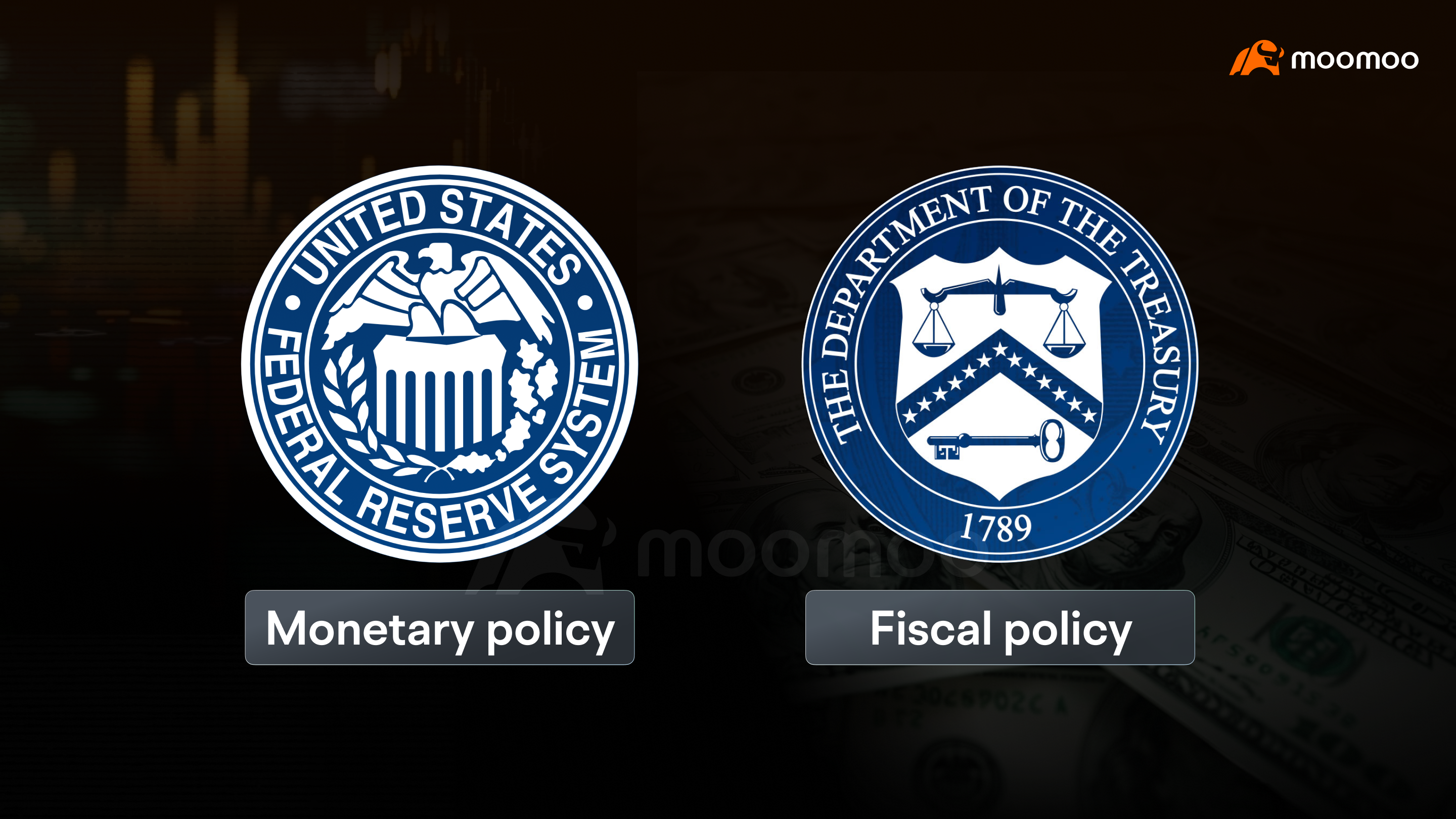
So, where does the Treasury get its cash? Primarily from two sources: taxes and borrowing.
Taxes are everywhere—sales tax, income tax, corporate tax, tariffs—you name it, and they all pour into the Treasury's coffers.
Then there's borrowing, which comes from issuing bonds, adding to the national debt.
Imagine someone working a job and borrowing from friends to make ends meet—that's the gist of it.
Once the Treasury acquires funds, they are used in various sectors of society, including defense spending, social welfare, and paying interest on debt.
If the yearly income is greater than spending, there's a surplus. But if spending outpaces income, we get a deficit.
As for the U.S. government, most years saw a deficit.
2. The Impact on the Economy
By tweaking income and spending, the Treasury can try to rev up or slow down the economy. It's like choosing between stepping on the gas or hitting the brakes.
An expansionary fiscal policy is like saying, "Let's collect less and spend more!" This often means cutting taxes so people and businesses have more cash.
During his first term, Trump reduced the corporate tax rate from 35% to 21%. In his second term, he plans to reduce it to 15% further.
And on the spending front, think of those stimulus checks during the pandemic—money straight into people's pockets.
While this can boost the economy in the short term, it can also balloon the debt and spark inflation. The expansionary policy had a hand in price hikes starting in 2021.
On the flip side, a contractionary fiscal policy applies the brakes by raising taxes and cutting back on spending.
Fiscal policy isn't just about the big picture; it can also target specific industries to nudge economic shifts.
Take Biden's CHIPS Act, for instance, which uses tax breaks and subsidies in an effort to boost the semiconductor industry and cut supply chain dependencies.
3. Bessent's plan
As the U.S. enters the Trump 2.0 era, Scott Bessent, the new Treasury Secretary, has caught the market's attention.
Bessent was the Chief Investment Officer(CIO) at Soros's hedge fund and founded his investment company.
Bessent proposed the "3-3-3" plan:
3% real GDP growth, trim the deficit rate to 3%, and boost oil production by 3 million barrels per day.
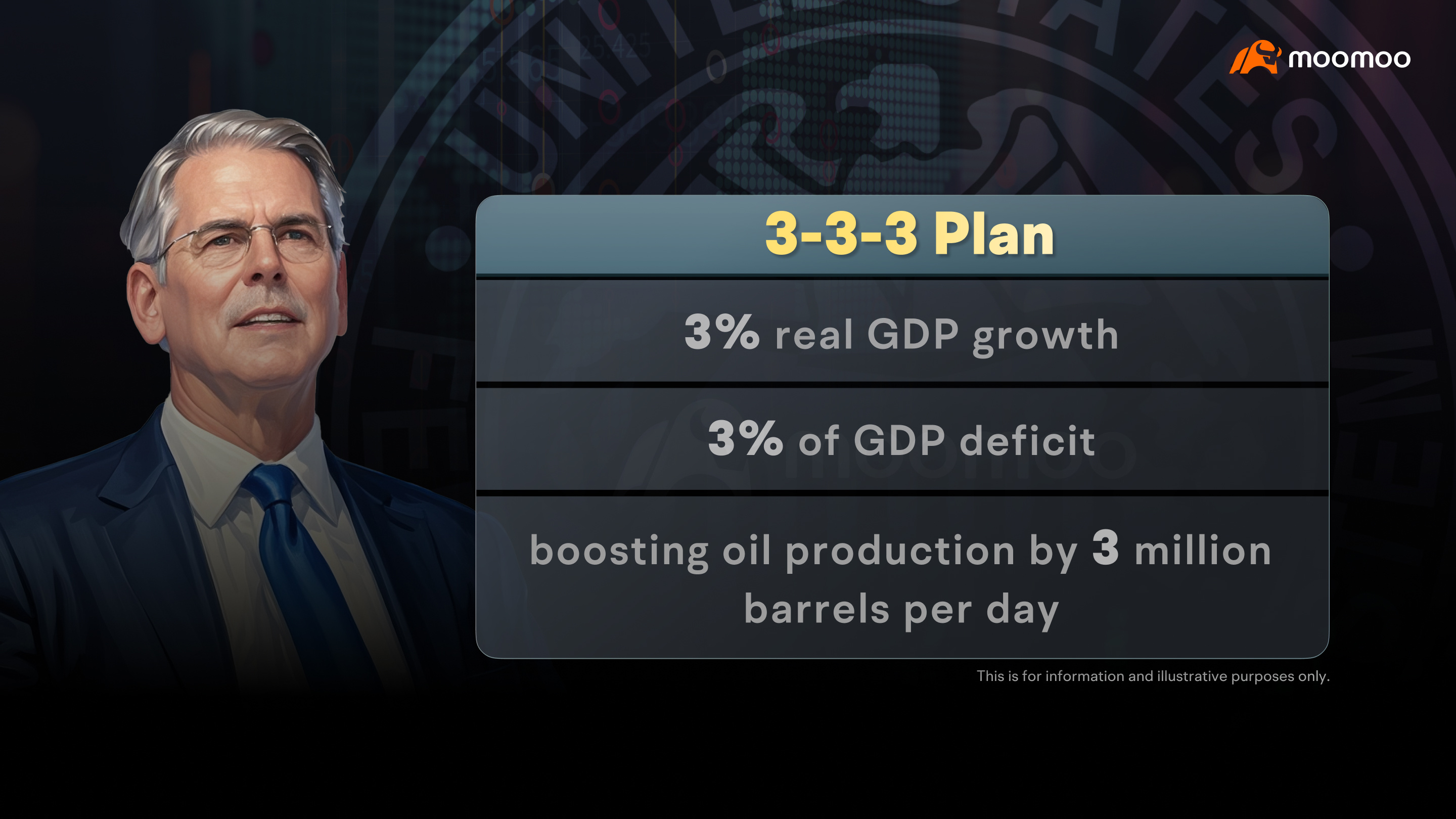
This blueprint is all about driving growth while tackling debt and inflation.
Growth could come from slashing taxes to spur business investment and using tariffs to bring industries back stateside.
Reducing the deficit could be achieved by streamlining government agencies and personnel—Musk's DOGE is currently pursuing this—and pausing some social welfare programs.

For oil, it's about tapping into shale and Alaska's energy, hoping to push down commodity prices and tame inflation.
It sounds like a win-win, pulling America out of the high-inflation, high-debt quagmire and onto healthy growth.
Conclusion
But no plan is without its hurdles. Cutting spending can slow growth, tariffs might not help tackle inflation, and tax cuts need Congress's green light.
Plus, after raking in profits from high oil prices, producers might not be eager to ramp up production.
Will this ambitious plan come to life? Only time will tell.
That's it for this macro lesson! If you enjoyed it, give it a thumbs up, share it with your friends, and comment below!
This presentation is for informational and educational use only and is not a recommendation or endorsement of any particular investment or investment strategy. Investment information provided in this content is general in nature, strictly for illustrative purposes, and may not be appropriate for all investors. Read more