Meet Dr. Copper: Understanding the Copper Market
Copper is a well-known industrial metal with excellent electrical and thermal conductivity.
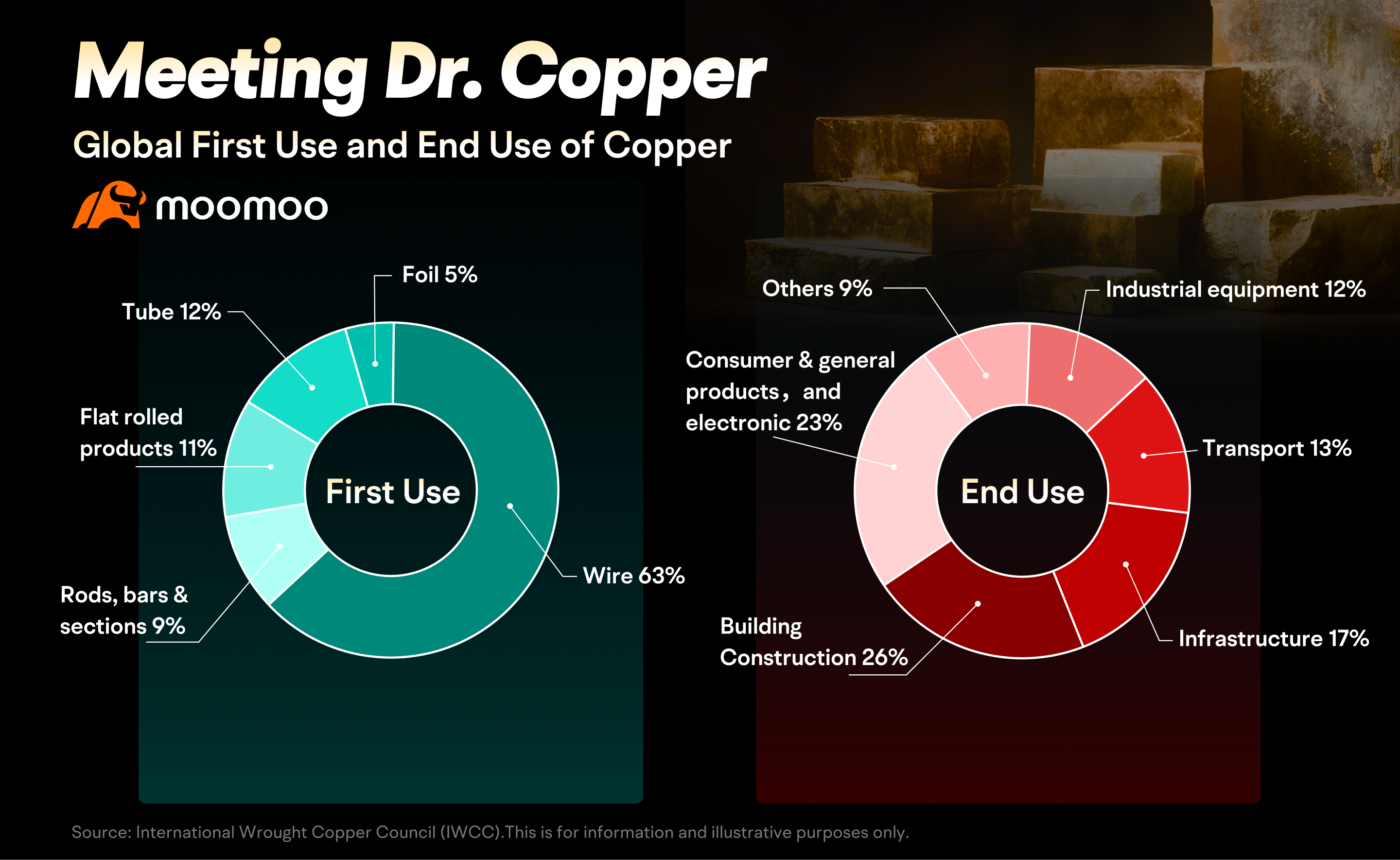
Most copper is used to produce wires, playing a vital role in power transmission, electronic devices, and the automotive industry.
In the financial world, copper has earned the nickname "Dr. Copper" because its demand swings mirror the ups and downs of economic activity.
The copper supply chain stretches from mining and refining to consumption and recycling, touching almost every corner of the globe.
When President Trump slapped a 50% tariff on copper, prices skyrocketed, putting this metal right in the investment spotlight.
In this macro lesson, we introduce the mysterious "Dr. Copper."
Takeaways:
Copper is often referred to as the "Dr. Copper" because its price changes quickly reflect shifts in economic activity.
LME and Comex are the primary platforms for copper futures trading, and their use of different units, combined with tariffs, disrupts price balance.
Copper production is concentrated in a few countries, with demand driven by industrial growth and technological innovation.
1. "Dr. Copper"
Copper isn’t just a metal; it’s like the economic weathervane we all need.
Often dubbed the “Ph.D. in Economics,” copper prices are quick to signal shifts in the broader economy, especially when it comes to industrial production and investment.
Sometimes, it’s even ahead of the stock market in predicting economic changes.
Copper demand is tightly linked to core industrial activities, with price swings reflecting market expectations in real-time.
The supply side of copper is pretty rigid, which means even small changes in demand can cause big price shifts.
Over the past few years, new copper discoveries have been sparse, and it typically takes 8-10 years from discovery to production.
Additionally, the quality of copper ore (how much copper is actually in the rock) is gradually declining worldwide.
When the economy is booming, we see a surge in infrastructure projects and manufacturing, driving up the demand and price of copper. But when things slow down, copper demand and prices usually take a hit, too.
2. LME vs. Comex
Like oil, copper prices are often set through futures contracts, with two main ones priced in U.S. dollars:
LME Copper: Traded on the London Metal Exchange, with contracts in metric tons, generally reflecting global demand.
Comex Copper: Offered by the CME Group (Chicago Mercantile Exchange), with contracts in pounds, mainly reflecting U.S. demand.
>> Learn more: Why is Oil Called the "Mother of All Commodities"?
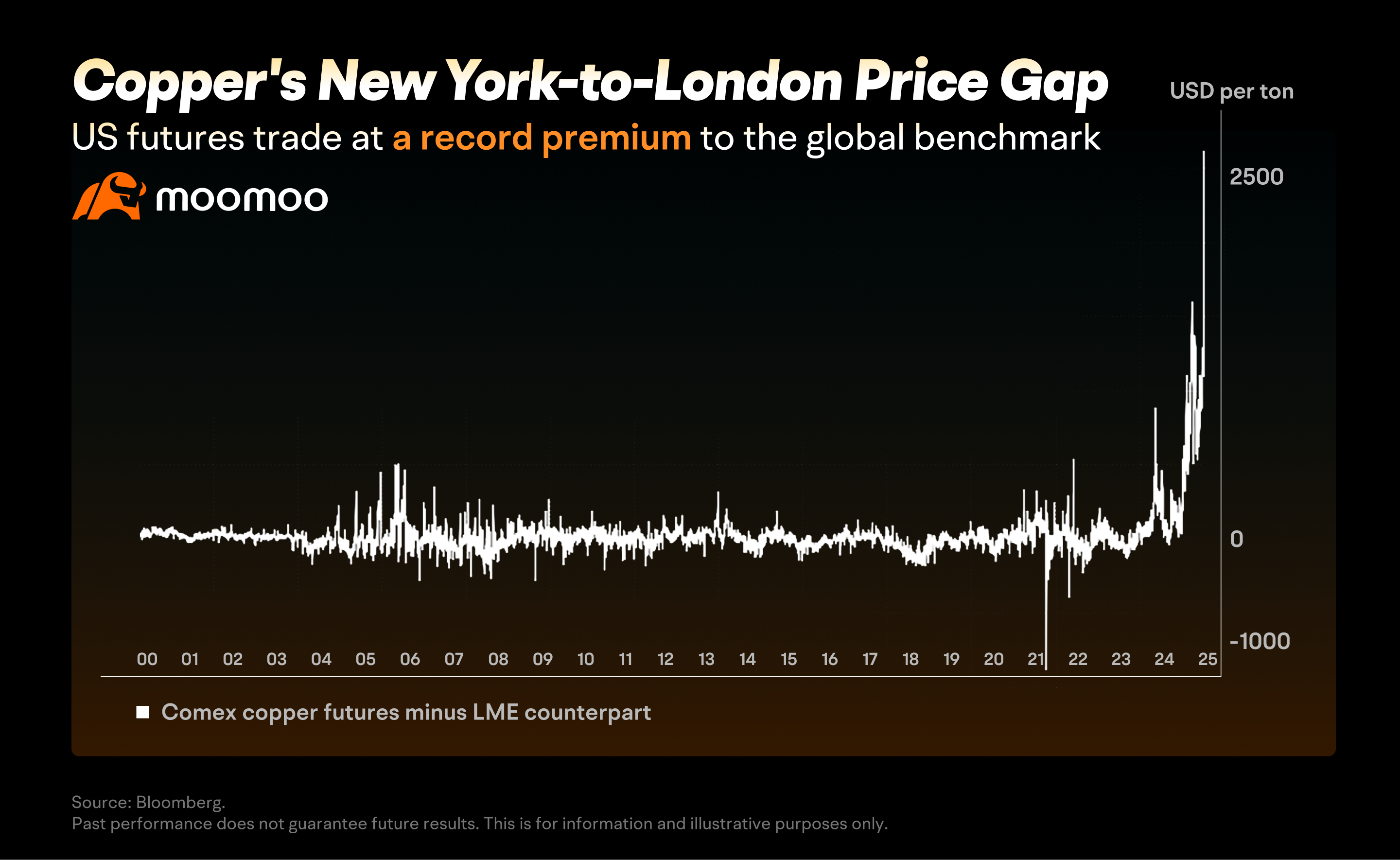
While both contracts deal with the same metal and currency, Comex copper prices are usually just a few bucks compared to LME's thousands, thanks to the difference in trading units (1 ton equals about 2,204 pounds).
Due to arbitrage, price differences between these markets are usually minimal. If New York prices exceed London's, investors can buy in London and sell in New York, keeping prices balanced.
However, due to U.S. tariff expectations, New York copper prices surged, with premiums over London copper surpassing $2,500/ton in July 2025, adding more uncertainty to the global copper market.
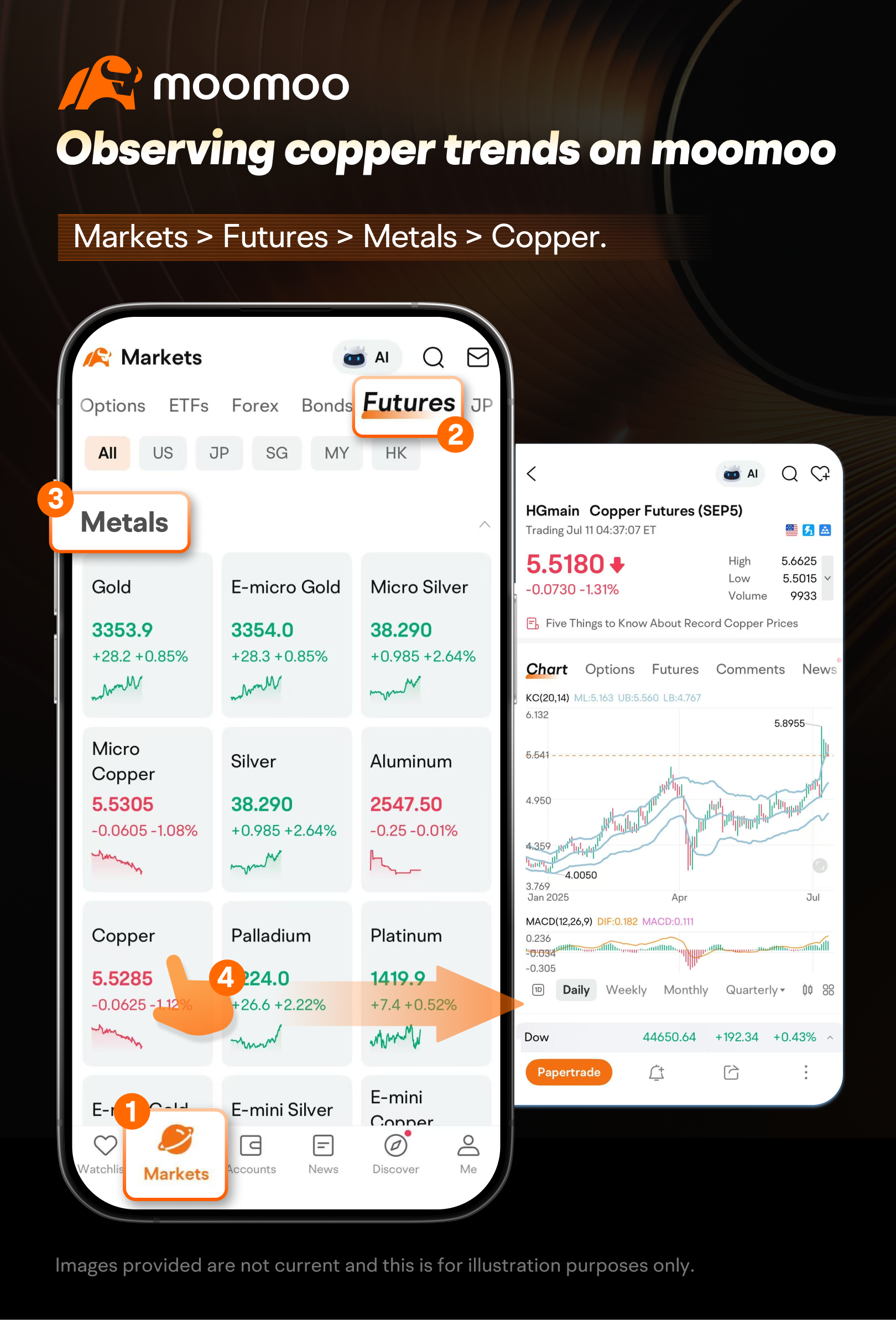
For those wanting to track copper prices, head over to moomoo: Markets > Futures > Metals > Copper. You can also set alerts to catch any price swings.
3. Supply and Demand at a Glance
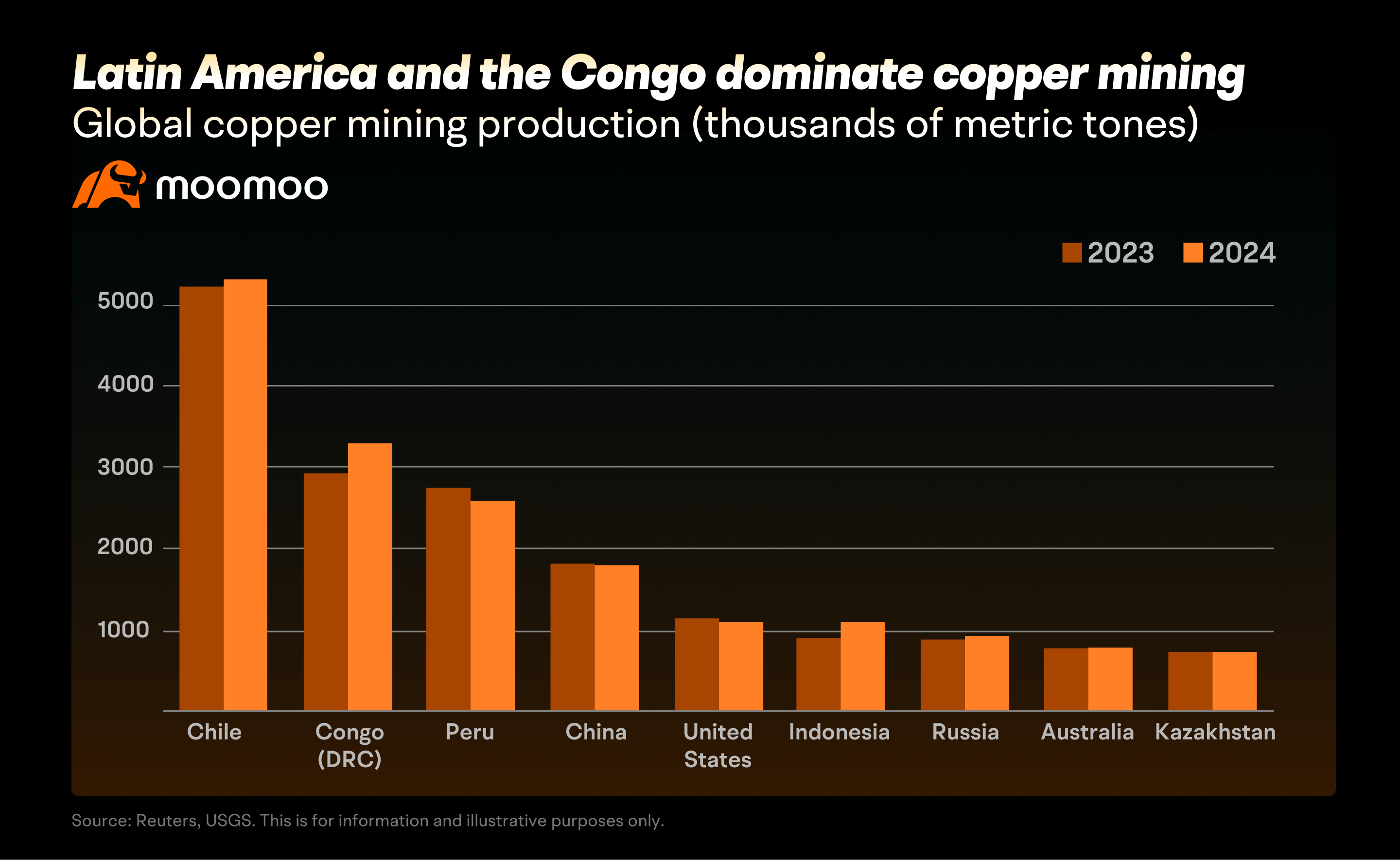
Copper production is dominated by resource-rich countries like Chile, the Democratic Republic of the Congo, and Peru, with Chile leading the pack.
Demand growth mainly comes from developing nations as they industrialize and urbanize, driving up the need for electrical networks. Developed countries are past this stage, focusing more on construction use.
In recent years, electric vehicles and AI data centers have become new demand drivers. Currently, China is the world's largest copper consumer and dominates copper refining.
In his "copper tariff declaration," Trump highlighted copper's critical role across industries, aiming to revive the U.S. copper industry through tariffs.
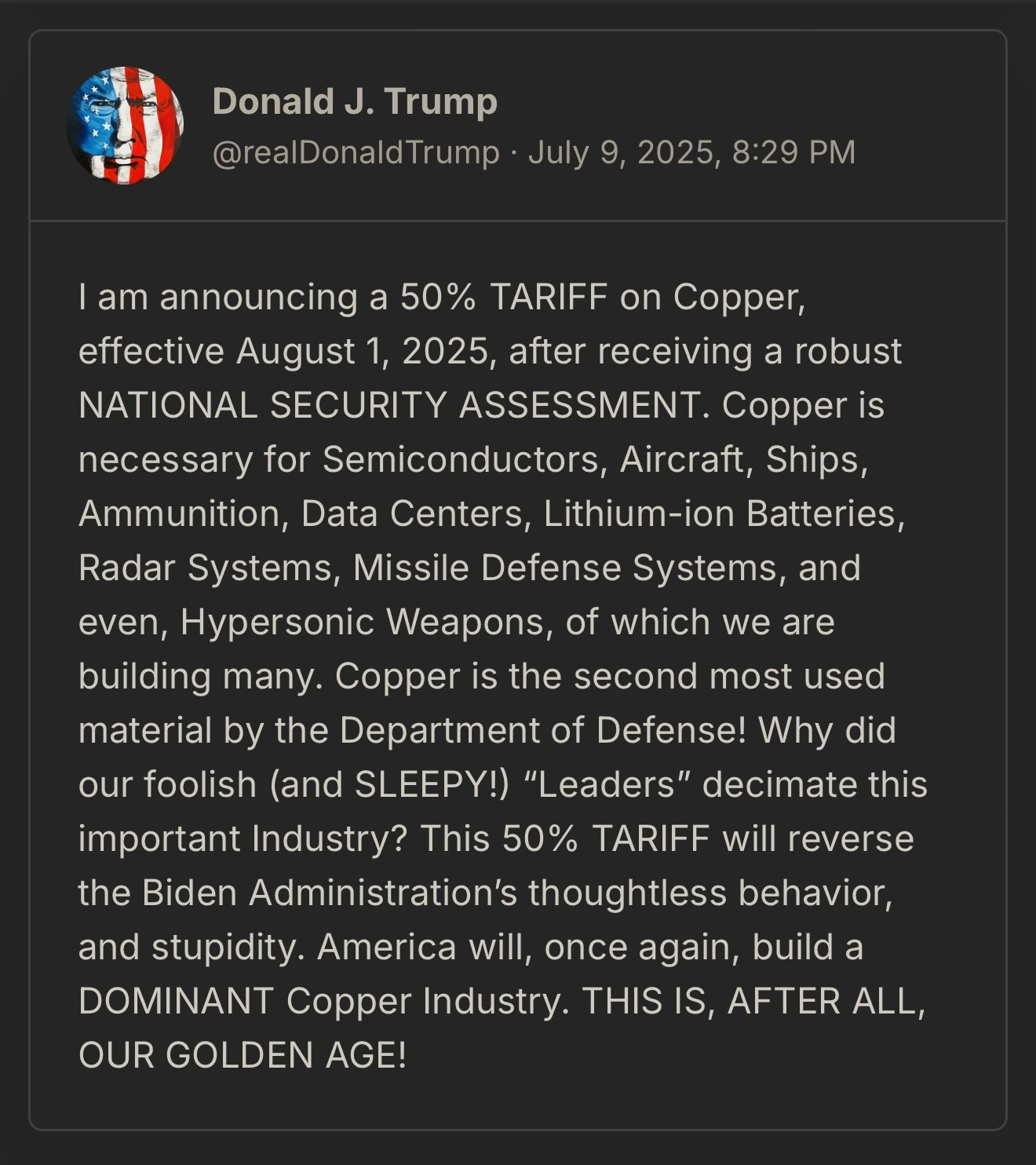
Source: TruthSocial. This is for information and illustrative purposes only.
What impact might tariffs have on the copper sector? If you're optimistic about copper, what investments could you consider?
Stay tuned for our next session to find out!
This presentation is for informational and educational use only and is not a recommendation or endorsement of any particular investment or investment strategy. Investment information provided in this content is general in nature, strictly for illustrative purposes, and may not be appropriate for all investors. Read more