Bitcoin vs. Ethereum: Which is better to invest in?
Let's start with an overview of the market.
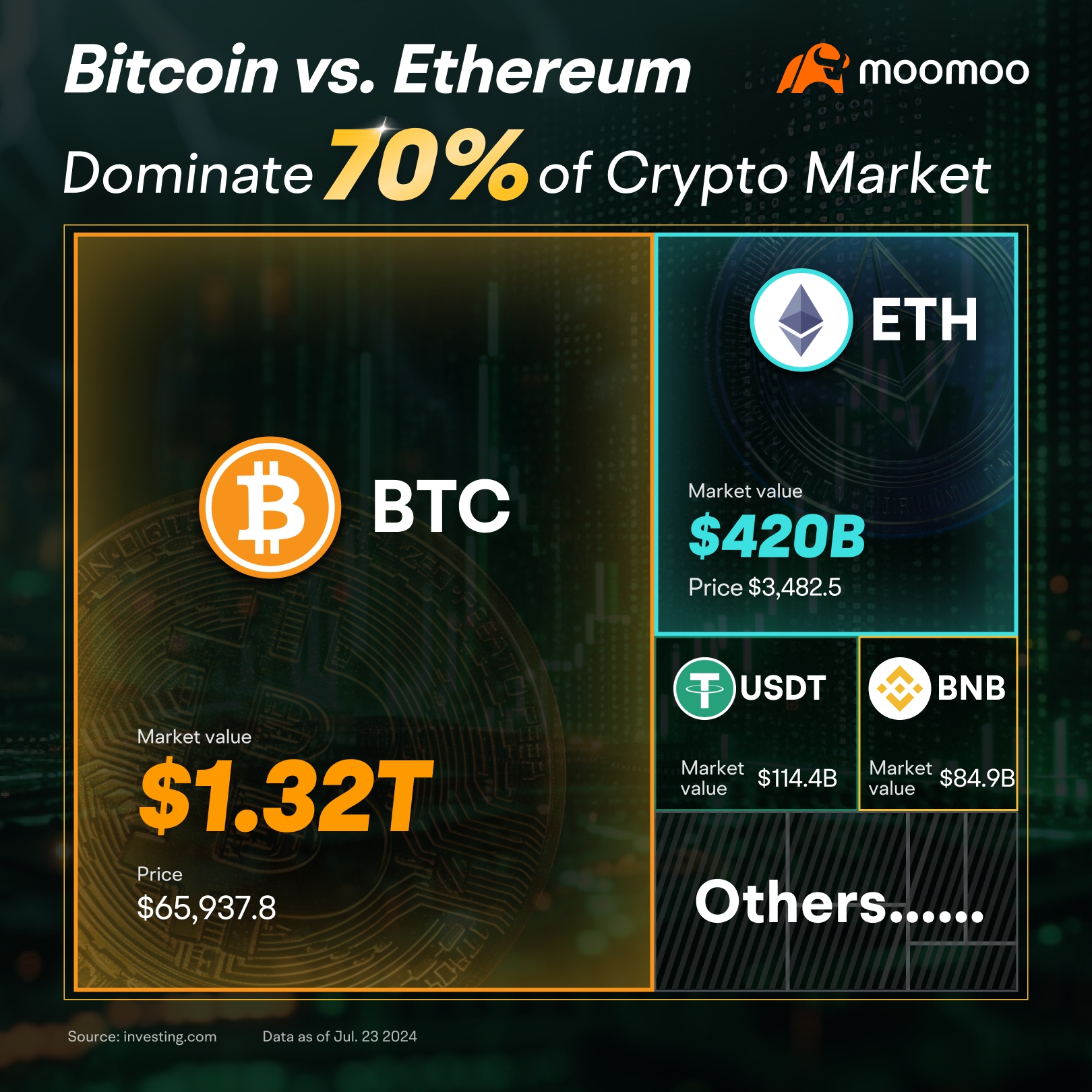
Despite the abundance of cryptocurrencies, as of May 2024, only about 85 have market caps over $1 billion, and around 25 exceed $5 billion. This means less than 1% of cryptocurrencies hold significant value. Bitcoin and Ethereum lead the pack with the highest market caps and the most mainstream recognition.
So, which is a better investment: Bitcoin or Ethereum? This article will compare them from several perspectives.
BTC vs. ETH: How do they differ?
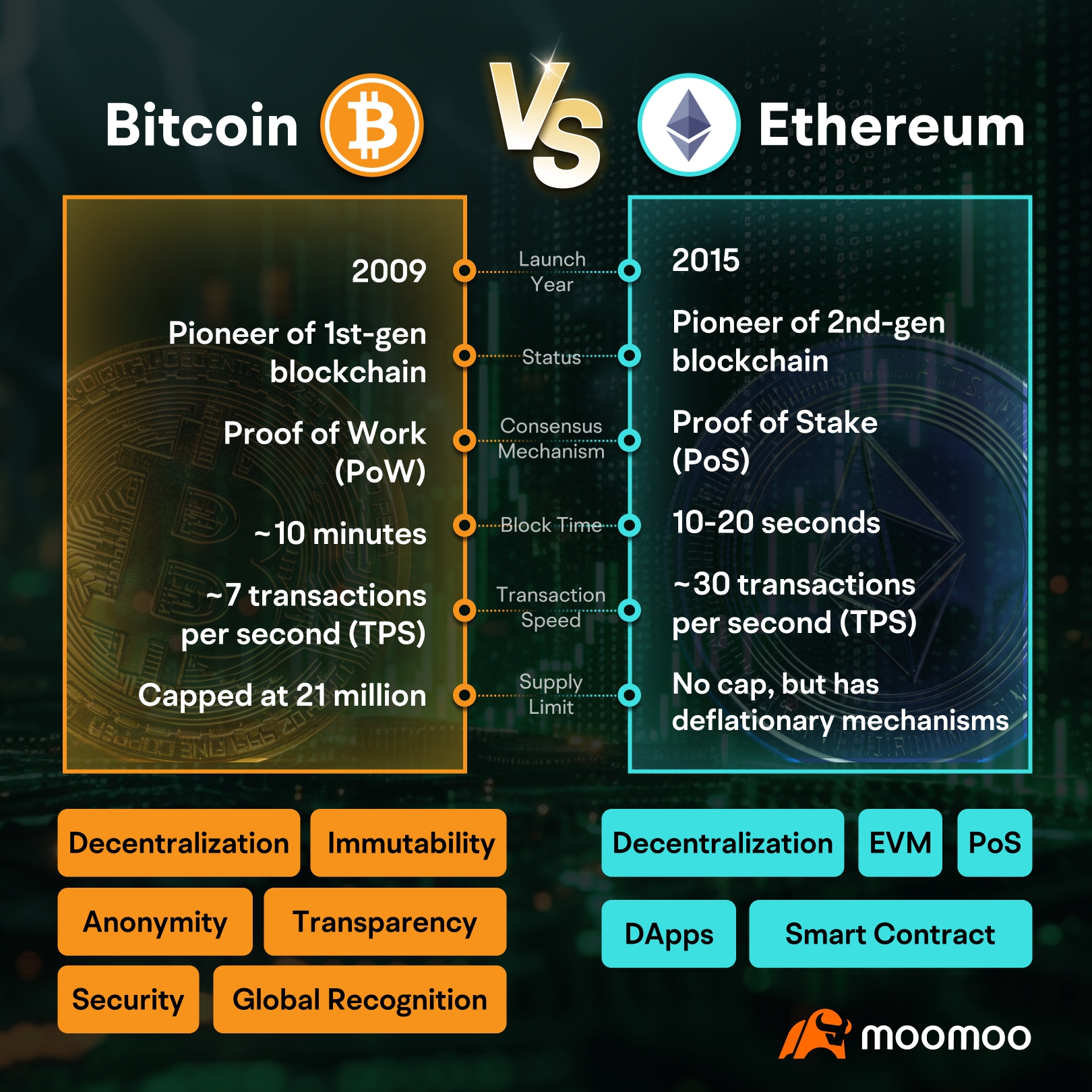
I. Technology
Bitcoin, being older, lacks some of the advanced features of Ethereum. It has slower transaction speeds and lower scalability. However, Bitcoin's limited supply makes it scarce and resistant to inflation, which is highly valued by investors.
Ethereum, on the other hand, boasts several technological innovations and is popular among developers. Initially criticized for its unlimited supply, Ethereum transitioned to Ethereum 2.0 in 2022, reducing the issuance rate and introducing a token-burning mechanism, thereby increasing its scarcity.
II. Use Cases
Apart from transfer and payment, the two have many differences in application scenarios.
Bitcoin is designed as a limited and anti-inflationary currency, so it is widely recognized for its store of value.
Ethereum aims to incorporate smart contract into the blockchain, enabling developers to build and run decentralized applications (DApps). Its diverse use cases include:
Decentralized Finance (DeFi): Building various financial products like lending, exchanges, and insurance using smart contracts.
Digital Assets: NFTs representing digital art, game items, virtual real estate, etc.
Governance and Voting: Decentralized autonomous organizations (DAOs) and on-chain voting systems.
III. Ecosystem
Bitcoin's ecosystem is relatively simple, focused mainly on value storage and payment methods.
Ethereum has one of the largest and most active developer communities globally. Its smart contract functionality and flexible development environment have drawn many developers to create and deploy various applications.
BTC vs. ETH: Market performance
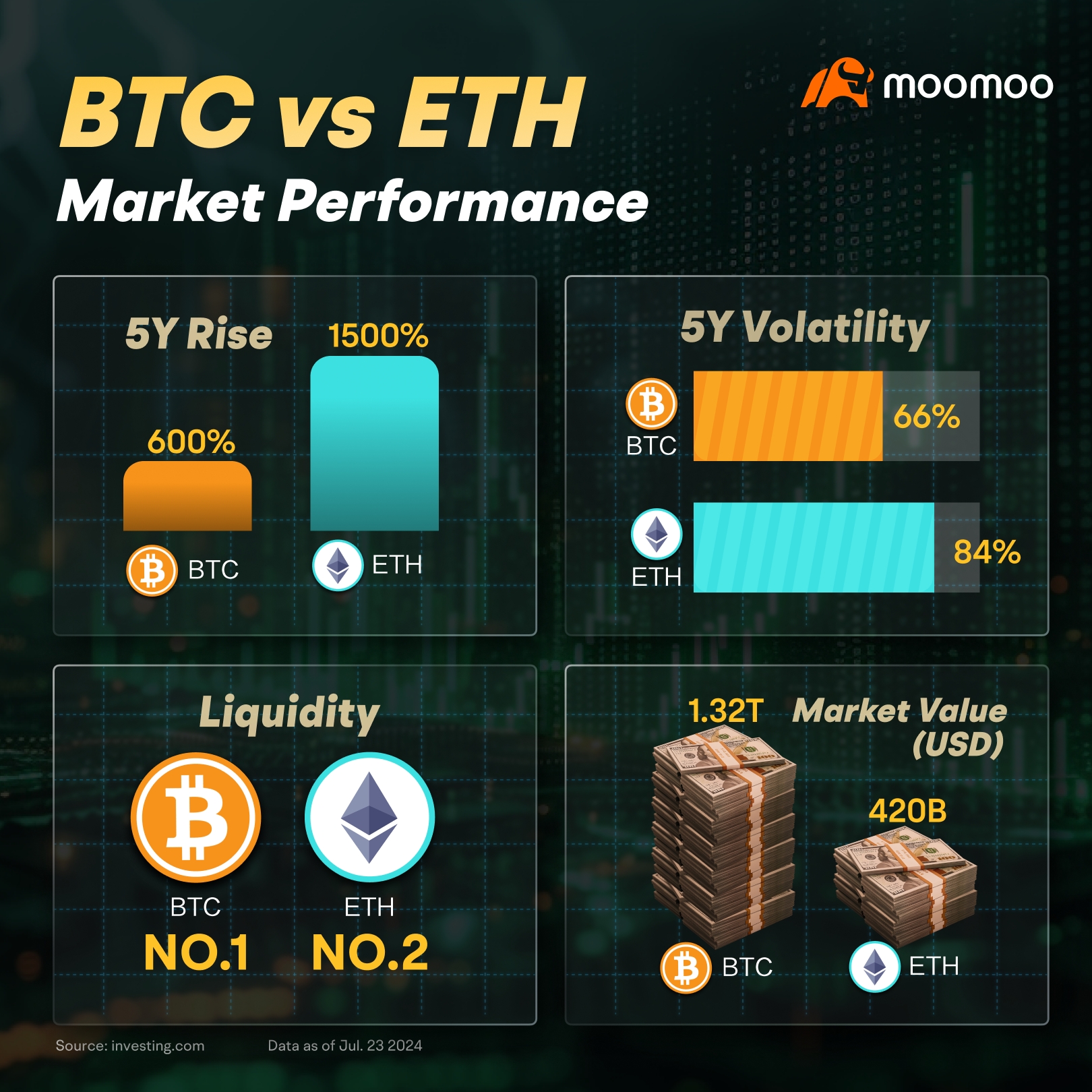
- Bitcoin and Ethereum have become major global assets. According to Companies Marketcap, Bitcoin's market cap surpassed that of silver in March 2024, making it the eighth largest asset in the world. Ethereum also boasts a substantial market cap of around $400 billion.
- Both Bitcoin and Ethereum enjoy high liquidity.
- Over the past five years, both Bitcoin and Ethereum have seen significant gains, with Ethereum outperforming Bitcoin. However, in the past year, Bitcoin has taken the lead.
- Ethereum's price volatility is higher than Bitcoin's, indicating potentially higher risk.
Performance comparison: Which is stronger?
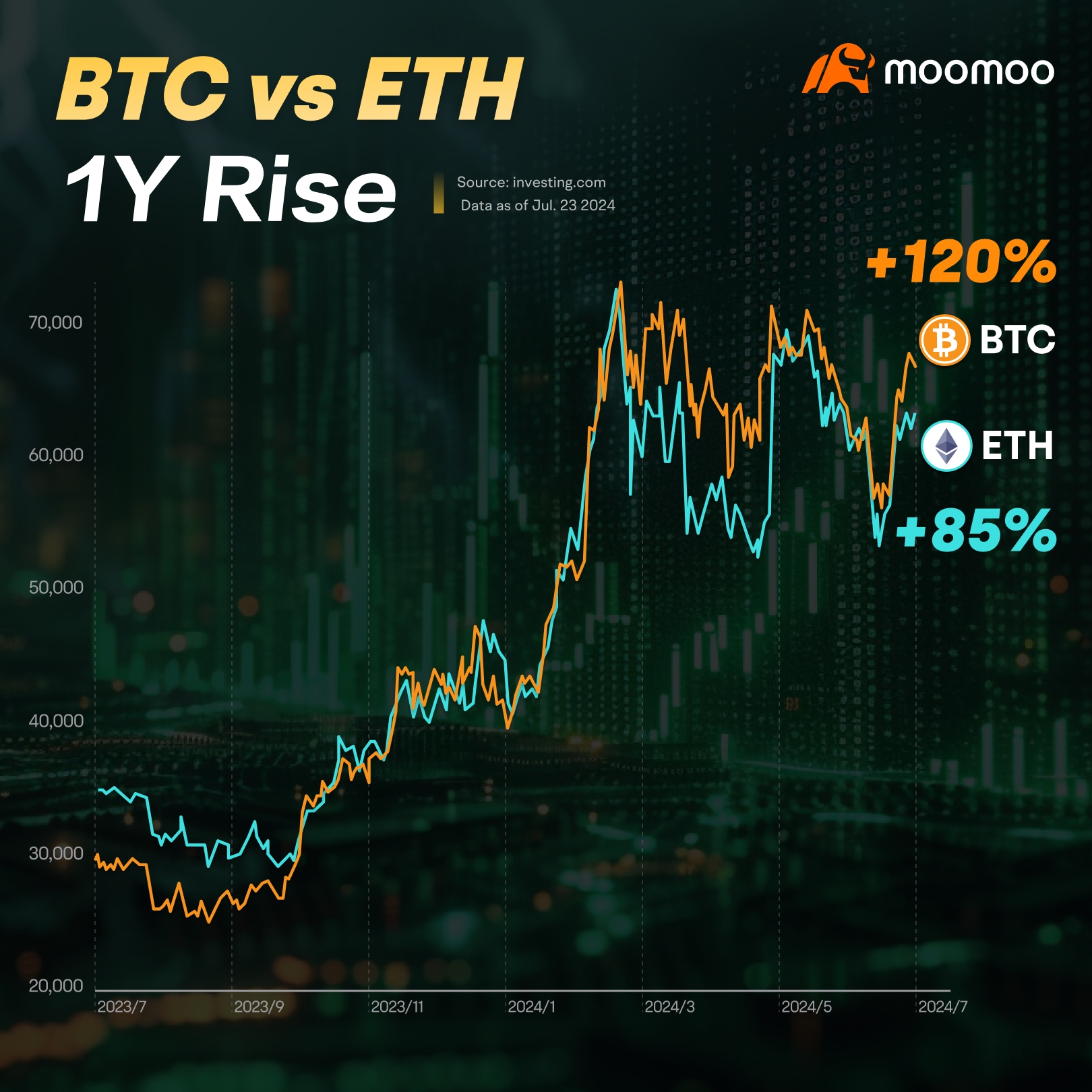
Over the past year, Bitcoin and Ethereum prices have moved in tandem, showing high correlation. To gauge their relative strength, the market often uses the ETH/BTC ratio. An increase in this ratio signals Ethereum's strength compared to Bitcoin, while a decrease signals weakness.
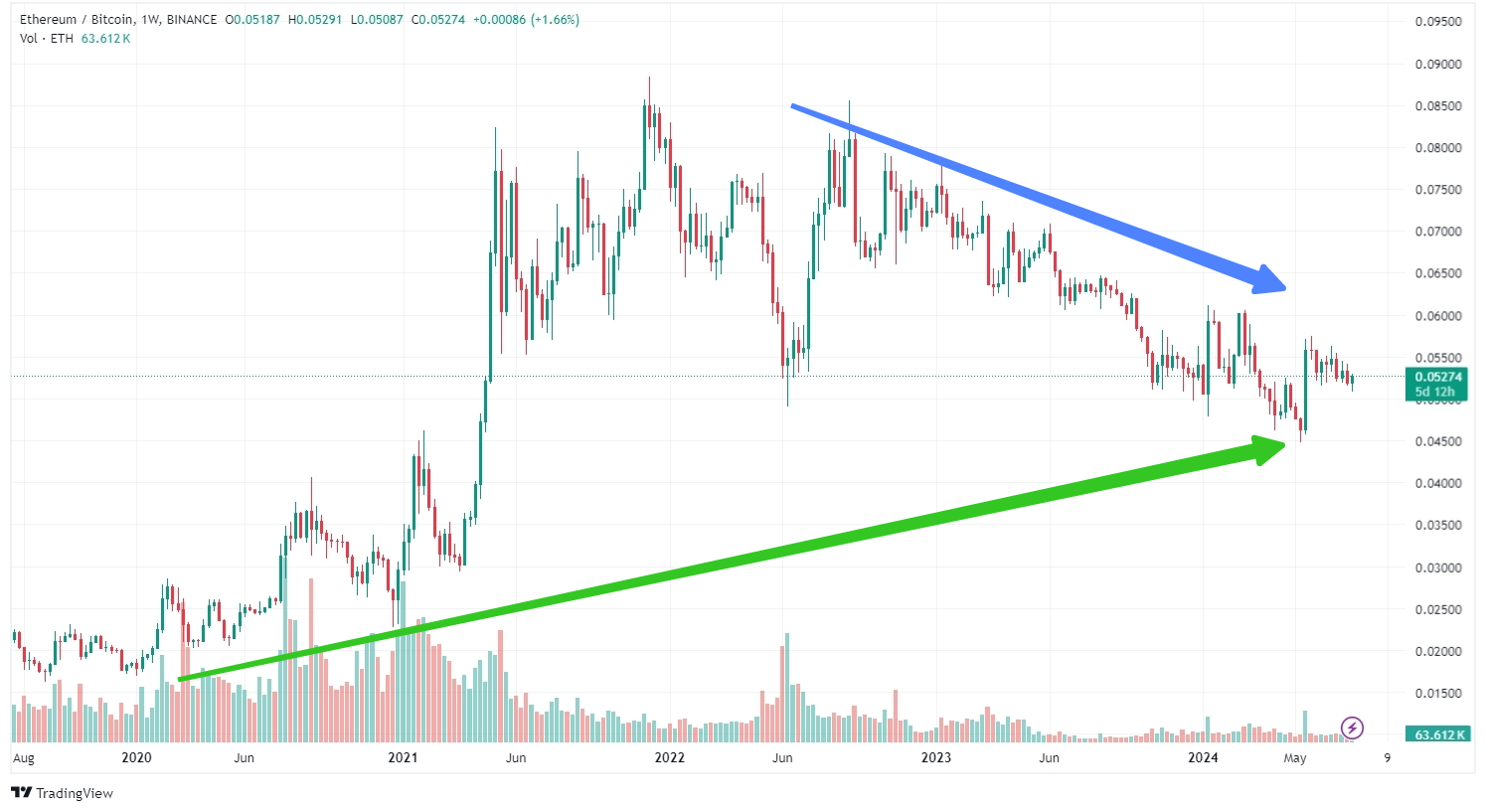
Examining the ETH/BTC ratio over the past five years, Ethereum has gained value relative to Bitcoin. During the 2018 bear market, the ratio hit a low of 0.01, but in the 2022 bear market, it remained around 0.05, thanks to Ethereum's growing ecosystem and on-chain value.
However, since 2022, the ETH/BTC ratio has been declining, indicating that Ethereum's performance relative to Bitcoin has weakened. Analysts suggest this is due to Ethereum's sensitivity to the Federal Reserve's tightening monetary policy and stricter SEC regulations, as well as market confidence being impacted by factors like founder sell-offs and the FTX exchange hack.
Summary
I. Long-Term Perspective:
Bitcoin: Its core investment value lies in its scarcity and resistance to inflation. Think of Bitcoin like gold.
Ethereum: Its core value comes from the growth of its application ecosystem. Ethereum is more akin to securities.
II. Short-Term Perspective:
The ETH/BTC ratio is still on a downward trend, indicating that Ethereum might be weaker relative to Bitcoin in the near term.
However, some believe that events like the onset of a rate-cut cycle and the approval of an Ethereum spot ETF could reverse this trend.
This presentation is for informational and educational use only and is not a recommendation or endorsement of any particular investment or investment strategy. Investment information provided in this content is general in nature, strictly for illustrative purposes, and may not be appropriate for all investors. Read more