7 Key factors that could impact cryptocurrency prices
Before diving into cryptocurrency investments, you've probably heard about their wild price swings. This volatility makes trends hard to predict. However, knowing the key factors that influence prices can give you an edge.
In this article, we'll explore seven crucial factors that impact cryptocurrency prices. Let's dive in!

Supply and Demand: The Decisive Factor
1. Supply side:
Like all commodities and assets, when cryptocurrency supply exceeds demand, prices fall; when demand outpaces supply, prices rise.
Cryptocurrency supply is often predetermined at the inception of the currency, known as tokenomics, which includes factors like total supply, distribution methods, consensus mechanisms, and burn protocols. If these details are missing in the cryptocurrency’s whitepaper, a crypto could be a red flag for investors.
How do you analyze supply? For example:
Ethereum originally had no supply cap and issued around 18 million new ETH annually, causing concern among holders.
Then, with its issuance mechanism transitioning from Proof of Work (PoW) to Proof of Stake (PoS), new issuance was substantially reduced. The introduction of a burning mechanism also helps maintain long-term price stability.

2. Demand side:
Short-term demand for crypto is influenced by many factors, but long-term demand relies on utility. Successful projects must solve real-world problems for their demand to grow. To predict a cryptocurrency's long-term price, examine its use cases and potential.
For instance, Ethereum is a leading platform for decentralized apps (DApps). A revolutionary app within its ecosystem could drive Ether's price up.
Market Sentiment: Crypto's Speculative Nature
Market sentiment heavily impacts crypto prices, even for Bitcoin. The market's speculative nature means that during bull markets, FOMO (fear of missing out) drives prices up, while in bear markets, panic selling causes sharp declines.
The Fear & Greed Index from Alternative.me is a popular tool to gauge sentiment.
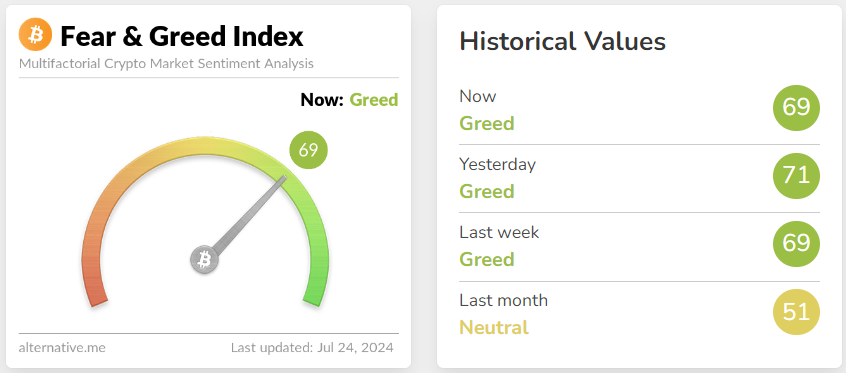
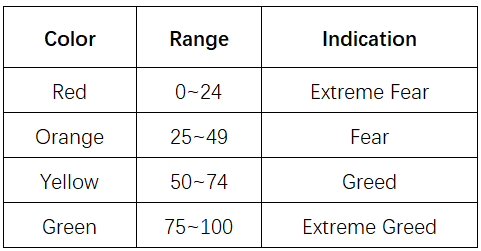
It ranges from 0 to 100, with lower scores indicating fear and higher scores indicating greed. The categories are:
Media: a double-edged sword
Social media undeniably influences the crypto market. Key opinion leaders (KOL) in the crypto space can significantly impact prices, especially for smaller altcoins.
For example, Elon Musk's tweets have boosted meme coins like Dogecoin and Shiba Inu. Popular platforms for crypto discussions include Twitter and Reddit.
However, media can also have a destructive impact.
A notable case is Coindesk's report on November 2, 2022, which led to the rapid collapse of FTX, the world's second-largest crypto exchange.
Regulation: an unavoidable challenge
Regulatory changes often cause significant price swings in the crypto market. Globally, regulation has evolved from being lax to stringent and is now moving towards a more structured approach.
For instance, decisions by the U.S. Securities and Exchange Commission (SEC) have greatly impacted crypto prices. The approval of a Bitcoin spot ETF by the SEC in January 2024 likely contributed to Bitcoin's surge in the first quarter.
Similarly, the SEC's approval of an Ethereum spot ETF in July 2024 has fueled market optimism for the future.

Competition: battling for investment
Cryptocurrency competition is fierce. Projects with better prospects attract more investment, driving up their prices.
For instance, Ethereum faces challenges from other smart contract platforms like Cardano and Solana.
Thousands of crypto projects claim to offer similar solutions. A few may succeed and gain significant funding, while most will likely fail, leading to price drops or even collapse.
Production costs: a price support
Data shows a positive correlation between Bitcoin's price and its hashrate, a measure of mining computational power. A higher hashrate demands expensive equipment and significant energy consumption, increasing production costs and potentially helping support price increases of PoW tokens. Simply put, if the value of mined cryptocurrency doesn't cover these costs, miners will stop mining.

Liquidity: the cause of high volatility
Liquidity significantly impacts smaller cryptocurrencies, which may lead to sharp price swings.
One major factor influencing liquidity is cryptocurrency exchanges. Generally, listing on more exchanges could enhance liquidity and potentially drive up its price.
Data from crypto research firm Messari shows cryptocurrencies gained an average of 91% within five days of being listed on Coinbase.
Additionally, whale investors—those holding large amounts of cryptocurrency—can cause price drops when they sell off substantial holdings.
For example, crypto analytics firm Nansen found that the initial instability and subsequent crash of the LUNA coin were primarily due to sell-offs by just seven traders.
Summary
The seven factors mentioned above are key according to industry experts. Other factors, like macroeconomic conditions, may also influence crypto prices but lack consensus.
Here's a list of key considerations to predict crypto prices.

Now do you know how to analyze cryptocurrency price trends?
This presentation is for informational and educational use only and is not a recommendation or endorsement of any particular investment or investment strategy. Investment information provided in this content is general in nature, strictly for illustrative purposes, and may not be appropriate for all investors. Read more