3 Good Reasons Why Stock Investors Can Start Crypto Investing Using ETFs
As digital assets gain traction in global markets, many stock investors are exploring new ways to diversify portfolios. However, the volatility and technical complexity of direct cryptocurrency investments can be a barrier. Crypto Exchange-Traded Funds (ETFs) offer a regulated and accessible solution—allowing investors to gain exposure to cryptocurrencies without managing individual coins or wallets.
Key Takeaway
Crypto ETFs offer stock investors a familiar investment vehicle to access digital assets, blending the benefits of regulatory oversight, ease of access, and diversification.
Key Highlights
Regulated exposure: Crypto ETFs are subject to regulatory standards, offering protection and transparency.
Lower entry barriers: Investors can gain exposure to cryptocurrencies without needing digital wallets or private keys.
Similar Operational Structure: Crypto ETFs operate like traditional stock ETFs, offering a familiar format, but the underlying crypto assets involve substantially higher risks.
1. Wall Street and Everyday Investors Trust Regulated Crypto ETFs
ETFs providing crypto exposure, when offered by companies regulated by authorities like the SEC in the U.S., benefit from oversight that ensures transparency and investor protection. This regulatory structure ensures transparency, investor protection, and market integrity—attributes that attract both institutional and retail investors.
The approval of spot Bitcoin ETFs in January 2024 marked a turning point. BlackRock’s iShares Bitcoin Trust (IBIT) gathered over $15 billion in assets within three months, becoming one of the most successful ETF launches in U.S. history (1). IBIT has even overtaken MicroStrategy (MSTR) in total Bitcoin holdings—highlighting a shift in how large institutions approach crypto exposure (2).
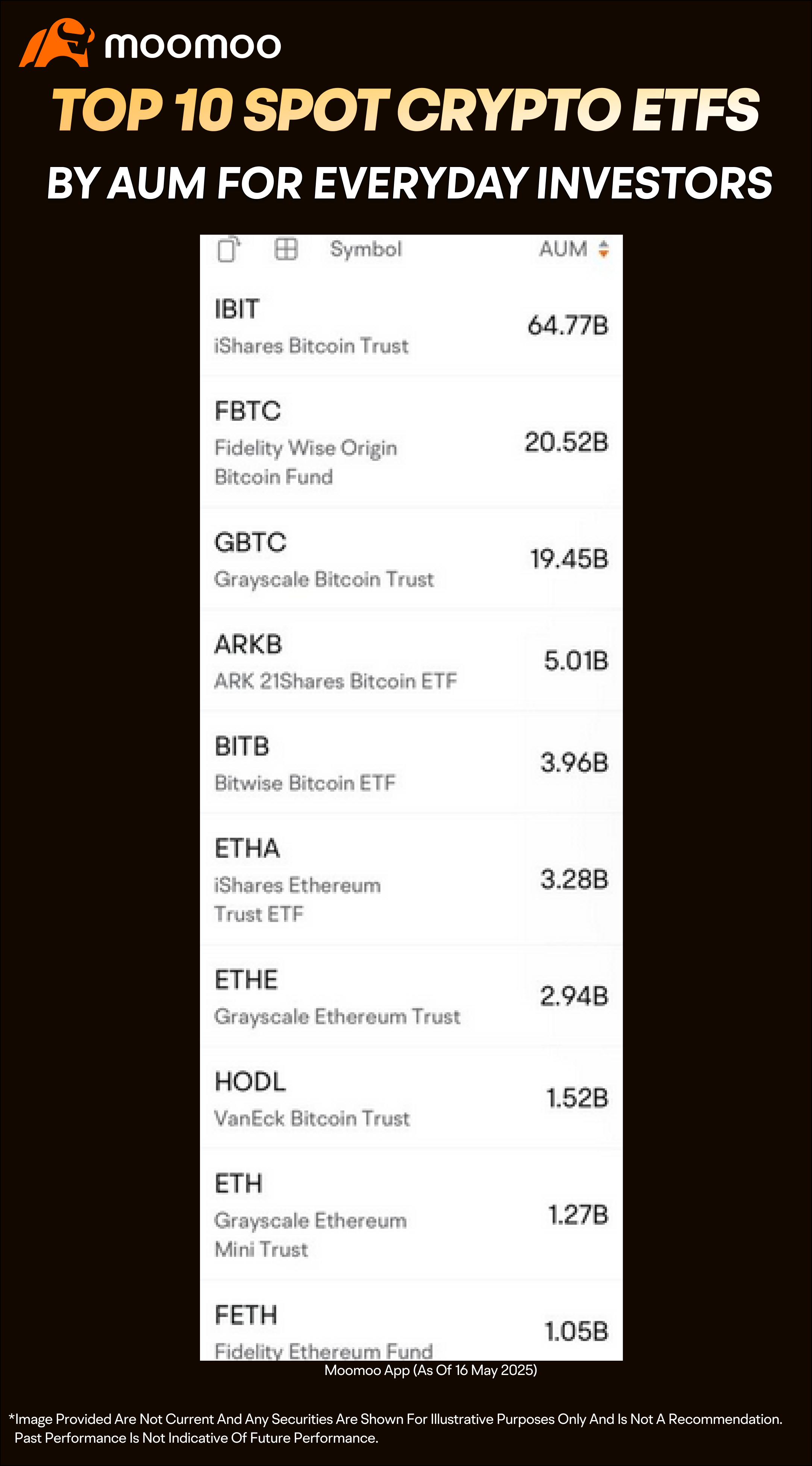
For everyday investors, crypto ETFs provide a regulated gateway into crypto markets—without needing to navigate unregulated platforms. Plus, since these ETFs are exchange-listed, investors can access public disclosures, track institutional flows, and make data-driven decisions—bridging the information gap between retail and Wall Street.
For everyday investors, crypto ETFs provide a regulated gateway into crypto markets—without needing to navigate unregulated platforms. Plus, since these ETFs are exchange-listed, investors can access public disclosures, track institutional flows, and make data-driven decisions—bridging the information gap between retail and Wall Street.
2. Low Entry Barriers Without Crypto Wallet Hassles
Unlike direct crypto investing, which often involves setting up a digital wallet, securing private keys, and managing exchange risk, investing in a crypto ETF is as easy as buying a stock.
You can use your existing brokerage account, trade with hotkeys, view Level 2 data, and leverage familiar tools—all without leaving your current platform. This reduces operational risk, improves convenience, and removes the need to learn blockchain mechanics.
For new investors or those focused on simplicity, this structure removes the steep learning curve and security concerns often associated with direct crypto ownership.
3. Crypto ETFs Simplifies Portfolio Diversification like Stock ETFs
Crypto ETFs mirror the structure of traditional ETFs, giving investors a range of choices to match their investment goals and risk tolerance. These include:
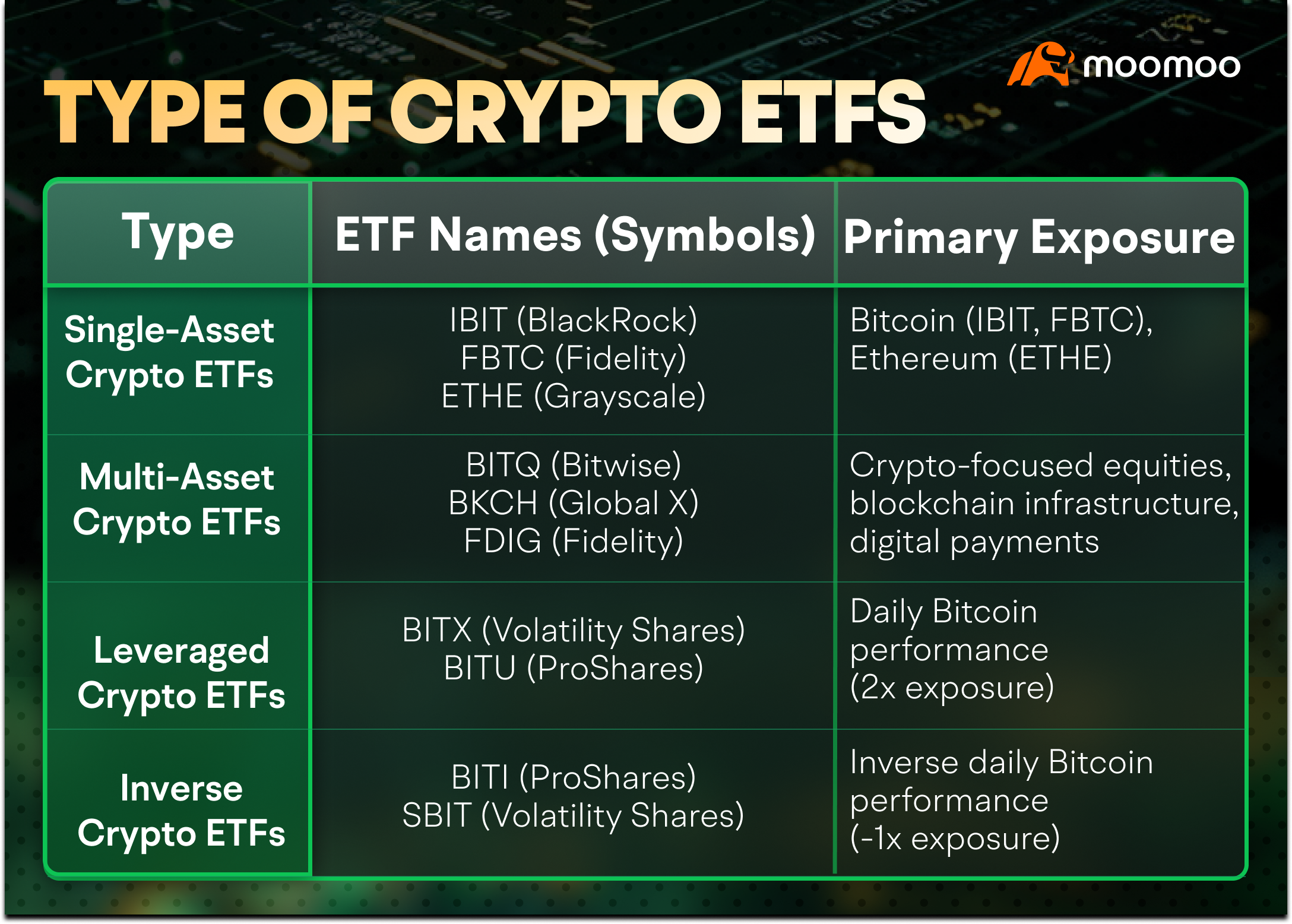
Similar to how equity investors use products like QQQ for Nasdaq exposure or SMH for semiconductor companies, crypto ETFs can offer targeted or diversified access—all within a regulated framework.
Conclusion
For stock investors seeking exposure to the burgeoning world of cryptocurrencies, crypto ETFs offer an accessible and familiar investment avenue through companies regulated by recognized authorities, such as the U.S. Securities and Exchange Commission (SEC) for U.S.-based products. These ETFs mitigate the complexities of direct crypto investments, such as managing digital wallets and understanding blockchain technology, allowing investors to explore diversification with ease. As the financial landscape continues to evolve, incorporating crypto ETFs can be a prudent step towards embracing the future of digital assets.
Source
Reuters. (2025, January 10). Cryptoverse: The next wave of US crypto ETPs is already in the pipeline. Reuters. https://www.reuters.com/technology/cryptoverse-next-wave-us-crypto-ETPs-already-pipeline-2025-01-10/
IBTimes. (2024, March 13). BlackRock’s Bitcoin ETF (IBIT) exceeds MicroStrategy’s BTC holdings. International Business Times. https://www.ibtimes.com/blackrocks-bitcoin-etf-ibit-exceeds-microstrategys-btc-holdings-3726858
This presentation is for informational and educational use only and is not a recommendation or endorsement of any particular investment or investment strategy. Investment information provided in this content is general in nature, strictly for illustrative purposes, and may not be appropriate for all investors. Read more