3 Key Questions to Ask Before Adding Crypto to Your Asset Allocation

Cryptocurrencies have gained attention through U.S.-listed Bitcoin Exchange-Traded Funds (ETFs) and institutional interest, but their speculative nature, volatility, and complexity make them high-risk and unsuitable for many investors. Before considering crypto, evaluate its risks, seek professional financial advice, and determine its fit with your goals with the help of these 3 questions.
Key Highlights:
Consider Regulated Brokers: Use platforms like Moomoo SG that comply with MAS for increased transparency and investor protection.
Evaluate Risk and Goals: Align crypto exposure with your risk tolerance and time horizon—crypto’s volatility may not suit conservative or short-term investors.
Confirm Financial Stability: Ensure emergency savings and portfolio diversification before exploring higher risk assets like crypto.
1. Is Your Broker Regulated, and Do You Understand the Crypto Market?

The collapse of unregulated platforms like FTX and the rise of meme coins highlight the importance of using regulated brokers. Platforms such as Moomoo SG aim to offer spot crypto trading under oversight from MAS.
Spot trading means buying/selling cryptocurrencies at current market prices with immediate settlement, allowing investors to own the underlying assets.
Regulated platforms typically emphasize transparency, investor protection, and operational security—all essential when trading in a volatile and rapidly evolving space like crypto. If you're new to crypto, consider starting with a small allocation of regulated products such as spot crypto, or U.S.-listed crypto-related ETFs.
2. What Is Your Risk Profile and Investment Time Horizon?
Crypto assets are highly volatile and not suitable for all investors. Before investing, assess whether your risk tolerance and investment objectives support an allocation to this asset class. Define your goal: is it long-term growth, short-term trading, or portfolio diversification?
Conservative investors might explore limited exposure via regulated crypto ETFs.
Balanced-risk investors can combine crypto-related stocks or ETFs with core portfolio assets.
Active traders may seek opportunities through optionable crypto ETFs or short-term strategies tied to large-cap cryptocurrencies like Bitcoin (BTC) or Ethereum (ETH).
Additionally, your age and time horizon matter. Younger investors may be more tolerant of volatility over time, while those nearing retirement typically prioritize capital preservation. Consider adjusting your strategy accordingly to avoid misaligned risk.
3. Is Your Financial Base Solid, and Do You Need Near-Term Funds?
Before adding any crypto exposure, evaluate whether your financial base is secure. This includes having an emergency fund, manageable debt, and a diversified portfolio. If these aren’t in place, it may be better to focus on building stability before exploring higher-risk assets like crypto.
Those with a strong foundation may allocate a small portion to spot crypto or crypto-related ETFs as part of a diversified growth strategy. If you need access to funds in the short term (6–12 months), you can avoid high-volatility assets and focus instead on more liquid and stable investments.
For long-term goals, consider dollar-cost averaging (DCA) into crypto-related products to help smooth out volatility over time. Consider using only surplus funds for crypto investments, allowing you to explore potential growth while keeping your essential financial goals secure.
4. Potential Benefits and Risks of Crypto Investing
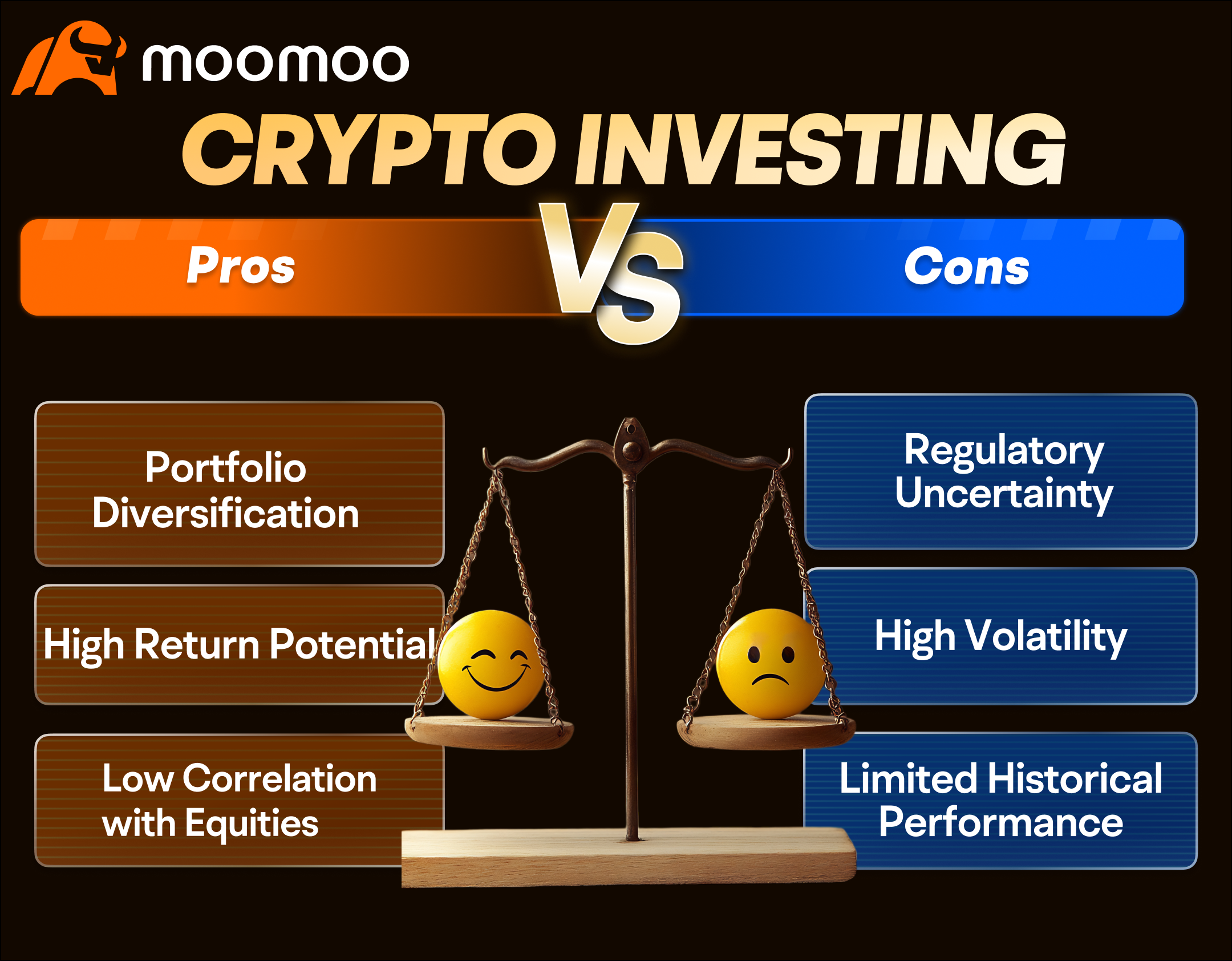
Cryptocurrencies offer the potential for high returns and portfolio diversification, primarily due to their low correlation with traditional assets and exposure to innovative blockchain technologies.
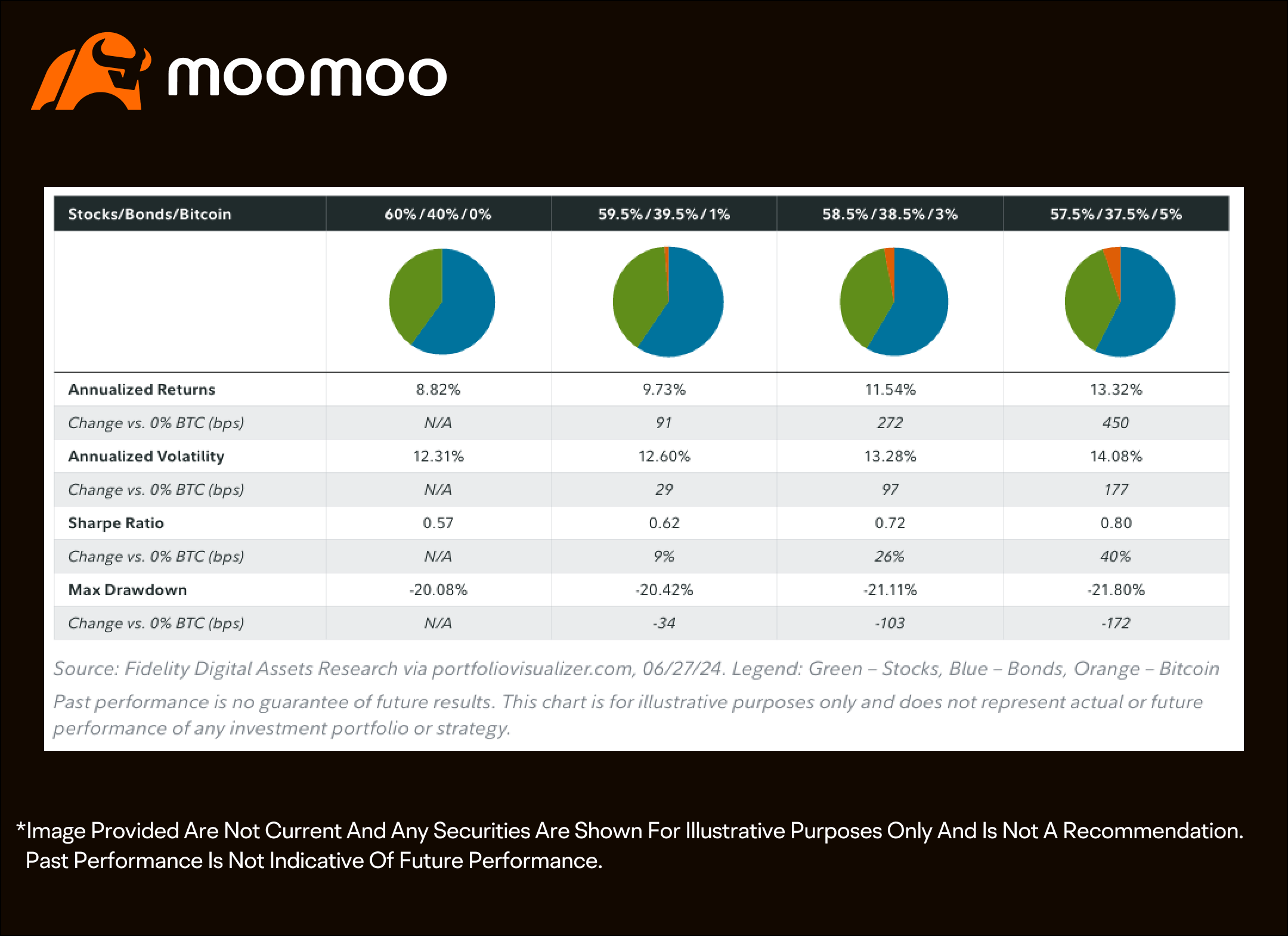
Fidelity Digital Assets Research examined the impact of allocating 1%, 3%, and 5% of Bitcoin to a traditional 60/40 portfolio of equities and fixed income. The findings indicated that higher Bitcoin allocations led to increased annualized returns, but also elevated exposure to volatility and drawdowns (1). Similarly, research from Grayscale found that a 'moderate' crypto allocation—around 5%—may enhance risk-adjusted returns in a traditional stock and bond portfolio, though it can also increase overall portfolio risk (2).
In summary, crypto remains a highly volatile asset class, with prices subject to significant swings, regulatory uncertainty, cybersecurity risks, and limited long-term historical data. As such, it may not be suitable for all investors. Carefully evaluating these risks and consulting a licensed financial professional is recommended before considering an allocation to crypto.
Conclusion
Crypto may fit into a diversified portfolio, but its benefits come with significant risks. Use these questions to align any allocation with your goals, risk tolerance, and timeline. Always consider working with a regulated broker, prioritize education, and consult a financial advisor to navigate this volatile asset class.
References
Fidelity Digital Assets Research (Oct 2024). Bitcoin's Evolving Role as an Alternative Investment. Understanding where bitcoin can fit in a portfolio. https://www.fidelitydigitalassets.com/sites/g/files/djuvja3256/files/acquiadam/FDA%20Bitcoins%20Evolving%20Role%20as%20an%20Alternative%20Investment%20Oct%2030.pdf
Grayscale Investments. The Role of Crypto in a Portfolio. Last Updated: January 26, 2024. https://research.grayscale.com/reports/the-role-of-crypto-in-a-portfolio
This presentation is for informational and educational use only and is not a recommendation or endorsement of any particular investment or investment strategy. Investment information provided in this content is general in nature, strictly for illustrative purposes, and may not be appropriate for all investors. Read more