Understanding the Bank of Canada: Why is it Important for Investors?
Bank of Canada (BOC) is the central bank of Canada and a Crown corporation, also the sole issuing authority of Canadian banknotes, the Canadian dollar (CAD). The Bank of Canada handles several operations that ensure that the economic and financial environments in Canada thrive.
In this article, we will introduce the responsibilities of the Bank of Canada, how it executes monetary policy, and what central bank meetings are.
History of the Bank of Canada
Canada did not always have a central bank. As the financial system developed in the 19th century, the scattered and mainly rural population of Canada didn’t need a central bank. Instead, the federal government relied on the Bank of Montreal to act as its unofficial bank.
To supervise the banks, force change when needed, and encourage the banks to limit their risk-taking and to operate prudently, the federal government instituted 10-year review periods in the Bank Act. Each bank issued its own paper money, or currency, that was exchangeable between the banks.
Public pressure for a central bank grew during the Great Depression. The prolonged depressed economy, fuelled by drought conditions and a worldwide economic slump, contributed to a change in government and unprecedented public criticism of Canada's banking system.
In 1933, Prime Minister R.B. Bennett set up the Royal Commission on Banking and Currency to study the organization and working of the entire banking and monetary system. The Bank of Canada Act was passed in 1934, and the Bank of Canada opened in 1935.
Privately owned at first, the BoC became majority owned by the federal government in 1936 and fully nationalized in 1938.
The Bank of Canada Act has been amended many times since 1934, but the preamble has not changed. We still exist “to regulate credit and currency in the best interests of the economic life of the nation.”
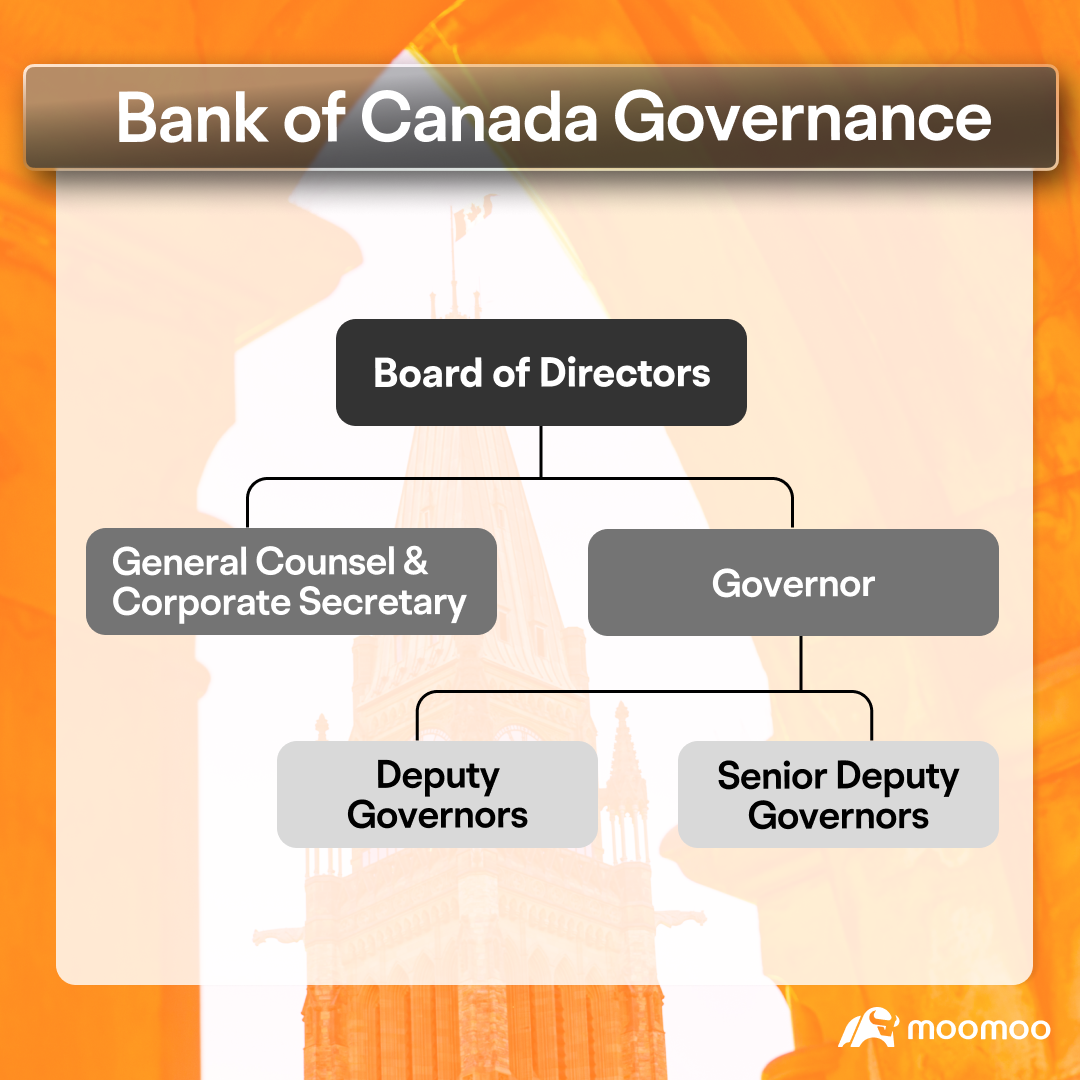
Bank of Canada Governance
The Bank of Canada is managed by the Governing Council, which is responsible for making policies. The members of the board of directors are appointed by the Minister of Finance and serve for three years. The Governing Council consists of the Governor, General Counsel & Corporate Secretary, the Senior Deputy Governor, and three other Deputy Governors.
Since its establishment in 1934, Graham F. Towers was the first Governor who oversaw the bank's operations and held the position for 20 years. As of July 2020, the Bank has had nine governors.
Function and Roles of the Bank of Canada
After introducing the history of the Bank of Canada, perhaps you now have a rough understanding of its responsibilities. Specifically, the Bank of Canada has the following five responsibilities:
Monetary policy: Influence the supply of money circulating in the economy, using our monetary policy framework to keep inflation low and stable.
Financial system: Promote safe, sound and efficient financial systems, within Canada and internationally. We also conduct transactions in financial markets in support of these objectives.
Currency: Design, issue and distribute Canada’s bank notes.
Funds management: The “fiscal agent” for the Government of Canada, managing its public debt programs and foreign exchange reserves.
Retail payments supervision: Supervise payment service providers, according to the Retail Payment Activities Act.
One of the most well-known and frequently discussed responsibilities of the Bank of Canada is monetary policy. In the following section, we will provide a detailed explanation of how the central bank carries out monetary policy regulation.
Bank of Canada Monetary Policy Tools and Why they Matter
The foundation of the BOC’s monetary policy framework is its inflation-control system. The bank’s main goal is to keep inflation near 2%, which is the mid-point of a 1 to 3% target range.
The Bank of Canada implements monetary policy tools to preserve the value of money by keeping inflation low, stable, and predictable. Its monetary policy framework has two key components that operate together as follows:
The Inflation-control Target: The inflation target is set around 2%, and it is reviewed every five years. Under the inflation-control target, the target for the overnight rate is essential. It is the interest rate that the Bank expects to be used in financial markets for single day loans between financial institutions.
Flexible Exchange Rate: The flexible exchange rate or floating dollar allows the BOC to go after an independent monetary policy that will benefit Canada’s economic circumstances the most. The flexible exchange rate helps the BOC to achieve its inflation target and also serve as a buffer, helping the Canadian economy to absorb and adjust to both internal and external shocks.
When the inflation rate diverges from the target figure, central banks can use various economic intervention measures. These tools modify the availability of money supply influencing consumption activity to be stimulated or slowed:
Interest Rates: Increasing or decreasing the commission charged when lending the relevant currency to the domestic banks and financial institutions makes it more or less expensive. In other words, the central bank's interest rate hikes or cuts are implemented by adjusting the overnight interest rate.
Open Market Operations: Selling or buying governmental bonds and commercial debts injects cash into the economy or sends cash out of it.
Minimum Reserve Requirements: Raising or reducing the amount retail banks must reserve for emergencies limits the resources they can use to offer products to their customers.
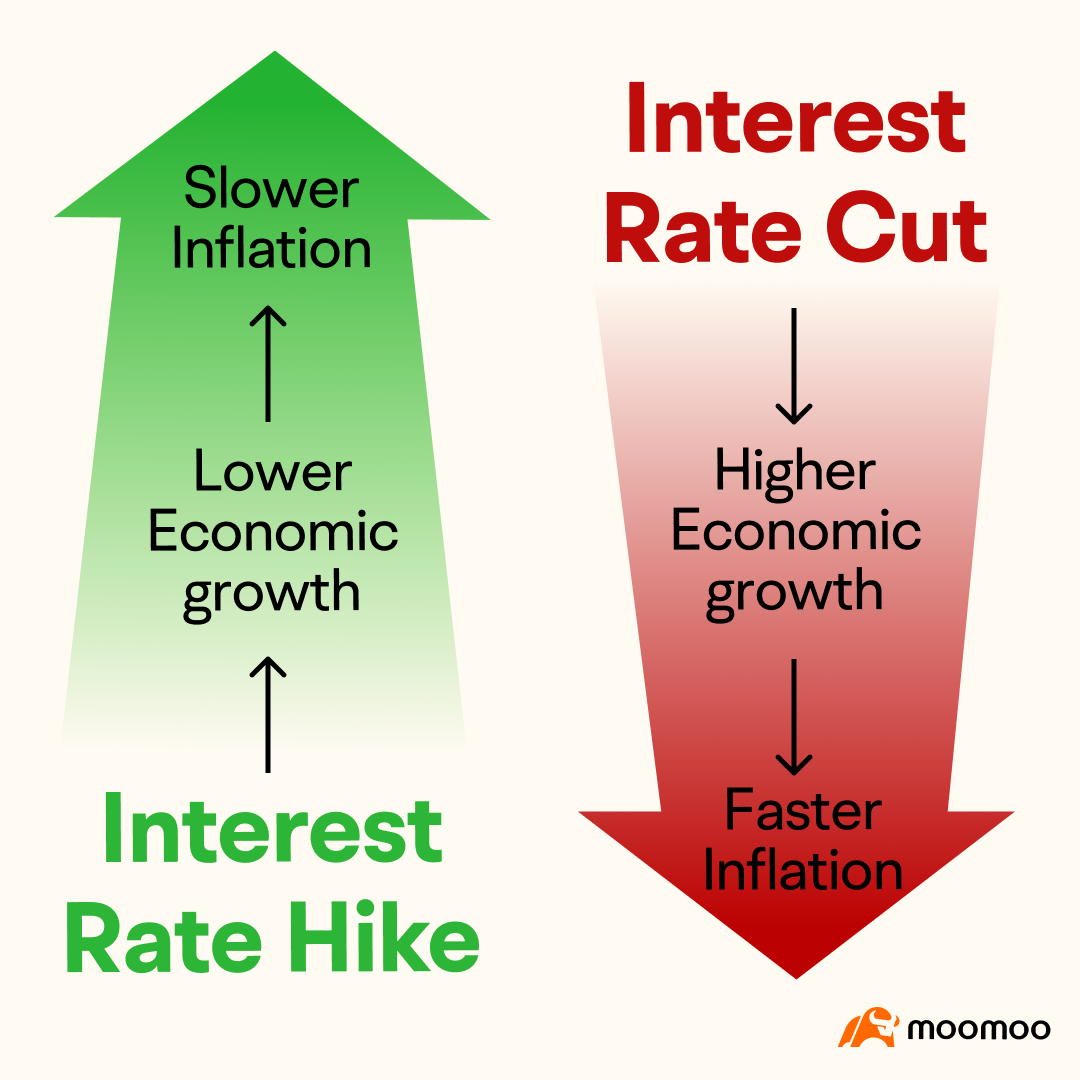
Central banks usually prefer to use interest rates as the first step to shift the economy. Rate changes create a powerful top-down domino effect which influences the individual decisions of various entities. This is a less heavy-handed option than initiating proactive open market operations. Interest rate adjustments are also less intrusive than enforcing a change in the minimum reserve requirements.
To summarize, the transmission mechanism of monetary policy is a complex chain of cause and effect that links the Bank of Canada's policy actions to aggregate demand, output, and inflation. Monetary policy operates with long and variable lags, making it necessary to be forward-looking and anticipate events that could potentially impact the global and domestic economies.
What are Central Bank Meetings
So when does the central bank announce an increase or decrease in interest rates? The answer is at each central bank meeting.
Central Bank Meetings are periodic gatherings of a central bank’s monetary policy committee (MPC). The members of the MPC attend central bank meetings to evaluate the state of the national economy and make decisions on official interest rates and other interventions. These decisions are guided by monetary policy goals and economic indicators, such as GDP, inflation rate, and unemployment rate.
Each monetary tool that the central bank uses will affect the value of the national currency and any course corrections are announced in press conferences by the central bank's President. The central bank meeting minutes are also released, which reveal the discussions and perspectives of individual committee members.
The meetings also set the tone for the financial markets. Investors trust central banks as a key source of information for their respective economies and seek to position themselves advantageously before the central bank's expectations are realized.
The Effect of Central Bank Decisions on the Economy
When the country adopts an expansionary economic policy, the decisions taken in the central bank meetings will aim to stimulate growth. To boost consumption, the bank can:
Cut the interest rate, making loans cheaper and more attractive
Increase asset purchases, injecting ready-to-use cash into the economy
Reduce reserve requirements, allowing banks to use more reserve capital in operations
As consumption increases and loans become more accessible, businesses are encouraged to expand and grow their workforce, ultimately resulting in a prosperous economy.
Alternatively, in order to prevent an economic crisis, the central bank can implement a contractionary monetary policy to bring down price inflation to a manageable level with decisions such as:
Hiking interest rates, making loans more expensive and less attractive
Increasing asset sales, moving cash from the economy by offering non-circulating investments
Increasing reserve requirements, reducing the capital the banks can use for products
As a result, banks pay more when borrowing from the central bank or each other, and these added expenses are passed on to consumer products. Over time, these measures will help cool down the overheated state of the economy.
How to Trade with Central Bank Meetings?
1. Interest rate decisions
Rumors regarding the most likely outcomes of a central bank meeting often begin circulating a week prior to the meeting. News traders and long-term investors will typically start taking positions at the start of the meeting week, indicating their expectations through changes in price trends.
In normal circumstances, the decisions made during central bank meetings will result in predictably volatile price movements that are consistent with changes in the future profitability of assets. However, unexpected reactions can occur if the central bank's decisions fail to meet investors' expectations.
2. Press conference and meeting minutes
Interest rate decisions are not the only factor that determines market behavior. Institutional investors tune into the central bank President’s press conference after the meeting and analyze the central bank meeting minutes.
For example, in the meeting minutes, the investors analyze the discussions held among the members to understand how the managers of the economy view the current and future conditions. Such details provide insights about what the central bank will consider in their upcoming meetings and what kind of decisions this might lead to.
Once the information is digested, investors start taking their positions according to the decisions they expect the central bank to make in the future. As a result, the well-known extreme volatility after the central bank meeting occurs.
Key Central Bank Meetings
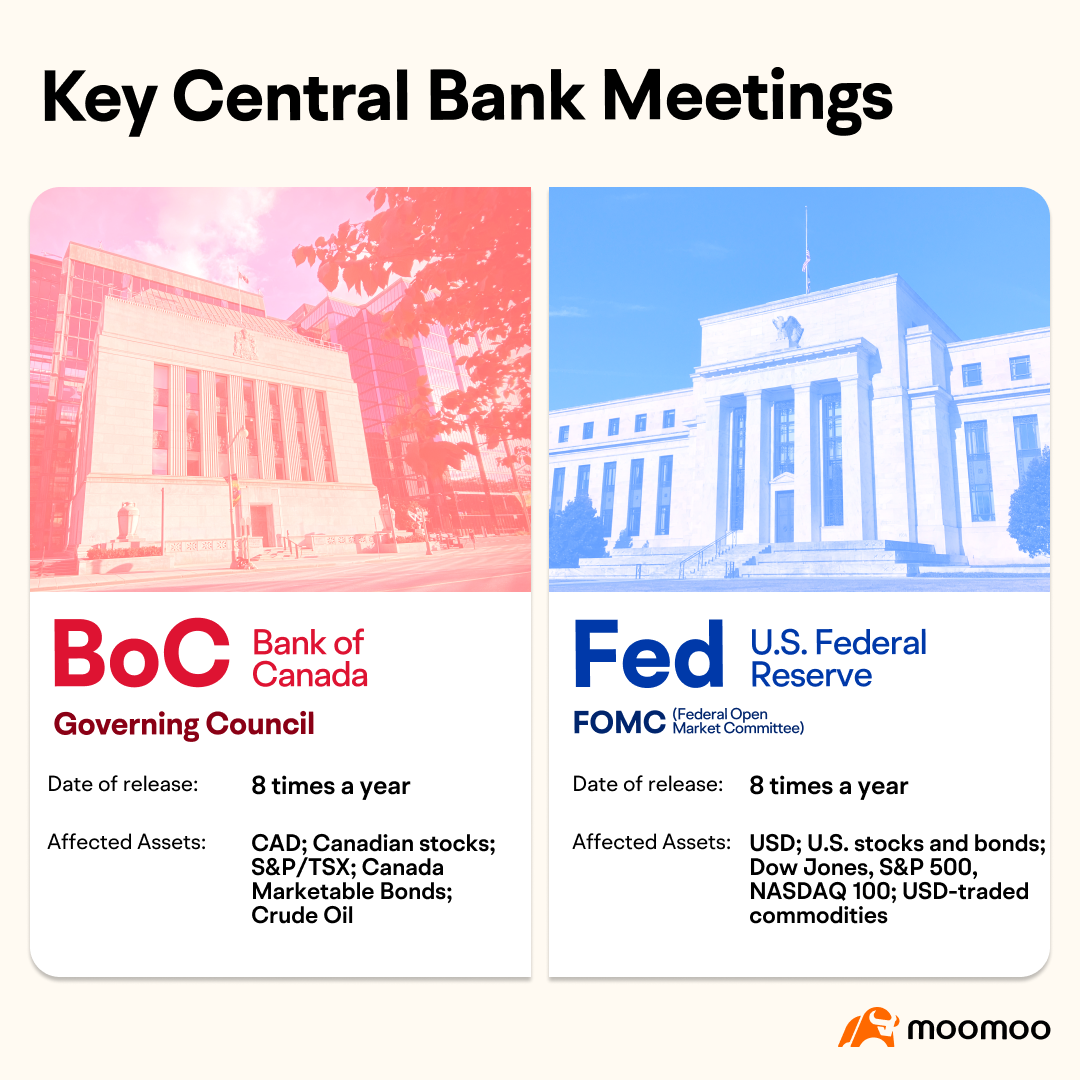
Bank of Canada (BoC) – Governing Council
Date of release: 8 times a year
Affected Assets: CAD; Canadian stocks; S&P/TSX; Canada Marketable Bonds; Crude Oil
U.S. Federal Reserve (Fed) – Federal Open Market Committee (FOMC)
Date of release: 8 times a year
Affected Assets: USD; U.S. stocks and bonds; Dow Jones, S&P 500, NASDAQ 100; USD-traded commodities
In conclusion, the Bank of Canada is a vital organ in Canada's financial system, and its continuous care and maintenance are crucial to ensure its healthy functioning. It circulates the society's financial lifeline through its veins, and as the heart of the system, it bears the responsibility of securing its long-term survival.
This presentation is for informational and educational use only and is not a recommendation or endorsement of any particular investment or investment strategy. Investment information provided in this content is general in nature, strictly for illustrative purposes, and may not be appropriate for all investors. Read more