Unlocking the potential of Shopify: what investors need to know?
For Canadian investors, Shopify ( $Shopify Inc (SHOP.CA)$ ) is worth watching.
As the third-most valuable company in Canada by market cap, Shopify has established itself as a leading e-commerce platform.
In this article, we will take a closer look at Canada's largest software company.
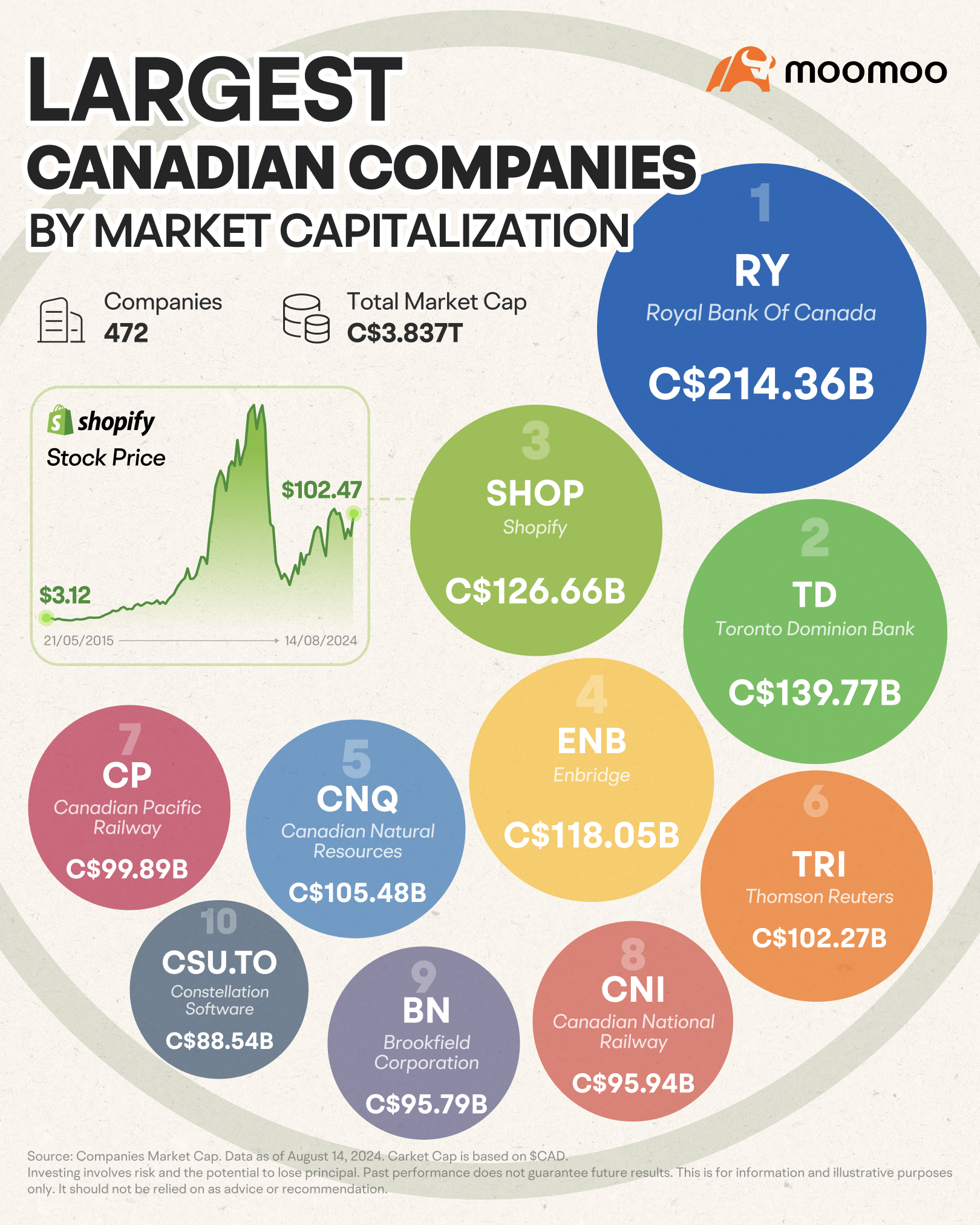
Shopify: A remarkable growth stock
Shopify's e-commerce platform helps businesses of all sizes build and manage their online stores. From creating storefronts to handling payments and shipping, Shopify provides tools to make online selling easier.
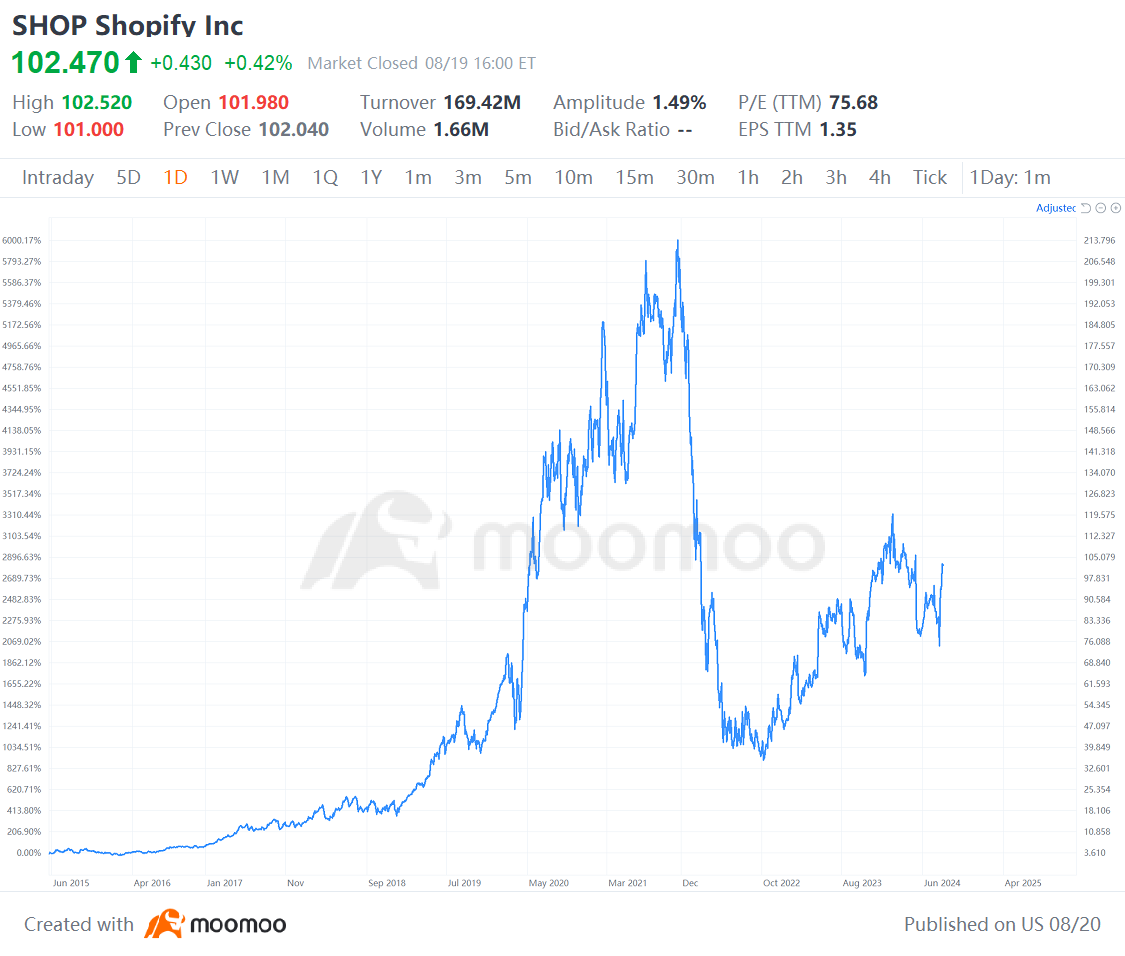
After going public in May 2015, Shopify's stock has been traded on both the New York Stock Exchange (NYSE) and the Toronto Stock Exchange (TSX) under the ticker symbol "SHOP".
Since going public in 2015, the stock has experienced staggering growth, up by approximately 2,800% as of the time of writing. To put it in perspective, an initial investment of $10,000 CAD at the IPO would now be worth over $280,000 CAD. This remarkable performance is driven by Shopify's strong financial growth.
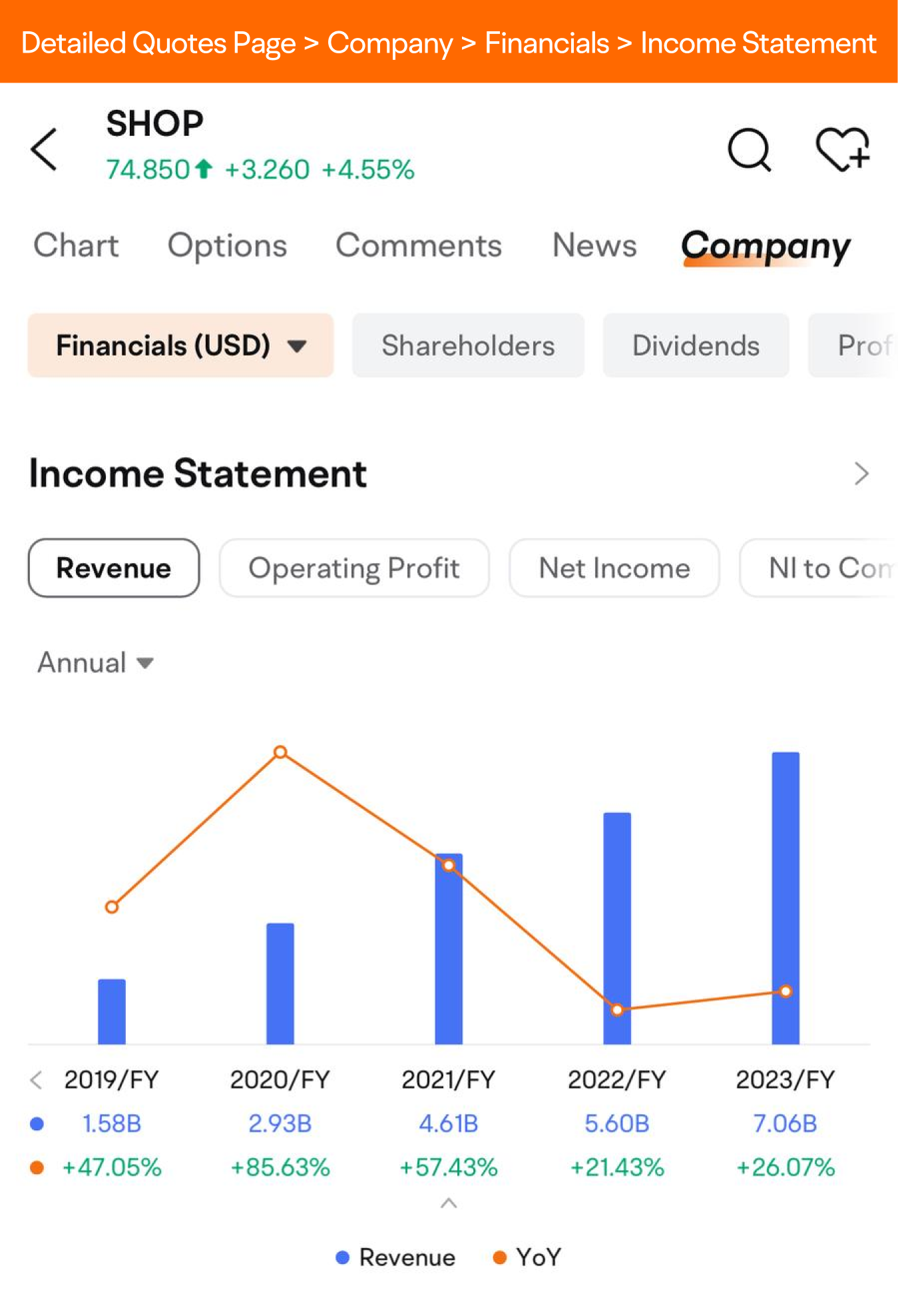
Shopify has impressive revenue growth. From $105 million USD in 2014, the company's revenue soared to $7.06 billion USD in 2023, representing a growth rate of over 6,700%. This exceptional increase is due to Shopify's dedication to helping merchants succeed in online and offline sales.
Business: How Shopify makes money
Shopify makes money through a combination of subscription fees and merchant solutions.
Merchants pay a monthly subscription fee to access Shopify's services, which include website building, payment processing, shipping solutions, and marketing tools. This subscription revenue forms a significant portion of Shopify's overall revenue.
In addition to subscription fees, Shopify generates revenue through its merchant solutions. These solutions include payment processing fees, transaction fees, and other services that help merchants manage their online stores.
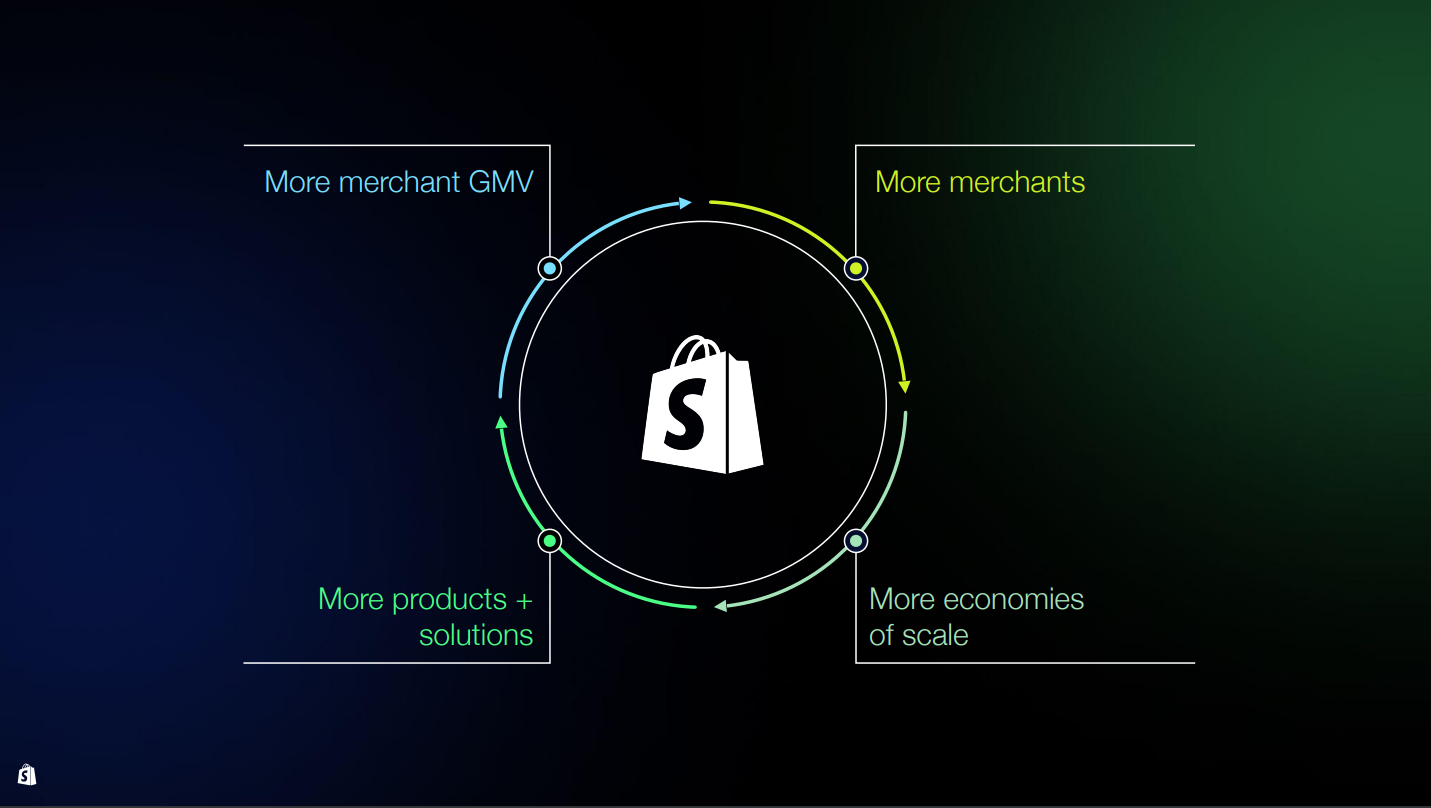
As more merchants join the platform and experience growth, Shopify benefits from increased transaction volume and higher Gross Merchandise Volume (GMV), resulting in higher revenue from merchant solutions. This diversified revenue stream provides stability and growth potential for the company.
Overall, Shopify's revenue model aligns its success with that of its merchants, creating a mutually beneficial relationship.
Investing in Shopify: Essential considerations for investors
When considering an investment in Shopify, there are several essential factors to consider:
Gross Merchandise Volume (GMV)
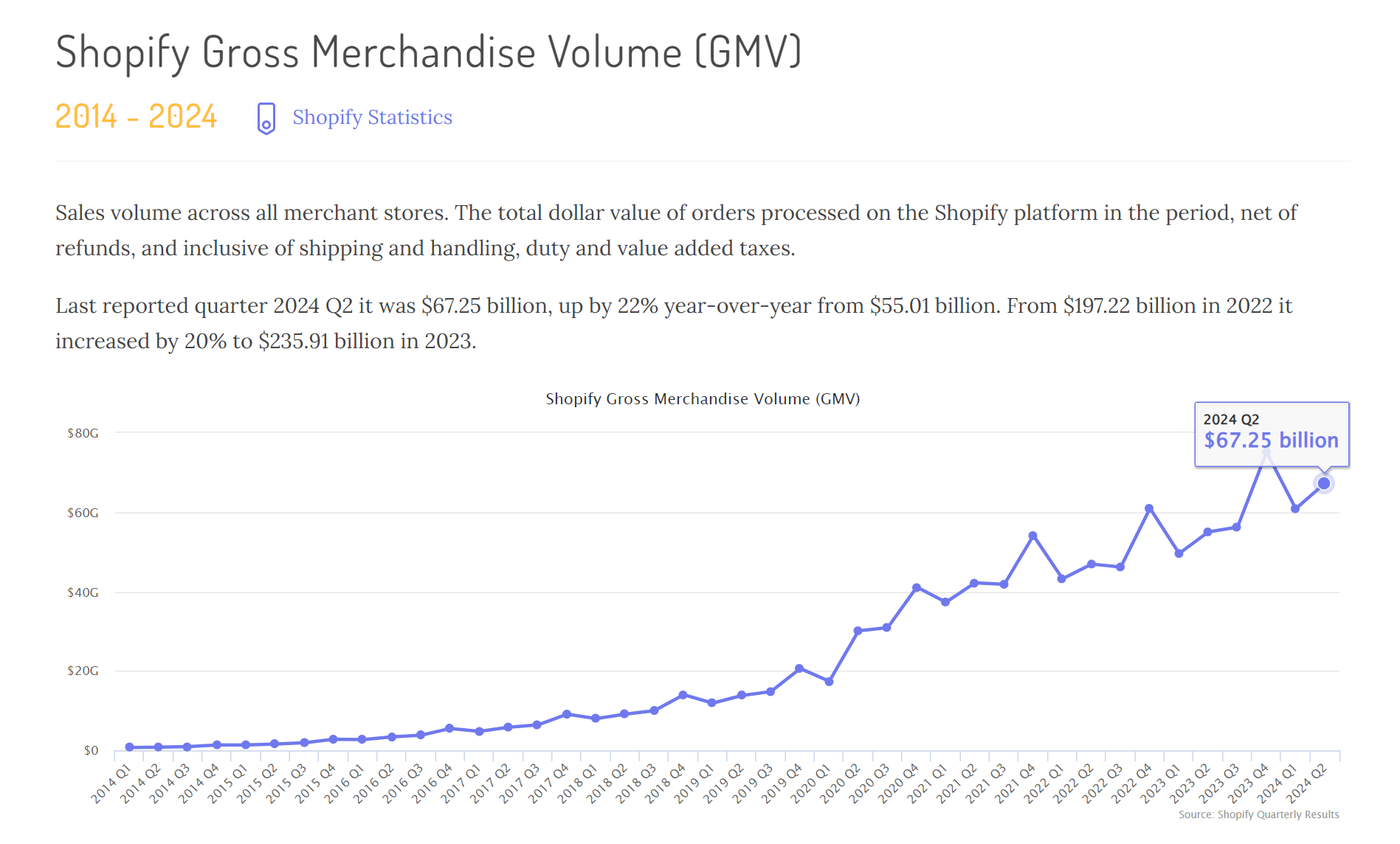
GMV is a vital metric for evaluating Shopify's performance. It represents the total dollar value of all sales processed through Shopify's platform. A rising GMV indicates increased merchant activity and platform adoption, which is a good sign for future growth.
In 2024 Q2, Shopify's GMV was up 22% to $67.25 billion, from $55.01 billion in the previous year.
Revenue growth
Revenue growth is a key indicator of a company's prospects. Investors should closely monitor Shopify's revenue growth trajectory to assess its potential for long-term success.
Shopify's revenue surged during the pandemic, leading to a significant increase in its stock value.
Although pandemic-driven growth was not sustainable in the long term, Shopify continues to grow robustly. Its revenue grew 26% to $7 billion in 2023.
Profitability
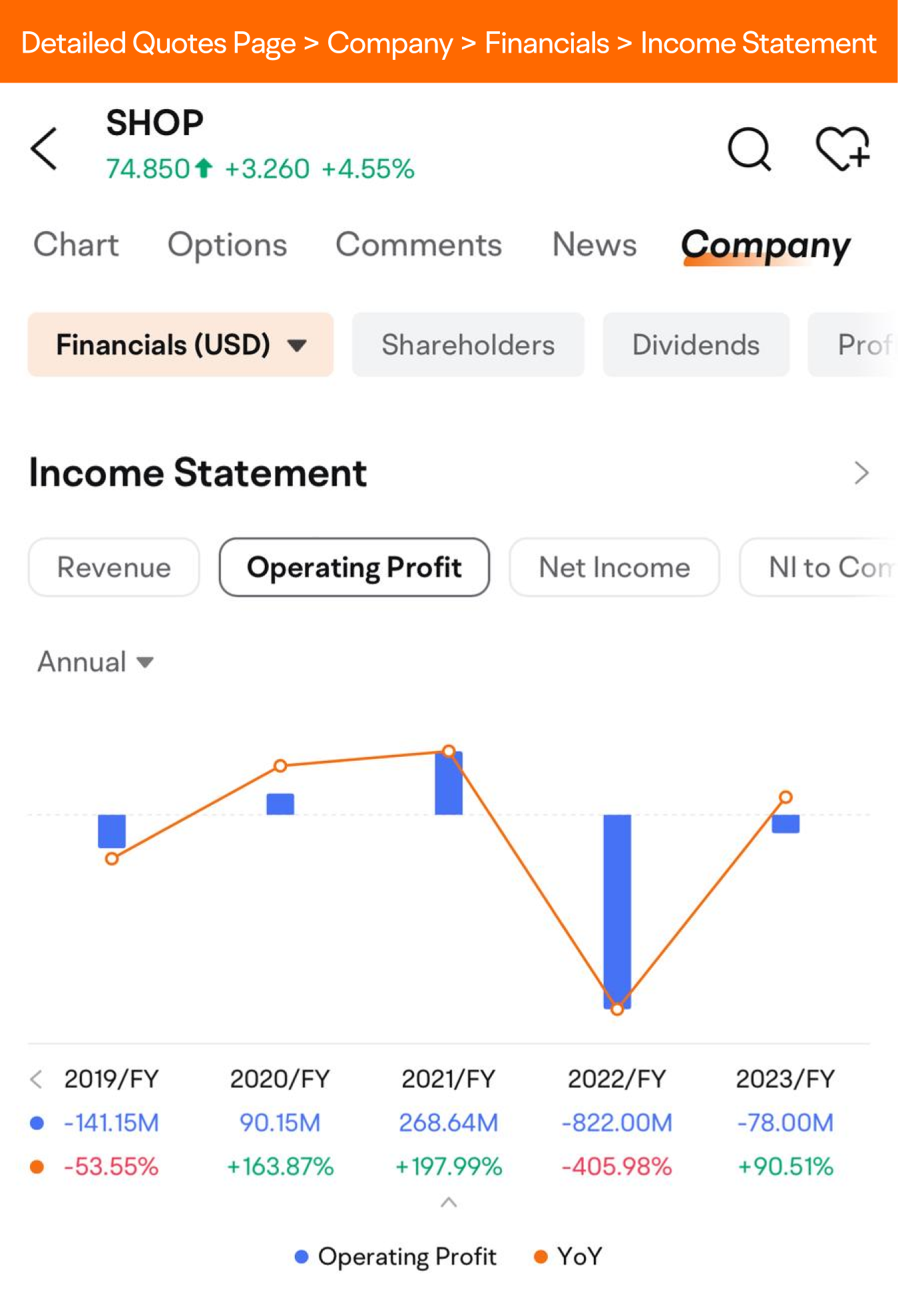
Profitability is another crucial consideration. While Shopify has historically prioritized growth over profitability, the ability to make a sustainable profit is essential for long-term success. Investors can use metrics such as operating income to understand the company's financial stability and efficiency.
The company's operating income has fluctuated over the past five years. They reported positive operating profits in 2020 and 2021, indicating financial stability and efficiency during those years. However, in 2022, Shopify experienced a significant operating loss of $822 million. The challenges persisted into 2023, with an operating loss of $78 million. It is crucial to monitor the company's profitability over time to ensure sustainable success.
Risks of investing in Shopify
Investing in Shopify comes with several risks. These include the company's dependence on subscription revenue, intense competition in the e-commerce industry, reliance on third-party providers for various services, challenges associated with international expansion, high valuation, and regulatory risks. Investors should carefully consider these factors when evaluating a potential investment in Shopify.
This presentation is for informational and educational use only and is not a recommendation or endorsement of any particular investment or investment strategy. Investment information provided in this content is general in nature, strictly for illustrative purposes, and may not be appropriate for all investors. Read more