Options Greeks Explained: Calculate Key Metrics & Trade Smarter

Key Takeaways
Options Greeks—including Delta, Gamma, Theta, Vega, and Rho are essential tools for understanding how different factors impact options pricing.
Learning what the Greeks in options represent helps traders make informed decisions around risk management, timing, and strategy selection.
Moomoo Canada offers real-time Greeks data, 13 supported options strategies, an options screener, 0DTE tracking, and paper trading, making it an ideal platform for learning and executing options trades.
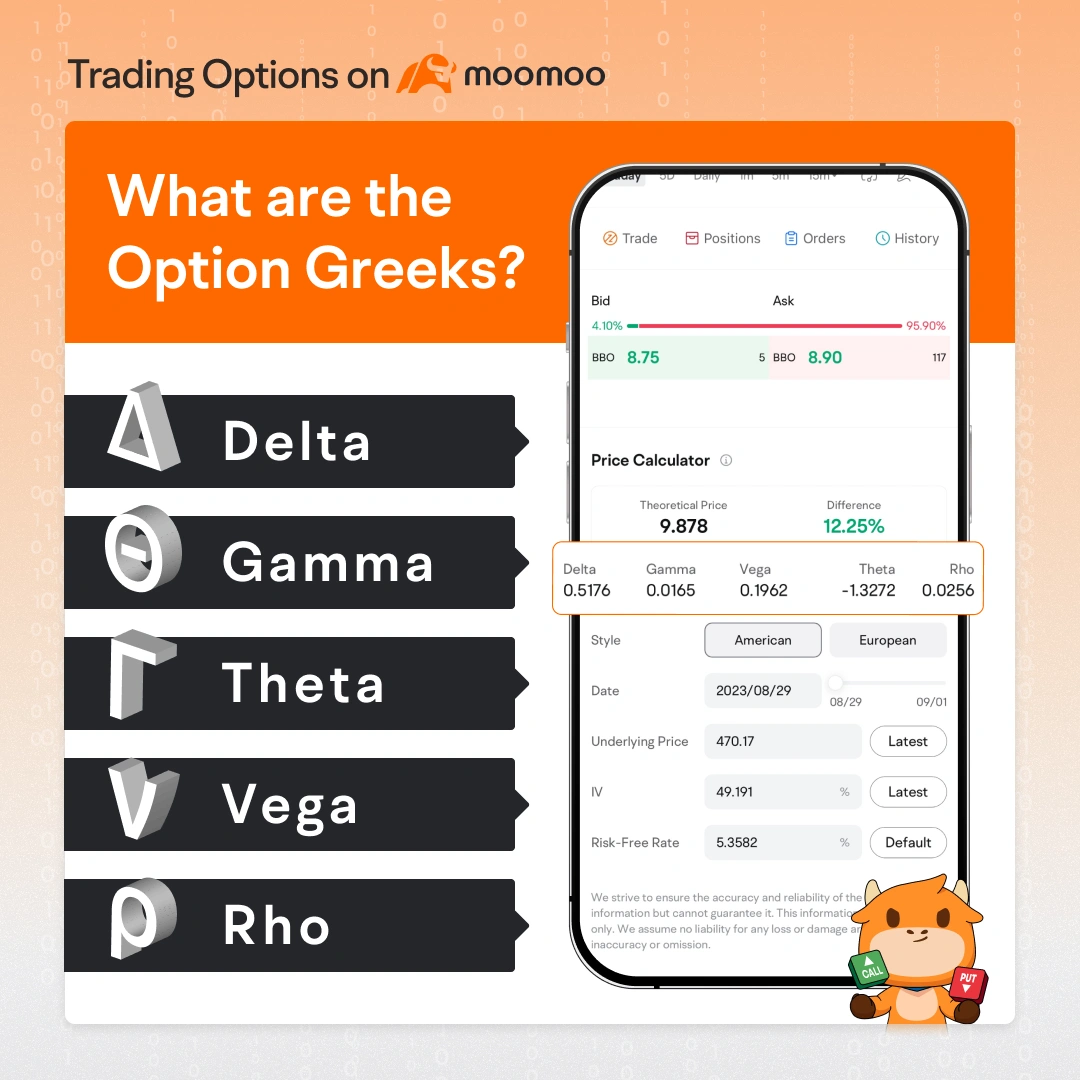
Wondering what are the Greeks in options and how they impact your trading decisions? The options Greeks are a set of theoretical metrics that help traders analyze how various factors, like price movements, time decay, volatility, and interest rates that can influence the value of an options contract. These measurements aren’t guarantees but rather tools to help you make more informed decisions about when and what to trade.
Here’s a quick breakdown of the primary options greeks:
Delta estimates how much an option’s price might change when the underlying stock moves by $1, and it also indicates the probability of expiring in the money.
Gamma tells you how much Delta is expected to change with a $1 move in the stock price.
Theta tracks how much value the option could lose each day due to the passage of time.
Vega measures the option’s sensitivity to changes in implied volatility.
Rho reflects how the option price may respond to interest rate fluctuations.
Let’s dive deeper into each one.
Why Greeks Matter for Options Trading?
For Canadian investors trading options, the Greeks are essential tools that help measure how various factors impact the price of an options contract.
Delta indicates how much an option's price will change with a $1 movement in the underlying stock, helping investors gauge potential price swings.
Gamma measures how fast delta changes, which is valuable during volatile market moves. Theta represents time decay, showing how much value an option loses as it nears expiration, while vega measures sensitivity to changes in market volatility—an important factor in Canada’s commodity-driven markets.
Rho gauges sensitivity to interest rate changes, which can be relevant for longer-term options during shifts in Bank of Canada rates.
What Are Option Greeks?
When investors are looking to benefit from stock price movements without committing as much capital as buying the shares themselves, they often consider trading options. Options offer the flexibility to generate potential profits whether the market moves up, down, or stays relatively flat and they can also be used as a form of protection against losses in other holdings.
However, unlike stocks which are primarily influenced by supply and demand—options pricing is affected by several internal variables.
Time decay steadily reduces an option’s value, and the closer it gets to expiration, the faster that decline can happen. Market volatility may cause option prices to rise or fall unexpectedly, and movements in the underlying asset can lead to significant changes in the option’s worth.
To monitor and manage these moving parts, traders use a set of mathematical tools known as the Greeks. Represented by Greek letters like delta, gamma, theta, and vega, these metrics help traders assess how different factors, such as time, volatility, and price changes may impact their options positions, acting like a set of risk indicators on a trading dashboard.
Delta
Delta is a foundational concept in options trading that measures how much the price of an option is expected to change for every $1 move in the underlying asset.
For example, a call option with a delta of 0.60 will increase in value by $0.60 if the underlying stock rises by $1, while a put option’s delta is negative, reflecting the decrease in value as the underlying rises.
Besides price sensitivity, delta is also used as an estimate of the probability that the option will finish in-the-money at expiration, making it a practical tool for both directional bets and trade probability assessments.
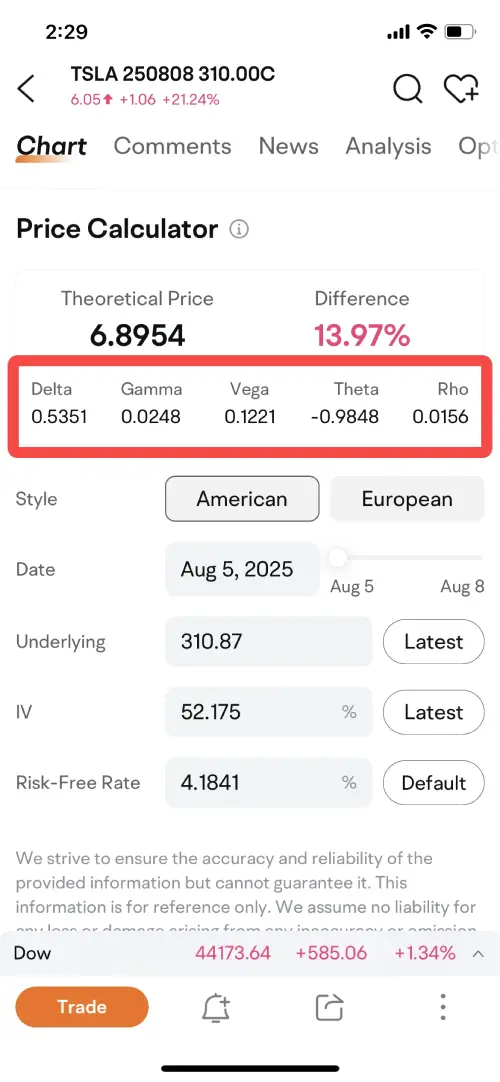
Moomoo Canada provides clear, real-time access to key options metrics, especially the Greeks, including Delta, Gamma, Theta, Vega, and Rho. Take TSLA for example. We can see the option chain data for a TSLA $310 Call option expiring August 8, 2025. One of the key metrics highlighted is Delta, which is shown as 0.5351.
What does a Delta of 0.5351 mean?
A Delta of 0.5351 indicates that for every $1 move in Tesla’s stock price, this call option is expected to increase by approximately $0.5351.
Because Delta also represents the probability of the option expiring in the money (ITM), a value of 0.5351 suggests that the market currently assigns roughly a 53.5% chance that Tesla’s stock will close above $310 by expiration.
This Delta value also tells us:
The option is slightly out-of-the-money or near-the-money.
For traders, this provides a nice balance of upside exposure and limited cost versus buying the stock outright.
If you're constructing multi-leg strategies like spreads or looking to hedge a stock position, Delta is crucial for managing directional risk.
Gamma
Gamma reflects how much an option's Delta is expected to change when the underlying stock price shifts by one unit. In other words, it shows the rate at which Delta itself moves in response to price fluctuations in the underlying asset. Because of this, Gamma is often used to assess the difficulty of managing hedging strategies. A higher Gamma suggests that Delta is more reactive to price changes, which can make it more complex to maintain a stable hedge and manage potential risks effectively.
Continuing with the Tesla example above. What does Gamma 0.0248 mean?
In this case, a Gamma of 0.0248 means that for every $1 move in Tesla’s stock, the Delta of this option is expected to change by approximately 0.0248.
Since Delta represents how much the option price will move based on the underlying stock's movement, Gamma gives insight into how fast Delta itself is changing.
If TSLA moves from $310.87 to $311.87, Delta would increase from 0.5351 to about 0.5599 (0.5351 + 0.0248), assuming all else remains constant. That means the option becomes more sensitive to further changes in stock price.
How moomoo helps:
Moomoo clearly displays Gamma alongside other key Greeks (like Delta and Theta), allowing traders to quickly assess how sensitive their Delta exposure is and evaluate hedging complexity for short-term moves.

Theta
While gamma and delta indicate how option prices fluctuate with changes in the underlying stock prices, theta measures the rate at which an option loses value due to the passage of time. This metric quantifies the daily reduction in an option's value as it nears its expiration date, assuming all other factors remain constant.
Continuing with our Tesla example above. What does Theta -0.9848 mean?
Theta measures how much the value of an option is expected to decrease each day, assuming all other factors remain constant.
A Theta of -0.9848 means this option is expected to lose about $0.98 in value every day as it gets closer to expiration—if nothing else changes (stock price, volatility, interest rates, etc.).
The negative sign simply indicates decay, which is a normal characteristic of options, especially near expiration.
Why Theta matters for traders?
Time is the enemy of option buyers. As expiration nears, time value erodes faster, this is known as accelerated time decay.
This specific Theta suggests the trader is holding a short-term option, likely near the money, where time decay is significant.
Vega
While Delta reflects how much an option's price moves with changes in the stock price, Vega measures how sensitive the option is to changes in implied volatility. When volatility expectations rise, options become more expensive due to the increased probability of the strike price being reached.
Vega tells you how much an option’s value may rise or fall in response to a 1% change in implied volatility. Here are some important considerations:
A decline in implied volatility generally benefits option sellers, while an increase tends to favor option buyers.
When demand for options rises and traders push prices higher, implied volatility tends to increase.
Traders holding long options positions benefit when implied volatility rises, giving them a positive Vega, whereas short options typically carry negative Vega exposure.
Vega can shift even if the stock price doesn’t move, purely due to changes in market volatility.
As the expiration date approaches, Vega gradually declines, making volatility less impactful.
To reduce sensitivity to changes in implied volatility, traders can construct Vega-neutral strategies.
Continuing with our Tesla example above. What does Vega 0.1221 mean?
Vega is 0.1221, which means that for a 1% increase in the implied volatility of the underlying asset (TSLA in this instance), the price of this option is expected to increase by approximately 0.1221. Conversely, a 1% decrease in implied volatility would lead to a roughly 0.1221 decrease in the option price.
Rho
Rho is an options Greek that measures how sensitive an option’s price is to changes in interest rates. It estimates the expected price change of an option if the risk-free interest rate moves by 1%.
Call options generally have a positive rho, meaning their value tends to increase as interest rates rise, while put options have a negative rho, decreasing in value when rates go up.
Although rho typically has a smaller impact on option prices compared to other Greeks like delta or vega, it becomes more significant for long-term options and during periods of fluctuating interest rates.
For Canadian investors, keeping an eye on rho is particularly useful when trading longer-dated options or during shifts in Bank of Canada interest rate policies. In such cases, changes in interest rates can subtly influence option prices, making rho an important consideration for precise risk management and portfolio adjustments.
What Are the Minor Greeks?
The minor Greeks are additional, less commonly discussed Greek metrics that provide deeper insight into the complexities of options pricing and risk management beyond the primary Greeks like delta, gamma, theta, vega, and rho. These minor Greeks—such as lambda, epsilon, vomma, vera, zomma, and ultima—measure the sensitivity of the primary Greeks themselves to changes in market conditions. For example, some minor Greeks track how vega changes with volatility shifts or how gamma changes as the underlying price moves.
While the minor Greeks are generally more complex and less used by everyday investors, they can be valuable for sophisticated traders and professionals managing complex options strategies or automated trading systems.
Greeks in Action: Trading Strategies
The application of Greek letters in real-world options trading is essential for effective risk management and building robust trading strategies. By closely monitoring the Greeks, traders can quantify risks and dynamically adjust positions to limit potential losses.
For example, delta is widely used to create delta-neutral portfolios—where the overall delta is balanced to minimize sensitivity to price moves in the underlying asset, allowing investors to hedge directional risk.
Gamma, meanwhile, helps identify how rapidly a portfolio’s delta could change, prompting active adjustments during volatile markets to maintain portfolio stability. Theta gives insight into time decay, helping option sellers select positions that benefit from the natural loss in value as expiration nears.
Traders also leverage the Greeks for sophisticated hedging and profit strategies. In practice, an investor might use vega to analyze how changes in volatility will impact an option’s value—crucial during earnings seasons or key announcements.
For instance, an options trader worried about a sudden spike in volatility (as measured by vega) might buy a straddle or strangle to hedge market swings. In another case, a market participant may sell options with high theta to capitalize on time decay, effectively earning premium as options approach expiration.
These real-world uses show how the Greeks aren’t just theoretical—they’re powerful, practical tools that help both manage risk and seize opportunities in the evolving options market environment.
If you're looking to learn more about options trading, moomoo offers a wealth of educational resources. You can also join the moomoo community to share your options trading experiences with over 26 million users worldwide and learn from others' options trading strategies!
Avoiding Common Greek Pitfalls in Canada
Successfully trading options goes beyond understanding the mechanics; you also need to avoid frequent mistakes traders make when interpreting and applying the Greeks, especially within the Canadian market. Here are some essential lessons and pointers for navigating these pitfalls:
Overlooking the Impact of Low Liquidity
Canadian options often have less trading volume compared to their U.S. counterparts, leading to wider bid-ask spreads. This can skew Greeks, particularly Delta, Gamma, and Vega calculations, making them less accurate in real-world trading.
Tip: Always check the open interest and trading volume before relying on Greeks for trade decisions. Higher liquidity ensures more accurate Greek values and better trade execution.
2. Ignoring Tax and Regulatory Differences
Canada’s tax treatment of options and regulatory environment differs from other jurisdictions. For example, assignment and expiry rules can affect positions differently, and tax reporting for capital gains and losses is specific to Canadian law.
Tip: Be aware of local tax rules and trading regulations. When using Greeks to hedge or unwind positions, factors in how Canadian brokerage practices might impact assignment risk, especially around expiry.
3. Over-Reliance on Greeks Without Scenario Analysis
While Greeks are vital, real-world market behavior—like volatility spikes or unexpected news—can produce outcomes not predicted by Greek values alone.
Tip: Combine Greek analysis with scenario planning and stress-testing. Ask, "What if implied volatility spikes suddenly?" or "How would a gap open affect Gamma and Delta?"
4. Not Recognizing Currency Risk
If you want to trade US options, currency movements can affect the option’s effective Greeks for Canadian investors.
Tip: Factor currency exposure into your risk calculations, especially for portfolios holding both Canadian and U.S. assets.
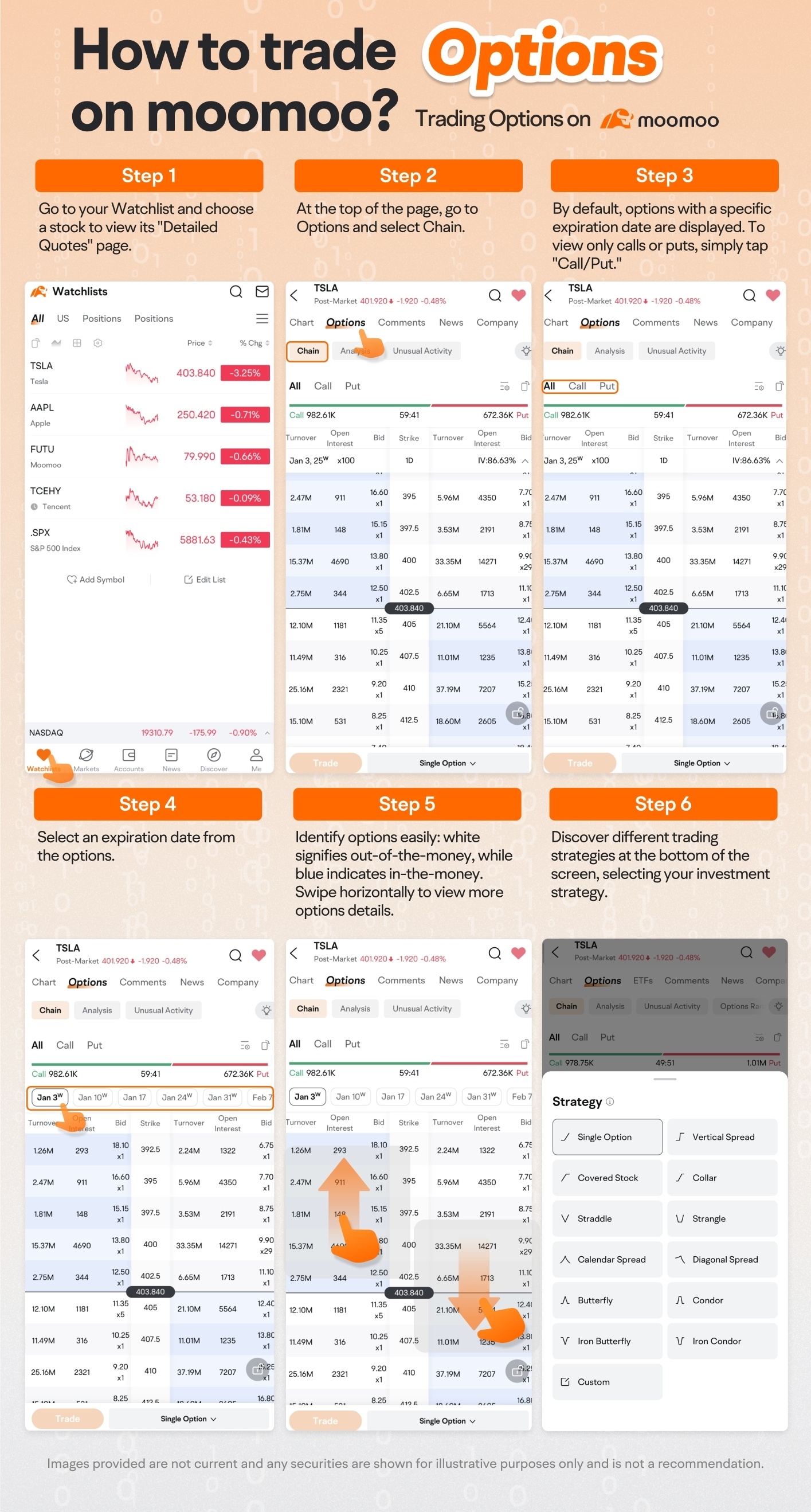
How to trade options with moomoo?
Moomoo Canada offers a user-friendly platform designed for both new and experienced options traders. With advanced tools, transparent pricing, and real-time data, moomoo empowers you to make smarter and faster trading decisions — all from your desktop or mobile app.
Moomoo’s Key Features for Options Trading
Real-Time Greeks Calculator: Instantly view Delta, Gamma, Theta, Vega, and Rho for any options contract (as shown in the price calculator screenshot above). This helps you assess risk and potential returns before entering a trade.
Intuitive Trading Interface: Whether you're placing single-leg options or multi-leg strategies like spreads or straddles, moomoo’s interface makes order placement simple and efficient.
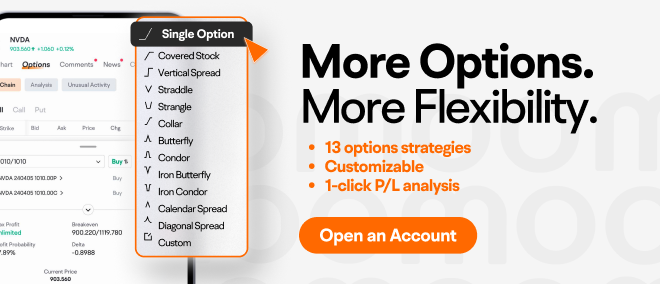
Support for 13 Options Strategies: From basic calls and puts to advanced strategies like iron condors and vertical spreads, moomoo empowers traders with flexible strategy support.
Options Screener: Filter and discover options based on strike, expiry, IV, volume, and more.
Unusual Options Activity: Get alerted to abnormal spikes in options volume and open interest to spot potential market-moving trades.
Options Paper Trading: Practice risk-free with virtual trades to test your strategies before putting real money on the line.
Step-by-Step Guide
With moomoo Canada, stepping into the world of options trading is fast and straightforward — giving you access to powerful investment tools without the complexity.
If you're new to the platform, getting started takes just three easy steps. You can choose to visit the moomoo website or download the moomoo app.
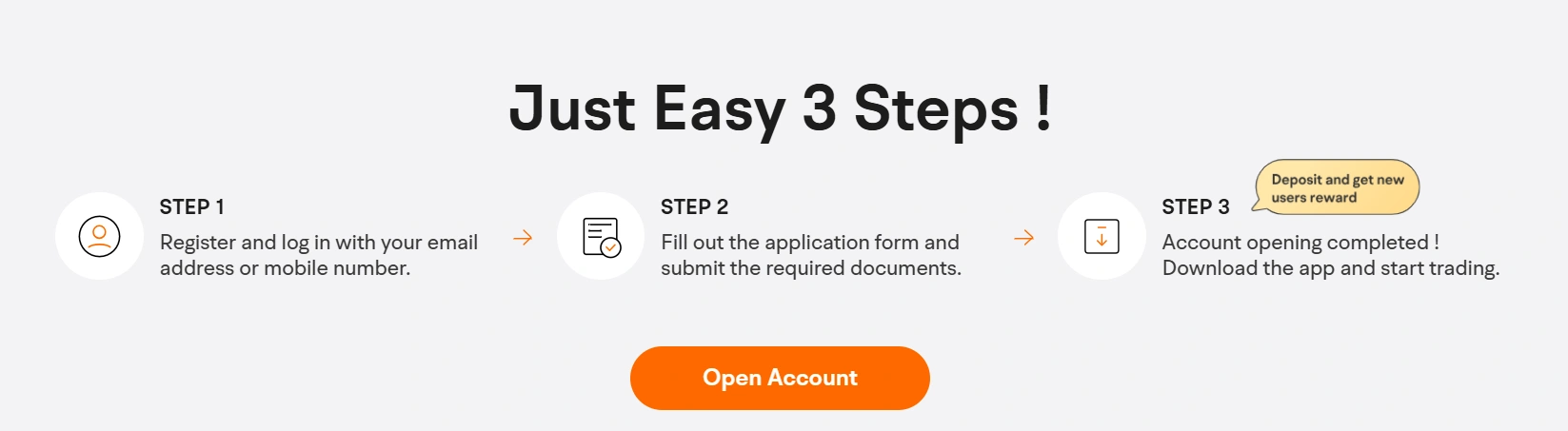
Simply sign up using your email or mobile number, complete the application form, and upload the required documents. Once your account is approved, you’re ready to take control of your trading journey with moomoo’s feature-rich platform.
Once your moomoo account is set up, the next step is to enable options trading access. If your account details or investor profile don’t yet meet the eligibility criteria, you may be asked to complete a brief questionnaire to proceed.
To activate your options trading permissions, simply follow these steps:Go to: Accounts> More> Trading Capability> US Options> Signature.

After your options account is activated, you're all set to begin trading options on moomoo Canada!
FAQs about Greeks
What are the 5 Greeks in options?
The five main Greeks in options trading are Delta, Gamma, Theta, Vega, and Rho. Each Greek measures a different kind of risk or sensitivity in an option's price:
Delta measures how much an option's price changes relative to a $1 move in the underlying asset. It can be positive for calls (0 to 1) and negative for puts (0 to -1).
Gamma measures the rate of change of Delta itself as the underlying asset price changes, showing how Delta will move if the stock price moves.
Theta measures the time decay of an option, indicating how much value the option loses each day as it approaches expiration.
Vega measures how sensitive the option's price is to changes in the implied volatility of the underlying asset.
Rho measures how sensitive the option's price is to changes in interest rates.
What is the best Greek for options?
The "best" Greek for options depends on your trading objectives, as each Greek measures a different risk factor.
However, Delta is widely considered the most important and commonly referenced Greek by many options traders. Delta indicates how much an option’s price will change for every $1 move in the price of the underlying asset.
It effectively lets traders assess their directional exposure and can approximate the chance that an option will end up in the money. This makes Delta essential for almost every options strategy, whether you're focused on profit from price movements, hedging, or managing portfolio risk.
Are option Greeks always reliable?
Option Greeks are useful but not always perfectly reliable, as they're based on mathematical models with assumptions that don’t always match real market conditions. Factors like changing volatility, low liquidity, and fast price moves can make Greeks less accurate. Traders use Greeks as helpful estimates for risk management, not absolute predictions and combine them with real-time monitoring and scenario analysis.
This presentation is for informational and educational use only and is not a recommendation or endorsement of any particular investment or investment strategy. Investment information provided in this content is general in nature, strictly for illustrative purposes, and may not be appropriate for all investors. Read more