12 Popular Options Strategies to Enhance Your Trading Portfolio
Key takeaways
The most basic types of options are Calls and Puts, with roles divided into buyers and sellers. By combining these fundamental components, a wide variety of option strategies can be created.
Different option strategies have distinct applications and risk characteristics, so investors should carefully assess them before making a choice.
This article introduces 12 popular options strategies, catering not only to novice investors but also offering options for more advanced traders.
Using moomoo Canada can make investing in options simpler and more accessible.

When you think of having an option, you think of having a choice.
Options are financial derivatives that give the holder the right, but not the obligation, to buy or sell an underlying asset at a specified price (the strike price) before a specified date (the expiration date).
Options can be broadly classified into two types:
Call: These give the holder the right to buy the underlying asset at the strike price before expiration. Investors typically buy call options when they expect the cost of the underlying asset to rise.
Put: These give the holder the right to sell the underlying asset at the strike price before expiration. Investors typically buy put options when they anticipate the price of the underlying asset will fall.

Options are a special type of contract involving a buyer and a seller:
The buyer pays an amount, called the option premium, to gain the right to buy or sell stocks in the future.
The seller receives this money and is obligated to buy or sell stocks at a set price in the future if the option contract is exercised.

Using these basic building blocks, investors can construct a wide range of option strategies to achieve various objectives, such as hedging, speculation, and income generation.
Overall, options strategies offer flexibility and versatility, enabling market participants to tailor their approach according to their market outlook, risk tolerance, and investment objectives.
However, options trading can be complex and carries risks, so it is important for traders to thoroughly understand the mechanics and potential outcomes of the strategies they employ.
In this article, we're diving into 12 popular options strategies that cater to everyone, from newbies just dipping their toes in the water to seasoned pros looking to up their game. Buckle up and let's embark on this exciting journey to discover which strategies can add some serious sparkle to your investment portfolio!
Options strategies for beginners
Options trading can seem complex at first, but it offers a versatile way to participate in the financial markets.
Most traders dive into options trading without proper preparation, which is why it's generally not a good idea to jump in without the right knowledge. As a beginner, trading strategies having limited losses may be useful as you don’t potentially lose as much money.
Below are a few starter option trading strategies to get to know.
Long Call
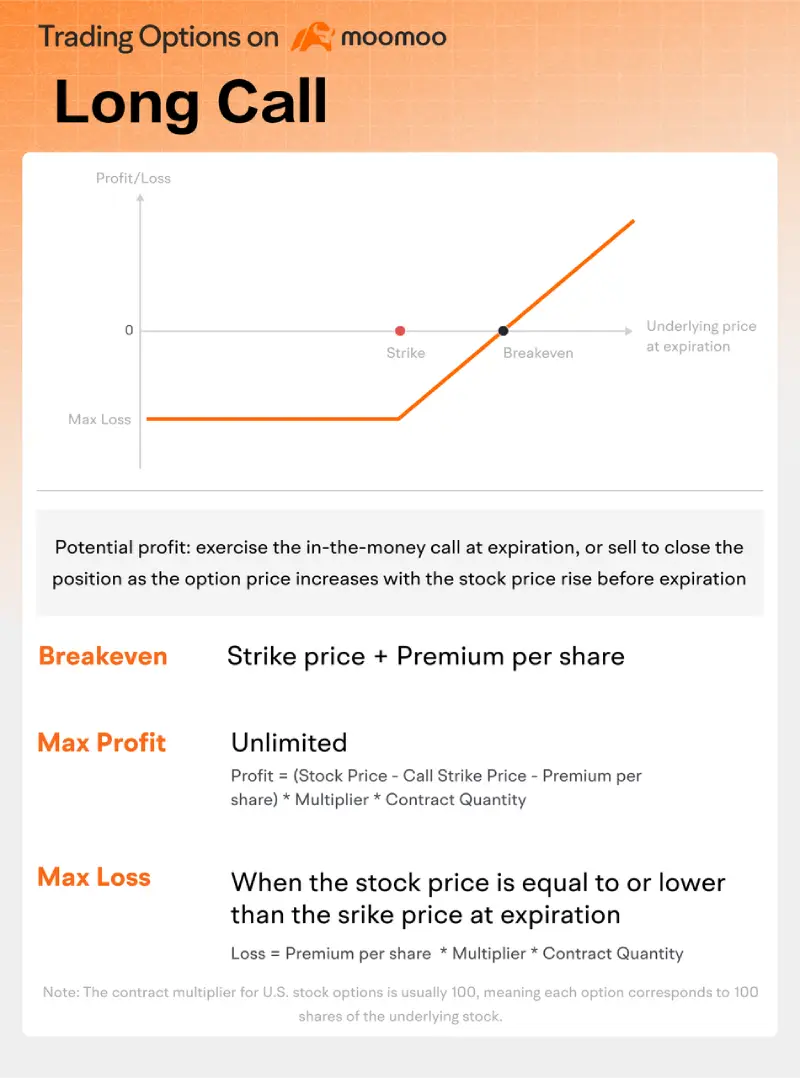
If you believe that a stock will rise in the future, you can choose to buy a call option. As the most basic single-leg option strategy, buying call options (Long Call) is commonly used and straightforward.
When the stock price rises, the price of the call option may also rise promptly, potentially leading to a profit.
Advantages:
Unlimited Profit Potential: The potential profit is theoretically unlimited as the underlying asset's price can rise indefinitely. Profits increase as the asset price goes above the break-even point.
Limited Risk: The maximum loss is limited to the premium paid for the call option, making it a relatively low-risk strategy compared to buying the underlying asset directly.
Leverage: A long call allows traders to control a larger position in the underlying asset with a smaller initial investment compared to directly buying the asset.
Disadvantages:
Time Decay: The value of a call option erodes over time, especially as it approaches expiration. If the underlying asset's price does not move significantly, the option may expire worthless.
Break-even Point: The underlying asset's price must rise above the strike price plus the premium paid to achieve profitability, which requires a significant price movement.
Here's an example:
Assume TUTU is a well-performing listed company, and its current stock price is $50 per share. You expect the stock price to rise to $65.
(Note: TUTU is not a real stock; it is used for illustrative purposes only and is applicable throughout the text)
If you buy the stock:
Suppose you spend $5,000 to buy 100 shares. If the stock price rises to $65, your profit will be (65-50)*100 = $1,500.
Return on Investment (ROI): $1,500/$5,000 = 30%.
If you buy call options:
Suppose you buy a call option with a strike price of $55, expiring in three months. You pay a premium of $2 per share, totaling $2*100 = $200.
If the stock price rises to $65 at expiration, your profit will be (65-55-2)*100 = $800.
ROI: $800/$200 = 400%.
It's important to note that returns from buying call options are more restricted; the stock price must reach your target within a specific time frame.
For instance, if TUTU's stock fluctuates or drops (remains below $55) within three months but reaches $65 afterward, holding the stock would still allow you to benefit from the price increase. However, the call option would have expired worthless.
Therefore, consider using this strategy only when you have strong confidence in the stock's upward movement within the specified period.
Long Put
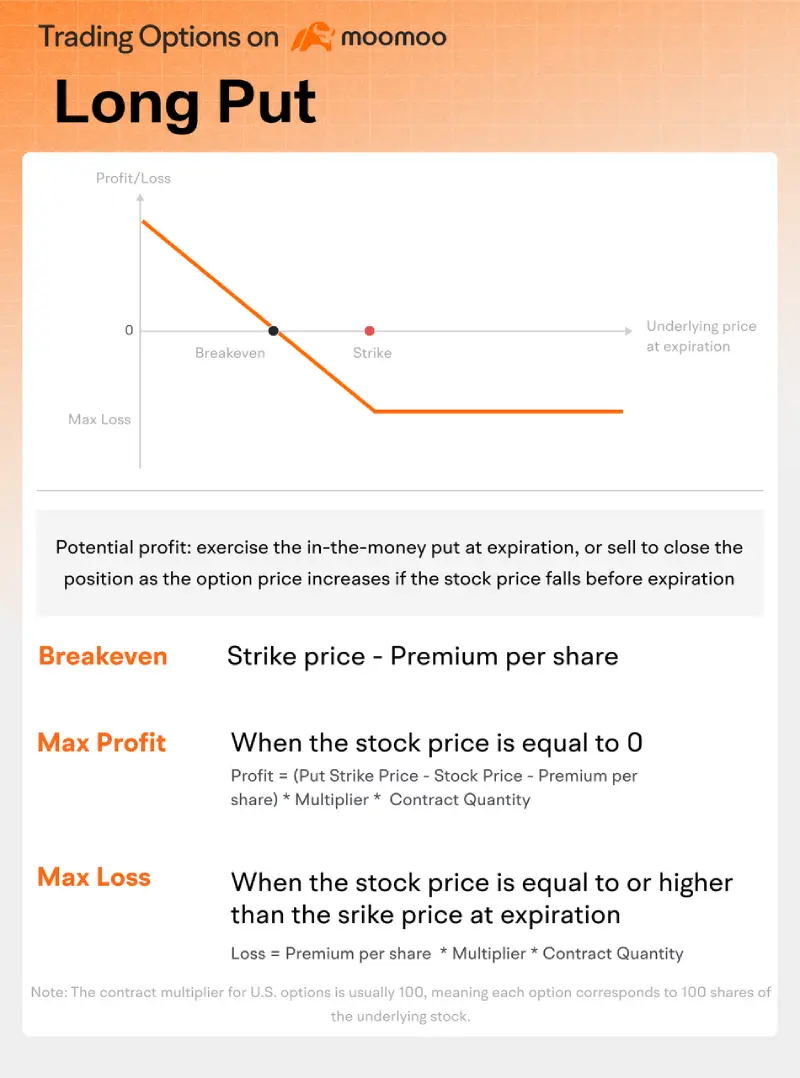
Most investors follow the classic strategy of trying to buy low and sell high to make a profit. However, some strategies allow you to potentially profit when an asset's value goes down, and one of the most common option strategies is buying a put option.
The price of the put usually rises when the stock price falls, potentially leading to profits.
Advantages:
Profit from Price Decline: The long put allows traders to profit from a decline in the underlying asset's price. As the price falls below the strike price, the potential profit increases.
Limited Risk: The maximum loss is limited to the premium paid for the put option, making it a relatively low-risk strategy compared to short selling the asset directly.
Leverage: A long put provides the opportunity to control a larger position in the underlying asset with a smaller initial investment compared to short selling.
Disadvantages:
Time Decay: The value of a put option decreases over time, particularly as it approaches expiration. If the underlying asset's price does not fall significantly, the option may expire worthless.
Break-even Point: The underlying asset's price must fall below the strike price minus the premium paid to achieve profitability, which requires a significant price movement.
Here's an example:
Assume TUTU is a listed company you believe is overvalued and might decline soon. TUTU's current stock price is $50, and you believe it might drop to $40.
If you short the stock:
You need a margin account to short 100 shares at $50. If the price falls to $40, the profit is (50-40)*100 = $1,000. ROI: $1,000/$5,000 = 20%.
If you buy a put option:
Suppose you buy a put option with a $45 strike price expiring in three months, paying a $2 premium per share. Your total cost is $2*100 = $200.
If the price falls to $40 by expiration, the profit is (45-40-2)*100 = $300. ROI: $300/$200 = 150%.
If TUTU's stock fluctuates or rises within three months before reaching the target price, a short position can still profit, but a short-term put would have expired worthless.
Therefore, this strategy is most effective when you are confident that a stock will decline within a certain timeframe.
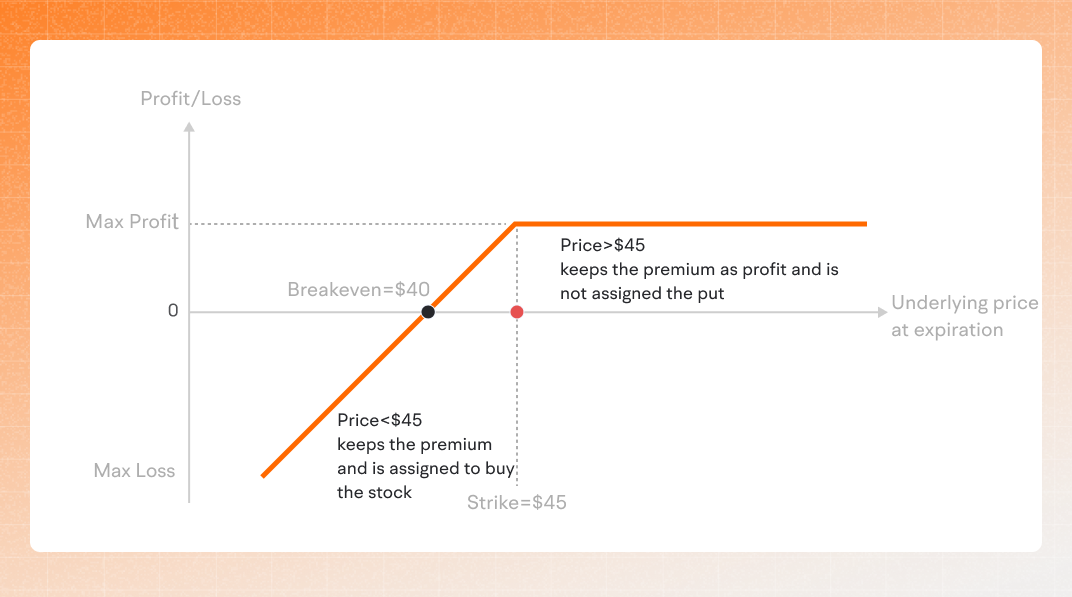
Cash-Secured Put
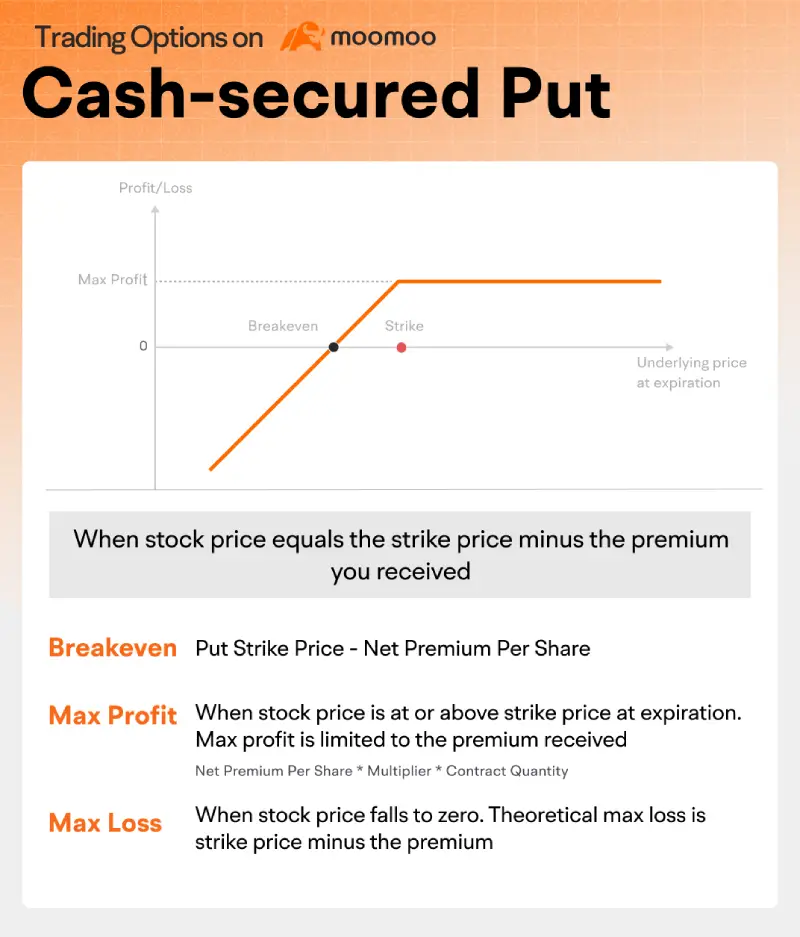
A cash-secured put is an options trading strategy where an investor sells put options and simultaneously sets aside the cash needed to buy the underlying asset if the option is exercised.
The potential benefit from a cash-secured put theoretically comes from two sources: the premium earned from selling the put option, and the opportunity to buy the stock at a lower price if the option is assigned.
Advantages:
Income: Generates income through the premium received from selling the put option.
Lower Purchase Price: Allows investors to potentially buy the underlying asset at a price lower than the current market value, accounting for the premium received.
Disadvantages:
Limited Profit: The maximum profit is limited to the premium received, regardless of how high the underlying asset's price rises.
Capital Requirement: Requires a significant amount of capital to be set aside in case the option is exercised, which could be used elsewhere.
Here's an example:
TUTU is a stable, publicly traded company with strong long-term prospects. However, you expect its stock price to fluctuate sideways in the short term due to a lack of positive news.
To try to capitalize on time value and potentially buy TUTU stock at a lower price, you set up a cash-secured put strategy. With TUTU's stock at $50, you sold a put option with a $45 strike price and a cost of $5 per share. To cover potential losses if the option is exercised, you must hold $4,500 ($45 * 100 option multiplier) in cash as collateral.
Covered Call
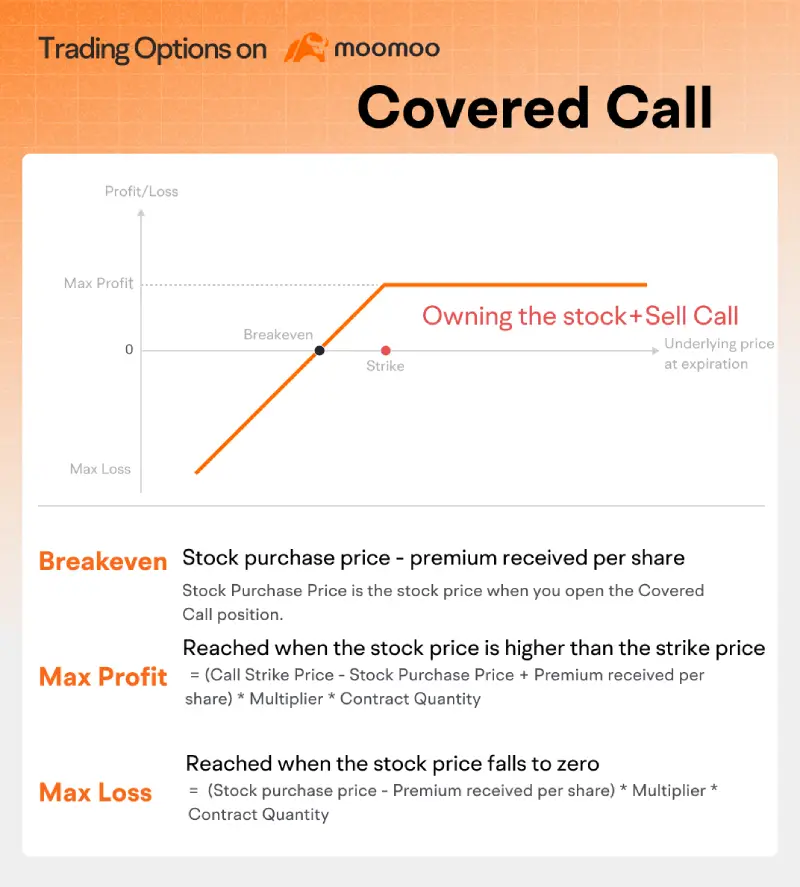
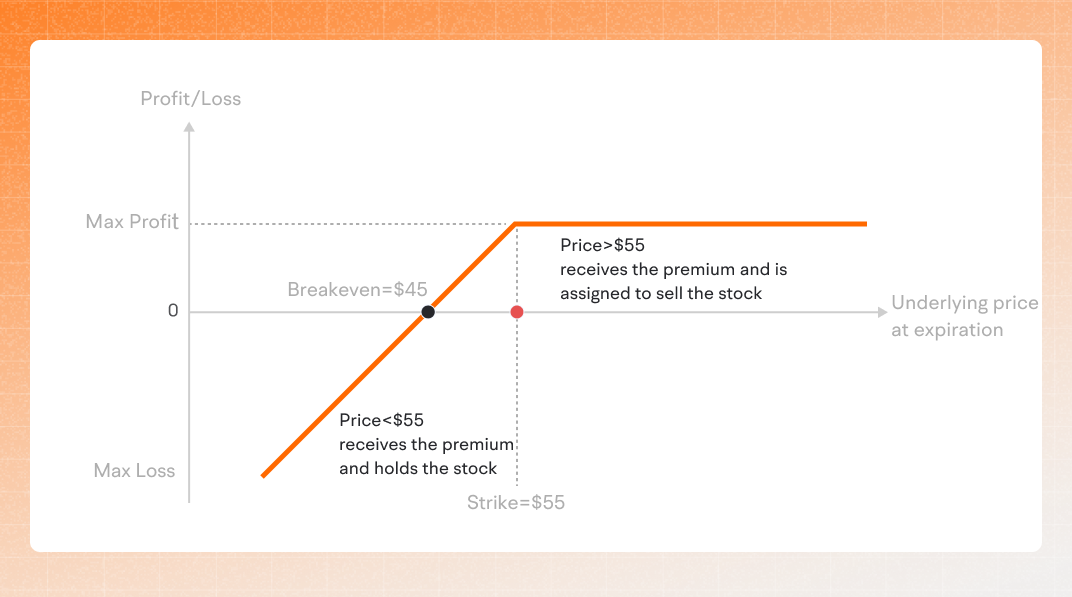
A covered call is an options trading strategy where an investor holds a long position in an asset, such as a stock, and sells call options on the same asset.
The potential profit from a covered call theoretically comes from two sources: the appreciation of the stock's value and the premium earned from selling the call option.
Advantages:
Income: Generates additional income through the premium received from selling the call option.
Downside Protection: The premium received provides a cushion against minor declines in the stock price.
Disadvantages:
Limited Upside: If the stock price rises significantly, the investor's profit is capped at the strike price plus the premium received.
Obligation to Sell: If the option is exercised, the investor must sell the stock at the strike price, potentially missing out on further upside.
Here's an example:
Suppose TUTU is a reliable public company you believe will do well in the long term. However, you think its stock price might not move much in the short term due to market conditions.
As a careful investor mindful of the time cost of holding stocks, you've set up a covered call strategy: you own 100 shares of TUTU and sell one call option, hedging a portion of potential downward losses while earning extra income. With TUTU's stock at $50, you sold a call option with a $55 strike price and a premium $5 per share.
Married Put (Protective Put)
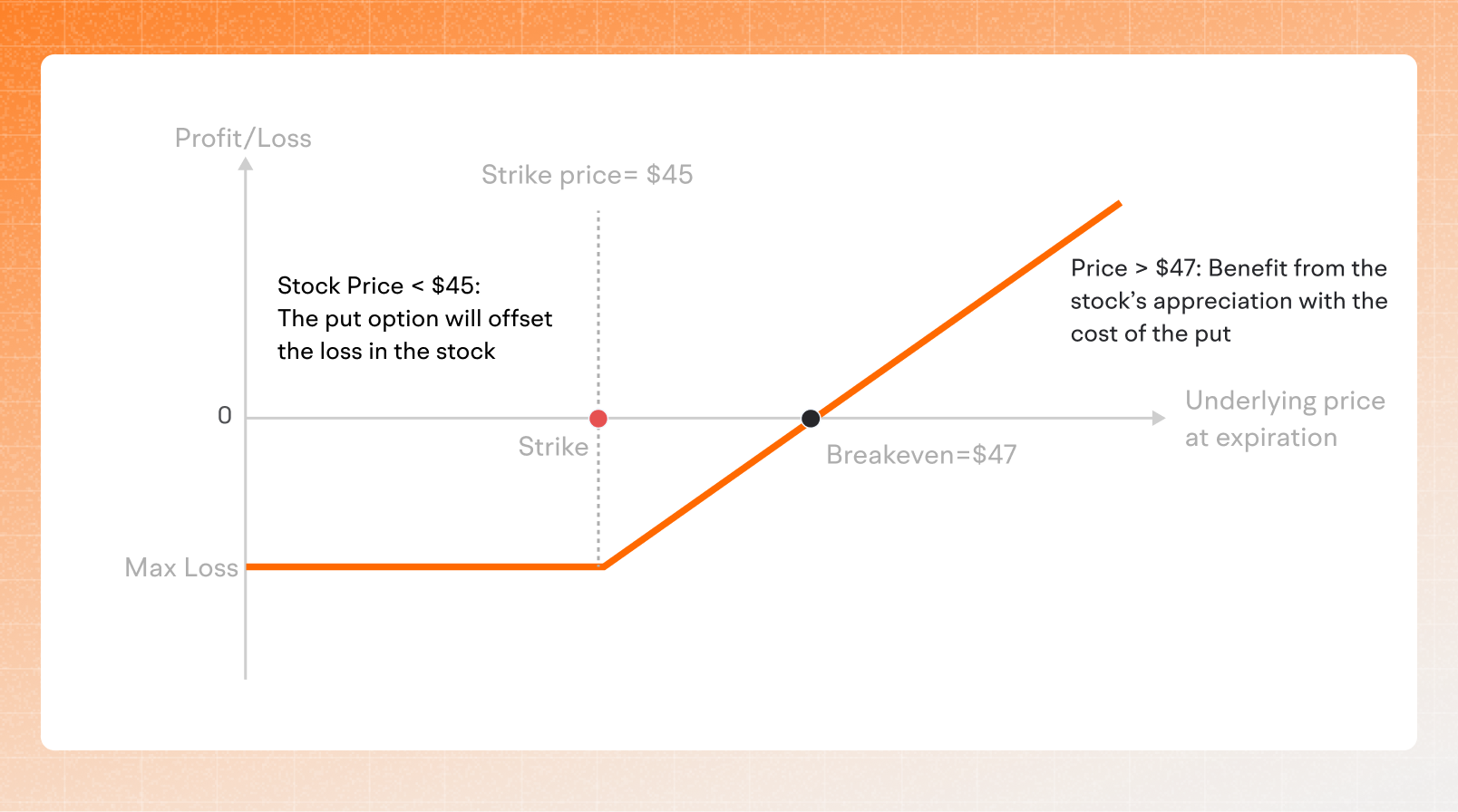
A married put is similar to a covered call in that an option is combined with a long stock position. Also known as a protective put, it is a long put combined with a long stock position.
The primary goal of a protective put is to limit potential losses on the downside while allowing for profit participation on the upside.
The profit from a protective put generally comes from mitigating losses during a stock price decline, while potential profits from stock price increases need to exceed the cost of the put option to realize a net gain.
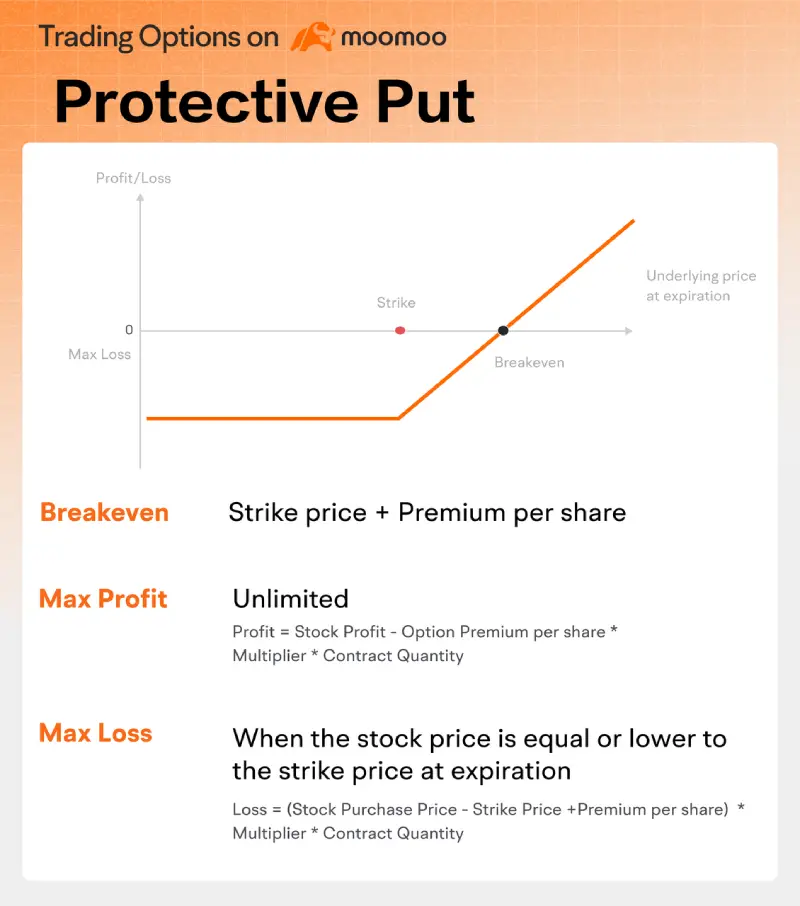
Unlimited Profit: The Protective Put strategy has unlimited profit potential, as the stock price can theoretically rise indefinitely.
Limited Loss: The put option sets a floor at the strike price for the minimum amount you can sell your shares for, regardless of how low the market price falls. This means that no matter how much the stock price decreases, you have the option to sell at the strike price, limiting your downside risk.
Here's an example:
Suppose you own 100 shares of TUTU stock, which recently rose significantly. You were concerned about a potential short-term pullback but didn't want to sell because you thought there might be long-term upside potential.
So, you've decided to set up a Protective Put strategy. TUTU is priced at $50. To safeguard your investment, you buy one put option with a strike price of $45, costing you $2 per option.
Advanced options strategies
As you become more familiar with how options work, you can explore more advanced strategies that fit your investment goals and risk tolerance.
These strategies typically involve multiple options contracts and can be more complex than basic strategies. Here are some of the most common advanced options strategies:
Bull Call Spread
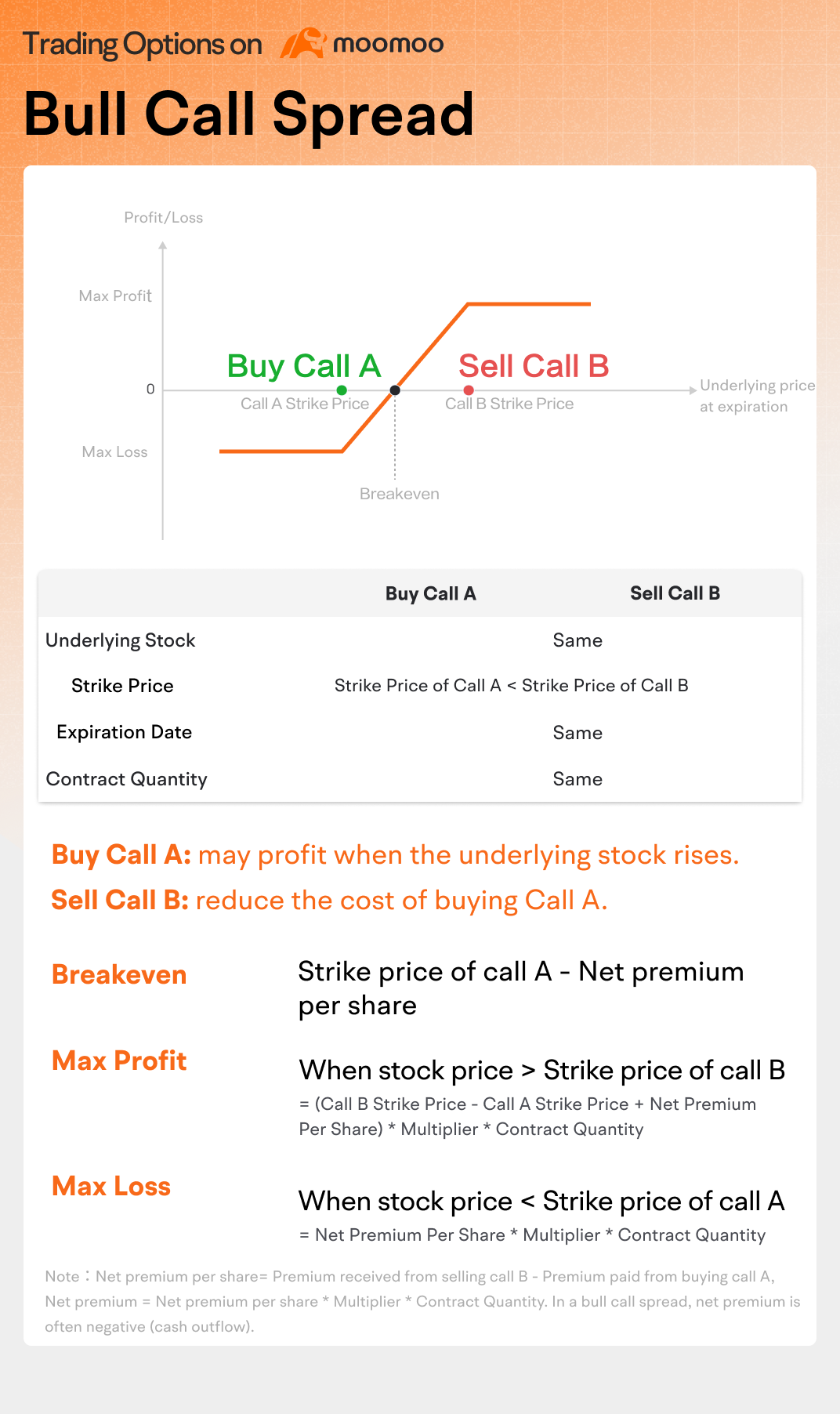
A bull call spread is an options strategy used by traders who are moderately bullish on a stock or other underlying asset.
Bull refers to the belief that the price of the underlying asset will increase in the future.
Call refers to the types of options used in these strategies.
Options spreads are a trading strategy where an investor buys and sells multiple options of the same type (call or put) on the same underlying asset.
Advantages:
Cost Efficiency: Selling the higher strike call helps reduce the cost of entering the position.
Risk Management: The strategy limits both potential losses and profits, making it suitable for conservative traders.
Disadvantages:
Capped Upside: While you benefit from a rise in the underlying asset's price, gains are capped at the higher strike price.
Time Decay: Like all options, the value of the options in a bull call spread is subject to time decay, which can erode potential profits if the underlying asset does not move as expected.
Here's an example:
Some investors believe in TUTU's growth potential, while others worry about challenges that may limit stock price increases. Anticipating a modest price rise with limited upside, you opt for a bull call spread.
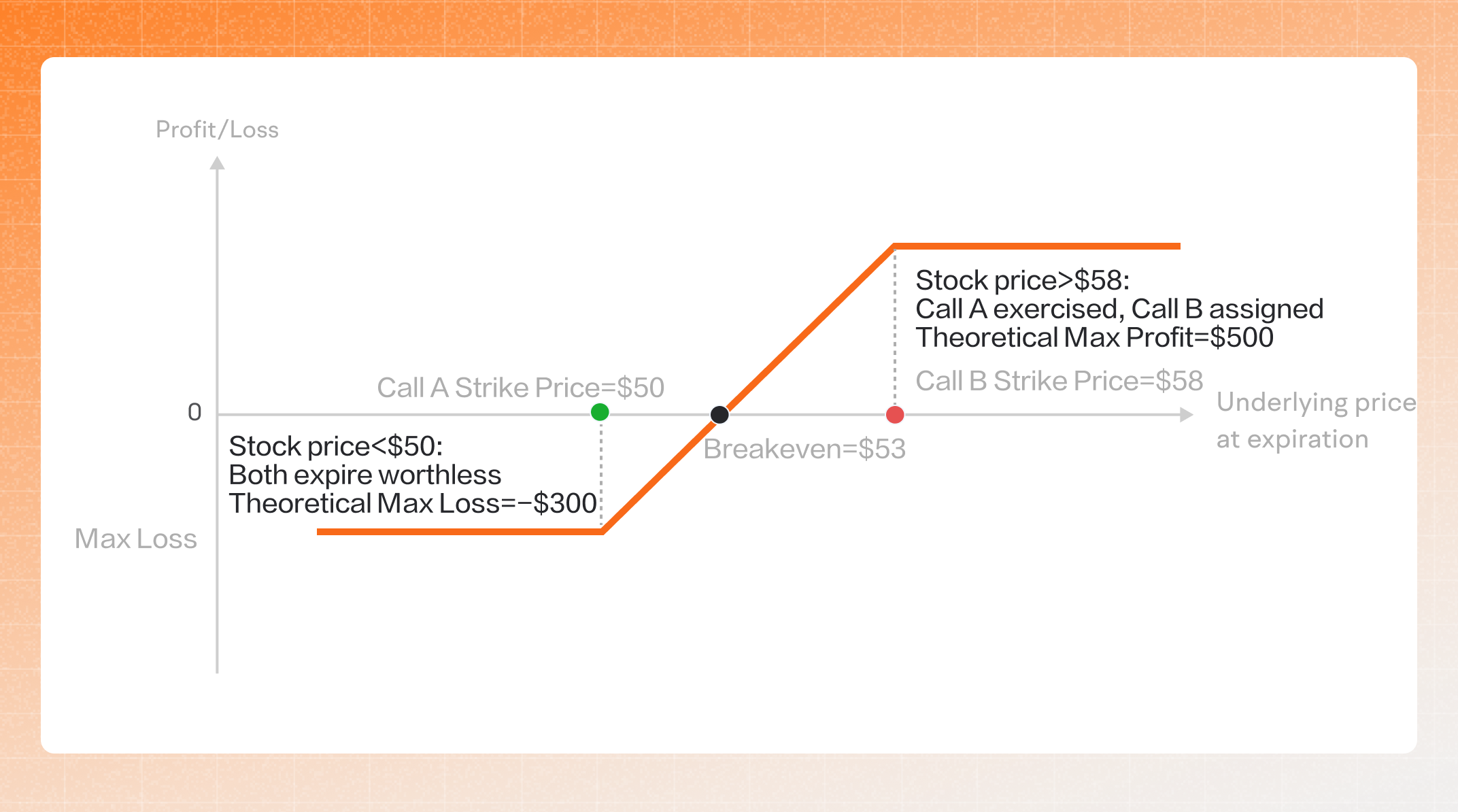
You buy call A with a strike price of $50, costing you $5 per option, and sell call B with a strike price of $58, costing you $2 per option.
Net premium in total: Premium paid for call A: -$500 + Premium received from call B: $200 = - $300.
Moomoo Canada: One-stop Solution for US Options!
>> Click to open an account and claim your welcome rewards!
>> Click to open an account and claim your welcome rewards!
Bear Put Spread
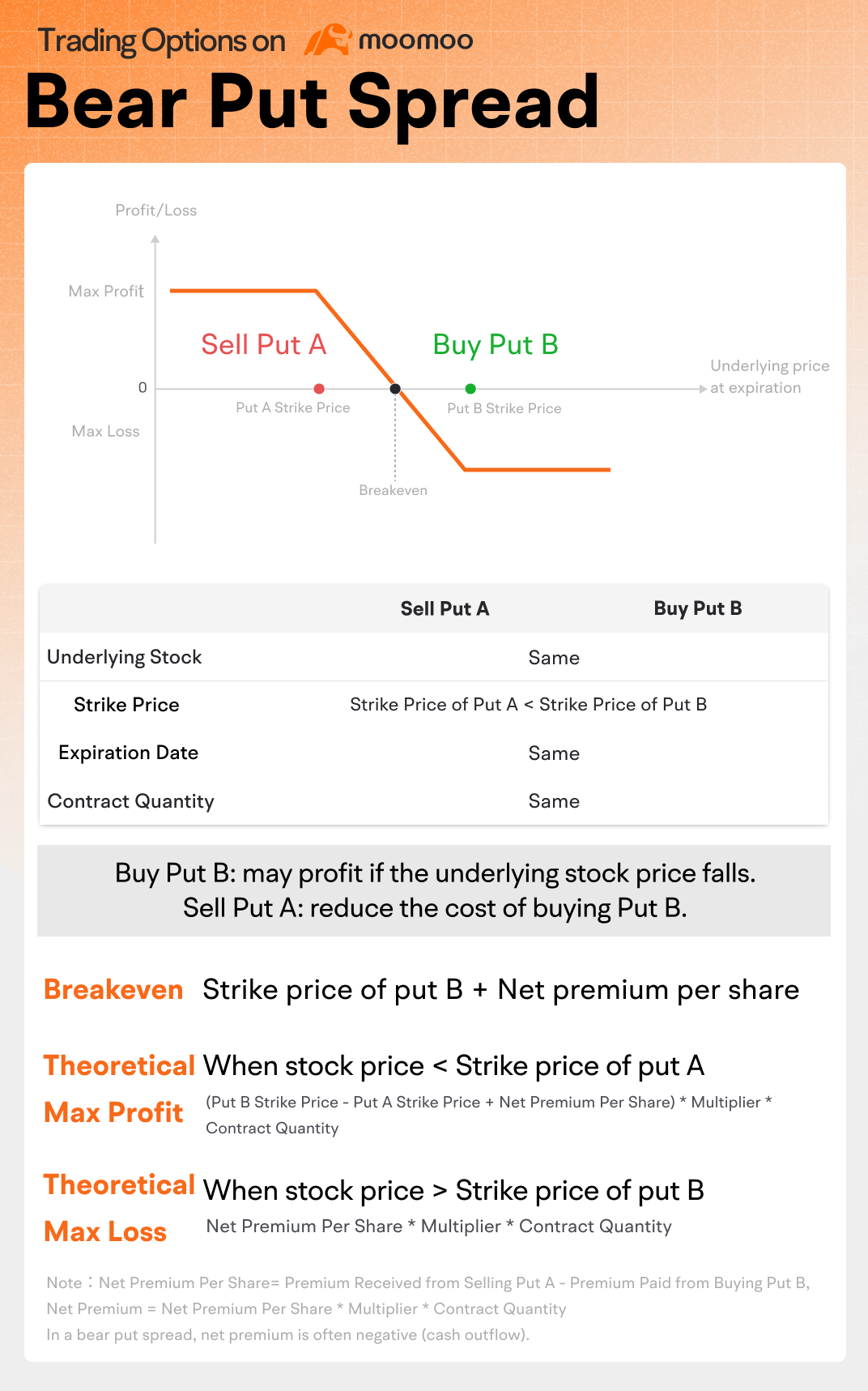
A bear put spread is an options trading strategy used when a trader expects a moderate decline in the price of an underlying asset.
This strategy involves buying and selling put options with different strike prices but the same expiration date. The bear put spread limits both potential profit and potential loss, making it a conservative bearish strategy.
Advantages:
Cost Efficiency: Selling the lower strike put helps reduce the cost of entering the position.
Risk Management: The strategy limits both potential losses and profits, making it suitable for conservative traders.
Disadvantages:
Capped Downside: While you benefit from a decline in the underlying asset's price, gains are capped at the lower strike price.
Time Decay: Like all options, the value of the options in a bear put spread is subject to time decay, which can erode potential profits if the underlying asset does not move as expected.
Here's an example:
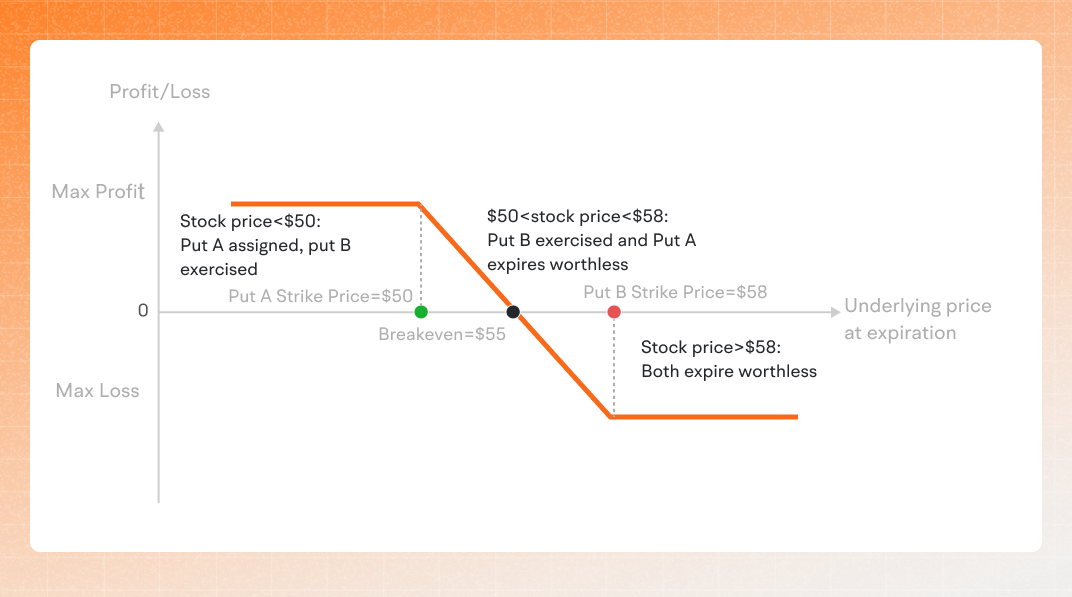
You believe that TUTU has reached a short-term peak and its stock price may fall slightly in the near term. Therefore, you buy a put option with a strike price of $58, referred to as put B, with a cost of $5 per share.
In the meantime, you choose to sell a put with a strike price of $50 with a cost of $2 per share, referred to as put A, creating a bear put spread strategy.
With this strategy, you can potentially profit from the decline in the stock price by buying put B while reducing the financial input required by selling put A.
>> Read more: TFSA Options Trading | Can I Do Options Trading in TFSA?
Long Straddle
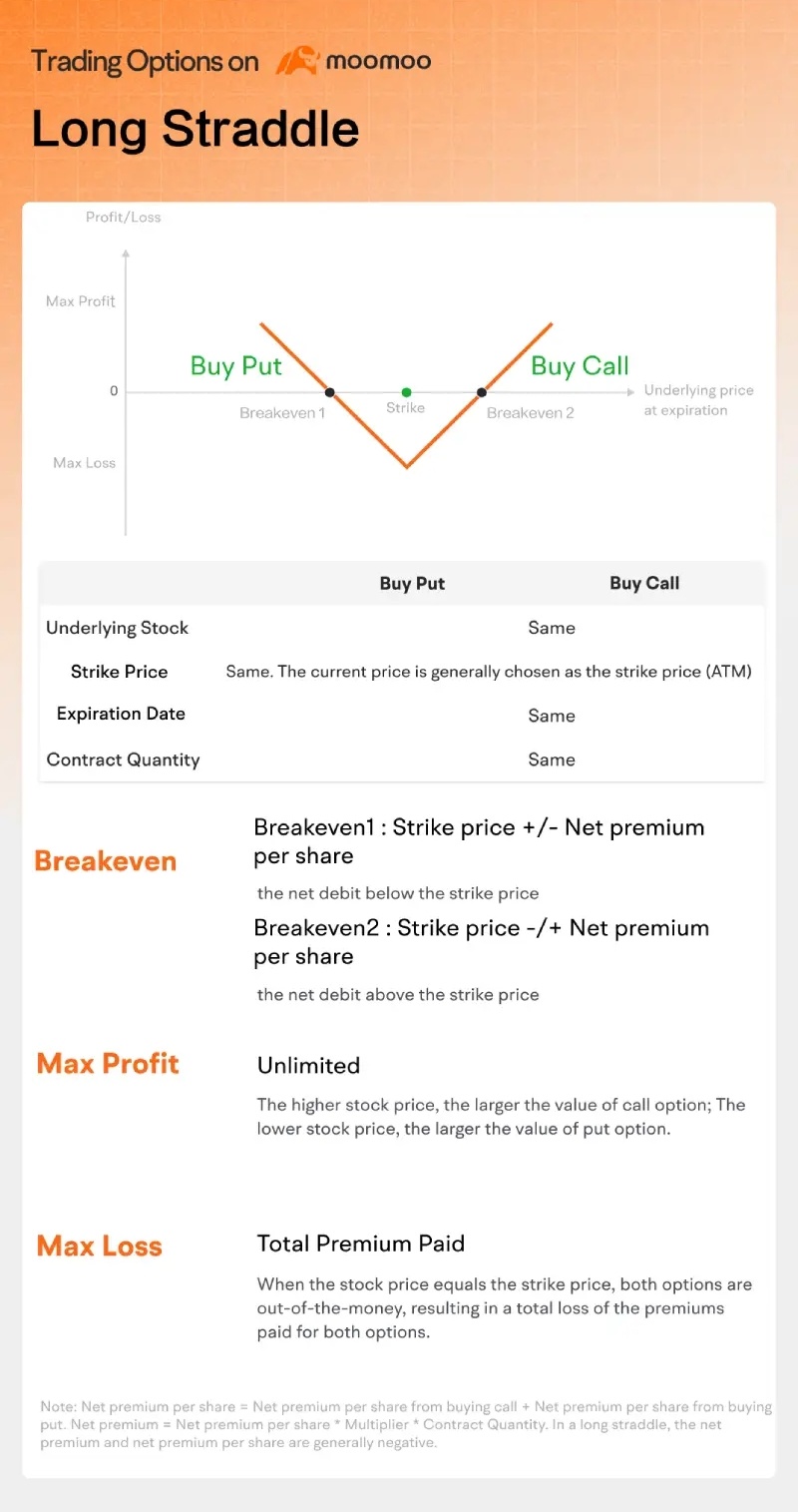
A long straddle is an options strategy used when a trader expects a significant price movement in the underlying asset, but is unsure about the direction of the move. This strategy involves buying both a call option and a put option with the same strike price and expiration date.
The long straddle is ideal for capturing volatility, as it allows traders to profit from large price swings in either direction. The underlying stock, strike price, expiration date, and contract quantity of the call and put options are all identical.
Advantages:
Flexibility: The long straddle profits from significant price movements in either direction.
Volatility Capture: It is an effective strategy for trading on expected volatility without needing to predict the direction.
Disadvantages:
Cost: The strategy can be expensive due to the cost of purchasing both options.
Time Decay: The value of both options is subject to time decay, which can erode profits if the underlying asset does not move as expected.
Here's an example:
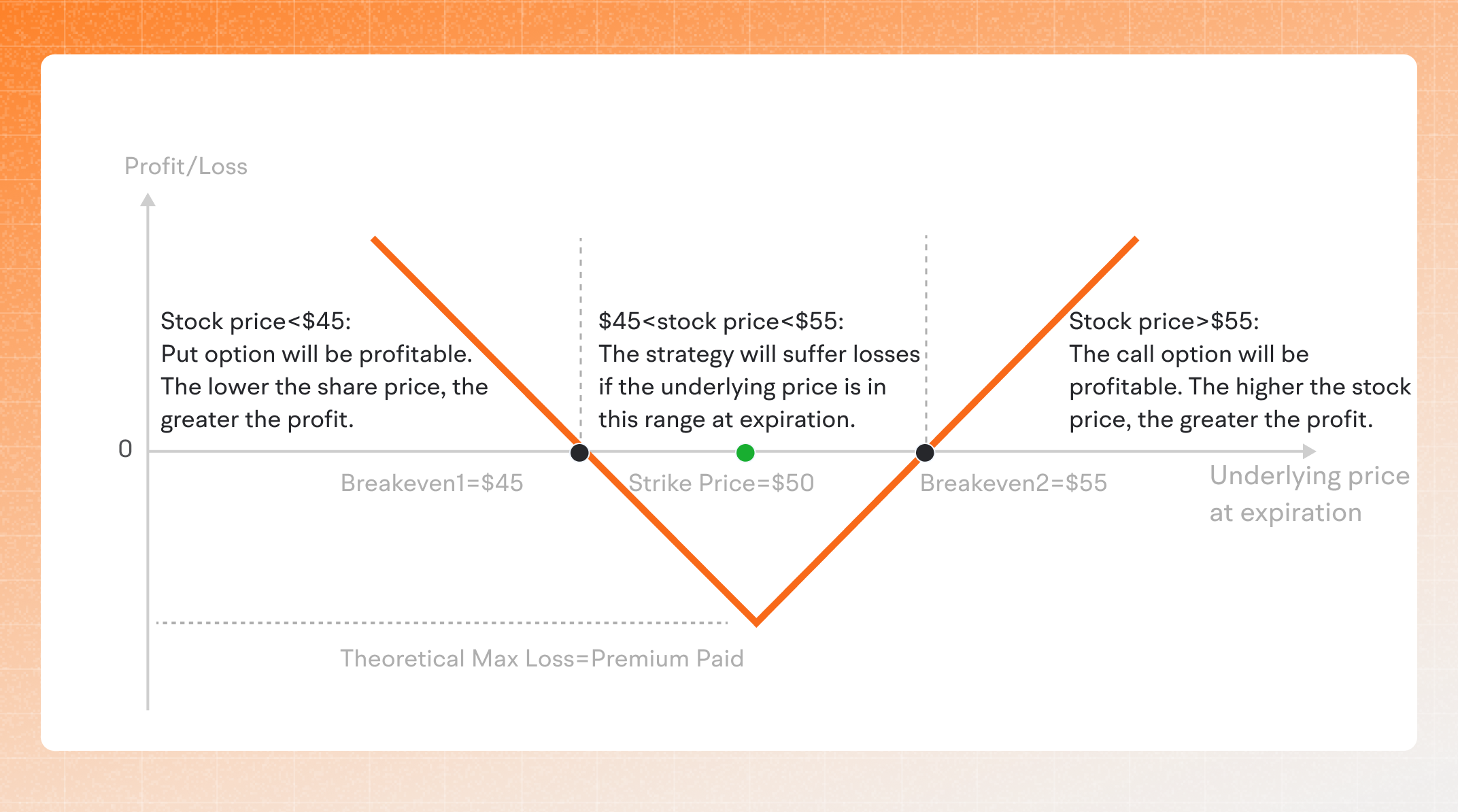
TUTU's stock price is $50. In anticipation of significant price movements next week, you buy both a call option and a put option with a strike price of $50, with a cost of $2 per share and $3 per share, respectively, thereby constructing a long straddle strategy.
Long Strangle
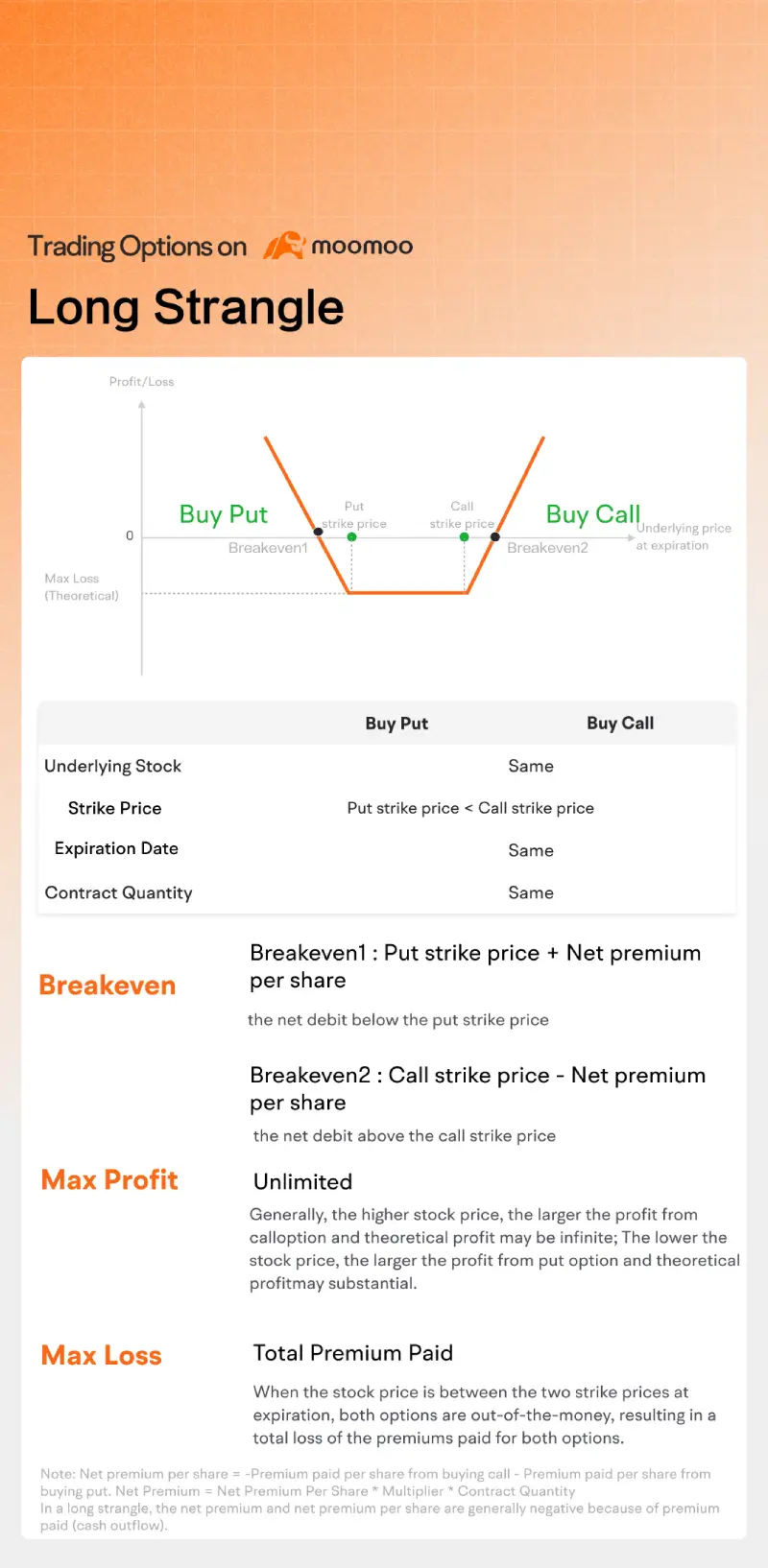
A long strangle is an options strategy similar to a long straddle, used when a trader expects significant volatility in the underlying asset's price but is unsure of the direction.
The difference is that in a long strangle, the call and put options purchased have different strike prices, both out-of-the-money, but the same expiration date. This strategy is typically less expensive than a straddle due to the lower premiums of out-of-the-money options.
Advantages:
Lower Cost: The long strangle is typically cheaper than a straddle because both options are out-of-the-money, resulting in lower premiums.
Flexibility: Profits from significant price movements in either direction.
Disadvantages:
Wider Break-even Range: Requires a larger move in the underlying asset's price to be profitable compared to a straddle.
Time Decay: The value of both options is subject to time decay, which can erode profits if the underlying asset does not move as expected.
Here's an example:
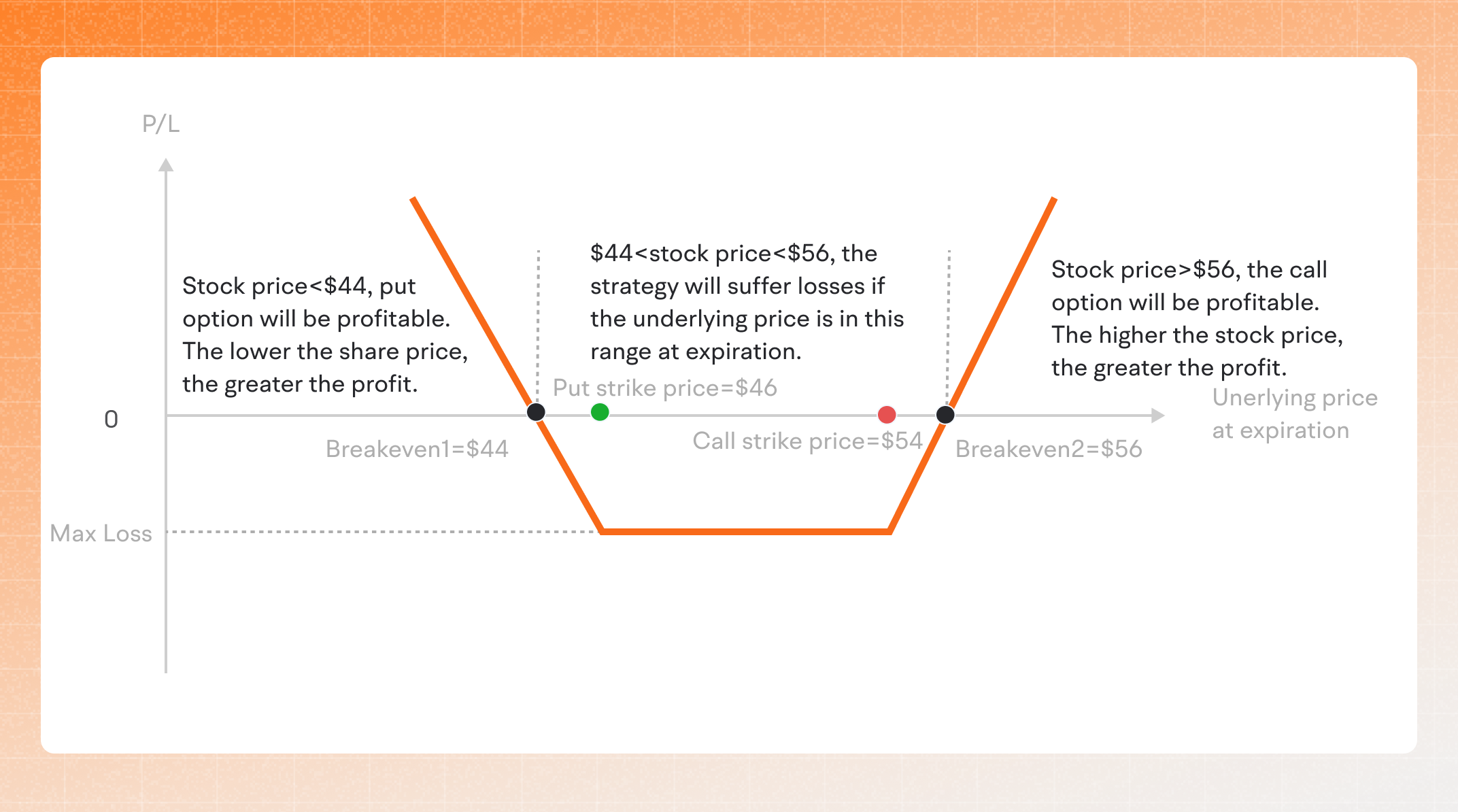
TUTU, our theoretical stock, is releasing its earnings report next week. You expect significant price volatility but aren't sure if the stock will rise or fall.
With TUTU's stock price at $50, you set up a long strangle strategy to prepare for potentially large price movements.
To have relatively lower initial setup costs, you choose to buy two OTM options: a call option with a strike price of $54 (premium $1 per share) and a put option with a strike price of $46 (premium $1 per share).
Iron Condor
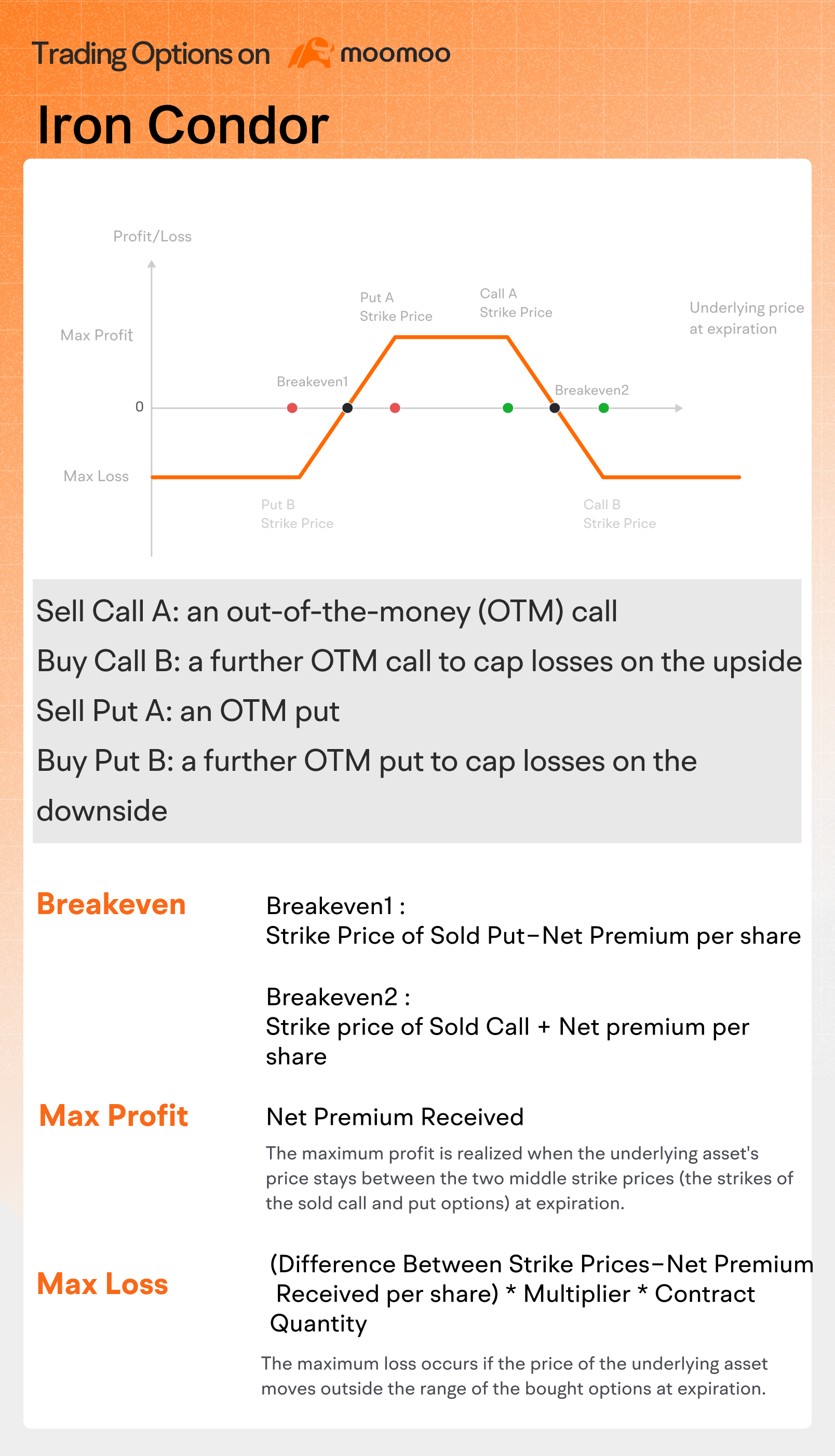
An iron condor is an advanced options trading strategy designed to capitalize on low volatility in the underlying asset. It involves using four option contracts (two calls and two puts) with different strike prices but the same expiration date. The strategy is typically employed by traders who anticipate the underlying asset will remain within a specific price range throughout the options' life.
It's important to note that the price distance between the calls is equal to that of the puts.
Advantages:
Income Generation: Provides income through the net credit received.
Defined Risk: Both potential profit and loss are known upfront and limited.
Profit from Low Volatility: Best suited for markets expected to remain stable.
Disadvantages:
Limited Profit: Maximum profit is capped at the net credit received.
Complexity: Involves multiple trades and requires careful management.
Requires Stable Market: Profits only if the underlying asset remains within the specified range.
Here's an example:
TUTU is trading at $50. You expect limited movement in the stock and want to generate income within a defined risk & reward framework, and build an iron condor.
You sell Call A at a strike price of $55 with a premium $1, and buy Call B at a strike price of $60 with a premium $0.50.
Also, you sell Put A at a Strike Price $45 with a premium $1, and buy Call B at a strike price of $40, Premium $0.50.
The difference between the strike prices of the calls and the puts is the same, $5 (Call: 60-55, Put: 45-40).
Your total premium received = $1 (call) + $1 (put) = $2. And total Premium Paid = $0.50 (call) + $0.50 (put) = $1.
So your net premium per share received would be: $2 - $1 = $1
When TUTU is between $45 and $55 at expiration, your profit would be $1 per share.
When TUTU is above $55 or below $45 at expiration, your max loss would be the difference between the strikes - net premium = $5 - $1 = $4 per share.
Iron Butterfly
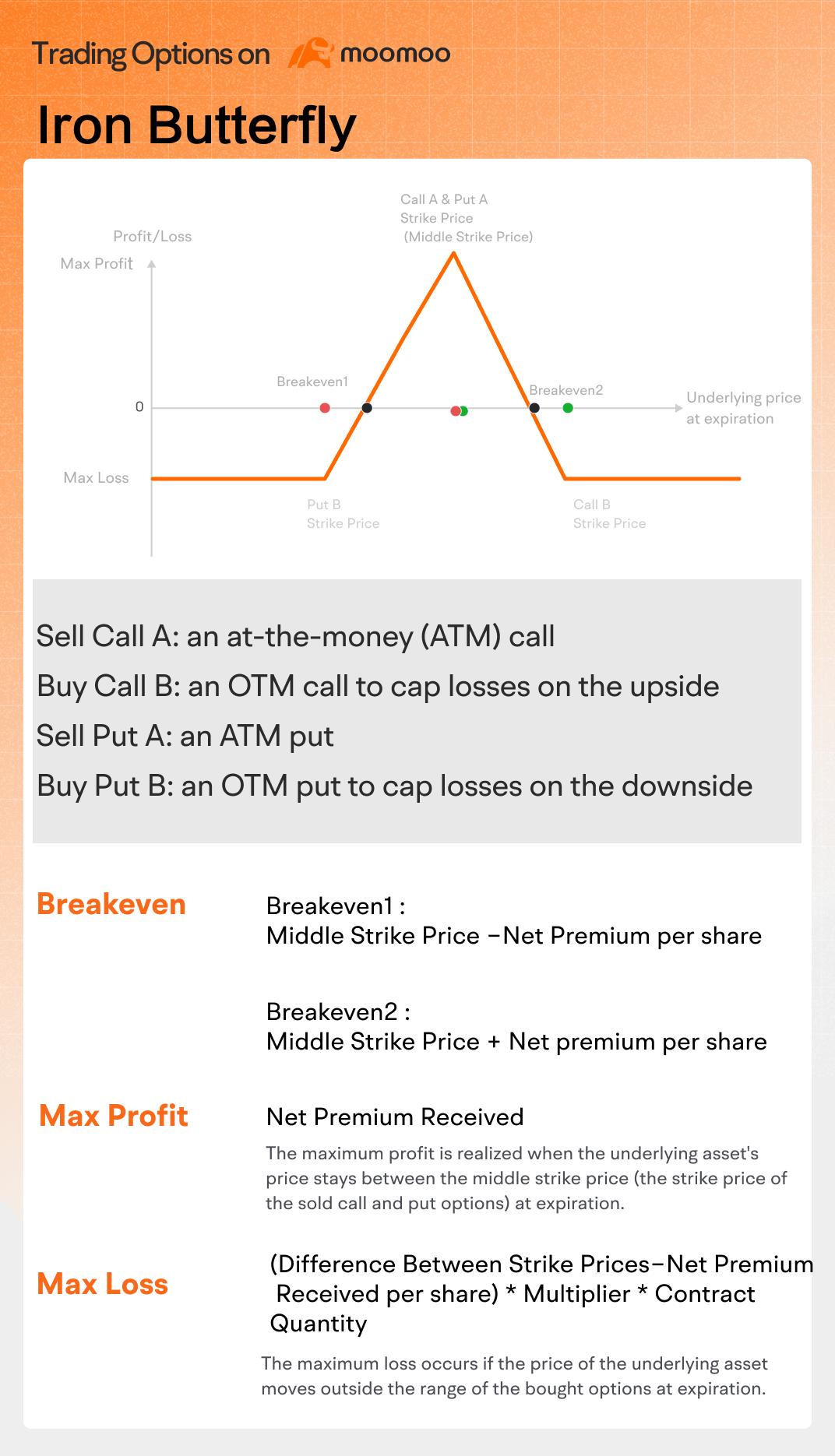
Like the iron condor, the iron butterfly uses four option contracts (two calls and two puts) to protect your investment. The lower and higher strike prices are equidistant from the middle strike price. All options have the same expiration date.
However, with this approach, both your short put and short call are set for the same price.
Advantages:
Income Generation: Provides income through the net credit received.
Defined Risk: Both potential profit and loss are known upfront and limited.
Profit from Low Volatility: Suitable for markets expected to remain stable around the middle strike price.
Disadvantages:
Limited Profit: Maximum profit is capped at the net credit received.
Complexity: Involves multiple trades and requires careful management.
Requires Stability: Profits only if the underlying asset remains near the middle strike price at expiration.
Iron Condor and Iron Butterfly both offset the risk of short positions with their long positions, and potentially profit by selling short positions.
However, aside from these broad similarities, there are critical differences between the two. The iron condor has a significantly larger maximum profit window, which gives you more room for volatility before you see a loss. While it carries less risk, it also carries less profit potential.
On the other hand, the Iron Butterfly has a smaller window in which you can generate profits. Since the iron butterfly is closer to the asset price, you will find that you may collect more premiums.
Here's an example:
TUTU is trading at $50, and you build an iron butterfly as follows:
Sell Call A: Strike Price $50, Premium $3
Buy Call B: Strike Price $55, Premium $1
Sell Put A: Strike Price $50, Premium $3
Buy Put B: Strike Price $45, Premium $1
The difference between the strike prices of the calls and the puts is $5.
Your total premium received = $3 (call) + $3 (put) = $6. And total Premium Paid = $1 (call) + $1 (put) = $2.
So your net premium per share received would be: $6 - $2 = $4
If TUTU is at $50 at expiration, your profit would be $4 per share.
When TUTU is above $55 or below $45 at expiration, your max loss would be the difference between the strikes - net premium = $5 - $4 = $1 per share.
>>You may also like: 6 Best Options Trading Platforms in Canada in 2025
Short Call & Short Put
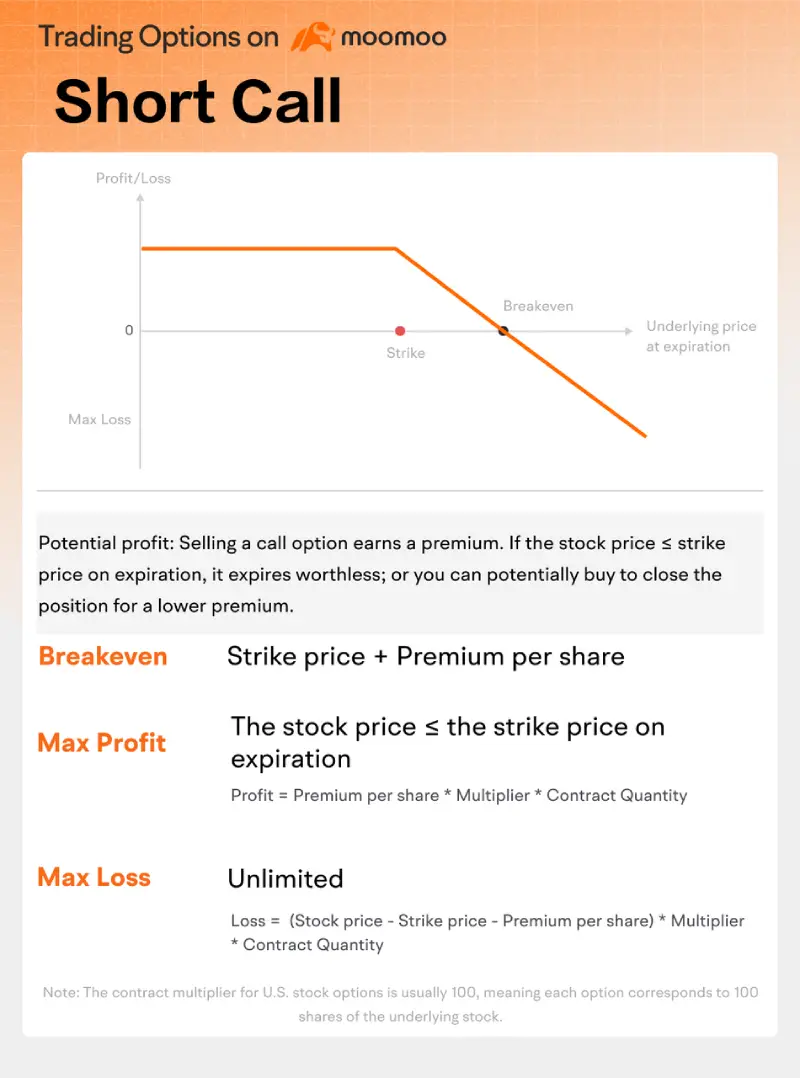
These strategies can result in significant losses and are not suitable for most investors. More common strategies are the covered call and the cash-secured put, as we mentioned earlier.
This section will introduce selling call options without holding the underlying asset, also known as a "naked call" or "uncovered call." When traders sell call options, they receive premiums and take on the obligation to deliver the underlying asset by the agreed time.
Advantages:
Income Generation: Provides immediate income through the premium received.
Simple Execution: Straightforward strategy involving a single options sale.
Profit in Stable/Declining Markets: Profitable if the underlying asset remains below the strike price.
Disadvantages:
Unlimited Risk: Potential for significant losses if the asset price rises sharply.
Limited Profit: Maximum profit is capped at the premium received.
Requires Accurate Market Timing: Success depends on precise forecasts of market stability or decline.
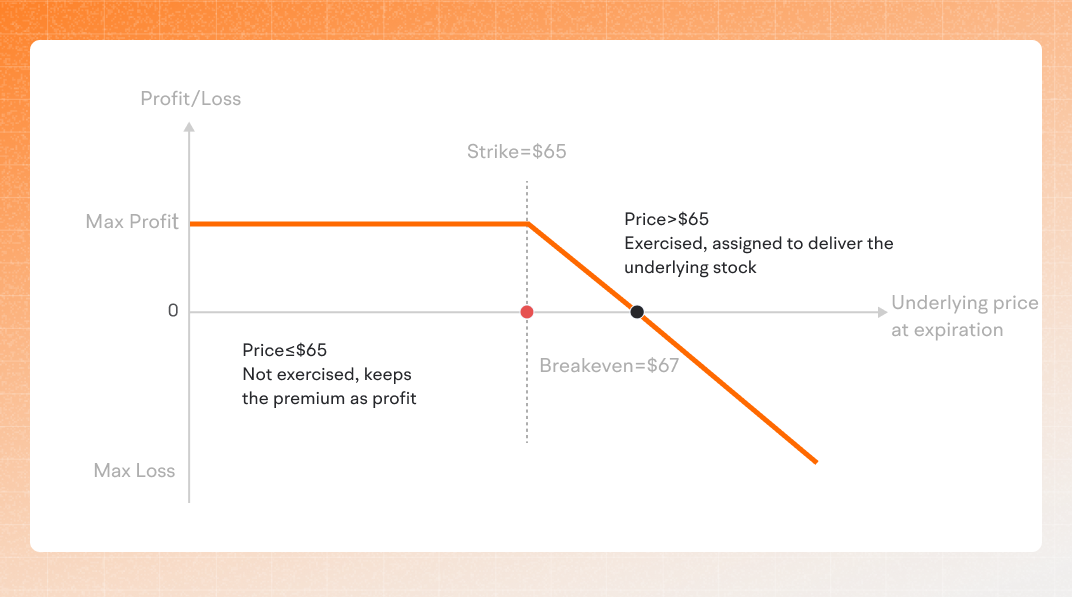
Here's an example:
TUTU has a current stock price of $50. Expecting no positive news in the near term, you believe the price won't rise. Thus, you sell a call option expiring in three months with a strike price of $65 and receive a $2 per share premium.
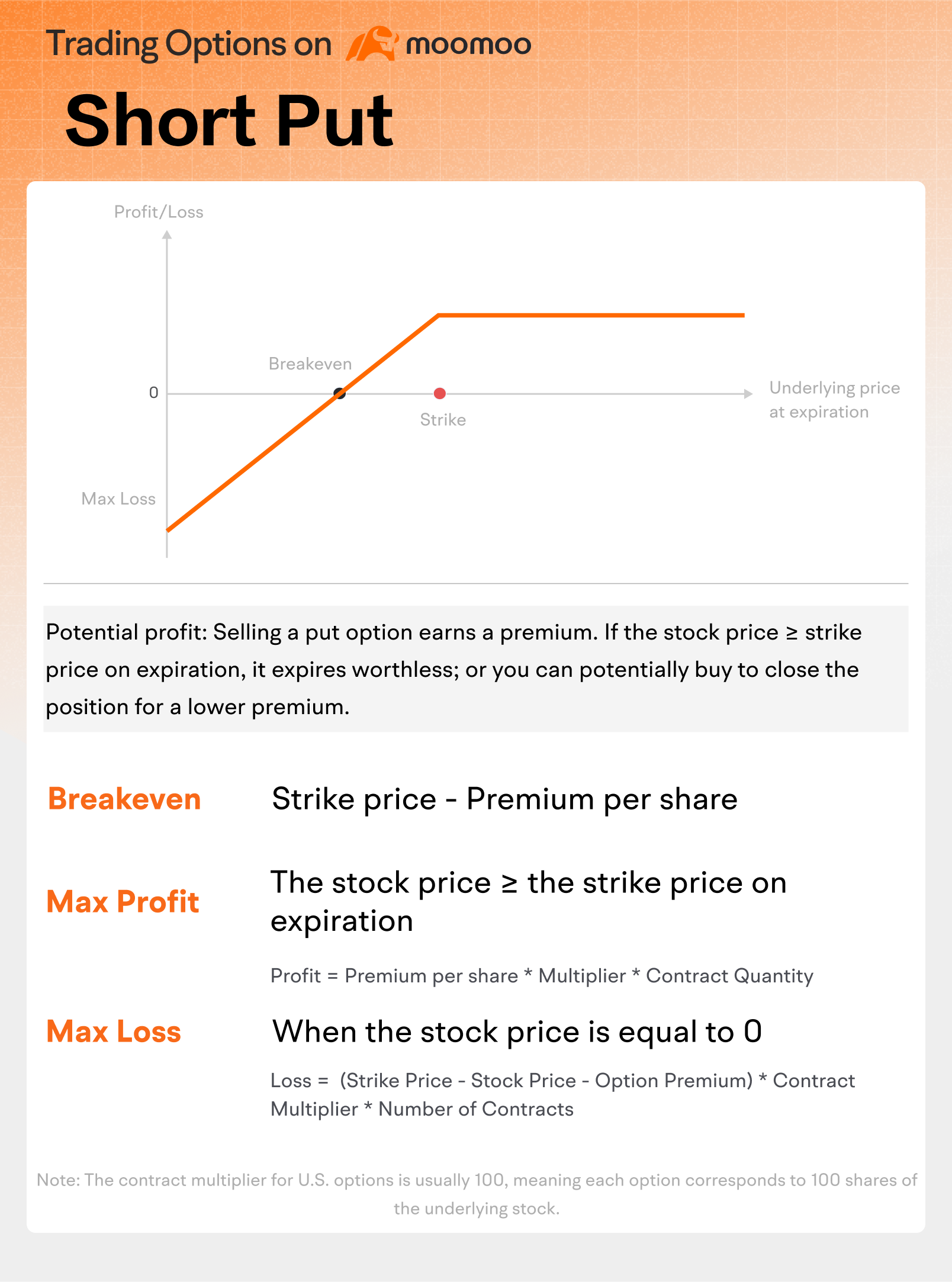
Then we discuss a straightforward short put option, where the investor mainly aims to receive the option premium and typically does not intend for the option to be exercised, nor do they prepare sufficient cash.
This operation is also known as an "uncovered put" or "naked put." Similar to the Short Call, this strategy is speculative and carries higher risk.
Advantages:
Income Generation: Provides immediate income through the premium received from selling the put option.
Profitable in Bullish/Stable Markets: Profits if the underlying asset's price stays above the strike price at expiration.
Disadvantages:
Substantial Risk: Potential losses can be significant if the underlying asset's price falls well below the strike price.
Margin Requirements: Requires a margin account and can tie up capital due to margin requirements.
Here's an example:
TUTU has a current stock price of $50. You believe that TUTU will not fall below $40 in the near future, so you sell a put option expiring in three months with a strike price of $40 and receive a $2 per share premium.
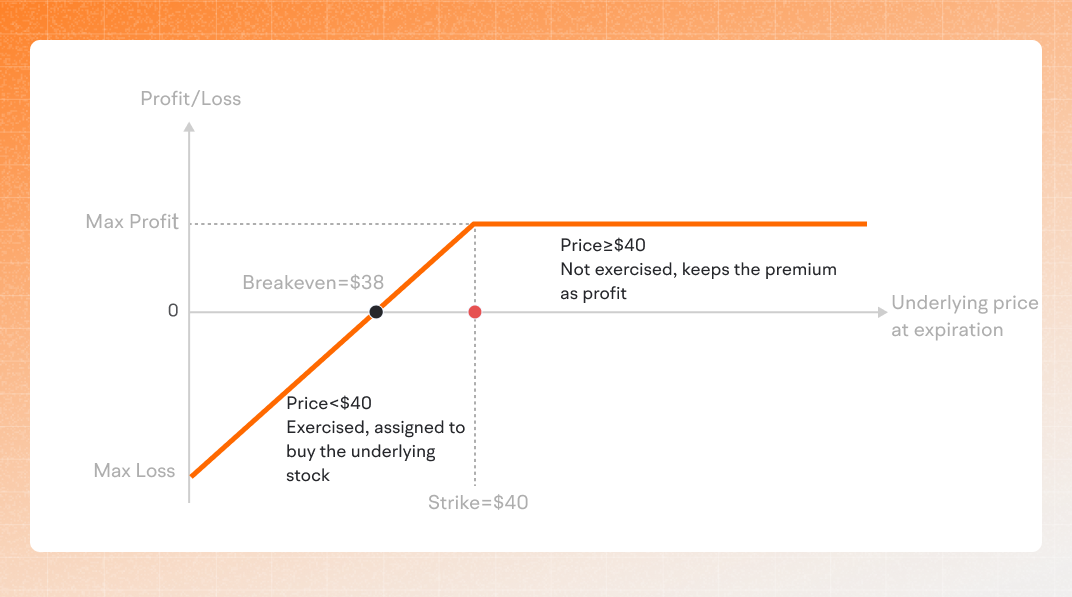
Both of them are high-risk strategies. A short call carries unlimited theoretical loss potential, since stock prices can rise indefinitely. In contrast, the risk associated with a short put is significant but predictable; the maximum loss occurs if the underlying asset's price drops to zero.
How to trade options on moomoo?
Before you can trade options, you’ll need to open an options trading account. Several online brokers allow for options trading, so it’s important to do your research as to which one will be the best fit for your needs.
Why choose moomoo to trade options?
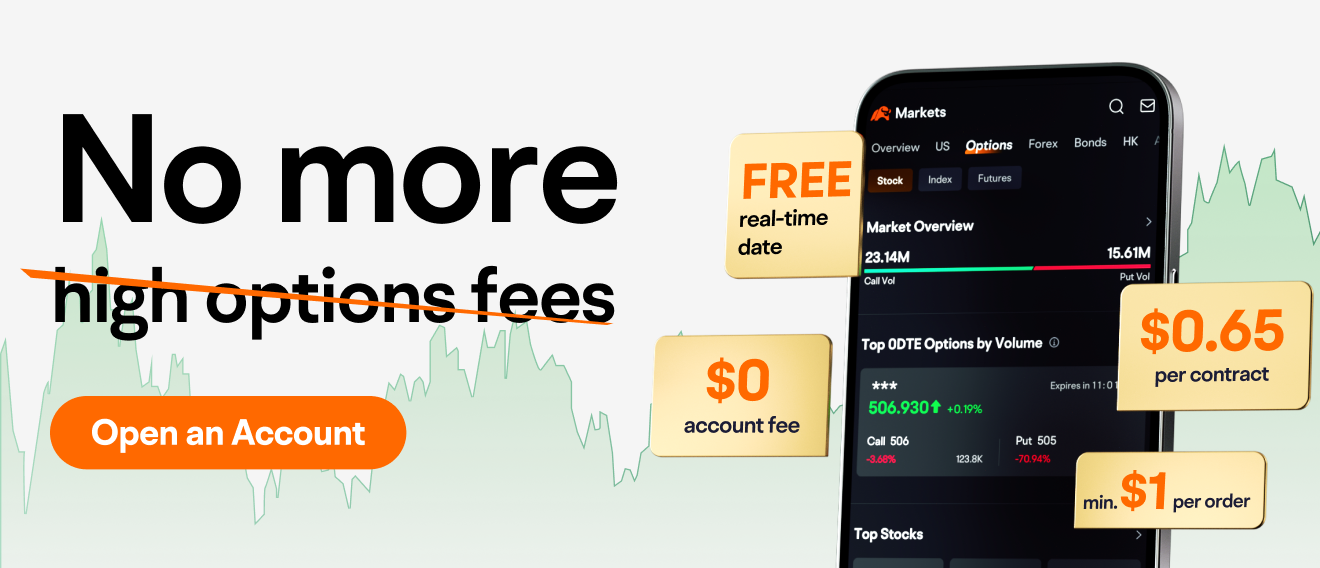
Moomoo Canada is an excellent choice for trading options, offering a robust platform with real-time market data, advanced charting tools, and a paper trading feature. Its options trading tools, such as options chains and volatility rankings, cater to both novice and experienced traders.
Trading Features:
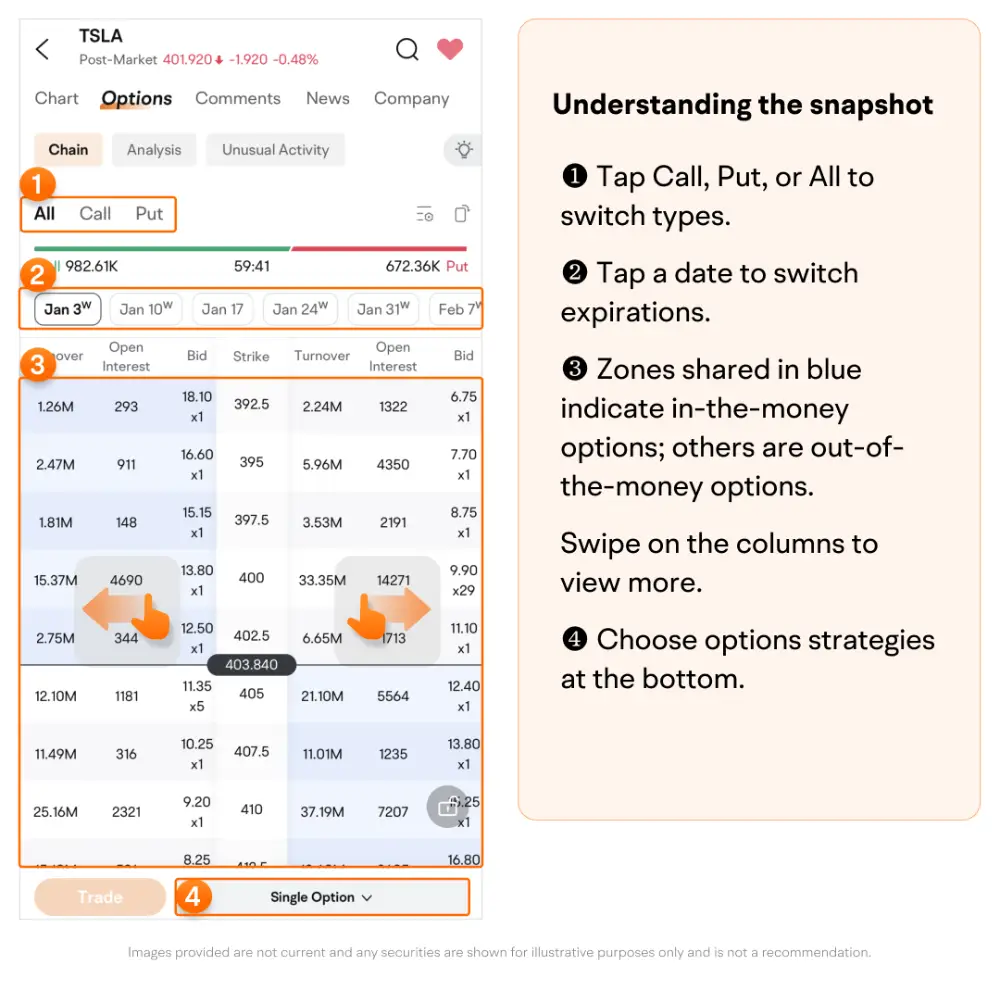
Options Chains: A live listing of all available options contracts for a given security, including their prices and other relevant data.
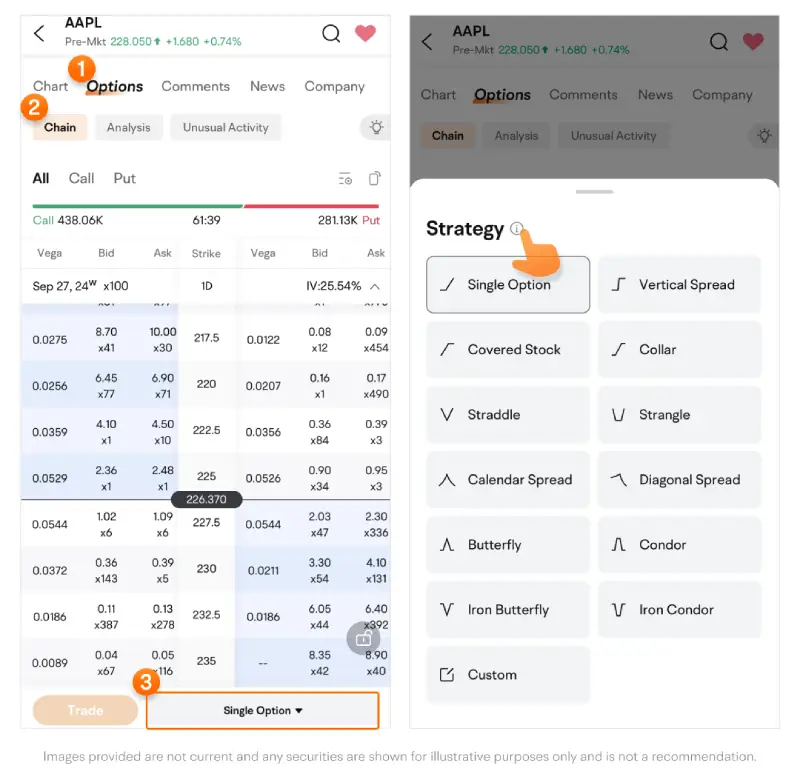
13 Options Strategies: A variety of strategies are available for trading options, each with different risk and reward profiles.
8 Types of Orders: Different order types are available for executing trades, such as market orders, limit orders, stop orders, etc.
Analysis Features:
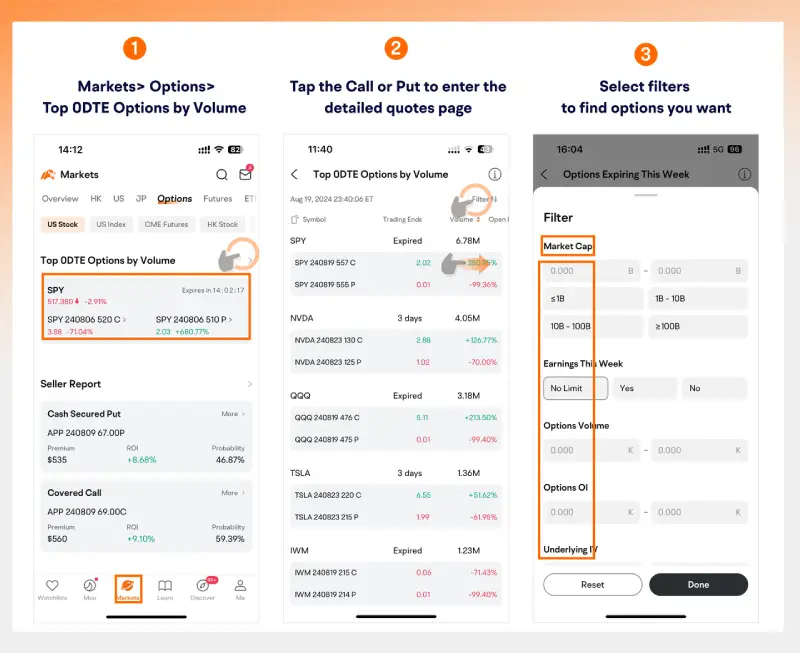
0DTE (Zero Days to Expiration) Section: A dedicated section for analyzing options as they approach their expiration date.
Unusual options activity: trading patterns that deviate from the norm, often indicating insider knowledge or larger market movements.
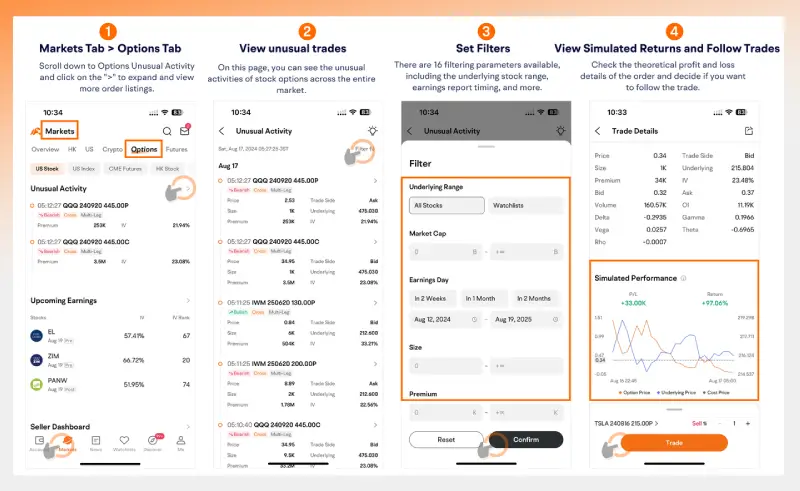
On moomoo, you can easily check out the profit and loss scenarios for your options, as well as monitor volatility levels.
Options Tools:
Options Calculator: to calculate the theoretical price under different scenarios.
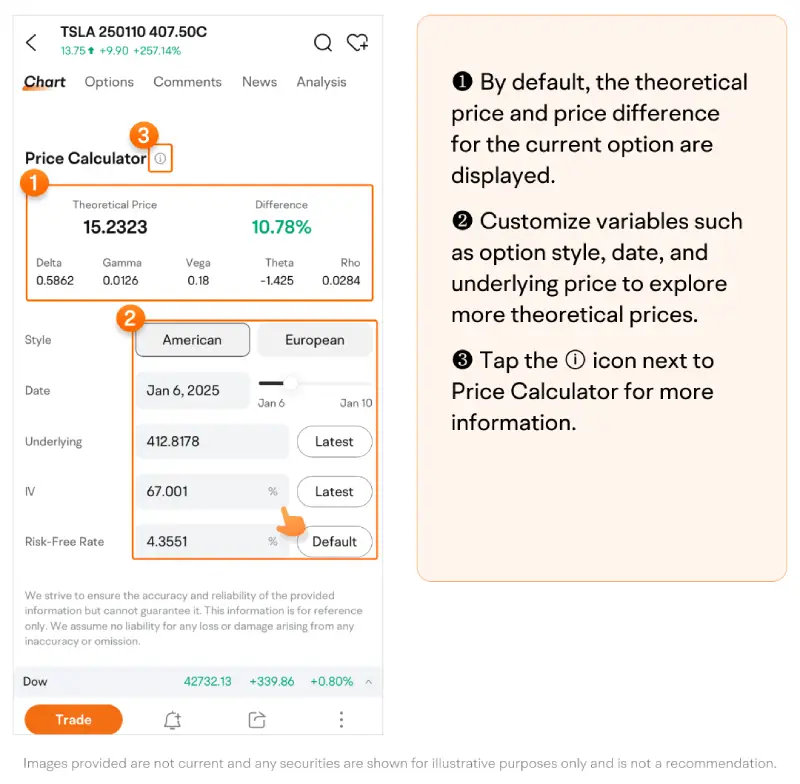
Options Screener: to filter and identify options contracts that meet specific criteria or investment strategies.
All this handy information could help you make smarter investment decisions. Think of it as having a crystal ball that gives you insights into your options strategy, helping you navigate the market with more confidence!
Step-by-step guide
With moomoo Canada, unlocking the world of options trading is just a few simple steps away! It's like having a magic key that opens the door to new investment opportunities without the hassle.
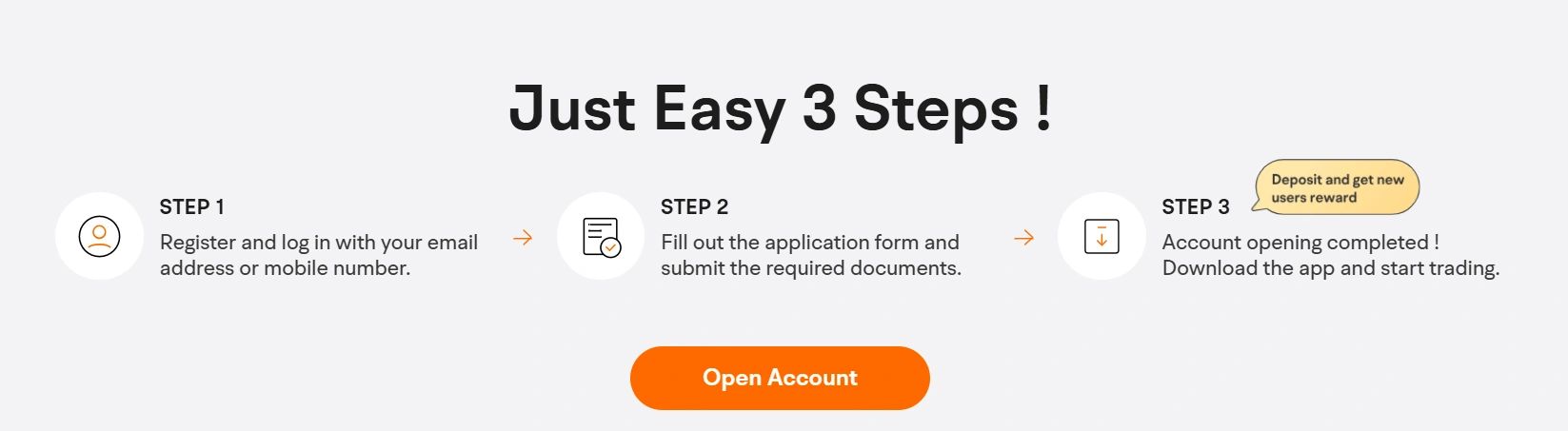
If you don't have an account, you can easily open one in just 3 steps.
You can register with your email address or mobile number, and submit the application form and other documents. Then you can take charge of your trading with moomoo!
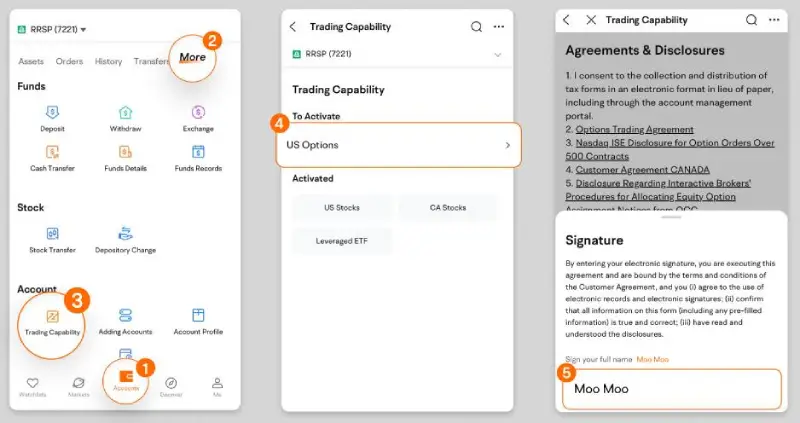
After opening a moomoo account, you will need to activate your options trading permissions. If your account or user profile doesn't meet the activation requirements for options trading, you might need to fill out a relevant questionnaire.
Here's how: Accounts > More > Trading Capability > US Options > Signature
Once you've opened an options account, you can start trading options on moomoo Canada! It offers a user-friendly interface and a range of tools to help you strategize your trades.
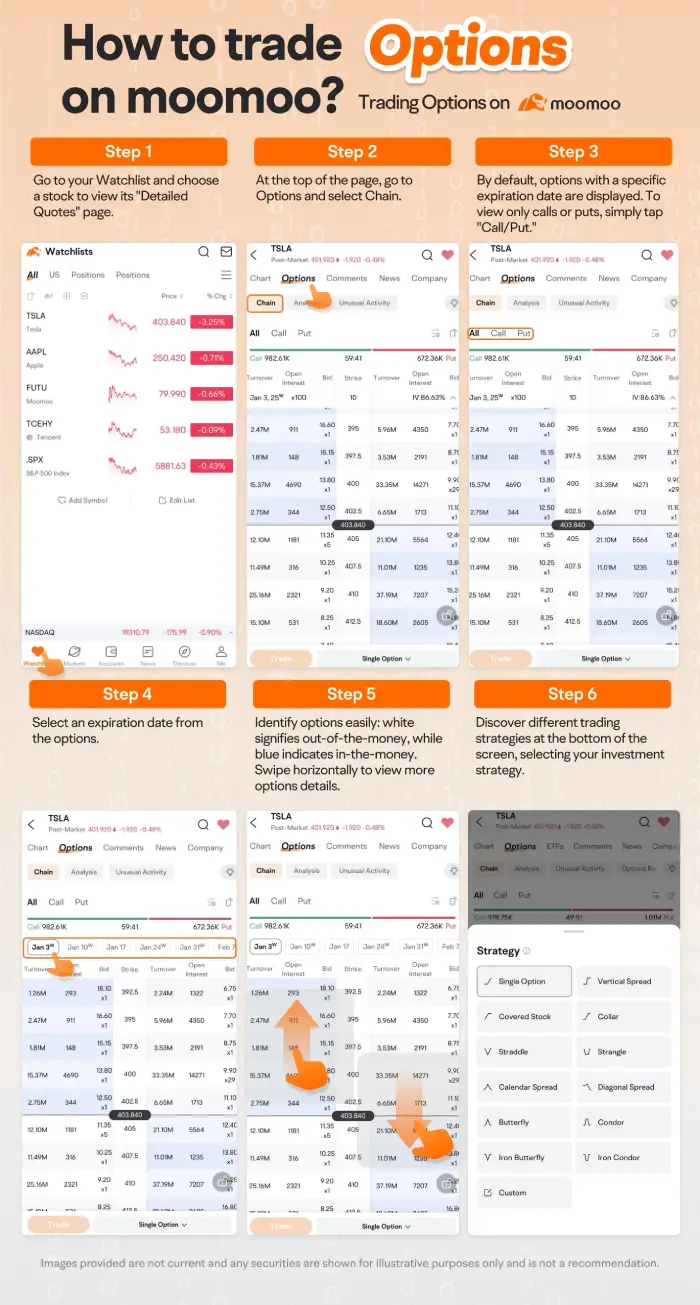
Step 1: Go to your Watchlist and choose a stock to view its "Detailed Quotes" page.
Step 2: At the top of the page, go to Options and select Chain.
Step 3: By default, options with a specific expiration date are displayed. To view only calls or puts, simply tap "Call/Put."
Step 4: Select your favorite date from the options to change the expiration date.
Step 5: Identify options easily: white signifies out-of-the-money, while blue indicates in-the-money. Swipe horizontally to view more options details.
Step 6: Discover different trading strategies at the bottom of the screen, providing flexibility for your investment strategy.
Frequency Asked Questions
How many option strategies are there?
There are numerous options strategies, and the exact number can vary depending on how they are categorized and combined. Here are some of them by categories: Basic Strategies: Long Call/Long Put/Short Call/Short Put Income Strategies: Covered Call/Cash-Secured Put Spread Strategies: Bull Call Spread/Bear Put Spread/Bull Put Spread/Bear Call Spread/Calendar Spread/Diagonal Spread Volatility Strategies: Straddle/Strangle/Butterfly Spread/Iron Butterfly/Iron Condor
How to backtest option strategies?
To backtest an options strategy, first define your strategy, including the type of options (calls or puts) and specific rules for entry and exit. Gather historical data for the underlying asset and options, such as prices and premiums. Input your strategy into a backtesting tool, select the historical period, and run the simulation. Analyze key metrics like return and drawdown to evaluate performance. Adjust the strategy as needed, avoiding overfitting by ensuring it works across various market conditions. Finally, validate your strategy by paper trading in a simulated environment to see how it performs in real-time without financial risk.
Which option strategy is most profitable?
Determining the most profitable options strategy is challenging because profitability depends on various factors, including market conditions, the trader's market outlook, risk tolerance, and strategy execution. Options strategies can be tailored to different market scenarios, so the "most profitable" strategy can vary based on the situation.
This presentation is for informational and educational use only and is not a recommendation or endorsement of any particular investment or investment strategy. Investment information provided in this content is general in nature, strictly for illustrative purposes, and may not be appropriate for all investors. Read more