How to Invest in S&P 500 for Beginners in Canada?

Investing in S&P 500 can be an excellent way for Canadian beginners to gain exposure to the U.S. stock market. The S&P 500 index includes 500 of the largest publicly traded companies in the United States, providing a diversified mix representative of the major industries in the United States. For Canadian investors, this means an opportunity to participate in the growth of companies like Apple, Microsoft and Amazon, while also diversifying their portfolios outside of the Canadian market.
There are several ways for Canadian investors to invest in the S&P 500. One approach is through a mutual fund that focuses on replicating the performance of the S&P 500. Another popular approach is via exchange-traded funds (ETFs) that are listed on Canadian stock exchanges. ETFs offer investors the advantage of trading on an exchange like a stock, providing greater liquidity and flexibility.
This article will explore the basics of the S&P 500 index, top 10 constituents of the S&P 500, benefits and risks of investing in S&P 500 and provide a step-by-step guide on how to invest in S&P 500 in Canada. Let’s break it down!
What is the S&P 500 index?
The S&P 500 index is a key financial benchmark that represents the performance of 500 of the largest publicly traded companies in the United States. As of 2024, it includes major companies like Apple, Microsoft, and Amazon, collectively accounting for about 80% of the U.S. stock market's total market capitalization.

For Canadian investors, it is crucial to understand the S&P 500 because it provides insight into the U.S. economy, which directly affects global markets, including Canada. The index covers a variety of industries and provides a comprehensive snapshot of the U.S. stock market.
Investing in S&P 500 allows Canadian investors to diversify their portfolios by gaining exposure to major U.S. companies, which can help them reduce risk and potentially improve returns. For example, the S&P 500 has delivered an average annual return of approximately 10% over the past few decades, outperforming many other investment benchmarks. By investing in S&P 500 index funds or ETFs listed on Canadian exchanges, such as the Vanguard S&P 500 Index ETF (TSX: VFV) or the iShares Core S&P 500 Index ETF (TSX: XUS), investors can easily access this index without dealing with currency exchange, making it a convenient option for those looking to expand their investment horizons.
Top 10 constituents of the S&P 500 by index weight
The S&P 500 index reflect the driving forces of growth in the U.S. economy. The table below lists the top 10 constituents by index weight as of November 21, 2024.
Company | Symbol | Sector | Index Weighting | Price | |
1 | NVIDIA Corp. | NVDA | Technology | 7.16% | 141.95 |
2 | Apple Inc. | AAPL | Technology | 6.90% | 229.87 |
3 | Microsoft Corp. | MSFT | Technology | 6.09% | 417.00 |
4 | Amazon.com Inc | AMZN | Consumer discretionary | 3.68% | 197.12 |
5 | Meta Platforms, Inc. Class A | META | Communication services | 2.44% | 559.14 |
6 | Alphabet Inc. Class A | GOOGL | Technology | 1.95% | 164.76 |
7 | Tesla, Inc. | TSLA | Consumer discretionary | 1.87% | 352.56 |
8 | Berkshire Hathaway Class B | BRK.B | Financial services | 1.72% | 476.57 |
9 | Alphabet Inc. Class C | GOOG | Technology | 1.61% | 166.57 |
10 | Broadcom Inc. | AVGO | Technology | 1.51% | 164.23 |
So you can easily find that top 10 constituents of the S&P 500 by index weight are typically dominated by companies from the technology, consumer discretionary, healthcare and finance. These sectors are crucial in driving the performance of the S&P 500, reflecting broader economic trends and consumer demand.
Why should Canadian investors invest in S&P 500?
Investing in S&P 500 can be a smart move for Canadian investors for several reasons:
1. Diversify investment risks
Sector diversification: The S&P 500 Index includes 500 large listed companies from different sectors in the United States, such as technology, finance, healthcare, etc. By investing in this index, Canadian investors can achieve diversification across different industries and economic fields, reduce the impact of single industry or company risks on the investment portfolio, and make the portfolio more robust.
Geographic diversification: Canadian investors' portfolios tend to be concentrated in the Canadian domestic market, and investing in the S&P 500 index can expand the investment scope to the US market and further diversify geographical risks.
2. Relatively low investment cost
Low management fees: Compared with actively managed funds, funds that track the S&P 500 index (such as index funds or ETFs) usually have lower management fees. Since professional fund managers are not required to make frequent stock selection and trading decisions, their operating costs are relatively low, which can save costs for investors and increase the actual returns of their investments.
Controllable trading costs: The constituents of the S&P 500 index typically have high liquidity and active trading. This means that when investors buy or sell funds tracking the index, the trading costs, such as commissions and bid-ask spreads are relatively low.
3. Advantages Compared to the Canadian Market
Market size: The U.S. stock market is larger and includes many globally leading high-tech enterprises and large multinational corporations. These companies often have stronger competitiveness in terms of technological innovation, market share, and profitability. Investing in the S&P 500 Index can allow Canadian investors to access a wider range of higher-quality investment targets and obtain higher potential returns.

Benefits of investing in S&P 500
For Canadian investors, there are many investment options, and the S&P 500 Index is becoming an increasingly popular investment target. This section will explore some benefits of investing in S&P 500. By understanding these benefits, Canadian investors can make more informed decisions and potentially enhance their portfolio performance.
Diversification beyond the Canadian market: The Canadian stock market is heavily weighted toward sectors such as finance, energy, and materials. By investing in the S&P 500, Canadian investors can gain exposure to a wider variety of sectors, including technology, healthcare, and consumer goods, which are more prominent in the U.S. market.
Exposure to leading global companies: The S&P 500 includes many of the world's leading companies, such as Apple, Amazon and Microsoft. These companies often have a global presence and robust growth prospects, providing Canadian investors with exposure to high-quality, internationally competitive companies.
High Liquidity: Stocks in the S&P 500 are highly liquid, meaning they can be easily bought and sold without a significant impact on the stock price. This liquidity extends to funds that track the index, such as ETFs and mutual funds, making it easy for investors to enter and exit positions.
Good historical performance: Historically, the S&P 500 index has shown a long-term upward trend. Although there may be short-term market fluctuations, over time the index has generally provided investors with significant long-term returns, helping them achieve asset appreciation.
High transparency: The S&P 500 is a well-known and widely followed index, with its components and performance readily available to the public. This transparency allows investors to easily track their investments and understand what they are investing in.
Cost-Effectiveness: Index funds and ETFs that track the S&P 500 generally have lower management fees compared to actively managed funds. This is because they simply replicate the index rather than requiring active stock selection and trading decisions, resulting in lower operating costs and higher net returns for investors.
Risks of investing in S&P 500
Investing in S&P 500 Index has long been considered a viable strategy for investors seeking exposure to a variety of large U.S. companies. However, like any investment, it comes with its own set of risks. Understanding these risks is important for Canadian investors to make informed investment decisions. In this section, we will explore some of the main risks of investing in the S&P 500 Index.
Market volatility: Like all stock investments, the S&P 500 is subject to market volatility. An economic recession or geopolitical events could cause the index's value to fluctuate significantly, resulting in potential losses for investors.
Concentration risk: The S&P 500 is weighted by market capitalization, which means that larger companies have a greater impact on the index's performance. This can lead to a concentration in certain sectors, such as technology, consumer discretionary and healthcare, which may expose investors to sector-specific risks if those sectors experience downturns.
Currency risk: For international investors, such as Canadians investing in the S&P 500, currency exchange rate fluctuations can affect returns. If the U.S. dollar weakens against their home currency, it can reduce the value of their investments when converted back.
Interest rate risk: Changes in U.S. interest rates can have a significant impact on the stock market. When interest rates rise, the borrowing costs for businesses increase, potentially compressing profits. At the same time, fixed-income products like bonds become more attractive, which may lead to funds to flow out of the stock market, causing the S&P 500 index to fall.
Political and regulatory risk: Changes in government policies, regulations, or political stability can impact the business environment and profitability of companies in the S&P 500. For example, changes in tax policies or trade regulations can affect corporate earnings.
S&P 500 Forecast 2025
With the U.S. economy showing unexpected strength and increased optimism after Donald Trump's 2024 election win, Wall Street analysts are revising their forecasts for the S&P 500 Index upward. This bullish sentiment suggests the index could reach new highs by the end of 2025.

Deutsche Bank's Chief Global Strategist, Binky Chadha, has set a year-end target of 7,000 for the S&P 500, reflecting the most optimistic forecasts. This prediction, representing a nearly 17% rise, is based on the strong macroeconomic conditions of low unemployment and steady GDP growth, which historically lead to strong equity performances.
The recent election victory of Donald Trump has further boosted market confidence, with investors expecting his policies to create a supportive business environment, enhancing market gains.
Brian Belsky from BMO Capital Markets has projected a target of 6,700 for the S&P 500 by the end of 2025, citing a long-term secular bull market since 2009. Despite occasional downturns, the market's upward trend is supported by factors like easing inflation and political stability. Belsky anticipates high single-digit price increases and significant earnings growth in 2025, as the economy continues to stabilize following recent volatility.
How to invest in S&P 500 in Canada?
Now you may be curious about how to invest in the S&P 500 in Canada. There are two common ways to invest in S&P 500 from Canada.
1. Exchange-Traded Funds (ETFs)
One of the most popular ways to invest in the S&P 500 is through ETFs that track the index. Canadian investors can purchase ETFs like the Vanguard S&P 500 ETF (VOO) or the iShares Core S&P 500 ETF (IVV) through a brokerage account. Additionally, Canadian-listed ETFs such as the iShares S&P 500 Index ETF (CAD-Hedged) (XSP) are available, which hedge against currency fluctuations.
2. Mutual Funds
Some Canadian mutual funds are designed to track or mimic the performance of the S&P 500. These funds can be purchased through a financial institution or an investment advisor.
Whether you choose to invest in S&P 500 through ETFs or mutual funds, the first thing is to find a trading platform. You can choose an online brokerage platform, like moomoo, to invest in S&P 500 in Canada easily.
moomoo Canada is a popular online trading platform that simplifies the process for Canadian investors looking to buy U.S.-listed ETFs and mutual funds. moomoo offers competitive commission rates and low fees, making it a cost-effective solution for Canadians seeking exposure to the U.S. markets.
Below is a step-by-step guide on how to invest in the S&P 500 in Canada via moomoo.
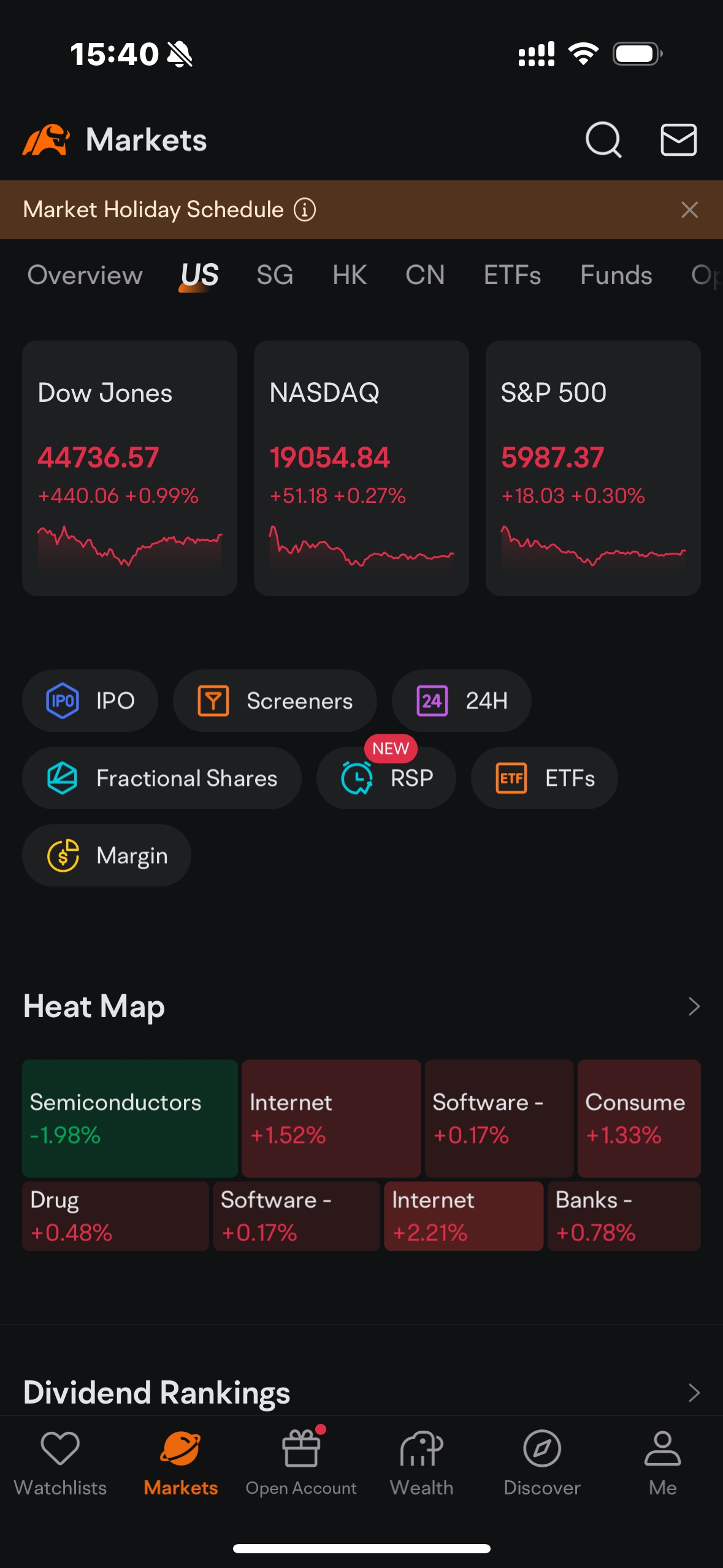
Step 1. Open moomoo Canada, select “Markets” tab and go to the US section, a list of well-known US indexes, including the Dow Jones, NASDAQ, and S&P 500, will be shown to you.
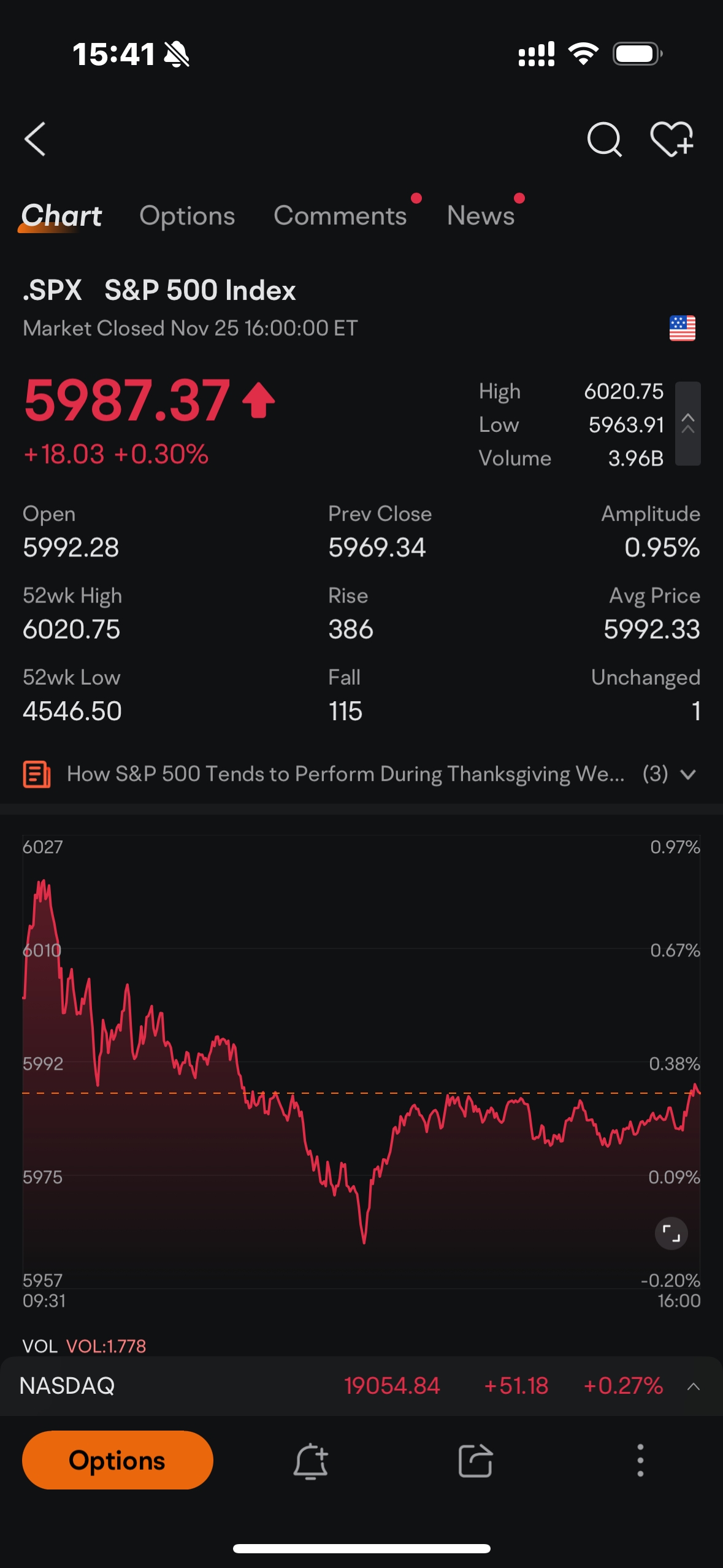
Step 2. Click on the S&P 500, and then you will see more detailed information about the index. Now you can start investing in S&P 500!
This presentation is for informational and educational use only and is not a recommendation or endorsement of any particular investment or investment strategy. Investment information provided in this content is general in nature, strictly for illustrative purposes, and may not be appropriate for all investors. Read more