Why Governments Are Rethinking Currency Strategy with Bitcoin Treasury Reserve
In an era defined by inflation, geopolitical tensions, and digital innovation, governments are beginning to view Bitcoin not just as a speculative asset, but as a potential strategic reserve component. Once considered fringe, Bitcoin is now being evaluated by certain nations in parallel to gold, prompting a reconsideration of global currency strategies. This trend, while early and controversial, reflects a deeper exploration into the role of non-sovereign digital assets on national balance sheets.
Key Takeaway
Governments are not replacing traditional currencies with Bitcoin but are exploring it as a strategic reserve asset to hedge against inflation and currency depreciation. This shift also signals national interest in financial innovation and digital infrastructure. Though adoption remains limited and Bitcoin is still volatile, these moves mark an evolving view of global reserves.
Key Highlights
Bitcoin vs. Fiat: Bitcoin's 21 million coin supply cap offers a stark contrast to the unlimited issuance of fiat currencies, which appeals during periods of inflation.
Sovereign Interest Rising: Countries like El Salvador and Bhutan have integrated Bitcoin into their national reserves, with the U.S. and China holding significant amounts through seizures.
Bitcoin as an Alliance Tool: Adopting digital reserves may reshape global financial alliances, altering geopolitical dynamics.
1. Bitcoin’s Scarcity Contrasts Fiat Currency Expansion
Traditional fiat currencies, such as the U.S. dollar or euro, can be expanded at the discretion of central banks, particularly during periods of economic stimulus or crisis. While this flexibility supports liquidity and credit flow, it can also contribute to inflationary pressures and long-term currency devaluation concerns.
In contrast, Bitcoin features a capped supply of 21 million coins, set by its underlying algorithm. This programmed scarcity introduces a deflationary dynamic that some observers compare to commodities like gold, which also have constrained supply. These characteristics have led to discussions around bitcoin holding as part of a nation’s treasury reserve strategy—although such actions remain limited and exploratory today.
This comparison has prompted discussions about Bitcoin's potential role as a hedge against fiat depreciation. However, it’s important to recognize that Bitcoin remains highly volatile, and its adoption in sovereign reserves is still limited and experimental.
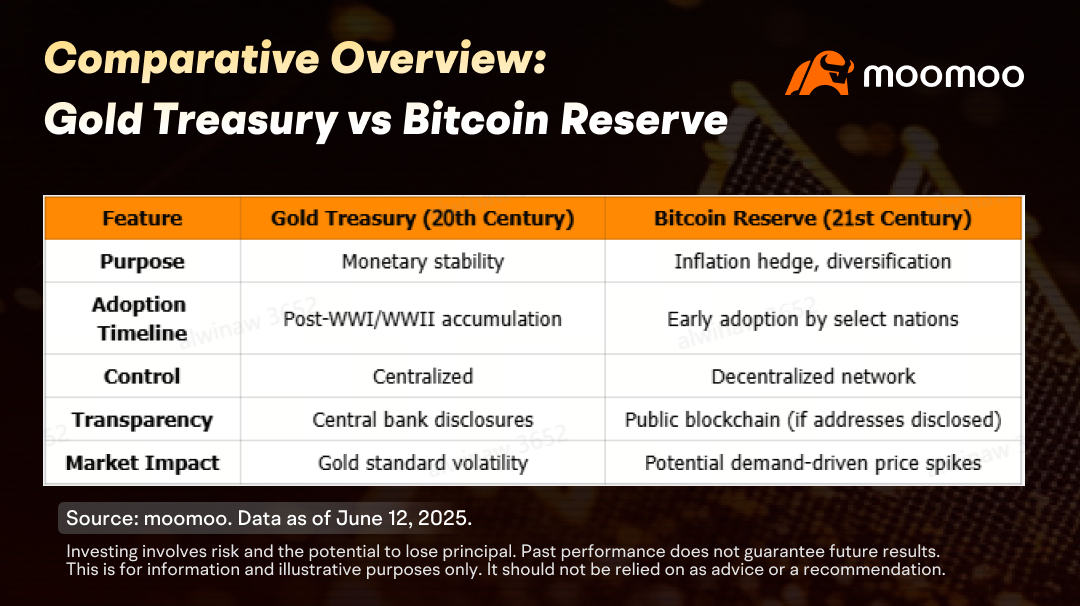
This cautious exploration reflects a growing awareness of alternative monetary tools in a changing economic landscape. Bitcoin, while not a mainstream reserve asset yet, is influencing debates around monetary diversification.
2. Early Sovereign Adoption May Create First-Mover Advantages
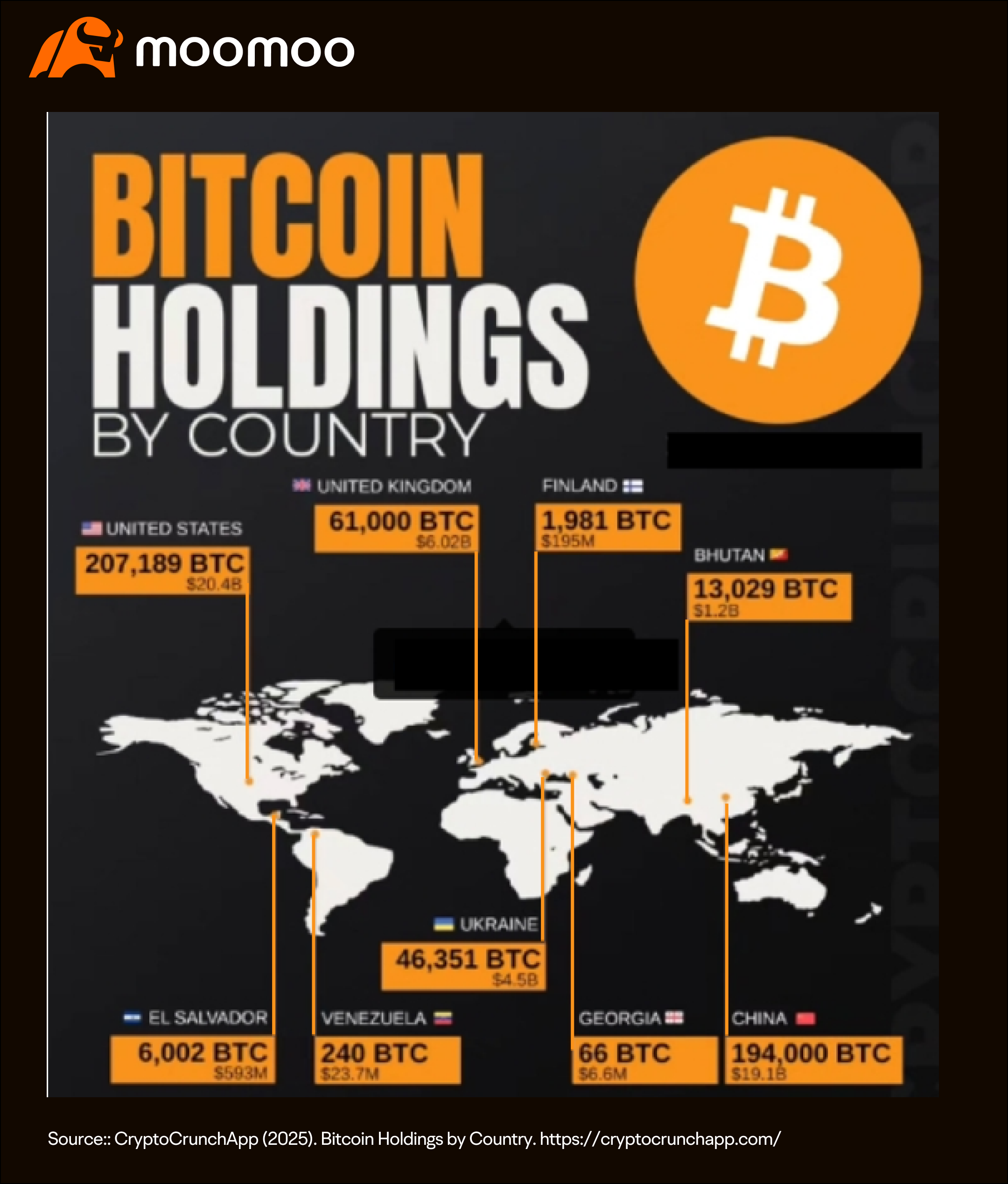
As of 2025, 9 countries collectively hold over 529,705 BTC, worth nearly $54 billion, representing 2.522% of Bitcoin’s 21 million supply (Bitbo, 2025).
Aside from these top 9 countries, countries exploring Bitcoin holdings as part of their treasury reserve strategy are progressing along three emerging dimensions—technological innovation, institutionalization, and regulatory maturity—which collectively signal varying degrees of readiness to adopt Bitcoin as an alternative asset class.
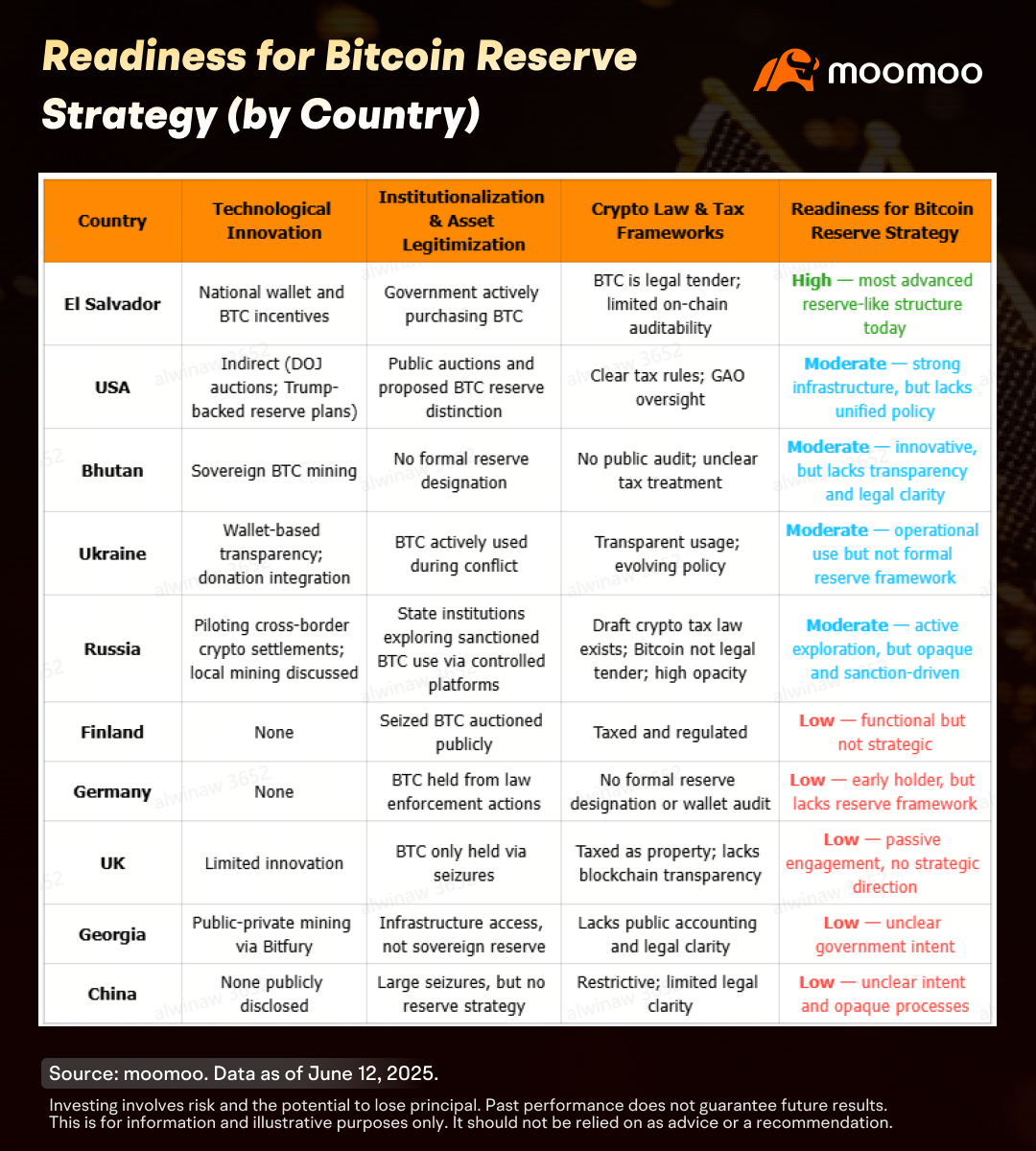
For instance, El Salvador, is a first mover, and ranked high in readiness. It has combined all three reasons to implement a national Bitcoin strategy. It developed the Chivo Wallet, which enables BTC transactions for the public and incentivizes usage with direct digital payments (BBC News, 2021). The government also publicly commits to a dollar-cost averaging (DCA) approach for acquiring BTC, suggesting long-term integration into its national reserves (Blockworks, 2022). Legally, the passage of the Bitcoin Law establishes BTC as legal tender and mandates acceptance by merchants, making El Salvador the most structurally prepared nation to treat Bitcoin as a sovereign asset (PriceWaterHouseCoopers, 2021).
In contrast, the United States demonstrates moderate readiness. While it lacks a coordinated national Bitcoin policy, it has taken steps toward institutionalization through Department of Justice (DOJ) public auctions of seized BTC and the recent creation of the Strategic Bitcoin Reserve and Digital Asset Stockpile under a 2025 executive order (White House, 2025). Technological adoption in the U.S. is primarily driven by private-sector innovation and federal pilots rather than a unified public strategy, and regulatory oversight remains fragmented across agencies like the U.S. Securities Exchange Commission (SEC), U.S. Internal Revenue Service (IRS), and U.S. Commodities Futures Trade and Commission (CFTC), complicating coherent reserve integration (Internal Revenue Service, 2021; U.S. Securities and Exchange Commission, 2023).
On the other end of the spectrum, China shows low readiness. Despite holding over 190,000 BTC from seizures such as the PlusToken scam, it has not formalized these holdings into any strategic reserve and maintains a prohibition on Bitcoin trading and mining (Chainalysis, 2025; The Block, 2024). While technologically advanced in launching the Digital Yuan (CBDC), China has actively suppressed decentralized cryptocurrencies in favor of state-controlled digital finance (Xinhua, 2022; Reuters, 2021). Legal treatment of Bitcoin in China remains ambiguous as it is considered virtual property in some court rulings, but its use and trade are banned by central authorities (South China Morning Post, 2023).
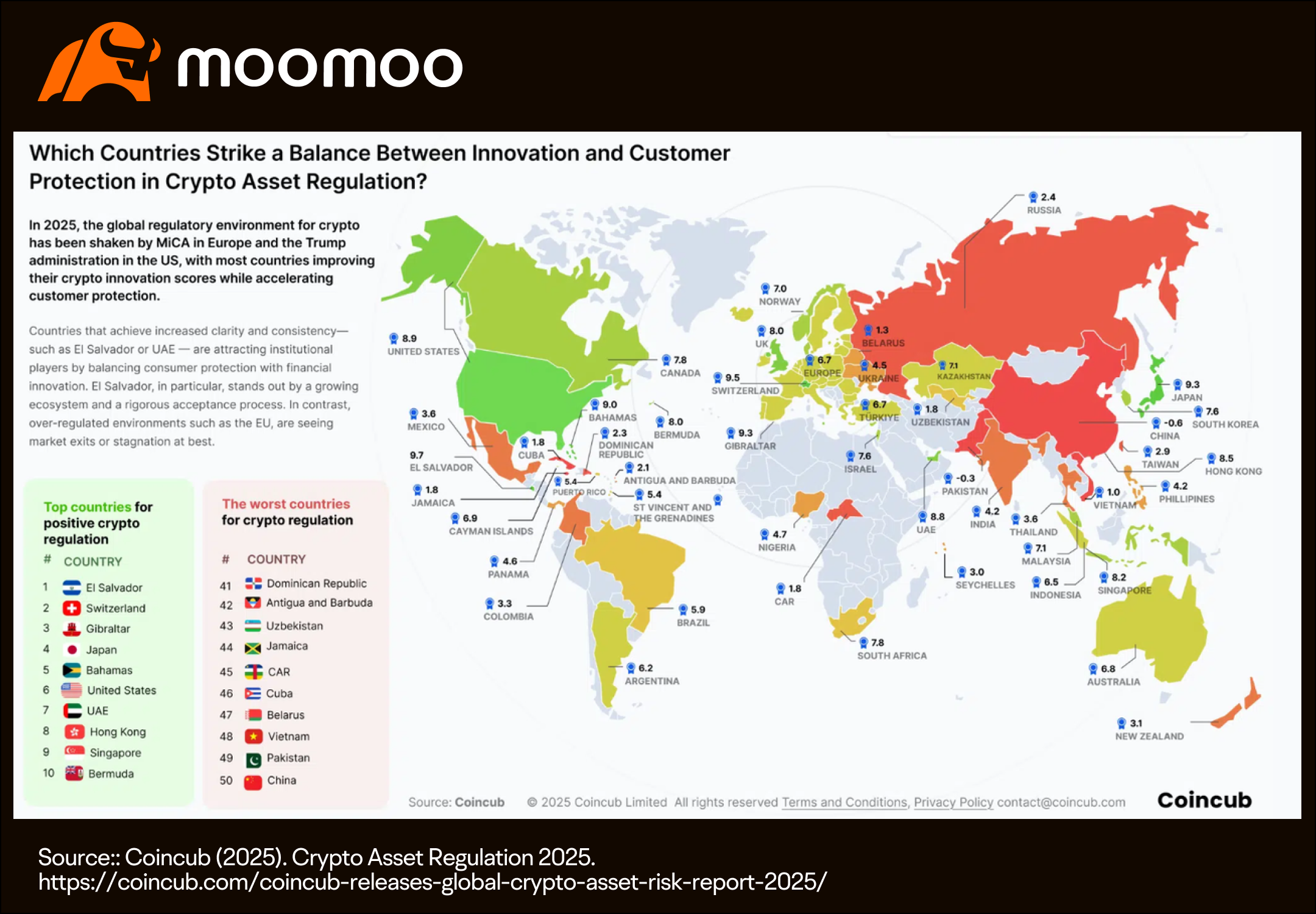
Meanwhile, Coincub (2025) published the Crypto Asset Risk Report 2025 revealed a contrast to the global regulatory environment for cryptocurrencies showing how these countries find the equilibrium between technological innovation and investor protection with new crypto regulations. Thus far, El Salvador still emerged as the first country to adopt Bitcoin as a legal tender and implemented a comprehensive digital asset law to combat crypto crimes and position itself as a global leader in digital finance. Meanwhile, Switzerland, El Salvador, Japan, and the UAE offer the most predictable and consistent regulatory environments for crypto assets, while other countries like Dominican Republic, Cuba or Vietnam still face compliance and enforcement challenges in 2025 (Coincub, 2025). These variations reflect how fiscal philosophy and regulatory maturity shape Bitcoin adoption.
3. Digital Reserves Could Alter Global Economic Alliances
Holding Bitcoin in national reserves isn’t just economic, it's geopolitical. As countries adopt Bitcoin as part of their strategic reserves, they are not only hedging against inflation or fiat currency devaluation, but also positioning themselves to increase financial sovereignty, bypass sanctions, and influence global economic governance. This trend is unfolding along three key dimensions.
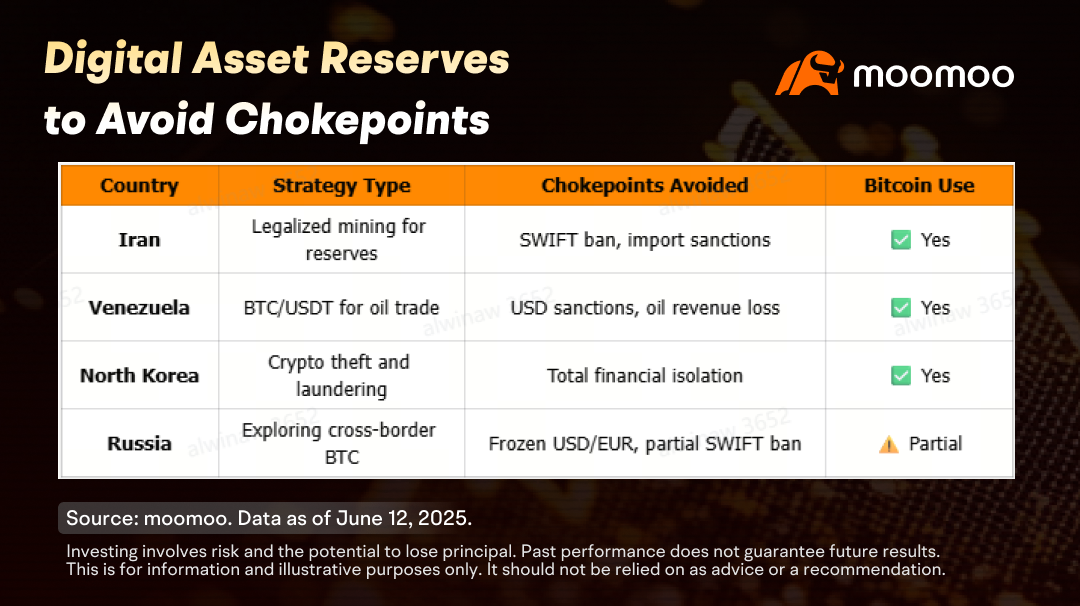
First, Bitcoin reserves provide a tool for countries to circumvent international financial chokepoints—especially sanctions or frozen assets in USD and EUR. For example, Iran has legalized Bitcoin mining to bolster its reserves amid SWIFT restrictions and trade embargoes (Reuters, 2021). Venezuela has used BTC and USDT to facilitate oil trade under sanctions (Reuters, 2024), while North Korea reportedly uses illicit crypto activities to fund state operations (Chainalysis, 2025). Even Russia is exploring Bitcoin-based cross-border transactions as a workaround for frozen Western reserves and partial SWIFT bans (Cryptobriefing, 2024). These use cases illustrate how digital assets offer alternative financial rails for countries under pressure, enhancing resilience and autonomy in foreign policy.
Second, Bitcoin holdings are catalyzing new bilateral and regional alliances around crypto infrastructure and regulation. A prominent example is the El Salvador–Argentina crypto cooperation pact signed in December 2024. The agreement aims to develop joint frameworks for digital asset regulation, signaling how Bitcoin-centric countries may collaborate to shape policy standards and advance regional fintech ecosystems (Cointelegraph, 2024). El Salvador has also opened dialogue with over two dozen nations to share its blockchain infrastructure experience (Cointelegraph, 2024)—underscoring how Bitcoin adoption can become a diplomatic bridge and a platform for shared digital sovereignty.
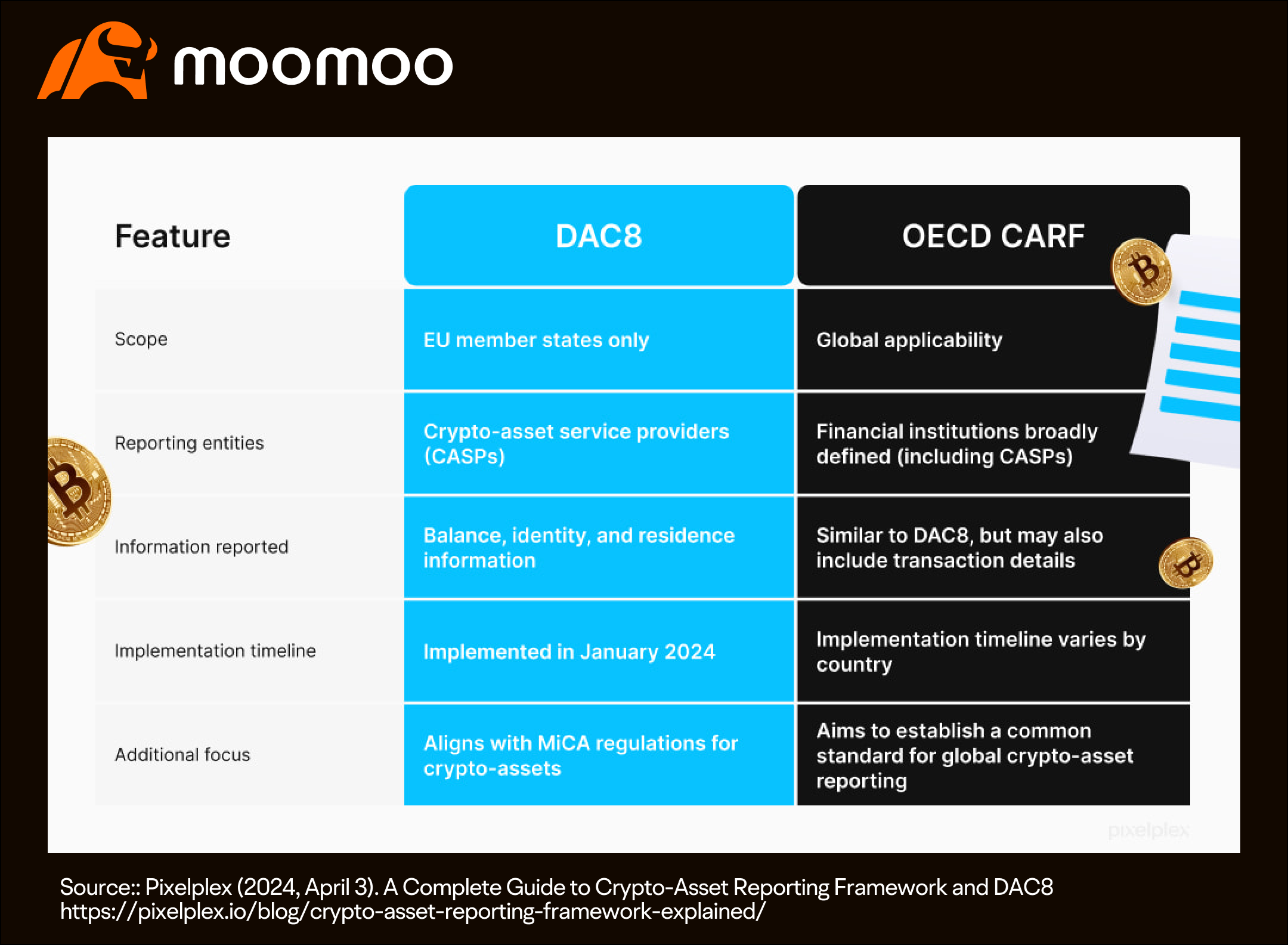
Third, broader multilateral initiatives are emerging to standardize crypto transparency and taxation, enabling coordinated development of digital reserves. In 2023, 48 countries, including the U.S., Japan, and France, signed on to implement the Organisation for Economic Co-operation and Development (OECD)’s Crypto-Asset Reporting Framework (CARF) by 2027 (OECD, 2023). This move establishes cross-border data-sharing rules for tax authorities, helping legitimize crypto assets as institutional holdings. Such frameworks can foster trust and interoperability between national crypto-reserve systems, a critical prerequisite for the emergence of globally aligned economic blocs based on digital assets.
Together, these developments point toward a world where Bitcoin and other crypto reserves are not merely domestic tools, but catalysts for reconfigured global alliances, economic coordination, and the redefinition of monetary sovereignty in the digital age.
Conclusion
While Bitcoin is still far from mainstream adoption in sovereign finance, its potential as a strategic reserve asset is no longer theoretical. From technological innovation, including fintech app development services, to institutional legitimization to the emergence of digital economic alliances, Bitcoin is being explored not only as a hedge against inflation and fiat depreciation but also as a lever for financial sovereignty and geopolitical signaling.
Countries like El Salvador are demonstrating high readiness through infrastructure investment, legal clarity, and international cooperation. Meanwhile, larger economies such as the United States show institutional progress yet remain fragmented in approach. In contrast, China's restrictive stance underscores how national priorities shape crypto strategy, regardless of technical capacity.
More broadly, as digital reserves increasingly influence global coordination—from bilateral pacts to multilateral tax frameworks—Bitcoin is evolving into a tool that could redefine international monetary relationships. These developments signal that crypto reserves are not merely speculative experiments but indicators of a country’s positioning in the emerging digital financial order.
Reference
Bitbo. (2025). Bitcoin Holdings of Countries & Governments. BitcoinTreasuries.com
PricewaterhouseCoopers (2021). El Salvador's Law: A Meaningful Test for Bitcoin. pwc.com/gx/en/f...
BBC News. (2021, June 9). Bitcoin: El Salvador makes cryptocurrency legal tender. Bitcoin: El Salvador makes cryptocurrency legal tender
Blockworks. (2022, November 17). Dollar-cost Averaging Bitcoin Would’ve Saved El Salvador $18M. Dollar-cost Averaging Bitcoin Would’ve Saved El Salvador $18M
Internal Revenue Service. (2021). Frequently asked questions on virtual currency transactions. Frequently asked questions on virtual currency transactions | Internal Revenue Service
Reuters. (2021, September 25). China bans crypto mining and trading again. reuters.com/wor...
South China Morning Post (SCMP). (2023, September 4). Local Chinese court argues cryptocurrency is property despite Beijing’s crackdown. Local Chinese court argues cryptocurrency is property despite Beijing’s crackdown" data-next-head="
The Block. (2024, August 7). Dormant wallets linked to PlusToken scam move large amounts of ether: analysts theblock.co/pos...
U.S. Securities and Exchange Commission (SEC). (2023). Statement on the Approval of Spot Bitcoin Exchange-Traded Products. sec.gov/newsroo...
White House. (2025, March 6). Establishment of the Strategic Bitcoin Reserve and United States Digital Asset Stockpile. Establishment of the Strategic Bitcoin Reserve and United States Digital Asset Stockpile
Xinhua News Agency. (2022, May 14). Chinese embrace digital yuan as China further promotes pilot program. news.cn/2022051...
Coincub (2025). Crypto Asset Risk Report 2025. Crypto Asset Risk Report 2025
Reuters. (2024, April 23). Exclusive: Venezuela to accelerate cryptocurrency shift as oil sanctions return. reuters.com/bus...
Chainalysis. (2025). The Chainalysis 2025 Crypto Crime Report. 2025 Crypto Crime Report
OECD. (2024, October 2). Crypto-Asset Reporting Framework and Amendments to the Common Reporting Standard. Organisation for Economic Co-operation and Development. oecd.org/en/abo...
Reuters. (2021, July 23). Iran allows crypto mining for import payments amid sanctions. Reuters.com. reuters.com/tec...
Cryptobriefing (2023, February 14). Russia adopts Bitcoin, crypto assets for cross-border transactions, finance minister says. Russia adopts Bitcoin, crypto assets for cross-border transactions, finance minister says
Cointelegraph (2024, December 12). El Salvador to extend crypto agreements beyond Argentina. El Salvador to extend crypto agreements beyond Argentina
Disclosure
This presentation is for information and educational use only and is not a recommendation or endorsement of any particular investment or investment strategy. Investment information provided in this content is general in nature, strictly for illustrative purposes, and may not be appropriate for all investors. It is provided without respect to individual investors' financial sophistication, financial situation, investment objectives, investing time horizon, or risk tolerance. You should consider the appropriateness of this information having regard to your relevant personal circumstances before making any investment decisions. Past investment performance does not indicate or guarantee future success. Returns will vary, and all investments carry risks, including loss of principal. All participants shall be responsible for the comparison and consideration of any relevant fees, charges and costs involved before investing.
Moomoo is a financial information and trading app offered by Moomoo Technologies Inc.
In the U.S., investment products and services available through the moomoo app are offered by Moomoo Financial Inc., a broker-dealer registered with the U.S. Securities and Exchange Commission (SEC) and a member of Financial Industry Regulatory Authority (FINRA)/Securities Investor Protection Corporation (SIPC).
In Singapore, investment products and services available through the Moomoo app are offered through Moomoo Financial Singapore Pte. Ltd. regulated by the Monetary Authority of Singapore (MAS). Moomoo Financial Singapore Pte. Ltd. is a Capital Markets Services Licence (License No. CMS101000) holder with the Exempt Financial Adviser Status. This advertisement has not been reviewed by the Monetary Authority of Singapore.In Australia, financial products and services available through the Moomoo app are provided by Moomoo Securities Australia Ltd, an Australian Financial Services Licensee (AFSL No. 224663) regulated by the Australian Securities and Investment Commission (ASIC). Please read and understand our Financial Services Guide, Terms and Conditions, Privacy Policy and other disclosure documents which are available on our website https://www.moomoo.com/au. Technical analysis is only one way of analysing historical market data and does not guarantee future trends. It must be read in conjunction with other forms of analysis and risk management strategies when making investment decisions. Images and information displayed are for illustrative purposes only and does not constitute a financial advice.
In Canada, order-execution only services available through the Moomoo app are provided by Moomoo Financial Canada Inc., regulated by the Canadian Investment Regulatory Organization (CIRO).
In Malaysia, investment products and services available through the Moomoo app are offered through Moomoo Securities Malaysia Sdn. Bhd. ("Moomoo MY") regulated by the Securities Commission of Malaysia (SC). Moomoo Securities Malaysia Sdn. Bhd. is a Capital Markets Services Licence (License No. eCMSL/A0397/2024) holder. This advertisement has not been reviewed by the SC.
Moomoo Technologies Inc., Moomoo Financial Inc., Moomoo Financial Singapore Pte. Ltd., Moomoo Securities Australia Ltd, Moomoo Financial Canada Inc., and Moomoo Securities Malaysia Sdn. Bhd. are affiliated companies.
This presentation is for informational and educational use only and is not a recommendation or endorsement of any particular investment or investment strategy. Investment information provided in this content is general in nature, strictly for illustrative purposes, and may not be appropriate for all investors. Read more