Why do oil ETFs lag behind oil prices in the long run?
Introduction
The oil market has been quite eventful in recent years.
In early 2020, during the initial phase of the pandemic, oil prices plummeted to unprecedentedly negative levels; just two years later, the Russia-Ukraine conflict drove oil prices up to $130 per barrel.
Oil holds a central position in the commodities sector as the most traded and liquid commodity worldwide. Global daily oil consumption has exceeded 100 million barrels, with annual trade volumes reaching several trillion dollars, far surpassing other commodities.
Oil futures, ETFs, and energy companies are important components for investors, often used to hedge against inflation or geopolitical risks.
However, you may have noticed that some oil ETFs underperform the actual price of oil over the long term.
What is the reason behind this underperformance? If you're looking to invest in oil, what investment methods might be more effective? Let's dive in.
Oil ETFs vs. Oil
For most investors, directly holding commodities is not practical.
Imagine buying a barrel of oil and keeping it at home—where would you store it? Moreover, it's not gasoline that you can directly pour into your car's tank, so it doesn't really help with your daily life.
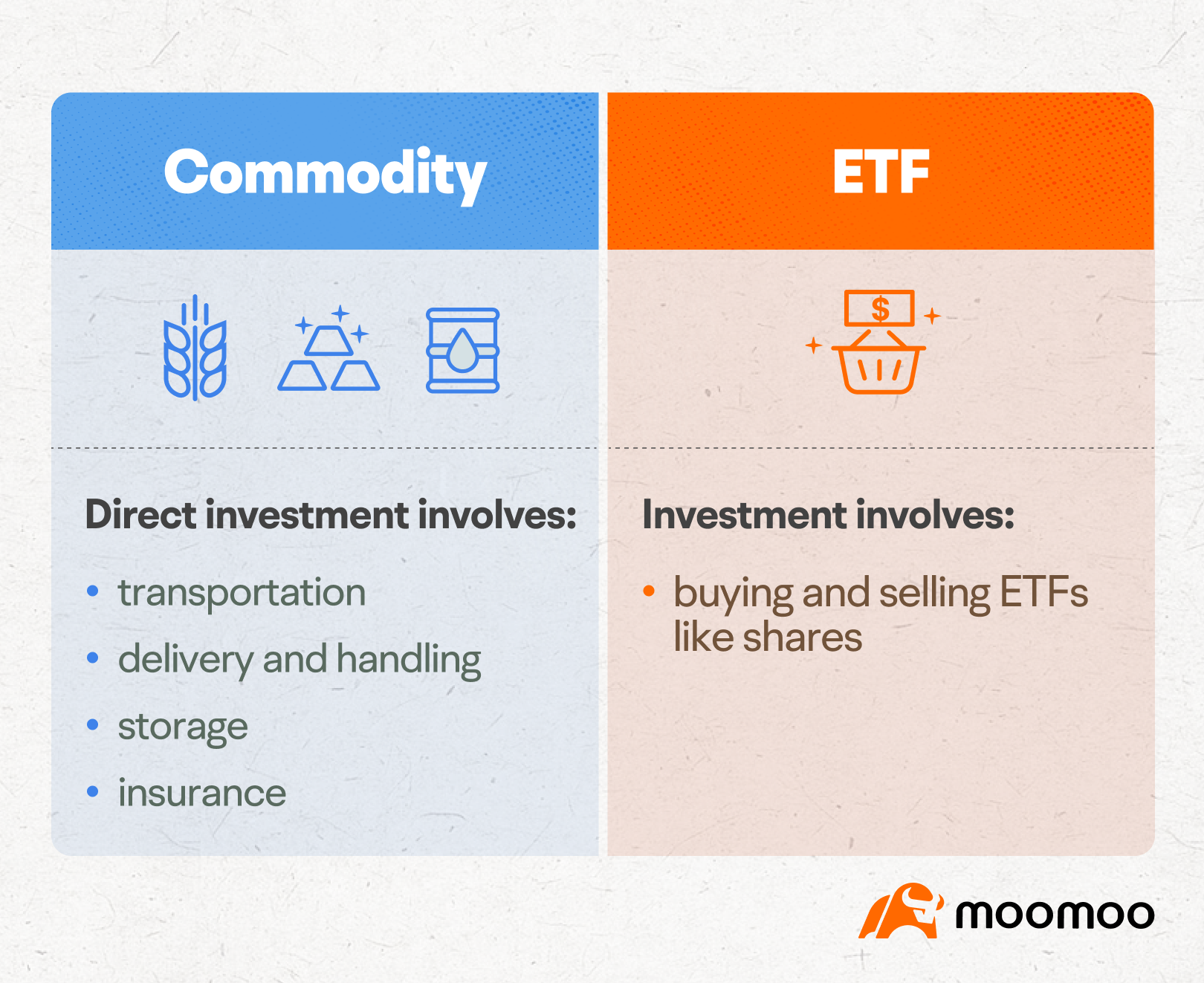
As a result, oil ETFs offer a simple and cost-effective way to track the performance of oil. Due to the characteristics of ETFs, investing in them is as straightforward as buying stocks.
What is an oil ETF?
An oil ETF is a type of investment fund that is designed to track the price of oil or the performance of oil-related assets.
The vast majority of oil ETFs do not directly purchase and store physical oil. This approach is neither practical (due to high storage costs and complexity) nor does it align with the structure of ETFs.
Instead, most oil ETFs achieve oil price tracking by investing in oil futures contracts. Some fund managers buy oil futures contracts that are nearing expiration and sell them before they expire, simultaneously purchasing contracts for the next month.
Some ETFs may indirectly track oil prices by investing in stocks of oil-related companies (such as exploration, extraction, refining, and transportation companies), other derivatives (like swap contracts), or a combination of these methods.
ETFs tracking oil prices
ETFs that track oil prices are primarily concentrated in the U.S. market. Below are some of the more well-known and liquid oil futures ETFs currently available, sorted by assets under management (AUM):
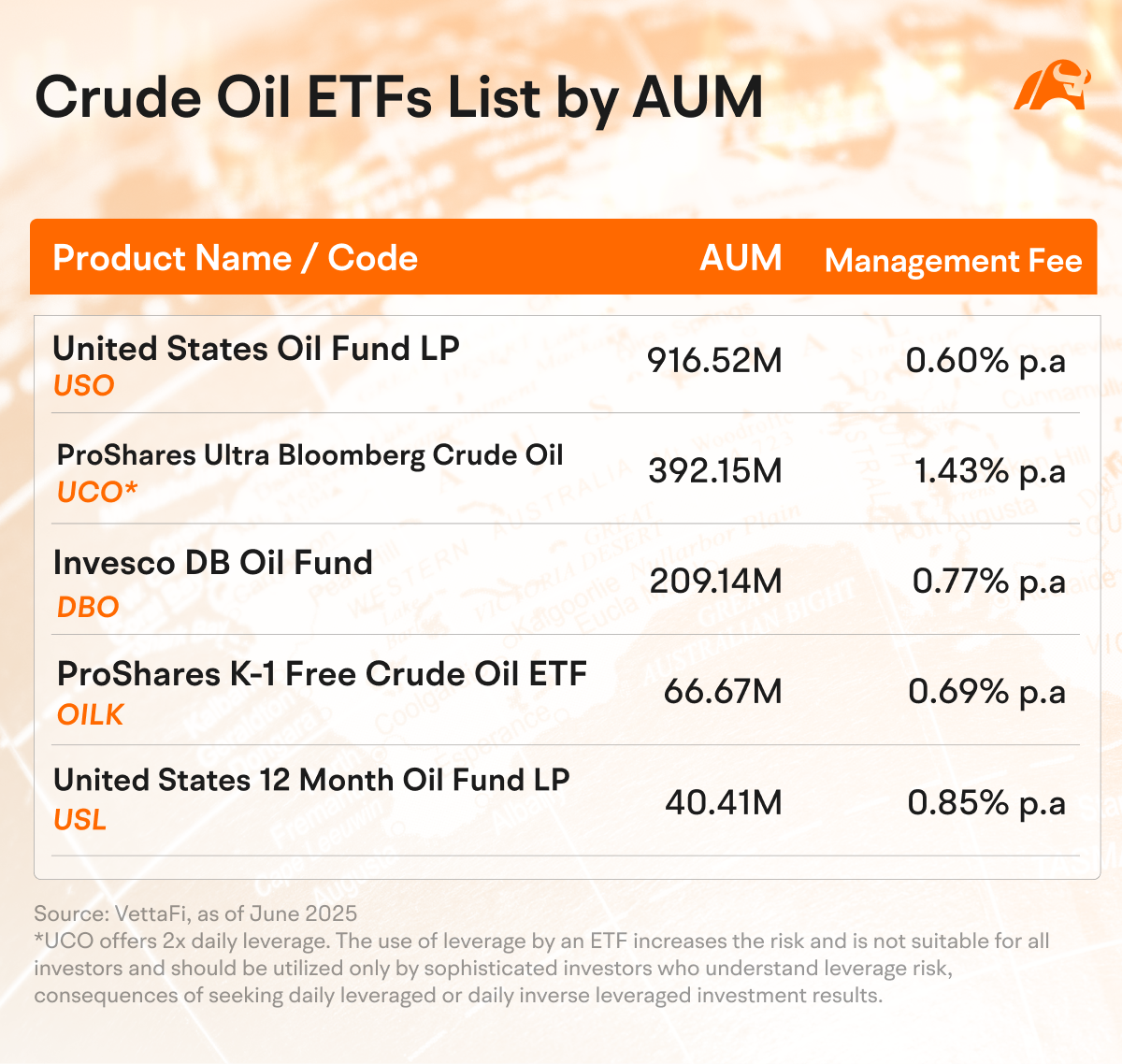
Among these, USO is one of the oldest, largest, and most liquid WTI crude oil ETFs. It is also a common tool for retail investors to access the oil market.
Is an oil ETF a good investment?
If you hold these oil ETFs for an extended period, you might notice a peculiar phenomenon: they often fail to keep pace with the price of oil itself.
Take USO, the largest ETF mentioned earlier, as an example. Over time, the performance of oil prices has far exceeded that of the ETF. In 2022, oil prices reached new highs not seen since 2008, USO's price had not recovered to its 2019 levels.
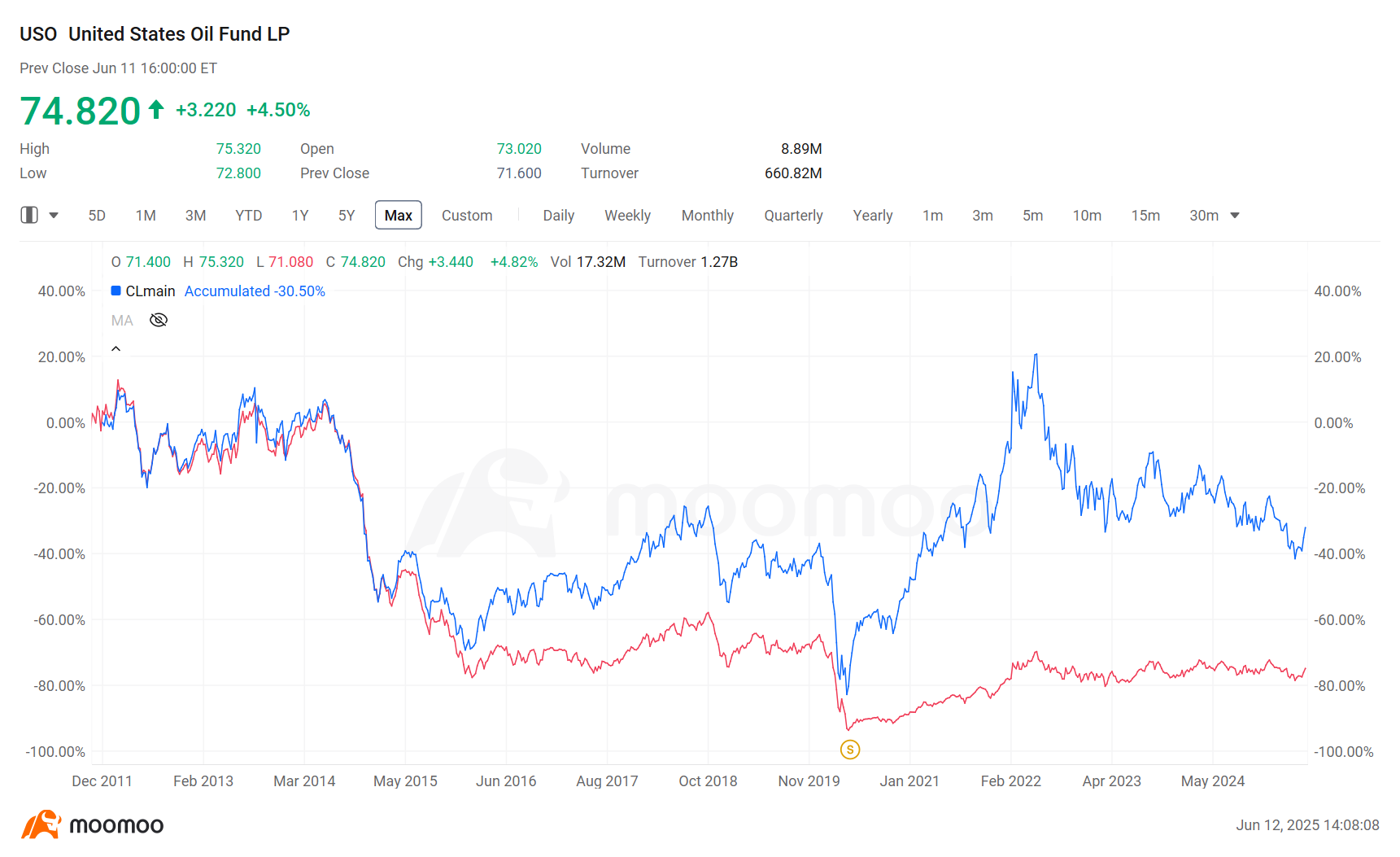
Past performance does not guarantee future results. This is for information and illustrative purposes only.
This suggests that for most investors, those oil ETFs may not be a good long-term investment choice. Even if oil prices rise, oil ETFs may stagnate or even decline.
How Rollovers Affect Performance
The underperformance of oil ETFs like USO over the long term is primarily due to the inherent and nearly insurmountable flaws associated with their futures-based structure. These challenges are significant obstacles for long-term holders.
Let's break down the mechanisms behind this:
What is the crude oil future?
Crude oil futures are standardized financial derivative contracts where the buyer and seller agree to exchange a specific quantity of a particular grade of crude oil (such as West Texas Intermediate, WTI, or Brent crude) at a predetermined price on a future date, known as the delivery date.
These contracts are used by various market participants, including producers, refiners, and speculators, to hedge against or speculate on future price movements of crude oil. The standardization of these contracts ensures that they are traded on regulated exchanges, providing liquidity and transparency to the market.
USO holds a portfolio of near-month WTI crude oil futures contracts traded on the New York Mercantile Exchange (NYMEX), allowing the ETF to reflect the price movements of crude oil.
Learn more: How to Buy Oil Stock: A Beginner’s Guide
What is a rollover?
Futures contracts have a specified expiration date. When the contract expires, the holder is obligated to either take or make delivery of the underlying asset. For a commodity like crude oil, this means physical delivery, which is not feasible for an ETF like USO that lacks the infrastructure to store physical oil.
To maintain continuous exposure to the price of crude oil without taking physical delivery, USO must "roll over" its futures contracts. This involves selling the contracts that are nearing expiration and purchasing new contracts that expire at a later date.
The rolling process typically occurs over a set period each month, known as the "roll period." USO follows a specific schedule to systematically sell the expiring futures contracts and buy the new ones.
What is contango & backwardation?
Contango and backwardation are two key terms used to describe the shape of the futures price curve, reflecting the price relationships between futures contracts with different expiration months.
They are crucial in commodity markets and directly affect the performance of derivatives like ETFs.
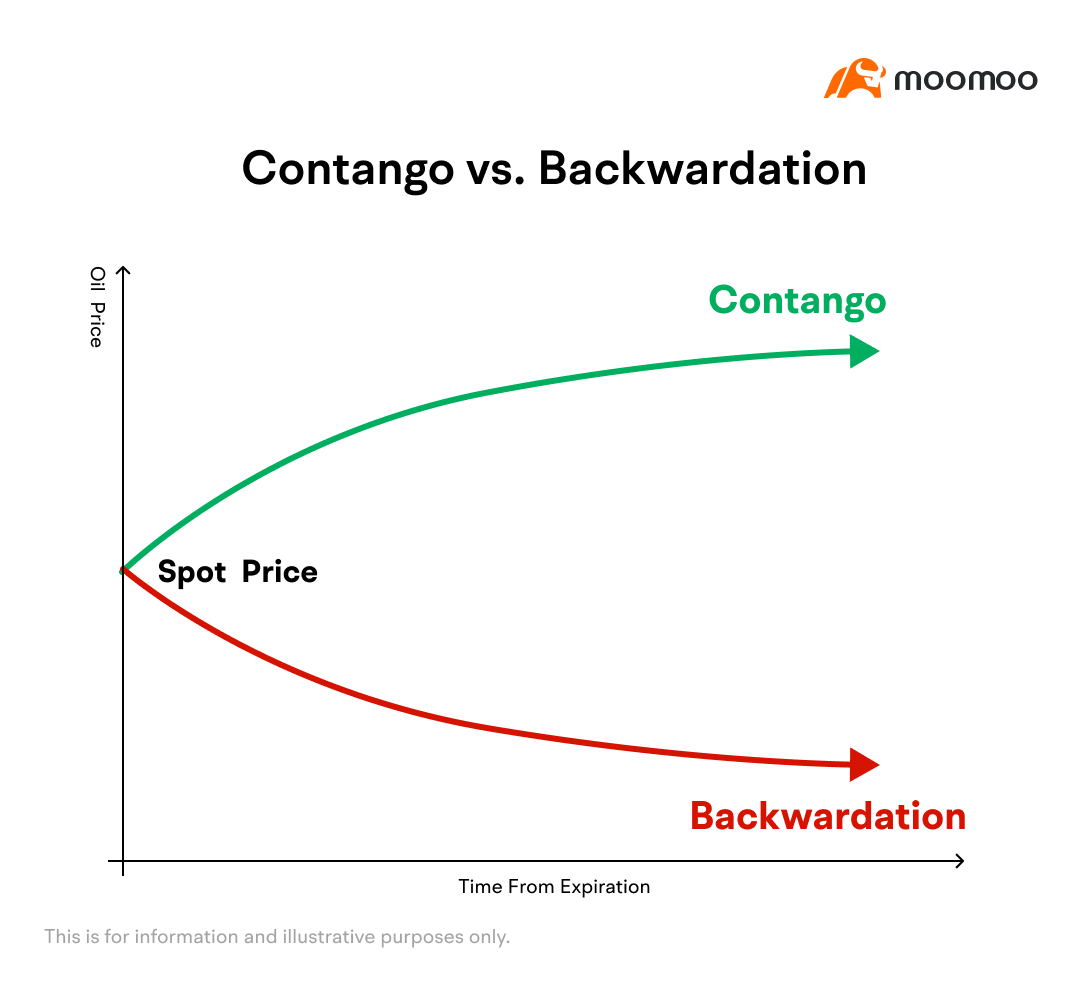
Contango: This occurs when the futures prices are higher than the spot prices.
Imagine it's January, and the current spot price of crude oil is $50 per barrel. The futures contract for delivery in February is priced at $52 per barrel, while the contract for delivery in March is priced at $54 per barrel. This situation, where futures prices are higher than the current spot price, is known as contango.
In a contango market, an ETF that rolls over its futures contracts (selling the near-month contract and buying the next-month contract) incurs a loss because it's buying higher-priced contracts and selling lower-priced ones. This can erode returns over time.
Backwardation: Conversely, backwardation occurs when futures prices are lower than spot prices, which can benefit ETFs as they roll over contracts.
However, markets are often in contango, especially for oil.
For physical commodities like oil, there are costs associated with storage, insurance, and financing.
Futures prices often reflect these costs, leading to higher prices for contracts further out in time compared to the current spot price.
Plus, holding a physical commodity involves opportunity costs, as capital is tied up in the commodity rather than being invested elsewhere. That also contributes to contango.
Backwardation in crude oil futures is less common and typically requires conditions such as immediate supply shortages, very low inventories, and strong demand to prompt market participants to overlook holding costs and accept higher near-month prices.
Typical instances of crude oil backwardation often occur during crises (such as the early stages of the Russia-Ukraine war). These periods usually last a few weeks to a few months, after which the market mostly returns to a state of contango.
Now you can understand why oil ETFs tend to underperform oil prices over the long term.
What are some other oil investing strategies?
Since ETFs that track oil prices cannot overcome the losses incurred from rolling over contracts, what other investment tools can you consider if you still want to invest in the oil sector? Here are some categories you might consider:
Oil Futures
Mainstream crude oil futures include NYMEX WTI Futures (CL) and ICE Brent Futures (B), among others. These contracts are directly linked to changes in crude oil prices, offer high leverage, and allow for both long and short trading.
Potential benefits:
Direct Price Exposure: They are closely tied to spot crude oil prices, making them the purest tools for investing in oil prices.
Bidirectional Trading: Investors can go long or short, providing flexibility in responding to market directions.
Good Liquidity: The leading contracts have high trading volumes, narrow bid-ask spreads, and enable quick execution.
Potential risks:
High Volatility and Leverage: Crude oil prices can be extremely volatile, and leverage can magnify losses, leading to rapid margin calls or even negative account balances.
High Level of Expertise Required: A deep understanding of futures rules, trading strategies, margin management, and contract rollover procedures is necessary.
Rollover Costs: Long-term holding requires continuous contract rollover, which can result in ongoing losses in a contango market (the usual state).
Oil Stocks
The oil industry is characterized by a long value chain, which primarily includes the upstream exploration and production, midstream transportation and storage, and downstream refining and distribution segments.
This industry involves numerous companies, including major integrated giants like ExxonMobil (XOM) and Shell (SHEL), as well as companies that specialize in specific areas of the oil sector.
Potential benefits:
Long-term Growth Potential: Investing in quality companies allows participation in long-term value growth driven by technological, managerial, and resource advantages. Strong companies can survive and even profit in low oil price environments.
No Rollover/Leverage Risks: Stocks have no expiration date, allowing for long-term holding without the risk of margin calls.
Simple Participation: Stocks can be traded through a brokerage account, with a lower barrier to entry compared to futures.
Potential risks:
Individual Stock Risk: A single company may face specific risks such as resource depletion, project failures, environmental lawsuits, and political risks like resource nationalization.
In-depth Research Required: Stock selection requires analyzing financial statements, reserve reports, cost structures, and dividend security, which can be time-consuming and demanding.

Oil ETFs (Tracking oil companies)
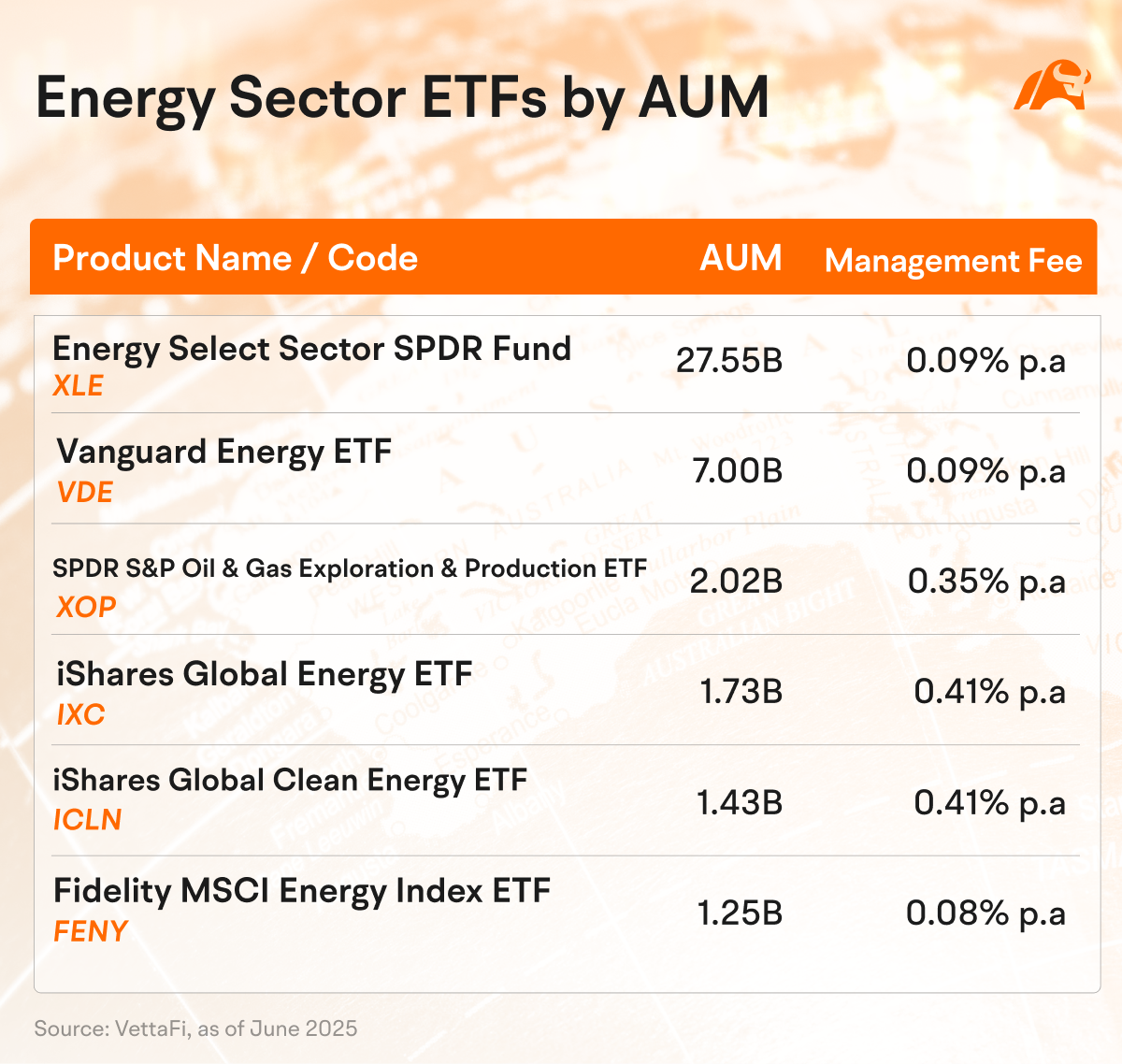
In addition to ETFs that purely track oil prices, some ETFs track the performance of oil-related companies. These ETFs are not affected by the rollover costs associated with oil futures contracts.
Generally, they tend to be larger in scale compared to those tracking oil prices directly, with major oil and gas sector ETFs often having assets exceeding $1 billion.
Below are some of the more well-known energy sector ETFs currently available, sorted by assets under AUM:
Potential benefits:
Diversified Investment: These ETFs help avoid the risk of individual stock blow-ups by covering multiple segments of the industry chain.
No Rollover Risk: The underlying assets are stocks, so there are no issues with rolling over futures contracts.
Potential risks:
Reduced Correlation with Oil Prices: a lower correlation with crude oil futures and may involve a time lag, as earnings reports are often needed to confirm impacts.
Inability to Avoid Industry Cycles: ETFs remain highly exposed to the systemic risks of the entire energy sector.
How to invest in oil on moomoo
Want to keep an eye on all oil moves? Moomoo's got you covered.
Step 1: Open a moomoo account. You can register with your email address or mobile number and submit the application form and other documents. Then you can take charge of your trading with moomoo.

Step 2: Check commodity performance on moomoo.
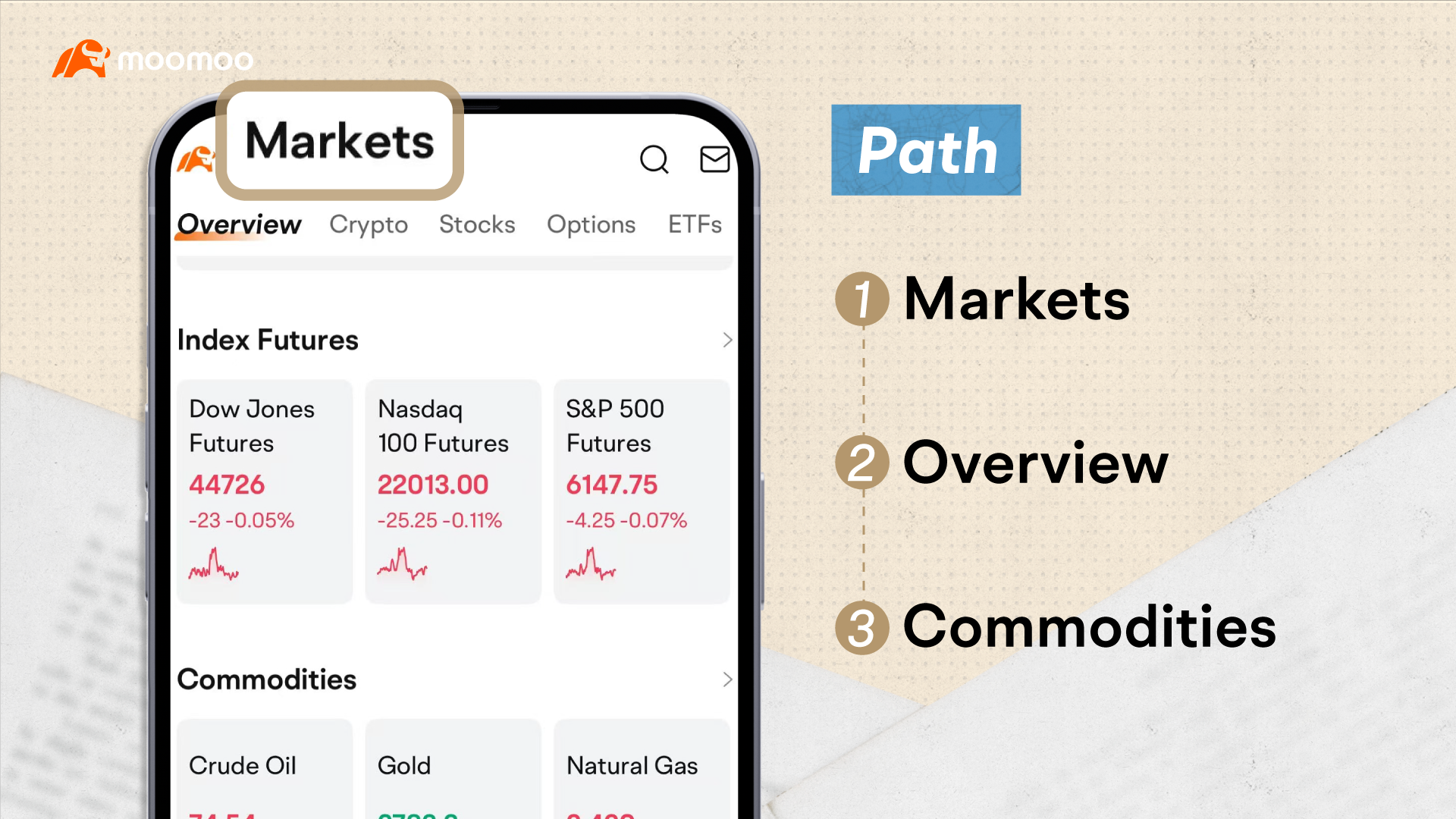
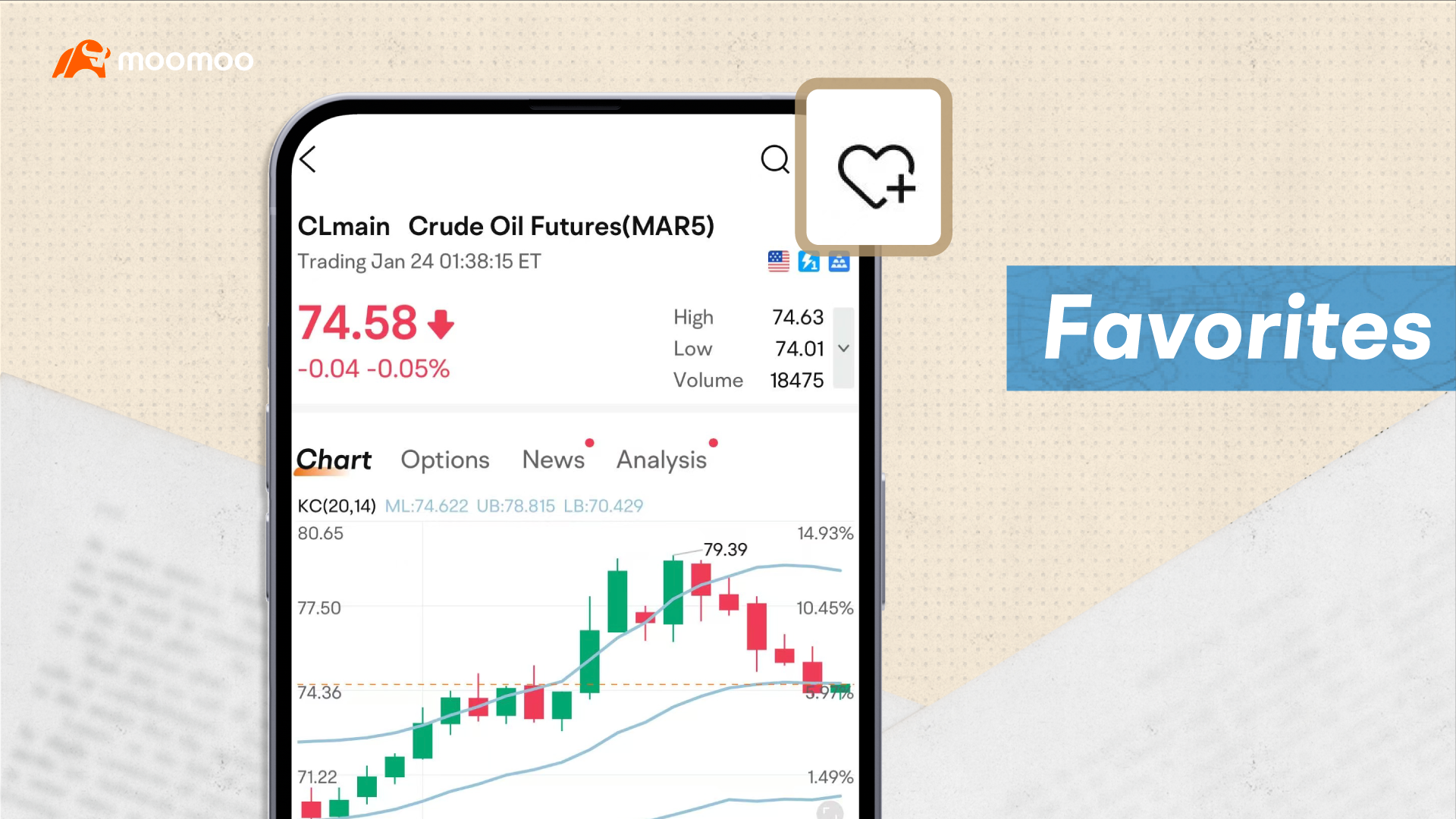
Just hit "Markets," select "Overview," and scroll down to "Commodities." And you can add it to your "Favorites" on the details page to keep track of their movements.
Step 3: Find oil-related ETFs.
Investors can use Moomoo’s Thematic ETF feature to find oil-related products.
Here's how: Markets > ETFs > Thematic ETFs.
Read more: Top Oil Stocks and ETFs for Diversification
Summing up
As one of the world's most important commodities, crude oil has been increasingly influenced by geopolitical factors in recent years, attracting more attention from investors. However, due to the inherent characteristics of futures structures, ETFs that track oil prices may not perform well over the long term, requiring careful selection by investors.
Oil stock ETFs can be a more investor-friendly choice: broad-based energy ETFs like XLE diversify individual stock risks and have no rollover issues, making them potentially practical tools for long-term participation in the energy sector.
Before investing, it's crucial to read the ETF prospectus to understand its holdings and fees, and to be prepared for industry volatility. If you have a strong short-term view on oil prices, be cautious when using leveraged instruments and strictly adhere to your investment discipline.
This presentation is for informational and educational use only and is not a recommendation or endorsement of any particular investment or investment strategy. Investment information provided in this content is general in nature, strictly for illustrative purposes, and may not be appropriate for all investors. Read more