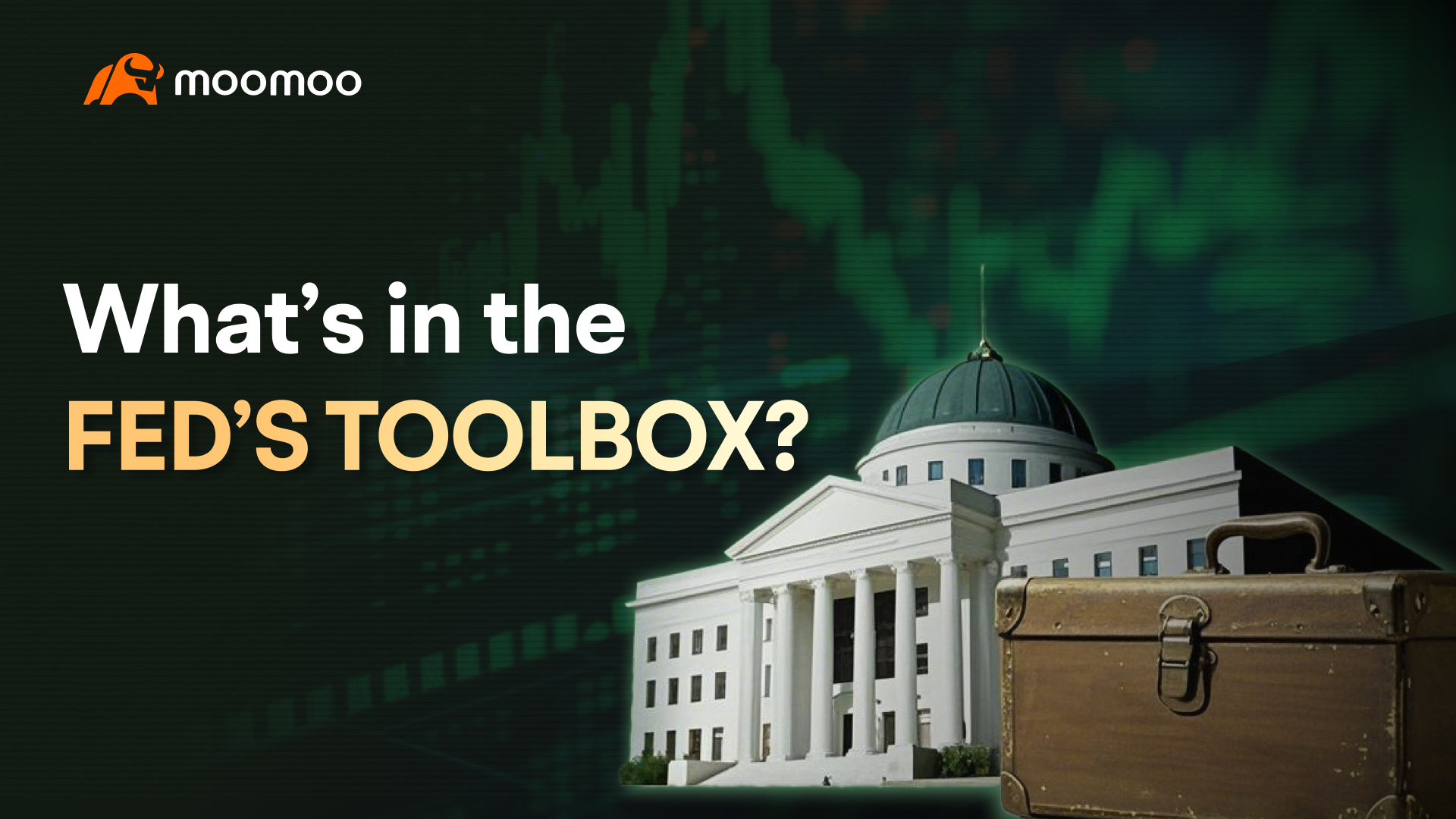
What's in the Fed's Toolbox?
The Federal Reserve (Fed) carries a "dual mandate," ensuring maximum employment and keeping prices stable.
Simply put, that means balancing "inflation" and "jobs," a task that's easier said than done.
Imagine a seesaw: when employment is high, most folks have jobs and money to spend, boosting demand for goods and nudging inflation upwards, just like we saw post-pandemic.
On the flip side, low inflation often lingers with layoffs and high unemployment. Japan's "Lost Decades" is a textbook case, with the economy stuck in low inflation and a job market deep freeze.
So, the Fed has to keep a keen eye on the economy’s pulse and make some tricky trade-offs along the way.
Luckily, the Fed isn’t facing this massive economic beast empty-handed. It's got two main arsenals: interest rates and the money supply.
Takeaways:
The Fed uses interest rates and the money supply to achieve its dual mandate.
The Fed influences the overall borrowing costs by setting the federal funds rate.
Quantitative Easing (QE) and Quantitative Tightening (QT) are methods the Fed uses to adjust market liquidity.
1. Interest Rate
Think about it—you encounter interest rates all the time. When you stash money in a savings account, the bank pays you interest. Take out a mortgage or swipe your credit card, and you’re paying interest. Essentially, interest rates are the cost of using money.
Does this mean the Fed sends memos to every bank, telling them to tweak their rates? Not quite.
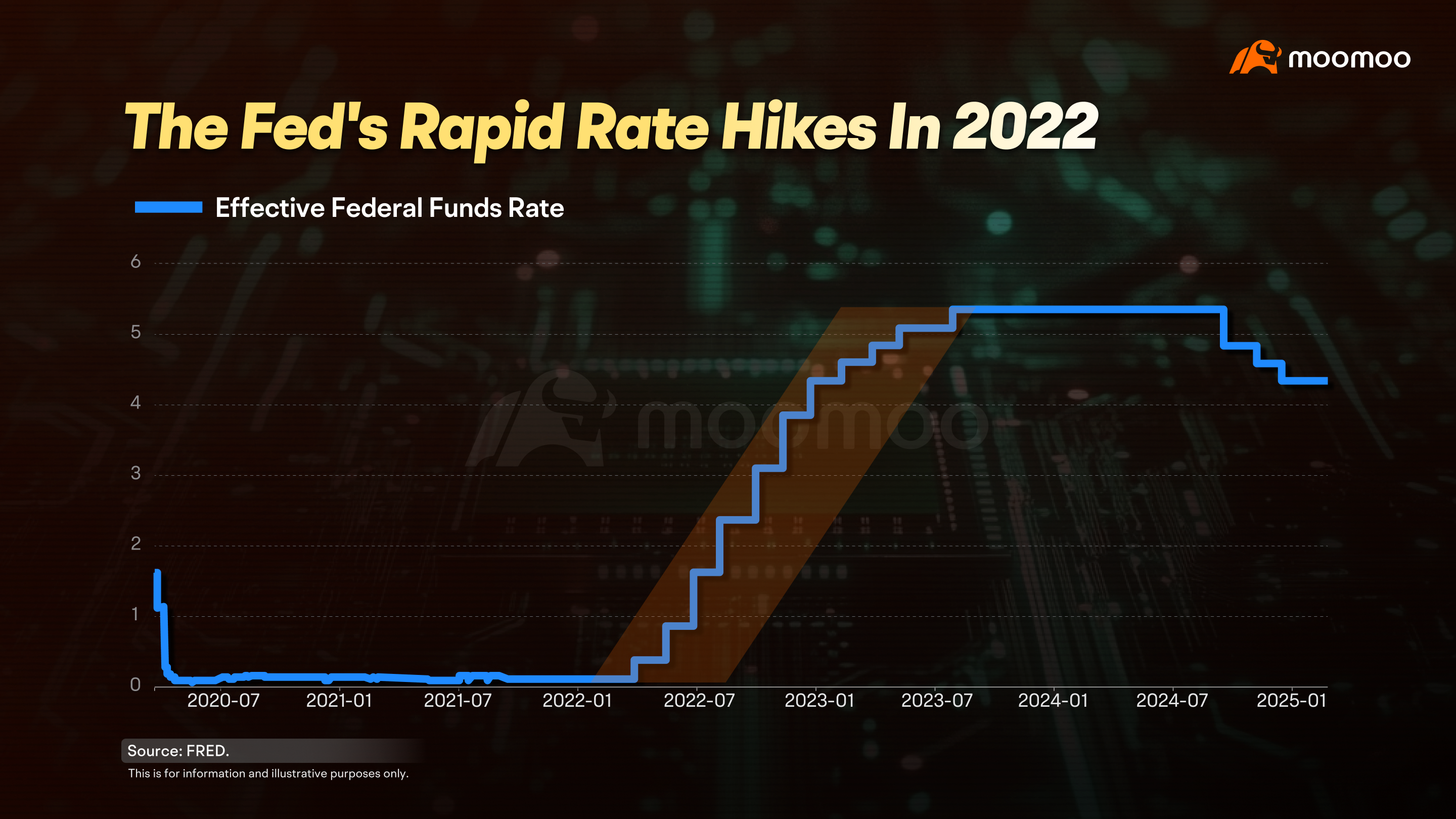
The Fed sets the federal funds rate, the headline number you hear about after those Fed meetings. It's the cost for banks to lend money to each other. By controlling this "master switch," the Fed influences nearly all other interest rates in the market.
Since 2022, the Fed has rapidly increased the Federal Funds Rate. By early 2025, it remains at a relatively high level.
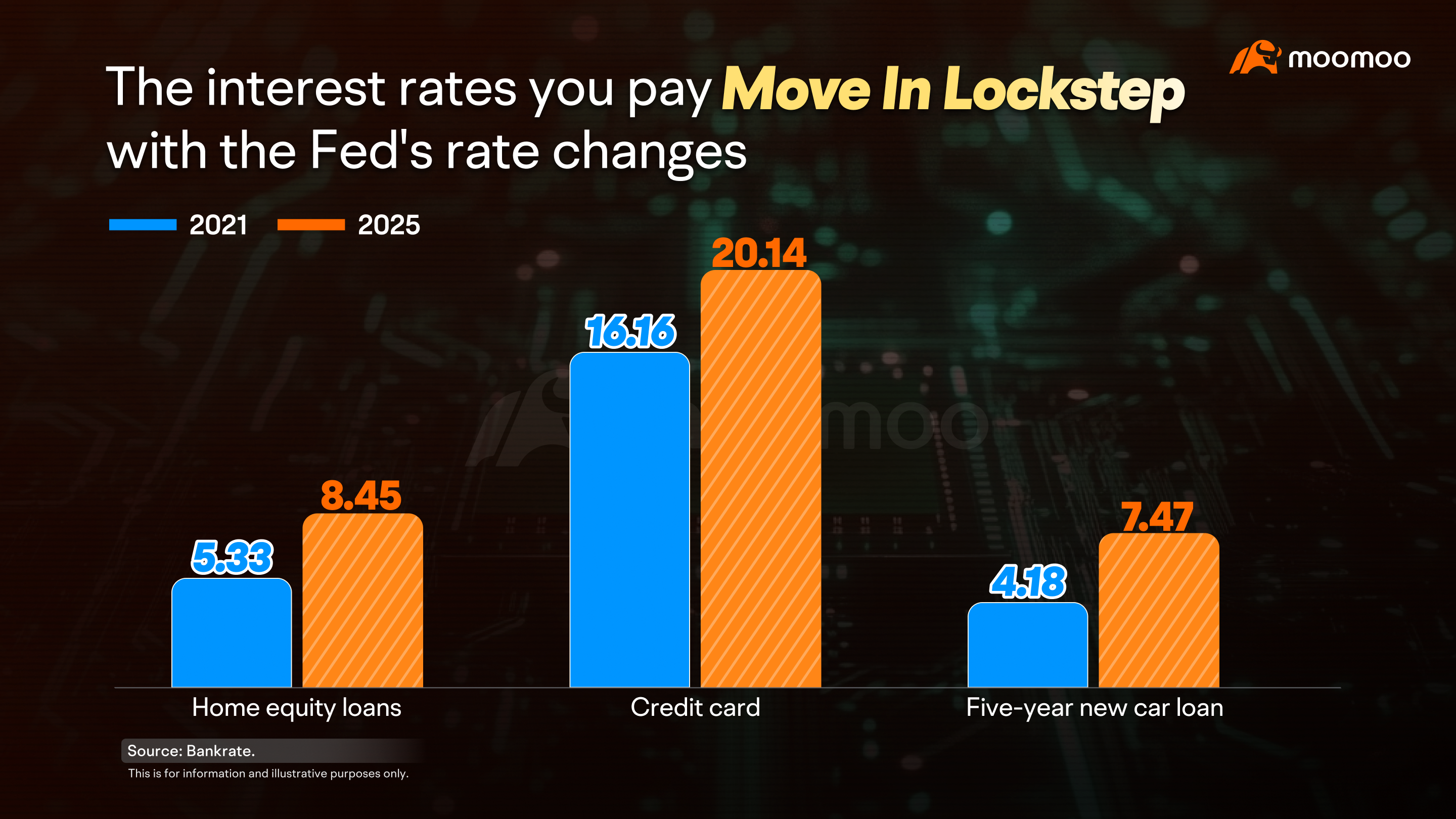
Consequently, the cost of taking out a loan to buy a house or a car using your credit card is climbing along with it.
2. QE & QT
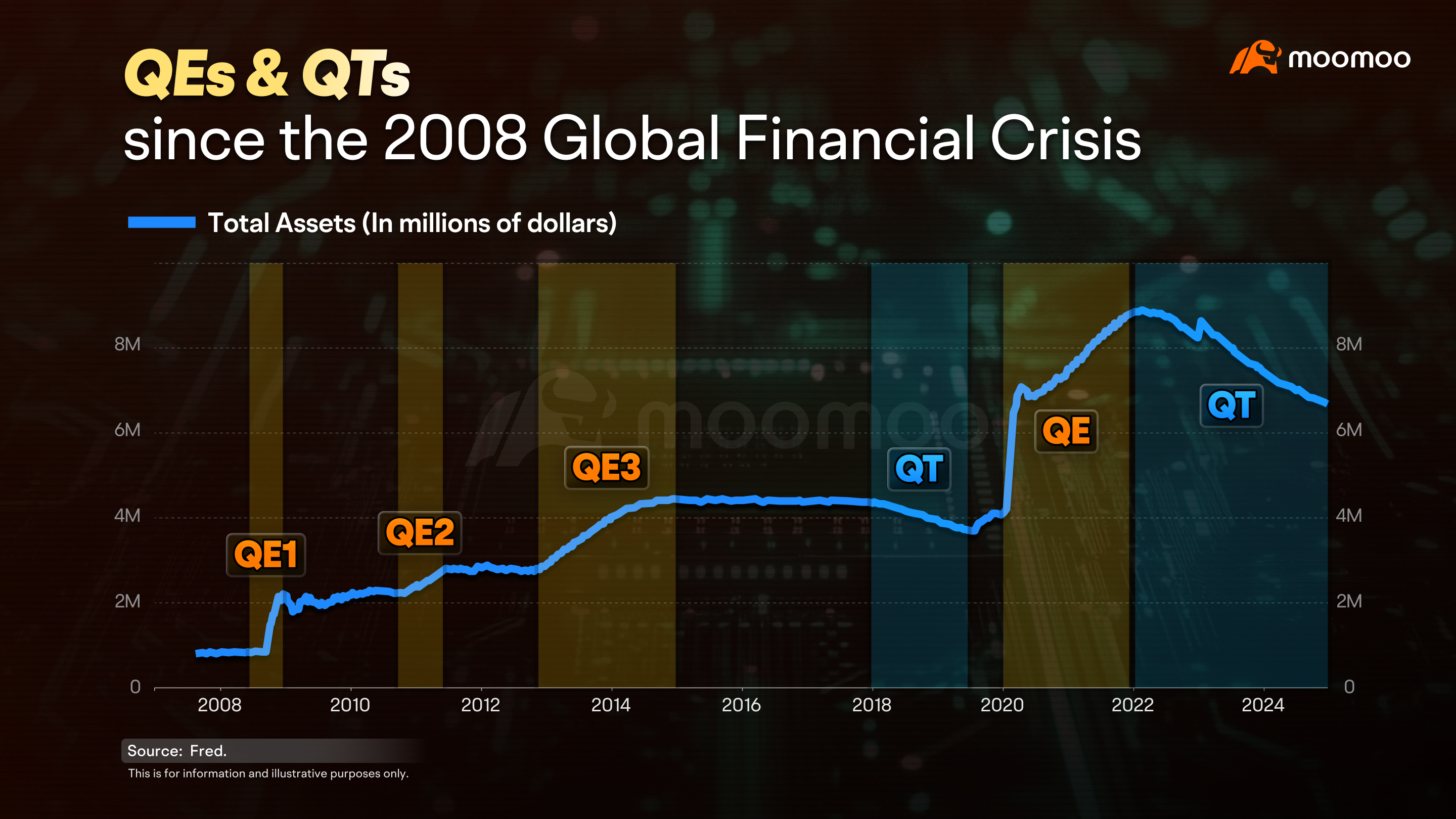
Now, let's explore direct methods for changing the money supply, like Quantitative Easing (QE). This is when the Fed buys long-term government bonds and other assets to pump liquidity into the economy.
After the 2008 financial crisis, the Fed launched three rounds of QE, ballooning its balance sheet from a few hundred billion dollars to $4.5 trillion. And when the pandemic hit in 2020, the Fed rolled out an even bigger QE round.
But where there’s easing, there’s also tightening.
Quantitative Tightening (QT) is the Fed’s way of reversing course—selling off bonds or letting them mature to shrink its asset holdings. QT typically follows QE, as seen from 2017 to 2019 and again after 2022.
When the economy is overheating, the Fed needs to hike rates and trim the money supply, stepping on the brakes.
But if we’re skidding into a recession, it’s time to lower rates and pump up the money supply—hitting the gas pedal to rev up the economy.
By understanding the mechanism of interest rates and the money supply, you'll have a better grasp of how the Fed navigates our economic highways, maneuvering through twists and turns.
This presentation is for informational and educational use only and is not a recommendation or endorsement of any particular investment or investment strategy. Investment information provided in this content is general in nature, strictly for illustrative purposes, and may not be appropriate for all investors. Read more