The Truth About Leveraged ETFs: Great Tool or Ticking Time Bomb?
Exchange-Traded Funds (ETFs) have reshaped modern investing by offering the diversification of mutual funds with the trading flexibility of individual stocks. They provide access to a wide range of markets and strategies, making them a popular tool for both individual and institutional investors.
Among them, leveraged ETFs are designed to amplify the daily returns of an index, sector, or asset—typically by two or three times. While they offer the potential for enhanced gains, they also carry higher risks due to their complex structure and short-term focus. This guide explains how leveraged ETFs work, when they might be useful, and what investors need to watch out for to use them wisely.
What Is a Leveraged ETF?
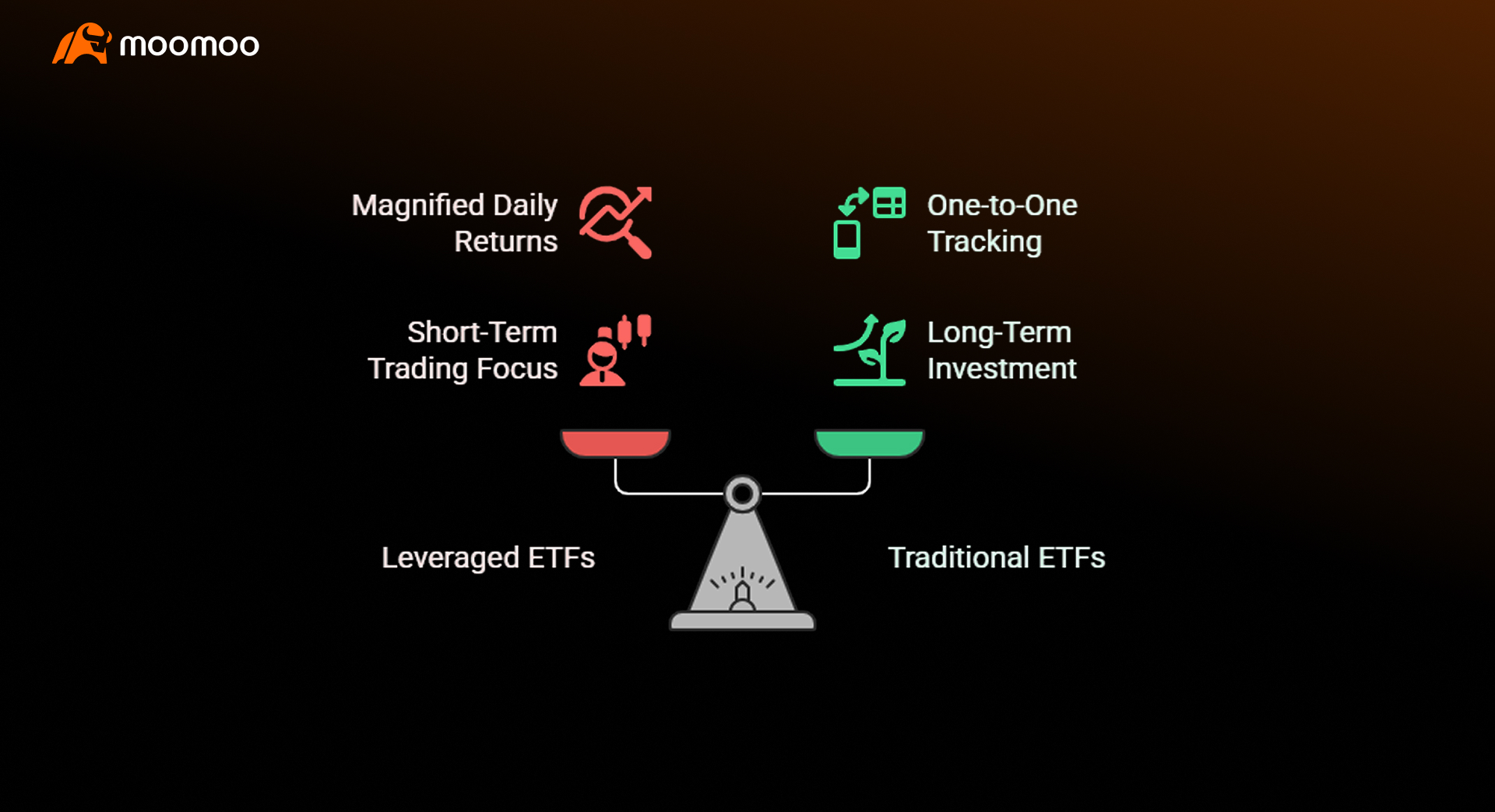
A leveraged ETF is a financial instrument engineered to deliver a multiple—commonly 2x or 3x—of the daily return of an underlying index, sector, or asset. Unlike traditional ETFs, which aim to mirror their benchmarks’ performance on a one-to-one basis, leveraged ETFs use financial derivatives such as futures, options, and swaps, along with borrowed capital, to magnify daily movements. For example, if the S&P 500 rises by 1% in a day, a 3x leveraged ETF tracking it targets a 3% gain, before fees and expenses. Conversely, a 1% decline in the index results in a 3% loss for the ETF.
Introduced in the mid-2000s, leveraged ETFs were designed to provide sophisticated investors with a streamlined way to pursue aggressive market strategies without navigating margin accounts or direct options trading. They are built for short-term trading due to their daily reset mechanism, which makes long-term performance less predictable. In addition to “bull” ETFs that amplify positive returns, inverse leveraged ETFs—often called “bear” ETFs—deliver multiples of the opposite performance, allowing investors to profit from market declines without short-selling. For instance, a -2x S&P 500 ETF aims to gain 2% if the index falls 1% in a day.
How Do Leveraged ETFs Work?
Leveraged ETFs achieve amplified returns by combining equity investments with derivatives. Consider a 2x leveraged ETF with $100 million in assets. Instead of investing solely in the underlying index’s components, the fund might allocate $100 million to a mix of index securities and cash equivalents, then use derivatives like swap agreements or futures contracts to gain an additional $100 million in notional exposure. This creates a total economic exposure of $200 million, doubling the fund’s sensitivity to daily market movements without traditional borrowing.
A hallmark of leveraged ETFs is their daily reset mechanism, where the fund rebalances its holdings each trading day to maintain its target leverage ratio. After a day of gains, the fund increases exposure by acquiring more derivatives; after losses, it reduces exposure to realign with its leverage goal. This ensures the ETF delivers its promised multiple for the next day’s performance but introduces volatility decay in non-trending markets, where daily compounding can erode value, or amplifies returns in trending markets.
To illustrate, consider a side-by-side comparison of a 3x leveraged ETF tracking an index over five days in a volatile market (with daily returns of +10%, -9%, +8%, -7%, +6%) versus a trending market (with consistent +5% daily returns):
Day | Volatile Market | Trending Market | ||||||
Index Value | Index Return | 3x ETF Value | 3x ETF Return | Index Value | Index Return | 3x ETF Value | 3x ETF Return | |
Start | $100 | - | $100 | - | $100 | - | $100 | - |
Day 1 | $110 | +10% | $130 | +30% | $105 | +5% | $115 | +15% |
Day 2 | $100.10 | -9% | $94.90 | -27% | $110.25 | +5% | $132.25 | +15% |
Day 3 | $108.11 | +8% | $117.68 | +24% | $115.76 | +5% | $152.09 | +15% |
Day 4 | $100.54 | -7% | $92.97 | -21% | $121.55 | +5% | $174.90 | +15% |
Day 5 | $106.57 | +6% | $109.70 | +18% | $127.63 | +5% | $201.14 | +15% |
Result | +6.57% | +9.70% | +27.63% | +101.14% | ||||
In the volatile market, the index gains 6.57% over five days, but the 3x ETF only achieves a 9.70% return, far less than three times the index’s gain (3 × 6.57% = 19.71%), due to volatility decay from alternating gains and losses. In the trending market, the index rises 27.63%, and the 3x ETF soars 101.14%, significantly exceeding three times the index’s gain (3 × 27.63% = 82.89%), as consistent daily gains amplify returns through compounding. This contrast highlights why leveraged ETFs are riskier in choppy markets but can outperform in sustained trends.
Leveraged ETFs vs. Traditional ETFs, What's the Difference?
Leveraged ETFs differ significantly from traditional ETFs, impacting their suitability for various strategies. Traditional ETFs aim to replicate an index’s performance over time, offering low-cost, diversified exposure to equities, bonds, commodities, and more across global markets. Leveraged ETFs target amplified daily returns using derivatives and daily rebalancing, introducing unique risks and higher costs.
By Underlying Asset and Investment Focus
Traditional ETFs cover a broad range of asset classes, including equities, fixed income, commodities, and real estate, with products tracking developed, emerging, and frontier markets. They prioritize minimal tracking error for close alignment with their benchmarks. Leveraged ETFs focus on liquid markets where derivatives are readily available, often emphasizing U.S. equities and major sectors like technology or financials. Their investment focus caters to short-term traders seeking volatile segments, but liquidity can vary, especially during market stress.
By Leverage Ratio and Performance Direction
Traditional ETFs provide 1:1 exposure to their benchmarks, moving in the same direction with no leverage. Leveraged ETFs offer 2x, 3x, or inverse (-1x, -2x, -3x) exposure, amplifying daily returns in either direction. Bull leveraged ETFs magnify positive returns, while bear ETFs profit from declines, enabling traders to capitalize on market movements without margin accounts. Their expense ratios (0.90%–1.50% vs. <0.20% for traditional ETFs) reflect the costs of managing derivatives and daily rebalancing, making them suitable for short-term trading rather than long-term holding.
Feature | Traditional ETFs | Leveraged ETFs |
Objective | Match index over time | Amplify daily index returns |
Leverage | 1:1 (no leverage) | 2x, 3x, or inverse (-1x, -2x, -3x) |
Investment Horizon | Long-term | Short-term (daily to a few days) |
Use of Derivatives | Minimal | Extensive (swaps, futures, options) |
Fees | Low (often <0.20%) | High (0.90%–1.50%) |
Suitable for Retirement | Yes | Not generally suitable |
Who Are the Major Issuers of Leveraged ETFs?
The leveraged ETF market in the United States is led by several prominent issuers, each offering specialized products tailored to different investor needs. Below is a detailed overview of the major U.S. issuers, their popular leveraged ETFs, and notable characteristics:
Issuer | Popular Leveraged ETFs | Specialization |
ProShares | One of the first to offer leveraged ETFs | |
Direxion | Focus on sector-based and aggressive ETFs | |
REX Shares | Thematic leveraged exposure | |
GraniteShares | Innovative single-stock leveraged ETFs | |
VanEck | Sector-focused leveraged ETFs | |
VelocityShares | Volatility-focused leveraged ETFs |
ProShares, a pioneer since 2006, dominates with a broad lineup of 2x and -2x ETFs, as well as select 3x and -3x products, covering major equity indices, sectors, fixed income, and commodities. Its flagship ETFs include the ProShares UltraPro QQQ (TQQQ) for 3x Nasdaq-100 returns, UltraPro Short QQQ (SQQQ) for -3x Nasdaq-100 exposure, UltraPro S&P 500 (UPRO) for 3x S&P 500 returns, and UltraPro Short S&P 500 (SPXU) for -3x S&P 500 exposure. ProShares is known for its liquidity and reliability, managing billions in assets.
Direxion Investments specializes in 3x leveraged ETFs, targeting aggressive traders with products like the Daily Technology Bull 3X Shares (TECL), Daily Semiconductor Bull 3X Shares (SOXL), Daily Biotech Bull 3X Shares (LABU), and Daily Small Cap Bear 3X Shares (TZA). These ETFs focus on volatile sectors, appealing to those comfortable with significant risk.
REX Shares offers thematic leveraged ETFs, such as the MicroSectors FANG+ Index 3X Leveraged ETN (FNGU) and its inverse counterpart (FNGD), providing amplified exposure to high-growth technology stocks. These products cater to traders targeting specific market themes.
GraniteShares, founded in 2016 and based in New York City, is known for its innovative single-stock leveraged ETFs. Notable products include the GraniteShares 2x Long NVDA Daily ETF (NVDL) for 2x NVIDIA exposure, the GraniteShares 2x Long TSLA Daily ETF (TSLR) for 2x Tesla exposure, and the GraniteShares 2x Short COIN Daily ETF (CONI) for -2x Coinbase exposure. Managing over $5.2 billion in assets as of May 2024, GraniteShares focuses on low fees and disruptive products.
VanEck, a well-established asset manager, offers leveraged ETFs focused on specific sectors. Key products include the VanEck BDC Income ETF (BDCX) for 1.5x exposure to business development companies and the VanEck Oil Services ETF (OIHX) for leveraged oil services exposure. VanEck focuses on niche markets for amplified returns.
VelocityShares, under Janus Henderson, specializes in volatility-focused leveraged ETFs. Products like the ProShares Ultra VIX Short-Term Futures ETF (UVXY) for 1.5x VIX futures exposure and the ProShares Short VIX Short-Term Futures ETF (SVXY) for -0.5x VIX futures exposure to the ETF, catering to traders capitalizing on market volatility.
Choosing the right leveraged ETF requires careful evaluation to align with investment goals and risk tolerance. Below are key criteria to consider, followed by examples of prominent leveraged ETFs.
Criteria for Evaluating Leveraged ETFs
When selecting leveraged ETFs, traders and investors commonly rely on several key metrics to assess suitability. While other factors may also be considered depending on individual strategies, the following are among the most widely used criteria due to their impact on performance and risk management:
Assets Under Management (AUM): AUM represents the total value of assets held by the ETF. Larger AUM can be associated with greater liquidity and lower risk of closure, while smaller AUM may indicate higher operational risks or less market interest.
Liquidity and Trading Volume: Liquidity refers to how easily shares can be bought or sold, often measured by daily trading volume and bid-ask spreads. Higher trading volume and narrower spreads typically indicate more efficient trading, whereas lower volume and wider spreads can lead to pricing challenges.
Expense Ratios: This metric reflects the annual fees charged by the ETF, typically ranging from 0.90% to 1.50% for leveraged ETFs. Higher expense ratios can impact returns over time, especially given the short-term nature of these products.
Issuer Reputation: The reputation of the ETF issuer can influence perceptions of reliability. Issuers like ProShares, Direxion, and GraniteShares are established in the leveraged ETF market, often noted for their experience in managing complex financial products and associated risks.
Examples of Prominent Leveraged ETFs
The following ETFs are among the most prominent in the leveraged ETF market, recognized for their high liquidity, significant trading volume, and appeal to traders seeking exposure to major indices or high-growth stocks:
ETF Name | Leverage | Index/Asset Tracked | Issuer | Expense Ratio |
UltraPro QQQ (TQQQ) | 3x | Nasdaq-100 | ProShares | 0.95% |
UltraPro S&P 500 (UPRO) | 3x | S&P 500 | ProShares | 0.92% |
Technology Bull 3X (TECL) | 3x | Tech Select Sector | Direxion | 0.95% |
2x Long NVDA Daily (NVDL) | 2x | NVIDIA Stock | GraniteShares | 1.15% |
These ETFs have gained prominence for specific reasons:
UltraPro QQQ (TQQQ)
TQQQ is famous for its high liquidity and trading volume, often ranking among the most traded leveraged ETFs. As of early 2025, TQQQ has an AUM of over $20 billion and an average daily trading volume exceeding 50 million shares, according to Yahoo Finance data. Its focus on the Nasdaq-100, which includes major tech giants, makes it a go-to for traders betting on tech sector growth.
UltraPro S&P 500 (UPRO)
UPRO is well-known for its broad market exposure and robust liquidity. With an AUM of approximately $4 billion and an average daily trading volume of around 10 million shares as of early 2025 (per ETF Database), UPRO appeals to traders seeking amplified exposure to the S&P 500, a benchmark for the overall U.S. market.
Technology Bull 3X (TECL)
TECL is popular among sector-focused traders due to its 3x exposure to the Technology Select Sector Index. It boasts an AUM of over $3 billion and an average daily trading volume of about 5 million shares in early 2025, as reported by Direxion’s website. Its prominence stems from the tech sector’s volatility and growth potential, attracting aggressive traders.
2x Long NVDA Daily (NVDL)
NVDL has gained fame for its focus on NVIDIA, a leading AI and semiconductor stock. As of May 2024, GraniteShares reported NVDL’s AUM at over $2 billion, with an average daily trading volume of 15 million shares in early 2025 (per Yahoo Finance). Its prominence is driven by NVIDIA’s high growth and volatility, making it a favorite for single-stock leveraged trading.
While these ETFs are prominent due to their liquidity, volume, and market appeal, fame does not guarantee suitability for every investor. The right choice depends on your investment goals, risk tolerance, time horizon, and market outlook. For example, a trader with a short-term bullish view on technology might favor TQQQ or TECL, while one focused on a single stock like NVIDIA might opt for NVDL. Always ensure the ETF aligns with your strategy and risk profile before investing.
How to Trade Leveraged ETFs?
Leveraged ETFs can be challenging to trade due to their inherent volatility and daily rebalancing. On Moomoo, one of the best trading platforms available, the ETF market tools are designed to give investors the edge they need to research, monitor, and trade leveraged ETFs with precision.
Below are three key features designed to support those starting with leveraged ETFs, explaining why they are essential and how they practically assist:
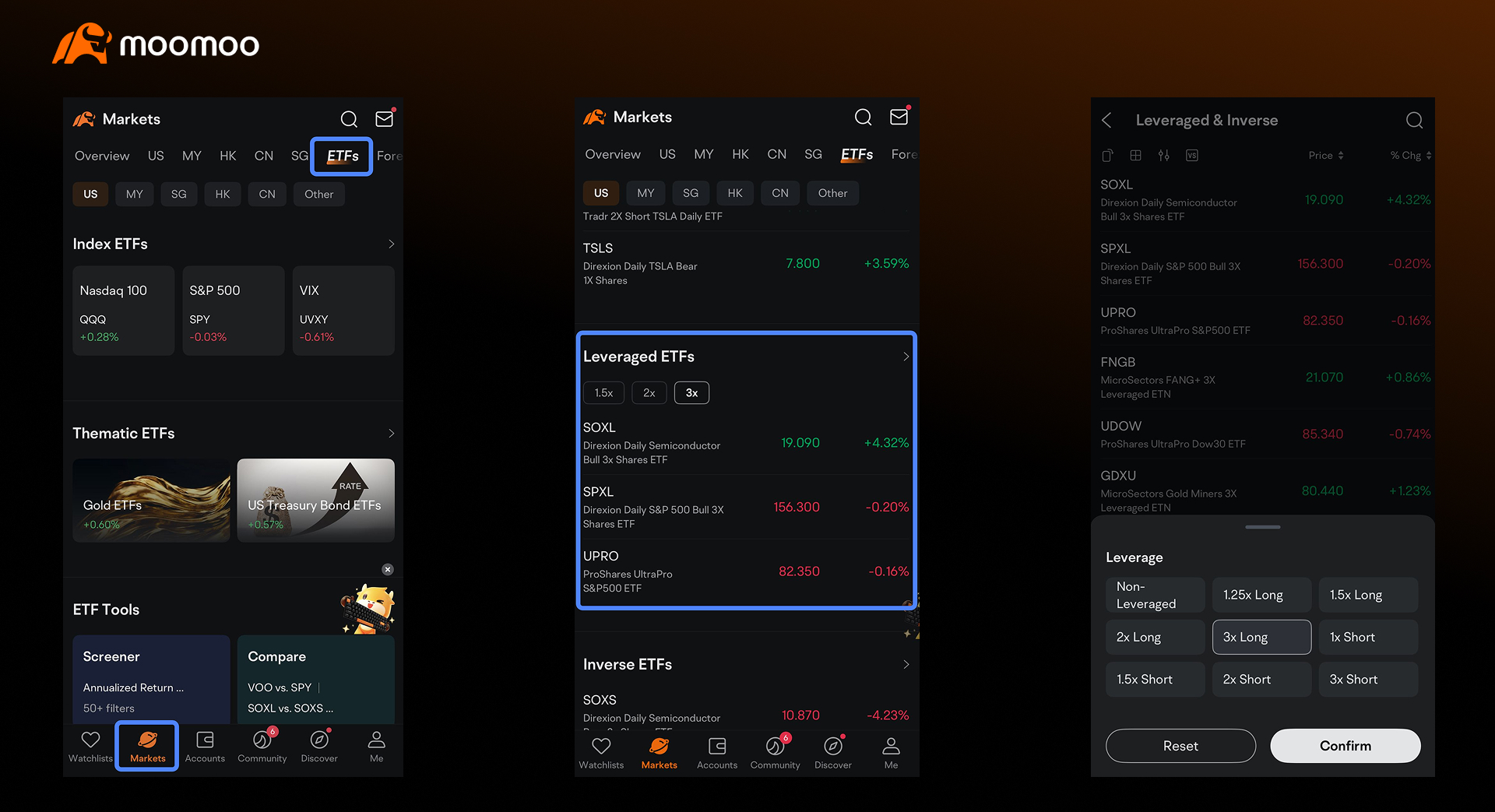
Leveraged ETFs List with Filters
Within the ETF category, you can access a dedicated section for Leveraged ETFs. Upon clicking, a comprehensive list of leveraged ETFs is displayed, which you can filter based on leverage type—such as 3x long or 3x short—depending on the available options.
This feature is essential because the high volatility and daily reset of leveraged ETFs demand quick, precise selection to match your market outlook—whether bullish or bearish. Practically, it saves time by providing a centralized view and allows you to immediately narrow down choices, ensuring you can act swiftly during market movements and align your trades with your strategy without sifting through irrelevant options.
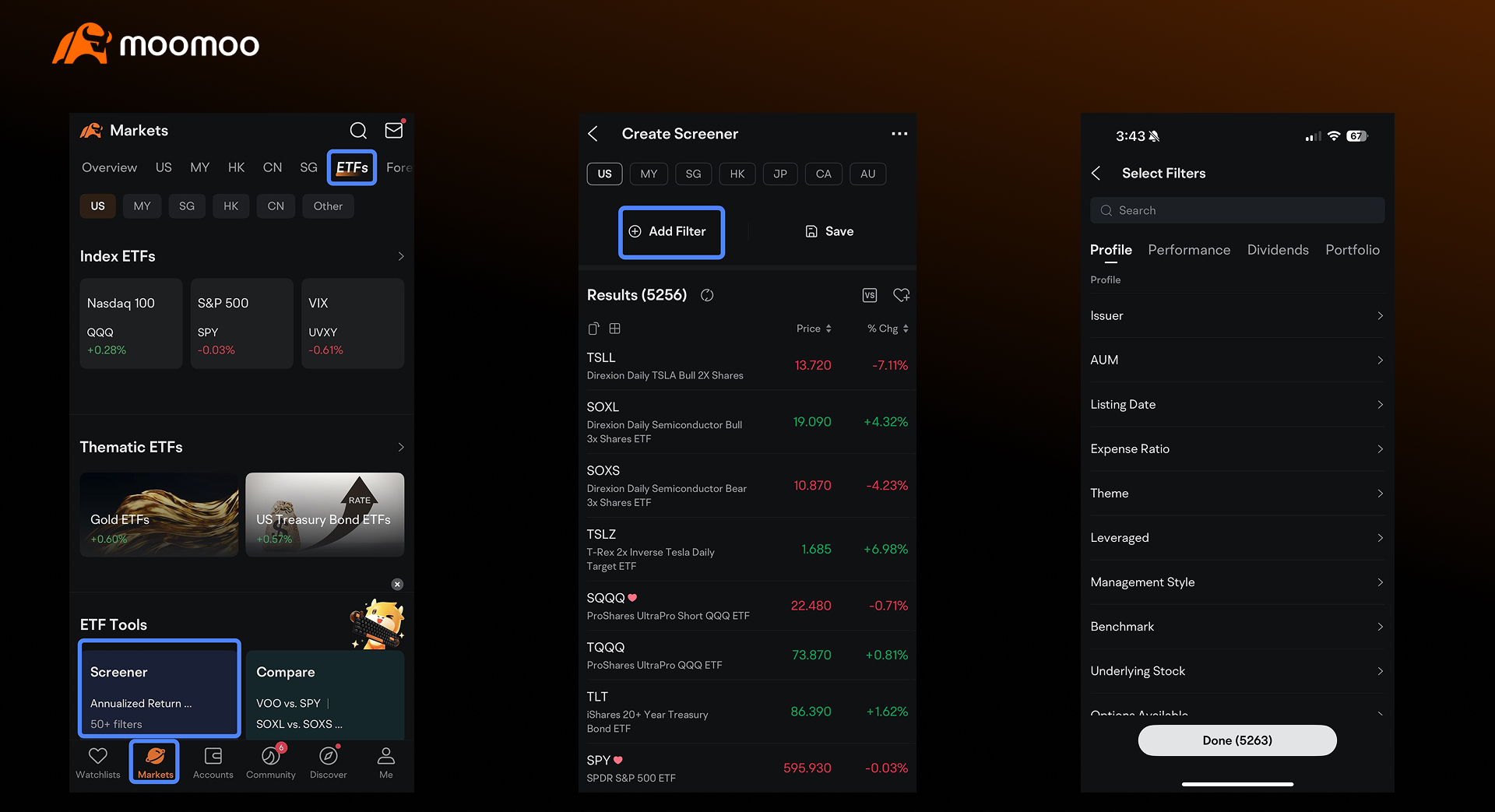
Screener for Customized Selection
The Screener tool enables you to filter leveraged ETFs based on various criteria, including profile, performance, dividends, portfolio, risk, and market data. You can narrow down options by issuer, assets under management (AUM), sector, or leverage level (e.g., long or short).
This is critical because leveraged ETFs’ complexity requires tailored analysis to match your risk tolerance and investment goals. These products carry the potential for significant gains or losses, making careful selection essential.
Practically, the Screener empowers you to build a custom shortlist—such as selecting high-AUM ETFs for better liquidity or targeting specific sectors to align with market trends. This helps streamline your research process and reduces the risk of overlooking key factors in volatile markets.
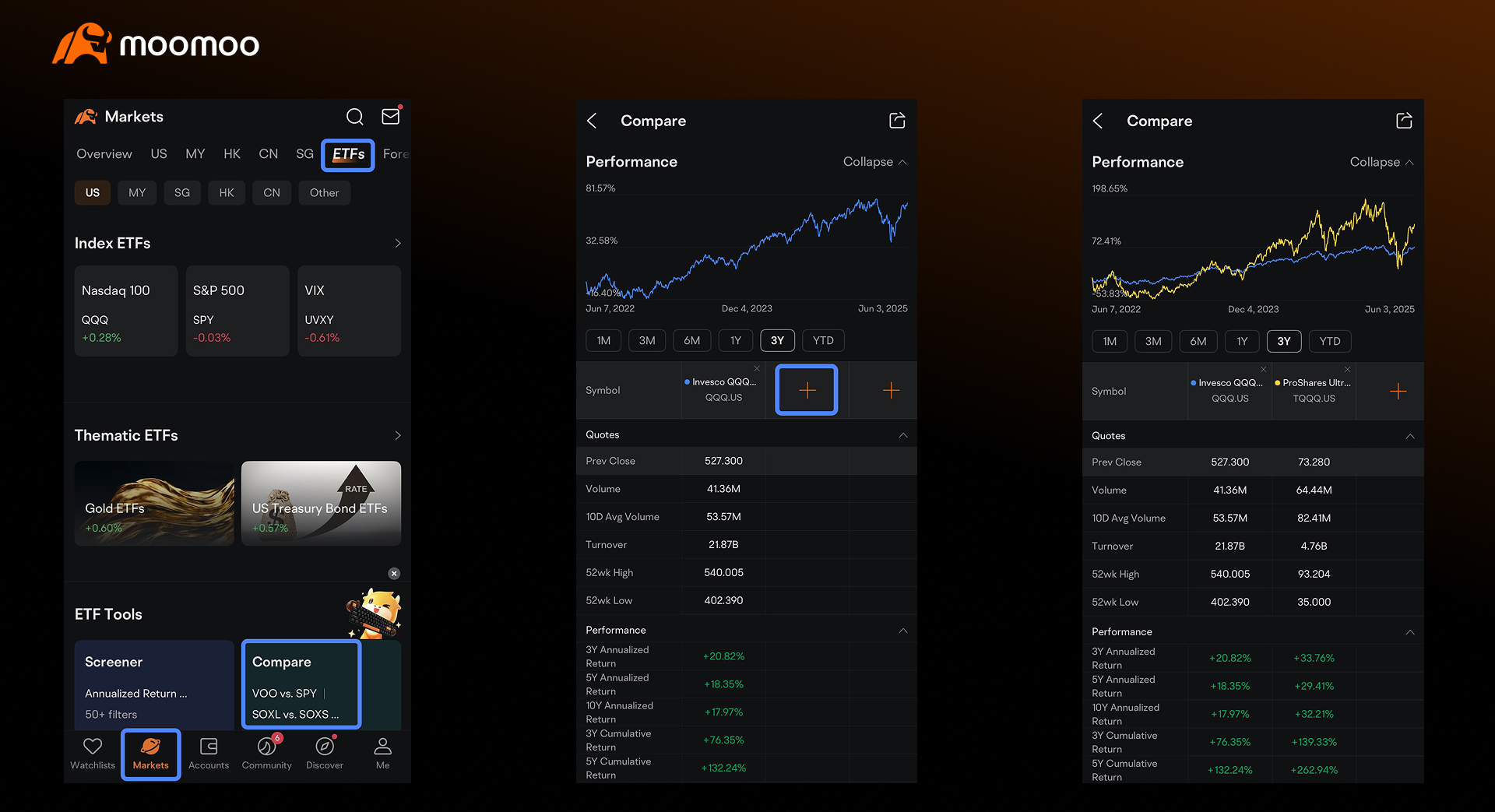
Compare Feature for Performance Analysis
The Compare tool allows you to input ticker symbols of ETFs, such as SPY and TQQQ, to analyze their performance side by side. Metrics like historical performance, trading volume, and 5-year annualized returns are presented for easy comparison. This is vital because understanding how leveraged ETFs perform relative to traditional ETFs or peers is essential for assessing their suitability amid daily fluctuations and long-term decay risks. Practically, it helps you make informed decisions by visualizing trends—e.g., comparing TQQQ’s amplified returns to SPY’s stability—allowing you to adjust position sizes or timing based on concrete data, enhancing your ability to manage risk effectively.
While there are various ways to approach trading leveraged ETFs, success often hinges on effective navigation. With challenges like significant daily swings, market events, and the complexity of leverage levels, these tools enable you to navigate the ETF landscape more efficiently, helping you identify and evaluate options that align with your market outlook and risk preferences.
What Are Common Trading Strategies for Leveraged ETFs?
Leveraged ETFs are often utilized in short-term trading strategies due to their amplified returns and directional flexibility. Below are three common approaches that traders use to leverage the unique characteristics of these products.
Short-Term Momentum Trading Approaches
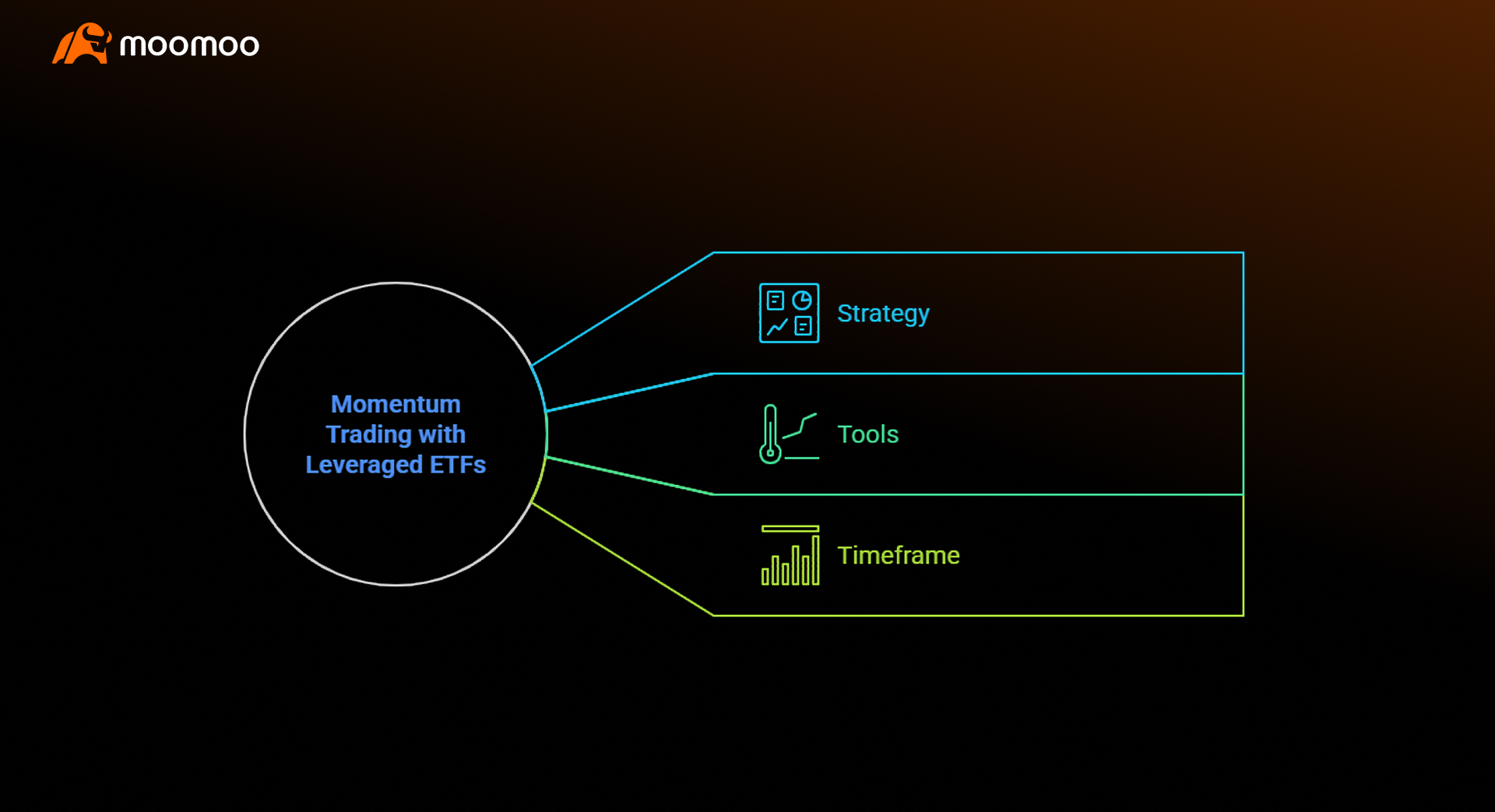
Momentum trading focuses on capitalizing on the continuation of existing price trends, making it a natural fit for leveraged ETFs. The amplified daily returns of these products can magnify gains when aligned with strong market movements, appealing to traders who aim to capture directional trends.
This strategy typically involves identifying markets or sectors showing clear directional movement. Traders often use technical analysis tools to spot trends, such as indicators that measure price momentum or moving averages that highlight sustained directional shifts. The goal is to enter positions during periods of strong momentum and exit before the trend weakens.
The timeframe for momentum trades with leveraged ETFs is generally short, often ranging from intraday to a few days, rather than weeks or months. This shorter duration accounts for the daily reset mechanism of leveraged ETFs, which can lead to volatility decay in non-trending or choppy markets, potentially eroding returns over longer periods.
Sector Rotation Strategies
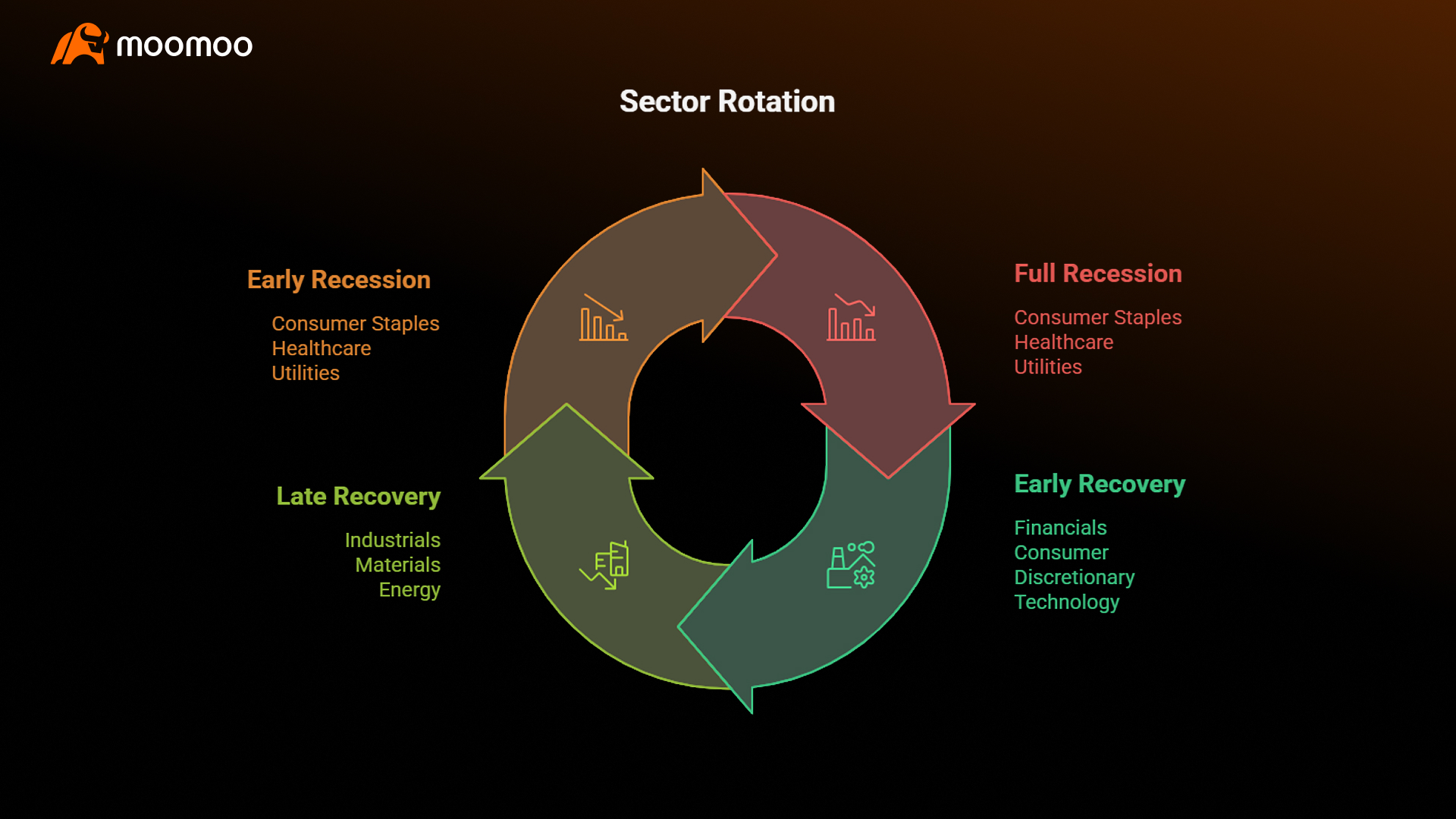
Sector rotation involves shifting investments across different market sectors based on economic cycles or performance trends, and leveraged ETFs are well-suited for this approach due to the availability of sector-specific products with amplified exposure.
One method of sector rotation is based on economic cycles, where certain sectors historically perform better during specific phases. For instance, defensive sectors like consumer staples and utilities may perform well during economic downturns, while cyclical sectors like financials and consumer discretionary often lead during early economic expansions. Leveraged ETFs allow traders to gain amplified exposure to these cyclical patterns.
Another approach gaining traction is relative strength-based rotation, where traders rank sectors based on recent performance metrics. Capital is then allocated to the strongest-performing sectors, while weaker sectors may be avoided or targeted with inverse leveraged ETFs to profit from potential declines. This method focuses on capturing short-term outperformance within specific sectors.
Hedging Strategies with Inverse Leveraged ETFs
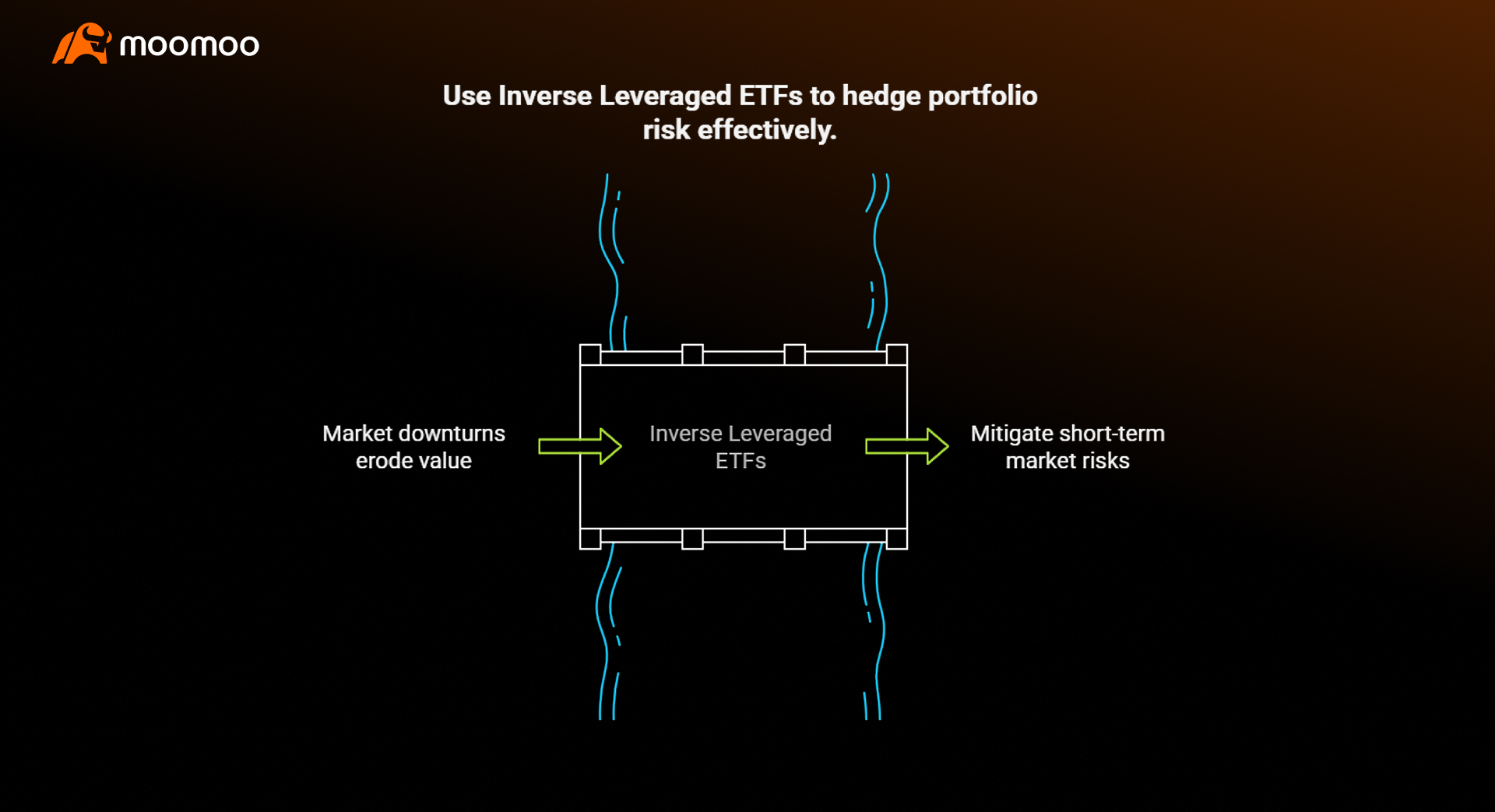
Inverse leveraged ETFs, which deliver amplified returns in the opposite direction of their benchmarks, offer a tool for portfolio hedging. Unlike traditional hedging methods that may require margin accounts or short-selling capabilities, inverse leveraged ETFs can be traded through cash accounts.
A common hedging application involves using inverse leveraged ETFs to temporarily protect a portfolio against expected market declines without selling long-term holdings. For example, an investor worried about short-term market weakness but unwilling to sell core positions might use an inverse leveraged ETF tracking a broad market index to offset potential losses in their equity portfolio.
When implementing this strategy, the sizing of the hedging position is an important consideration. Traders often assess the correlation between the inverse ETF and their portfolio, as well as the leverage ratio of the ETF. One approach is to calculate the portfolio’s sensitivity to the benchmark index and then determine the appropriate position size in the inverse ETF to offset a specific portion of that exposure.
What Are the Risks Associated with Leveraged ETFs?
Leveraged ETFs carry distinct risks that can impact their performance. Below are the primary risks associated with these instruments:
Volatility Decay
Due to their daily reset mechanism, leveraged ETFs can experience losses in volatile, non-trending markets. When the market fluctuates without a clear direction, the compounding of daily returns may lead to a decline in the ETF’s value, even if the underlying index remains unchanged over time, as demonstrated in the earlier table.
Counterparty and Liquidity Risks
Leveraged ETFs rely on derivatives such as swaps and futures to achieve amplified returns, introducing counterparty risk—the possibility that the financial institutions backing these contracts may fail to meet their obligations. While regulations mitigate this risk through collateral requirements, it persists to a limited extent. Additionally, liquidity can diminish during market turmoil, making it challenging to buy or sell the ETF at a desirable price due to reduced trading activity.
Operational Risks
The management of leveraged ETFs requires daily rebalancing to maintain the target leverage ratio, typically performed near the market close. In volatile conditions, this process can lead to execution challenges, potentially resulting in tracking errors or unintended price movements.
Are Leveraged ETFs Suitable for All Investors?
Leveraged ETFs are not for everyone. They are not for beginner investor. They suit investors with high risk tolerance, comfortable with rapid losses and volatility. A thorough risk assessment should evaluate financial capacity, income stability, and emotional resilience. They are ideal for short-term traders (intraday to weeks) but unsuitable for long-term investors due to compounding effects.
Investors need a strong understanding of derivatives, daily resets, and volatility decay, along with experience in technical analysis and risk management. New traders should practice with paper trading to practice with paper trading to refine strategies before committing capital.
Conclusion
Leveraged ETFs are powerful tools for short-term traders seeking amplified exposure to market movements, offering opportunities in momentum, sector rotation, hedging, and pair trading. Their derivatives-driven structure and daily reset deliver unique capabilities but introduce risks like volatility decay, counterparty risk, and liquidity challenges. Suitable for sophisticated investors with high risk tolerance and short-term horizons, they require careful strategy and disciplined risk management. For long-term growth, traditional ETFs are more appropriate. By mastering their mechanics and respecting their risks, investors can leverage these ETFs as part of a broader, well-informed investment approach.
Disclaimer
This presentation is for informational and educational use only and is not a recommendation or endorsement of any particular investment or investment strategy. Investment information provided in this content is general in nature, strictly for illustrative purposes, and may not be appropriate for all investors. It is provided without respect to individual investors’ financial sophistication, financial situation, investment objectives, investing time horizon, or risk tolerance. You should consider the appropriateness of this information having regard to your relevant personal circumstances before making any investment decisions. Past investment performance does not indicate or guarantee future success. Returns will vary, and all investments carry risks, including loss of principal. Moomoo makes no representation or warranty as to its adequacy, completeness, accuracy or timeliness for any particular purpose of the above content.Moomoo Technologies Inc., Moomoo Financial Inc., Moomoo Securities Australia Limited and Moomoo Financial Canada Inc. are affiliated companies.
Leveraged and inverse ETFs are not designed for buy and hold investors or investors who do not intend to manage their investments on a daily basis. The use of leverage by an ETF increase the risk and are not suitable for all investors and should be utilised only by sophisticated investors who understand leverage risk, consequences of seeking daily leveraged or daily inverse leveraged investment results, and intend to actively monitor and manage their investment.
Moomoo is a financial information and trading app offered by Moomoo Technologies Inc.
In Australia, financial products and services available through the moomoo app are provided by Moomoo Securities Australia Limited, an Australian Financial Services Licensee (AFSL No. 224663) regulated by the Australian Securities and Investment Commission (ASIC). Please read and understand our Financial Services Guide, Terms and Conditions, Privacy Policy, Options PDS, Target Market Determination and other disclosure documents which are available on our website https://www.moomoo.com/au.
In Canada, order-execution only services available through the moomoo app are provided by Moomoo Financial Canada Inc., regulated by the Canadian Investment Regulatory Organization (CIRO).
Frequency Asked Questions
Why do leveraged ETFs decay?
They reset daily to maintain leverage, and in choppy markets with no clear trend, this compounding effect can reduce their value over time.
Are leveraged ETFs a good idea?
They can be useful for short-term traders with high risk tolerance, but their complexity and risks make them unsuitable for most investors without experience.
Are leveraged ETFs good for beginners?
No, their high volatility, complexity, and amplified risks make them unsuitable for beginners, who may lack the experience to manage these products effectively.
This presentation is for informational and educational use only and is not a recommendation or endorsement of any particular investment or investment strategy. Investment information provided in this content is general in nature, strictly for illustrative purposes, and may not be appropriate for all investors. Read more