Analysing earnings: is this company worth a long term position?
Why short term volatility makes investors hesitate
Many investors, especially those new to options, are cautious about holding positions over the long term. That hesitation is reasonable.
Unlike shares, options have an expiry. Holding short dated options over time can lead to significant value erosion due to time decay, which increases the overall risk.
That said, if you believe a company has strong long term growth potential, longer dated options such as LEAPS can be a useful tool. These contracts typically have one to three years until expiry, are less sensitive to short term price swings, and experience slower time decay.
The key is knowing whether a company’s earnings strength is sustainable, or simply a short term spike. That distinction is what builds confidence in holding longer term positions.
The key question: how do you assess earnings quality?
To avoid being misled by short term market moves, focus on two core metrics. These can give you a clearer view of whether a business is building long term value.
1. Net profit trend: spotting real growth
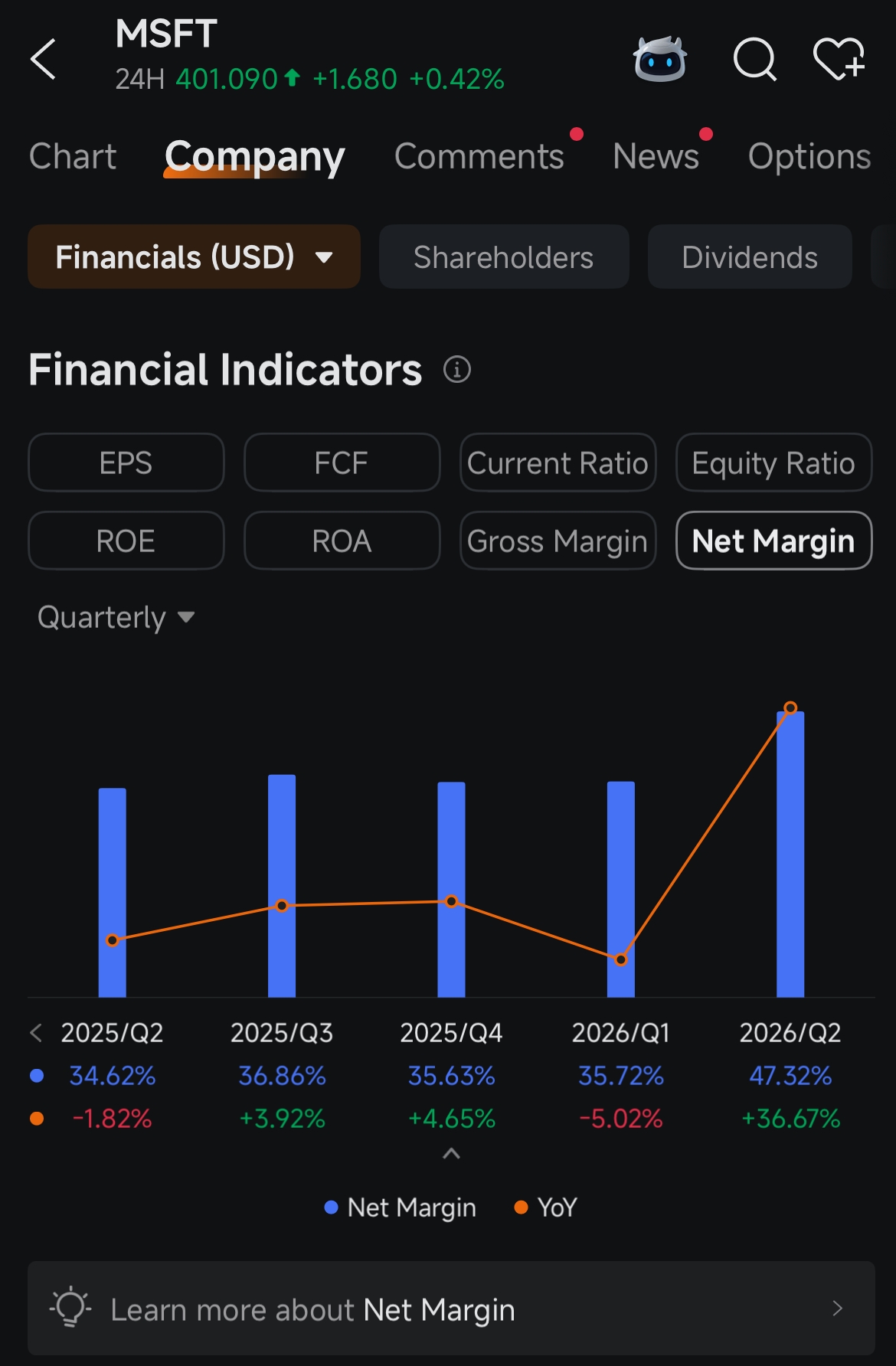
Net profit trends help you separate consistent performers from companies benefiting from short term conditions.
Short term earnings spikes
Some industries experience temporary boosts due to cyclical factors. This can lead to sharp increases in profit and short lived share price moves, which may not be sustainable.
Long term value
Look for companies with a steady upward trend in net profit over time. Consistency matters more than one strong quarter. Stable earnings, reliable growth and leadership within their sector are all positive signals.
Using visual charts can make this much easier to assess at a glance.
2. Gross Margin: Judge “Moat” and “Pricing Power”
Gross margin shows how profitable a company’s core business is.
Formula: (revenue minus cost of goods sold) ÷ revenue
Short term fluctuations
Margins that move sharply from period to period may be influenced by temporary factors such as lower input costs or one off efficiencies.
Long term strength
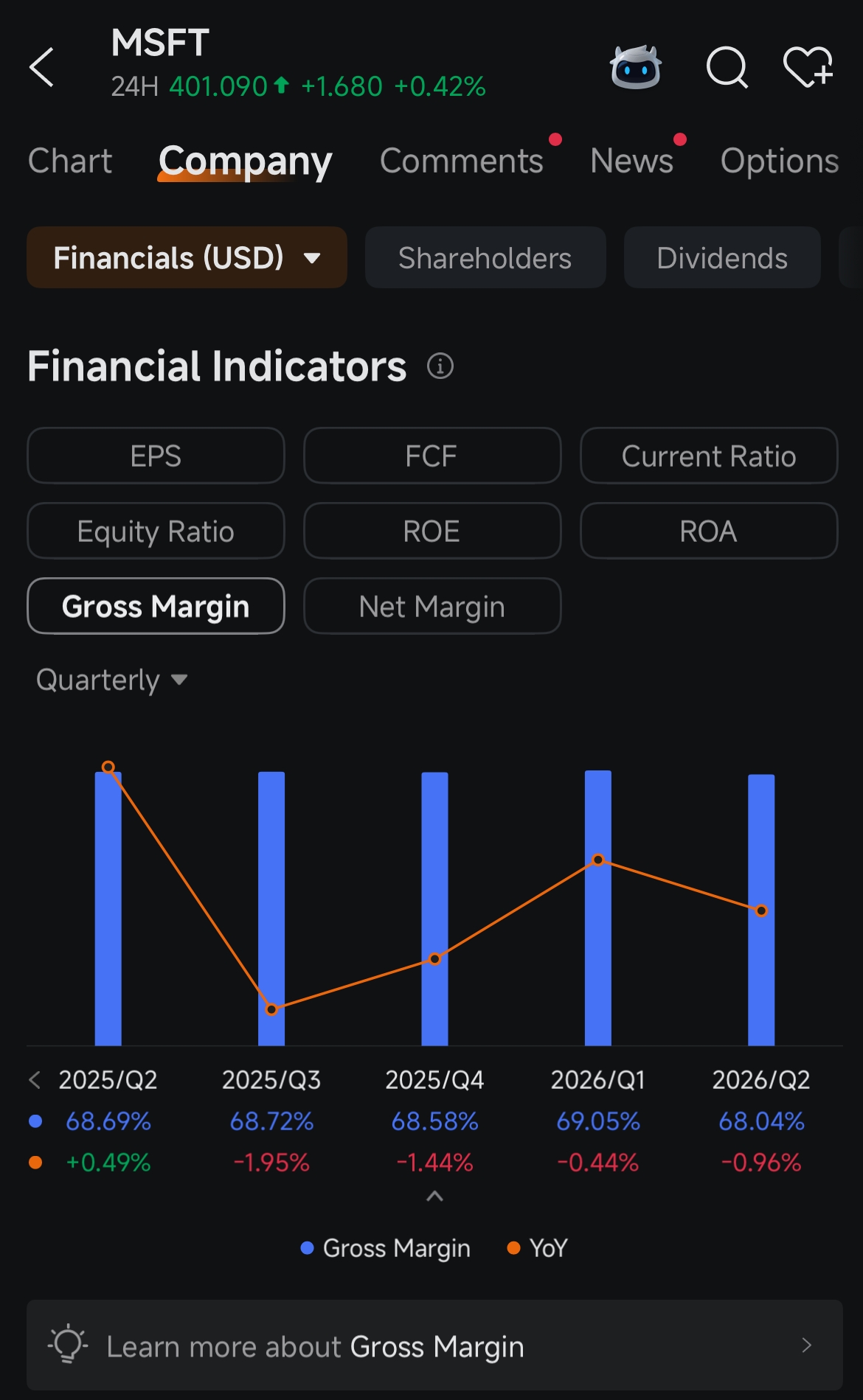
Companies with consistently high or improving margins tend to have stronger competitive advantages. This could come from brand strength, scale, or pricing power.
Comparing margins over time and against industry peers can help you understand whether the business has a durable edge.
Case study: identifying long term value
Consider a large US technology company as an example:
Net profit has grown steadily over the past five years, with no major declines even during periods of market volatility
Gross margins have remained at the higher end of the industry, reflecting strong pricing power and a dominant position in key segments such as cloud and software
When viewed through clear, visual data, these trends are easy to identify. Companies with this level of consistency are more likely to support long term strategies, including the use of longer dated options.
Conclusion
Confidence in long term options strategies comes from understanding earnings stability.
By focusing on net profit trends and gross margins, you can better distinguish between short term momentum and genuine long term potential. This helps you make more considered decisions when building positions over time.
Risk warning: This information is general in nature and has been prepared without considering your financial objectives, situation or needs. Consider the appropriateness of this information in light of your personal circumstances before making investment decisions. Options trading involves substantial risks and may not be suitable for all investors. Losses could potentially exceed your initial investment. Please consider our Financial Services Guide (FSG), US Options Product Disclosure Statement (PDS) and US Options Target Market Determination (TMD) available on moomoo.com/au before trading options with us.
This presentation is for informational and educational use only and is not a recommendation or endorsement of any particular investment or investment strategy. Investment information provided in this content is general in nature, strictly for illustrative purposes, and may not be appropriate for all investors. Read more