Decoding CBA's lofty valuation: What investors need to know?
The financial sector significantly influences the Australian sharemarket, constituting roughly 30% of the benchmark $S&P/ASX 200 (.XJO.AU)$. This sector is dominated by four major banks, collectively known as the 'Big Four', with Commonwealth Bank of Australia (CBA) being the largest in terms of total assets and market capitalisation.
Since owning a home is a significant part of the Australian dream, the Big Four banks' control over nearly 80% of the residential property mortgage loan market means their fortunes are closely tied to the residential property prices that have been rising steadily in recent years.
In this article, we’ll take a closer look at CBA, which is among the world’s most expensive bank stocks, and why CBA commands such a high valuation and if it's justified.
The origin of CBA
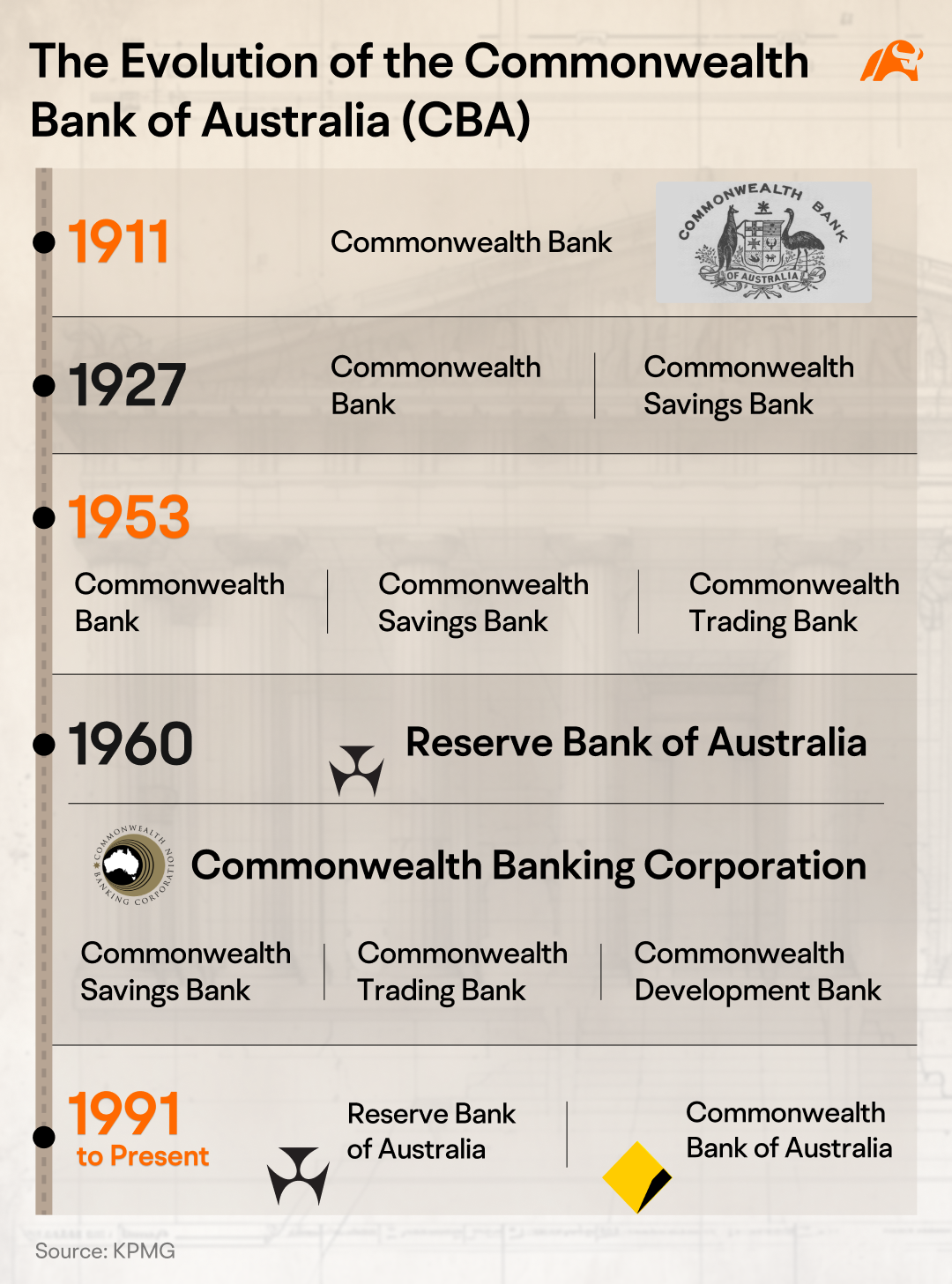
CBA’s roots can be traced back to the year 1911 when it was founded as a government-owned savings and trading bank under the Commonwealth Bank Act 1911.
As major events like the Great Depression and World War II unfolded, the bank took on more central banking responsibilities. However, these activities expanded to the point where a separate regulatory body was needed. It was crucial from a governance standpoint that the bank did not act as both a regulator and a competitor to other commercial banks.
With the passing of the Commonwealth Banks Act 1959 and Reserve Bank Act 1959, the commercial and central banking functions of the bank were separated. A new bank, the Commonwealth Banking Corporation (now known as the Commonwealth Bank of Australia or CBA), was established to handle the commercial banking operations of the original Commonwealth Bank. The Reserve Bank of Australia became Australia’s central bank and the legal successor to the Commonwealth Bank established in 1911.
Strengths of CBA
- A dominant player in the banking oligopoly
The Australian banking market is widely perceived as an oligopoly, which is a significant advantage for major banks.

The 'Four Pillars' banking policy is an Australian government initiative introduced in 1990 to ensure the banking sector maintains an appropriate level of competition. The policy mandates that no fewer than four major banks operate in the country, thereby keeping Australia’s ‘Big Four’ banks independent and prohibiting mergers or acquisitions among them. This regulation effectively eliminates the possibility of competitors merging to gain market share or competitive advantages, thereby enhancing returns on equity for major banks.
- The king of deposits
CBA boasts a large and devoted retail customer base, with 35% of retrial customers considering it their main financial institution in 2023.
With 17.1 million customers and 8.7 million digitally active customers in the 2023 financial year, CBA has the most extensive deposit funding pool of any Australian bank. This enables CBA to access cheap and stable funding for its operations, with 75% of its total funding coming from customer deposits, which are deemed the most dependable source of funding.
- Leading position in home lending
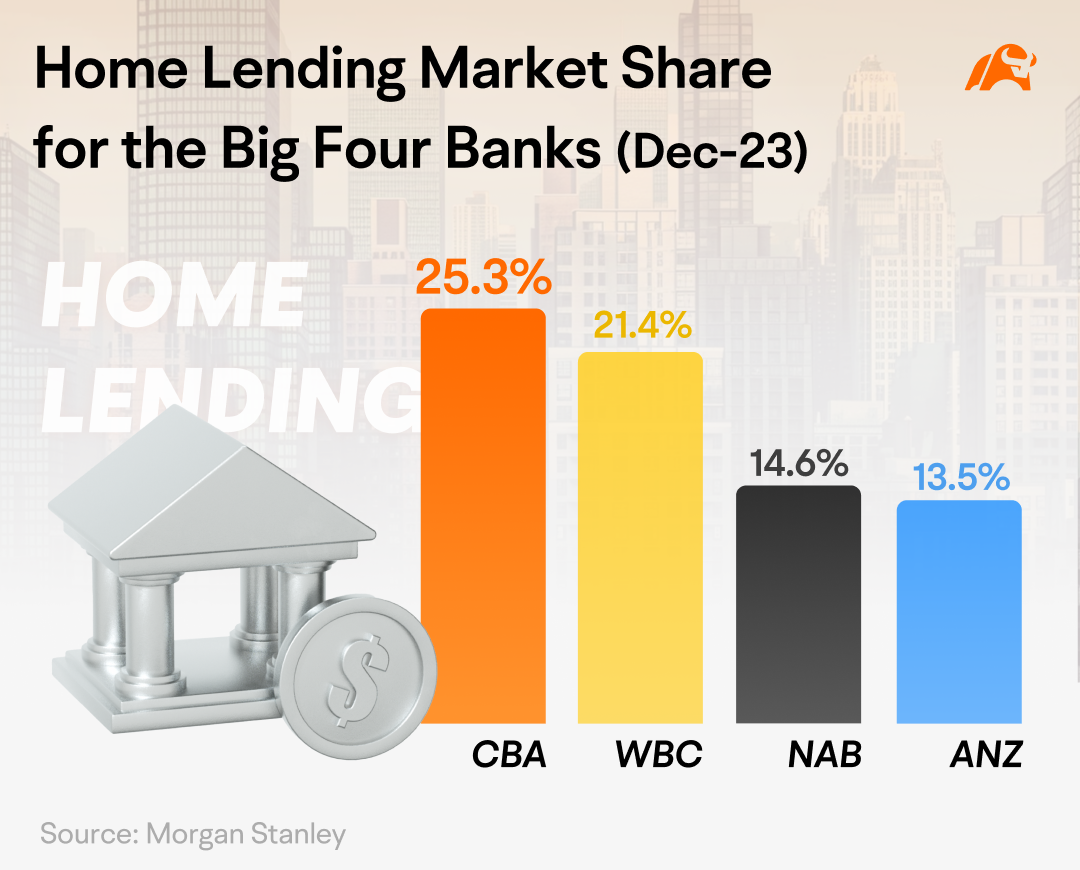
Home lending is a key revenue driver for Australian banks, and CBA, as the largest bank in Australia, leads this market with a 25.3% share as of December 2023.
CBA is well-positioned to benefit from a resurgent housing market, with profits heavily influenced by mortgage book growth. Continued growth in loan volumes could significantly boost CBA's earnings.
- Technology pioneer
CBA is a leader in banking innovation, leveraging artificial intelligence (AI), mobile technologies and big data to digitally transform its operations. It also invests in technology to combat fraud and scams targeting its customers.
In the 2023 financial year, CBA spent $2,036 million on information technology, representing 17% of its total operating expenses. This significant investment and focus on AI have earned CBA the top spot in the Evident global AI rankings for Asia Pacific and sixth place globally.
- Decent shareholder returns
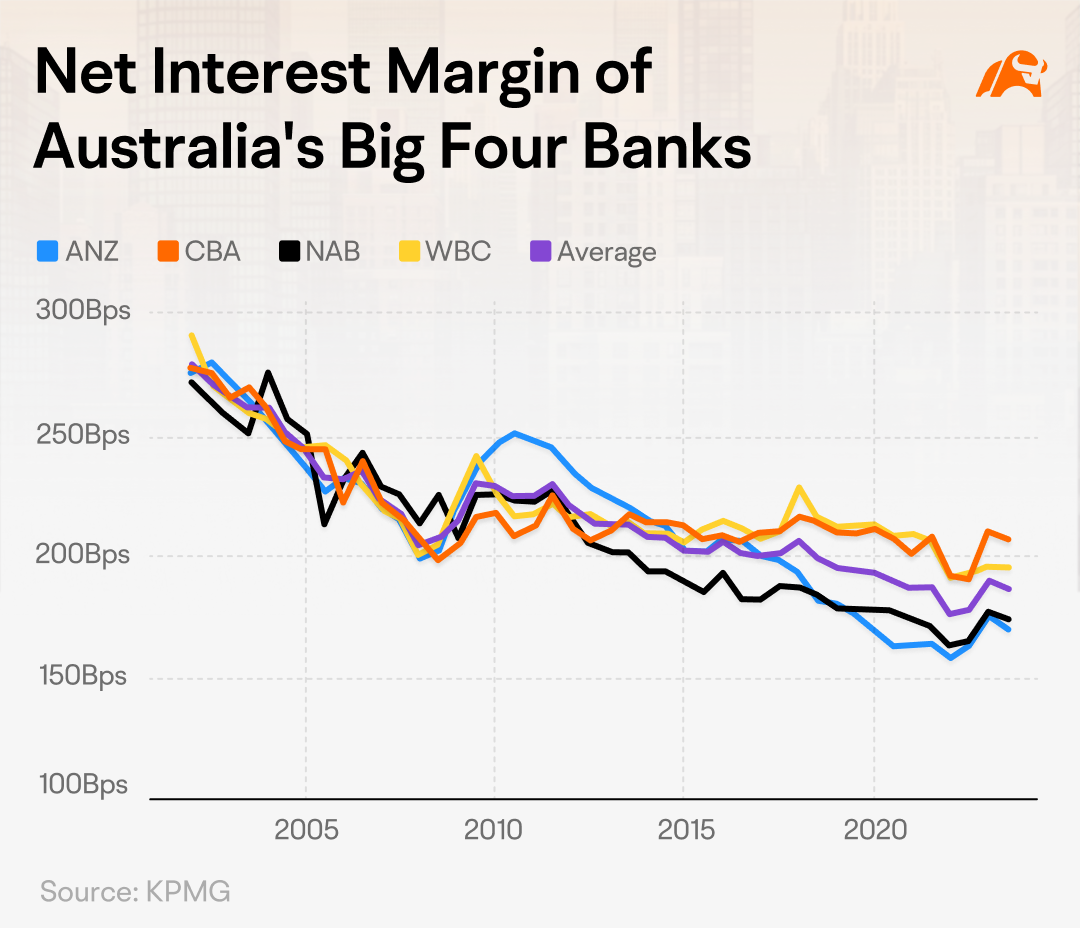
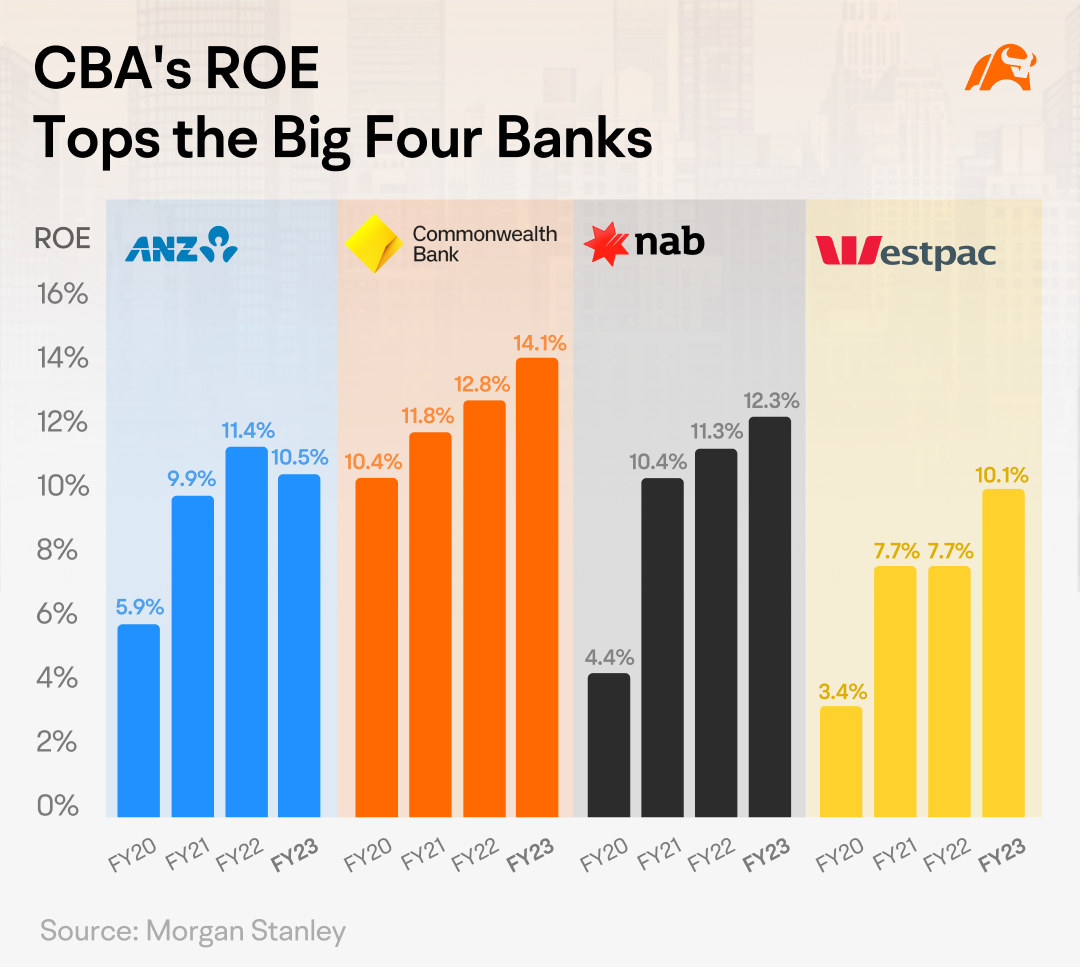
CBA’s ability to retain a large customer base while earning high margins has resulted in a relatively high return on capital, with its return on equity (ROE) metrics consistently exceeding those of its competitors.
For the financial year 2023, CBA delivered an impressive ROE of 14.1%, the highest among the Big Four banks, reflecting the bank’s outstanding financial performance. Moreover, CBA’s consistent growth trend in recent years showcases its remarkable profitability and financial stability, solidifying its position as a leading player in the banking industry.
The conundrum of a lofty valuation
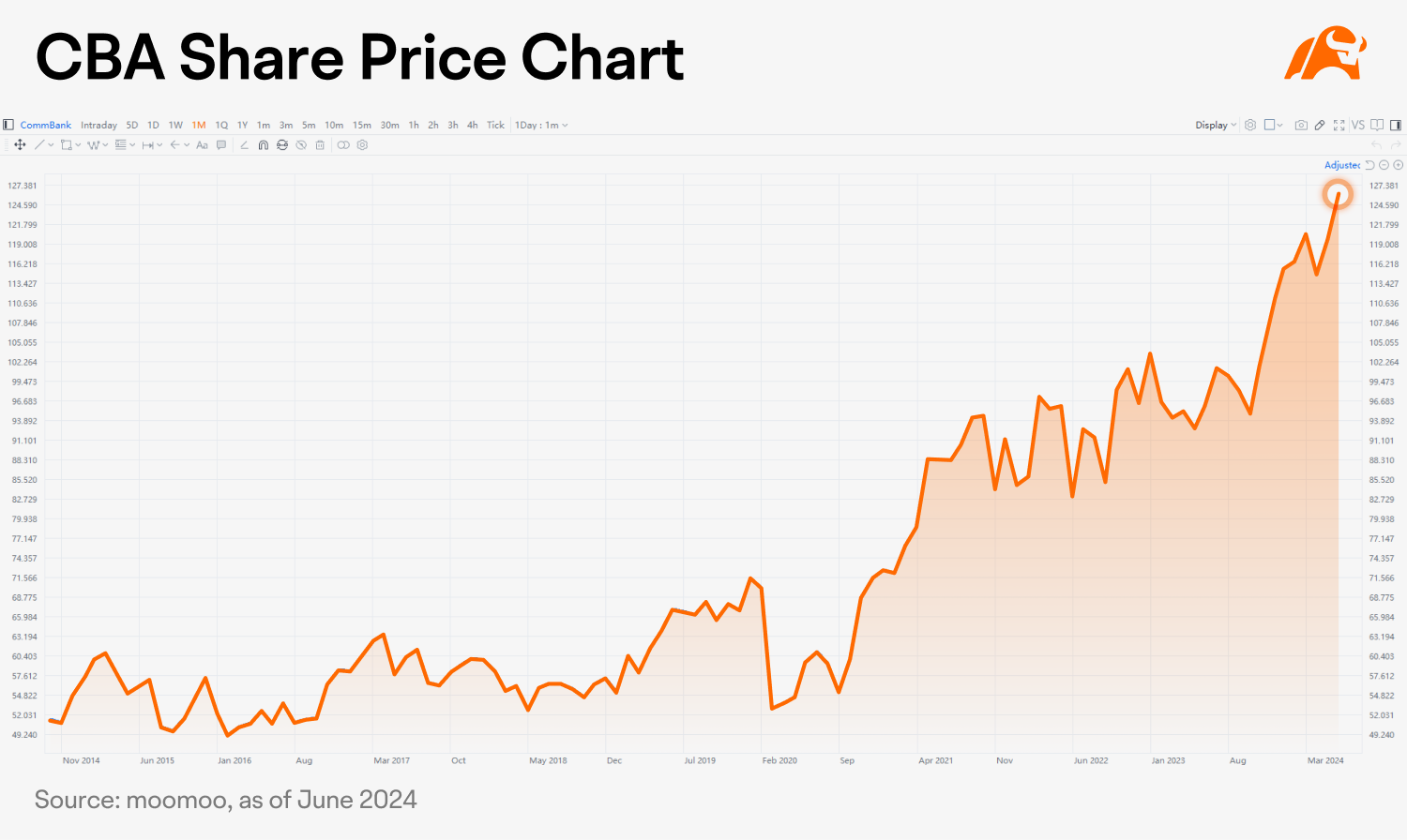
Investors are betting on the Reserve Bank of Australia’s potential cash rate cut in 2024, which has propelled CBA’s shares to all-time highs.
As of 26 June 2024, CBA’s shares have risen 15.63% year-to-date, outpacing the benchmark S&P/ASX 200 index’s 2.53% return. This has boosted CBA’s market capitalisation to over $210 billion, just shy of the biggest company, BHP, on the ASX.
Despite CBA’s undeniable success, as evidenced by critical metrics such as return on equity (ROE) and return on assets (ROA), its valuation is significantly higher than that of other Big Four banks, with its market capitalisation almost twice that of its closest competitor. Consequently, many analysts argue that CBA’s shares are in an unprecedented valuation territory.
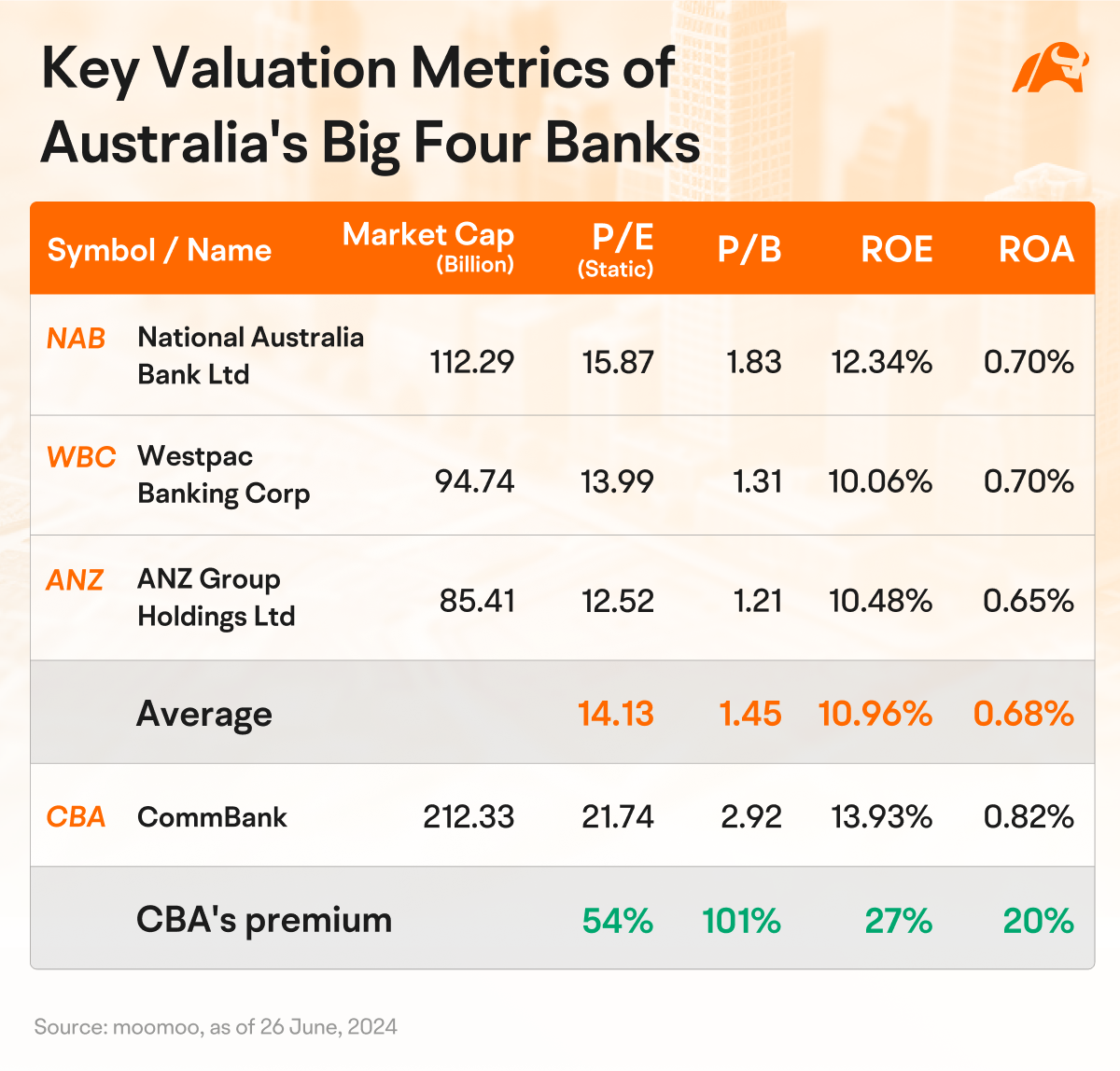
As shown in the table above, CBA trades at a 21.74x price-to-earnings (P/E) ratio, representing a 54% premium compared to major peers. Furthermore, its price-to-book (P/B) ratio of nearly 3x is even more inflated, with a 101% premium compared to major peers. Both the P/E and P/B ratios are significantly higher than those of its peers in the developed world.
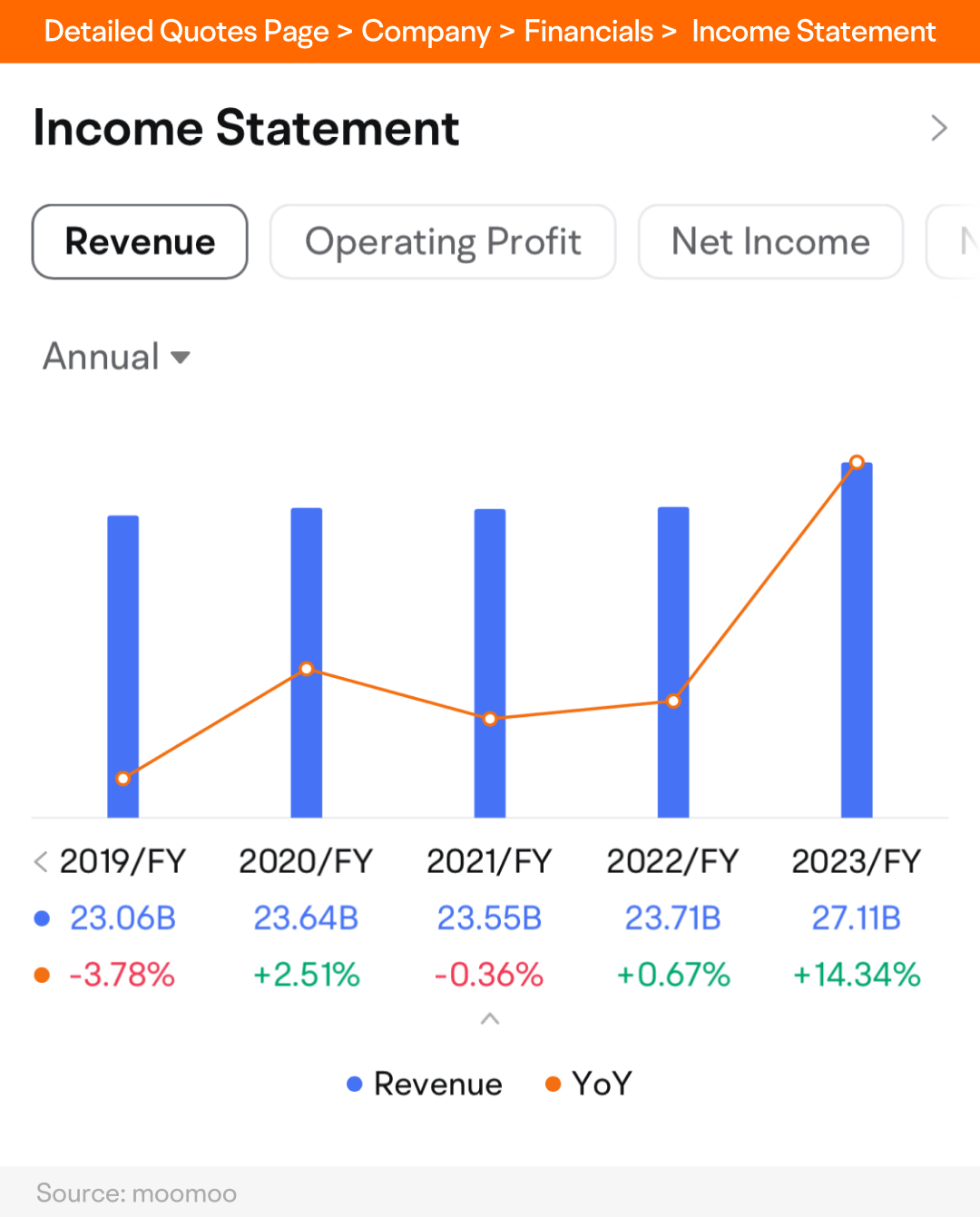
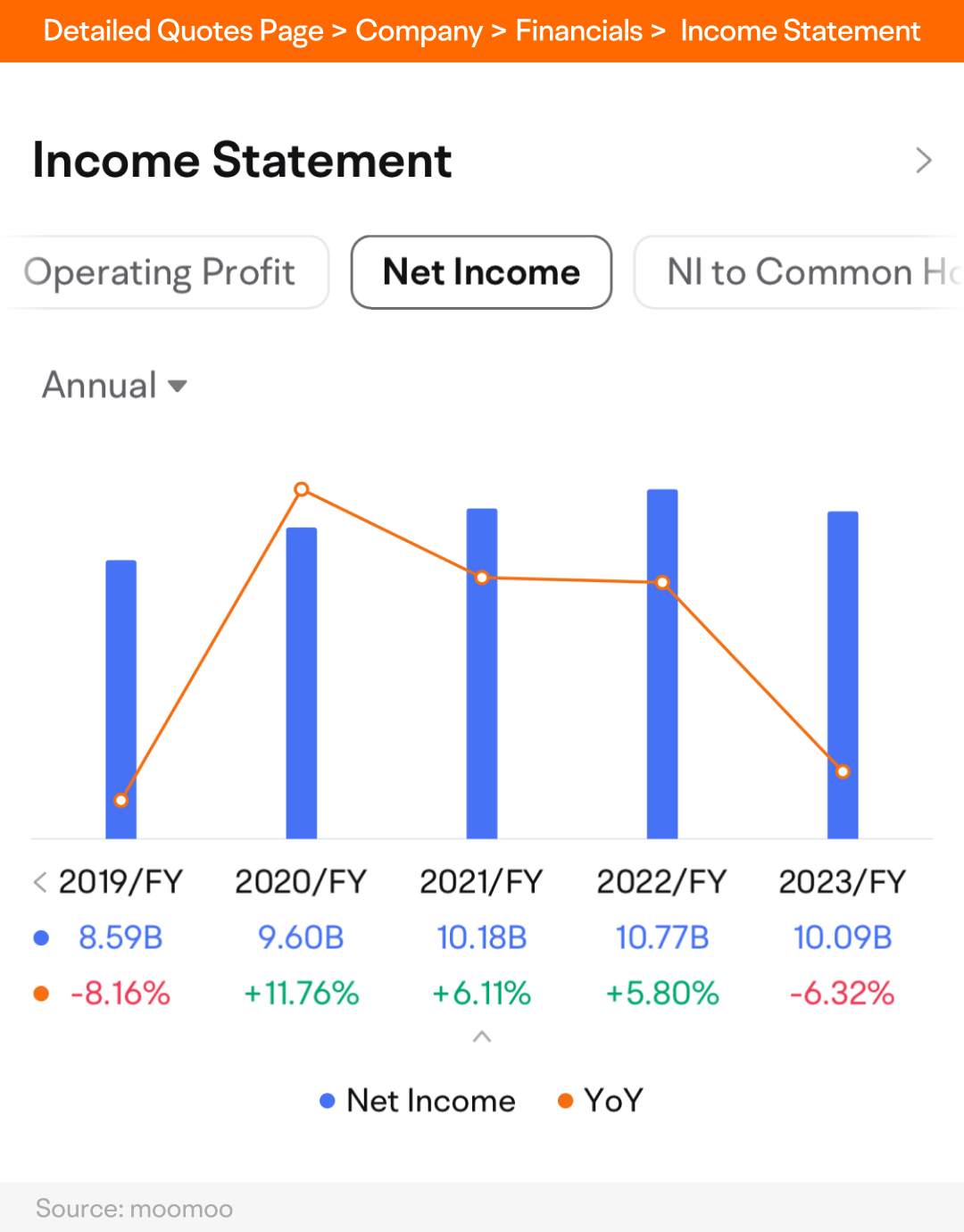
However, CBA is not showing a robust growth trend, with its revenue and net income being ups and downs over the past five years.
On the other hand, some experts suggest that CBA’s robust performance may continue, given that bank’s shares have historically outperformed following interest rate cuts, particularly in a favorable macroeconomic environment.
Business summary
CBA offers a wide range of integrated banking and financial products and services, primarily in Australia and New Zealand.
CBA business operations are divided into the following categories:
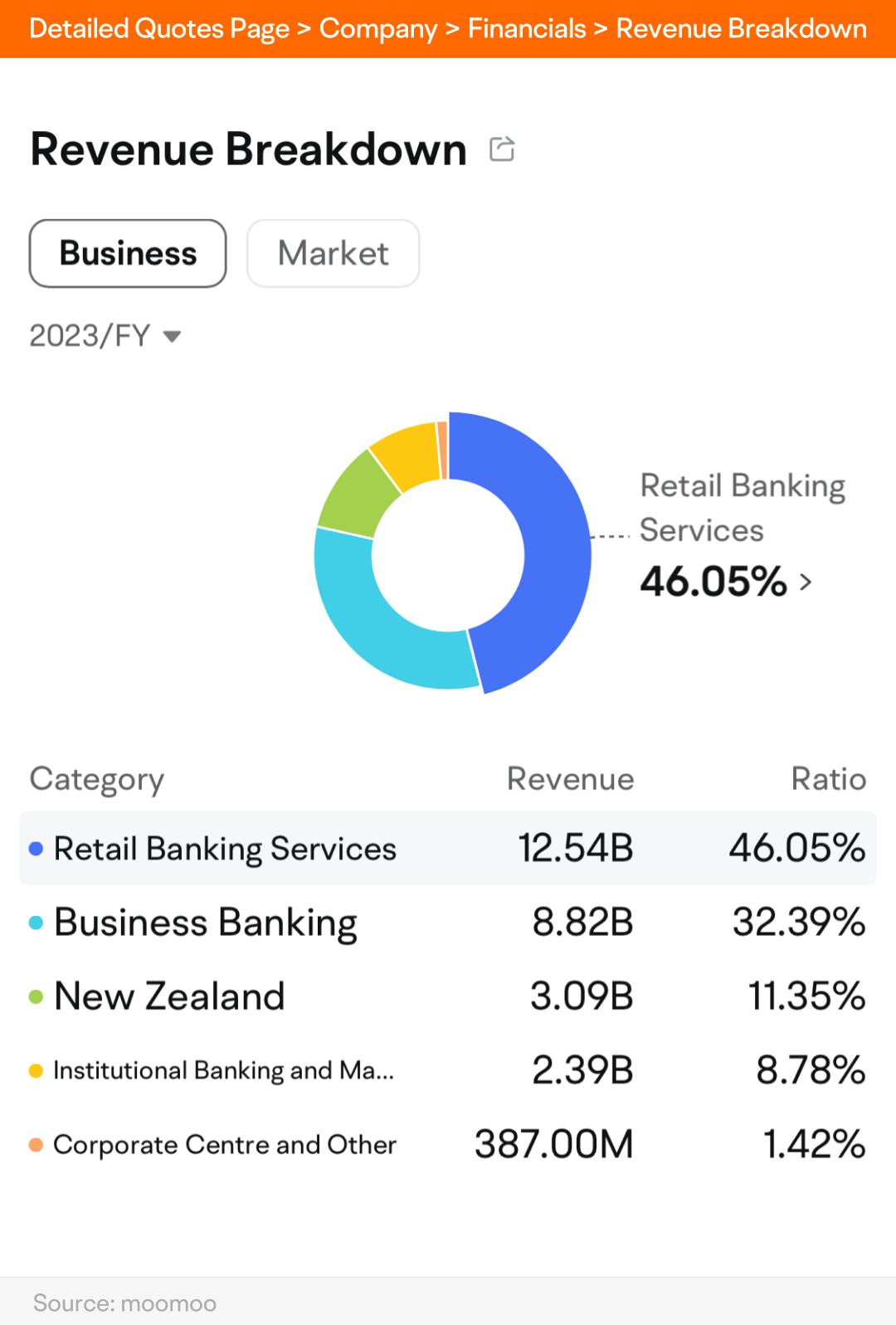
- Retail Banking Services: This division provides simple, convenient and affordable banking products and services to personal and private bank customers, helping them manage their everyday banking needs, purchase a home or invest for the future.
- Business Banking: This division serves the banking needs of business, corporate and agribusiness customers across the full range of financial services solutions. It also offers Australia's equities trading and margin lending services through the CommSec business.
- Institutional Banking and Markets: This division provides domestic and global financing and banking services to large corporate, institutional and government clients, through dedicated product and industry specialists.
- New Zealand: This division includes ASB Bank which provides a range of banking and investment products and services to its personal, business and rural customers in New Zealand.
This presentation is for informational and educational use only and is not a recommendation or endorsement of any particular investment or investment strategy. Investment information provided in this content is general in nature, strictly for illustrative purposes, and may not be appropriate for all investors. Read more