Gold and oil do mix: opportunity in the 2026 commodity surge
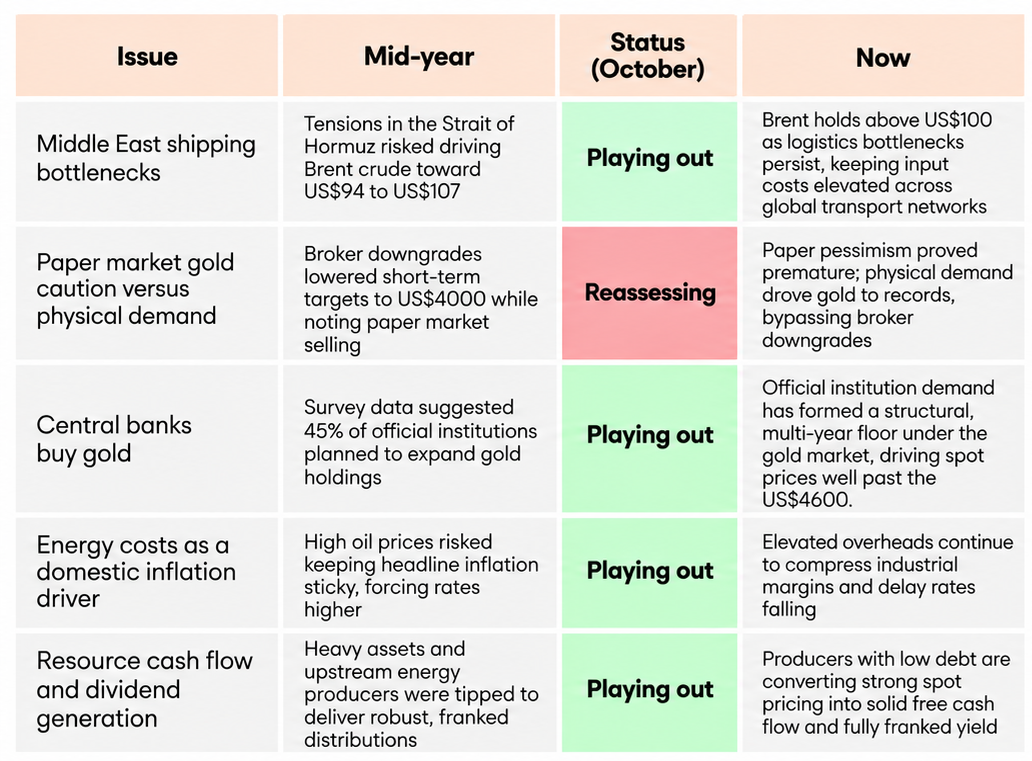
Gold and oil are rarely on the same side of a portfolio. One defends against crisis, while the other fuels industrial growth. But as we enter the last quarter of 2026, they are surging together. With Brent crude holding above US$100 and physical gold reaching new highs, the traditional playbook has changed.
For Australian and New Zealand investors, this dual rally creates a unique opportunity. Because our domestic sharemarkets are heavily weighted toward resources, understanding how these two assets interact is vital for managing costs and finding yield into 2027.
The supply and demand reality
This commodity cycle is not driven by speculative momentum. It is underpinned by years of structural undersupply and deliberate balance-sheet repositioning. In the energy sector, a decade of capital underinvestment across and refining infrastructure has left global supply chains brittle. With capacity tight, minor disruptions now trigger outsized price shocks. The World Bank notes that while baseline energy price forecasts are elevated, adverse geopolitical scenarios continue to risk Brent crude spiking toward US$115.
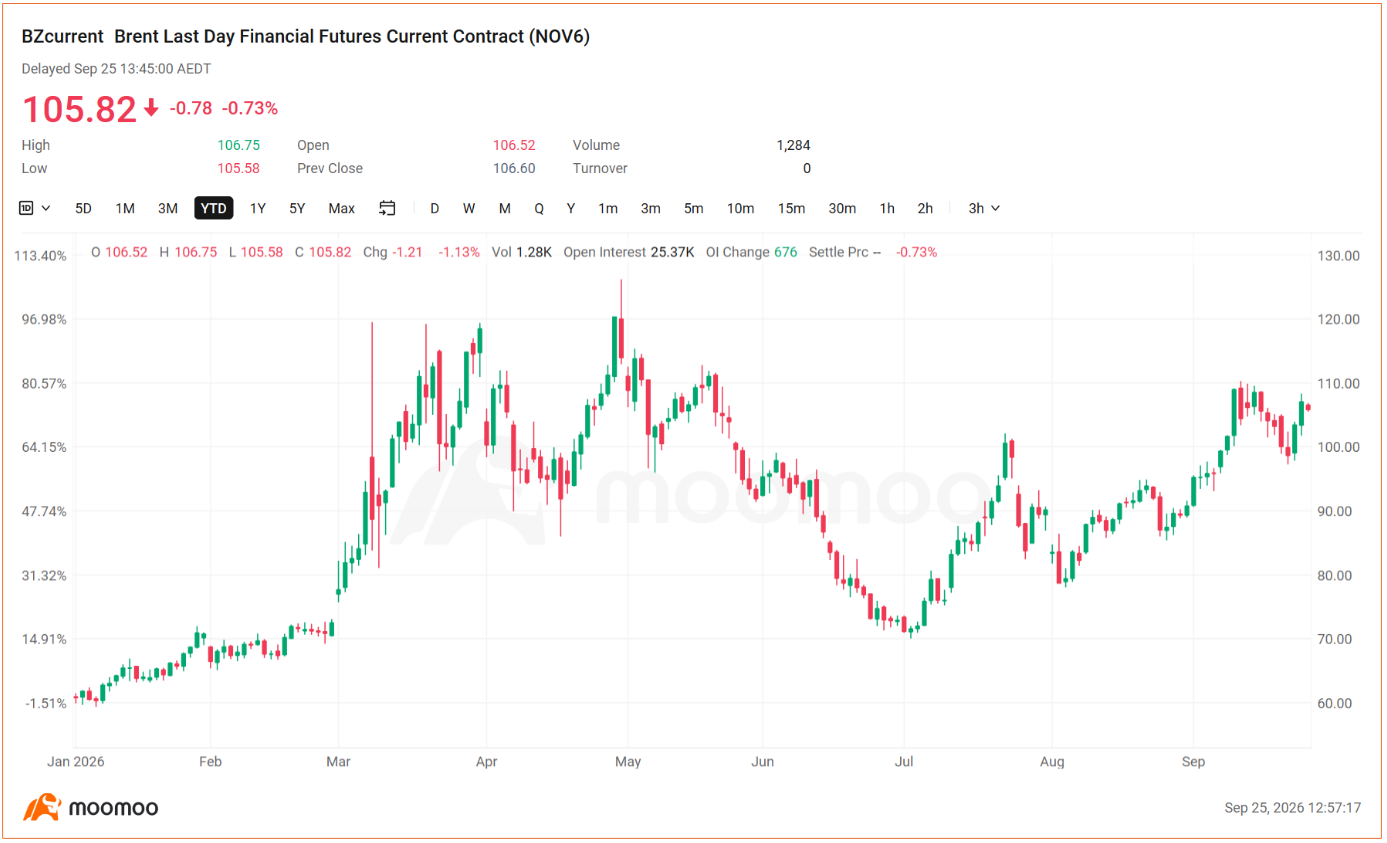
Oil price in 2026 (Brent last day financial futures current contract)
At the same time, central banks are accumulating gold at a generational pace. According to the World Gold Council’s 2026 central bank survey, official institutions have acquired an average of 1000 tonnes of gold annually over the past four years – double the pace of the prior decade. Furthermore, 89% of central-bank respondents expect global official reserves to rise over the next 12 months. This steady institutional bidding establishes a durable floor under precious metals, treating physical bullion as essential collateral against currency weakness.
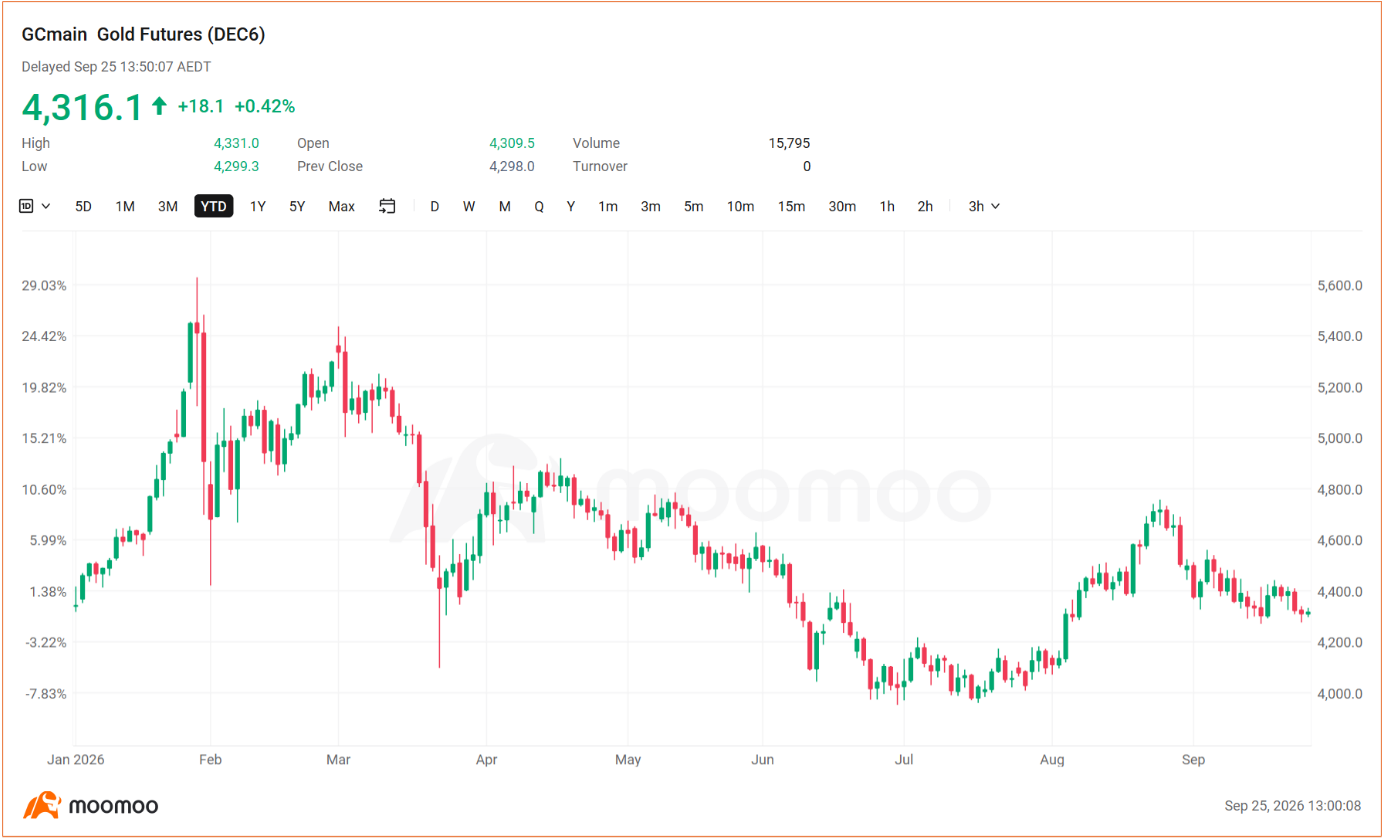
Gold price in 2026 (gold futures)
Oil and gold: the tax versus the hedge
To deploy capital effectively, investors must separate how these two commodities impact broader economic margins.
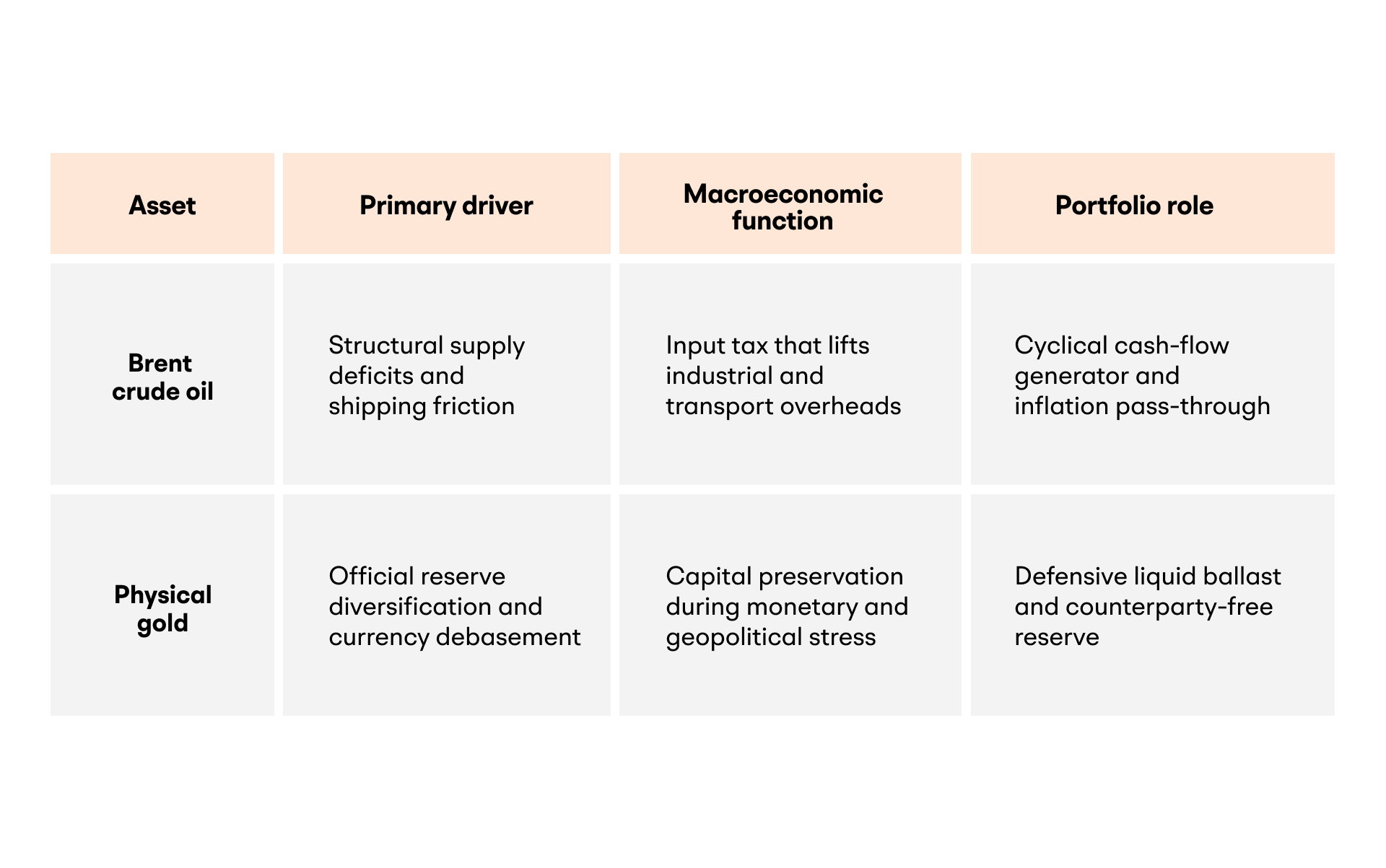
Elevated oil prices act as a direct tax on commerce. When fuel and logistics costs rise, operating margins compress across airlines, consumer staples and discretionary retail. This dynamic keeps inflation sticky and limits the scope for rapid central bank rate cuts.
Gold thrives in this friction. Because it carries no counterparty risk and does not depend on corporate earnings, it insulates portfolios against the inflationary pressures that triple-digit oil creates.
Assessing Australian and New Zealand equities
Surging resource prices present local investors with a distinct advantage. While higher energy bills squeeze household budgets, they expand free cash flows, balance-sheet resilience and dividend distributions across domestic energy and materials producers.
There are three ways to evaluate potential exposure.
Look for heavy physical infrastructure, including tier-one assets and export terminals built during lower-cost environments.
Focus on essential materials and energy sources that cannot be easily engineered out of industrial supply chains.
Identify strong cash-flow conversion in upstream producers with low debt levels, which often supports fully franked dividends for Australian users.
Navigating the final stretch of 2026
Capturing opportunities in hard assets requires tracking capital rotation rather than chasing day-to-day volatility.
You can monitor and execute on these macro movements using tools on the moomoo platform.
Open the heat map to see whether capital is broadly lifting energy and materials or merely concentrating in a few mega-cap producers.
Use the Stock screener to filter for resource companies showing manageable debt-to-equity ratios and strong return on equity.
Set real-time price and volume alerts around multi-month resistance levels to identify confirmed breakouts without reacting to market noise.
Gold and oil may serve opposing economic masters, but in late 2026 their combined force offers both growth and protection. By pairing cyclical energy cash flows with defensive bullion exposure, local portfolios can withstand headline turbulence while capturing genuine resource leverage into 2027.
Greg Boland is an Auckland-based market strategy consultant for Moomoo Australia and New Zealand.
This presentation is for informational and educational use only and is not a recommendation or endorsement of any particular investment or investment strategy. Investment information provided in this content is general in nature, strictly for illustrative purposes, and may not be appropriate for all investors. Read more