Are These the Top High Dividend ETFs in 2025?

Key takeaways
High dividend ETFs typically offer relatively stable returns, which can be potentially appealing during periods of market volatility.
Traditional high dividend ETFs refer to investments in equities. In recent years, bond ETFs and covered call ETFs have also become high dividend assets, each with its own distinct characteristics.
Considering various factors such as size, operating history, dividend yield, and expense ratio, we select the top 10 International High Dividend ETFs for Australian investors' reference.
Moomoo offers a variety of tools, such as the ETF Screener/Compare and high dividend rankings, to help you select your preferred high dividend ETFs.
Introduction
In recent years, geopolitical crises have increased economic and market volatility. During market downturns, high dividend assets typically demonstrate greater resilience, providing investors with a relatively stable income source and gaining popularity among some investors.
For income-focused investors, high dividend ETFs give an alternative to individual high dividend stocks. These ETFs mitigate single-stock risk through diversification, offering more stable dividend returns for investors who may lack expertise at stock picking.
This article will guide you through the basics of high dividend ETFs and introduce some of the top dividend-paying ETFs. You will also learn how to leverage tools from moomoo to help select your ETF.
Do ETFs pay dividends?
As pooled investment vehicles, ETFs hold a basket of stocks, bonds, or other assets, and therefore, their dividend distributions typically come from the income generated by these underlying assets.
By investing in dividend ETFs, investors can enjoy diversified investments while also receiving regular dividend income. The frequency of these dividend payments can vary; they may be distributed monthly, quarterly, or annually, depending on the specific ETF.

What are the types of high dividend ETFs?
High dividend ETFs come in various types, each focusing on different strategies or sectors. Here are some common types:
Equity ETFs
These ETFs invest in dividend-paying stocks, typically selecting companies with a history of consistent and possibly growing dividend payments. They aim to provide investors with regular income through dividends, along with potential capital appreciation. Traditional high dividend ETFs typically refer to equity ETFs.
Advantages:
Income and Growth Potential: Investors receive regular dividend income while also benefiting from potential capital appreciation as the underlying stocks increase in value.
Diversification: These ETFs typically hold a broad basket of dividend-paying stocks, reducing company-specific risk.
Disadvantages:
Market Volatility: Equity ETFs are subject to stock market volatility, which affects both income and principal value.
Dividend Cuts: If companies experience headwinds, they might reduce or eliminate dividend payments.
Bond ETFs
Bond dividend ETFs invest in fixed-income securities, such as government, corporate, or municipal bonds, which pay interest to investors. These ETFs aim to provide a steady income stream through interest payments, with potential for lower volatility compared to equity ETFs.
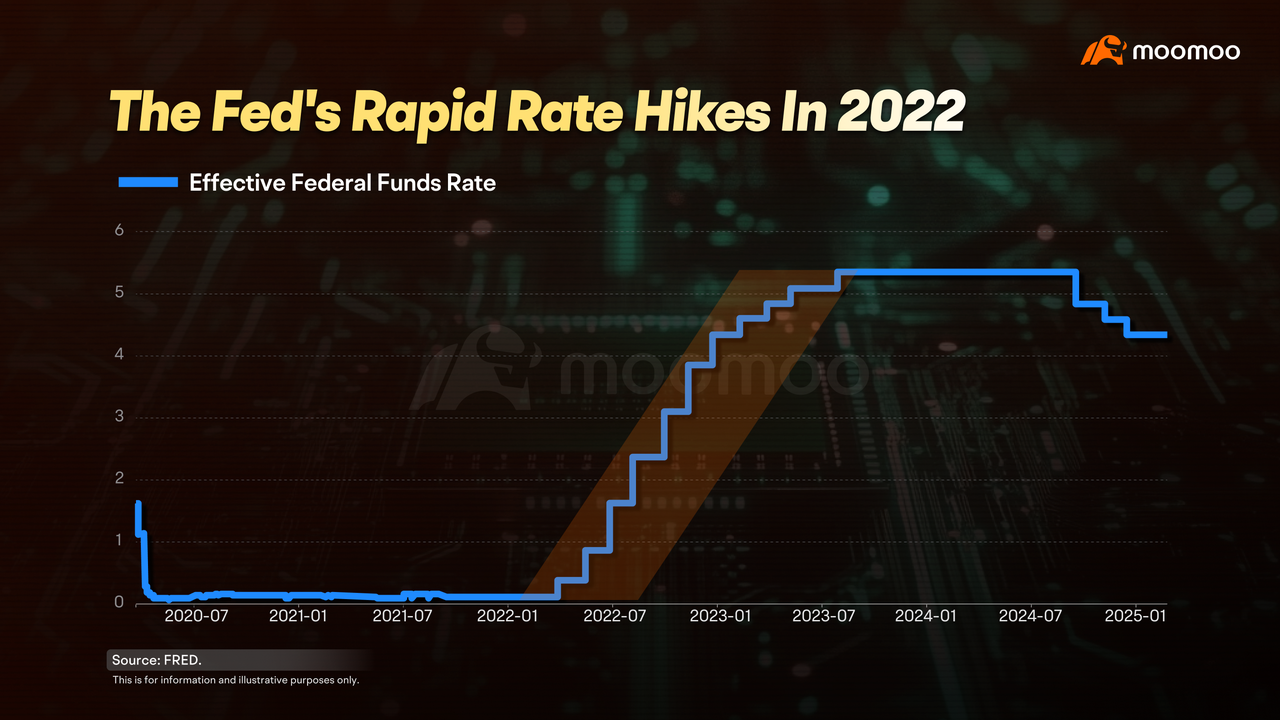
Bond ETFs have only recently become high-yield assets since 2022. This is mainly because the Federal Reserve implemented significant interest rate hikes and maintained high rates, which has led to a general increase in bond yields in the market.
Advantages:
Stable Income: Bond ETFs provide regular interest payments, often with less volatility compared to equity ETFs.
Lower Volatility: Bonds exhibit less price fluctuation compared to stocks, resulting in a smoother investment experience and a reduced risk of significant principal loss.
Disadvantages:
Interest Rate Risk: Bond prices can decline when interest rates rise, which impacts the ETF's value.
Covered Call ETFs
These ETFs employ a covered call strategy, where the fund holds a portfolio of stocks and sells call options on them. This strategy generates additional income from option premiums, which can potentially enhance overall yield but may limit upside potential.
These types of ETFs have gained popularity recently, especially by combining with trending sectors, such as AI and cryptocurrencies. For instance, there are covered call ETFs, such as NVDY for AI leader Nvidia and CONY for the cryptocurrency exchange Coinbase, both of which have exceeded $1 billion in assets under management (AUM).
It's important to note that although these ETFs offer high dividend yields, their operation involves options, which are high-risk assets and may not be suitable for all investors. It is advisable to thoroughly understand how covered call strategies work before deciding whether to invest in them.
Advantages:
Enhanced Yield: By combining dividend income with option premiums, covered call ETFs can offer a higher yield compared to conventional dividend-focused ETFs. Some covered call ETFs can have dividend yields exceeding 100%.
Regular Income: Covered call ETFs often provide more consistent income because the premiums received from regularly selling call options can be more frequent than traditional dividend payouts.
Disadvantages:
Limited Upside Potential: The strategy caps potential capital gains, as stocks may be called away if prices rise above the strike price.
Downside Risk: Many of the underlying assets in covered call ETFs can be highly volatile. If there is a significant downturn, the premiums collected from selling call options may not be sufficient to offset the losses in the portfolio, resulting in substantial drawdowns for the ETF.
Complexity: Covered call strategies can be more complex to understand compared to straightforward dividend investing.
Higher Expense Ratios: Implementing the covered call strategy involves regularly writing (selling) call options and managing the underlying portfolio. The additional administrative and trading activities can increase the operational costs.
With so many high dividend ETFs available in the market, it can indeed be overwhelming to decide which one to choose. No worries!
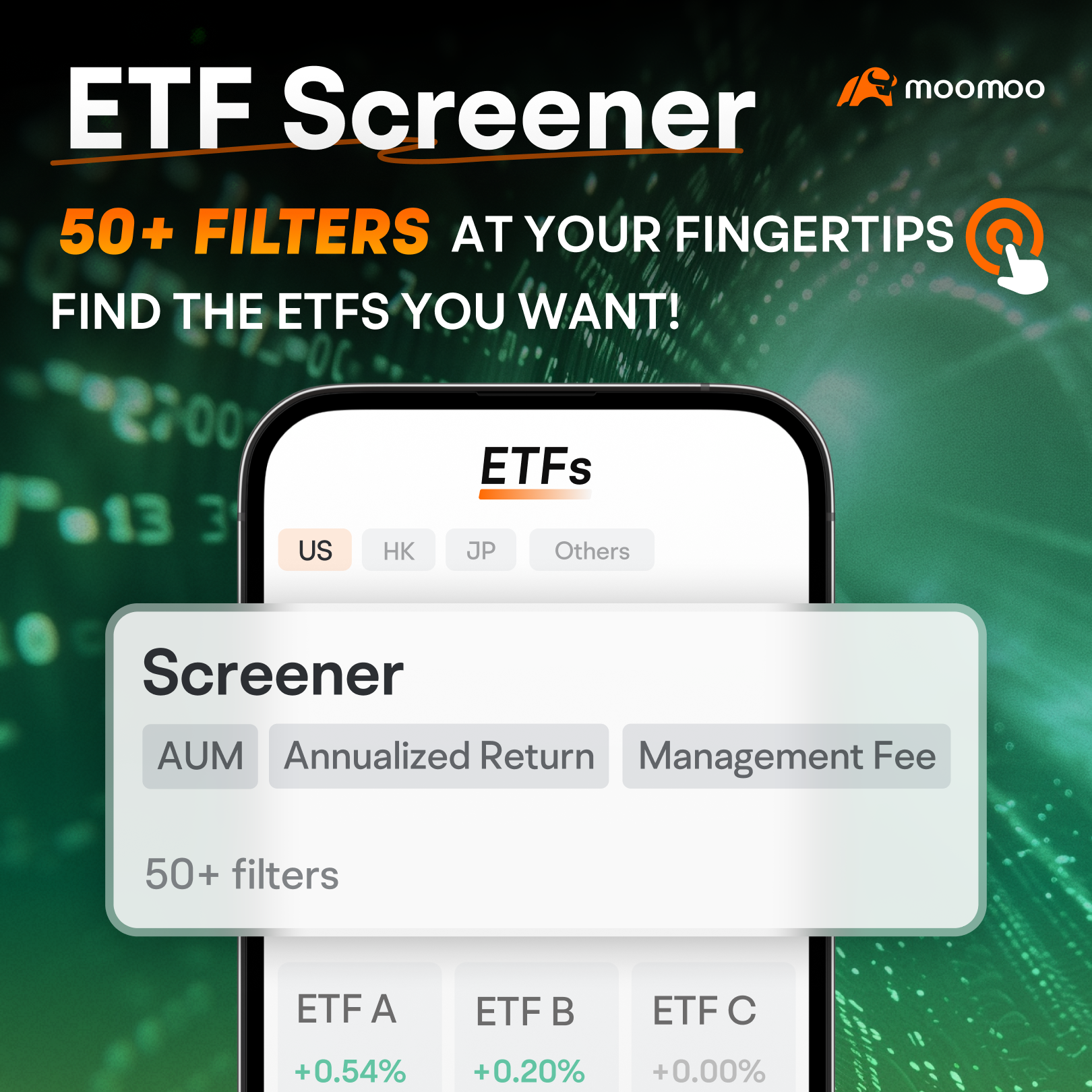
Moomoo offers an ETF screener that can help simplify this process. It integrates over 50 customizable screening criteria, covering various dimensions like Assets Under Management (AUM), dividends, annualized returns, and management fees. This allows you to create a personalized formula for selecting ETFs that potentially fit your investment needs and preferences.
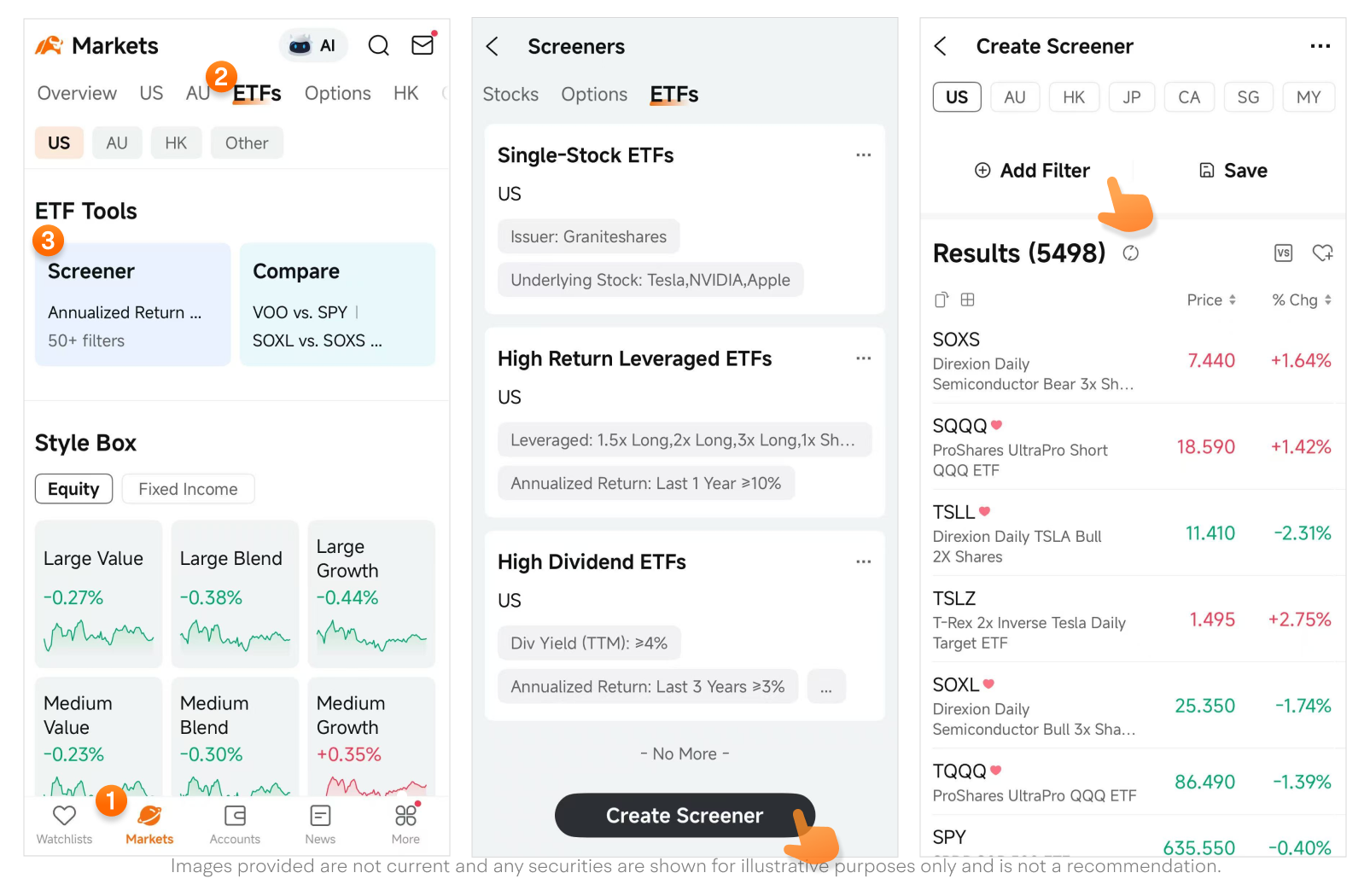
To access the ETF screener, open the Markets page and switch to the ETFs tab. Scroll down to find the ETF Tools section, where you can enter the screener page.
By clicking Create Screener, you can customize your criteria. The system also provides several templates for you to adjust and use as a reference. If you find a set of criteria that suits your needs, you can save it with one click for easy access at any time. This feature allows you to customize your ETF selection to align more closely with your specific investment objectives.
What are the 10 best high dividend ETFs for Aussies to watch?
When searching for the best high dividend ETFs in 2025, investors typically compare a range of factors, such as size, operating history, dividend yield, and expense ratio.
According to these criteria, we select the top 10 international high dividend ETFs for Australian investors, ranked by dividend yield.
These ETFs fall under the first category of Equity ETFs mentioned earlier, which are traditional high dividend ETFs.
All the ETFs on this list have assets over $3 billion, with the largest, VIG, exceeding $100 billion. Most of these ETFs have been operating for over 10 years, and all have an annual management fee below 0.5%, the lowest being 0.04%. Some focus on U.S. assets, while others target high dividend assets globally.
ETF Ticker | ETF Name | AUM | Dividend Yield | Payout Frequency | Management Fee |
IDV | iShares International Select Dividend ETF | 5.73B | 4.87% | Quarterly | 0.49% |
SPYD | SPDR Portfolio S&P 500 High Dividend ETF | 7.02B | 4.40% | Quarterly | 0.07% |
VYMI | Vanguard International High Div Yield Index Fund ETF | 11.85B | 3.97% | Quarterly | 0.15% |
SCHD | Schwab US Dividend Equity ETF | 71.03B | 3.76% | Quarterly | 0.06% |
DVY | iShares Select Dividend ETF | 20.23B | 3.73% | Quarterly | 0.38% |
HDV | iShares Core High Dividend ETF | 11.38B | 3.36% | Quarterly | 0.08% |
FDVV | Fidelity High Dividend ETF | 6.55B | 3.02% | Quarterly | 0.15% |
VYM | Vanguard High Dividend Yield Index Fund ETF | 76.27B | 2.57% | Quarterly | 0.05% |
DON | WisdomTree US MidCap Dividend Fund | 3.74B | 2.31% | Monthly | 0.38% |
VIG | Vanguard Dividend Appreciation Index Fund ETF | 109.57B | 1.68% | Quarterly | 0.04% |
Source: moomoo. Data as of Aug 20, 2025. | |||||
>> Good news! Moomoo provides high dividend lists and a thematic ETF section to help you easily find high dividend ETFs.
iShares International Select Dividend ETF(IDV)
The iShares International Select Dividend ETF, managed by BlackRock, is an international high dividend equity fund designed to track the performance of high dividend-yielding companies in developed markets outside the U.S.
Launched in 2007, it holds constituents across financials, utilities, communication services, energy, and other sectors. Geographically, the fund is primarily exposed to Europe, with significant allocations to countries such as the U.K., France, and Germany. It tracks the Dow Jones EPAC Select Dividend Index.
SPDR Portfolio S&P 500 High Dividend ETF(SPYD)
The SPDR Portfolio S&P 500 high dividend ETF is a passively managed exchange-traded fund launched by State Street Global Advisors in 2015. It aims to replicate the performance of the S&P 500 high dividend Index, which comprises the top 80 highest-dividend-yielding stocks within the broader S&P 500 Index.
Vanguard Intl High Div Yield Index Fund ETF(VYMI)
Launched in 2016, it is managed by Vanguard. The investment seeks to replicate the FTSE All-World ex US high dividend Yield Index, capturing returns from non-U.S. companies with high dividend yields. The ETF holds a diversified portfolio, focusing on developed and emerging markets outside the U.S. with above-average dividend prospects.
Schwab US Dividend Equity ETF(SCHD)
The Schwab U.S. Dividend Equity ETF (SCHD) tracks the Dow Jones U.S. Dividend 100 Index, focusing on 100 high-quality U.S. companies with strong dividend histories. It was launched in 2011 by Charles Schwab. It provides exposure across various sectors, including consumer goods, healthcare, industrials, and technology, among others.
iShares Select Dividend ETF(DVY)
iShares Select Dividend ETF is designed to track the performance of the Dow Jones U.S. Select Dividend Index, providing investors with exposure to large-cap U.S. companies that have a consistent five-year history of paying dividends. It is managed by BlackRock and was launched in 2003.
>> Start investing in high dividend ETFs! Open an account now to claim your welcome rewards and boost your portfolio!
iShares Core High Dividend ETF(HDV)
It is managed by BlackRock and was launched in 2011. It aims to track the Morningstar Dividend Yield Focus Index. The index comprises 75 high-quality, high dividend-paying U.S. companies that have been screened for financial health.
Fidelity High Dividend ETF(FDVV)
The investment seeks to provide investment returns that correspond to the performance of the Fidelity high dividend Index. The Index is designed to reflect the performance of stocks of large and mid-capitalization dividend-paying companies that are expected to continue to pay and grow their dividends. It is managed by Fidelity and was launched in 2016.
Vanguard High Dividend Yield Index Fund ETF(VYM)
It seeks to track the performance of the FTSE high dividend yield Index, which is derived from the U.S. component of the FTSE Global Equity Index Series. The ETF focuses on large-cap equity, emphasizing stocks that are forecasted to have above-average dividend yields. It is managed by Vanguard and was launched in 2006.
WisdomTree US MidCap Dividend Fund(DON)
It is managed by WisdomTree and was launched in 2006. The ETF aims to track the performance of the WisdomTree U.S. MidCap Dividend Index, consisting of mid-cap U.S. companies that pay dividends. It is designed to offer exposure to core U.S. mid-cap equities with an emphasis on dividend income.
Vanguard Dividend Appreciation Index Fund ETF(VIG)
The Vanguard Dividend Appreciation ETF is managed by Vanguard and was launched in 2006. It seeks to track the performance of the S&P U.S. Dividend Growers Index, which comprises U.S. companies with a history of increasing dividends over time. The portfolio is well-diversified across 337 holdings with significant exposure to the Information Technology, Financials, and Healthcare sectors.
At this point, you might wonder how to compare the different focuses of each high dividend ETF more thoroughly. This is where Moomoo can help. Moomoo provides an ETF comparison feature that enables you to visually analyze and contrast the characteristics of different ETFs, making it easier to assess their attributes and make informed investment decisions. Here's how: Markets> ETFs> Compare.
Click the "+" next to "symbol" to start searching for the ETF you want to compare, then you can add it to the comparison list. The tool supports comparison of up to six different ETFs across multiple dimensions, including historical performance, analyst ratings, holding styles, and dividend details.
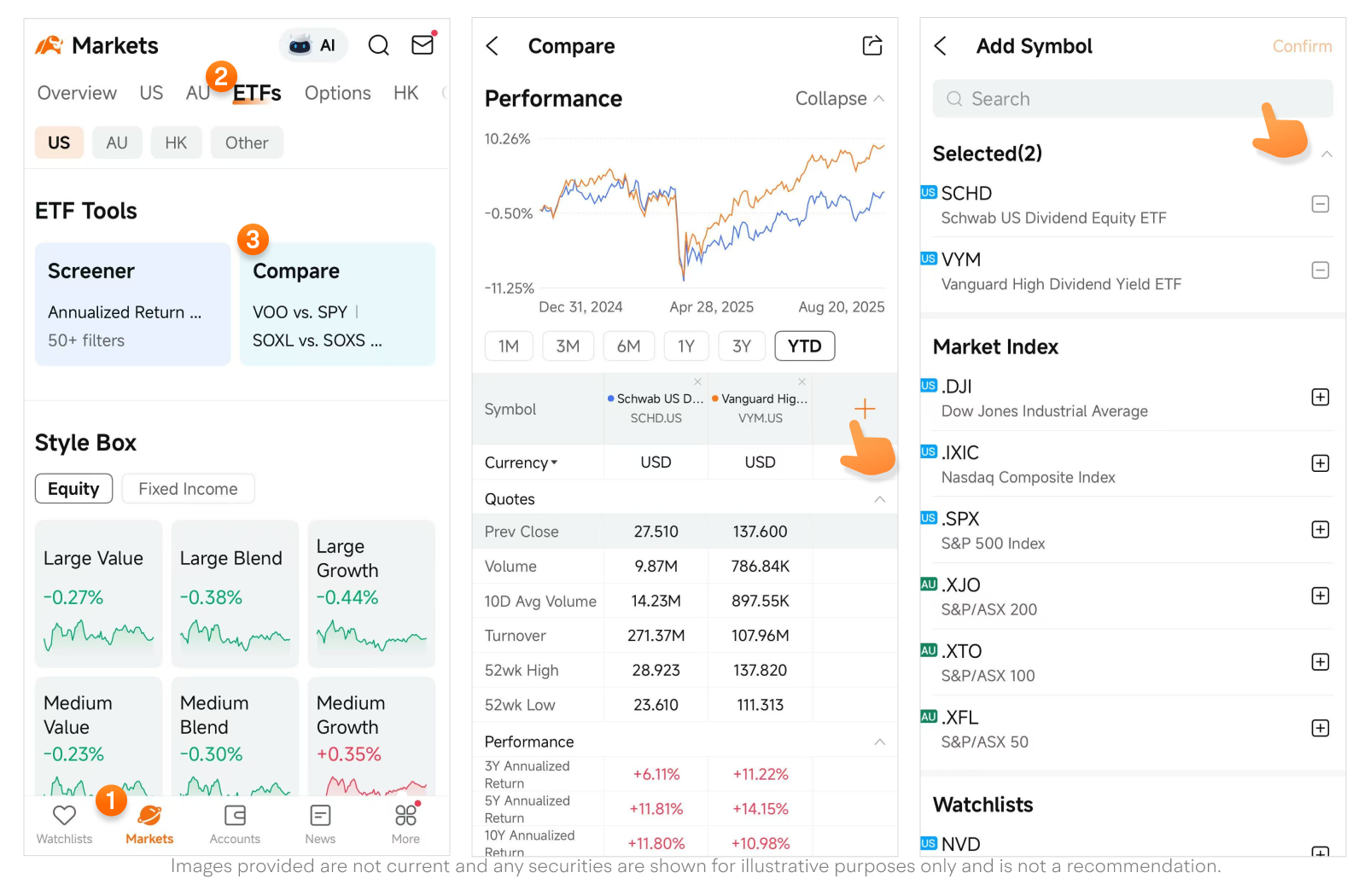
For example, SCHD vs VYM: these two high dividend ETFs have similar sizes, each around $7 billion (as of August 2025), and primarily focus on large-cap stocks. However, you might notice slight differences in their historical performances. You can add ETFs of interest to compare them based on your needs.
>> If you are interested in the best high dividend ETF in Australia, read our article: 10 Best High Dividend ETFs in Australia 2025
How to invest in dividend ETFs?
After learning the top 10 high dividend ETFs list, have you found any favorites? Here is a step-by-step guide on how to start your high dividend ETF investing:
Step 1: Open a share trading account
Many brokerages offer high dividend ETFs for users to invest in, so make sure the broker you choose supports the markets and assets you want to invest in. Moomoo offers a diverse range of market and asset options, enabling you to select from high dividend ETFs available on exchanges in both Australia and the United States.
If you don't have a moomoo account yet, joining is very simple and can be done in just three easy steps.

Step 2: Fund your trading account
Once you have an account, the next step is to prepare funds for investing in high dividend ETFs.
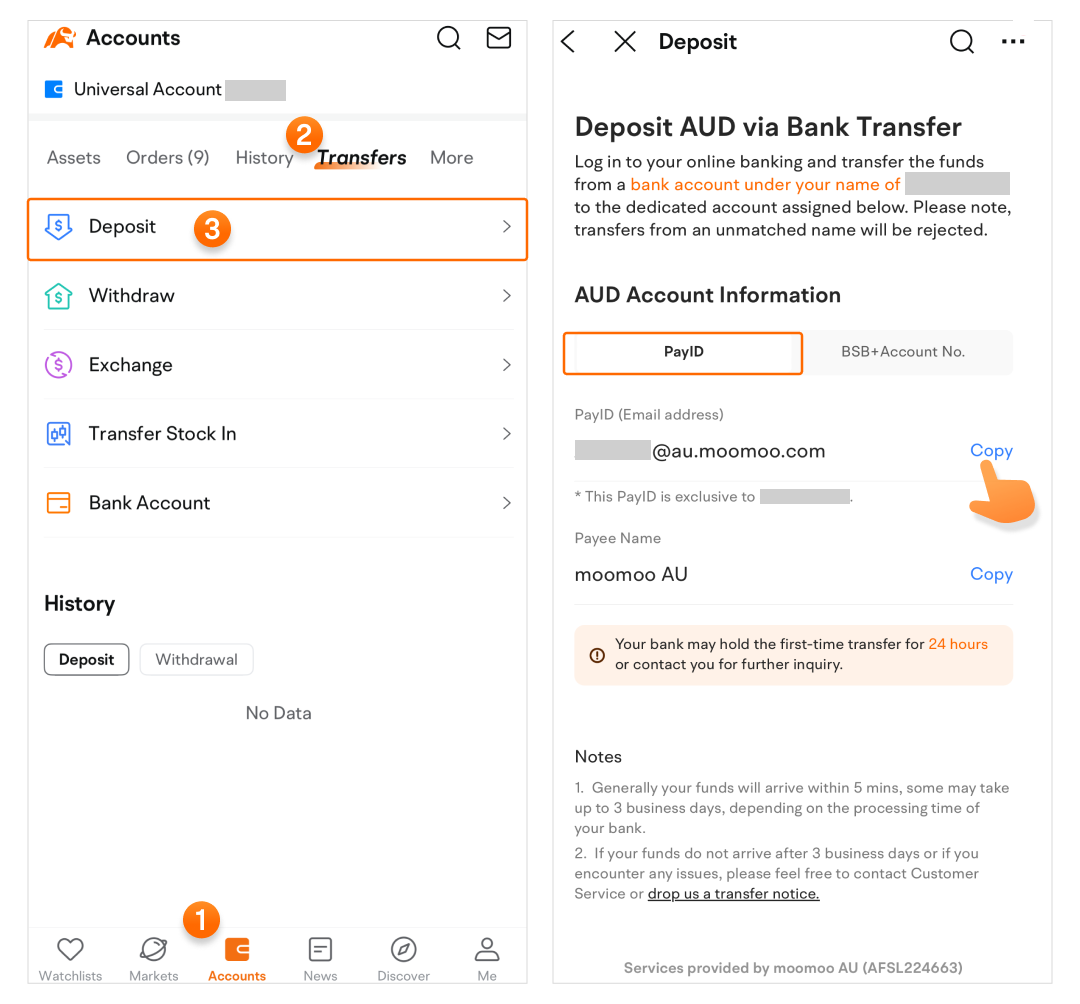
Moomoo offers PayID for instant bank transfers, with funds arriving in just 5 minutes if your bank and Moomoo account names match. Your funds are securely held in designated client money trust accounts with CBA, HSBC, and MUFG, separate from moomoo's assets.
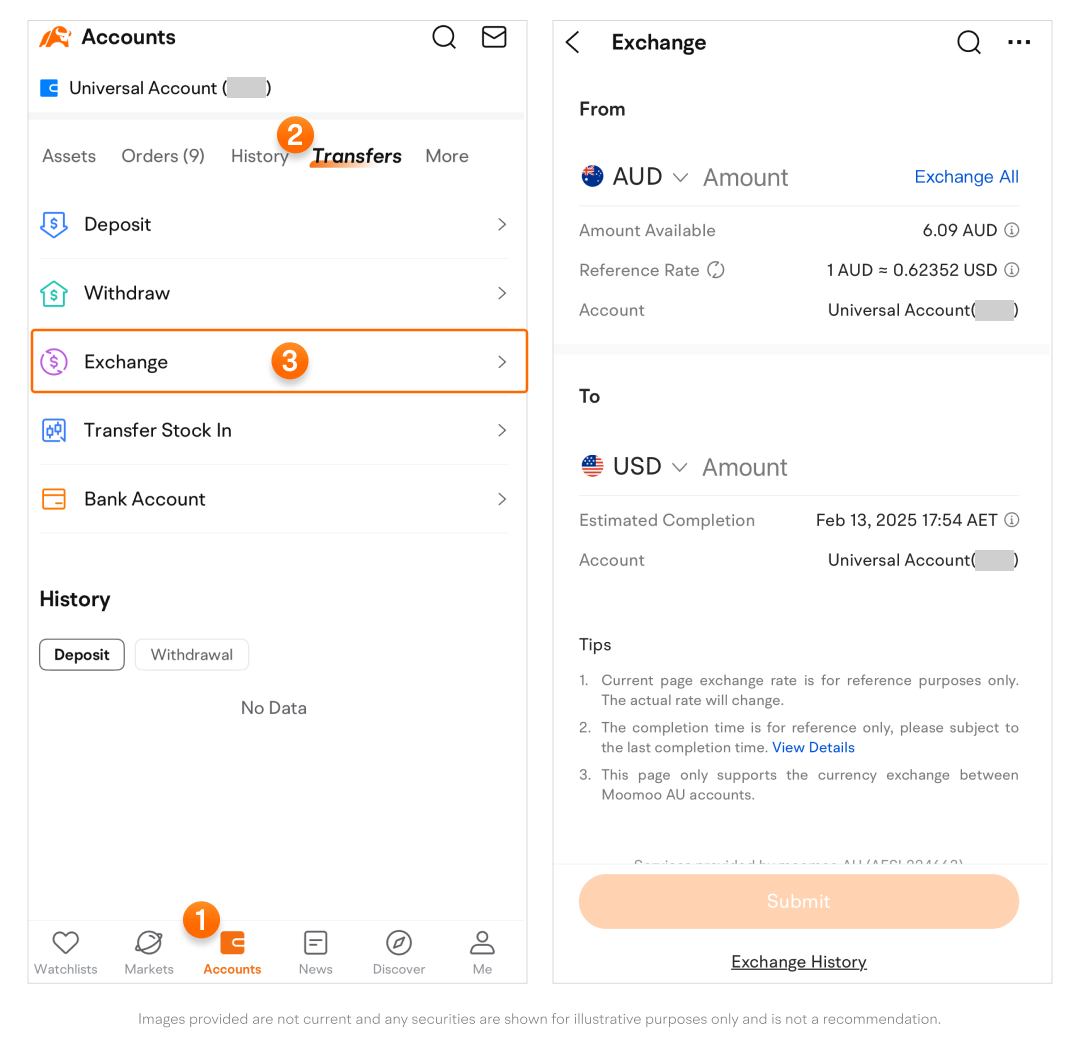
Additionally, moomoo includes an in-app currency exchange feature, making it easy to convert currencies when you want to invest in U.S. assets.
Step 3: Find high dividend ETFs
Before investing, you can define your financial goals (whether income generation, capital growth, or both) to ensure you choose ETFs that align with your objectives and risk tolerance. Once your goals are clear, the next step is to identify suitable dividend ETFs.
Look for those that match your investment strategy by considering factors such as dividend yield, expense ratio, and historical performance. Additionally, examine the types of companies or sectors that the ETF invests in to ensure they align with your preferences and market outlook.
In addition to the ETF Screener and ETF Compare tools we mentioned, Moomoo also offers a High Dividend Ranking feature. This handy tool helps you quickly spot ETFs with the most attractive dividend yields, making it easier to find those income-generating assets. You can find it through Markets> ETFs> High Dividend Yield
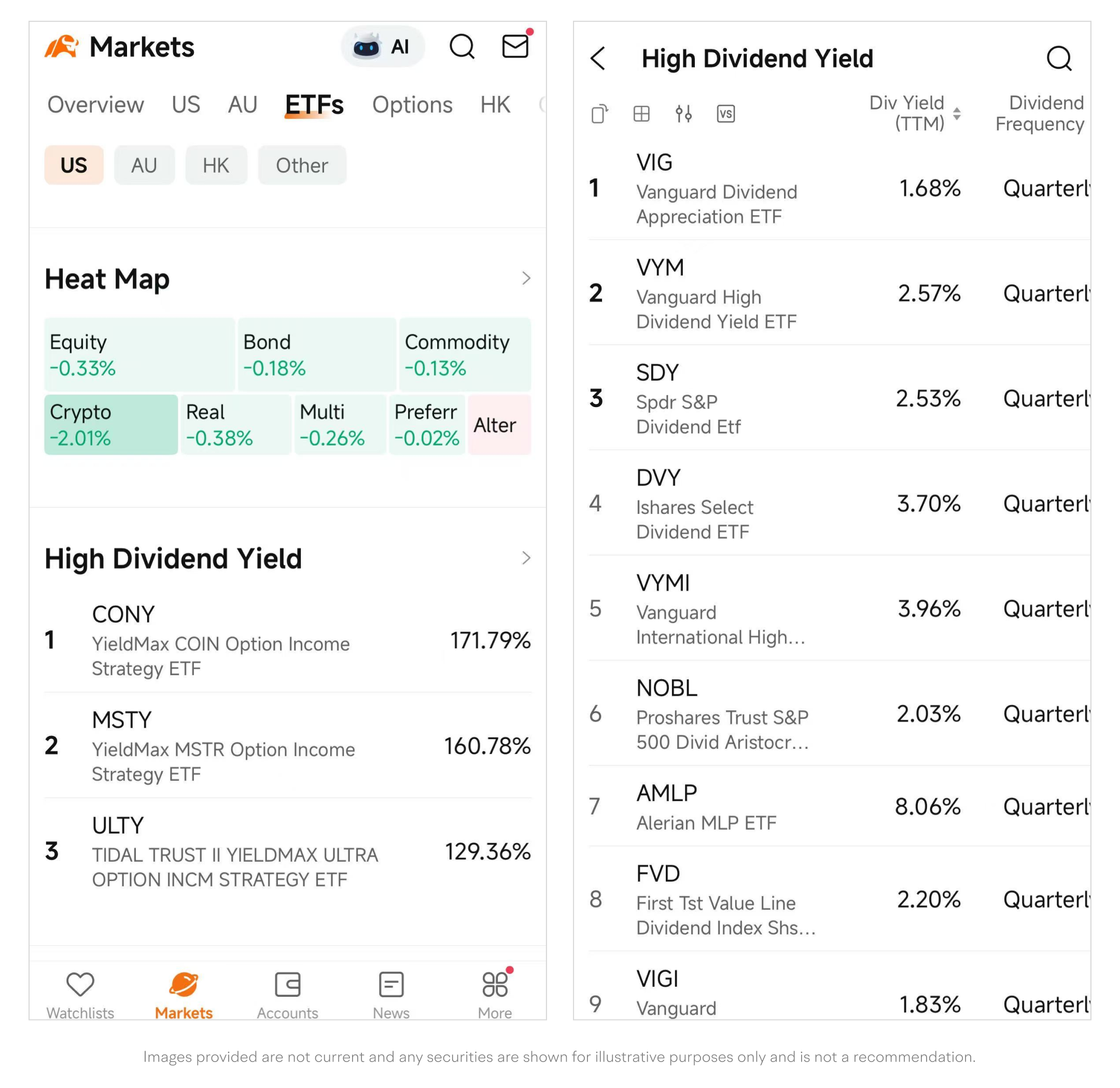
And within the Thematic ETFs section, you can easily discover assets related to high dividends. Just head over to the ETFs page, click on Thematic ETFs, and you'll find a list of High Dividend ETFs.
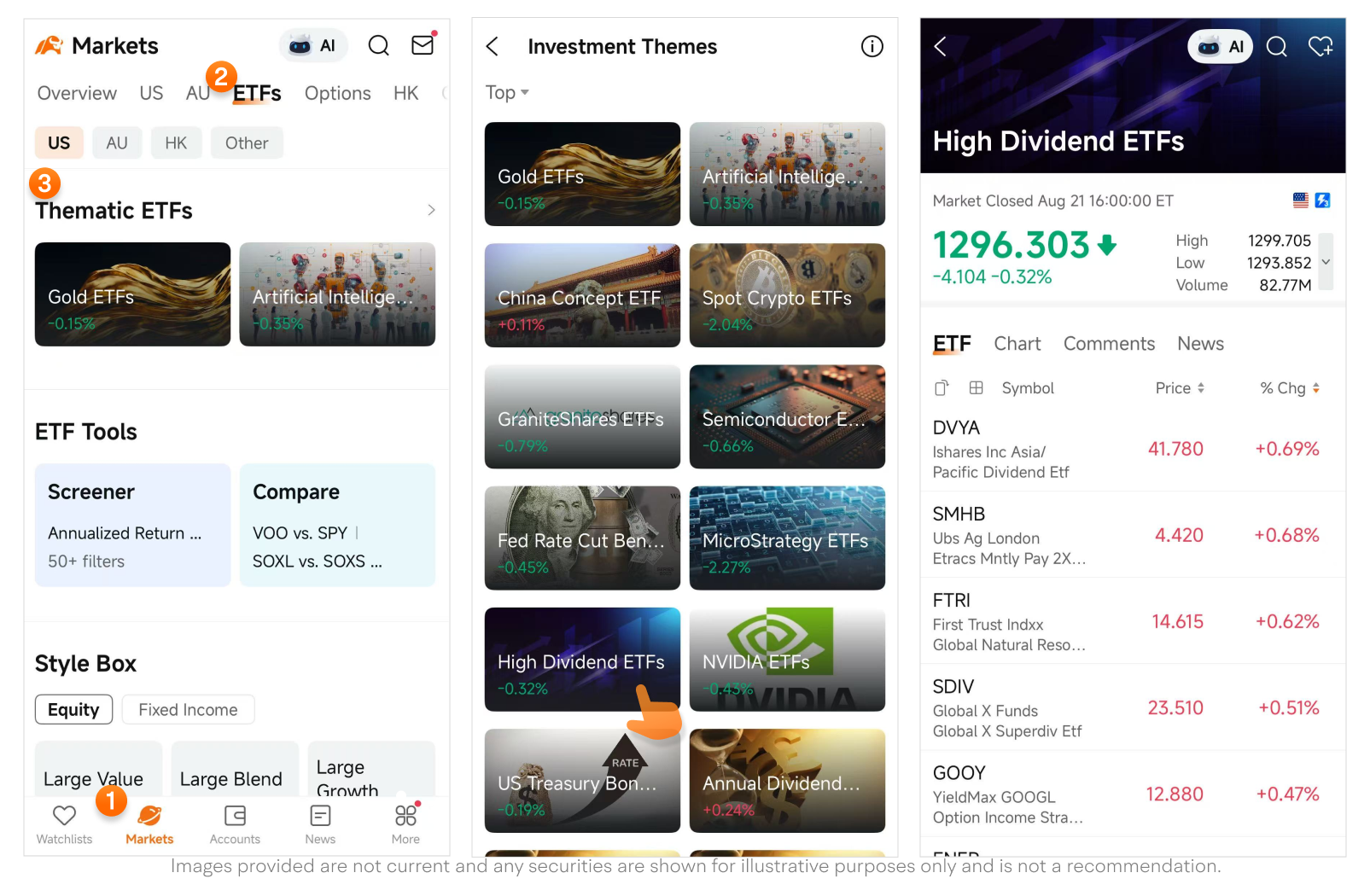
It's important to note that the selection criteria for these rankings differ and do not constitute a recommendation. Investors should carefully assess their own needs and objectives before making any investment decisions.
Step 4: Analyze the ETF with the best dividends
If you have identified an ETF you are interested in, you can further analyze it by considering several key factors:
Dividend Yield: Examine the ETF's dividend yield; a higher yield might be attractive, but it's important to understand the factors driving it, as we've discussed in the Covered Call ETFs.
Dividend Stability: Investigate the consistency of the ETF's dividend payments. A history of stable or increasing dividends suggests a reliable income stream.
Underlying Assets: Review the ETF's holdings to understand the types of companies or assets it invests in. high dividend ETFs typically include sectors such as utilities, consumer staples, and real estate.
Expense Ratio: Consider the ETF's expense ratio, which represents the fees you'll pay annually as a percentage of your investment. Lower expense ratios can enhance your net returns over time.
Past Performance: Evaluate the ETF's past performance, but keep in mind that past performance is not always indicative of future results. Look for consistency in returns and compare them to similar ETFs or benchmarks.
Analyst Ratings: Consider any available analyst ratings or reports to get professional insights into the ETF’s prospects.
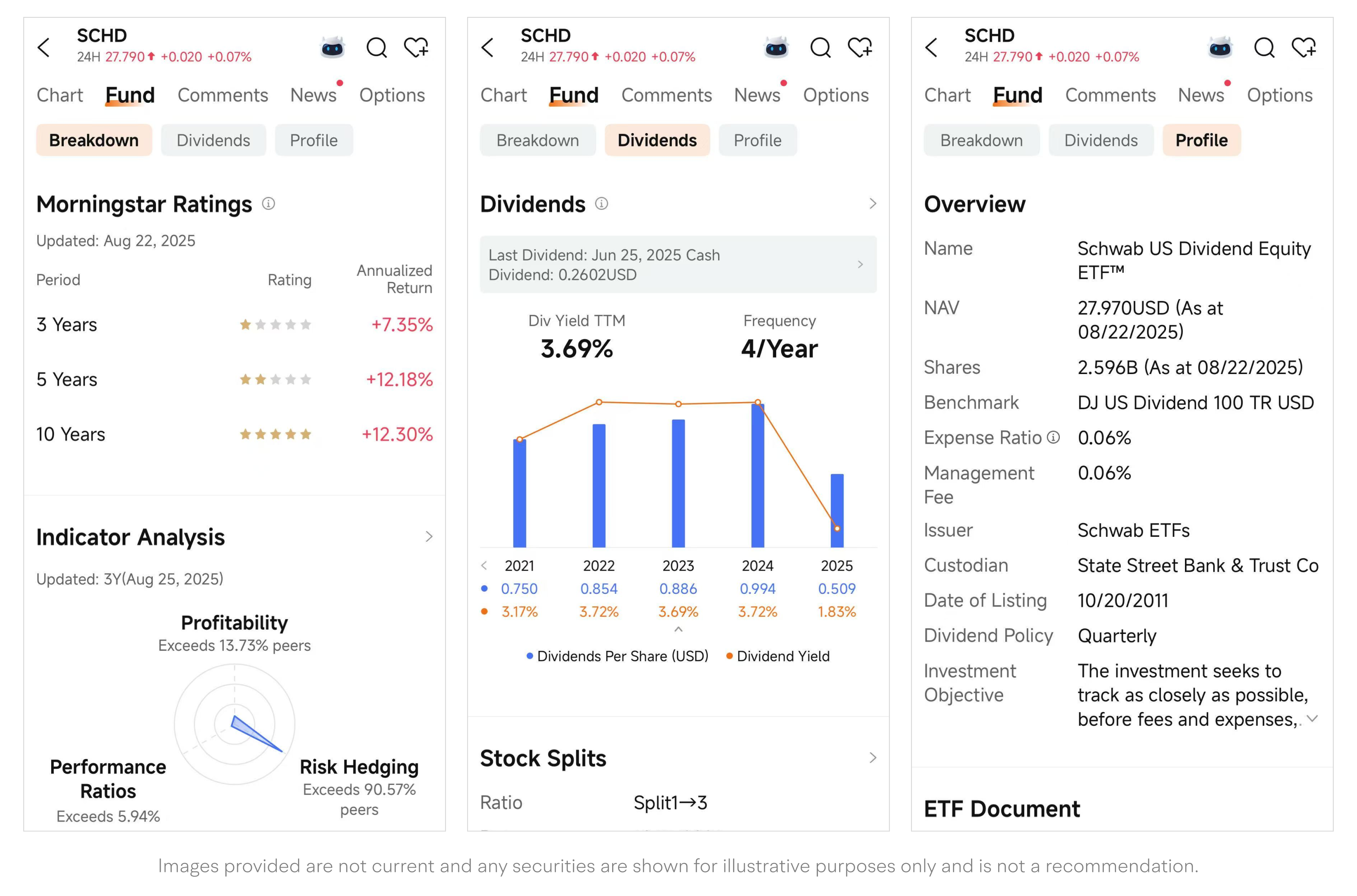
On moomoo, you can easily find them. Click on a specific ETF, then move to the Fund tab. Here, you will find three tabs: Breakdown, Dividends, and Profile.
Breakdown: You can view Morningstar Ratings, Indicator Analysis, and the latest holdings. There are also visual charts of the portfolio and investment style.
Dividends: This section includes the most recent dividend distribution and details of distributions over the past five years, along with information on past stock splits.
Overview: You can see the basic information about the ETF, and official documents disclosed by the company, including the Fact Sheet and Annual Report.
Step 5: Place your order
Once you've selected your preferred high dividend ETF, you can start trading. Go back to the ETF’s quote page, click on Trade, and then select Buy. On the order placement page, choose your desired price and quantity. Once the order is executed, it will appear in your portfolio.

Moomoo supports 5x24 trading for U.S. stocks, allowing you to trade at any time and minimize the impact of time differences, so you don't have to stay up late to place your order.
If you have any issues with order execution, feel free to contact our customer support team. Moomoo offers live customer service 24 hours a day, five days a week, and our intelligent customer service is available 24/7.

Moreover, a DRIP (Dividend Reinvestment Plan) is a convenient tool that automatically reinvests cash dividends into additional ETF shares on the dividend payment date. On moomoo, this feature is typically free of transaction fees and allows for the purchase of fractional shares.
>> Learn more: Dividend Reinvestment Plan (DRIP): How to Set Up it in Australia?
How are ETF dividends taxed?
Dividend income, whether from domestic or international ETFs, is generally added to your other income and taxed at your marginal tax rate. Dividends from international ETFs may be subject to foreign withholding taxes. However, Australia has tax treaties with several countries that might reduce the amount withheld. You may also be able to claim a foreign income tax offset to account for taxes paid overseas. Australian investors could consult with a tax professional or financial advisor to understand the specific tax implications of their ETF investments.
Are high dividend ETFs worth it?
High dividend ETFs can be worthwhile for investors seeking income and diversification, as they typically provide steady income through regular dividends and hold diversified portfolios that may offer lower volatility. However, potential downsides include the risk of dividend cuts during economic downturns and the complexity of understanding various ETF types, such as covered call ETFs. Ultimately, the suitability of high dividend ETFs depends on individual financial goals and risk tolerance.

Disclaimer:
This presentation is for informational and educational use only and is not a recommendation or endorsement of any particular investment or investment strategy. Investment information provided in this content is general in nature, strictly for illustrative purposes, and may not be appropriate for all investors. It is provided without respect to individual investors’ financial sophistication, financial situation, investment objectives, investing time horizon, or risk tolerance. You should consider the appropriateness of this information having regard to your relevant personal circumstances before making any investment decisions. Past investment performance does not indicate or guarantee future success. Returns will vary, and all investments carry risks, including loss of principal. Moomoo makes no representation or warranty as to its adequacy, completeness, accuracy or timeline for any particular purpose of the above content. Moomoo is a financial information and trading app offered by Moomoo Technologies Inc. In Australia, financial products and services available through the moomoo app are provided by Moomoo Securities Australia Ltd, an Australian Financial Services Licensee (AFSL No. 224663) regulated by the Australian Securities and Investment Commission (ASIC). Please read and understand our Financial Services Guide, Terms and Conditions, Privacy Policy and other disclosure documents which are available on our website https://www.moomoo.com/au.
Frequency Asked Questions
2. Are there any risks associated with investing in high dividend ETFs?
There are several risks associated with investing in high dividend ETFs. While conventional high dividend ETFs can potentially provide a steady income stream, it's important to be aware of the potential risks involved: Market Risk: Like all investments in equities, high dividend ETFs are subject to market risk. The value of the stocks within the ETF can fluctuate due to changes in the overall market or economic conditions. Interest Rate Risk: high dividend stocks, such as those in utilities and real estate sectors, can be sensitive to changes in interest rates. When interest rates rise, these stocks may become less attractive compared to fixed-income investments, leading to potential declines in their value. Sector Concentration Risk: Many high dividend ETFs are heavily concentrated in specific sectors like utilities, financials, or consumer staples. This concentration can lead to increased volatility if those sectors experience downturns. Dividend Cuts: Companies may reduce or eliminate their dividend payments in response to financial difficulties, economic downturns, or changes in corporate strategy. This can affect the income generated by the ETF.
3. What ETFs pay the highest dividends?
In August 2025, UltraShort Ether ETF (ETHD) had the highest dividend yield among high dividend ETFs, with a dividend TTM exceeding 300%. However, it's important to note that this ETF carries significant risk. Firstly, it is an ETF that shorts ETH. Due to the recent surge in ETH, the price of this ETF experienced a substantial decline, significantly reducing the denominator (stock price) used in the dividend yield calculation. Additionally, its operational mechanism is similar to that of a covered call ETF. It holds a large amount of ETH and participates in staking, converting the rewards from staking into cash, which is periodically distributed to holders (similar to the premium obtained from selling covered calls). As a result, its dividend yield appears exceptionally high. This type of ETF is highly risky and not suitable for most investors. Therefore, one should not simply buy based on the dividend yield alone but should conduct a comprehensive analysis of various factors before making a decision.
This presentation is for informational and educational use only and is not a recommendation or endorsement of any particular investment or investment strategy. Investment information provided in this content is general in nature, strictly for illustrative purposes, and may not be appropriate for all investors. Read more