10 AI ETFs You Can Buy in Australia in 2026: A Comparison Guide
Key takeaways
- The 10 ETFs compared are GXAI, AINF, SEMI, RBTZ, NDQ, VGT, AIQ, BOTZ, ARTY and SOXX.
- GXAI and AIQ give relatively broad AI exposure, while AINF, SEMI and SOXX focus on infrastructure supporting AI.
- NDQ and VGT are broad technology ETFs rather than dedicated AI funds. You may already hold some of their largest companies through other ETFs.
- Thematic AI ETFs can be more concentrated and volatile than broad-market funds. Compare their fees, holdings, currency exposure and liquidity before investing.
- The 10 ETFs compared are GXAI, AINF, SEMI, RBTZ, NDQ, VGT, AIQ, BOTZ, ARTY and SOXX.
- GXAI and AIQ give relatively broad AI exposure, while AINF, SEMI and SOXX focus on infrastructure supporting AI.
- NDQ and VGT are broad technology ETFs rather than dedicated AI funds. You may already hold some of their largest companies through other ETFs.
- Thematic AI ETFs can be more concentrated and volatile than broad-market funds. Compare their fees, holdings, currency exposure and liquidity before investing.
Artificial intelligence investment now extends well beyond software companies. The AI value chain includes semiconductors, data centres, cloud computing, power infrastructure, robotics and businesses using AI within their products.
In May 2026, Gartner forecast worldwide AI spending would reach US$2.59 trillion for the year, with AI infrastructure accounting for more than 45% of the total. While this rapidly rising spending is exciting and suggests growth for the sector, you need to know that higher industry spending does not automatically translate into higher ETF returns. Valuations, competition, operating costs and market expectations all affect performance.
AI ETFs available to Australian investors provide different types of exposure. Some focus directly on artificial intelligence, while others cover robotics, semiconductors, infrastructure or the broader technology sector.
This guide compares five Australian and five US ETFs. It supports product comparison rather than ranking funds by past performance.
What is an AI ETF?
An AI ETF is an exchange-traded fund that invests in companies involved in artificial intelligence or related technologies. Depending on its methodology, it may hold companies involved in:
AI software, models and data analytics
semiconductors and computing hardware
cloud computing and data centres
robotics and industrial automation
networking, electricity and cooling infrastructure
businesses applying AI within their products or operations.
The label ‘AI ETF’ does not describe one standard portfolio. Two funds with AI in their names may hold different companies and respond differently to market conditions.
Some ETFs are only indirectly connected to AI. For example, Nasdaq-100 and information-technology ETFs hold major AI-related companies, but a lot more besides.
How we selected these AI ETFs
There is no single AI ETF that is best for every investor. In this article, ‘best’ refers to a representative selection assessed using factors including AI exposure, fund size, liquidity, fees, operating history and portfolio concentration. It does not mean these funds are suitable for everyone or expected to deliver high returns.
AI exposure also varies between funds. Some invest directly in AI software and data businesses, while others focus on supporting infrastructure such as semiconductors, data centres, robotics and cloud computing. Broad technology ETFs may hold major AI companies without following a dedicated AI mandate. Our selection reflects these different approaches so readers can compare the main ways of investing in artificial intelligence through these funds.
To build a balanced comparison, we reviewed ETFs available through Australian and US markets using the following criteria:
Connection to the AI value chain: Each fund must have identifiable exposure to AI development, adoption or supporting infrastructure. We distinguish dedicated AI funds from broader technology ETFs with indirect exposure.
Investment approach: The list covers AI software, big data, robotics, automation, semiconductors, infrastructure and broad technology. This gives readers several types of exposure to compare.
Market access: We include both Australian and US ETFs that Australian investors may be able to access through an eligible brokerage account.
Fund size and liquidity: Assets under management and trading activity provide context about the fund’s scale and how readily its units may trade. (Larger size does not guarantee better liquidity or performance.)
Fees and costs: We compare management fees and costs for Australian funds and expense ratios for US-listed funds. Brokerage, bid-ask spreads and foreign exchange costs may also apply.
Operating history: A longer track record can show how a fund has behaved under different market conditions. Newer funds are not excluded, but their shorter history is clearly identified.
Portfolio concentration: We consider the number of holdings, weighting method and dependence on a small group of companies or industries.
Overlap and distinctiveness: Funds with nearly identical exposure were generally excluded in favour of products representing a different part of the AI value chain.
Data quality: Fees, assets under management, strategy and fund identity were checked against the latest available information from ETF issuers as at August 2026.
We excluded leveraged and inverse ETFs because their structure and risks differ substantially from conventional long-term ETF exposure. The final list is a representative comparison, not a ranking based on recent returns. Inclusion does not constitute a recommendation, endorsement or assessment that a fund is appropriate for every investor.
Best AI ETFs available to Australian investors
ETFs are subject to market volatility and the risks of their underlying securities. Depending on the fund, these may include risks associated with smaller companies, international securities, commodities, fixed interest, currency movements and concentrated sectors.
ETF | Market | Main exposure | Annual fee | Approximate AUM |
Global X Artificial Intelligence ETF (GXAI) | Australia | AI and big data | 0.57% | A$268.5m |
Global X Artificial Intelligence Infrastructure ETF (AINF) | Australia | AI infrastructure | 0.57% | A$188.7m |
Global X Semiconductor ETF (SEMI) | Australia | Global semiconductors | 0.45% | A$937.8m |
Betashares Global Robotics and Artificial Intelligence ETF (RBTZ) | Australia | Robotics and automation | 0.57% | A$290.6m |
Betashares Nasdaq 100 ETF (NDQ) | Australia | Nasdaq-100 | 0.48% | A$8.85b |
Vanguard Information Technology ETF (VGT) | US | US information technology | 0.09% | US$146.6b |
Global X Artificial Intelligence & Technology ETF (AIQ) | US | AI and technology | 0.68% | US$10.1b |
Global X Robotics & Artificial Intelligence ETF (BOTZ) | US | Robotics and AI | 0.68% | US$3.40b |
iShares Future AI & Tech ETF (ARTY) | US | Generative AI and infrastructure | 0.47% | US$3.93b |
iShares Semiconductor ETF (SOXX) | US | Semiconductors | 0.33% | US$47.8b |
ASX figures are based on issuer information dated August 21 to 25, 2026. US figures are based on issuer information available in June to August 2026. Assets under management, fees and holdings can change. Australian and US dollar amounts are not directly comparable. For an Australian ETF, review its latest product disclosure statement and target market determination to check whether the product is likely to be consistent with your objectives, financial situation and needs. For a US-listed ETF, review the issuer’s latest prospectus and fund documents.
Global X Artificial Intelligence ETF (GXAI)
GXAI tracks the Indxx Artificial Intelligence & Big Data Index. It invests across AI software, big data, cloud infrastructure and the hardware used to develop and operate AI systems.
The fund gives more targeted AI exposure than a broad technology index, although its portfolio can still include large companies with businesses extending beyond AI. GXAI commenced in April 2024, so its live performance history is relatively short.
Management fees and costs: 0.57% a year
AUM: approximately $268.5 million
Main consideration: short operating history and technology-sector concentration
Global X Artificial Intelligence Infrastructure ETF (AINF)
AINF focuses on the physical infrastructure required to support artificial intelligence. This can include data-centre equipment, electricity generation, cooling systems, networking hardware and raw materials.
Its return drivers may differ from those of software-focused AI funds. Energy prices, capital expenditure, commodity markets and infrastructure demand can all affect performance.
Management fees and costs: 0.57% a year
AUM: approximately $188.7 million
Main consideration: exposure extends beyond traditional technology companies
Global X Semiconductor ETF (SEMI)
SEMI tracks the Solactive Global Semiconductor 30 Index. It invests in companies involved in semiconductor design, manufacturing and production equipment.
Semiconductors are central to AI computing, but SEMI is a semiconductor ETF rather than a dedicated AI fund. The industry can be cyclical and sensitive to demand, manufacturing capacity, export restrictions and geopolitical developments.
Management fees and costs: 0.45% a year
AUM: approximately $937.8 million
Main consideration: concentrated exposure to one part of the AI supply chain
Betashares Global Robotics and Artificial Intelligence ETF (RBTZ)
RBTZ invests in global companies involved in robotics, automation and robotics-related artificial intelligence. Its index methodology was expanded in March 2026 to include humanoid technology.
The fund can hold industrial and healthcare companies alongside technology businesses. Its performance may therefore be affected by industrial investment cycles as well as developments in AI.
Management fees and costs: 0.57% a year
AUM: approximately $290.6 million
Main consideration: targeted exposure to robotics and industrial automation
Betashares Nasdaq 100 ETF (NDQ)
NDQ tracks the Nasdaq-100 Index, covering 100 of the largest non-financial companies listed on Nasdaq. Its holdings include businesses investing heavily in AI hardware, cloud computing and software.
NDQ is not a dedicated AI ETF. It also holds consumer, communications and other growth companies. Its market-capitalisation weighting can create substantial exposure to a small group of large businesses.
Management fees and costs: 0.48% a year
AUM: approximately $8.85 billion
Main consideration: potential overlap with S&P 500 and global equity ETFs
Vanguard Information Technology ETF (VGT)
VGT gives broad exposure to the US information technology sector. Its portfolio covers software, semiconductors, hardware and IT services.
VGT commenced in 2004 and disclosed an expense ratio of 0.09% as at June 2026. It provides broad technology exposure rather than following a dedicated AI mandate. However, it excludes AI-related companies classified outside the information technology sector and is not a dedicated AI fund.
Expense ratio: 0.09%
ETF net assets: approximately US$146.6 billion
Main consideration: broad technology exposure rather than a targeted AI strategy
Global X Artificial Intelligence & Technology ETF (AIQ)
AIQ tracks an index that selects companies involved in artificial intelligence, big data and related technologies, based on the index provider’s methodology. It also holds businesses supplying big-data technologies and related hardware.
Its portfolio gives broader AI exposure than a semiconductor-only fund, but you should check how its index defines an AI company. Some holdings may generate only part of their revenue from AI-related activities.
Expense ratio: 0.68%
Net assets: approximately US$10.1 billion
Main consideration: relatively high fee and potential overlap with broad technology ETFs
Global X Robotics & Artificial Intelligence ETF (BOTZ)
BOTZ focuses on companies involved in industrial robotics, automation, autonomous systems and artificial intelligence.
Its portfolio includes businesses operating across different countries and industries. This gives it different exposure from a US software fund, while also introducing industrial-cycle, currency and international sharemarket risks.
Expense ratio: 0.68%
AUM: approximately US$3.4 billion
Main consideration: robotics and industrial automation make up a significant part of the strategy
iShares Future AI & Tech ETF (ARTY)
ARTY tracks the Morningstar Global Artificial Intelligence Select Index. Its strategy covers generative AI, data and infrastructure, software and related services.
The fund previously traded under the ticker IRBO. Its name, ticker and benchmark changed in August 2024. Historical IRBO holdings should not be used to describe the current ARTY portfolio.
Expense ratio: 0.47%
Net assets: approximately US$3.93 billion
Main consideration: the current strategy has a shorter history than the fund’s original launch date suggests
iShares Semiconductor ETF (SOXX)
SOXX invests in US-listed companies involved in semiconductor design, manufacturing and equipment. These businesses supply many of the processors and systems used for AI training and inference.
Like SEMI, SOXX gives indirect exposure to AI infrastructure rather than the full AI market. Semiconductor portfolios can be affected by inventory cycles, customer concentration and export controls.
Expense ratio: 0.33%
Net assets: approximately US$47.8 billion
Main consideration: concentrated semiconductor exposure
How to compare AI ETFs
Look beyond recent returns when comparing AI ETFs. Focus on the factors below.
AI exposure: Check whether the fund focuses on software, semiconductors, robotics, infrastructure or broad technology.
Index methodology: Review how companies qualify, how holdings are weighted and how often the index rebalances.
Holdings overlap: Compare the portfolio with any technology, S&P 500 or global equity ETFs you already hold.
Costs and liquidity: Consider management fees, brokerage, bid-ask spreads, foreign-exchange costs, assets under management and trading volume.
Currency exposure: An ASX-listed ETF trading in Australian dollars is not necessarily currency hedged.
An AI-themed name does not mean every holding earns substantial revenue from artificial intelligence. Check the latest holdings and fund documents before investing.
ASX-listed or US-listed AI ETFs
You can access AI-related ETFs through Australian or US markets.
ASX-listed ETFs trade in Australian dollars during local market hours. Australian-based funds usually handle your Australian tax paperwork, but their overseas investments can still be affected by changes in foreign currency values.
Product range, fees, trading hours, currency exposure and tax-reporting requirements differ between Australian and US-listed ETFs. Before trading them, consider:
currency conversion costs and AUD-USD movements
US market trading hours
foreign distributions and Australian tax reporting
W-8BEN documentation
brokerage and US regulatory pass-through fees
differences in fund domicile and investor protections.
Tax treatment depends on your circumstances. Consider seeking professional tax advice if needed.
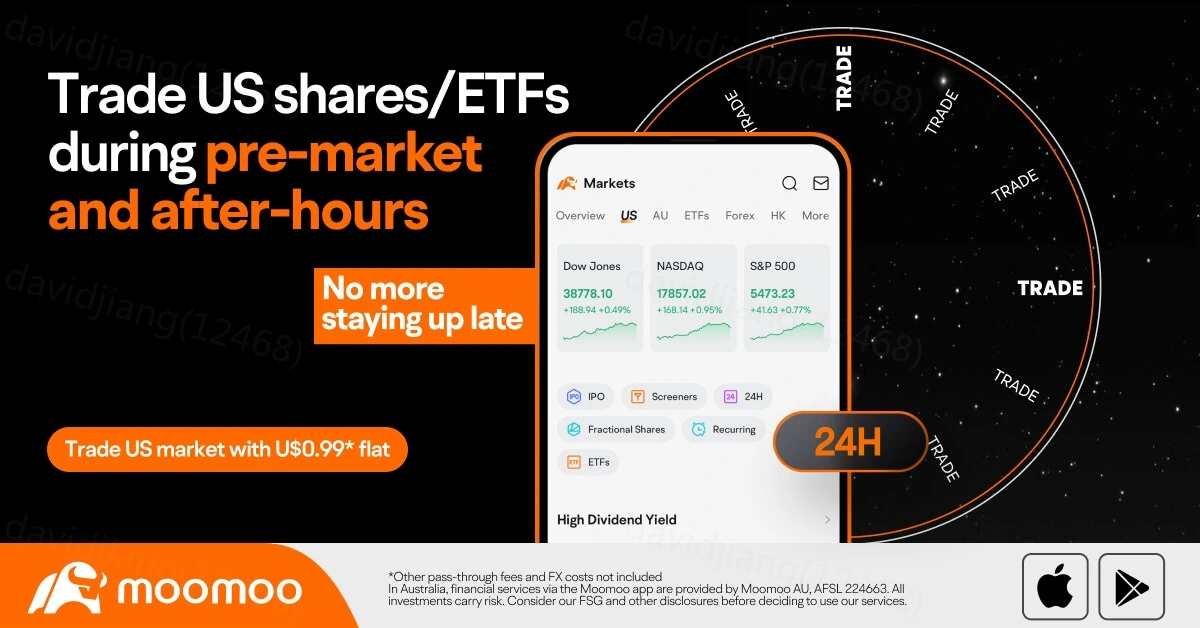
With moomoo, Australian investors can deposit Australian dollars instantly using PayID or bank transfer. At the same time, moomoo offers a transparent AUD→USD conversion with just a 50‑pip spread, far lower than typical bank fees of 1% to 2%.
How to buy AI ETFs with moomoo
AI ETFs can give Australian investors exposure to companies involved in artificial intelligence, semiconductors, robotics and supporting infrastructure without selecting individual shares. You can access these funds through Australian or eligible US-listed ETFs. The following steps explain how to research, compare and trade AI ETFs from Australia.
Step 1: Open and verify your account
Sign up via the moomoo app or visit the Moomoo Australia website and complete identity verification. Ensure you comply with any necessary identification requirements.
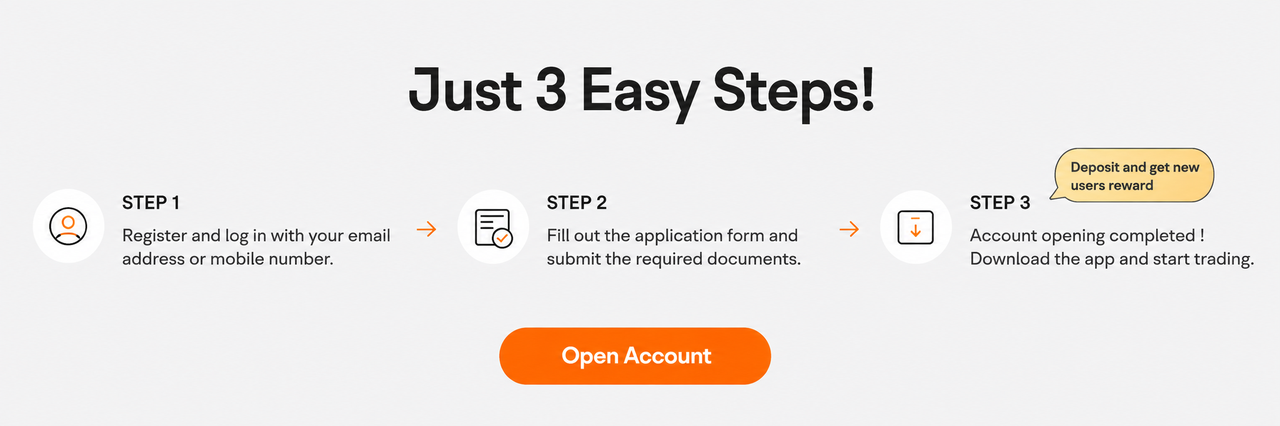
Step 2: Fund your account
Deposit funds into your account using bank transfer, debit cards, or other accepted payment options.
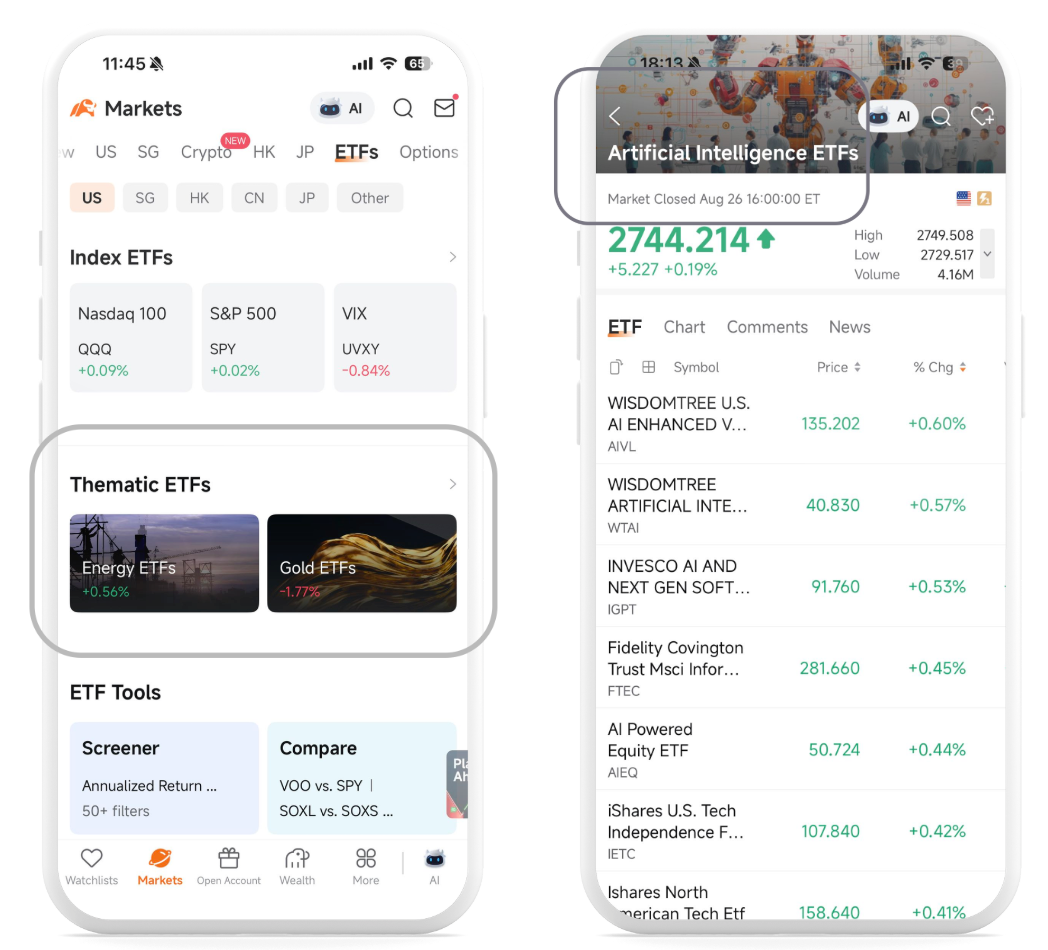
Step 3: Research AI ETFs
Use moomoo’s ETF section: in the app click on 'Markets' > 'ETFs' > scroll down to 'Thematic ETFs' to explore 'Artificial Intelligence ETFs'. Compare each ETF’s index, holdings, management costs, historical performance and risks. Diversification varies by fund, and returns or protection against market losses are not guaranteed.
Step 4: Review and place your order
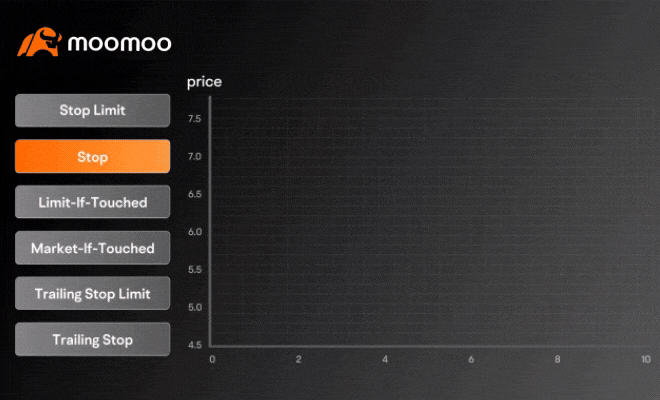
Choose an available order type and check the ticker, market, quantity, price and estimated costs before confirming your order.
Use the platform to buy your selected ETF. Depending on your trading strategy, you can choose from market, limit, and stop orders, as well as 12 other advanced order types.
Download the moomoo app to explore more than 4400 ETFs across Australian and US markets. Compare their holdings, fees and performance using market data, ETF research tools and Moomoo AI.
Consider recurring investments
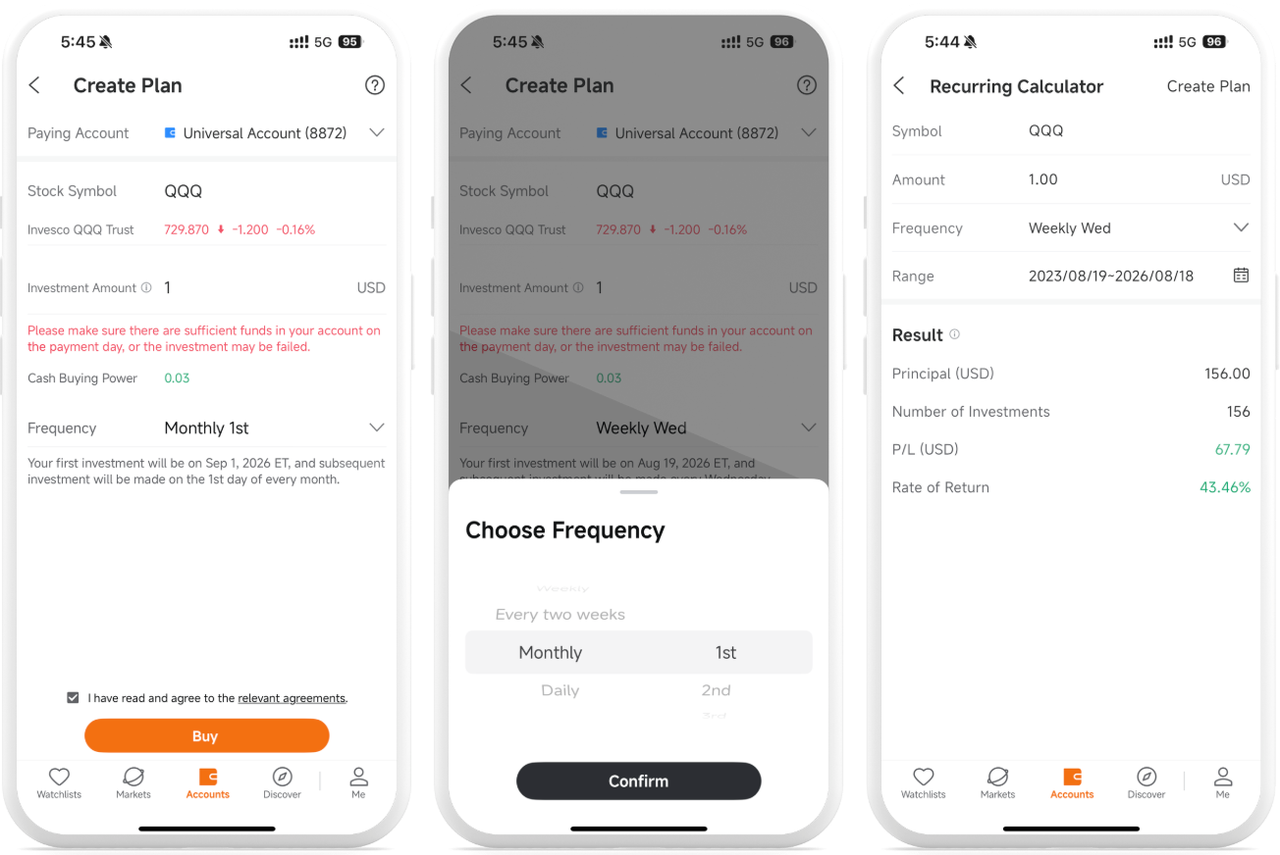
Recurring investment allows a fixed amount to be invested at scheduled intervals. Purchases take place across different dates rather than through one transaction, but this does not guarantee a lower average purchase price, better returns or protection against losses. This spreads your purchases across different market conditions and reduces the pressure of choosing one entry point. It does not remove market risk or guarantee better returns.
The moomoo recurring calculator lets you test different investment amounts, frequencies and historical periods. For eligible ETFs, you can then create a recurring investment plan in the app and schedule investments daily, weekly, fortnightly or monthly. Available frequencies and requirements may vary by market and security.
Calculator results are hypothetical and based on historical data. Past performance is not indicative of future results. Minimum investment amounts, brokerage and other requirements may apply.
FAQs
1. What is the best AI ETF in Australia?
There is no single best AI ETF. GXAI focuses broadly on AI and big data, AINF targets infrastructure and RBTZ covers robotics. SEMI gives semiconductor exposure, while NDQ is a broader Nasdaq-100 fund. Compare their holdings, methodology, fees, liquidity and risks rather than relying only on recent performance.
2. Is there a pure AI ETF on the ASX?
GXAI is one of the more directly targeted AI ETFs listed on the ASX. However, even dedicated AI funds can hold companies with business operations extending beyond AI. Check the index methodology and latest holdings to understand the source of the fund’s exposure.
3. Can Australians buy US-listed AI ETFs?
Australians can access US-listed ETFs through brokers offering US market trading, such as moomoo. Brokerage, foreign exchange costs, US trading hours, currency exposure and tax-reporting requirements should be considered.
4. Are AI ETFs high risk?
Risk varies by fund, but thematic AI ETFs can be more concentrated and volatile than broad-market ETFs. They remain exposed to market losses, changing valuations, currency movements and rapid technological change.
5. Do AI ETFs pay distributions?
Some AI ETFs make distributions, but the amount and frequency vary and are not guaranteed. Consider distributions alongside total return, tax treatment and changes in the value of your units.
Final thoughts
There's a lot of variety in AI ETFs, giving you several ways to access this fascinating theme, from software and big data to semiconductors, infrastructure and robotics. These exposures are not interchangeable.
Before selecting a fund, check what it owns, how companies enter the index, how much it costs and whether its holdings overlap with ETFs already in your portfolio. Strong growth in AI spending does not guarantee strong investment returns.
This content is for general information and educational purposes only. It does not constitute financial advice, a recommendation or an endorsement of any financial product. It does not consider your objectives, financial situation or needs. Investments carry risk and may result in losses. Past performance is not indicative of future performance. For Australian ETFs, review the latest product disclosure statement and target market determination. For overseas-listed ETFs, review the relevant prospectus and issuer documents. Consider seeking independent financial, tax or legal advice where appropriate.
This presentation is for informational and educational use only and is not a recommendation or endorsement of any particular investment or investment strategy. Investment information provided in this content is general in nature, strictly for illustrative purposes, and may not be appropriate for all investors. Read more