What is the Debt Ratio?

Key Takeaways
● A company's debt ratio is the ratio of its total debt to total assets.
● Corporate debt can be classified into long-term debt and short-term debt, or current liabilities.
● The debt ratio measures a company's leverage and risks.
Understanding
The debt ratio divides a company's total debt by its total assets.
It represents the proportion of the company's assets financed with debt. The ratio shows the company's ability to raise capital from creditors.
Calculation
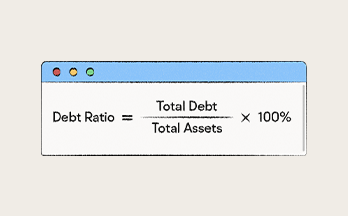
The formula for a company's debt ratio is:
Debt ratio = Total debt / Total assets
Total debt includes long-term and short-term debt, also known as current liabilities.
Total assets can be categorized into current assets, fixed assets, long-term investments, intangible assets, deferred assets, and more.
How to use the debt ratio
Investors can determine the overall risk of a company with this ratio.
Generally, a company with a 40-60% debt ratio is considered moderately leveraged.
Companies that face higher uncertainty in operation should lower their debt ratio to improve their financial health.
Yet, companies with robust performance may consider raising the debt ratio to add more value to their shareholders.
This presentation is for informational and educational use only and is not a recommendation or endorsement of any particular investment or investment strategy. Investment information provided in this content is general in nature, strictly for illustrative purposes, and may not be appropriate for all investors. Read more
Recommend

What is Retirement Planning?
What is Market Sentiment?
What is the Debt Ratio?

What is a Balance Sheet?
What is Qualitative Analysis?
What is Simple Moving Average (SMA)?
What is Swing Trading?
What is the Securities and Exchange Commission(SEC)?
What is Sector Rotation?
What is the Stock Market?
How to read level 2 market data - using an order book for trading strategies
What are Bull and Bear Markets?
What is EPS?
What Is an Initial Public Offering (IPO)?
What is Circuit Breakers?
What is Over-the-Counter (OTC)?
What is a Security?
What is the S&P 500?
What is Technical Analysis?
What Is Equity?
What is the Dow Jones Industrial Average
What is Paper Trading?
What is Price-Volume Relationship?
What is a Fiscal Year?
What is the Federal Open Market Committee (FOMC)?
What is Day Trading?
What are CPI, PPI and PMI?
What is Quantitative Analysis?
What is a Value Stock?
What is an Investment Portfolio?
What are Dual Listing and Secondary Listing?
What Is Moving Average Convergence Divergence(MACD)?
What is a Candlestick?
What is an Investment?
What is a Stock?
What is Return on Investment (ROI)?
What is Net Margin?
What is the Nasdaq Composite?
Brokerage Account
What is Deflation?
What is ADR?
What is competitive bidding?
What is Retirement Planning?
What is Market Sentiment?
What is the Debt Ratio?
What is a Balance Sheet?
What is Qualitative Analysis?
What is Simple Moving Average (SMA)?
What is Swing Trading?
What is the Securities and Exchange Commission(SEC)?
What is Sector Rotation?
What is the Stock Market?
How to read level 2 market data - using an order book for trading strategies
What are Bull and Bear Markets?
What is EPS?
What Is an Initial Public Offering (IPO)?
What is Circuit Breakers?
What is Over-the-Counter (OTC)?
What is a Security?
What is the S&P 500?
What is Technical Analysis?
What Is Equity?
What is the Dow Jones Industrial Average
What is Paper Trading?
What is Price-Volume Relationship?
What is a Fiscal Year?
What is the Federal Open Market Committee (FOMC)?
What is Day Trading?
What are CPI, PPI and PMI?
What is Quantitative Analysis?
What is a Value Stock?
What is an Investment Portfolio?
What are Dual Listing and Secondary Listing?
What Is Moving Average Convergence Divergence(MACD)?
What is a Candlestick?
What is an Investment?
What is a Stock?
What is Return on Investment (ROI)?
What is Net Margin?
What is the Nasdaq Composite?
Brokerage Account
What is Deflation?
What is ADR?
What is competitive bidding?