What is competitive bidding?
To ensure price stability at the open and close, as well as a fair and transparent trading environment, exchanges typically conduct"opening call auction"and "closing call auction", two important trading mechanisms, throughthe method of call auctionto determine the day's opening and closing prices.
During the call auction period, buy and sell orders submitted by investorsare not executed immediately; instead, the exchange uses specific algorithms to find a uniform price for execution based on the orders submitted by both buyers and sellers, enablingMaximize trading volumeThis "uniform price" then becomes the day's opening or closing price.
Through market data from the call auction (NOII, Net Order Imbalance Indicator), you can quickly understand the situation during the Nasdaq call auction period.Reference Price、Matched SharesandUnmatched Shares。
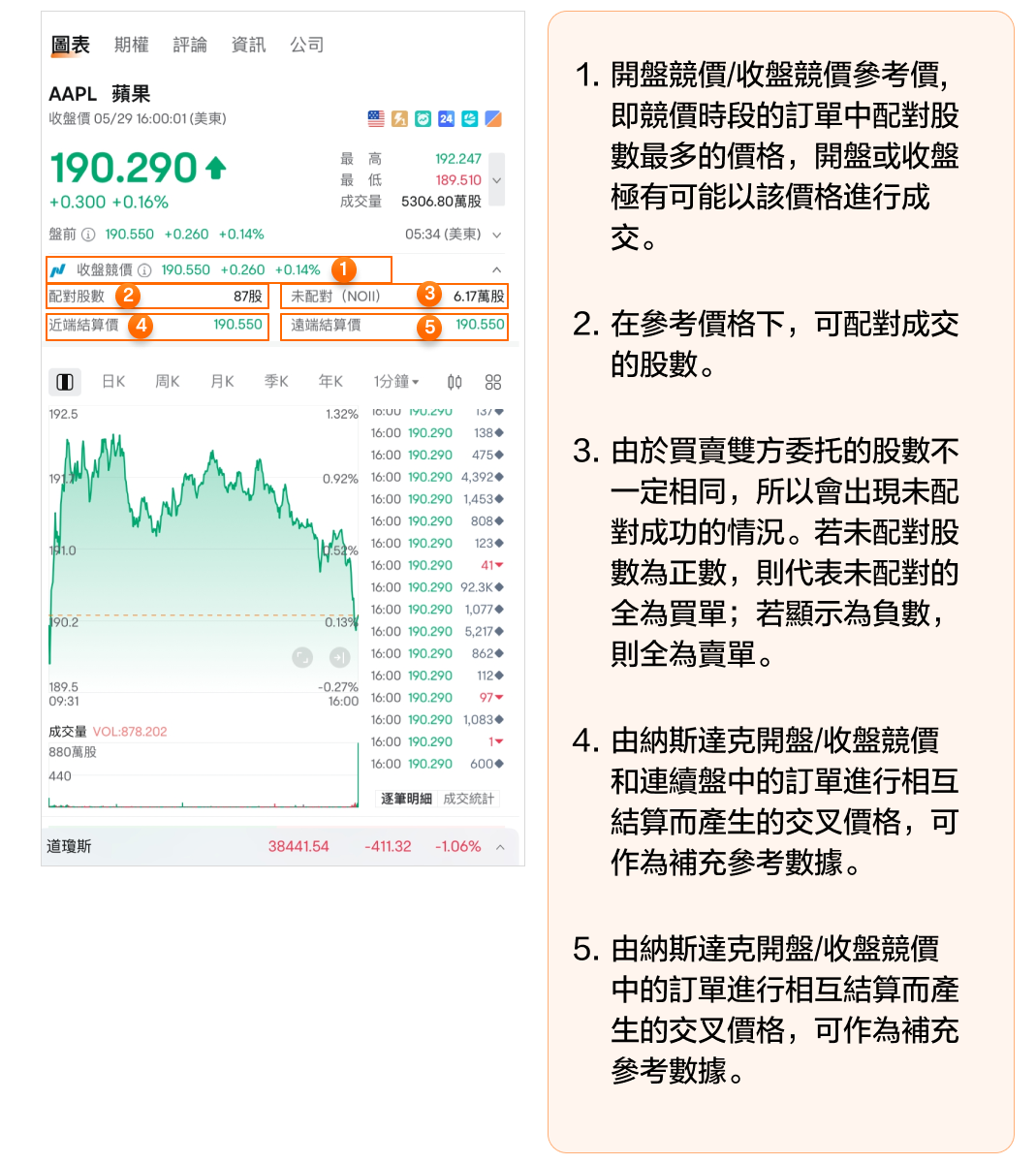
U.S. Stock Auction Trading Hours
Opening Auction Time:
Eastern Time09:25 AM – 09:30 AM
Closing Auction Session:
Eastern Time (ET):03:50 PM – 04:00 PM
How to Analyze Auction Market Dynamics
Method 1: Using Unmatched Share Volume to Predict Opening Trends
If the unmatched share volume is positive and large in absolute terms, it indicates that buy orders significantly outnumber sell orders, suggesting high market demand for the stock and potentially signaling a rise in price after the market opens. Conversely, if the unmatched share volume is negative and large in absolute terms, it means that sell orders far exceed buy orders, which may foreshadow a decline in the stock price post-opening.
Method 2: IPO Auction Analysis
On the listing day of a new U.S. stock, trading does not commence immediately; instead, the stock enters an auction session. During the initial public offering (IPO) auction on the first day of listing, investors can assess the willingness of both buyers and sellers to trade by examining the opening reference price and order matching status. This analysis helps gauge the IPO's opening performance and informs buy or sell decisions.
Method 3: Leveraging the Closing Reference Price to Capture Final Trading Opportunities
At the end of each trading day, investors can execute final trades at prices determined through the closing call auction.
This presentation is for informational and educational use only and is not a recommendation or endorsement of any particular investment or investment strategy. Investment information provided in this content is general in nature, strictly for illustrative purposes, and may not be appropriate for all investors. Read more
Recommend

What is Retirement Planning?
What is Market Sentiment?
What is the Debt Ratio?

What is a Balance Sheet?
What is Qualitative Analysis?
What is Simple Moving Average (SMA)?
What is Swing Trading?
What is the Securities and Exchange Commission(SEC)?
What is Sector Rotation?
What is the Stock Market?
How to read level 2 market data - using an order book for trading strategies
What are Bull and Bear Markets?
What is EPS?
What Is an Initial Public Offering (IPO)?
What is Circuit Breakers?
What is Over-the-Counter (OTC)?
What is a Security?
What is the S&P 500?
What is Technical Analysis?
What Is Equity?
What is the Dow Jones Industrial Average
What is Paper Trading?
What is Price-Volume Relationship?
What is a Fiscal Year?
What is the Federal Open Market Committee (FOMC)?
What is Day Trading?
What are CPI, PPI and PMI?
What is Quantitative Analysis?
What is a Value Stock?
What is an Investment Portfolio?
What are Dual Listing and Secondary Listing?
What Is Moving Average Convergence Divergence(MACD)?
What is a Candlestick?
What is an Investment?
What is a Stock?
What is Return on Investment (ROI)?
What is Net Margin?
What is the Nasdaq Composite?
Brokerage Account
What is Deflation?
What is ADR?
What is competitive bidding?
What is Retirement Planning?
What is Market Sentiment?
What is the Debt Ratio?
What is a Balance Sheet?
What is Qualitative Analysis?
What is Simple Moving Average (SMA)?
What is Swing Trading?
What is the Securities and Exchange Commission(SEC)?
What is Sector Rotation?
What is the Stock Market?
How to read level 2 market data - using an order book for trading strategies
What are Bull and Bear Markets?
What is EPS?
What Is an Initial Public Offering (IPO)?
What is Circuit Breakers?
What is Over-the-Counter (OTC)?
What is a Security?
What is the S&P 500?
What is Technical Analysis?
What Is Equity?
What is the Dow Jones Industrial Average
What is Paper Trading?
What is Price-Volume Relationship?
What is a Fiscal Year?
What is the Federal Open Market Committee (FOMC)?
What is Day Trading?
What are CPI, PPI and PMI?
What is Quantitative Analysis?
What is a Value Stock?
What is an Investment Portfolio?
What are Dual Listing and Secondary Listing?
What Is Moving Average Convergence Divergence(MACD)?
What is a Candlestick?
What is an Investment?
What is a Stock?
What is Return on Investment (ROI)?
What is Net Margin?
What is the Nasdaq Composite?
Brokerage Account
What is Deflation?
What is ADR?
What is competitive bidding?