Watch the 2025 fiscal budget that might impact your wallet
On October 18, 2024, the government will announce the 2025 fiscal budget.
Malaysia's economy has exceeded expectations this year, with a stronger ringgit and a bull stock market. This budget is crucial for guiding future economic trends; let's explore its implications.
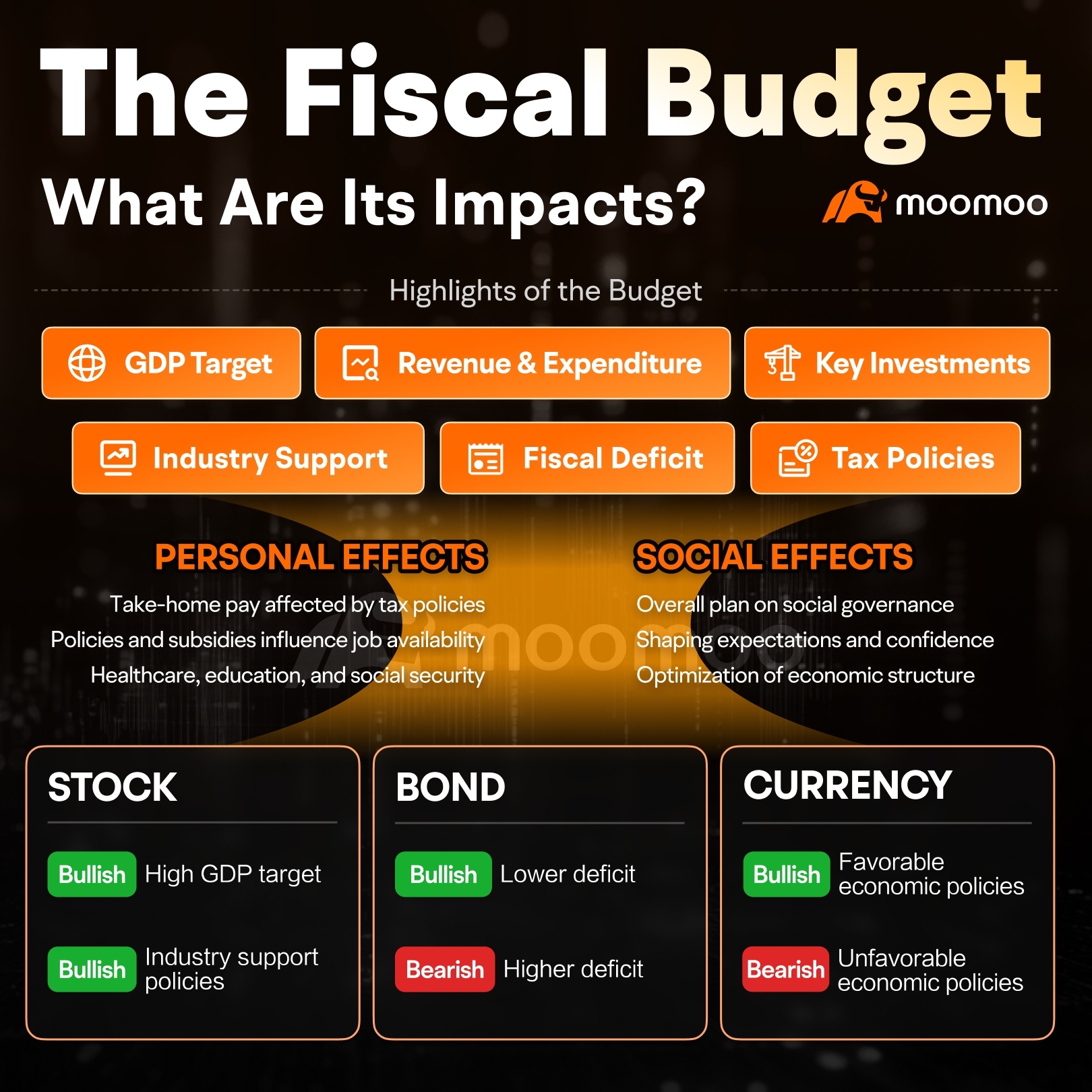
What is a fiscal budget?
A fiscal budget is like a national version of a household financial plan, outlining the government's fiscal policies and spending plans for the upcoming year. Key components include:
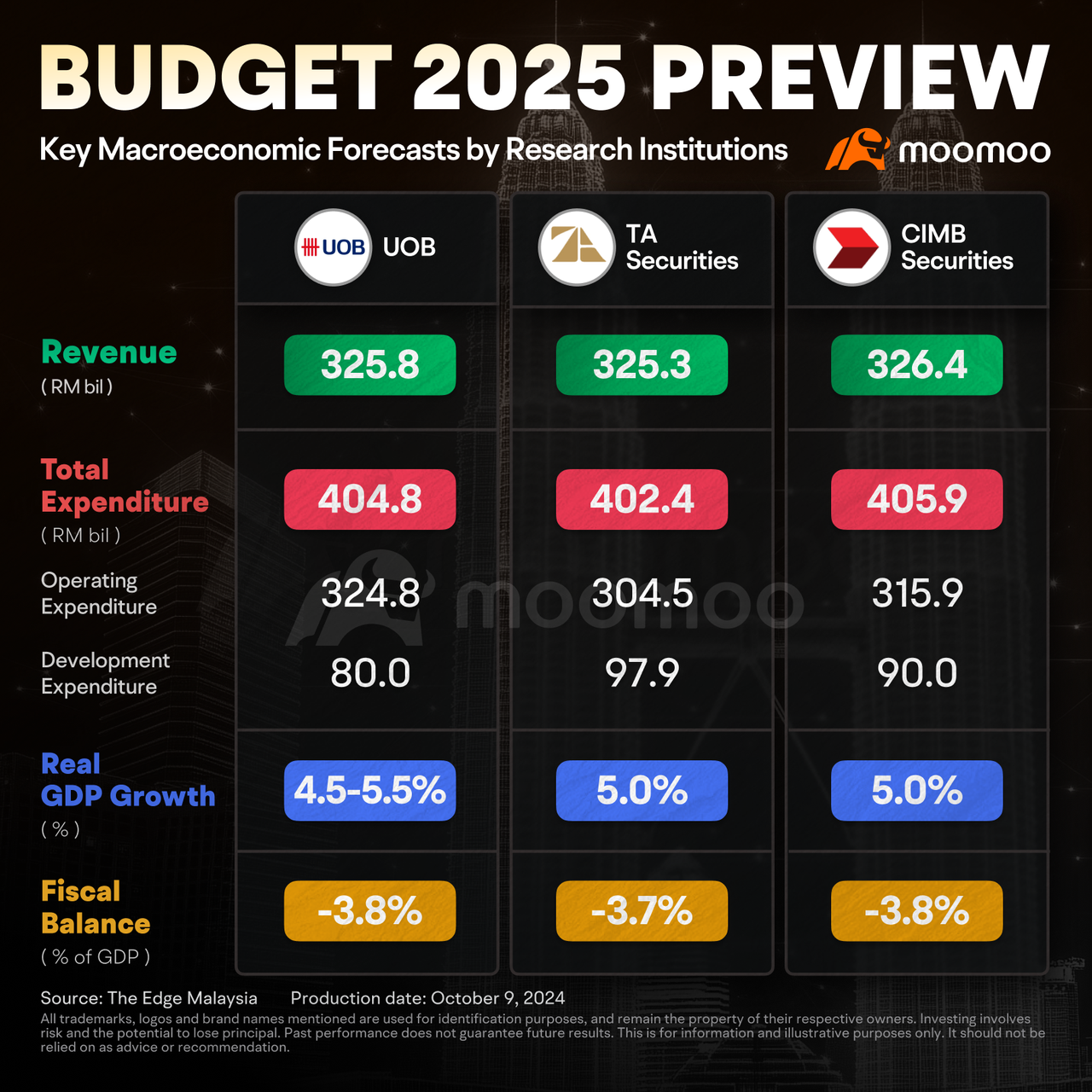
1. GDP growth targets and fiscal deficit plans
These two figures encapsulate the government's economic goals.
For your reference, the chart below summarizes predictions regarding these two key figures in the upcoming budget.
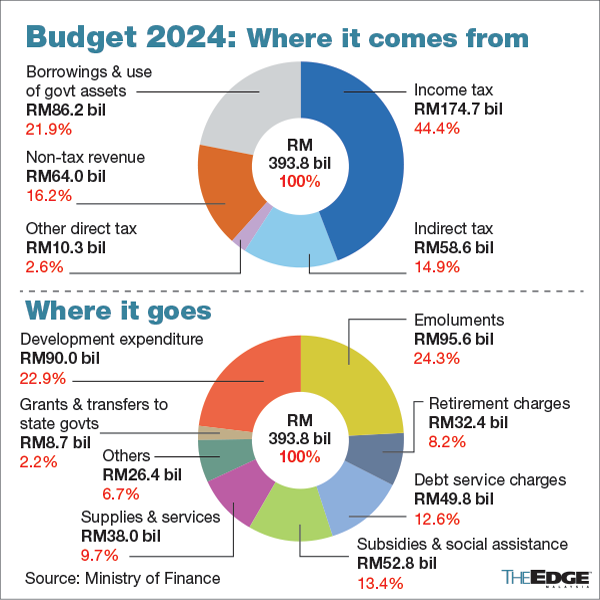
2. Fiscal revenue and expenditure plans
The budget outlines the government's expected sources of revenue as well as planned expenditures.
For your reference, here's the 2024 fiscal budget:
3. Tax policies
Taxes are the main source of government revenue and a key focus of the budget.
Changes may include introducing new taxes, eliminating existing ones, or adjusting rates, directly affecting individuals and businesses.
4. Industry Support Policies
The budget outlines the sectors and industries the government prioritizes. The government often uses tax incentives and subsidies to encourage growth.
5. Infrastructure and social spending
What impact does the budget have?
From a personal standpoint, key effects include:
Income tax: affect our take-home pay.
Job availability: influence by policies and subsidies.
Quality of life: healthcare, education, and etc.
On a broader level, the budget affects the market in two major ways:
1. Expectations and confidence
The budget sets economic goals that shape market expectations and investor confidence, directing financial flows.
A solid tax policy and stable economy attract foreign investment, while the management of fiscal deficits can influence credit ratings and borrowing costs.
2. Optimization of economic structure
Government support for emerging industries drives the optimization of economic structure, boosting productivity and enhancing long-term competitiveness.
How do financial markets respond after the budget is released?
Stocks in sectors highlighted for support are likely to perform well.
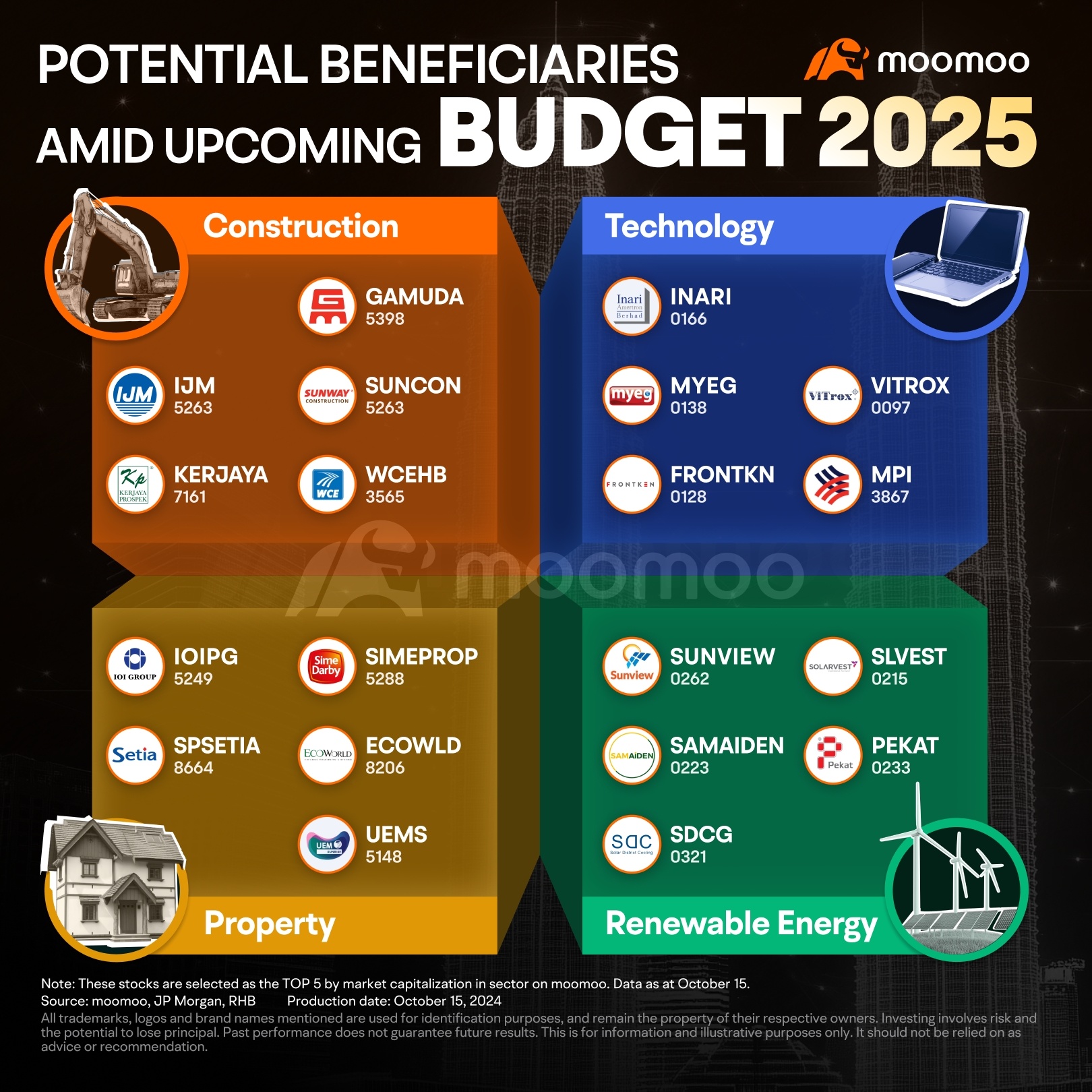
2. Bond market
Generally, a reduction in the deficit-to-GDP ratio is favorable for bond prices, leading to lower yields.
3. Currency
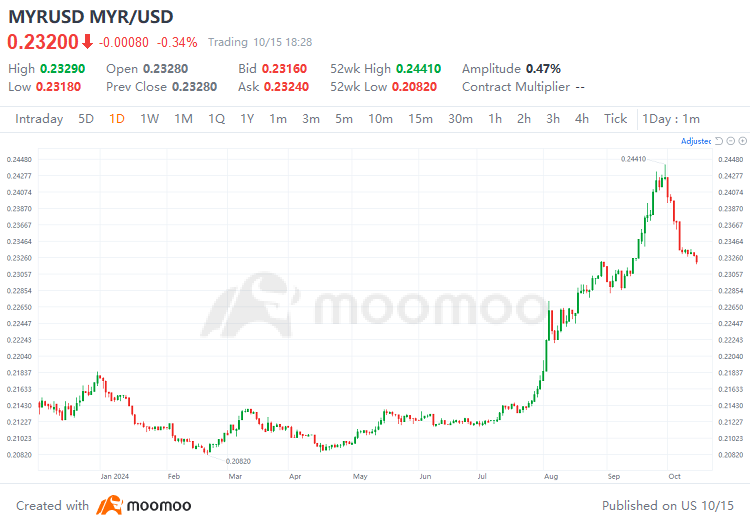
If the policies in the budget are perceived as favorable for economic growth, the ringgit's value may increase.
This year, the ringgit has appreciated significantly against the US dollar, rising by more than 10%.
Do you know which aspects of the upcoming budget you should focus on? Start planning your investment portfolio now!
This presentation is for informational and educational use only and is not a recommendation or endorsement of any particular investment or investment strategy. Investment information provided in this content is general in nature, strictly for illustrative purposes, and may not be appropriate for all investors. Read more