Fed Interest Rate Cut: Will This Trigger a Surge in Gold Prices?
Gold has shown impressive performance since October, with spot gold rising from a low of $1,831.93 to a high of $2,006.07, marking a 9.5% increase and the best October gain in 45 years.
The sharp rise in gold prices may have you wondering what is driving this trend, and whether November's pullback presents a risk or an opportunity. Additionally, some investors suggest that the Fed interest rate hike cycle may have ended. With growing calls for a rate cut next year, is now the best time to invest in gold? In this edition of Opportunity Mining, we will provide you some insight.
Why invest in gold?
Historically, gold has been a rare commodity, used for currency, jewelry, and collectibles. Nowadays, gold has become an alternative investment that is widely accepted thanks to various financial instruments.
While there are different reasons for owning gold, investing in gold is primarily aimed at wealth preservation due to its scarcity. Below are some of the major factors that influence the price of gold.
Main Factors Affecting the Price of Gold:
Inflation: Gold tends to increase in value as inflation rises, as higher prices increase the value of gold.
US Dollar: Since gold is priced in US dollars, when the dollar rises in value, the price of gold falls, and vice versa.
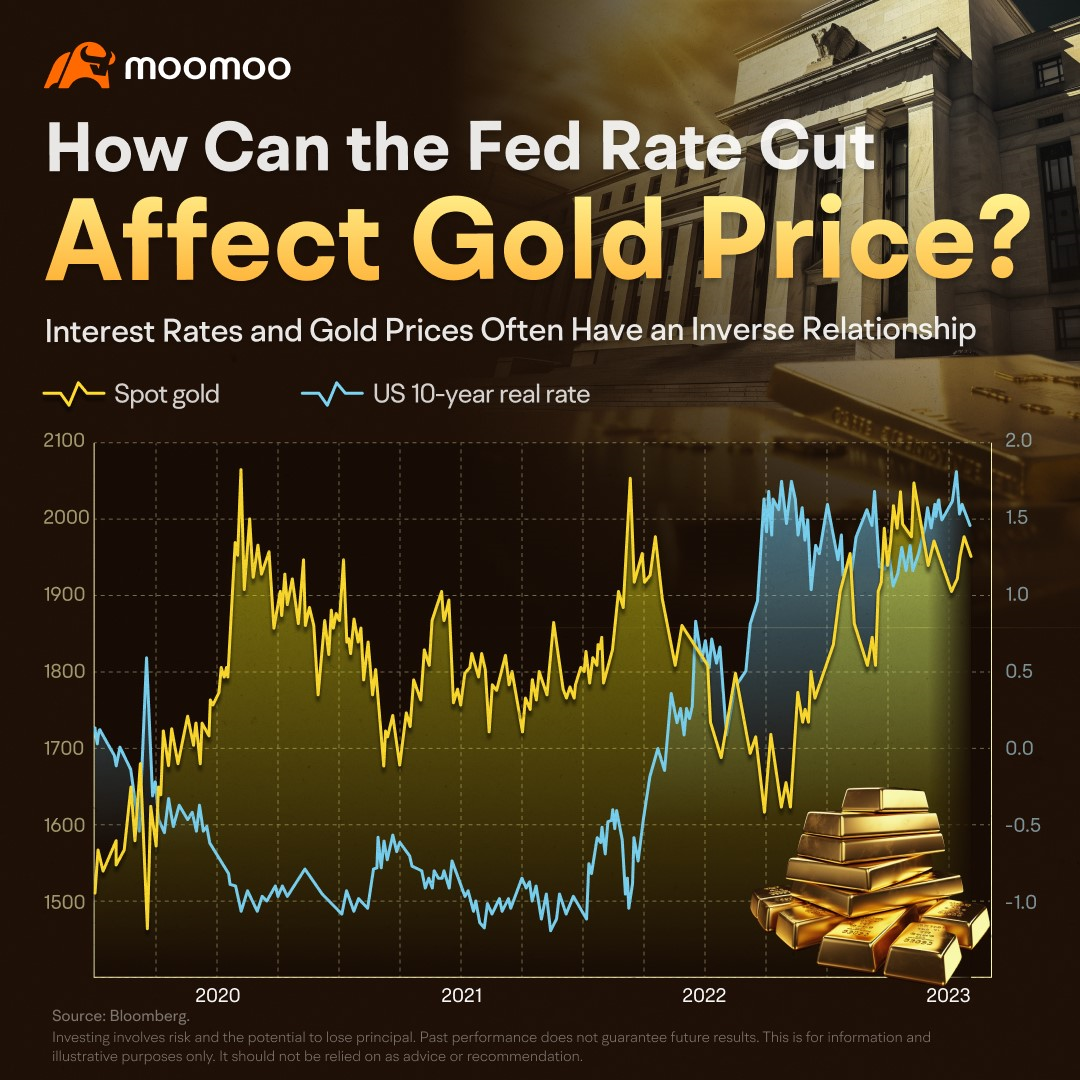
Monetary Policy: During periods of Fed rate hikes, gold generally doesn't perform well because it's often viewed as an asset that can hedge against inflation. Rate hikes suppress inflation, affecting the value of gold negatively.
Safe Haven Demand: Historically, the correlation between gold and high-risk assets such as stocks and bonds has been minimal, even negative, making it one of the best choices for safe-haven investments.
Commodity Demand: Gold's inherent commodity value allows people to buy physical gold. Approximately 49% of gold worldwide is used for jewelry, which is the largest single use for gold. Therefore, when demand is high, the price of gold naturally increases.
What are the related investment options for gold?
1. Physical Gold
One of the simplest ways to invest in gold is through physical gold, such as jewelry or gold bars. In the past decade, small gold bars and coins accounted for two-thirds of annual gold investment demand and one-quarter of global gold demand. However, it should be noted that physical gold may lack liquidity, and investors need to ensure safe storage.
2. Gold Futures
Gold futures are contracts with standardized terms that give investors the right to buy or sell gold at a particular price and date in the future. These contracts are traded on regulated exchanges, and their market prices can fluctuate based on supply and demand factors. Due to the involvement of numerous professional investors, the gold futures market typically has high liquidity and efficiency. Investors have the flexibility to either go long or short on gold by purchasing gold futures. As a result, corporate clients frequently use gold futures for risk management purposes.
3. Gold ETFs
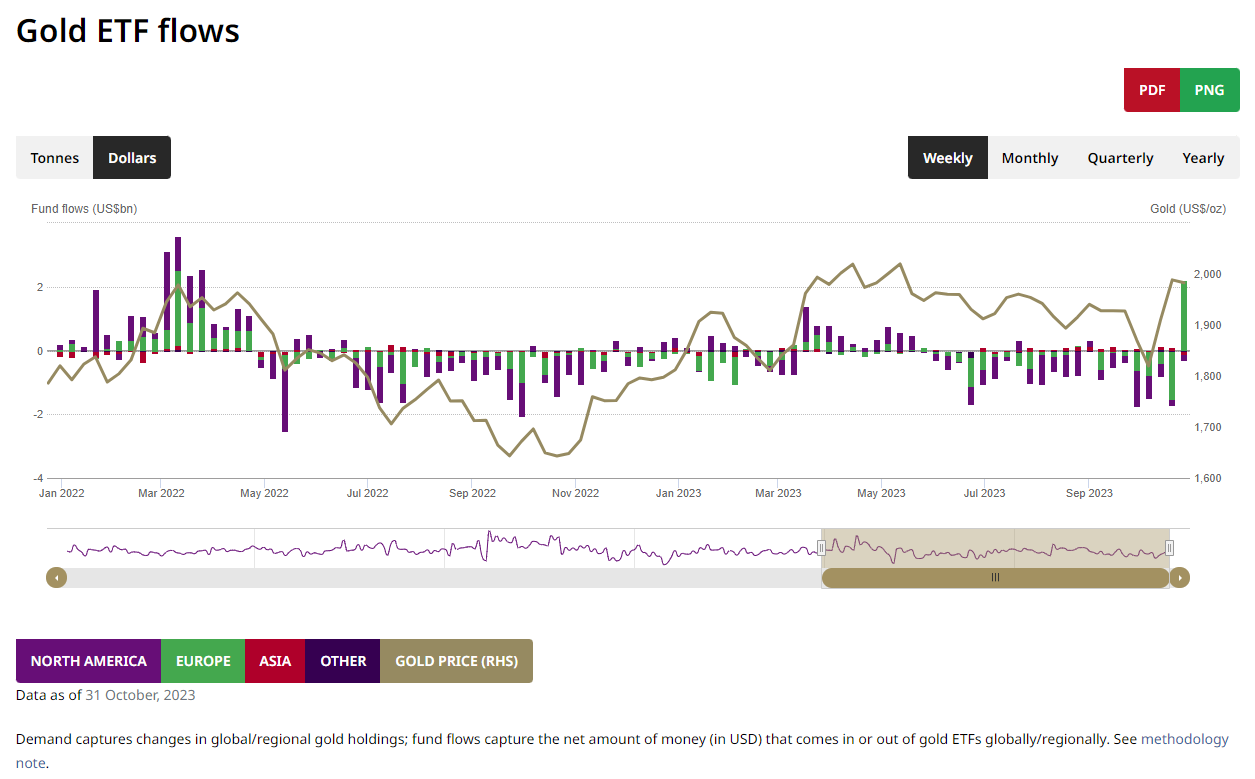
Some investors like to hold stocks of companies specializing in gold mining and refining, and these gold mining stocks can also be purchased through exchange-traded funds (ETFs) and mutual funds. According to statistics, ETFs and other exchange-traded investment tools account for about one-third of gold investment demand.
Gold ETF prices typically track the performance of spot gold prices and can be bought and sold on exchanges like company stocks. Since the minimum investment amount is only the price of one share of the ETF, this method is more convenient than directly owning gold bars for small investors. Moreover, the average expense ratio of these funds is usually around 0.61%, much lower than the fees and expenses of most public funds and other investments.
4. Gold IRA
A Gold IRA is a specialized type of retirement account that permits individuals to hold physical gold and other precious metals as investments, unlike traditional IRAs. Investing in a Gold IRA can have two significant benefits: Firstly, it can help reduce annual taxable income for investors. Secondly, it enables investors to manage the investment portfolio included in the IRA independently. Additionally, since gold doesn't have liquidity like other assets, holding physical gold may be more suitable for long-term investment and align with the investment philosophy of an IRA.
Is Gold's pullback an opportunity or a risk?
Why did the price of gold rise in October?
The recent market environment gave gold a chance to showcase its safe-haven properties.
The global economic uncertainty has increased, with continued concerns about global economic growth and a rise in geopolitical conflicts in certain regions. This has resulted in a surge in investor demand for safe havens. In October, the VIX index, which represents market volatility, surged to 21.71, and the three major US stock indices fell sharply, marking the worst October performance for the US stock market in five years.
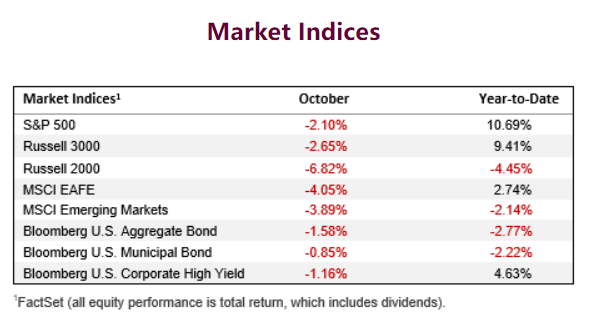
Currently, gold is seen as a safe-haven asset that attracts investors' attention worldwide because of stability during times of high volatility.
In October, the international price of gold not only rebounded continuously from its low point but also successfully broke through the key level of $2000 per ounce, monthly returns surpassing other commodities such as oil and copper, as well as global stock market performance.
From a technical analysis perspective, gold surged exponentially in October, breaking through the 200-day simple moving average easily, but appears to have reversed after hitting resistance at $2,010 in November, entering a correction phase.
Technical indicators investors may consider
According to DailyFX analysis, here are some technical indicators that investors may consider:
Support and resistance levels: As of the date of Nov. 13th, resistance seems to exist around the $2000 level. The 200-day simple moving average is widely used as an indicator for monitoring long-term trends in the market, with the current level at $1935. If gold falls below the support level of $1,985, it may move towards the target of $1,935.
Different moving averages: Gold’s moving averages form a golden cross pattern, with the 50-day moving average crossing the 100-day and 200-day moving averages. While this indicates a potential bullish trend, there are mixed signals due to macroeconomic and geopolitical uncertainties.
Implied volatility: Gold’s 30-day implied volatility has dropped significantly, but this suggests gold needs another catalyst to retest recent highs.
In summary, based on the technical indicators discussed, it is advisable to exercise caution when making investment decisions regarding gold.
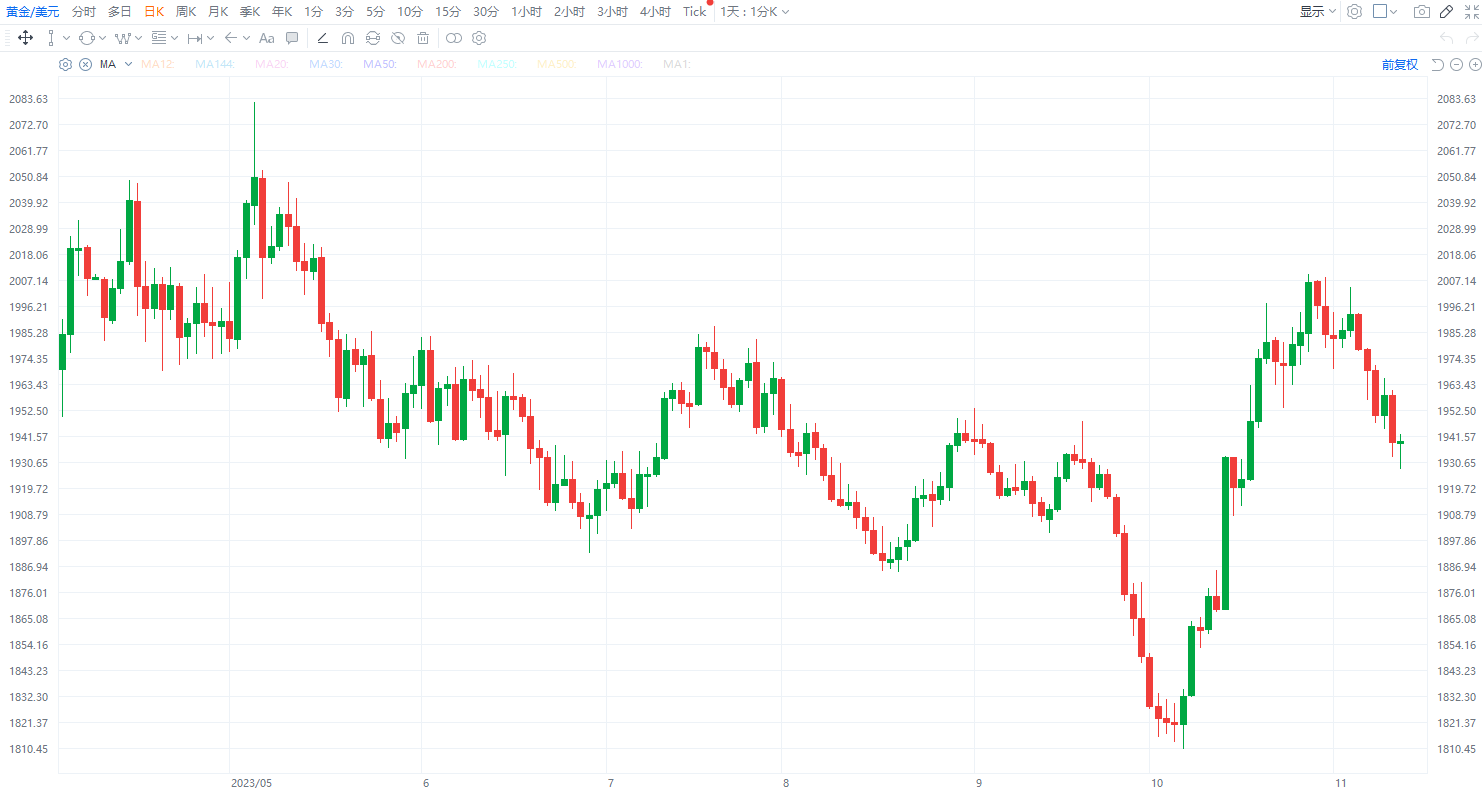
Source: moomoo | Gold price (XAU/USD) as date of Nov. 13th, 2023 | Please note that any illustrations mentioned in this content are intended for educational purposes only. They should not be used as the sole basis for making investment decisions or recommendations for any investment or investment strategy.
In the short term, the most significant factors that impact gold prices could be monetary policy and geopolitical conflicts. However, recent analysis from DailyFX suggests that geopolitical tensions may have become less relevant in the market as gold prices fell after reaching a high in November, despite being viewed as a safe-haven asset.
The decline in gold prices may be attributed to another factor - monetary policy. In early November, the Fed indicated a hawkish stance and signaled the possibility of further rate hikes. This resulted in the market receiving signals that "further rate hikes" are possible, causing gold prices to fall.
Analyst's Opinion on Gold Price
In terms of future trends, DailyFX analysts believe that gold may continue to be supported in the short term because holding precious metals remains attractive, and a weaker US dollar also supports gold prices.
In the long term, according to Zacks analyst projections, gold prices could rise to $2024 by 2024 due to the Fed may transition from hawkish to dovish expectations and declining actual yields.
Morgan Stanley agrees that gold presents an opportunity, expecting gold prices to break through the $2000 per ounce level by year-end and reach a historical high in 2024. This shift will likely occur when the Fed starts cutting rates next year, where falling US yields will become an "important driver" of precious metals, according to Greg Hiller, executive director of global commodity research at Morgan Stanley. As interest rates often move inversely to gold prices, gold prices are expected to break through $2175 next year.
Zacks analysts indicate that gold's rebound depends on the behavior of the Fed and the progress of geopolitical crises. If the Fed continues to hold steady, this will be good news for gold investment.
Therefore, in the face of uncertain global economic prospects, gold investors should closely monitor economic and market events before making investment decisions.
This presentation is for informational and educational use only and is not a recommendation or endorsement of any particular investment or investment strategy. Investment information provided in this content is general in nature, strictly for illustrative purposes, and may not be appropriate for all investors. Read more