Top Investment Strategies for Banking Sector in Bursa Malaysia
The banking sector of the Malaysian stock market is an important part of the country's economy, playing a key role as a money intermediary. As one of the key financial markets in Southeast Asia, Malaysia's banking sector not only serves the domestic economy, but also attracts many international investors. In terms of investment strategy, investors need to focus on a number of dimensions such as banks' capital adequacy, profitability, asset quality and adaptability to new technologies.
Malaysia's banking stocks are favored by investors for their solid growth and relatively high dividend payout ratios. With the changing global economic situation and domestic policy adjustments, the investment strategies of the banking sector have evolved to meet the new market environment and demands. Therefore, exploring the top investment strategies of the banking sector in Bursa Malaysia is of particular importance to investors.
Investment Strategies for Banking Sector in Bursa Malaysia
Bursa Malaysia's banking sector refers to the bank stocks listed on Bursa Malaysia, which represent a significant portion of Malaysia’s banking and financial services industry. These bank stocks include not only local banks such as Maybank, Public Bank Berhad and CIMB, but also branches of some foreign banks in Malaysia. The banking sector, as one of the pillars of the Malaysian economy, provides a wide range of financial services to individuals and corporations, including personal banking, commercial banking services, Islamic banking, and investment banking.
Overview of Banking Sector
The banking sector in Malaysia is a significant contributor to the country’s economy, with a large number of banks operating in the country. The sector is regulated by Bank Negara Malaysia, the central bank of Malaysia, which ensures the stability and soundness of the financial system. The banking sector in Malaysia offers a wide range of financial services, including personal and corporate banking, investment banking, and Islamic banking. This diverse array of services caters to the needs of individuals, businesses, and government entities, making it a cornerstone of the financial landscape in Malaysia.
Types of Banks in Malaysia
There are several types of banks in Malaysia, each serving different segments of the market. Commercial banks are the largest and most significant providers of funds in the banking system, with 27 commercial banks operating in Malaysia. These banks offer a broad range of services, including savings and checking accounts, loans, and credit facilities. Islamic banks, on the other hand, operate in accordance with Islamic principles and laws, offering financial services that are compliant with Shariah law. These banks provide products such as profit-sharing investment accounts and Islamic mortgages. Investment banks focus on providing financial advisory and transaction services to corporations and governments, including mergers and acquisitions, underwriting, and asset management. Other financial institutions, such as leasing and factoring companies, offer specialized financial services that cater to niche markets. This diverse banking ecosystem ensures that the financial needs of all sectors of the economy are met.
Why Invest in Bank Stocks in Bursa Malaysia?

There are several reasons to invest in banking stocks on Bursa Malaysia:
Profitability and Dividend Returns: Malaysian banking stocks, especially those large commercial banks with high and stable profits, usually pay out a portion of their profits in dividends, providing investors with an additional source of income.
Economic Recovery and Improvement in Asset Quality: With the recovery in economic activities and improvement in the health of the bank’s assets, the excess provisions previously set aside by the bank to meet potential losses may be recovered in the coming period, which will further improve the bank’s financial position.
Anti-inflationary Characteristics: Malaysian bank stocks often demonstrate the ability to preserve and enhance value amidst inflation due to their integral connection with the real economy. Banks have the capacity to adjust lending rates in response to inflation, thereby maintaining or even expanding the spread between deposits and loans, which can sustain or even improve profitability .
Market Growth Potential: Malaysian banking stocks are poised to benefit from the growth potential in the ASEAN region and international markets. This is exemplified by the expansion of Maybank’s business development in Dubai, highlighting the opportunities for growth beyond domestic boundaries .
Financial Reforms and Digitalization: The Malaysian banking sector is currently undergoing significant digital transformation, presenting new growth opportunities for investors. This transformation involves leveraging modern technologies such as big data, AI, and IoT to enhance precision in environmental monitoring and resource optimization .
Benefits of Investing Bank Stocks
For Malaysian investors, it is crucial to understand the potential advantages and risks before investing in Malaysian banking stocks. Below is a brief analysis of these factors that can help you better assess the viability and potential risks of investing in banking stocks.
High Dividend Yield: Malaysian banking stocks are known for their high dividend yields. A high dividend yield means that investors can earn more cash return per unit of investment. This is particularly attractive to investors looking for regular cash flow. For example, some Malaysian banks can offer dividend yields in excess of 5%, which provides very substantial dividend returns for long-term investors.
Dividend Reinvestment Plan: Dividend reinvestment schemes enable shareholders to reinvest dividends into more shares, growing their holdings and leveraging compound interest. In Malaysia, bank stocks typically offer such schemes, allowing investors to buy shares below market value, which can notably enhance their investment returns. These plans are advantageous as they allow for capital appreciation and dividend reinvestment without selling shares or incurring transaction costs.
Business Prospects: The business outlook for Malaysian bank stocks is positive, thanks to their diversified business structure. The bank's business includes not only the traditional deposit and lending business, but also covers a wide range of areas such as investment banking, insurance and asset management. As the economy develops and the demand for financial services increases, these business areas are expected to bring new growth to the bank, thus providing more value to investors.
Share Price Growth Potential: Malaysian banking stocks show potential for share price growth due to their solid profitability and favorable market outlook. With the expansion of the bank's business and the growth of the economy, the bank's profitability is expected to increase. In addition, the low valuation of bank stocks provides an attractive entry point for investors, and there is room for share prices to rise as the market reassesses bank stocks.
Risks of Investing Bank Stocks
Macroeconomic Fluctuations: The performance of Malaysian bank stocks is closely tied to the health of the macroeconomy. Economic downturns or instability can adversely affect bank profitability and share prices, as they may lead to reduced lending and increased defaults, impacting the banks' bottom line.
Interest Rate Movements: For Malaysian bank stocks, changes in interest rates are pivotal. Fluctuations can influence the net interest margin, a key determinant of bank profitability. Rising rates can boost income from loans, but also increase the cost of funds, while declining rates can compress margins, affecting earnings.
Credit Risk: In the context of Malaysian bank stocks, the non-performing loan (NPL) ratio is a critical measure of credit risk. An elevated NPL ratio suggests increased defaults, which can strain banks' financial performance by necessitating higher provisions and potentially leading to asset quality deterioration.
Market Competition: Malaysian bank stocks face escalating competition, particularly from fintech firms. The growth of fintech disrupts traditional banking models, offering customers more innovative and often more convenient services. This competition can challenge Malaysian banks to innovate and improve their services to retain and attract customers.
Top Investment Strategies for Banking Sector in Bursa Malaysia

In order to maximize investment returns and effectively control risks, investors should adopt some wise investment strategies. Below are some important investment strategies for investing in Malaysian banking stocks:
Value Investing Strategy
Investors should analyze in-depth the business income components of Malaysian banking stocks, including net interest income and fee and commission income, to look for investment opportunities that are undervalued by the market. This strategy is based on a long-term perspective with the expectation that the market will eventually recognize the true value of these stocks.
High Dividend Strategy
For investors seeking stable income, focusing on the dividend yield of Malaysian banking stocks is key. By choosing to invest in bank stocks with high dividend yields and sound fundamentals, you will not only receive a steady cash flow, but also capital appreciation as the share price rises, allowing you to realize double profits.
Dollar Cost Averaging(DCA)
By investing a fixed amount in Malaysian banking stocks on a regular basis, this strategy helps to reduce the average cost of investing regardless of share price fluctuations. Buy more shares when the share price is low and less when the share price is high, thus reducing the risk associated with market volatility.
Fundamental Analysis
Strong profitability and sound financial position are key factors when investing in Malaysian banking stocks. Investors need to focus on financial statements, including revenue, profit, balance sheet and cash flow, as well as consider valuation metrics such as dividend policy, P/E ratio, P/B ratio, etc. in order to make an informed investment decision.
Technical Analysis
Investors can complement fundamental analysis with technical analysis to aid in decision-making by examining historical data such as stock price trends and trading volumes to forecast potential future stock price movements. Tools like moving averages, the Relative Strength Index (RSI), and the Moving Average Convergence Divergence(MACD) can be utilized to identify market trends and potential entry and exit points for trades.
Diversification
To minimize risk, investors should include Malaysian banking stocks in their portfolios and avoid over-concentration in a single stock. This diversification strategy reduces the impact of volatility in specific stocks or sectors and enhances the stability and risk tolerance of the overall portfolio.
You can read Malaysia Stock Category to learn more about Bursa Malaysia.
List of Top Stock in Bursa Malaysia Banking Sector
Below is a list of Malaysian bank stocks with the highest market value as of November 7, 2024, based on the latest data, for investors' reference only.
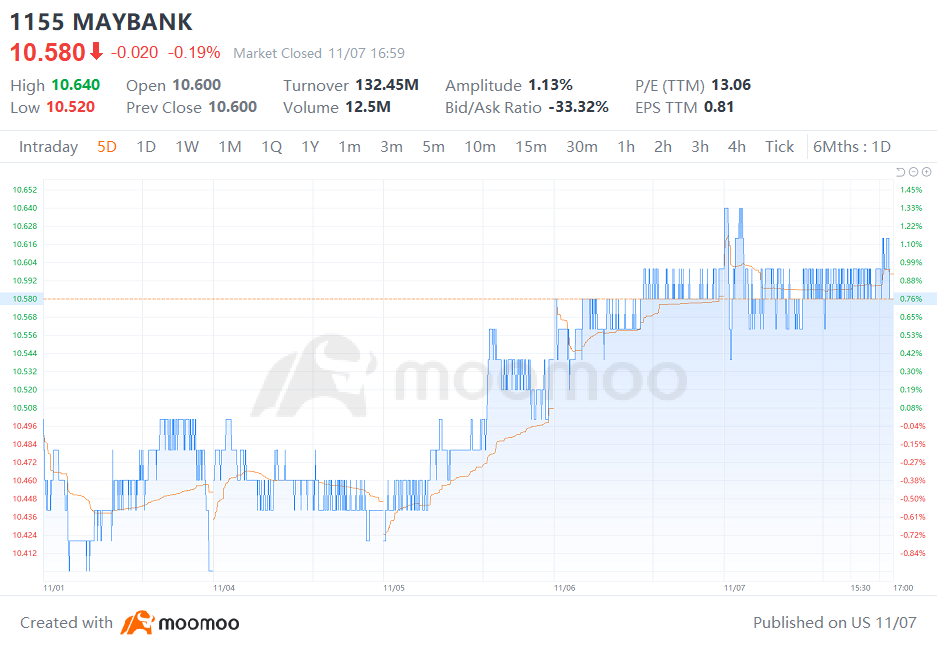
Malayan Banking Berhad (MAYBANK)
Maybank is the largest bank in Malaysia with presence in 18 countries and territories with more than 2,600 branches around the world. Maybank is known for its extensive network and diversified financial services, offering a full range of services including retail banking, corporate banking, investment banking and Islamic banking for individuals and corporations.
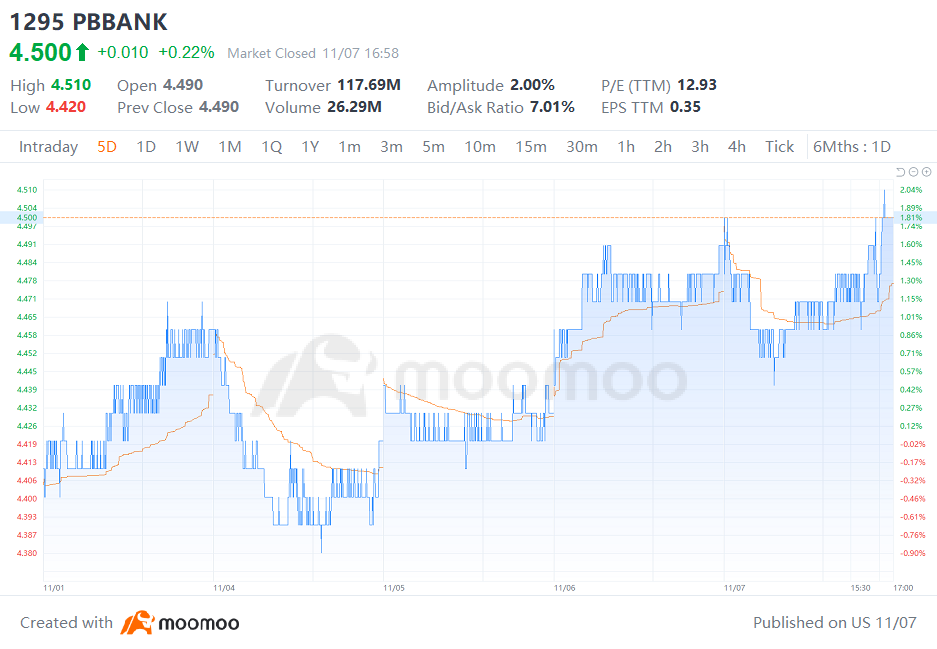
Public Bank
Public Bank Berhad is the third largest bank in Malaysia and is mainly active in the Asia Pacific region. Public Bank is known for its financial stability and investment in public construction projects. Public Bank offers a wide range of benefits and privileges to students and is the leading private bank in Malaysia.
CIMB Group
CIMB Group, formed by the merger of nine banks, is the largest Islamic bank in Malaysia and the second largest in the country. CIMB Group offers a comprehensive range of financial services including personal banking, commercial banking, investment banking and Islamic banking and is recognized for its innovation and customer service.
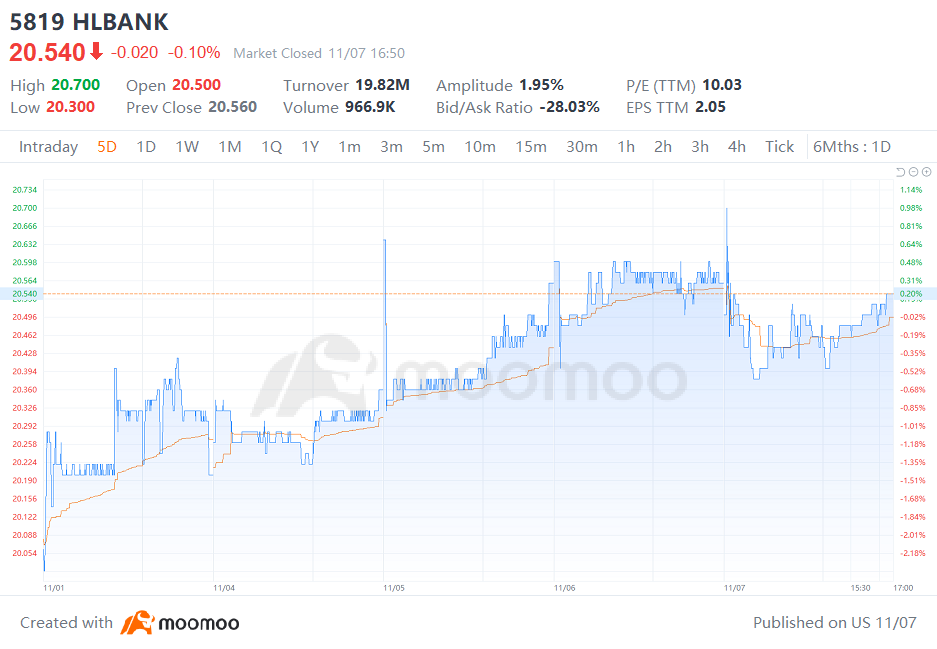
Hong Leong Bank
Hong Leong Bank As one of the top five commercial banks in Malaysia, Hong Leong Bank offers a full range of services including personal financial services, corporate banking, trade finance, and wealth management. With more than 300 branches worldwide, the bank has carved a niche in the market with its precise customer targeting and continuous expansion strategy.
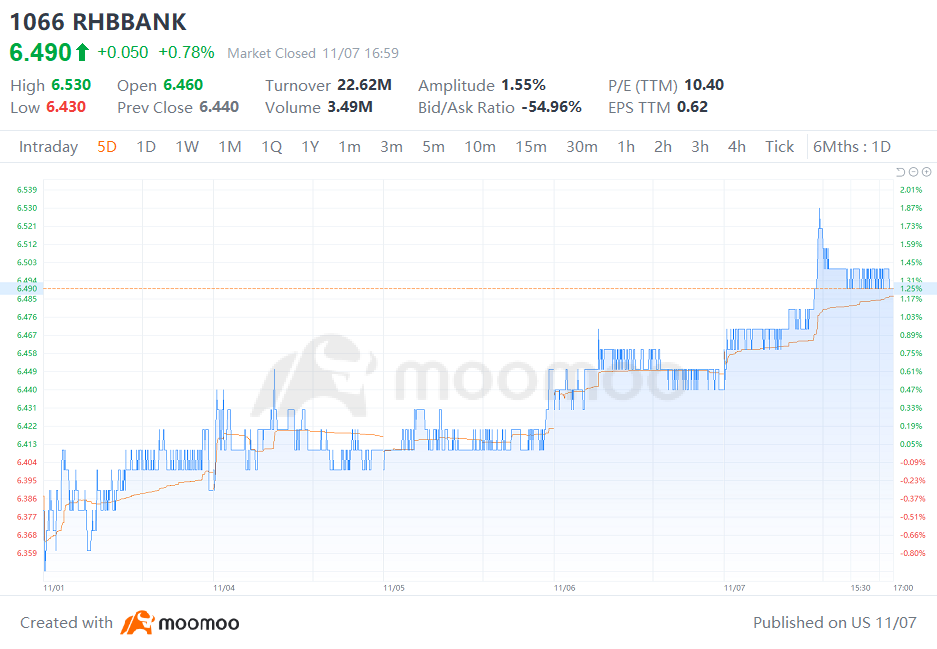
RHB Bank
RHB Bank, formed by the merger of DCB Bank and Kwong Yik Bank, is one of the young and dynamic banks in Malaysia. RHB Bank is favored by its customers for its modern services and products, offering a wide range of financial services including retail banking, commercial banking and Islamic banking.
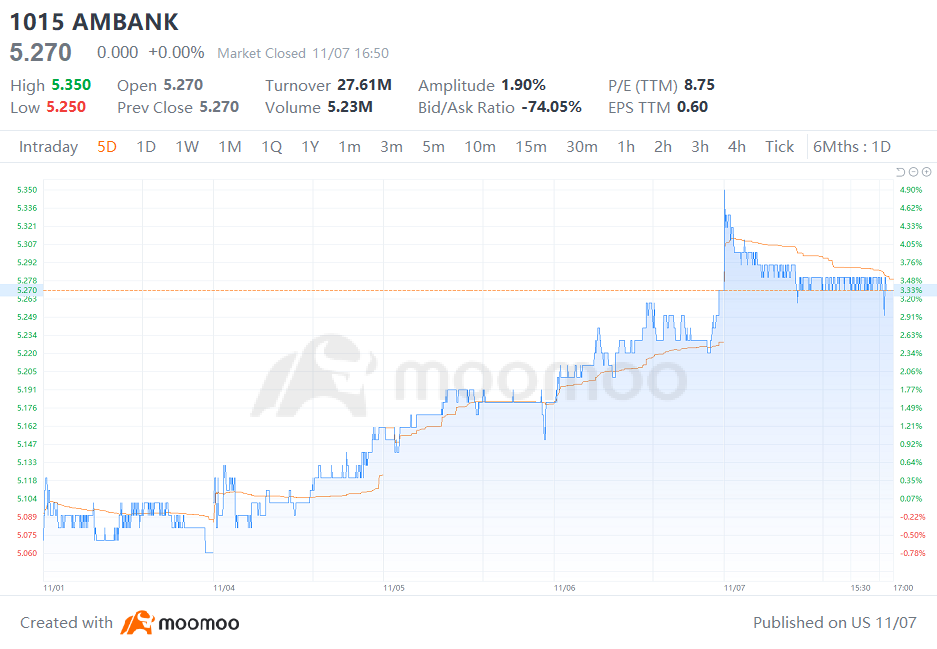
AmBank
AmBank is a Malaysian financial services group with over 40 years of service history. It offers a comprehensive range of banking and financial services, including retail banking, commercial banking, investment banking as well as Islamic banking, insurance services and more.
Outlook for Banking Sector in Malaysia
The outlook for the banking sector in Malaysia is positive, with the sector expected to continue growing in the coming years. The government’s plans to transform Kuala Lumpur into a major financial centre through the construction of the Tun Razak Exchange (TRX) is expected to boost the sector's growth. This ambitious project aims to attract international financial institutions and investors, enhancing Malaysia’s position in the global financial market. Additionally, the increasing demand for Islamic banking services is expected to drive the growth of Islamic banks in Malaysia. As more consumers and businesses seek Shariah-compliant financial products, Islamic banks are poised to expand their market share. However, the sector also faces challenges such as increasing competition and regulatory requirements, which may impact the profitability of banks in Malaysia. To navigate these challenges, banks will need to innovate and adapt, leveraging technology and improving operational efficiency to maintain their competitive edge.
Conclusion
When considering an investment in Malaysian banking stocks, investors should recognize the centrality of this sector in the country's economy and its attractiveness to international investors. Although banking stocks are favored for their solid profitability and high dividend returns, risk factors such as macroeconomic volatility and interest rate movements should not be ignored. Therefore, investors should adopt diversification strategies to maximize risk control and returns. By doing so, investors can better capitalize on the investment opportunities in Malaysian banking stocks while hedging against potential market risks.
This presentation is for informational and educational use only and is not a recommendation or endorsement of any particular investment or investment strategy. Investment information provided in this content is general in nature, strictly for illustrative purposes, and may not be appropriate for all investors. Read more
Recommend

How to Invest MyDCD IPO Malaysia 2026
SpaceX IPO 2026: How to Invest in SpaceX in Malaysia
Top 7 Dividend ETFs for Malaysian Investors 2026

How to Invest Stratus Global IPO Malaysia 2026
How to Invest in SkyeChip IPO in Malaysia 2026
Top 10 Features of Stock Brokers in Malaysia
How to Invest in Sunway Healthcare in Malaysia 2026
Cara Melanggan IPO Empire Sushi (5351): Panduan Lengkap
Top 7 S&P 500 ETFs Malaysian Investors
Top 9 Semiconductor ETFs Malaysia 2026
Top 8 Gold ETFs in Malaysia for 2026
Moomoo vs Robinhood: Which Platform for Malaysian Investors
Top 8 Inverse ETFs Malaysia 2026
Moomoo Scams Alert: The Official Anti-Fraud Guide in Malaysia
Top 9 Index ETFs Malaysia 2026
Top 10 Technology ETFs in Malaysia for 2026
Safe Investing in Malaysia: Moomoo MY Statement
Is Moomoo Safe in Malaysia
Top 8 Artificial Intelligence Stocks for Malaysian Investors
Invest in 99 Speedmart Share in Malaysia: A Complete Guide
Top 6 Semiconductor Stocks for Malaysian Investors in 2024
Top Investment Strategies for Banking Sector in Bursa Malaysia
How to Buy Tesla Stock in Malaysia
Top 4 Copper ETFs Malaysia 2026
How to Buy IPO Stocks in Malaysia
Top 7 Sectors in the US Stock Market for Malaysian Investors
Top 10 US Penny Stocks for Malaysian Investors
Popular China Stocks for Malaysia Investors to Buy
Top 10 High Dividend Stocks Malaysia 2026
What Is A Recession?
How to Buy Money Market Funds in Malaysia
How to Buy Stock in Malaysia 2026
Top 10 US Healthcare Stocks for Malaysian Investors 2024
Top 5 Malaysia Dividend Stocks in 2026
How to Invest in Startups Before IPO in Malaysia
Top 7 Leveraged ETFs to Invest in Malaysia
Top 8 Currency ETFs Malaysia 2026
How to Invest in Anthropic IPO Malaysia 2026
Moomoo Malaysia vs M+ Global: Which Platform to Choose
What is a Bond and How to Buy U.S. Treasury Bond?
How to Invest in Foodie Media IPO in Malaysia?
Mutual Funds vs Money Market Funds: Which to Invest in Malaysia
Moomoo Malaysia Brokerage Fees and Pricing
What is Thematic Investing?
Malaysia Data Center: Beneficial Sectors and Stocks
Is Moomoo Legal in Malaysia
8 Benefits of Using Paper Trading Apps for Malaysian Traders
Margin Trading: Guide and Strategy for Malaysian Investors
Top Fixed Deposit Rates in Malaysia 2024
Trading App Moomoo: Download and Guide
Top 8 Benefits of Using Moomoo Malaysia as a Stock Broker
Top 10 US Technology Stocks for Malaysian Investors 2026
US-Listed Chinese Stocks Surge on Policy Boost: Who is Leading the Charge?
China-Linked Stocks Surge Amid Strong Policy Stimulus: Wall Street Says, “This Time Is Different!”
How Much Room is There for Valuation Recovery in China-Linked Stocks?
Top 8 Consumer Products and Services Companies in Malaysia 2024
Top 8 Tips for Using Paper Trading for Bursa Malaysia Investors
Top 10 Real Estate Investment Trusts Companies in Malaysia 2024
Top 10 Construction Companies and Stocks in Malaysia 2024
Top 6 Plantation Companies and Stocks in Bursa Malaysia 2025
Special Purpose Acquisition Company and How to Invest
Top 8 Technology Stocks in Malaysia 2024
Top 10 ETFs in Malaysia 2026
How to Choose Your Ideal ETF in Malaysia?
Top 5 Energy Companies and Stocks in Malaysia 2024
What Is Social Trading
How to Use Paper Trading to Test and Help Refine Your Trading Strategy?
Tax Trading Strategies in a Bear Market
6 ETF Concerns That Investors Shouldn’t Overlook
HK Financial Stocks Make a Strong Comeback Amid PBOC Policies & Fed Rate Cuts: Are High-Dividend Inv
How Stock Charting Tools Can Help You
Choosing a Stock Simulator to Practice Stock Trading
Psychological Condition of the Market
What Is SWOT Analysis?
What Is Copy Trading
What Is Working Capital?
What Is the Spot Rate?
Index Funds in Singapore
How to Practice Trading Without Risking Money?
Mutual Funds in Singapore
What Is Mirror Trading?
What Is Revenue?
What Is Trend Analysis?
What Is a Volatility Smile?
What Is Beta in the Stock Market?
What Does It Mean to Have a Certificate of Deposit (CD)?
What Is a Day Order?
Price-to-Earnings (P/E) Ratio
What Is the National Best Bid and Offer (NBBO) in US Equities?
What Are Market Orders?
Using Volume Oscillators to Confirm Price Movements
Forex Trading in Singapore
What Is a Bellwether?
On-Balance Volume (OBV): What Is It?
What Is Historical Volatility (HV)?
Company Earnings and Earnings per Share What Investors Need to Know
Spot Market: What Is It?
Scalping Stock Trading: How Does It Work?
What Is Market Depth?
What Is a Trailing Stop and How to Use It?
Swing Trading vs. Day Trading: What's the Difference?
Will ESG Investing Be The Future Of Investing?
Hedge Funds in Singapore
Build a Low-Risk Portfolio with Blue-Chip Shares in Australia
What Is the Money Flow Index (MFI)?
How to Invest MyDCD IPO Malaysia 2026
SpaceX IPO 2026: How to Invest in SpaceX in Malaysia
Top 7 Dividend ETFs for Malaysian Investors 2026
How to Invest Stratus Global IPO Malaysia 2026
How to Invest in SkyeChip IPO in Malaysia 2026
Top 10 Features of Stock Brokers in Malaysia
How to Invest in Sunway Healthcare in Malaysia 2026
Cara Melanggan IPO Empire Sushi (5351): Panduan Lengkap
Top 7 S&P 500 ETFs Malaysian Investors
Top 9 Semiconductor ETFs Malaysia 2026
Top 8 Gold ETFs in Malaysia for 2026
Moomoo vs Robinhood: Which Platform for Malaysian Investors
Top 8 Inverse ETFs Malaysia 2026
Moomoo Scams Alert: The Official Anti-Fraud Guide in Malaysia
Top 9 Index ETFs Malaysia 2026
Top 10 Technology ETFs in Malaysia for 2026
Safe Investing in Malaysia: Moomoo MY Statement
Is Moomoo Safe in Malaysia
Top 8 Artificial Intelligence Stocks for Malaysian Investors
Invest in 99 Speedmart Share in Malaysia: A Complete Guide
Top 6 Semiconductor Stocks for Malaysian Investors in 2024
Top Investment Strategies for Banking Sector in Bursa Malaysia
How to Buy Tesla Stock in Malaysia
Top 4 Copper ETFs Malaysia 2026
How to Buy IPO Stocks in Malaysia
Top 7 Sectors in the US Stock Market for Malaysian Investors
Top 10 US Penny Stocks for Malaysian Investors
Popular China Stocks for Malaysia Investors to Buy
Top 10 High Dividend Stocks Malaysia 2026
What Is A Recession?
How to Buy Money Market Funds in Malaysia
How to Buy Stock in Malaysia 2026
Top 10 US Healthcare Stocks for Malaysian Investors 2024
Top 5 Malaysia Dividend Stocks in 2026
How to Invest in Startups Before IPO in Malaysia
Top 7 Leveraged ETFs to Invest in Malaysia
Top 8 Currency ETFs Malaysia 2026
How to Invest in Anthropic IPO Malaysia 2026
Moomoo Malaysia vs M+ Global: Which Platform to Choose
What is a Bond and How to Buy U.S. Treasury Bond?
How to Invest in Foodie Media IPO in Malaysia?
Mutual Funds vs Money Market Funds: Which to Invest in Malaysia
Moomoo Malaysia Brokerage Fees and Pricing
What is Thematic Investing?
Malaysia Data Center: Beneficial Sectors and Stocks
Is Moomoo Legal in Malaysia
8 Benefits of Using Paper Trading Apps for Malaysian Traders
Margin Trading: Guide and Strategy for Malaysian Investors
Top Fixed Deposit Rates in Malaysia 2024
Trading App Moomoo: Download and Guide
Top 8 Benefits of Using Moomoo Malaysia as a Stock Broker
Top 10 US Technology Stocks for Malaysian Investors 2026
US-Listed Chinese Stocks Surge on Policy Boost: Who is Leading the Charge?
China-Linked Stocks Surge Amid Strong Policy Stimulus: Wall Street Says, “This Time Is Different!”
How Much Room is There for Valuation Recovery in China-Linked Stocks?
Top 8 Consumer Products and Services Companies in Malaysia 2024
Top 8 Tips for Using Paper Trading for Bursa Malaysia Investors
Top 10 Real Estate Investment Trusts Companies in Malaysia 2024
Top 10 Construction Companies and Stocks in Malaysia 2024
Top 6 Plantation Companies and Stocks in Bursa Malaysia 2025
Special Purpose Acquisition Company and How to Invest
Top 8 Technology Stocks in Malaysia 2024
Top 10 ETFs in Malaysia 2026
How to Choose Your Ideal ETF in Malaysia?
Top 5 Energy Companies and Stocks in Malaysia 2024
What Is Social Trading
How to Use Paper Trading to Test and Help Refine Your Trading Strategy?
Tax Trading Strategies in a Bear Market
6 ETF Concerns That Investors Shouldn’t Overlook
HK Financial Stocks Make a Strong Comeback Amid PBOC Policies & Fed Rate Cuts: Are High-Dividend Inv
How Stock Charting Tools Can Help You
Choosing a Stock Simulator to Practice Stock Trading
Psychological Condition of the Market
What Is SWOT Analysis?
What Is Copy Trading
What Is Working Capital?
What Is the Spot Rate?
Index Funds in Singapore
How to Practice Trading Without Risking Money?
Mutual Funds in Singapore
What Is Mirror Trading?
What Is Revenue?
What Is Trend Analysis?
What Is a Volatility Smile?
What Is Beta in the Stock Market?
What Does It Mean to Have a Certificate of Deposit (CD)?
What Is a Day Order?
Price-to-Earnings (P/E) Ratio
What Is the National Best Bid and Offer (NBBO) in US Equities?
What Are Market Orders?
Using Volume Oscillators to Confirm Price Movements
Forex Trading in Singapore
What Is a Bellwether?
On-Balance Volume (OBV): What Is It?
What Is Historical Volatility (HV)?
Company Earnings and Earnings per Share What Investors Need to Know
Spot Market: What Is It?
Scalping Stock Trading: How Does It Work?
What Is Market Depth?
What Is a Trailing Stop and How to Use It?
Swing Trading vs. Day Trading: What's the Difference?
Will ESG Investing Be The Future Of Investing?
Hedge Funds in Singapore
Build a Low-Risk Portfolio with Blue-Chip Shares in Australia
What Is the Money Flow Index (MFI)?