HK Financial Stocks Make a Strong Comeback Amid PBOC Policies & Fed Rate Cuts: Are High-Dividend Inv
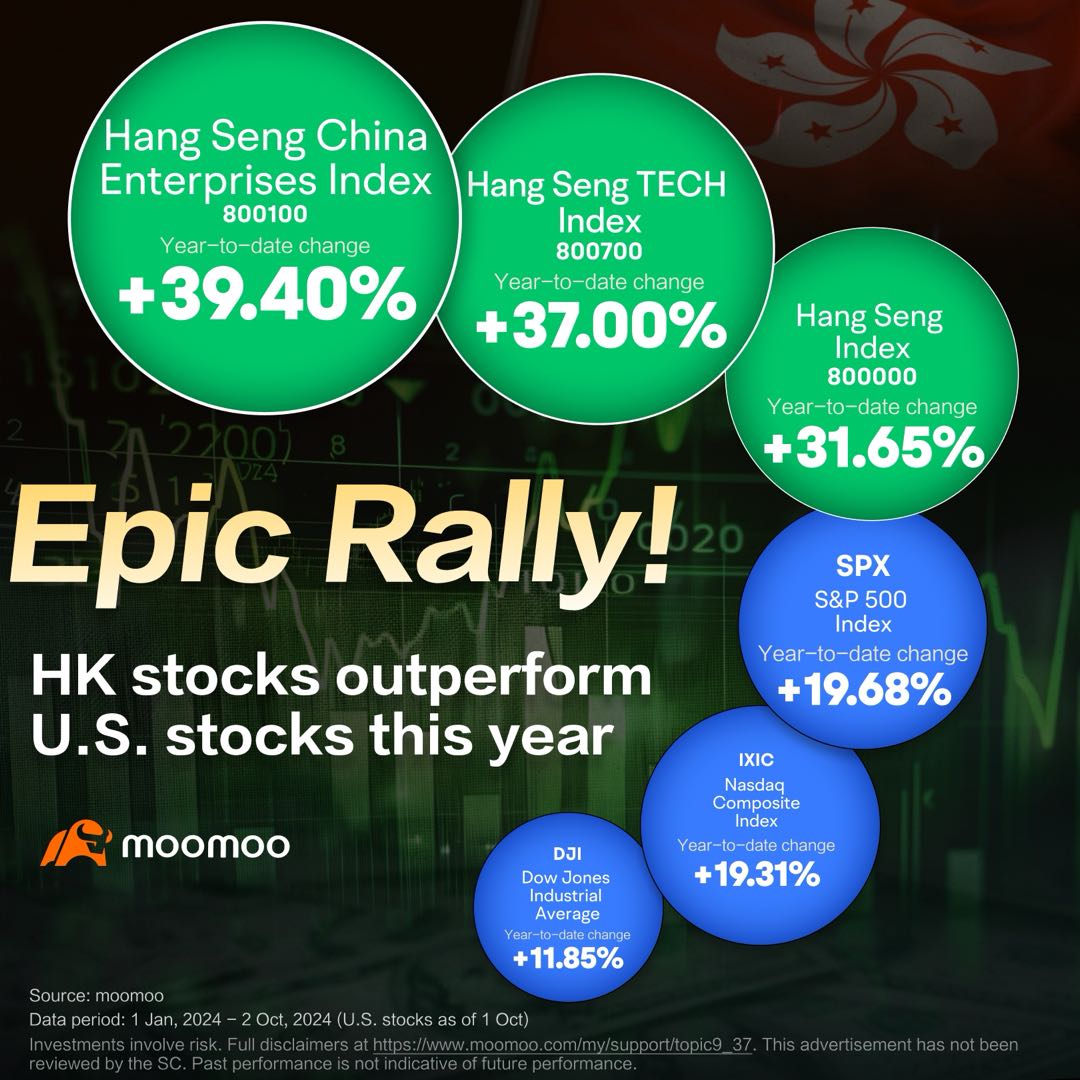
This year, banking and insurance stocks in Hong Kong have surged, driven by a combination of PBOC policies and global interest rate cuts. Amid a diminished risk appetite in the Chinese market, investors have increasingly turned to these stocks for their high dividend yields, boosting their share prices consistently throughout the year. As the market recovers, questions remain: Are these high-dividend investments still attractive, and do these stocks have further upside potential?
PBOC Measures Alleviate Concerns Over the Banking Sector
Before the PBOC's major policy announcements on Tuesday, markets were anxious about the impact of lower interest rates on existing housing loans, particularly concerning banks' interest income from mortgages. Concerns had arisen that if deposit rates remained unchanged, banks would face narrower net interest margins, ultimately hurting profits.
However, the PBOC's strategic measures on Tuesday calmed these concerns. The central bank announced a 0.5 percentage point cut in the reserve requirement ratio and indicated potential further reductions depending on liquidity conditions. Along with a 0.2 percentage point reduction in the 7-day reverse repo rate, these actions are expected to lower both lending and deposit rates, effectively reducing banks' funding costs and stabilizing their net interest margins.
Additionally, in collaboration with the China Banking and Insurance Regulatory Commission (CBIRC), the PBOC is boosting the core tier-one capital of six major commercial banks, ensuring the stability and resilience of the banking sector in the long run.
Zong Liang, Chief Researcher at Bank of China, believes that increasing the core tier-one capital of these banks will enhance their competitiveness and set the stage for stronger loan disbursements and financial system stability.
Opportunities for Insurance Companies in Hong Kong and China
Insurance funds, which are known for their large scale, stable sources, and long durations, are considered natural long-term capital in the stock market. Historically, insurance capital has played a critical role in the market's stability, serving as both an economic shock absorber and a stabilizer of the broader financial system.
According to Wind Information, by the end of Q2 2024, insurance funds held a significant portion of the shares in 796 A-share companies, valued at a total of 1.22 trillion yuan. This demonstrates the growing presence of insurance funds in both A-shares and H-shares.
Despite recent market declines, the new suite of policy measures introduced by the PBOC has favored the insurance industry. These policies are expected to enhance the investment capabilities of insurance funds.
Monetary Policy Innovations:The PBOC has introduced a "swap facility", allowing eligible entities—including insurance companies—to use their holdings in bonds, stock ETFs, and CSI 300 constituent stocks as collateral in exchange for high-liquidity assets like government bonds and central bank notes. The swap facility is expected to channel 500 billion yuan into the market, with potential for expansion depending on future liquidity conditions. This infusion is expected to stimulate price corrections for high-quality stocks and restore overall market valuations.
In addition, the China Securities Regulatory Commission (CSRC) is working on new guidelines to promote the entry of medium and long-term funds, further reinforcing the long-term stability and development of the stock market.
Fed Rate Cuts and Hong Kong’s Economic Rebound
From a global perspective, the Federal Reserve's interest rate cuts have influenced markets worldwide, including Hong Kong. On the heels of the Fed's 50-basis point reduction, the Hong Kong Monetary Authority followed suit, leading to increased liquidity and positive market sentiment for Hong Kong stocks.
Since September 10, under the dual impact of rate cuts and appealing high-dividend yields, banking and insurance stocks in Hong Kong have experienced notable increases. Notable stocks include:
China Merchants Bank (03968.HK): 17.67% increase, maintaining a dividend yield above 6%.
Ping An Insurance (02318.HK): 16.12% increase, with its dividend yield also exceeding 6%.
Other notable performers include Bank of Communications (03328.HK), China Construction Bank (00939.HK), Bank of China (03988.HK), and CITIC Bank (00998.HK), all offering dividend yields around 7%.
Is Investing in High-Dividend Bank and Insurance Stocks Still Worth It for Singapore and Malaysian Investors?
For Singaporean and Malaysian investors looking to capitalize on high-dividend yields, banking and insurance stocks in Hong Kong present an enticing option. With stable dividends and strong regulatory backing, these stocks are positioned to continue benefiting from PBOC policy support and global interest rate cuts. However, investors should weigh the potential for further upside in these sectors, especially as broader market conditions improve.
What’s Next for Hong Kong and China’s Financial Markets?
The recent policy package from the PBOC has provided the financial markets with the confidence to continue growing. With enhanced liquidity, support for the banking sector, and the insurance industry's long-term capital influx, Hong Kong’s financial sector is well-positioned for continued growth. However, Singaporean and Malaysian investors should stay informed about global interest rates, inflation concerns, and potential shifts in the Chinese economy that could impact their investments.
Key Takeaways for Singapore and Malaysia Investors
PBOC policies are stabilizing the banking sector in Hong Kong and China, making it an attractive investment for high-dividend yields.
The Fed's rate cuts and Hong Kong Monetary Authority's policies are providing liquidity support to Hong Kong stocks, particularly in the banking and insurance sectors.
Insurance funds and long-term capital are expected to play a critical role in stock market recovery, presenting a unique opportunity for Singaporean and Malaysian investors to gain exposure to high-dividend stocks in Hong Kong and China.
*For Malaysia-eligible clients, 0 commission is for 180 days only. Full T&Cs and other fees apply. The stocks shown are for illustrative purposes only. Investments involve risk. Full disclaimers at https://www.moomoo.com/my/support/topic9_37. This advertisement has not been reviewed by the SC. Past performance is not indicative of future performance. For Singapore-eligible clients, full T&Cs and other fees apply. Investments involve risk; this advertisement has not been reviewed by the Monetary Authority of Singapore. Please click Advertisement Disclaimer-moomoo Help Center for full disclaimers.All logos and brands referenced are for identification purposes only and remain the property of their respective owners and do not represent endorsements of any kind.
This presentation is for informational and educational use only and is not a recommendation or endorsement of any particular investment or investment strategy. Investment information provided in this content is general in nature, strictly for illustrative purposes, and may not be appropriate for all investors. Read more
Recommend

How to Invest MyDCD IPO Malaysia 2026
SpaceX IPO 2026: How to Invest in SpaceX in Malaysia
Top 7 Dividend ETFs for Malaysian Investors 2026

How to Invest Stratus Global IPO Malaysia 2026
How to Invest in SkyeChip IPO in Malaysia 2026
Top 10 Features of Stock Brokers in Malaysia
How to Invest in Sunway Healthcare in Malaysia 2026
Cara Melanggan IPO Empire Sushi (5351): Panduan Lengkap
Top 7 S&P 500 ETFs Malaysian Investors
Top 9 Semiconductor ETFs Malaysia 2026
Top 8 Gold ETFs in Malaysia for 2026
Moomoo vs Robinhood: Which Platform for Malaysian Investors
Top 8 Inverse ETFs Malaysia 2026
Moomoo Scams Alert: The Official Anti-Fraud Guide in Malaysia
Top 9 Index ETFs Malaysia 2026
Top 10 Technology ETFs in Malaysia for 2026
Safe Investing in Malaysia: Moomoo MY Statement
Is Moomoo Safe in Malaysia
Top 8 Artificial Intelligence Stocks for Malaysian Investors
Invest in 99 Speedmart Share in Malaysia: A Complete Guide
Top 6 Semiconductor Stocks for Malaysian Investors in 2024
Top Investment Strategies for Banking Sector in Bursa Malaysia
How to Buy Tesla Stock in Malaysia
Top 4 Copper ETFs Malaysia 2026
How to Buy IPO Stocks in Malaysia
Top 7 Sectors in the US Stock Market for Malaysian Investors
Top 10 US Penny Stocks for Malaysian Investors
Popular China Stocks for Malaysia Investors to Buy
Top 10 High Dividend Stocks Malaysia 2026
What Is A Recession?
How to Buy Money Market Funds in Malaysia
How to Buy Stock in Malaysia 2026
Top 10 US Healthcare Stocks for Malaysian Investors 2024
Top 5 Malaysia Dividend Stocks in 2026
How to Invest in Startups Before IPO in Malaysia
Top 7 Leveraged ETFs to Invest in Malaysia
Top 8 Currency ETFs Malaysia 2026
How to Invest in Anthropic IPO Malaysia 2026
Moomoo Malaysia vs M+ Global: Which Platform to Choose
What is a Bond and How to Buy U.S. Treasury Bond?
How to Invest in Foodie Media IPO in Malaysia?
Mutual Funds vs Money Market Funds: Which to Invest in Malaysia
Moomoo Malaysia Brokerage Fees and Pricing
What is Thematic Investing?
Malaysia Data Center: Beneficial Sectors and Stocks
Is Moomoo Legal in Malaysia
8 Benefits of Using Paper Trading Apps for Malaysian Traders
Margin Trading: Guide and Strategy for Malaysian Investors
Top Fixed Deposit Rates in Malaysia 2024
Trading App Moomoo: Download and Guide
Top 8 Benefits of Using Moomoo Malaysia as a Stock Broker
Top 10 US Technology Stocks for Malaysian Investors 2026
US-Listed Chinese Stocks Surge on Policy Boost: Who is Leading the Charge?
China-Linked Stocks Surge Amid Strong Policy Stimulus: Wall Street Says, “This Time Is Different!”
How Much Room is There for Valuation Recovery in China-Linked Stocks?
Top 8 Consumer Products and Services Companies in Malaysia 2024
Top 8 Tips for Using Paper Trading for Bursa Malaysia Investors
Top 10 Real Estate Investment Trusts Companies in Malaysia 2024
Top 10 Construction Companies and Stocks in Malaysia 2024
Top 6 Plantation Companies and Stocks in Bursa Malaysia 2025
Special Purpose Acquisition Company and How to Invest
Top 8 Technology Stocks in Malaysia 2024
Top 10 ETFs in Malaysia 2026
How to Choose Your Ideal ETF in Malaysia?
Top 5 Energy Companies and Stocks in Malaysia 2024
What Is Social Trading
How to Use Paper Trading to Test and Help Refine Your Trading Strategy?
Tax Trading Strategies in a Bear Market
6 ETF Concerns That Investors Shouldn’t Overlook
HK Financial Stocks Make a Strong Comeback Amid PBOC Policies & Fed Rate Cuts: Are High-Dividend Inv
How Stock Charting Tools Can Help You
Choosing a Stock Simulator to Practice Stock Trading
Psychological Condition of the Market
What Is SWOT Analysis?
What Is Copy Trading
What Is Working Capital?
What Is the Spot Rate?
Index Funds in Singapore
How to Practice Trading Without Risking Money?
Mutual Funds in Singapore
What Is Mirror Trading?
What Is Revenue?
What Is Trend Analysis?
What Is a Volatility Smile?
What Is Beta in the Stock Market?
What Does It Mean to Have a Certificate of Deposit (CD)?
What Is a Day Order?
Price-to-Earnings (P/E) Ratio
What Is the National Best Bid and Offer (NBBO) in US Equities?
What Are Market Orders?
Using Volume Oscillators to Confirm Price Movements
Forex Trading in Singapore
What Is a Bellwether?
On-Balance Volume (OBV): What Is It?
What Is Historical Volatility (HV)?
Company Earnings and Earnings per Share What Investors Need to Know
Spot Market: What Is It?
Scalping Stock Trading: How Does It Work?
What Is Market Depth?
What Is a Trailing Stop and How to Use It?
Swing Trading vs. Day Trading: What's the Difference?
Will ESG Investing Be The Future Of Investing?
Hedge Funds in Singapore
Build a Low-Risk Portfolio with Blue-Chip Shares in Australia
What Is the Money Flow Index (MFI)?
How to Invest MyDCD IPO Malaysia 2026
SpaceX IPO 2026: How to Invest in SpaceX in Malaysia
Top 7 Dividend ETFs for Malaysian Investors 2026
How to Invest Stratus Global IPO Malaysia 2026
How to Invest in SkyeChip IPO in Malaysia 2026
Top 10 Features of Stock Brokers in Malaysia
How to Invest in Sunway Healthcare in Malaysia 2026
Cara Melanggan IPO Empire Sushi (5351): Panduan Lengkap
Top 7 S&P 500 ETFs Malaysian Investors
Top 9 Semiconductor ETFs Malaysia 2026
Top 8 Gold ETFs in Malaysia for 2026
Moomoo vs Robinhood: Which Platform for Malaysian Investors
Top 8 Inverse ETFs Malaysia 2026
Moomoo Scams Alert: The Official Anti-Fraud Guide in Malaysia
Top 9 Index ETFs Malaysia 2026
Top 10 Technology ETFs in Malaysia for 2026
Safe Investing in Malaysia: Moomoo MY Statement
Is Moomoo Safe in Malaysia
Top 8 Artificial Intelligence Stocks for Malaysian Investors
Invest in 99 Speedmart Share in Malaysia: A Complete Guide
Top 6 Semiconductor Stocks for Malaysian Investors in 2024
Top Investment Strategies for Banking Sector in Bursa Malaysia
How to Buy Tesla Stock in Malaysia
Top 4 Copper ETFs Malaysia 2026
How to Buy IPO Stocks in Malaysia
Top 7 Sectors in the US Stock Market for Malaysian Investors
Top 10 US Penny Stocks for Malaysian Investors
Popular China Stocks for Malaysia Investors to Buy
Top 10 High Dividend Stocks Malaysia 2026
What Is A Recession?
How to Buy Money Market Funds in Malaysia
How to Buy Stock in Malaysia 2026
Top 10 US Healthcare Stocks for Malaysian Investors 2024
Top 5 Malaysia Dividend Stocks in 2026
How to Invest in Startups Before IPO in Malaysia
Top 7 Leveraged ETFs to Invest in Malaysia
Top 8 Currency ETFs Malaysia 2026
How to Invest in Anthropic IPO Malaysia 2026
Moomoo Malaysia vs M+ Global: Which Platform to Choose
What is a Bond and How to Buy U.S. Treasury Bond?
How to Invest in Foodie Media IPO in Malaysia?
Mutual Funds vs Money Market Funds: Which to Invest in Malaysia
Moomoo Malaysia Brokerage Fees and Pricing
What is Thematic Investing?
Malaysia Data Center: Beneficial Sectors and Stocks
Is Moomoo Legal in Malaysia
8 Benefits of Using Paper Trading Apps for Malaysian Traders
Margin Trading: Guide and Strategy for Malaysian Investors
Top Fixed Deposit Rates in Malaysia 2024
Trading App Moomoo: Download and Guide
Top 8 Benefits of Using Moomoo Malaysia as a Stock Broker
Top 10 US Technology Stocks for Malaysian Investors 2026
US-Listed Chinese Stocks Surge on Policy Boost: Who is Leading the Charge?
China-Linked Stocks Surge Amid Strong Policy Stimulus: Wall Street Says, “This Time Is Different!”
How Much Room is There for Valuation Recovery in China-Linked Stocks?
Top 8 Consumer Products and Services Companies in Malaysia 2024
Top 8 Tips for Using Paper Trading for Bursa Malaysia Investors
Top 10 Real Estate Investment Trusts Companies in Malaysia 2024
Top 10 Construction Companies and Stocks in Malaysia 2024
Top 6 Plantation Companies and Stocks in Bursa Malaysia 2025
Special Purpose Acquisition Company and How to Invest
Top 8 Technology Stocks in Malaysia 2024
Top 10 ETFs in Malaysia 2026
How to Choose Your Ideal ETF in Malaysia?
Top 5 Energy Companies and Stocks in Malaysia 2024
What Is Social Trading
How to Use Paper Trading to Test and Help Refine Your Trading Strategy?
Tax Trading Strategies in a Bear Market
6 ETF Concerns That Investors Shouldn’t Overlook
HK Financial Stocks Make a Strong Comeback Amid PBOC Policies & Fed Rate Cuts: Are High-Dividend Inv
How Stock Charting Tools Can Help You
Choosing a Stock Simulator to Practice Stock Trading
Psychological Condition of the Market
What Is SWOT Analysis?
What Is Copy Trading
What Is Working Capital?
What Is the Spot Rate?
Index Funds in Singapore
How to Practice Trading Without Risking Money?
Mutual Funds in Singapore
What Is Mirror Trading?
What Is Revenue?
What Is Trend Analysis?
What Is a Volatility Smile?
What Is Beta in the Stock Market?
What Does It Mean to Have a Certificate of Deposit (CD)?
What Is a Day Order?
Price-to-Earnings (P/E) Ratio
What Is the National Best Bid and Offer (NBBO) in US Equities?
What Are Market Orders?
Using Volume Oscillators to Confirm Price Movements
Forex Trading in Singapore
What Is a Bellwether?
On-Balance Volume (OBV): What Is It?
What Is Historical Volatility (HV)?
Company Earnings and Earnings per Share What Investors Need to Know
Spot Market: What Is It?
Scalping Stock Trading: How Does It Work?
What Is Market Depth?
What Is a Trailing Stop and How to Use It?
Swing Trading vs. Day Trading: What's the Difference?
Will ESG Investing Be The Future Of Investing?
Hedge Funds in Singapore
Build a Low-Risk Portfolio with Blue-Chip Shares in Australia
What Is the Money Flow Index (MFI)?