How to Choose Your Ideal ETF in Malaysia?
Exchange traded funds (ETFs) are investment funds that are listed and traded on stock exchanges, reflecting the performance of a basket of assets, including stocks, bonds, commodities, and indices. ETFs help in creating a diversified portfolio. Unlike Mutual Funds, ETFs can be traded throughout the day on a stock exchange, similar to the buying and selling of individual stocks, with flexibility and real-time pricing.
Selecting the ideal ETF in Malaysia requires a meticulous approach that considers investment objectives, the ETF’s cost structure, market liquidity, and keen awareness of market timing and macroeconomic conditions. This comprehensive guide provides Malaysian investors with the knowledge to choose the best ETFs in Malaysia that meet their financial goals and risk appetite, making the ETF trading in Malaysia easier in the eyes of investors.
What are the Top ETFs in Malaysia?
The search for an ideal ETFs in Malaysia involves examining both local offerings and the broader range of international ETFs accessible to Malaysian investors. Selecting a good ETFs requires a well-thought-out investment strategy. ETFs often track an index, which is a basket of securities used to measure the performance of a specific market. Investors can choose from different types of ETFs (Equity ETFs, Bond ETFs, Commodity ETFs, etc.) depending on their investment objectives and risk appetite. Below is a selection of ETFs that have performed relatively well from recent performance.
Invesco QQQ Trust (QQQ)
The Invesco QQQ Trust (QQQ) provides investors with substantial exposure to the technology and communications sector, focusing on the Nasdaq 100 non-financial giants, reflecting the growth potential of technology and innovation, yielding 18.61% year-to-date(YTD) in 2024, complemented by quarterly dividends and a low 0.2% expense ratio. QQQ is an example of sector-specific ETFs focusing on technology. The QQQ ETF tracks the performance of the underlying Nasdaq 100 non-financial giants. QQQ presents an attractive option for investors with a higher risk appetite who are seeking the tech sector’s growth potential and competitive returns.
SPDR Gold Shares (GLD)
The SPDR Gold Shares ETF (GLD) tracks physical gold held in trust, offering vital exposure during times of market uncertainty. GLD serves as a hedge against market volatility. The GLD ETF tracks the performance of the underlying physical gold held in trust. With a robust 12.26% YTD return in 2024, GLD demonstrates its effectiveness as a hedge against volatility. It stands uncorrelated with traditional market fluctuations, offering protection against inflation and currency depreciation while also enriching portfolio diversification. This makes GLD attractive to investors seeking to mitigate risks associated with currency depreciation and inflation.
iShares Core U.S. Aggregate Bond ETF (AGG)
The iShares Core U.S. Aggregate Bond ETF (AGG), mirroring the Bloomberg Barclays U.S. Aggregate Index, provides an investment solution for investors seeking broad U.S. bond exposure. AGG provides broad market exposure to U.S. bonds.
The AGG ETF tracks the performance of the underlying U.S. Aggregate Index, which includes Treasuries, corporate, and asset-backed securities. It includes Treasuries for corporate and asset-backed securities, making AGG embodies stability and diversification. Featuring a minimal 0.03% expense ratio, AGG consistently delivers a steady stream of interest income, making it an excellent choice for investors who seek low volatility and reliable returns that are insulated from stock market fluctuations.
FTSE Bursa Malaysia KLCI ETF Listed and Traded on
The FTSE Bursa Malaysia KLCI ETF offers concentrated exposure to Malaysia’s top 30 equities by tracking the KLCI Index. The FTSE Bursa Malaysia KLCI ETF provides local market exposure to Malaysian equities. The ETF tracks the performance of the underlying KLCI Index. It serves as a direct channel for investors to tap into Malaysia’s burgeoning economy, providing a comprehensive and liquid representation of the Malaysian equity market. Ideal for investors seeking local diversification and direct.
Benefits and Risk of Malaysian Exchange Traded Funds ETFs Market
Exploring the Malaysian ETF trading market in comparison to the mature US market reveals its unique pros and cons. Market volatility is a significant risk factor for Malaysian ETFs. Investors can buy or sell ETFs on various trading platforms, providing flexibility and access to a diversified portfolio. This comparison highlights the specificity of Malaysian ETFs and draws out strategic considerations for investors navigating these two distinct investment areas.
Benefits
Emerging Market: As part of Southeast Asia’s vibrant economic landscape, Malaysia offers opportunities for investors with a focus on growth. Malaysian ETFs provide exposure to emerging markets, making them an attractive option for those looking to capitalize on growth potential. Its ETFs often provide exposure to sectors poised for rapid expansion, such as technology, finance, and renewable energy, potentially offering higher return prospects compared to more mature US markets. Malaysian ETFs are listed and traded on stock exchanges, providing transparency and ease of access for investors.
Diversification Opportunities: Investing in Malaysian ETFs allow investors to diversify their portfolios by gaining exposure to the emerging market economy of Malaysia, potentially reducing overall portfolio risk. Such geographical diversification can serve as a hedge against market fluctuations centered in the US.
Access to leading regional companies: Investing in Malaysian ETFs offers direct access to the region’s top companies, which may exhibit low correlation with the U.S. or European markets, contributing to a unique portfolio composition.
Risks
International Policy and Currency Risks: Investors in Malaysian ETFs must be vigilant against international policy changes and currency risks. Currency risk is a significant concern for investors in Malaysian ETFs. In particular, ETFs that are US dollar-based are exposed to fluctuations in the RM/USD exchange rate, which can affect returns. Therefore, vigilance regarding global economic relations is required. Additionally, the performance of ETFs can be affected by the value of the underlying assets they hold.
Market Liquidity: Compared to the highly liquid US ETF market, Malaysian ETFs may have lower trading volumes, leading to wider bid-ask spreads and potentially higher transaction costs, which can significantly impact short-term traders.
Market maturity: Compared to the broad participation and stability of the mature US market, the Malaysian ETF market is at a developmental stage with limited educational resources and a less diversified investor base, which may exacerbate market volatility. Attention should also be paid to the potential concentration of the ETF trading market in Malaysia, which would introduce concentration risk in specific industries or companies.
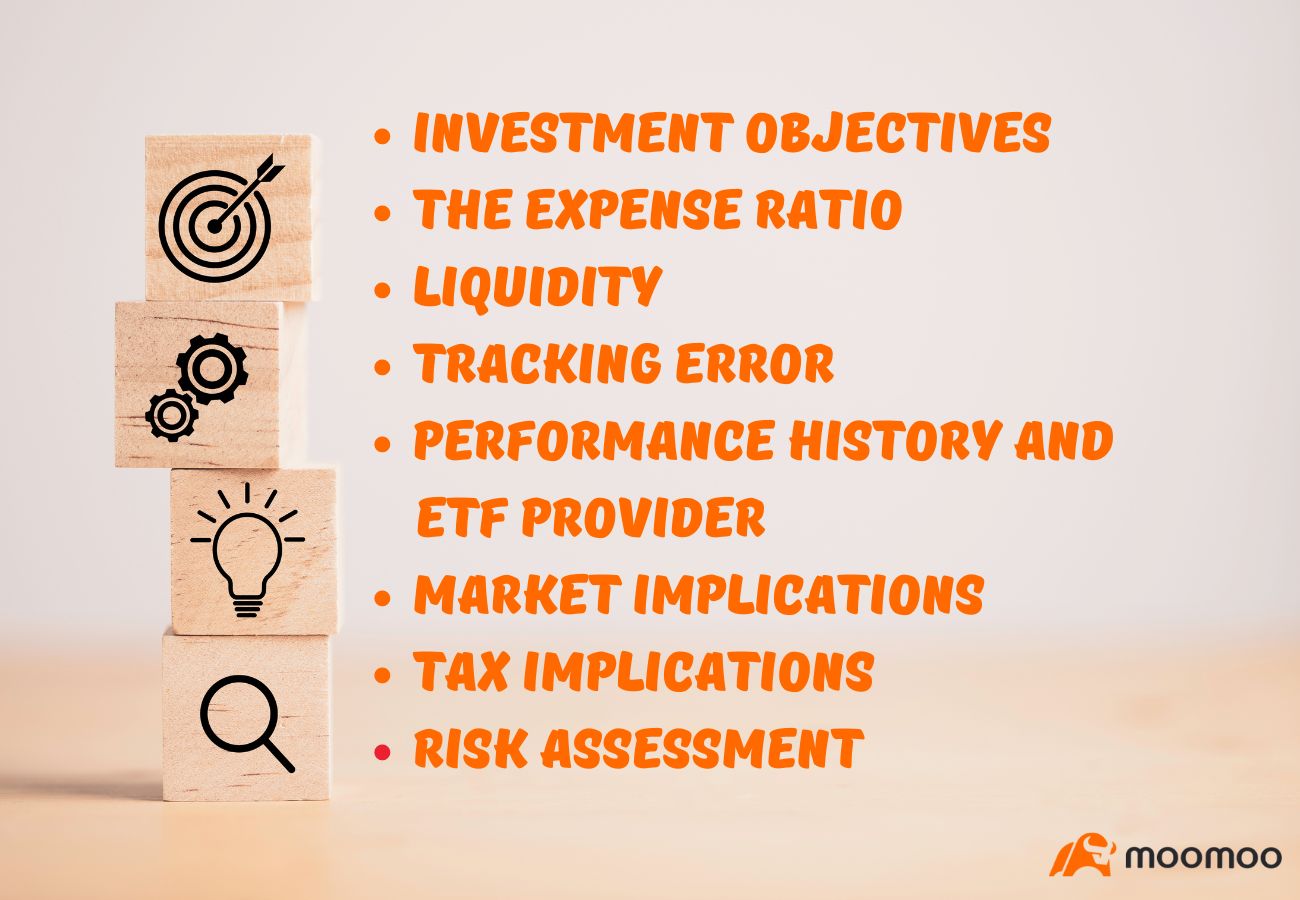
8 Factors to Consider When Choosing the Best ETF
Investment Objectives
The primary consideration when choosing the best ETF is the investor’s investment objectives, which may include capital appreciation, income generation, or portfolio diversification, and should align with their personal risk appetite. Capital appreciation is a common investment objective for ETF investors.
ETFs often track an index, which is a basket of securities used to measure the performance of a specific market. For Malaysian investors, if the primary goal is capital growth, ETFs that track indices in high-growth sectors such as technology or emerging markets should be considered. For those seeking income, dividend-focused ETFs offer a suitable alternative.
The Expense Ratio
One of the great advantages of ETFs is their generally low cost compared to other investments, such as actively managed funds. Cost efficiency is a key advantage of ETFs with low expense ratios. Nevertheless, significant differences in costs can exist between various ETFs.
An ETFs’ expense ratio can significantly impact returns; therefore, lower costs typically result in higher returns over both the short and long term, making ETFs with lower expense ratios a popular choice. The expense ratio reflects the underlying costs associated with managing the ETF.
Liquidity
Liquidity in ETFs, indicated by ample daily trading and narrow bid-ask spreads, is crucial for reducing costs and ensuring competitive pricing. High trading volume is a sign of good liquidity in ETFs. Liquidity is especially important for investors who wish to buy or sell ETFs quickly and at competitive prices.
Market-makers help maintain this liquidity by narrowing these spreads. ETFs with high trading volumes closely track their benchmarks, offering quick arbitrage opportunities for large investors. Strong liquidity is typically based on the high tradability of underlying securities, the substantial size of the fund, and the presence of numerous market-makers. However, liquidity can decline during periods of market turbulence.
Tracking Error
The performance of index-tracking ETFs is measured by their tracking error, which is the difference between the ETF’s performance and that of its benchmark index. A low tracking error indicates close alignment with the benchmark index. An index is a basket of securities used to track the performance of a specific market, and ETFs are designed to track the performance of an index.
A lower tracking error signifies a closer alignment with the index. Tracking error, which stems from expenses, holdings, and strategies, affects investor returns, influences decisions, and impacts cost-efficiency. Excess returns, or tracking deviation, demonstrate the ETF’s performance relative to the index, with a higher deviation indicating potentially greater excess returns. While consistent excess returns can lead to minimal tracking errors, fluctuations in the market can cause them to increase.
Performance History and ETF Provider
What is an Exchange Traded Fund (ETF)? An ETF is an investment fund traded on stock exchanges, much like stocks. It operates by tracking an index, commodity, bonds, or a basket of assets like an index fund. ETFs offer advantages such as lower costs, tax efficiency, and stock-like features.
While past performance of ETFs does not ensure future results, it is an indicator that offers valuable insights into market resilience. Market resilience is an important factor to consider when evaluating past performance. Consider including top-performing ETFs and carefully weighing under-performing ones in your portfolio. With many ETF providers available, choose those with significant size, relevant specialization, and a strong commitment to performance, as well as the technological capability to minimize costs and manage risk effectively.
Market Implications
When selecting ETFs, assess their market and industry breadth for risk diversification. Economic conditions play a crucial role in the performance of ETFs. ETFs often track an index, which is a basket of securities used to measure the performance of a specific market. Factor in the ETF’s regional focus, considering economic conditions, policy landscapes, and market maturity.
When investing in specialized ETFs in emerging trends or sectors such as technology, healthcare, and renewable energy, consider the alignment with your investment objectives and risk tolerance. Malaysia’s diverse ETF landscape, including sectors like palm oil, technology, and sustainability, caters to a myriad of diversification needs.
Tax Implications
Capital gains exemptions and single-tier dividend systems in Malaysia enhance the appeal of local ETF investments, which enjoy tax-free dividends- benefits not typically available with direct stock purchases. Tax efficiency is a key advantage of ETFs, making them an attractive option for investors. It is important to note that Malaysian ETF transactions are subject to stamp duty. However, foreign ETFs come with varied tax treatments; for example, US dividends may be subject to tax for Malaysian investors.
The tax implications of ETFs can be influenced by the underlying tax treatments of the assets they hold. International ETF investments necessitate careful consideration of withholding taxes and staying abreast of regulatory updates. Seeking expert advice can ensure optimal tax management and maximize after-tax returns.
Risk Assessment
Malaysian investors seeking the best ETFs must conduct a rigorous risk assessment. Understanding risk tolerance is crucial for selecting the right ETFs. ETFs offer diversification, but their resilience to market volatility hinges on the breadth of the fund’s holdings and its investment focus.
While market index ETFs tend to be stable, sector-specific ETFs may carry higher segmentation risks, and global ETFs can introduce additional currency volatility. Investors should also consider the underlying risks associated with the assets held by the ETF. Utilize beta and correlation coefficients to gauge sensitivity, tailor selections to personal risk tolerance, and consistently rebalance to optimize returns while mitigating risks.
Step-by-Step Guide to Choosing An Ideal ETF in Malaysia

Malaysian investors face a plethora of ETF options. An Exchange Traded Fund (ETF) is an investment fund traded on stock exchanges, much like stocks. Clearly defining investment goals is the first step in choosing the best ETF. It is an efficient way to diversify your portfolio and gain exposure to various asset classes.
Strategic planning is crucial for selecting those that align with individual investment goals and risk profiles. Below, we describe the steps you can take when choosing an ETF. For a detailed guide on exactly how to start investing in ETFs, refer to the attached article.
What is an ETF? An ETF operates by tracking an index, commodity, bonds, or a basket of assets like an index fund. It offers the advantages of stock-like features, including real-time pricing and trading flexibility.
Step 1: Define Your Investment Goals
Investors should assess their financial situation, including assets, liabilities, income, and expenses, before selecting an ETF to ensure that investment allocations will not jeopardize financial stability. Ensuring financial stability is crucial before making investment decisions. ETFs often track an index, which is a basket of securities used to measure the performance of a specific market. Clearly state your measurable, time-bound investment objectives, such as those for education, savings, or retirement, with aimed at capital appreciation, income, or wealth preservation.
Step 2: Assessing risk tolerance
Investors can judge their risk tolerance according to their own circumstances. Conservative investors often prefer the stability of bonds. Investors with a high risk tolerance often favor equities for their potential high yields, while conservative investors prefer the stability and capital preservation offered by bonds. When assessing risk tolerance, consider the underlying risks associated with the assets held by the ETF. Tailor your portfolio to align with your risk tolerance, ensuring a balanced approach to risk and reward.
Step 3: Determine the Asset Mix
Asset allocation is the balancing of stocks, bonds, cash, and other assets in a portfolio, with the percentage of each asset reflecting financial goals, investable time, and risk tolerance. Asset allocation is crucial for managing risk and achieving financial goals. When determining the asset mix, it is important to consider ETFs that track an index, which is a basket of securities used to measure the performance of a specific market. On a relative basis, equities are the most risky, ETFs are the next most risky, and cash assets are the least risky. This allocation aligns the portfolio with personal goals while managing risk effectively.
Step 4:Focus on key features of ETFs
Consider several key features when choosing an ETF. Higher assets under management typically result in greater liquidity. For instance, opt for ETFs with lower expense ratios to enhance returns. Also, look for those with higher Assets Under Management (AUM) for greater liquidity, which typically results in smaller bid-ask spreads, ensuring favorable pricing and investment efficiency. Additionally, focusing on key features of ETFs should consider the underlying features associated with the assets they hold.
Conclusion
Finding an ideal ETFs in Malaysia is an essential journey that requires a combination of personal investment objectives and rigorous market analysis. An ETF is a type of investment fund traded on stock exchanges. Investors should select the right ETF for their portfolio by carefully considering the following factors: investment objectives, cost structure, liquidity, and risk profile.
To build a portfolio aligned with personal investment objectives and risk tolerance, capture the benefits of ETFs, mitigate risks, take advantage of the flexibility and diversification they offer, and adopt a disciplined asset allocation approach. While doing so, remain alert to market dynamics and regulatory changes to optimize returns and secure your financial future.
In conclusion, an ETF is an investment fund traded on stock exchanges, much like stocks. Understanding what is an ETF, how it operates, and its advantages can help investors make informed decisions and effectively manage their portfolios.
This presentation is for informational and educational use only and is not a recommendation or endorsement of any particular investment or investment strategy. Investment information provided in this content is general in nature, strictly for illustrative purposes, and may not be appropriate for all investors. Read more