Mutual Funds in Singapore
What are Mutual Funds?
Mutual funds are financial vehicles that pool together money from multiple investors and use that money to purchase a diversified portfolio of stocks, bonds, or other securities. They are a popular investment option in Singapore, offering investors the opportunity to gain exposure to a wide range of assets with a relatively small amount of capital.
One of the main advantages of investing in mutual funds is that they offer professional management of your investments. Rather than having to research and choose individual stocks or bonds, investors can rely on the expertise of professional fund managers to make investment decisions on their behalf. This can be particularly useful for those who do not have the time or knowledge to actively manage their own investments.
Types of Mutual Funds
There are various types of mutual funds available, each with its own specific investment focus and risk profile. Some common types of mutual funds include:
Equity Funds: Equity funds invest in stocks, with the goal of generating capital appreciation over the long term. They can be further sub-categorized based on the type of stocks they invest in, such as large cap, mid cap, or small cap, or based on the sectors or industries they focus on, such as technology or healthcare.
Bond Funds: Bond funds invest in fixed income securities, such as government bonds, corporate bonds, or municipal bonds. They can be used to generate income or to diversify a portfolio by adding a more stable asset class.
Balanced Funds: Balanced funds invest in a mix of stocks and bonds, with the goal of providing both growth and income. They can be a good option for investors looking for a moderate level of risk.
Money Market Funds: Money market funds invest in short-term, highly liquid debt securities, such as certificates of deposit and commercial paper. They are generally considered to be a low-risk investment option, with the goal of preserving capital and generating a small amount of income.
Specialized Funds: Specialized funds invest in specific sectors or industries, such as technology or healthcare, or in specific regions or countries. They can be more risky than more diversified funds, as they are more exposed to the performance of a specific sector or region.
Pros and Cons of Investing in Mutual Funds
Mutual funds can be a convenient and effective investment option for many investors, offering the opportunity to gain exposure to a diversified portfolio of stocks, bonds, or other securities with a relatively small amount of capital. However, like any investment, mutual funds also have their own set of pros and cons that investors should consider before making a decision.
Pros of investing in mutual funds:
Professional management: Mutual funds are managed by professional fund managers, who research and select the securities in the fund's portfolio. This can be particularly useful for investors who do not have the time or expertise to manage their own investments.
Diversification: Mutual funds offer investors the opportunity to diversify their portfolios by investing in a mix of stocks, bonds, or other securities. This can help to reduce risk and potentially enhance returns over the long term.
Convenience: Mutual funds are relatively easy to buy and sell, and they can be purchased through most brokerage firms or financial advisors.
Low minimum investment: Many mutual funds have low minimum investment requirements, making them accessible to investors with limited capital.
Cons of investing in mutual funds:
Fees: Most mutual funds charge annual management fees to cover the costs of managing the fund, as well as sales charges when you buy or sell shares in the fund. These fees can significantly impact your returns over time.
Risk: Mutual funds carry varying levels of risk depending on the types of securities they invest in. Some mutual funds may be more volatile than others, and there is always the risk that you could lose some or all of your investment.
Lack of control: As an investor in a mutual fund, you do not have direct control over the specific securities that are included in the fund's portfolio.
Potential for underperformance: While mutual funds are managed by professional fund managers, there is always the risk that the fund may underperform compared to other investment options.
Examples of Mutual Funds in Singapore
There are many mutual funds available in Singapore, offering a wide range of investment options to suit different investment objectives and risk tolerances. Some examples of mutual funds in Singapore include:
Aviva MM Capital Growth(0P00008T71.SI): This is an equity fund that has a larger portion of its portfolio allocated to equities, with significant positions in technology, finance, and consumer cyclical stocks.
LionGlobal Short Duration Bond Fund Class A (SGD) (Dist) (0P00006FYV.SI): This fund focuses on investing in bonds, with holdings diversified over both Singapore and international bonds, as well as high quality interest rate securities, business trusts, and REITs.
Nikko AM Singapore STI ETF(G3B.SI): This exchange-traded fund (ETF) tracks the performance of the Straits Times Index (STI), which consists of the 30 largest and most liquid companies listed on the Singapore Exchange.
Investing in Mutual Funds via moomoo
You can start investing in mutual funds through moomoo, which supports a wide variety of mutual funds on their platform. To begin, click on the 'Funds' tab at the bottom of the screen. After which, you will be able to select from a few categories of funds available, such as 'Equity Funds', 'Bond Funds', and 'Balanced Funds'. After selecting your desired category, you will be shown a list of mutual funds that belong to that category. You will then be able to look through the list and click on any mutual fund that you are interested in to find out more about that mutual fund.

Images provided are not current and any securities are shown for illustrative purposes only.
After clicking on a particular mutual fund, you will be able to see a summarised chart of its past performance. Upon scrolling down, you will be able to see the fund's historical returns and specific portfolio allocations as seen in the screenshots below. You can also navigate to the 'Analysis' tab to get an overview of the asset, portfolio, and region breakdown of the fund's assets. The information obtained can then help you to make a more informed investment decision. You can sign up and download the moomoo app to get the comprehensive information about the mutual fund.
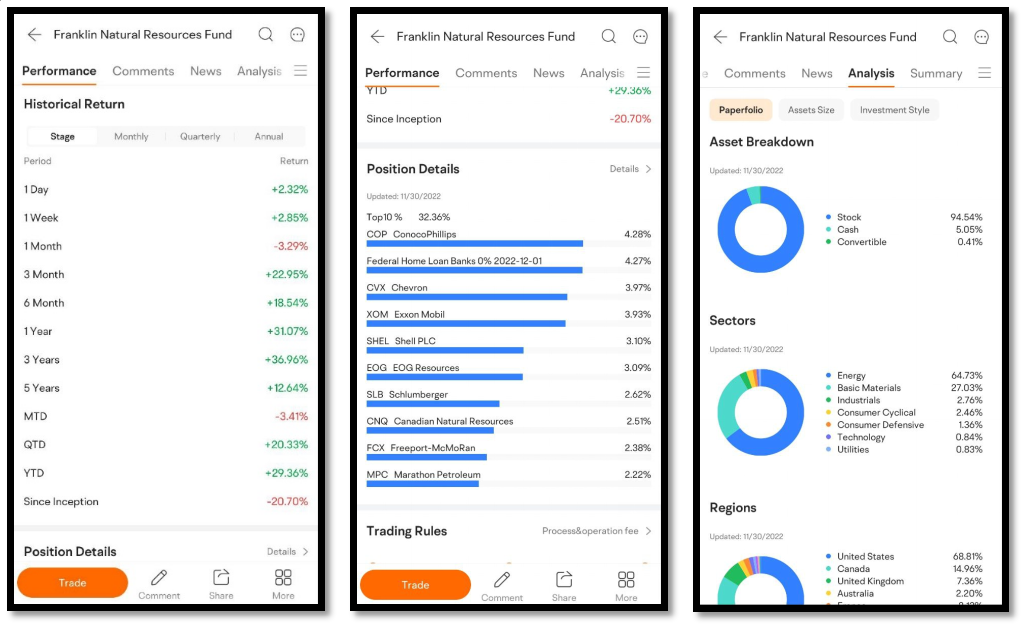
Images provided are not current and any securities are shown for illustrative purposes only.
This presentation is for informational and educational use only and is not a recommendation or endorsement of any particular investment or investment strategy. Investment information provided in this content is general in nature, strictly for illustrative purposes, and may not be appropriate for all investors. Read more
Recommend

How to Invest MyDCD IPO Malaysia 2026
SpaceX IPO 2026: How to Invest in SpaceX in Malaysia
Top 7 Dividend ETFs for Malaysian Investors 2026

How to Invest Stratus Global IPO Malaysia 2026
How to Invest in SkyeChip IPO in Malaysia 2026
Top 10 Features of Stock Brokers in Malaysia
How to Invest in Sunway Healthcare in Malaysia 2026
Cara Melanggan IPO Empire Sushi (5351): Panduan Lengkap
Top 7 S&P 500 ETFs Malaysian Investors
Top 9 Semiconductor ETFs Malaysia 2026
Top 8 Gold ETFs in Malaysia for 2026
Moomoo vs Robinhood: Which Platform for Malaysian Investors
Top 8 Inverse ETFs Malaysia 2026
Moomoo Scams Alert: The Official Anti-Fraud Guide in Malaysia
Top 9 Index ETFs Malaysia 2026
Top 10 Technology ETFs in Malaysia for 2026
Safe Investing in Malaysia: Moomoo MY Statement
Is Moomoo Safe in Malaysia
Top 8 Artificial Intelligence Stocks for Malaysian Investors
Invest in 99 Speedmart Share in Malaysia: A Complete Guide
Top 6 Semiconductor Stocks for Malaysian Investors in 2024
Top Investment Strategies for Banking Sector in Bursa Malaysia
How to Buy Tesla Stock in Malaysia
Top 4 Copper ETFs Malaysia 2026
How to Buy IPO Stocks in Malaysia
Top 7 Sectors in the US Stock Market for Malaysian Investors
Top 10 US Penny Stocks for Malaysian Investors
Popular China Stocks for Malaysia Investors to Buy
Top 10 High Dividend Stocks Malaysia 2026
What Is A Recession?
How to Buy Money Market Funds in Malaysia
How to Buy Stock in Malaysia 2026
Top 10 US Healthcare Stocks for Malaysian Investors 2024
Top 5 Malaysia Dividend Stocks in 2026
How to Invest in Startups Before IPO in Malaysia
Top 7 Leveraged ETFs to Invest in Malaysia
Top 8 Currency ETFs Malaysia 2026
How to Invest in Anthropic IPO Malaysia 2026
Moomoo Malaysia vs M+ Global: Which Platform to Choose
What is a Bond and How to Buy U.S. Treasury Bond?
How to Invest in Foodie Media IPO in Malaysia?
Mutual Funds vs Money Market Funds: Which to Invest in Malaysia
Moomoo Malaysia Brokerage Fees and Pricing
What is Thematic Investing?
Malaysia Data Center: Beneficial Sectors and Stocks
Is Moomoo Legal in Malaysia
8 Benefits of Using Paper Trading Apps for Malaysian Traders
Margin Trading: Guide and Strategy for Malaysian Investors
Top Fixed Deposit Rates in Malaysia 2024
Trading App Moomoo: Download and Guide
Top 8 Benefits of Using Moomoo Malaysia as a Stock Broker
Top 10 US Technology Stocks for Malaysian Investors 2026
US-Listed Chinese Stocks Surge on Policy Boost: Who is Leading the Charge?
China-Linked Stocks Surge Amid Strong Policy Stimulus: Wall Street Says, “This Time Is Different!”
How Much Room is There for Valuation Recovery in China-Linked Stocks?
Top 8 Consumer Products and Services Companies in Malaysia 2024
Top 8 Tips for Using Paper Trading for Bursa Malaysia Investors
Top 10 Real Estate Investment Trusts Companies in Malaysia 2024
Top 10 Construction Companies and Stocks in Malaysia 2024
Top 6 Plantation Companies and Stocks in Bursa Malaysia 2025
Special Purpose Acquisition Company and How to Invest
Top 8 Technology Stocks in Malaysia 2024
Top 10 ETFs in Malaysia 2026
How to Choose Your Ideal ETF in Malaysia?
Top 5 Energy Companies and Stocks in Malaysia 2024
What Is Social Trading
How to Use Paper Trading to Test and Help Refine Your Trading Strategy?
Tax Trading Strategies in a Bear Market
6 ETF Concerns That Investors Shouldn’t Overlook
HK Financial Stocks Make a Strong Comeback Amid PBOC Policies & Fed Rate Cuts: Are High-Dividend Inv
How Stock Charting Tools Can Help You
Choosing a Stock Simulator to Practice Stock Trading
Psychological Condition of the Market
What Is SWOT Analysis?
What Is Copy Trading
What Is Working Capital?
What Is the Spot Rate?
Index Funds in Singapore
How to Practice Trading Without Risking Money?
Mutual Funds in Singapore
What Is Mirror Trading?
What Is Revenue?
What Is Trend Analysis?
What Is a Volatility Smile?
What Is Beta in the Stock Market?
What Does It Mean to Have a Certificate of Deposit (CD)?
What Is a Day Order?
Price-to-Earnings (P/E) Ratio
What Is the National Best Bid and Offer (NBBO) in US Equities?
What Are Market Orders?
Using Volume Oscillators to Confirm Price Movements
Forex Trading in Singapore
What Is a Bellwether?
On-Balance Volume (OBV): What Is It?
What Is Historical Volatility (HV)?
Company Earnings and Earnings per Share What Investors Need to Know
Spot Market: What Is It?
Scalping Stock Trading: How Does It Work?
What Is Market Depth?
What Is a Trailing Stop and How to Use It?
Swing Trading vs. Day Trading: What's the Difference?
Will ESG Investing Be The Future Of Investing?
Hedge Funds in Singapore
Build a Low-Risk Portfolio with Blue-Chip Shares in Australia
What Is the Money Flow Index (MFI)?
How to Invest MyDCD IPO Malaysia 2026
SpaceX IPO 2026: How to Invest in SpaceX in Malaysia
Top 7 Dividend ETFs for Malaysian Investors 2026
How to Invest Stratus Global IPO Malaysia 2026
How to Invest in SkyeChip IPO in Malaysia 2026
Top 10 Features of Stock Brokers in Malaysia
How to Invest in Sunway Healthcare in Malaysia 2026
Cara Melanggan IPO Empire Sushi (5351): Panduan Lengkap
Top 7 S&P 500 ETFs Malaysian Investors
Top 9 Semiconductor ETFs Malaysia 2026
Top 8 Gold ETFs in Malaysia for 2026
Moomoo vs Robinhood: Which Platform for Malaysian Investors
Top 8 Inverse ETFs Malaysia 2026
Moomoo Scams Alert: The Official Anti-Fraud Guide in Malaysia
Top 9 Index ETFs Malaysia 2026
Top 10 Technology ETFs in Malaysia for 2026
Safe Investing in Malaysia: Moomoo MY Statement
Is Moomoo Safe in Malaysia
Top 8 Artificial Intelligence Stocks for Malaysian Investors
Invest in 99 Speedmart Share in Malaysia: A Complete Guide
Top 6 Semiconductor Stocks for Malaysian Investors in 2024
Top Investment Strategies for Banking Sector in Bursa Malaysia
How to Buy Tesla Stock in Malaysia
Top 4 Copper ETFs Malaysia 2026
How to Buy IPO Stocks in Malaysia
Top 7 Sectors in the US Stock Market for Malaysian Investors
Top 10 US Penny Stocks for Malaysian Investors
Popular China Stocks for Malaysia Investors to Buy
Top 10 High Dividend Stocks Malaysia 2026
What Is A Recession?
How to Buy Money Market Funds in Malaysia
How to Buy Stock in Malaysia 2026
Top 10 US Healthcare Stocks for Malaysian Investors 2024
Top 5 Malaysia Dividend Stocks in 2026
How to Invest in Startups Before IPO in Malaysia
Top 7 Leveraged ETFs to Invest in Malaysia
Top 8 Currency ETFs Malaysia 2026
How to Invest in Anthropic IPO Malaysia 2026
Moomoo Malaysia vs M+ Global: Which Platform to Choose
What is a Bond and How to Buy U.S. Treasury Bond?
How to Invest in Foodie Media IPO in Malaysia?
Mutual Funds vs Money Market Funds: Which to Invest in Malaysia
Moomoo Malaysia Brokerage Fees and Pricing
What is Thematic Investing?
Malaysia Data Center: Beneficial Sectors and Stocks
Is Moomoo Legal in Malaysia
8 Benefits of Using Paper Trading Apps for Malaysian Traders
Margin Trading: Guide and Strategy for Malaysian Investors
Top Fixed Deposit Rates in Malaysia 2024
Trading App Moomoo: Download and Guide
Top 8 Benefits of Using Moomoo Malaysia as a Stock Broker
Top 10 US Technology Stocks for Malaysian Investors 2026
US-Listed Chinese Stocks Surge on Policy Boost: Who is Leading the Charge?
China-Linked Stocks Surge Amid Strong Policy Stimulus: Wall Street Says, “This Time Is Different!”
How Much Room is There for Valuation Recovery in China-Linked Stocks?
Top 8 Consumer Products and Services Companies in Malaysia 2024
Top 8 Tips for Using Paper Trading for Bursa Malaysia Investors
Top 10 Real Estate Investment Trusts Companies in Malaysia 2024
Top 10 Construction Companies and Stocks in Malaysia 2024
Top 6 Plantation Companies and Stocks in Bursa Malaysia 2025
Special Purpose Acquisition Company and How to Invest
Top 8 Technology Stocks in Malaysia 2024
Top 10 ETFs in Malaysia 2026
How to Choose Your Ideal ETF in Malaysia?
Top 5 Energy Companies and Stocks in Malaysia 2024
What Is Social Trading
How to Use Paper Trading to Test and Help Refine Your Trading Strategy?
Tax Trading Strategies in a Bear Market
6 ETF Concerns That Investors Shouldn’t Overlook
HK Financial Stocks Make a Strong Comeback Amid PBOC Policies & Fed Rate Cuts: Are High-Dividend Inv
How Stock Charting Tools Can Help You
Choosing a Stock Simulator to Practice Stock Trading
Psychological Condition of the Market
What Is SWOT Analysis?
What Is Copy Trading
What Is Working Capital?
What Is the Spot Rate?
Index Funds in Singapore
How to Practice Trading Without Risking Money?
Mutual Funds in Singapore
What Is Mirror Trading?
What Is Revenue?
What Is Trend Analysis?
What Is a Volatility Smile?
What Is Beta in the Stock Market?
What Does It Mean to Have a Certificate of Deposit (CD)?
What Is a Day Order?
Price-to-Earnings (P/E) Ratio
What Is the National Best Bid and Offer (NBBO) in US Equities?
What Are Market Orders?
Using Volume Oscillators to Confirm Price Movements
Forex Trading in Singapore
What Is a Bellwether?
On-Balance Volume (OBV): What Is It?
What Is Historical Volatility (HV)?
Company Earnings and Earnings per Share What Investors Need to Know
Spot Market: What Is It?
Scalping Stock Trading: How Does It Work?
What Is Market Depth?
What Is a Trailing Stop and How to Use It?
Swing Trading vs. Day Trading: What's the Difference?
Will ESG Investing Be The Future Of Investing?
Hedge Funds in Singapore
Build a Low-Risk Portfolio with Blue-Chip Shares in Australia
What Is the Money Flow Index (MFI)?