Top Investment Strategies for Banking Sector in Bursa Malaysia

The banking sector of the Malaysian stock market is an important part of the country's economy, playing a key role as a money intermediary. As one of the key financial markets in Southeast Asia, Malaysia's banking sector not only serves the domestic economy, but also attracts many international investors. In terms of investment strategy, investors need to focus on a number of dimensions such as banks' capital adequacy, profitability, asset quality and adaptability to new technologies.
Malaysia's banking stocks are favored by investors for their solid growth and relatively high dividend payout ratios. With the changing global economic situation and domestic policy adjustments, the investment strategies of the banking sector have evolved to meet the new market environment and demands. Therefore, exploring the top investment strategies of the banking sector in Bursa Malaysia is of particular importance to investors.
Investment Strategies for Banking Sector in Bursa Malaysia
Bursa Malaysia's banking sector refers to the bank stocks listed on Bursa Malaysia, which represent a significant portion of Malaysia’s banking and financial services industry. These bank stocks include not only local banks such as Maybank, Public Bank Berhad and CIMB, but also branches of some foreign banks in Malaysia. The banking sector, as one of the pillars of the Malaysian economy, provides a wide range of financial services to individuals and corporations, including personal banking, commercial banking services, Islamic banking, and investment banking.
Overview of Banking Sector
The banking sector in Malaysia is a significant contributor to the country’s economy, with a large number of banks operating in the country. The sector is regulated by Bank Negara Malaysia, the central bank of Malaysia, which ensures the stability and soundness of the financial system. The banking sector in Malaysia offers a wide range of financial services, including personal and corporate banking, investment banking, and Islamic banking. This diverse array of services caters to the needs of individuals, businesses, and government entities, making it a cornerstone of the financial landscape in Malaysia.
Types of Banks in Malaysia
There are several types of banks in Malaysia, each serving different segments of the market. Commercial banks are the largest and most significant providers of funds in the banking system, with 27 commercial banks operating in Malaysia. These banks offer a broad range of services, including savings and checking accounts, loans, and credit facilities. Islamic banks, on the other hand, operate in accordance with Islamic principles and laws, offering financial services that are compliant with Shariah law. These banks provide products such as profit-sharing investment accounts and Islamic mortgages. Investment banks focus on providing financial advisory and transaction services to corporations and governments, including mergers and acquisitions, underwriting, and asset management. Other financial institutions, such as leasing and factoring companies, offer specialized financial services that cater to niche markets. This diverse banking ecosystem ensures that the financial needs of all sectors of the economy are met.
Why Invest in Bank Stocks in Bursa Malaysia?

There are several reasons to invest in banking stocks on Bursa Malaysia:
Profitability and Dividend Returns: Malaysian banking stocks, especially those large commercial banks with high and stable profits, usually pay out a portion of their profits in dividends, providing investors with an additional source of income.
Economic Recovery and Improvement in Asset Quality: With the recovery in economic activities and improvement in the health of the bank’s assets, the excess provisions previously set aside by the bank to meet potential losses may be recovered in the coming period, which will further improve the bank’s financial position.
Anti-inflationary Characteristics: Malaysian bank stocks often demonstrate the ability to preserve and enhance value amidst inflation due to their integral connection with the real economy. Banks have the capacity to adjust lending rates in response to inflation, thereby maintaining or even expanding the spread between deposits and loans, which can sustain or even improve profitability .
Market Growth Potential: Malaysian banking stocks are poised to benefit from the growth potential in the ASEAN region and international markets. This is exemplified by the expansion of Maybank’s business development in Dubai, highlighting the opportunities for growth beyond domestic boundaries .
Financial Reforms and Digitalization: The Malaysian banking sector is currently undergoing significant digital transformation, presenting new growth opportunities for investors. This transformation involves leveraging modern technologies such as big data, AI, and IoT to enhance precision in environmental monitoring and resource optimization .
Benefits of Investing Bank Stocks
For Malaysian investors, it is crucial to understand the potential advantages and risks before investing in Malaysian banking stocks. Below is a brief analysis of these factors that can help you better assess the viability and potential risks of investing in banking stocks.
High Dividend Yield: Malaysian banking stocks are known for their high dividend yields. A high dividend yield means that investors can earn more cash return per unit of investment. This is particularly attractive to investors looking for regular cash flow. For example, some Malaysian banks can offer dividend yields in excess of 5%, which provides very substantial dividend returns for long-term investors.
Dividend Reinvestment Plan: Dividend reinvestment schemes enable shareholders to reinvest dividends into more shares, growing their holdings and leveraging compound interest. In Malaysia, bank stocks typically offer such schemes, allowing investors to buy shares below market value, which can notably enhance their investment returns. These plans are advantageous as they allow for capital appreciation and dividend reinvestment without selling shares or incurring transaction costs.
Business Prospects: The business outlook for Malaysian bank stocks is positive, thanks to their diversified business structure. The bank's business includes not only the traditional deposit and lending business, but also covers a wide range of areas such as investment banking, insurance and asset management. As the economy develops and the demand for financial services increases, these business areas are expected to bring new growth to the bank, thus providing more value to investors.
Share Price Growth Potential: Malaysian banking stocks show potential for share price growth due to their solid profitability and favorable market outlook. With the expansion of the bank's business and the growth of the economy, the bank's profitability is expected to increase. In addition, the low valuation of bank stocks provides an attractive entry point for investors, and there is room for share prices to rise as the market reassesses bank stocks.
Risks of Investing Bank Stocks
Macroeconomic Fluctuations: The performance of Malaysian bank stocks is closely tied to the health of the macroeconomy. Economic downturns or instability can adversely affect bank profitability and share prices, as they may lead to reduced lending and increased defaults, impacting the banks' bottom line.
Interest Rate Movements: For Malaysian bank stocks, changes in interest rates are pivotal. Fluctuations can influence the net interest margin, a key determinant of bank profitability. Rising rates can boost income from loans, but also increase the cost of funds, while declining rates can compress margins, affecting earnings.
Credit Risk: In the context of Malaysian bank stocks, the non-performing loan (NPL) ratio is a critical measure of credit risk. An elevated NPL ratio suggests increased defaults, which can strain banks' financial performance by necessitating higher provisions and potentially leading to asset quality deterioration.
Market Competition: Malaysian bank stocks face escalating competition, particularly from fintech firms. The growth of fintech disrupts traditional banking models, offering customers more innovative and often more convenient services. This competition can challenge Malaysian banks to innovate and improve their services to retain and attract customers.
Top Investment Strategies for Banking Sector in Bursa Malaysia

In order to maximize investment returns and effectively control risks, investors should adopt some wise investment strategies. Below are some important investment strategies for investing in Malaysian banking stocks:
Value Investing Strategy
Investors should analyze in-depth the business income components of Malaysian banking stocks, including net interest income and fee and commission income, to look for investment opportunities that are undervalued by the market. This strategy is based on a long-term perspective with the expectation that the market will eventually recognize the true value of these stocks.
High Dividend Strategy
For investors seeking stable income, focusing on the dividend yield of Malaysian banking stocks is key. By choosing to invest in bank stocks with high dividend yields and sound fundamentals, you will not only receive a steady cash flow, but also capital appreciation as the share price rises, allowing you to realize double profits.
Dollar Cost Averaging(DCA)
By investing a fixed amount in Malaysian banking stocks on a regular basis, this strategy helps to reduce the average cost of investing regardless of share price fluctuations. Buy more shares when the share price is low and less when the share price is high, thus reducing the risk associated with market volatility.
Fundamental Analysis
Strong profitability and sound financial position are key factors when investing in Malaysian banking stocks. Investors need to focus on financial statements, including revenue, profit, balance sheet and cash flow, as well as consider valuation metrics such as dividend policy, P/E ratio, P/B ratio, etc. in order to make an informed investment decision.
Technical Analysis
Investors can complement fundamental analysis with technical analysis to aid in decision-making by examining historical data such as stock price trends and trading volumes to forecast potential future stock price movements. Tools like moving averages, the Relative Strength Index (RSI), and the Moving Average Convergence Divergence(MACD) can be utilized to identify market trends and potential entry and exit points for trades.
Diversification
To minimize risk, investors should include Malaysian banking stocks in their portfolios and avoid over-concentration in a single stock. This diversification strategy reduces the impact of volatility in specific stocks or sectors and enhances the stability and risk tolerance of the overall portfolio.
You can read Malaysia Stock Category to learn more about Bursa Malaysia.
List of Top Stock in Bursa Malaysia Banking Sector
Below is a list of Malaysian bank stocks with the highest market value as of November 7, 2024, based on the latest data, for investors' reference only.
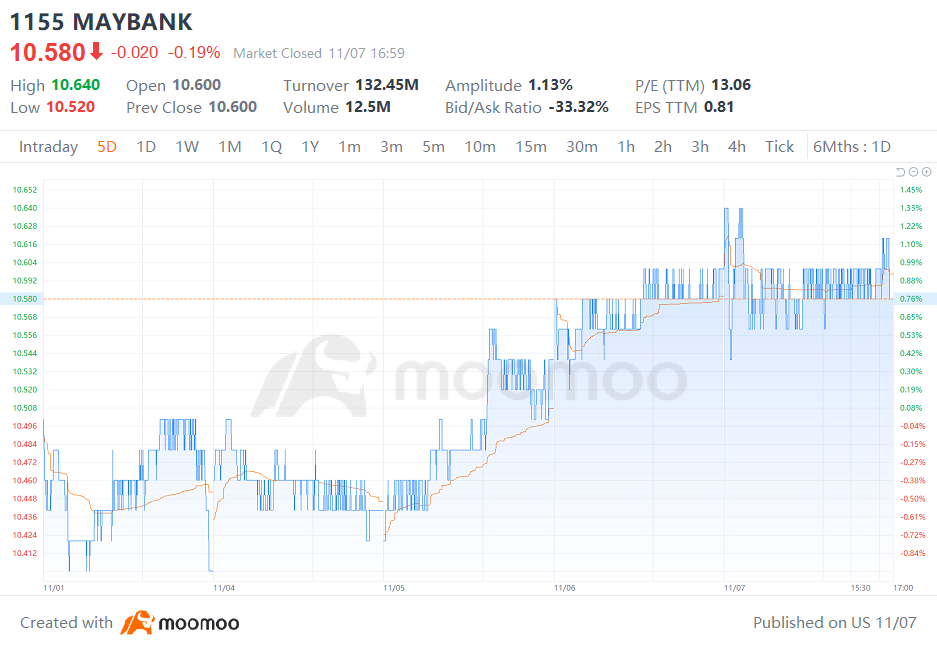
Malayan Banking Berhad (MAYBANK)
Maybank is the largest bank in Malaysia with presence in 18 countries and territories with more than 2,600 branches around the world. Maybank is known for its extensive network and diversified financial services, offering a full range of services including retail banking, corporate banking, investment banking and Islamic banking for individuals and corporations.
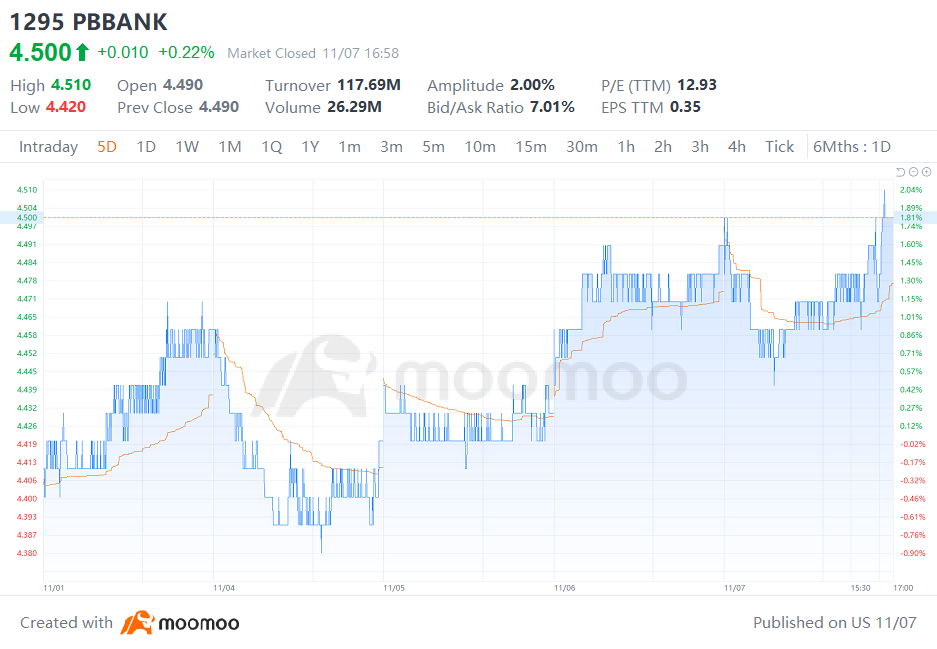
Public Bank
Public Bank Berhad is the third largest bank in Malaysia and is mainly active in the Asia Pacific region. Public Bank is known for its financial stability and investment in public construction projects. Public Bank offers a wide range of benefits and privileges to students and is the leading private bank in Malaysia.
CIMB Group
CIMB Group, formed by the merger of nine banks, is the largest Islamic bank in Malaysia and the second largest in the country. CIMB Group offers a comprehensive range of financial services including personal banking, commercial banking, investment banking and Islamic banking and is recognized for its innovation and customer service.
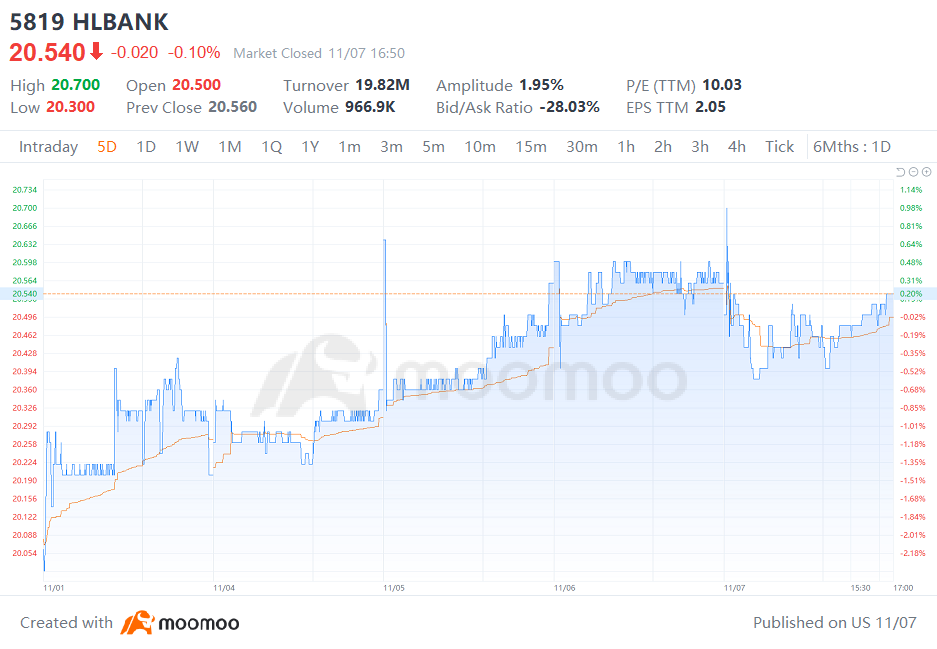
Hong Leong Bank
Hong Leong Bank As one of the top five commercial banks in Malaysia, Hong Leong Bank offers a full range of services including personal financial services, corporate banking, trade finance, and wealth management. With more than 300 branches worldwide, the bank has carved a niche in the market with its precise customer targeting and continuous expansion strategy.
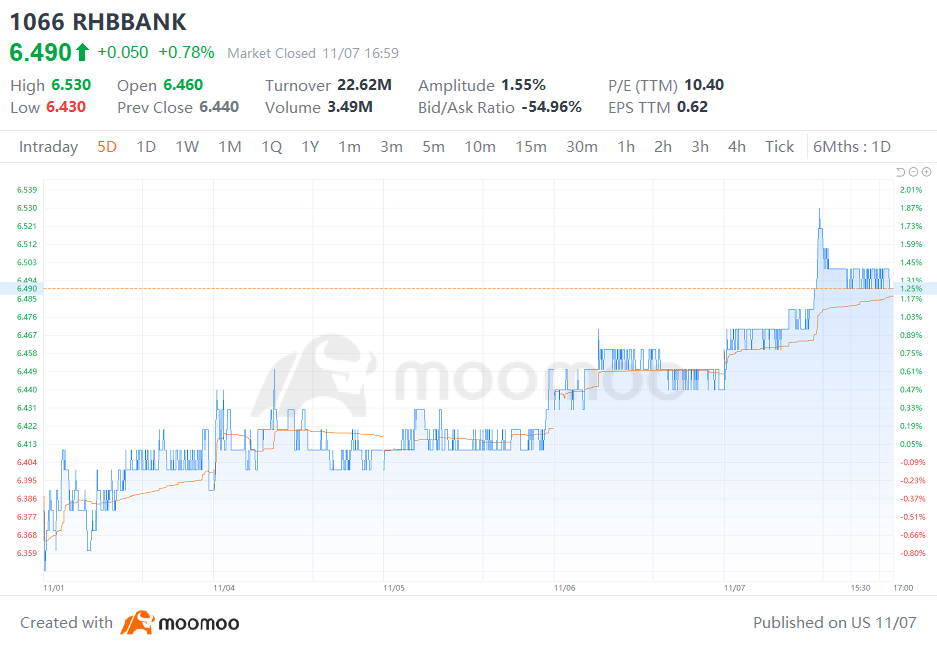
RHB Bank
RHB Bank, formed by the merger of DCB Bank and Kwong Yik Bank, is one of the young and dynamic banks in Malaysia. RHB Bank is favored by its customers for its modern services and products, offering a wide range of financial services including retail banking, commercial banking and Islamic banking.
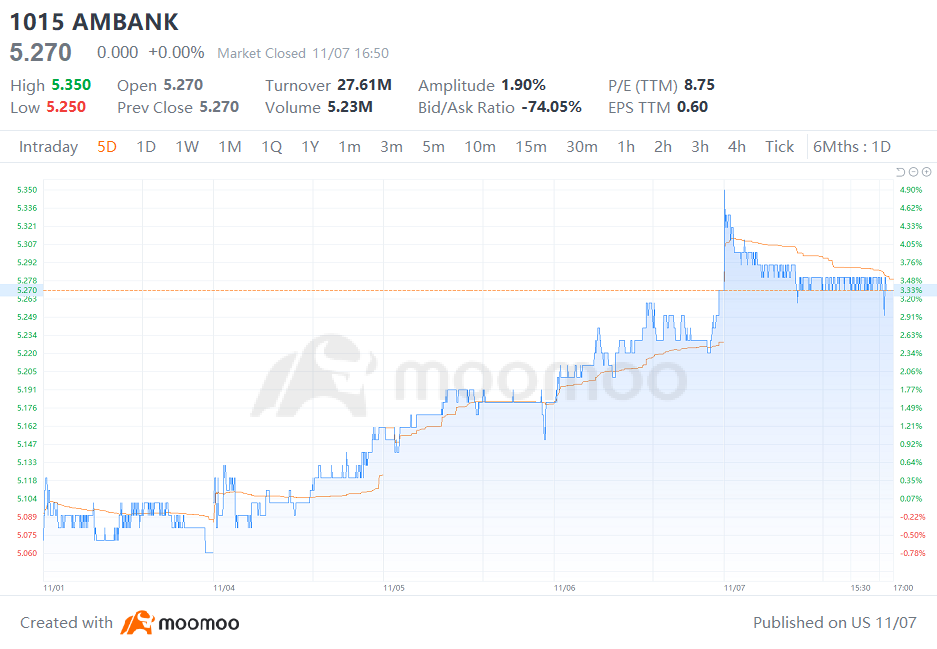
AmBank
AmBank is a Malaysian financial services group with over 40 years of service history. It offers a comprehensive range of banking and financial services, including retail banking, commercial banking, investment banking as well as Islamic banking, insurance services and more.
Outlook for Banking Sector in Malaysia
The outlook for the banking sector in Malaysia is positive, with the sector expected to continue growing in the coming years. The government’s plans to transform Kuala Lumpur into a major financial centre through the construction of the Tun Razak Exchange (TRX) is expected to boost the sector's growth. This ambitious project aims to attract international financial institutions and investors, enhancing Malaysia’s position in the global financial market. Additionally, the increasing demand for Islamic banking services is expected to drive the growth of Islamic banks in Malaysia. As more consumers and businesses seek Shariah-compliant financial products, Islamic banks are poised to expand their market share. However, the sector also faces challenges such as increasing competition and regulatory requirements, which may impact the profitability of banks in Malaysia. To navigate these challenges, banks will need to innovate and adapt, leveraging technology and improving operational efficiency to maintain their competitive edge.
Conclusion
When considering an investment in Malaysian banking stocks, investors should recognize the centrality of this sector in the country's economy and its attractiveness to international investors. Although banking stocks are favored for their solid profitability and high dividend returns, risk factors such as macroeconomic volatility and interest rate movements should not be ignored. Therefore, investors should adopt diversification strategies to maximize risk control and returns. By doing so, investors can better capitalize on the investment opportunities in Malaysian banking stocks while hedging against potential market risks.
This presentation is for informational and educational use only and is not a recommendation or endorsement of any particular investment or investment strategy. Investment information provided in this content is general in nature, strictly for illustrative purposes, and may not be appropriate for all investors. Read more