Top 8 Tips for Using Paper Trading for Bursa Malaysia Investors
In the Bursa Malaysia financial markets, paper trading is a risk-free practice that allows investors to test their trading strategies and skills in a real market environment. Paper trading allows both novice and experienced traders to hone their trading skills without incurring financial losses. The virtual trading platform not only replicates real-time market fluctuations, but also covers a wide range of financial instruments, including stocks, derivatives and indices, enabling participants to fully understand and experience the complexity of financial markets. Paper trading is undoubtedly a valuable testing ground for those who are eager to enter the stock market but are concerned that initial inexperience may result in the loss of funds. It not only helps them to familiarize themselves with the operating procedures of the trading platform, but also allows them to learn how to interpret market data and formulate and execute trading strategies without the flow of actual funds. More importantly, through paper trading, investors can develop the ability to calmly analyze the market and learn to make quick and wise decisions in the ever-changing market environment, thus laying a solid foundation for real trading in the future.
Why Do You Need Paper Trading to Trade Malaysia Stocks?
Paper trading serves as an indispensable tool for newcomers to the Malaysian stock market. Engaging in paper trading is not just advisable, but a critical step before transitioning to actual stock trading in Malaysia. The preparatory phase is paramount for several reasons:
Risk Reduction: Paper trading allows investors to familiarize themselves with the market without risking their money. It reduces the risk of losing money due to inexperience or poor decision making.
Market Understanding: Through paper trading, investors can gain a better understanding of how the Malaysian stock market works, including trading hours, market trends, ticker symbols and trading rules.
Strategy Testing: Investors can test different trading strategies and analytical methods in a simulated environment and observe how they perform under real market conditions without fear of losing money.
Psychological Training: Trading involves not only technical analysis and market understanding, but also emotional control. Paper trading helps investors practice emotional management without financial stress.
Familiarization with Platform: Trading platforms offer virtual accounts to allow investors to familiarize themselves with trading software and tools such as charts, indicators, stop loss and take profit settings.
Improving Skills: Paper trading provides a hands-on platform where investors can improve their trading skills, including order execution, market analysis and decision making.
Transitioning from paper trading to real trading involves the gradual introduction of real capital while maintaining learned strategies and continuously analyzing trades to adjust approaches in real market conditions.
Tips for Using Paper Trading in Moomoo
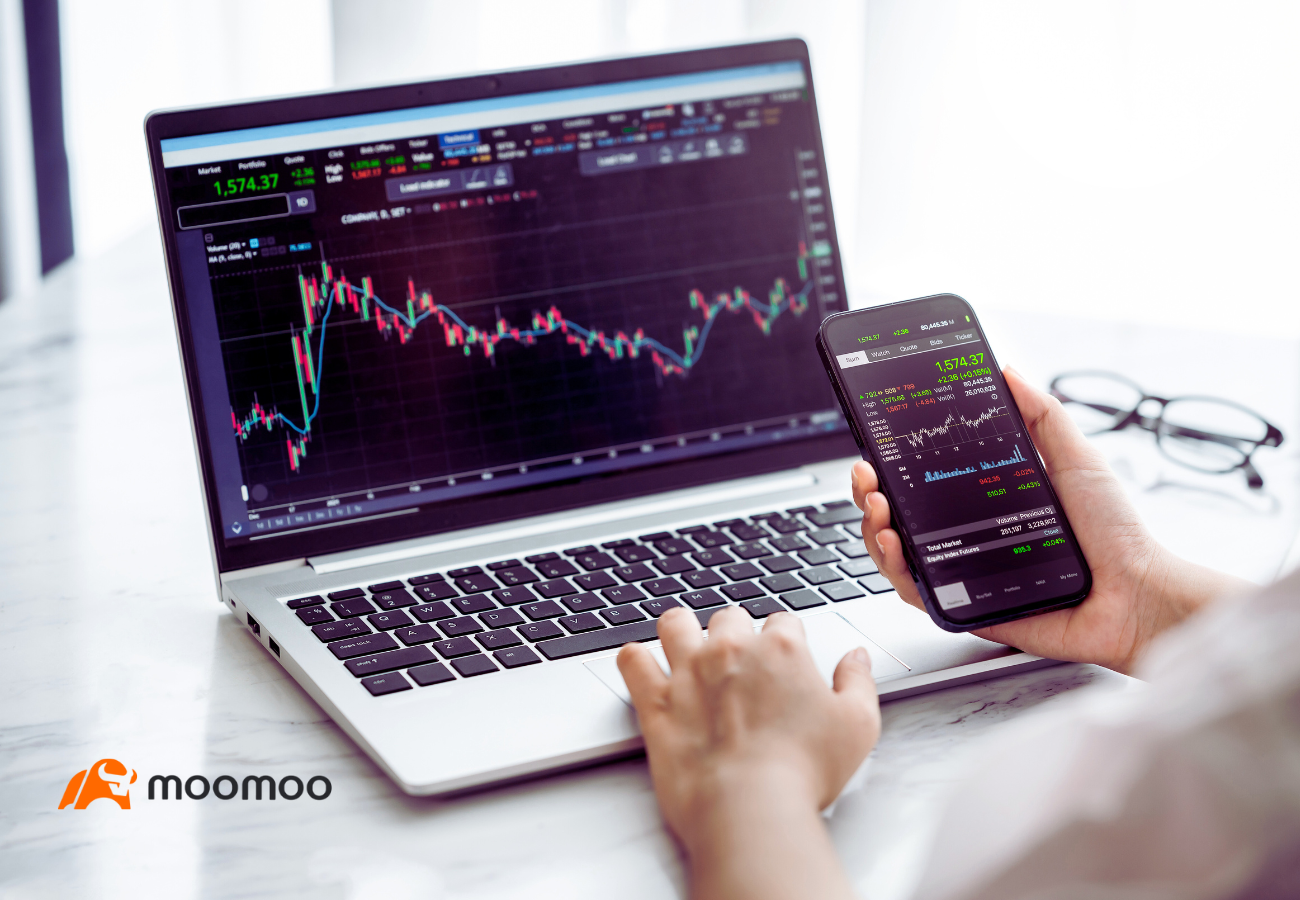
In the financial markets, paper trading is a risk-free practice that allows investors to test their trading strategies and skills in a real market environment. Below are the top 8 tips that you can employ when using moomoo's paper trading.
1. Familiarity with Trading Rules and Instructions
To effectively engage in paper trading on moomoo, investors must first familiarize themselves with Bursa Malaysia’s trading rules, including trading hours, order types, and limits, which are essential for avoiding errors. This understanding is a strategic step in trading education, allowing investors to synchronize their activities with market liquidity and optimize order timing. Grasping different order types, such as market for immediate execution and limit for specific pricing, is crucial for intentional and purposeful market navigation.
Understanding trading rules is particularly important for day trading, including managing accounts under the pattern day trader rule and selecting the right time frames for trading success.
This preparatory phase is not just about following procedures but also about investing in one’s trading knowledge, ensuring that investors can make informed decisions and effectively engage with the market’s dynamics.
2. Test New Strategies with Accounts

Paper trading offers investors a risk-free platform to paper trade and refine new strategies using real-time market data, essential for validating the effectiveness of both technical and fundamental analysis. This practice allows for the application of technical indicators and chart patterns, as well as the assessment of company financials and economic trends, without financial risk. Investors can evaluate their strategies across various market conditions, gaining insights into their performance and identifying areas for improvement. The process builds confidence and strategic readiness for live trading, enabling a more informed approach to real market scenarios.
3. Experience Trading Tools
Paper trading platform equips investors with a suite of trading tools that enhance market comprehension and decision-making. Real-time charts visually map out trends, facilitating pattern recognition and strategic trading based on price movements. The market depth tool, or order book, reveals pending orders and market liquidity, helping investors assess support and resistance levels. Option pricing tools provide theoretical valuations of options, crucial for options traders who need to consider stock prices, volatility, and expiration dates. Furthermore, risk management tools on these platforms allow for setting and monitoring exposure to market risks, promoting a disciplined trading approach. Utilizing these tools, investors can practice diverse trading scenarios, refining analytical and strategic skills. The practical engagement with market dynamics deepens financial market understanding and bolsters the quality and accuracy of trading choices, laying a solid groundwork for successful trading.
4. Learning Market Dynamics and Varieties of Securities
Paper trading is a tool that allows investors to deeply understand the patterns and mechanisms of various securities through market trend analysis. It helps investors develop and refine effective trading strategies by observing factors like economic indicators and corporate news that influence price movements. Understanding the unique trading dynamics of each security type is key to crafting tailored strategies. The platform lets investors test these strategies in simulated market conditions, from stable to volatile, without risk. This practice enhances their ability to make informed decisions and adapt strategies in real trading, building the necessary knowledge and confidence to navigate market complexities.
5. Risk Management and Stop Loss Setting

In paper trading, mastering risk control and setting stop-loss points is crucial, as it mimics the discipline needed in live trading and helps protect investments from severe losses. This involves evaluating the potential trade impact on your portfolio, determining acceptable loss levels, diversifying investments, and aligning position sizes with your risk tolerance. Analyzing technical levels to set stop-loss points is key to limiting losses and maintaining rationality amidst market volatility. Paper trading offers a risk-free environment to practice and refine these risk management strategies, building an investor's confidence to manage real market conditions effectively.
6. Mindset Adjustment and Emotion Management
Trading involves psychological elements as much as technical strategies, making it a mental game where emotional control is crucial. Paper trading offers investors a risk-free environment to practice managing emotions like greed, fear, and impatience, which can lead to poor decisions in live markets. It allows for the development of mental resilience and the cultivation of a disciplined approach to trading. By simulating trading scenarios, investors can experiment with emotion management techniques, such as setting clear goals, adhering to a plan, and taking breaks to maintain composure. This practice is key to fostering a rational mindset that can handle market volatility and is essential for building a robust trading temperament. Paper trading helps investors integrate emotional intelligence with technical skills, laying a strong foundation for successful trading.
7. Learning New Knowledge
The financial markets are constantly changing and investors need to keep learning and updating their knowledge base. Paper trading is a valuable educational tool that lets investors test and refine new strategies in a risk-free setting. It also helps them keep up with market trends, regulatory shifts, and technological innovations. Learning through paper trading should go beyond trading techniques to include macroeconomic influences, geopolitical impacts, and market sentiment. Investors can utilize financial news, webinars, courses, and reports to broaden their market knowledge, ensuring they're well-informed and ready to adapt to market changes.
8. Gradual Transition to Real Transactions
Once confident in your paper trading performance, it's time to cautiously transition to live market trading. Start with a small portion of your capital to reduce risk while learning from real market experiences. Keep the discipline from paper trading but stay flexible to adapt strategies to the unique demands of live trading. Continuously assess your live performance against your simulated results to identify the effects of trading with real money and adjust your approach accordingly. This will help manage trading stress and refine your strategy for better results in the real market.
Moomoo Paper Trading Platform

Moomoo offers a paper trading feature that allows users to practice and improve their trading skills without risking their money. Here are some key introductions to moomoo paper trading:
Multi-Market Support: Moomoo's paper trading platform extends its support across a multitude of markets, offering a comprehensive and diverse range of investment opportunities for its users. It encompasses the major financial hubs of the United States, China, Japan, Singapore, and Malaysia, thereby providing a truly global trading experience.
Initial Virtual Assets: After opening a virtual account, users will be provided with initial virtual assets in different markets. The virtual account in Malaysia will receive RM 1 million assets.
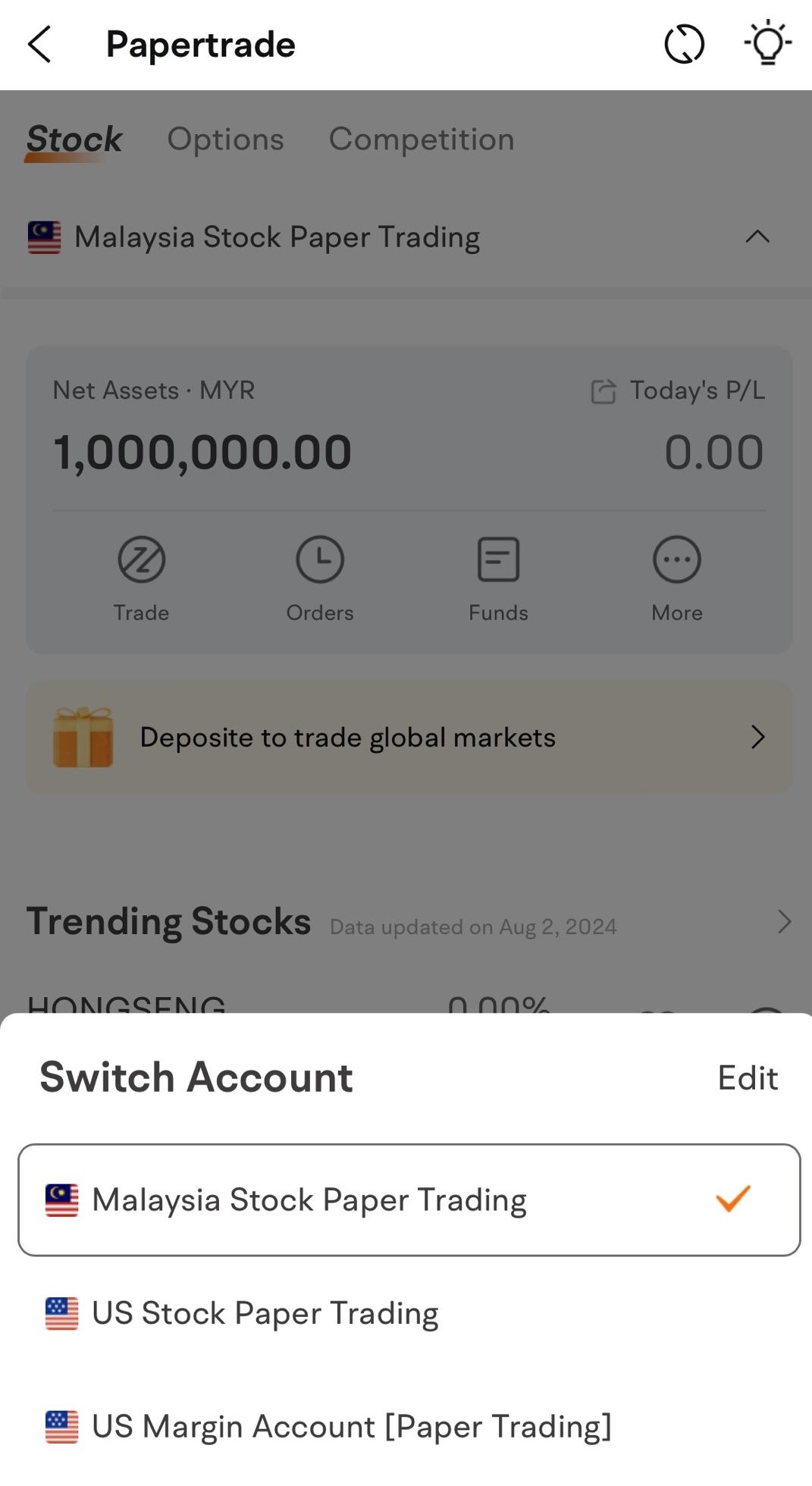
Limitations on Trading Varieties: Moomoo paper trading provides an expansive range of trading opportunities across various markets. With access to a diverse selection of instruments, moomoo enables you to engage in paper trading with more than 1,000 Malaysian stocks, a vast array of over 9,000 U.S. stocks, exchange-traded funds (ETFs), and U.S. stock options.
Trading Hours: Moomoo paper trading platform meticulously aligns its trading hours with those of the actual markets, offering a realistic and immersive trading experience that closely mirrors the dynamics of live trading. By adhering to the real market's trading hours, users can practice trading at the precise moments when significant market movements occur. It also enables investors to experience firsthand the rush of trading during peak hours, such as the opening and closing bells, and to observe how news and events can influence market behavior during these critical periods.
Fee Structure: The fees in moomoo paper trading are referenced to the real market, including commissions, platform usage fees, trading system usage fees, etc, but all fees are virtual and do not involve real expenses. This feature allows traders learn about the budgeting and cost management necessary for successful trading without the fear of financial loss.
Advantages of Paper Trading: Moomoo paper trading system is free of charge and users can use it with confidence. At the same time, the paper trading system provides a risk-free environment to help users familiarize themselves with the operating procedures of the trading platform, learn to interpret market data, and formulate and execute trading strategies.
Internationalization Development: Moomoo, as an internationalized product, has achieved significant market share in the United States, Singapore, Australia, Japan, Malaysia, Canada, etc., especially in Singapore where the market share exceeds 25%, and continues to expand its influence throughout the United States.
By using moomoo paper trading, users can hone their trading skills in a safe environment and lay a solid foundation for real trading in the future. At the same time, moomoo continues to realize self-research and technological innovation, which provides moomoo with strong technical support and enhances the functionality and user experience of the platform.
Conclusion
Paper trading is a valuable learning tool that enables investors to improve their trading skills and market understanding without risking their capital. By following the above tips, investors are able to familiarize themselves with market dynamics and master trading skills in a risk-free environment, thus enhancing their investment decision-making ability before actually stepping into the stock market. In addition, the ultimate goal of paper trading is to learn and improve, not just to pursue virtual profits. Through continuous practice and reflection, investors will be able to become more comfortable and comfortable in the real market.
Disclaimer: Moomoo is a financial information and trading app offered by Moomoo Technologies Inc. In Malaysia, investment products and services available through the moomoo app are offered through Moomoo Securities Malaysia Sdn. Bhd. ("Moomoo MY").
This content is for informational purposes only and does not constitute a recommendation or solicitation for any financial products or services. Past performance does not guarantee future results. All investments carry risks, including loss of principal. This content does not consider your investment objectives or financial situation. Please consult your financial adviser as to the suitability of any investment. Full disclaimers at https://www.moomoo.com/my/support/topic9_37.
This advertisement has not been reviewed by the SC.
This presentation is for informational and educational use only and is not a recommendation or endorsement of any particular investment or investment strategy. Investment information provided in this content is general in nature, strictly for illustrative purposes, and may not be appropriate for all investors. Read more