What Are Energy ETFs and How to Invest in Energy ETF in Canada?
Energy Exchange-Traded Funds (ETFs) are a specialized investment tool, and it is crucial for Canadian investors to understand them. Energy ETFs primarily invest in a basket of assets related to the energy sector. In the Canadian market, these assets often include stocks of both domestic and global energy companies, such as those involved with Canada's abundant oil sands resources, like Suncor Energy, as well as stocks of large oil and gas companies participating in the global energy market.
For Canadian investors, there are multiple ways to invest in energy ETFs. These can be traded through major Canadian brokerage firms, making the process as convenient as buying and selling regular stocks. However, it is important to thoroughly consider the risks before investing. The Canadian energy market is significantly influenced by international oil price fluctuations. Factors such as changes in the global economic landscape and geopolitical tensions can cause oil prices to fluctuate, thereby affecting the value of energy ETFs.
This guide will explore what are energy ETFs, pros and cons of investing in energy ETFs and teach you how to invest in energy ETF in Canada.
What is an energy ETF?
An energy ETF, or Energy Exchange-Traded Fund, is an investment fund that focuses on companies and assets within the energy sector. For Canadian investors, this means you can invest in a diversified portfolio of energy-related stocks and assets without having to buy each one individually.
These ETFs often include a mix of Canadian and international energy companies. This includes major Canadian energy giants like Suncor Energy and Imperial Oil, which play significant roles in various segments such as oil sands extraction and oil refining. It also covers renowned international energy companies, such as ExxonMobil.
An energy ETF is like an investment bundle for the energy sector. When the energy industry performs well, such as when rising oil prices increase oil company profits or strong demand for natural gas boosts related company stock prices, the value of the energy ETF typically rises as well. Conversely, if the energy market cools down, the value of the energy ETF is likely to be negatively affected.
By investing in an energy ETF, Canadian investors can diversify their investments across the entire energy industry at a relatively low cost and in a more straightforward manner, rather than relying solely on the stocks of individual energy companies.
Types of energy ETF
Categorized by Type of Energy Commodity
Oil ETFs: These ETFs primarily track the price movements of oil-related assets. Their investments may include stocks of oil companies, such as the globally renowned oil giants ExxonMobil, Chevron, and others.
Natural Gas ETFs: Natural gas ETFs mainly invest in natural gas-related assets. Their investment scope includes stocks of natural gas production and transmission companies, such as Canada's Enbridge, which is an important natural gas transmission company in North America. Many natural gas ETFs include its stock in their investment portfolios.
Coal ETFs: Coal ETFs focus their investments on the coal-related industry. They invest in stocks of coal mining companies, such as Peabody Energy in the United States, which is one of the largest private coal companies in the world. The operational performance of these companies, including factors like coal production, sales prices, and cost control, directly impacts the value of coal ETFs.
Categorized by Investment Strategy
Passive ETFs: Passive ETFs are funds that aim to replicate a specific energy index. For example, an ETF that tracks the S&P Global Energy Index will build its portfolio based on the constituent stocks and their weights of the index. The fund manager will minimize active management decisions so that the performance of the ETF is closely related to the energy index it tracks. This type of ETF has the characteristics of low cost and high transparency.
Active ETFs: Unlike passive ETFs, fund managers of active ETFs will actively adjust their portfolios based on their own research, analysis and forecasts of the energy market. For example, fund managers may believe that certain emerging renewable energy technology companies have great development potential and choose to increase their investment in them even if these companies have a low weight in the traditional energy index.
Categorized by Leverage
Leveraged ETFs: Leveraged ETFs use financial derivatives and borrowing to amplify returns. For example, a 2x leveraged ETF aims to double the performance of the index it tracks. If the index rises by 10%, the ETF's net asset value would theoretically increase by 20%. Conversely, if the index falls by 10%, the net asset value would also decrease by 20%. Both gains and losses are magnified.
Unleveraged ETFs: These ETFs do not use leverage and aim to provide returns that closely track the performance of their underlying index. They are suitable for investors who prefer a more conservative and less risky approach.

Pros and cons of investing in energy ETFs
Energy ETFs, as an investment tool, have received a lot of attention in the Canadian market. For investors, understanding the pros and cons of investing in energy ETFs is crucial to making reasonable investment decisions. There are both positive aspects that may bring rich returns, and risk factors that cannot be ignored.
Pros of investing in energy ETFs
Diversification: Energy ETFs usually include multiple different energy stocks or related assets, such as stocks of oil, gas, coal, etc. By investing in energy ETFs, investors can diversify the risks of single stocks and avoid major losses due to operating problems of a certain energy company or industry-specific risks.
High liquidity: Energy ETFs are listed and traded on stock exchanges and have high liquidity. Investors can buy and sell at any time during trading days, and the trading method is similar to stocks, which can quickly convert investments into cash and meet the liquidity needs of funds.
Lower management costs: Most energy ETFs are passively managed funds that are designed to track a specific energy index and have relatively low management fees. This means that investors can get professional investment management services at a lower cost, saving the time and effort required to actively select and manage individual stocks.
Access to global markets: Many energy ETFs give you exposure to international markets, not just Canadian energy companies, which can enhance your portfolio's diversity.
Cons of investing in energy ETFs
High volatility: Energy stocks can experience significant volatility and are sensitive to changes in commodity prices. Investors in energy ETFs should be prepared to handle potentially large unrealized losses.
Lack of flexibility in stock selection: Unlike investing in individual energy stocks, the portfolio of an energy ETF is determined by the fund manager based on index composition rules. Investors cannot adjust the individual stocks in the portfolio based on their own research and judgment of specific companies.
Environmental, social, and governance (ESG) considerations: Energy sector ETFs that own businesses with perhaps inconsistent policies may not appeal to investors who place a high importance on these aspects.
Exchange rate risk: For Canadian investors in international energy ETFs, fluctuations in exchange rates can impact investment returns if the energy assets held by the ETF are denominated in foreign currencies.
Top Canadian energy ETFs
The table below lists some top Canadian energy ETFs and provides some detailed information for each other.
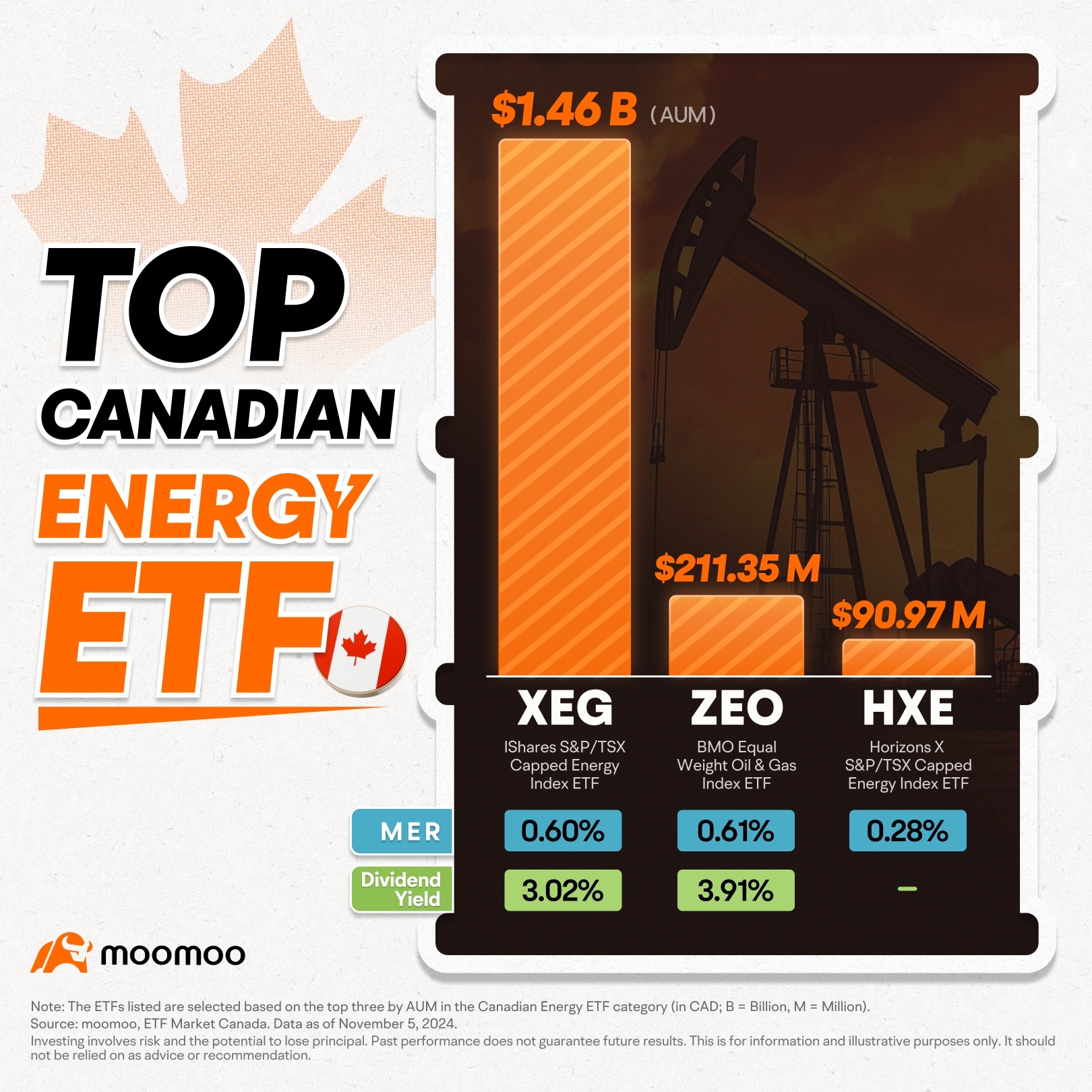
Top Canadian energy ETFs | Holdings | Inception Date | MER |
iShares S&P/TSX Capped Energy Index ETF (XEG) | XEG typically includes major Canadian energy companies such as Suncor Energy, Canadian Natural Resources, and Cenovus Energy. | 2001/3/19 | Approximately 0.61% |
BMO Equal Weight Oil & Gas Index ETF (ZEO) | It includes a diverse range of oil and gas companies, ensuring that no single company dominates the ETF. | 2009/10/20 | Approximately 0.55% |
Horizons S&P/TSX Capped Energy Index ETF (HXE) | It holds a similar roster of top Canadian energy firms and focuses on capital appreciation through reinvestment. | 2013/9/16 | Approximately 0.27% |
iShares S&P/TSX Capped Energy Index ETF (XEG)
Overview: This ETF aims to replicate the performance of the S&P/TSX Capped Energy Index, which includes Canadian energy companies involved in the exploration, production, and distribution of oil and gas.
Characteristics: The "capped" nature of the index means that no single stock can have an excessive weight in the ETF, which helps in maintaining diversification within the energy sector.
BMO Equal Weight Oil & Gas Index ETF (ZEO)
Overview: ZEO offers exposure to the Canadian oil and gas industry through an equal-weight strategy, meaning each company in the ETF has approximately equal representation.
Characteristics: The equal-weight approach can provide more balanced exposure across the sector, potentially reducing the impact of volatility from any one company.
Horizons S&P/TSX Capped Energy Index ETF (HXE)
Overview: HXE seeks to replicate the performance of the S&P/TSX Capped Energy Index, similar to XEG, but often employs a total return strategy to reinvest dividends back into the ETF.
Characteristics: The total return structure can be tax-efficient for investors who prefer growth over income.
Note: Please always consider checking the latest data from official ETF providers, as MER and other details can change over time.
Top US energy ETFs for Canadian investors
The table below lists some Top US energy ETFs that Canadian investors may be interested in. Let's take a look!
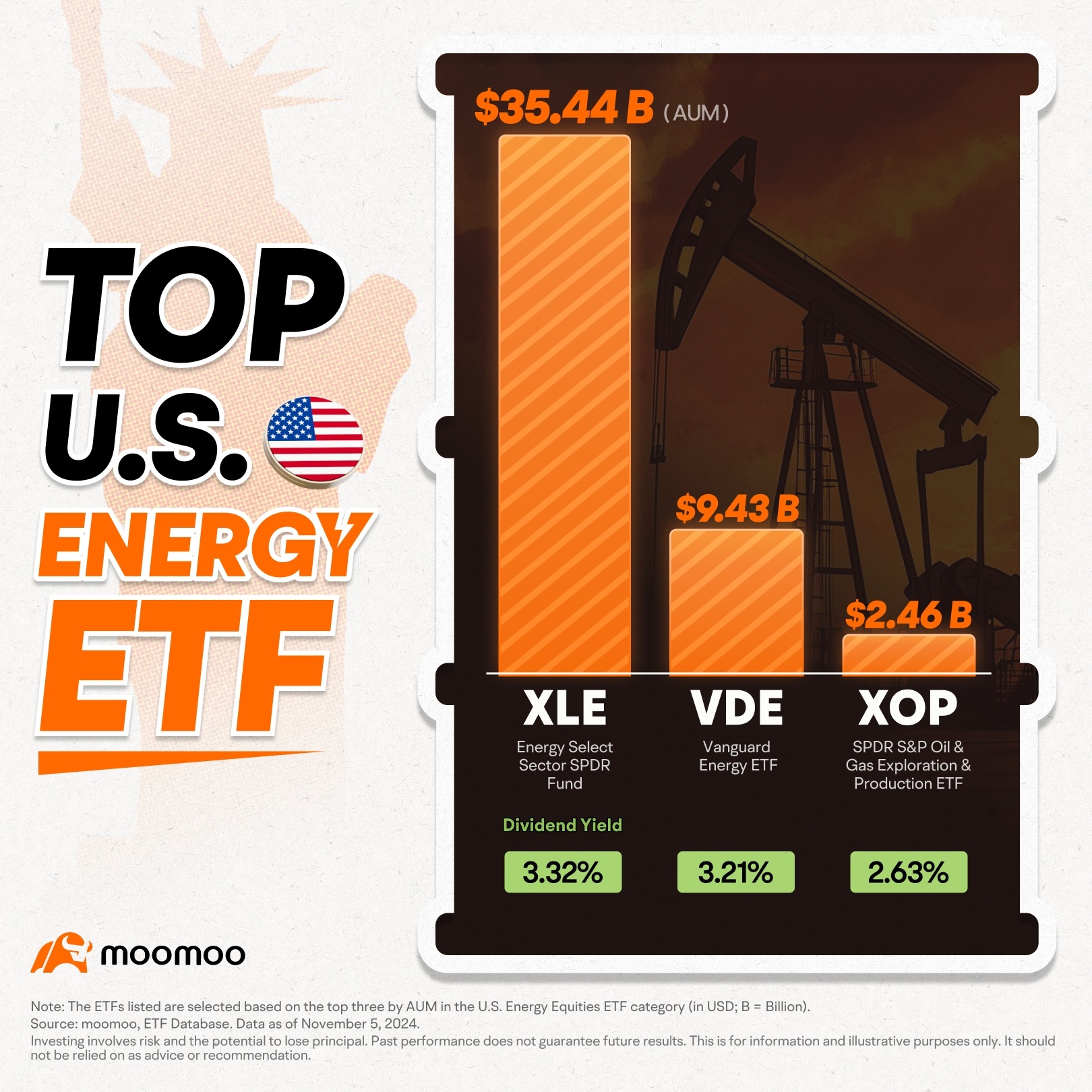
Top US energy ETFs | Holdings | Inception Date | MER |
Energy Select Sector SPDR Fund (XLE) | The ETF often includes major U.S. energy firms such as ExxonMobil, Chevron, and Schlumberger. | 1998/12/16 | Approximately 0.10% |
Vanguard Energy Index Fund ETF (VDE) | It provides exposure opportunities for a wide range of energy companies, from industry giants to small businesses. | 2004/9/23 | Approximately 0.10% |
SPDR S&P Oil & Gas Exploration & Production ETF (XOP) | These include companies primarily engaged in oil and gas exploration and production, offering more concentrated investments in the energy sector. | 2006/6/19 | Approximately 0.35% |
Energy Select Sector SPDR Fund (XLE)
Overview: XLE is one of the largest energy ETFs in the U.S. It aims to provide exposure to the energy sector by tracking the Energy Select Sector Index, which includes companies from the S&P 500 involved in oil, gas, and energy equipment and services.
Characteristics: XLE offers broad exposure to the U.S. energy sector, making it a popular choice for investors seeking diversified energy holdings.
Vanguard Energy Index Fund ETF (VDE)
Overview: VDE tracks the performance of a variety of U.S. energy companies through the MSCI US Investable Market Energy 25/50 Index.
Characteristics: VDE is known for its comprehensive coverage of the U.S. energy sector, offering a combination of stability and growth potential.
SPDR S&P Oil & Gas Exploration & Production ETF (XOP)
Overview: XOP focuses specifically on the oil and gas exploration and production subsector, tracking the S&P Oil & Gas Exploration & Production Select Industry Index.
Characteristics: XOP provides a more focused investment in exploration and production companies, which can lead to higher volatility but also greater potential for capital appreciation.
Top commodity ETFs
A commodity ETF is an exchange-traded fund that offers investors exposure to the price movements of commodities, which are raw materials or primary agricultural products available for buying and selling. These ETFs enable investors to participate in the commodities market without the need to directly own the physical assets.
Below are some top commodity ETFs that investors may be interested in.
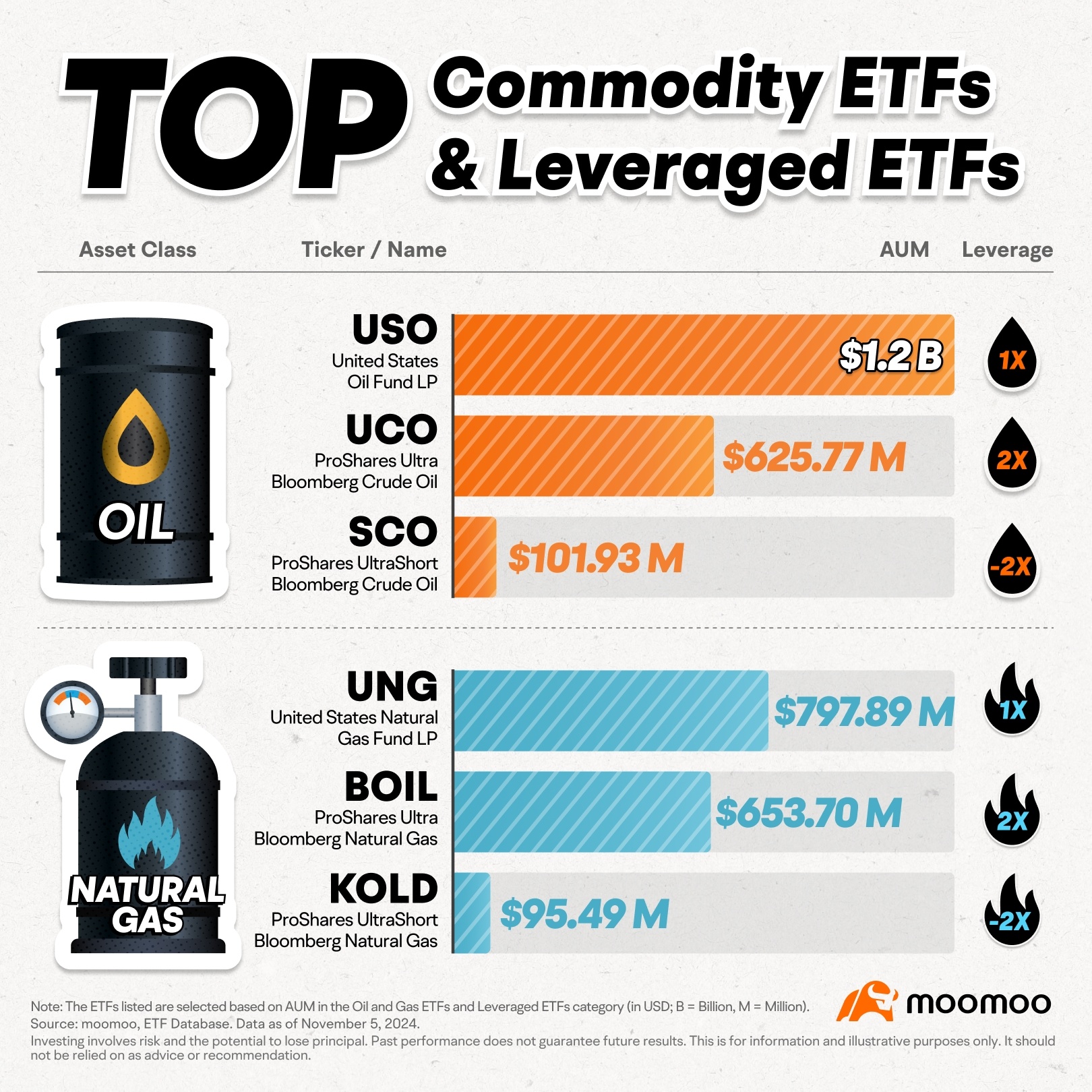
Oil ETFs
1. United States Oil Fund LP (USO)
Overview: USO is designed to track the price movements of West Texas Intermediate (WTI) crude oil through futures contracts.
Purpose: This ETF offers direct exposure to oil price changes, suitable for investors seeking to speculate or hedge against oil price fluctuations.
2. ProShares Ultra Bloomberg Crude Oil ETF (UCO)
Overview: UCO seeks to provide twice (2x) the daily performance of oil prices.
Purpose: It is designed for short-term trading and allows investors to expand their exposure to crude oil price movements.
3. ProShares UltraShort Bloomberg Crude Oil ETF (SCO)
Overview: SCO seeks to offer twice (2x) the inverse daily performance of oil prices.
Purpose: It is suitable for investors who want to profit from falling crude oil prices or hedge risks.
Natural Gas ETFs
1. United States Natural Gas Fund (UNG)
Overview: UNG is designed to track the price movements of natural gas delivered at the Henry Hub through futures contracts.
Purpose: It provides investors with a tool to speculate or hedge against natural gas price movements.
2. ProShares Ultra Bloomberg Natural Gas (BOIL)
Overview: BOIL aims to provide twice the daily performance of the Bloomberg Natural Gas Subindex.
Purpose: It is designed for short-term trading to gain exposure to changes in natural gas prices.
3. ProShares UltraShort Bloomberg Natural Gas (KOLD)
Overview: KOLD seeks to provide twice the inverse of the daily performance of the Bloomberg Natural Gas Subindex.
Purpose: It is suitable for investors seeking to profit from or hedge against falling natural gas prices and is suitable for short-term strategies.
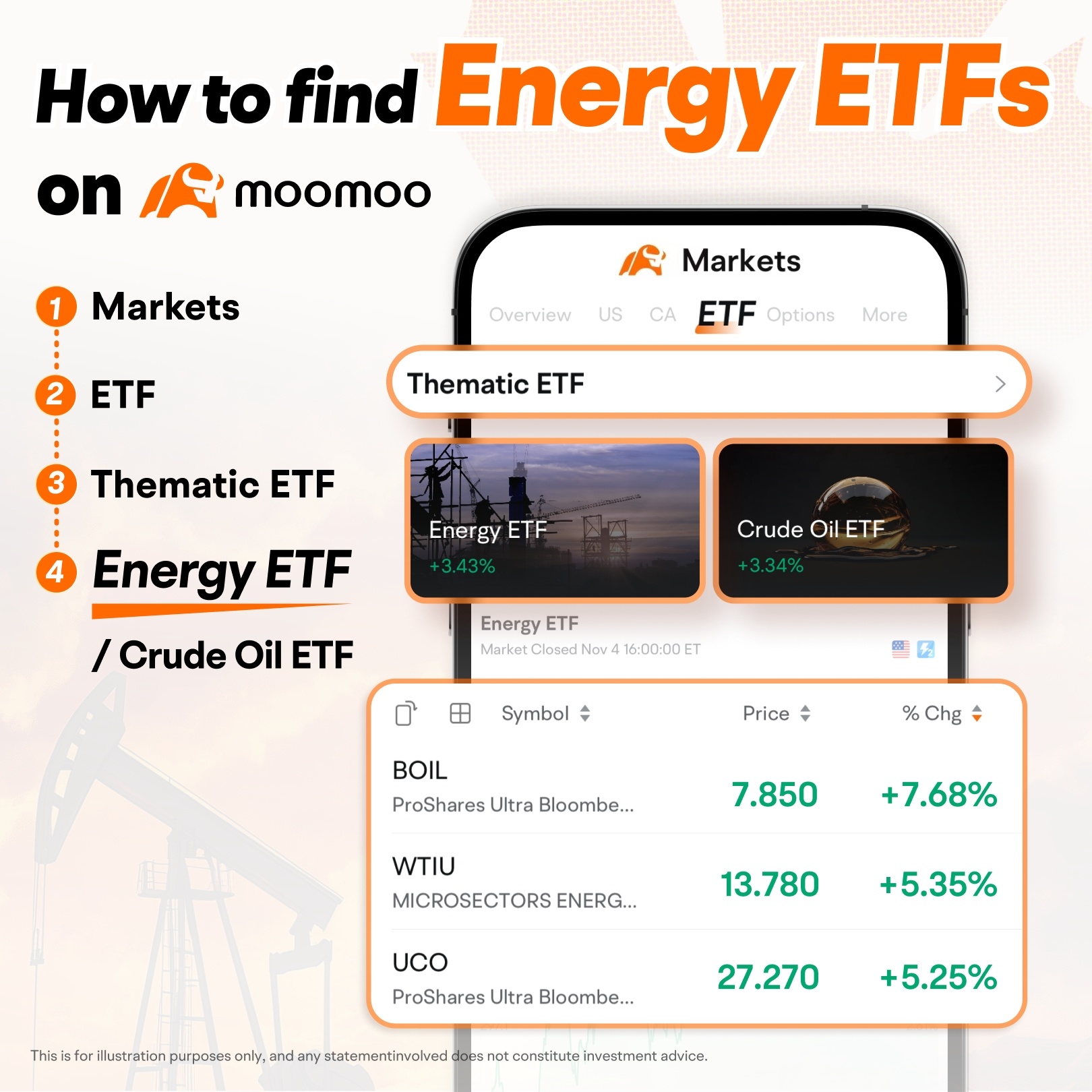
How to find Energy ETFs on moomoo? Step-by-step guide
Step 1. Launch the moomoo Canada App and go to the “Markets” section.
Step 2. Find and select the "ETF" section.
Step 3. Choose "Thematic ETF" to locate Energy ETFs and Crude Oil ETFs under the ETF options.
Step 4. You can sort the ETFs on the detailed list page according to a number of factors, such as market capitalization, trading volume, price fluctuations, and transaction value.
This presentation is for informational and educational use only and is not a recommendation or endorsement of any particular investment or investment strategy. Investment information provided in this content is general in nature, strictly for illustrative purposes, and may not be appropriate for all investors. Read more