How to Choose the Best Stock Trading App in Australia?
Key takeaways
Trading apps simplify investing by letting Australians buy and sell ASX and international shares directly from their smartphones.
When choosing a stock trading app, ASIC regulation and AFSL licensing are essential for investor protection.
Consider factors like platform fees, supported markets (ASX, US, etc.), investment options, and account types before signing up.
Beginner investors benefit most from apps that offer paper trading, educational resources, and user-friendly interfaces.
Advanced traders may prefer platforms with real-time Level 2 data, customizable charting tools, and multi-market access.
Moomoo, along with other platforms, is one of the platforms available to Australian investors. The “best” trading app depends on your trading goals, experience level, and desired features.
Choosing a stock trading app is an important step for Australian investors looking to buy and sell shares easily and securely. With many options available, it can be hard to know which trading app fits your needs best. Whether you’re new to investing or experienced, using the right app can help you access the Australian Securities Exchange (ASX) and global markets while keeping costs low.
This guide will help you understand how trading apps work in Australia and what to consider when comparing them. From fees and supported accounts to customer support and user experience, we cover all the key factors you need to make a smart choice.
How do trading apps work in Australia?
Stocks and exchange-traded funds (ETFs) are available on stock exchanges across the globe. To access these markets, investors need a licensed stock broker who can place trades on their behalf, usually through an online trading platform.
Trading platforms and mobile apps give you the ability to submit buy and sell orders, which are then carried out by the broker.
It’s important to understand that each broker or platform partners with specific exchanges. This means the range of stocks you can invest in will depend on the platform you select.
In Australia, the main exchange is the Australian Securities Exchange (ASX). Internationally, other major exchanges include the New York Stock Exchange (NYSE) and the London Stock Exchange (LSE).
Most Australian trading apps provide access to companies listed on the ASX, and some also allow trading in U.S. markets. A handful of global platforms extend access to an even wider range of international markets, examples include moomoo Australia, Interactive Brokers, CMC Invest, and eToro.

How to choose the best stock trading app in Australia?
Choosing a best stock trading app in Australia for you involves considering several important factors to ensure a safe, convenient, and cost-effective investing experience.
In the following sections, we’ll explore essential aspects such as regulatory oversight, user ratings, device compatibility, market access, fees, investment choices and account types. Each of these factors plays a crucial role in finding an app that suits your trading needs and preferences.
ASIC-regulated trading apps
Before choosing a trading app, it’s essential to confirm that the provider is regulated by the Australian Securities and Investments Commission (ASIC) and holds a valid Australian Financial Services Licence (AFSL).
Unfortunately, fraudulent or unlicensed platforms that mimic legitimate services are becoming more common. Data from the ACCC shows that Australians lose millions of dollars each month to investment scams.
To safeguard your money, always verify that the trading platform you sign up for has an AFSL number listed on ASIC’s official register.
In Australia, moomoo is operated by Moomoo Securities Australia Ltd (ABN 51 095 920 648), which holds an Australian Financial Services Licence (AFSL No. 224663) issued by the Australian Securities and Investments Commission (ASIC). Client funds are kept in segregated trust accounts with major banks such as CBA and HSBC, ensuring they remain separate from the company’s own operating capital.
This licensing and custody structure is designed to meet Australian regulatory requirements. However, regulation does not remove the risks associated with investing, and investors should carefully consider their circumstances before trading.
Curious how moomoo ensures your trust? Learn more about moomoo's security and regulatory framework here.
Average user ratings on the App Store and Google Play Store
Average user ratings on the App Store and Google Play Store are a valuable starting point when choosing a stock trading app in Australia. These ratings reflect real user experiences and can indicate how well the app performs in terms of reliability, ease of use, and customer satisfaction.
High ratings often suggest that the app is trusted by its users, while consistent positive reviews can highlight features like smooth trading execution, helpful tools, and responsive customer service.
However, it’s important to read some reviews to understand the reasons behind the ratings and to spot any recurring issues that might affect your own trading experience. Checking both stores also ensures you get a balanced view, as ratings can sometimes differ between iOS and Android users.
Availability on iOS and Android devices
It's important for you to ensure that the trading app is available on both iOS and Android devices. This ensures you can access your investments and make trades conveniently no matter what type of smartphone or tablet you use.
Most trading apps, including moomoo, support the latest versions of iOS and Android operating systems, offering seamless functionality with features such as biometric login (Face ID and fingerprint) for added security.
Having app availability on multiple platforms means you can manage your portfolio on the go, whether you prefer an iPhone, iPad, or an Android device. This flexibility is crucial for staying updated with real-time market data and executing trades quickly from anywhere.
>>Free download moomoo app & moomoo desktop, enjoying low commissions trading Australian, US, Hong Kong stocks, ETFs, and options!
![]() Trade anywhere you want!
Trade anywhere you want!
 Trade anywhere you want!
Access to ASX and US markets
Access to both the Australian Securities Exchange (ASX) and international markets is a crucial factor when choosing a stock trading app in Australia.
Many apps offer seamless trading on the ASX, giving local investors the ability to buy and sell Australian shares easily. For diversification, access to major overseas markets such as the US is often desired.
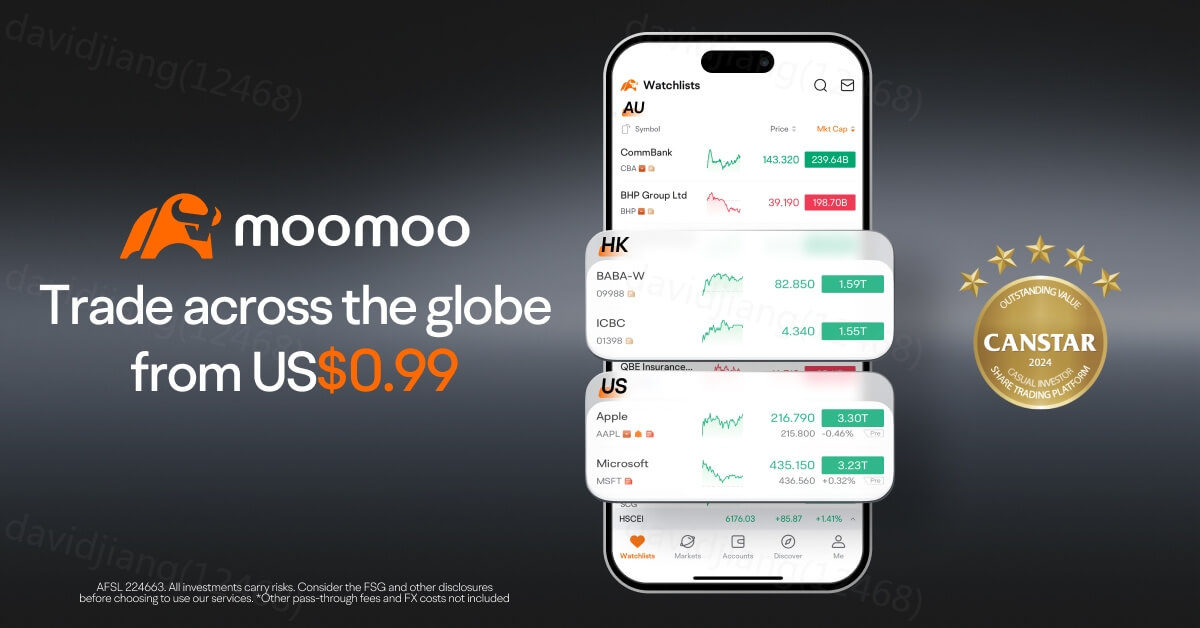
For example, moomoo, allows users to trade not only ASX stocks but also shares from the US and Hong Kong markets, making it a versatile choice for traders looking to invest globally.

Platform and brokerage fees
Platform and brokerage fees are major factors to consider when choosing a stock trading app in Australia, as they directly impact your investment returns.
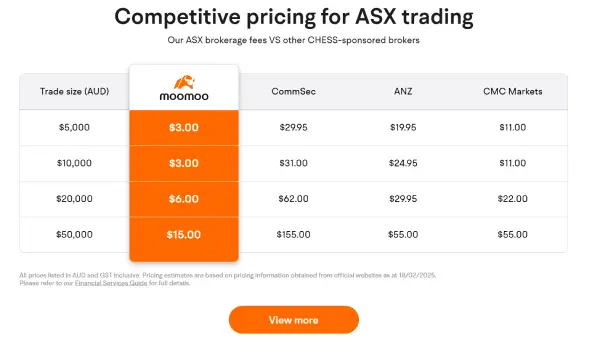
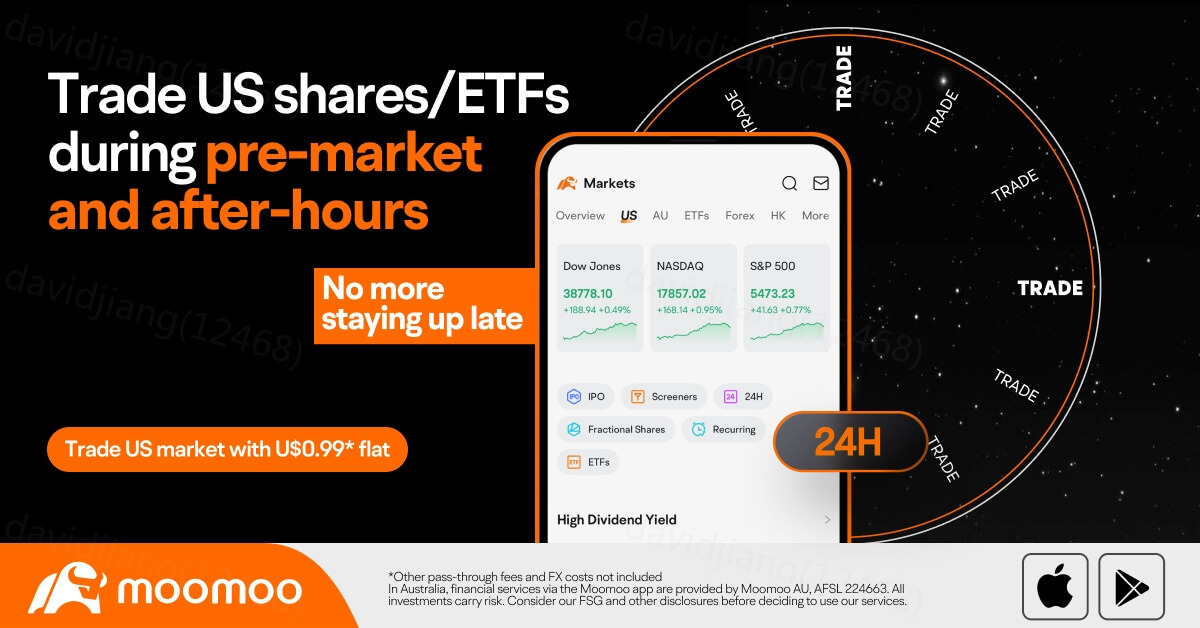
Most trading apps charge either a flat fee per trade or a percentage of the trade value, with some offering tiered pricing depending on the size of your trades. For example, popular trading apps like moomoo charge a brokerage fee of around 0.03% per trade on ASX stocks, with a minimum fee of $3, and US trades are from US$0.99 per trade.
Other apps like Selfwealth offer a simple flat fee structure of AU$9.50 per trade for Australian shares and US$9.50 per trade for US shares. It’s also important to factor in any additional costs, such as currency conversion fees when trading international stocks, as these can add up over time.
Supported investment options
Supported investment options vary among stock trading apps, and this is an important consideration when choosing the best platform in Australia for you. Most apps primarily offer trading in Australian shares listed on the ASX, which is ideal for local investors.
However, trading apps like moomoo, Webull, and Stake also provide access to US shares, ETFs, and even Hong Kong markets, enabling investors to build a diversified global portfolio.
Some platforms also support options trading, managed funds, and exchange-traded funds (ETFs), giving more flexibility in how you invest. Others might include emerging investment types, but many do not support cryptocurrencies, forex, or leveraged products. Evaluating the range of supported assets helps ensure the app matches your investment strategy and goals.
>> Learn more: Options Trading in Australia: How to trade options?
Supported account types
Supported account types are an important factor when selecting a stock trading app in Australia. Most apps offer standard individual or personal trading accounts that allow investors to buy and sell shares with ease. Many also support joint accounts for shared ownership, which can be useful for couples or business partners.
Some platforms go further by allowing self-managed superannuation fund (SMSF) accounts, enabling Australians to incorporate share trading into their retirement planning.
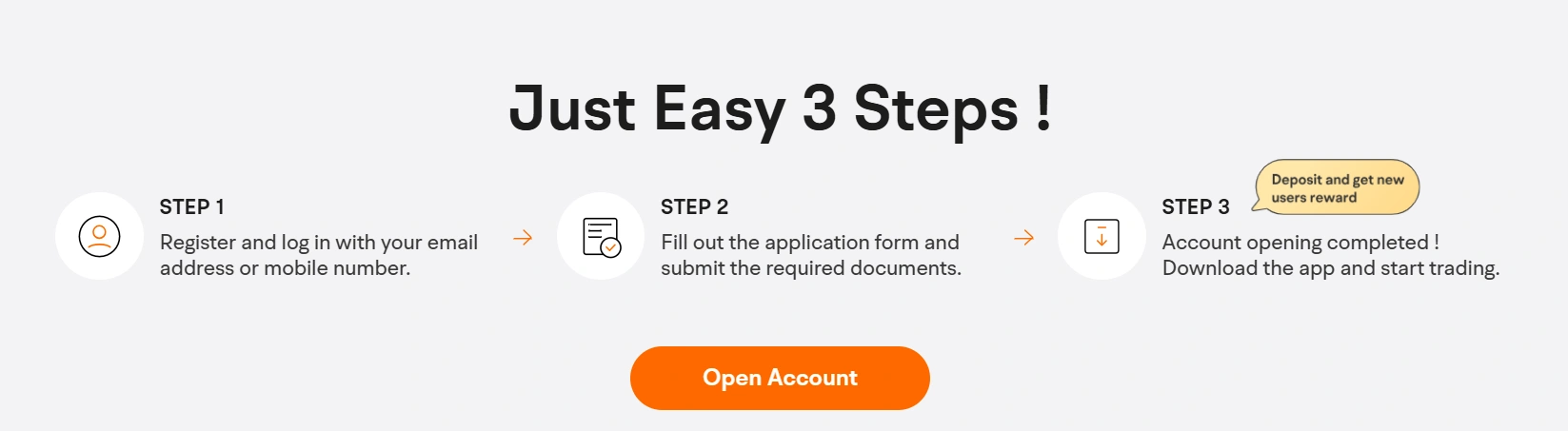
Moomoo supports Australian investors in opening individual, company, trust and SMSF accounts. Open one in just 3 steps!
User-friendliness
User-friendliness is another key aspect to consider when choosing the best stock trading app in Australia because it directly impacts how effectively and confidently investors can use the platform.
A user-friendly app offers a clean, intuitive interface that makes it easy for investors of all experience levels to navigate, find information, and place trades quickly. Features like clear menu layouts, customizable dashboards, and seamless order execution contribute to a smoother trading experience. Many top apps also provide educational resources and simple account setup processes that help beginners get started with confidence.
Overall, a user-friendly trading app reduces the learning curve and makes managing investments less stressful, encouraging consistent and confident trading.
Trading tools and features
When comparing stock trading apps in Australia, the quality and variety of trading tools can make a huge difference to your investing experience. Beyond placing trades, many platforms provide analytical tools to help investors review markets and manage risk.
For example, real-time Level 2 market data gives you deeper insight into market depth and liquidity, while advanced charting tools and customizable technical indicators allow you to perform detailed technical analysis. Many modern platforms now also include AI-powered market monitors, helping traders spot opportunities and trends more efficiently.
For those looking to practice without financial risk, paper trading is a valuable feature. Some apps also foster a social trading community, where you can exchange ideas and learn from other investors. On the more advanced side, options like multi-monitor support, a wide range of order types, and access to additional markets such as CFDs and Forex provide flexibility for different trading strategies.
Finally, features such as alerts and notifications, in-app educational resources, and responsive customer support ensure that you can stay informed and continuously improve your skills.

You may also like: How to Use AI to Trade Stocks in Australia
Customer support
Reliable customer support is a crucial factor when choosing the best stock trading app in Australia for you. Even the most experienced investors may run into technical issues, account questions, or need clarification on trading rules and having access to responsive support can make all the difference.
Some trading apps offer multiple support channels, such as live chat, email, and phone support, ensuring that users can get help in the way that suits them best. For example, moomoo provides 24/5 assistance, which is particularly valuable if you trade international markets outside of Australian business hours.
In addition to direct support, high-quality platforms often include comprehensive help centres, FAQs, and educational resources so users can quickly find answers on their own. Access to a community forum or social trading network can also be helpful, allowing investors to share knowledge and experiences.
When comparing apps, it’s worth checking how quickly support teams respond, whether they are knowledgeable about ASIC regulations, and if the platform provides local support for Australian users.

What are the best trading apps for beginners in Australia?
For Australians new to investing, choosing the right trading app can feel overwhelming. The best trading apps for beginners are those that combine ease of use, strong educational resources, and transparent fees. Instead of overwhelming users with overly complex features, these platforms tend to offer a straightforward interface, clear explanations of investment options, and built-in tools that help beginners learn as they go.
Key factors to look for include ASIC regulation, which ensures the platform operates under Australian financial laws, and low or no minimum deposit requirements, so you can start investing with smaller amounts. Many beginner-friendly apps also provide paper trading or demo accounts, allowing new investors to practise without risking real money. Access to both the ASX and popular international markets, such as the NYSE and NASDAQ, is another advantage for those looking to diversify.
Educational support is especially important for first-time investors. Apps that include step-by-step guides, tutorials, or in-app learning modules can help build confidence and reduce the risk of costly mistakes. Strong customer support and responsive mobile experience also go a long way in making beginners feel secure.
Frequency Asked Questions
Why are stock trading apps so popular?
Stock trading apps have become highly popular in Australia mainly due to the convenience they offer. These apps allow investors to buy and sell shares anytime and anywhere using their smartphones or tablets, removing the need to be tied to a desk or rely on traditional brokers. The ease of access means users can quickly react to market changes, making trading more flexible and timely. Another reason for their popularity is the broad range of features that many apps offer, such as real-time market data, advanced charting tools, educational resources, and social trading communities. Low or zero commission fees and the availability of investing in both Australian and international markets have also attracted a wide range of investors, from beginners to experienced traders.
Bank apps vs dedicated stock trading apps: which are better?
When deciding between bank apps and dedicated stock trading apps, each option has its own advantages and disadvantages for Australian investors. Bank apps, such as CommSec, NABTrade, or Westpac Share Trading, offer convenience, especially for customers already using the bank’s other services. They provide seamless integration with your banking accounts, making deposits and withdrawals easier and often feel more secure due to the bank’s established reputation. However, bank trading apps usually come with higher brokerage fees, sometimes reaching nearly $30 per trade, and often have fewer advanced features compared to specialized trading platforms. On the other hand, dedicated stock trading apps like Selfwealth, moomoo, or Webull tend to offer a wider range of investment options, lower trading fees, and more sophisticated trading tools, including advanced charting, real-time data, and customizable alerts. These apps are usually designed specifically for trading and investing, making them more feature-rich and flexible. Many dedicated apps also support international markets and modern trading features such as social trading and paper trading. The trade-off is that they may not integrate as seamlessly into your everyday banking and might require more initial setup. Ultimately, the choice depends on whether convenience and brand trust or cost-effectiveness and advanced functionality are more important to your investing style.
This presentation is for informational and educational use only and is not a recommendation or endorsement of any particular investment or investment strategy. Investment information provided in this content is general in nature, strictly for illustrative purposes, and may not be appropriate for all investors. Read more