Is stock selection too difficult? Even beginners can achieve substantial returns.

In previous lessons, we introduced two stock investment strategies: value investing and technical analysis.
By employing these two methods, investors may have the opportunity to outperform the market.
However, nothing comes easily, and stock investing is no exception.

Are there any strategies that are more beginner-friendly?
The answer is yes: there is a strategy known as passive investing.

John Bogle, the father of passive investing, once said, “Don’t look for the needle in the haystack. Just buy the haystack!”

For some investors, stock selection can be as difficult as finding a needle in a haystack.
Investing in the entire market may be an alternative approach.

The question is:
With thousands of stocks available in the market, how can we possibly buy them all?

In fact, benchmark indices can be used to represent the overall performance of the stock market.
For example, the S&P 500 Index and the Dow Jones Industrial Average are two of the most popular benchmark indices, representing the overall performance of the U.S. stock market.

Each index is composed of a selection of high-quality stocks.
As stock values increase, benchmark indices also rise.
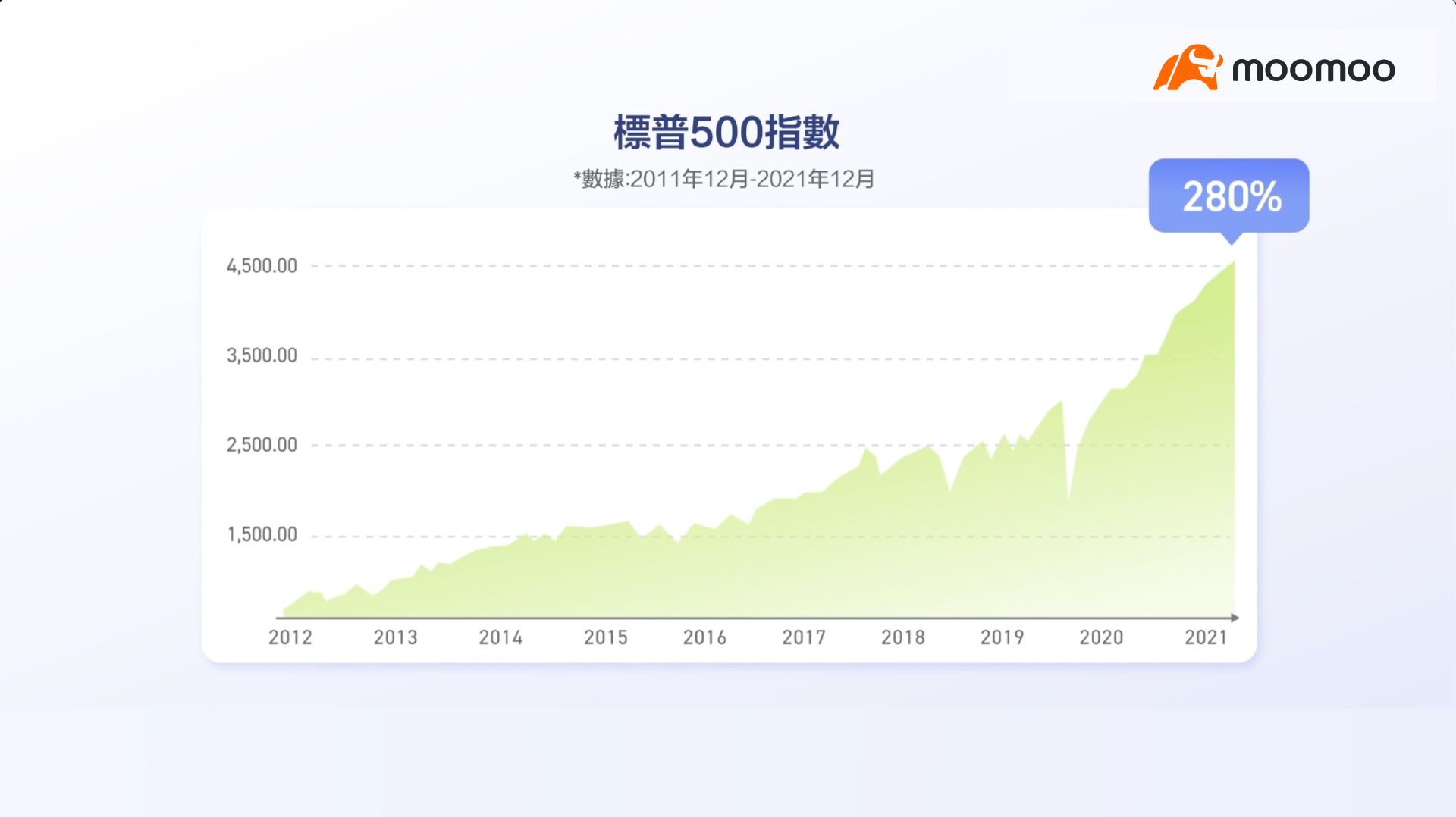
For instance, the S&P 500 Index has risen by approximately 280% over the past decade.

It is worth noting that investors cannot directly purchase an index.
One approach is to manually buy the constituent stocks of the S&P 500 Index.
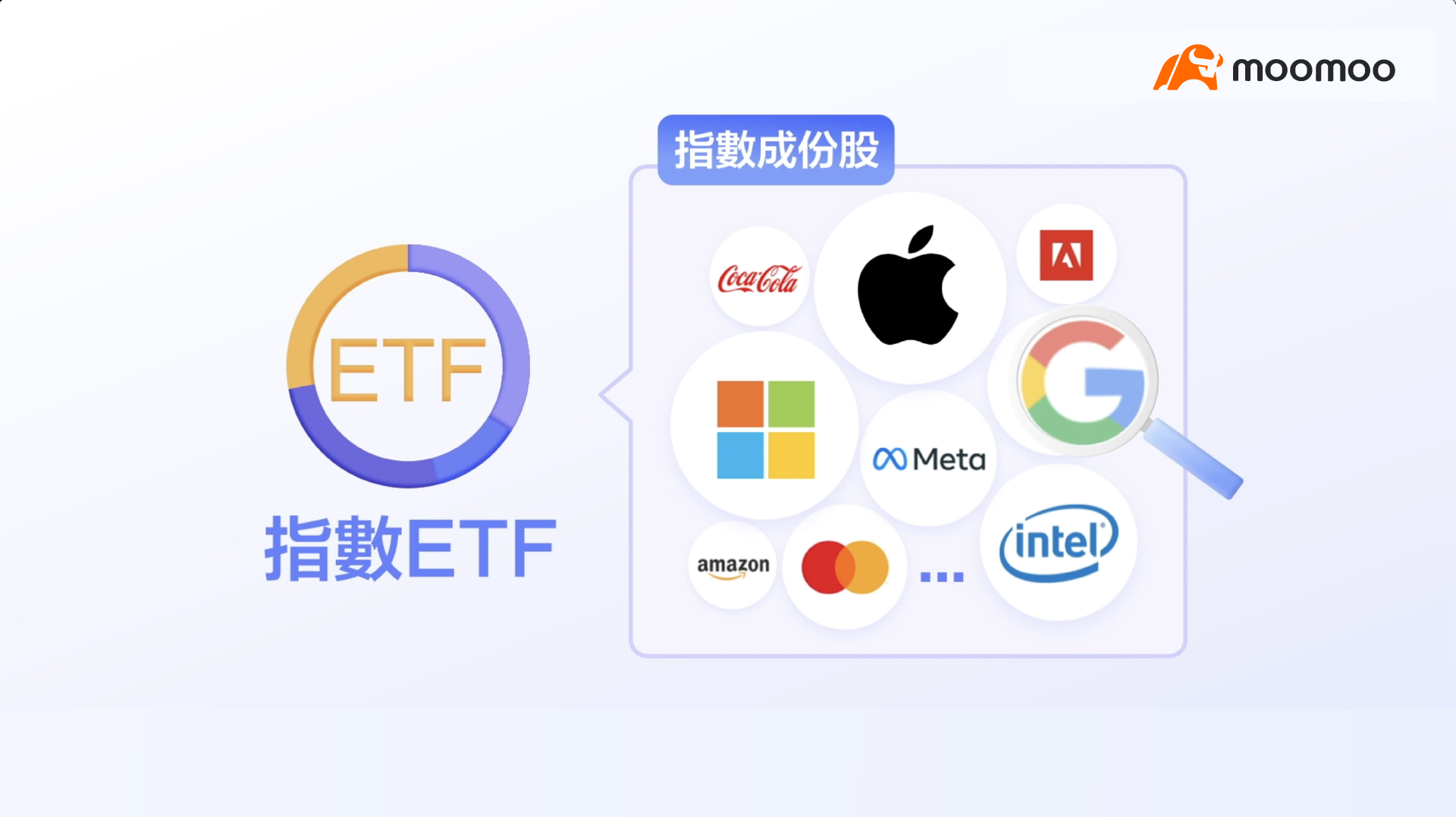
Another option is to invest in index ETFs.
An index ETF is essentially a fund that pools capital from individual investors,
and then the fund manager purchases the constituent stocks of the index in proportion to their weighting.
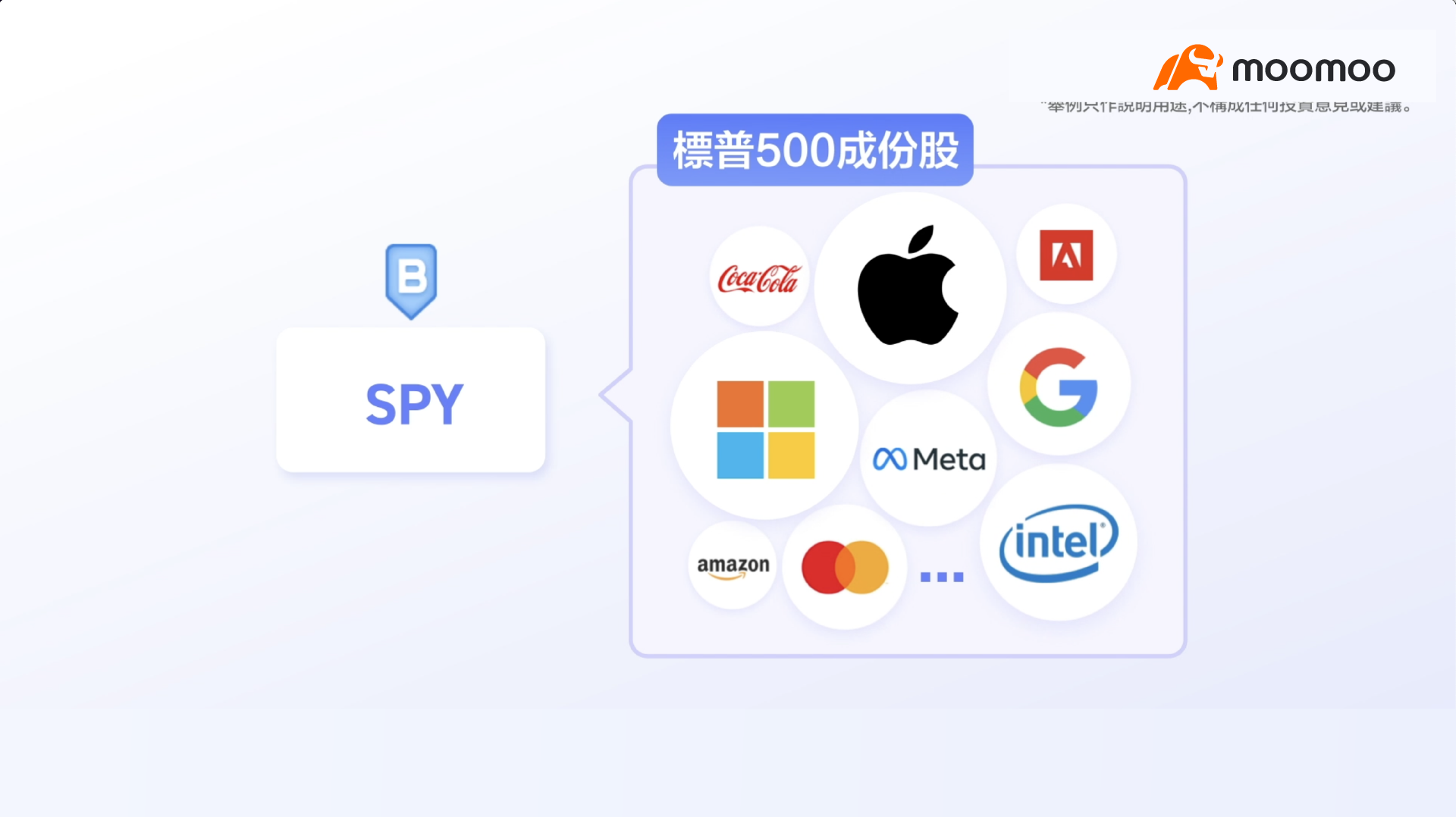
Let us take SPY as an example.
This is an ETF that tracks the performance of the S&P 500 Index.
Purchasing one share of SPY grants you a fractional ownership in each stock within the S&P 500 Index.

Another advantage of investing in index ETFs is that they can be bought and sold on exchanges at any time during trading hours, similar to individual stocks.
In addition to SPY, you can find index ETFs tracking various other stock markets, such as the Nasdaq, the FTSE 100, and the Shanghai Composite Index.

In summary, passive investment aims to achieve average market returns, and investing in index ETFs is the most common form of passive investment.
This concludes our equity investment course. If you wish to learn more about investing, please follow us. We look forward to connecting with you again.
This presentation is for informational and educational use only and is not a recommendation or endorsement of any particular investment or investment strategy. Investment information provided in this content is general in nature, strictly for illustrative purposes, and may not be appropriate for all investors. Read more