Relative valuation practices: See where big techs' valuations stand
The market had a crucial week (7.25-7.29 2022) as the top big techs, including Apple, Google, Meta, Amazon, and Microsoft reported their earnings.
While there's been a slowdown across the tech industry, it's not all doom and gloom.
"The market has rebounded and is now looking for leadership from some of the big tech names." said Burt White, chief strategy officer at Carson Group.
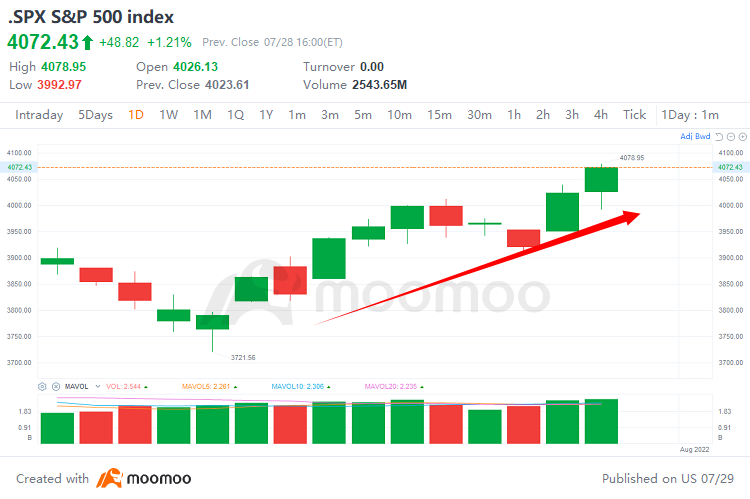
Looking back at this year, rising interest rates, inflation and recession fears have together pounded the tech sector. So far this year, Amazon shares decline more than 26%, Google 20%, Microsoft 17%, and Apple 11%.
Are they worth watching now? Answering this question is not easy, but we can find some clues from their valuation analysis.
 How to gauge a company with relative valuation?
Though the market turmoil may not end yet, it's time to review where the market’s valuation level lies now.
Vertical and horizontal comparisons using relative valuation methods can help to better understand whether a stock is currently undervalued or overvalued.
Valuation typically falls into two main categories: absolute valuation and relative valuation. Absolute valuation models attempt to find the intrinsic or "true" value of an investment based only on fundamentals.
Relative valuation models, in contrast, operate by comparing the company in question to other similar companies. Typically, the relative valuation model is a lot easier to calculate than the absolute valuation model, which is why many investors and analysts begin their analysis with this model.
There are many different kinds of relative valuation ratios, such as EV/Revenue, EV/EBITDA, price to cash flow for real estate, price-to-sales (P/S) for retail, and P/E ratios.
One of the most popular relative valuation multiples is the price-to-earnings (P/E) ratio. It is calculated by dividing the stock price by earnings per share (EPS).
The logic of applying P/E in relative valuation is if the P/E of a company is lower than the P/E of a comparable company, the original company might be considered undervalued.
Also, if a company's P/E ratio is now higher than its historical average over a certain period, it is considered overvalued.
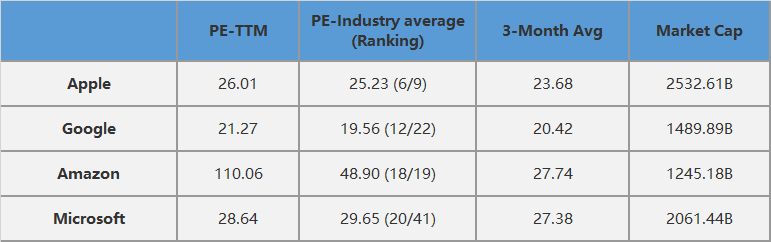
Can you figure out which company is overvalued right now based on relative valuation?
This presentation is for informational and educational use only and is not a recommendation or endorsement of any particular investment or investment strategy. Investment information provided in this content is general in nature, strictly for illustrative purposes, and may not be appropriate for all investors. Read more