Trump Tariffs: Key Stocks and Markets to Watch
The joint statement between the US and China has far exceeded expectations, triggering a significant rally in the US stock market. The three major US stock indexes witnessed their largest daily gains in a month. The Nasdaq Composite has rebounded 20% from its low last month and entered a "technical bull market", buoyed by the strong performance of technology stocks.


Moreover, shares of major global technology companies soared across the board. On May 12, 2025, following the positive trade news, shares of major global technology companies witnessed substantial increases. For example, Tesla's stock price rose nearly 7%, Amazon closed up over 8%, Meta advanced nearly 8%, and Apple climbed more than 6%, indicating a strong market confidence boost following positive trade news.
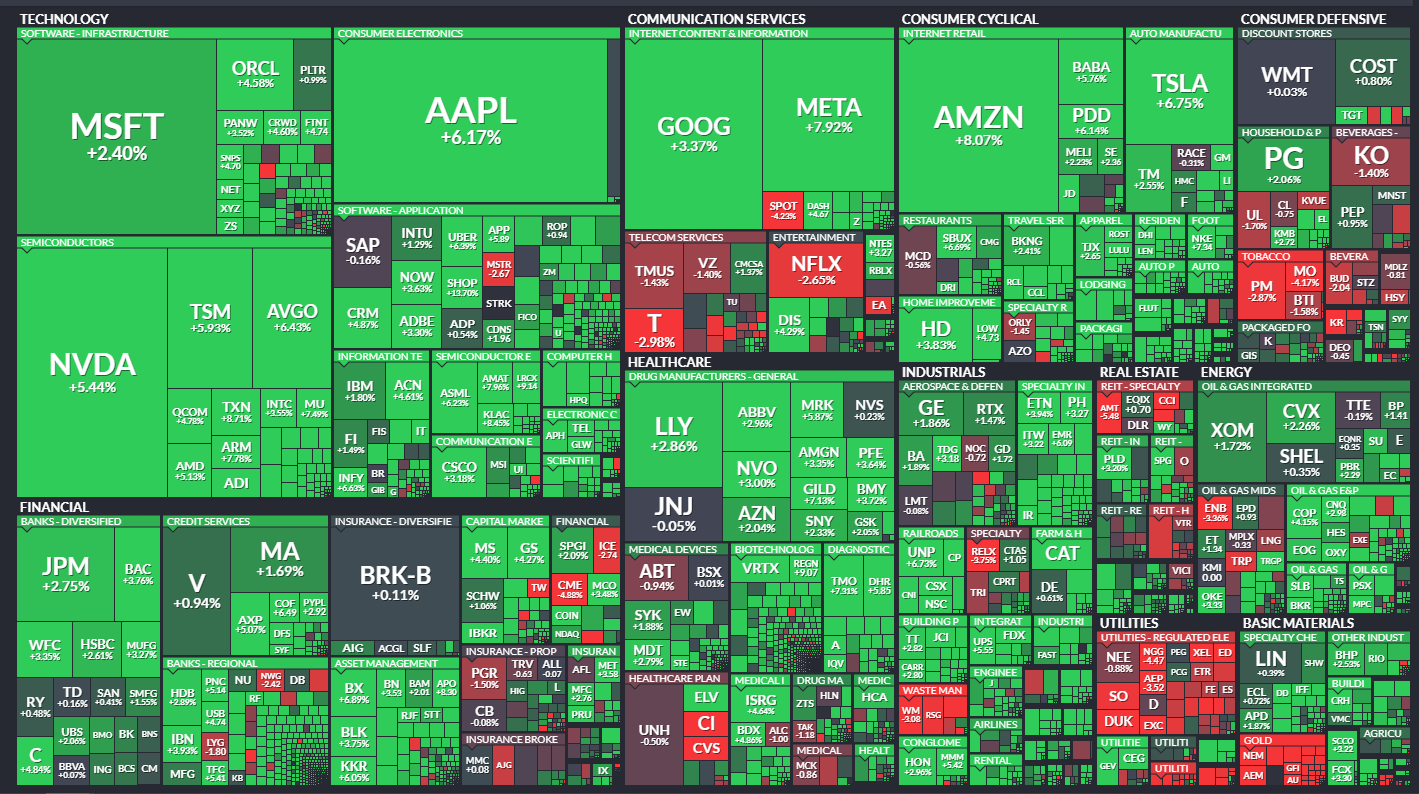
As investors brace for potential policy shifts, certain stocks and sectors find themselves in the spotlight. This article delves into the key stocks and markets that demand close attention in the face of these impending changes.
Understanding Trump Tariffs

US President Donald Trump has announced a series of tariffs, claiming they'll help American manufacturing grow and save jobs. But these import taxes and trade barriers have thrown the global economy into turmoil, and many argue they'll drive up prices for US shoppers. The US and China have now agreed to pause the tariffs they'd imposed on each other for 90 days. The UK and US have also struck a deal on tariffs, and other countries are hoping to reach agreements with the White House.
How Do Tariffs Work?
Tariffs, also known as import duties, are taxes placed on goods or services that are imported into a country. Usually, this added cost gets shifted to the consumer, which makes imported goods and services more expensive. But Trump kept wrongly saying that tariffs were a tax on foreign countries.
Tariffs are taxes imposed by a government on imported goods and services. They serve multiple purposes in international trade, such as protecting domestic industries, raising government revenue, and leveraging trade negotiations. Under President Trump, tariffs have been a central tool in addressing trade imbalances and negotiating trade deals with other countries. The ongoing trade war between the US and China has seen a significant increase in tariffs on Chinese imports, with Trump imposing tariffs on billions of dollars' worth of Chinese goods. This move aims to pressure China into making concessions in trade talks, but it has also led to retaliatory tariffs on US goods, affecting global trade dynamics. The impact of these tariffs is felt worldwide, as other countries adjust their trade policies in response to the shifting landscape of international trade.
Why is Trump using tariffs?

During Trump's presidency, he claimed that Trump's policies, including tariffs, would encourage Americans to buy more products made in the U.S., boost tax revenue, and attract massive investment, aiming to narrow the trade gap as he argued America had been “ripped off” by “cheating” nations and “looted” by foreigners.
Alongside tariffs, the U.S. president has made other demands. When he announced his first round of tariffs this term against China, Mexico, and Canada, he said he wanted those countries to do more to stop migrants and illegal drugs from entering the U.S. (Source: BBC News)
The Implications of Trump Tariffs Unveiled
Higher US tariffs can have a big impact on the global economy. In 2023, the US brought in $3.1 trillion worth of goods from other countries, which was 11% of its GDP. Crude oil and cars are the main things it imports, and a lot of them come from Canada and Mexico.
Right now, the US gets around 2% (that's $80 billion) of its total tax money from tariffs. But the economic hit usually lands on US consumers as prices go up, or on US companies as their profits shrink, contributing to the trade deficit.
Most of the burden shows up as higher prices for consumers. Think tanks figure that Trump's new tariffs could cut middle-class incomes by anywhere from $1700 to $3900 each year, and also make inflation worse.
Read More: How to Buy the Dip in Singapore: Trump's Tariffs Guide 2025
History of Tariff Implementation
The history of tariff implementation is as old as international trade itself. Initially, tariffs were primarily used to raise revenue for governments. However, over time, they evolved into tools for protecting domestic industries and negotiating trade agreements. In the United States, the Tariff Act of 1789 was the first law to impose tariffs on imported goods, setting a precedent for future trade policies. One of the most infamous tariffs in US history is the Smoot-Hawley Tariff Act of 1930, which raised tariffs on over 20,000 imported goods and is widely blamed for exacerbating the Great Depression. Fast forward to recent years, the Trump administration has imposed tariffs on goods from several countries, including China, Canada, and Mexico, citing national security concerns and trade imbalances. These tariffs have sparked significant debate and have had far-reaching implications for global trade.
Global Response to Trump Tariffs
The global response to tariffs has been a mix of retaliation and negotiation. Some countries have imposed retaliatory tariffs on US goods, while others have sought to negotiate new trade agreements with the US. For instance, the European Union has targeted US products like bourbon and motorcycles with tariffs, while China has imposed tariffs on American soybeans and cars. These actions have led to a significant impact on global trade, with many countries experiencing a decline in exports and imports. The World Trade Organization (WTO) has warned that escalating trade tensions could lead to a global trade war, potentially causing severe disruptions to the world economy. As countries navigate this complex landscape, the future of global trade remains uncertain, with tariffs playing a pivotal role in shaping economic relations.
US-China Trade Deal: What's the Future?

In recent months, the U.S. and China slapped huge tariffs on each other, but they've now agreed to cut them significantly. Trump first announced a 10% tariff on Chinese goods on February 4, which doubled to 20% a month later. On April 2—what he called “Liberation Day”—he imposed a flat 10% baseline tariff on all U.S. imports, though some countries (including China) faced higher rates. China hit back with its own tariffs, and by April 9, the U.S. had raised tariffs on Chinese imports to 145%. China had a 125% tariff on some U.S. products in response.
But now, both countries have paused all but 10% of their “Liberation Day” tariffs for 90 days, starting May 14. They've also canceled other retaliatory taxes. This means U.S. tariffs on Chinese imports will drop to 30%, while China's tariffs on U.S. goods will fall to 10%.
The U.S. is still keeping a 20% tariff on some Chinese products to pressure Beijing to crack down on illegal fentanyl trade (a powerful opioid drug). Trump first imposed major tariffs on China during his presidency, and his successor, Joe Biden, expanded them, reducing U.S. imports from China. But the U.S. still buys far more from China ($440 billion) than it sells to them ($145 billion).
The joint statement between the U.S. and China is not the final outcome. There will be multiple rounds of negotiations and consultations between the two countries in the follow-up, with the potential trade deal still being negotiated. (Source: BBC News)
Trade Negotiations in Geneva: US-China Tariffs

In 2025, the US and China engaged in significant trade negotiations in Geneva. The two economic powerhouses had been in a complex trade situation with a series of tariffs imposed on each other's goods. On May 12, 2025, they reached a significant agreement.
Here's a simplified breakdown of the U.S.-China deal announced on May 12, 2025, after Geneva talks:
The U.S. will cut its 125% "reciprocal" tariff on Chinese goods to 10%.
China will similarly lower its retaliatory tariff on U.S. goods from 125% to 10%.
A separate 20% U.S. tariff on Chinese goods linked to the fentanyl issue will stay in place.
These tariff cuts will last 90 days while both sides keep negotiating.
China agrees to stop or cancel non-tariff measures it took in response to U.S. actions.
What's Next?
Analyst Isaac Lim CMT, CFTe said: "After the U.S. paused the 24% tariff hike, companies such as NVIDIA and AMD—both with high export ratios to China—have benefited from lower supply chain costs. However, tech controls still matter a great deal. Restrictions on advanced equipment remain in place, and ongoing negotiations could lead to market volatility. Investors should monitor potential profit-realization pressures." (Source: Track US-China Tariff Negotiation)
The joint statement between the US and China is not the outcome. There will be multiple rounds of negotiations and consultations between the two countries in the follow-up. President Trump has stated that if a comprehensive trade agreement with China cannot be reached within 90 days, the US will raise tariffs on Chinese goods again.
However, the tariffs will not return to the previous 145% level. He emphasized that reaching such a high rate would essentially mean decoupling, as no one would engage in trade under such circumstances. But he also left the door open for significant tariff increases, suggesting that the US is still using tariffs as a bargaining chip in trade negotiations.
Morgan Stanley's China economist Robin Xing called the tariff pause “a break from what felt like a bilateral trade standstill,” predicting a surge in trade during the 90-day low-tariff period. JPMorgan, encouraged by the temporary deal, dropped its 2025 recession forecast and raised its projections for U.S. economic growth.
Wedbush's Dan Ives thinks markets and tech stocks could hit new highs in 2025 as trade talks move forward, with investors focused on what happens next. (Source: Moomoo Community)
Key Sectors to Monitor Amid Trump Tariffs' Impact

How to invest in US stock and China stock market during the Trump's presidency? As the Trump administration may reimpose or adjust tariffs, shifting global trade dynamics will bring both risks and opportunities to several key sectors, including auto parts. Closely tied to international supply chains, consumer demand, and geopolitics, these industries are likely to see significant volatility.
 Ready to trade? Try
 Technology Sector: Tech Giants Take the Lead
After the positive trade news, major U.S. Technology stocks that took a hit in earlier sell-offs saw big gains, including those in the Artificial Intelligence (AI) space. CEO Ivan Espinosa of Nissan has also highlighted the importance of adapting production strategies in response to international trade policies. Health Technology Stocks, which blend medical innovation with technological advancements, also began to attract investor attention.
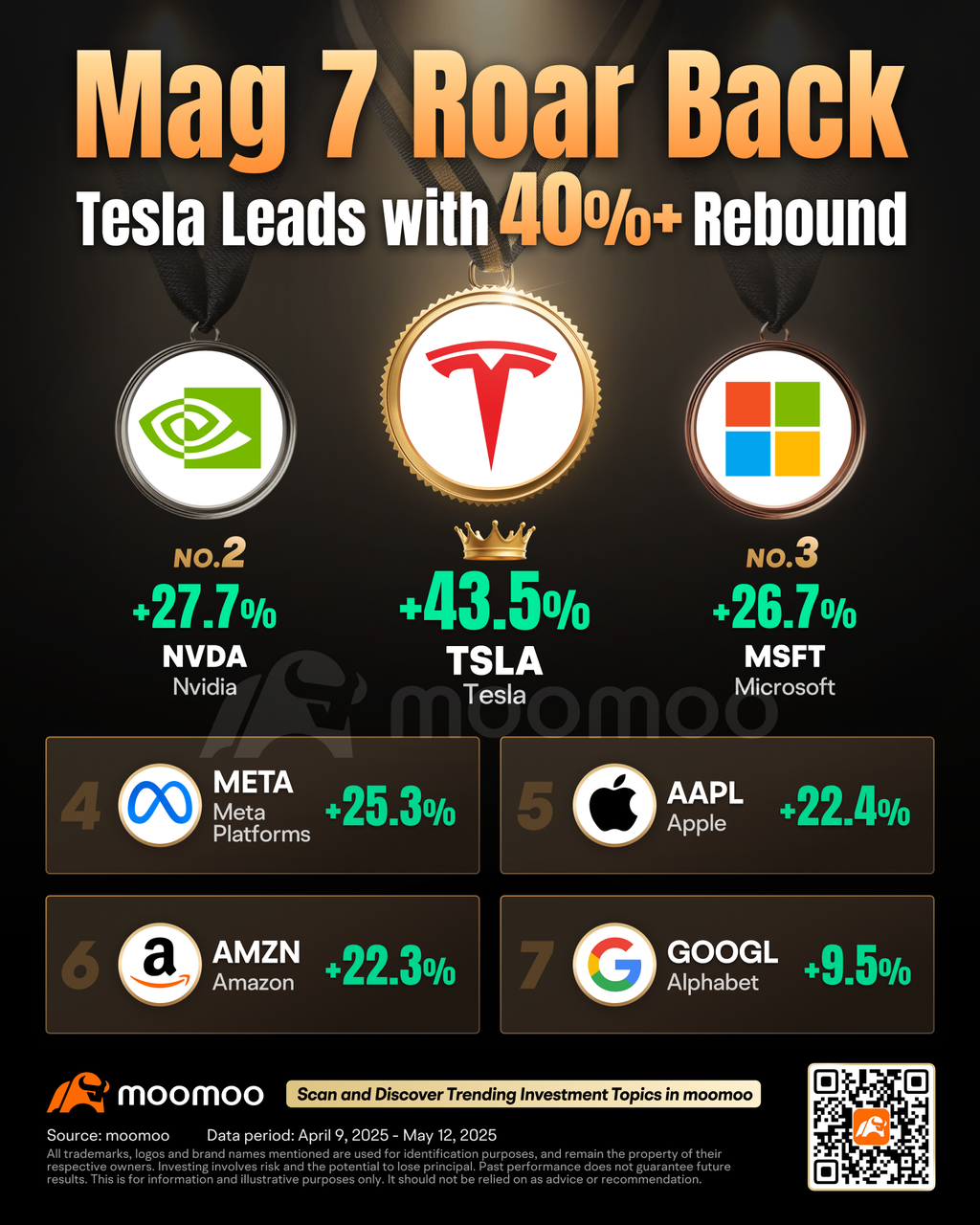
Tesla led the pack, bouncing back 40% since April 9. NVIDIA surged 27%, getting back to a $3 trillion valuation. Microsoft, Meta Platforms, Apple, and Amazon each climbed over 20%. But Alphabet-C (GOOG.US) only rose 9%—problems with its search dominance held it back.
Energy Sector
The energy sector is another area that requires close monitoring. Oil and gas companies are the key players in the energy sector. Trump's tariff policies can influence the supply and demand dynamics of energy resources, including liquefied natural gas. If tariffs are imposed on imported energy-related equipment, such as drilling machinery or pipeline components, it could increase the cost of energy production in the U.S.
Manufacturing Sector
The manufacturing sector is at the forefront of the impact of Trump's tariffs, particularly affecting car exports. Many manufacturing companies rely on a global supply chain, importing raw materials, components, and intermediate goods from various countries. Tariffs on these imports can increase production costs significantly.
Industrial Service stocks, which support manufacturers with maintenance, equipment repair, and supply chain help, may face collateral pressure as higher production costs could cut demand for their services or delay industrial projects.

Retail and Consumer Goods
Retail companies, especially small businesses with a heavy reliance on imported goods, may face challenges if tariffs increase the cost of inventory. This could lead to higher prices for consumers, potentially impacting sales volumes, particularly for non-essential or luxury items. On the flip side, domestic players within the consumer products and services industry could see a boost in demand.
Consumer Durables Companies, which produce long-lasting goods such as electronics and furniture, are poised to experience varied impacts from these dynamics, with importers facing cost pressures and domestic players potentially gaining market share.
Financial Services
Financial services firms, including banks, investment houses, and insurance companies, will need to navigate the complexities of a changing trade landscape. Tariffs can impact corporate earnings, profit margins, consumer spending, and overall economic growth, all of which influence financial markets.
Singapore Bank Stocks, key players in the region's financial sector, may face heightened volatility as trade uncertainties could affect loan demand, cross-border transactions, and investor confidence in the city-state's export-reliant economy.
Read More: Singapore Stock Sector List: Which to Invest
US and China Stocks Surge: Trump Tariffs' Influence on Market
After weekend negotiations, the U.S. committed to cutting baseline tariffs on most Chinese goods from 145% to 30%, while China will lower tariffs on U.S. products from 125% to 10%, illustrating how Trump's tariff policies have impacted market trends. On Monday, U.S. and China stocks surged, extending a robust recovery over the past month that aligns with Trump's April 9 urging to “buy.”
Since then, the S&P 500 has advanced more than 17%, and the Nasdaq Composite has surged over 22%, entering a “technical bull market”—defined as a 20% rebound following a sustained decline. This shift signals revived market optimism and investor confidence. What is the S&P 500?
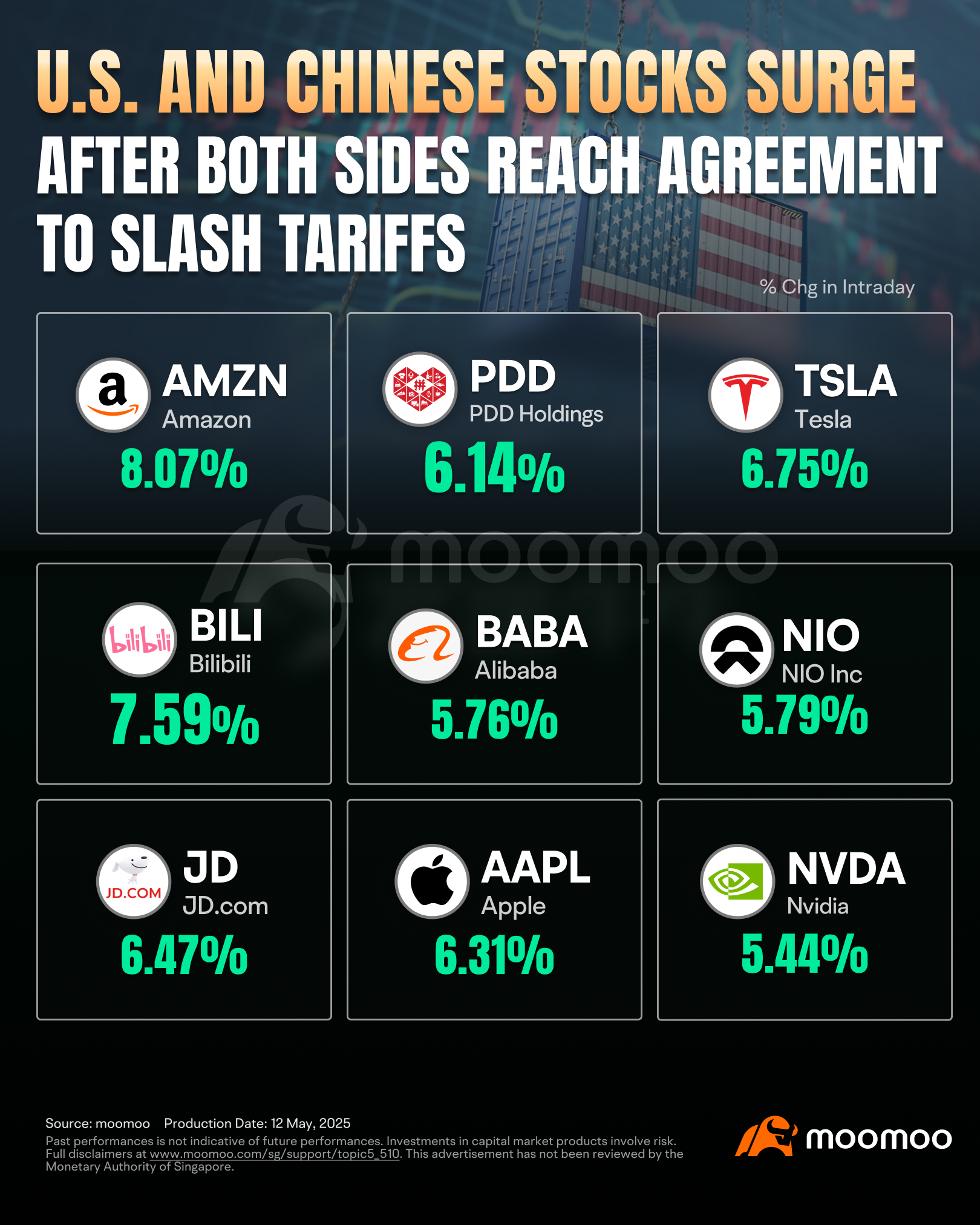
Here are 9 stocks that surged after both sides reached an agreement to slash tariffs: (Data as of May 12, 2025)
Amazon (AMZN)
Percentage Increase: 8.07%
Amazon is a multinational technology company based in the United States, and it is one of the world's largest e-commerce platforms, playing a significant role among American businesses. It offers a vast range of products from various categories. Additionally, Amazon has significant cloud computing services through Amazon Web Services (AWS), digital streaming, and artificial intelligence initiatives.
PDD Holdings (PDD)
Percentage Increase: 6.14%
PDD Holdings is a Chinese-based e-commerce company, one of the leading Chinese companies in the sector. It operates Pinduoduo, a popular e-commerce platform in China that focuses on group buying and offers a wide variety of consumer goods at competitive prices. It has grown rapidly by leveraging social commerce models.
Tesla (TSLA)
Percentage Increase: 6.75%
Tesla is an American automotive and energy company, known for its electric vehicles (EVs) that are exported worldwide. It is well-known for its electric vehicles (EVs), which have revolutionized the automotive industry. Tesla also manufactures solar panels and energy storage products like Powerwall, aiming to accelerate the world's transition to sustainable energy.
Bilibili (BILI.US)
Percentage Increase: 7.59%
Bilibili is a Chinese online entertainment platform that is expanding into other markets. It is well-liked by young people in China and provides a variety of content, such as anime, comics, games, and user-created videos. It has a unique community-driven model with features like bullet comments.

Alibaba (BABA.US)
Percentage Increase: 5.76%
Alibaba is a Chinese multinational conglomerate specializing in e-commerce, retail, Internet, and technology, contributing significantly to China's surplus. It operates several major e-commerce platforms such as Taobao and Tmall, which are dominant in the Chinese e-commerce market. It also has a significant presence in cloud computing through Alibaba Cloud.
NIO Inc. (NIO.US)
Percentage Increase: 5.79%
NIO is a Chinese-based electric vehicle manufacturer, with significant Chinese shipments to various markets. It designs, develops, and sells high-end electric vehicles. NIO also focuses on providing innovative battery-swapping services and a comprehensive user experience ecosystem for its EV customers.
JD.com (JD.US)
Percentage Increase: 6.47%
JD.com is a major Chinese e-commerce company, facing challenges from the US tariff policies. It is known for its reliable logistics and delivery services, as well as its wide range of genuine products. JD.com also has a significant presence in the consumer electronics and home appliances sectors in China.
Apple (AAPL)
Percentage Increase: 6.31%
Apple is an American multinational technology company, facing challenges from high tariffs on its products. It is famous for its consumer electronics products such as iPhones, iPads, Macs, and Apple Watches. Apple also has a strong software ecosystem with iOS, macOS, and services like the App Store and Apple Music.
Nvidia (NVDA)
Percentage Increase: 5.44%
Nvidia is an American technology company, facing challenges from non-tariff trade barriers in various markets. It is a leading manufacturer of graphics processing units (GPUs), which are widely used in gaming, professional visualization, data centers for artificial intelligence, and machine learning applications. Nvidia also develops automotive computing platforms for self-driving cars. For a deeper understanding of Nvidia's supply chain and its impact, including the pivotal role of TSMC, visit this informative page.
Read Also: Top China Stocks for Singapore Investors to Buy
Top 3 China Concept Stocks During Trump Tariff Changes

After the US and China held trade negotiations in Geneva on May 12, 2025, the Chinese-concept stocks shot up. According to the Financial Times, these stocks have shown resilience amid trade tensions. Here are 3 China-concept stocks with top trade volume: (Source: Track US-China Tariff Negotiation, as of May 12, 2025)
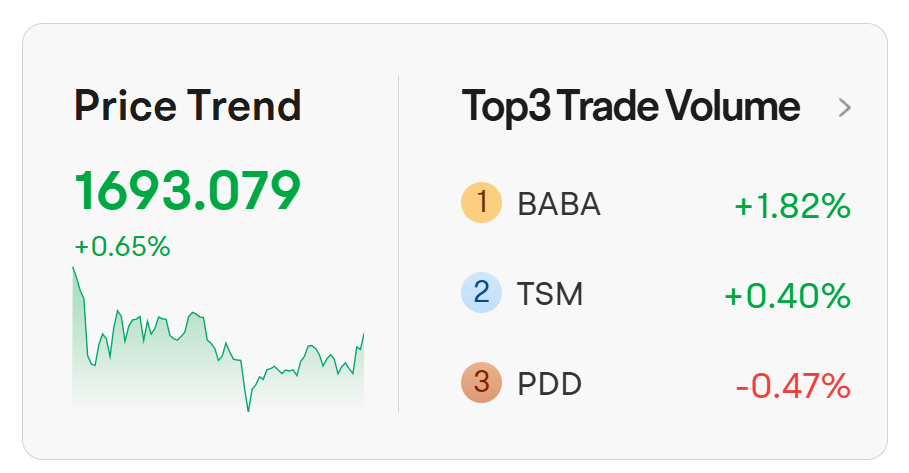
Firstly, Alibaba (BABA.US) is a leading Chinese e-commerce giant with a large ecosystem including online retail, cloud computing, and digital payment. Its 1.82% trading volume increase shows market confidence in its business and growth, given its influence in e-commerce. Secondly, Taiwan Semiconductor Manufacturing Company (TSM) is a global semiconductor-making powerhouse. It's 0.40% trading volume growth that matters, as it's vital to the global semiconductor supply chain for high-tech products. Lastly, PDD Holdings runs China's Pinduoduo e-commerce platform. Despite a 0.47% trading volume drop, it's still in the top three by overall volume, known for its group-buying and lower-tier market reach in e-commerce.
Read More: What is Hang Seng Index and How to Buy in Singapore
Top 9 Technology Stocks Amid Trump Tariff Shifts
Beyond the Mag 7—including Tesla, Microsoft, NVIDIA, Meta Platforms, Apple, Amazon, and Alphabet—several hot stocks surged on solid fundamentals and macro tailwinds. Here are the top 9 U.S. stocks in performance gains during the period from April 9, 2025, to May 12, 2025.
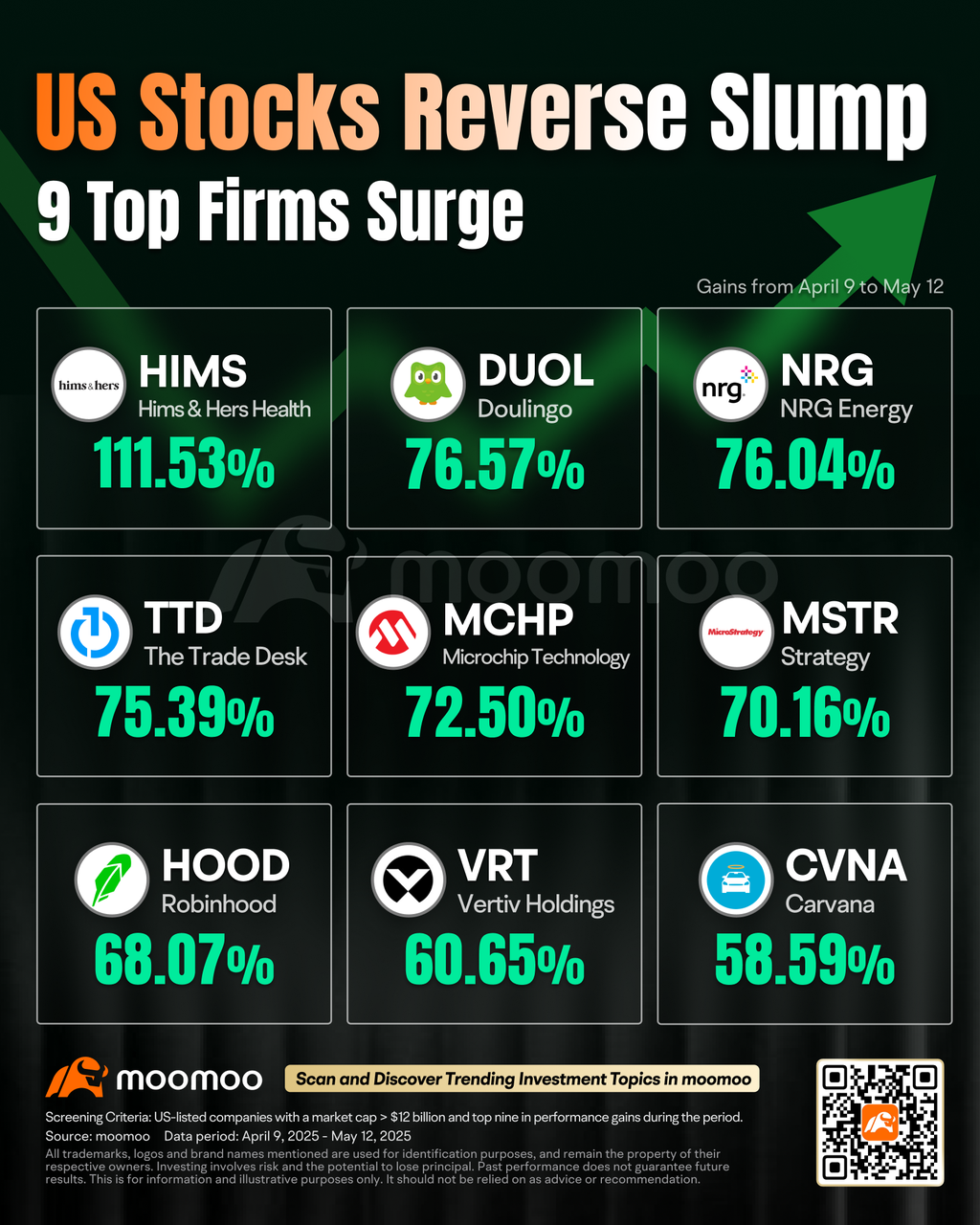
Telehealth company Hims & Hers Health (HIMS.US) soared 111% since April 9, driven by a partnership with Novo Nordisk to offer lower-priced Wegovy and strong Q1 results. Language-learning app Duolingo (DUOL.US) jumped 76%, hitting an all-time high after its stellar Q1 performance in user growth, subscriptions, and AI innovation. Energy firm NRG Energy (NRG.US) also gained 76%, approaching a $30 billion valuation, driven by stronger-than-anticipated Q1 earnings and a $12 billion acquisition to double its power generation capabilities. Other top performers included The Trade Desk (TTD.US), Microchip Technology (MCHP.US), Strategy (MSTR.US), Vertiv Holdings (VRT.US), and Carvana (CVNA.US), all reporting strong results. (Source: Moomoo Community)
Hims & Hers Health (HIMS)
Hims & Hers Health (HIMS.US) is a telehealth company. It offers a range of health-related services and products online. By leveraging digital platforms, it provides convenient access to healthcare, especially in areas like men's and women's wellness, and has seen significant growth, partly due to strategic partnerships.
Duolingo (DUOL)
Duolingo (DUOL.US) is a leading language learning app. It uses gamification techniques to make language learning fun and accessible. With a large user base globally, it has been successful in user acquisition and monetization through subscriptions, and is also exploring AI-driven innovations in education.
NRG Energy (NRG)
NRG Energy (NRG.US) is an energy firm. It operates in the power generation and energy retail sectors. The company has been growing through acquisitions, aiming to expand its power generation capacity. It also focuses on providing energy solutions to various customers, from residential to commercial.
The Trade Desk (TTD)
The Trade Desk (TTD.US) is a technology company in the digital advertising space. It provides a self-service cloud-based platform for buyers of advertising. It enables advertisers to create, manage, and optimize data-driven digital advertising campaigns across various devices and media channels.
Microchip Technology (MCHP)
Microchip Technology (MCHP.US) is a semiconductor company. It designs, develops, and manufactures a wide range of semiconductor products, including microcontrollers and analog semiconductors. These components are used in numerous electronic systems across industries like automotive, industrial, and consumer electronics.
Strategy (MSTR)
Strategy (MSTR.US) is a business intelligence (BI) and analytics firm. It offers software platforms that help businesses analyze and visualize data, enabling better decision - making. It has also been involved in cryptocurrency-related activities, using Bitcoin as a treasury reserve asset.
Robinhood (HOOD)
Robinhood is a fintech company that provides a commission - free trading platform. It has made investing accessible to a large number of retail investors, especially younger generations. The platform offers trading in stocks, options, cryptocurrencies, and exchange-traded funds (ETFs).
Vertiv Holdings (VRT)
Vertiv Holdings (VRT.US) is a company focused on critical infrastructure and continuity solutions. It provides power, thermal management, and infrastructure management products and services for data centers, communication networks, and industrial facilities. This helps ensure the reliable operation of these essential systems.
Carvana (CVNA)
Carvana (CVNA.US) is an e-commerce platform for buying and selling used cars. It offers a convenient, online-only car-buying experience, including features like home delivery and a 7-day return policy. It has disrupted the traditional used car dealership model through its digital first approach.
Buying US and China Stocks on Moomoo SG: Navigating Tariff Opportunities
As Trump's 2025 tariff policies reshape global trade dynamics, investors using Moomoo SG—a popular online trading platform in Singapore—must recalibrate their strategies, considering the potential national security threat posed by foreign investments. Here's how to approach equity allocations in both economies amid escalating trade tensions:
Moomoo SG Tools for Tariff-Era Trading
Real-Time Alerts: Set up price/news triggers for tariff-sensitive stocks (e.g., Apple, BYD).
Research Access: Leverage Moomoo's analyst reports to gauge sector-specific tariff impacts.
Community Insights: Participate in forums to crowdsource trade ideas from Singapore-based investors navigating similar risks.
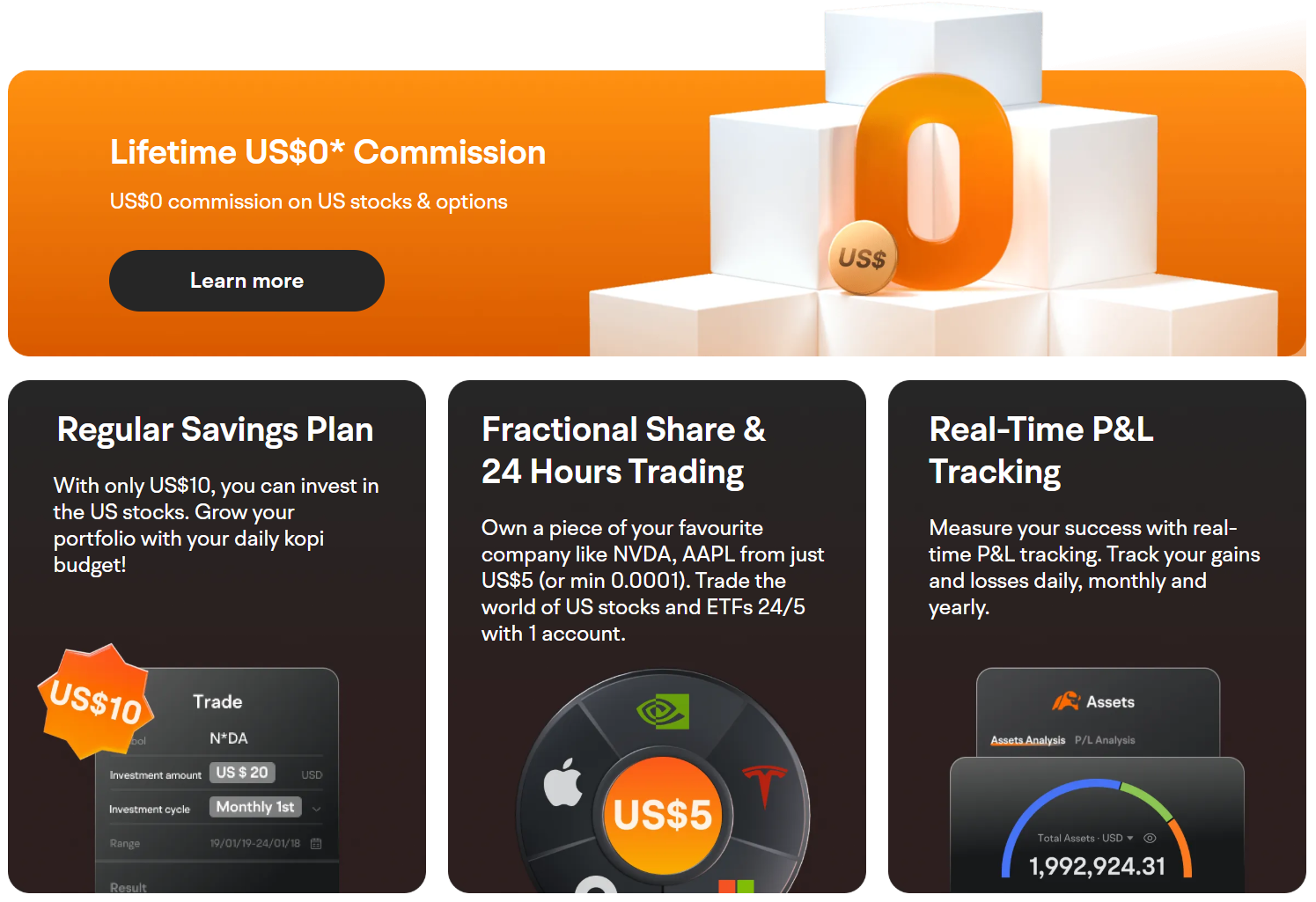
Lifetime 0 Commission* on US Stocks
When you invest in US stocks through our platform, you'll enjoy a lifetime 0 commission* structure, meaning we literally charge no fees for trading. This means more of your money stays in your pocket, allowing you to maximize your returns without the burden of excessive trading fees. Plus, with Moomoo, you can trade US stocks 24/5. That's right—round-the-clock trading is available five days a week. Whether it's pre-market, post-market, or overnight, you can seize opportunities as they arise, reacting promptly to global financial news and market movements.
Invest Anytime & Anywhere on Moomoo SG
An intuitive user interface that's compatible with multiple devices lets you manage your portfolio easily, no matter when or where you are.
Conclusion

In conclusion, the landscape of Trump tariffs in 2025 presents a complex web of opportunities and challenges for the world's economies, including the Singapore stock market. As we've explored, understanding the intricacies of these tariffs is crucial for investors.
The implications of Trump tariffs have far-reaching consequences, not only for the US-China trade relationship but also for a multitude of sectors. Key sectors such as manufacturing, agriculture, and technology have been significantly impacted, with some facing headwinds while others find new avenues for growth.
Platforms like Moomoo SG offer investors a means to navigate these tariff-influenced markets. With features such as lifetime 0 commission on US stocks and 24/5 trading, investors can take advantage of emerging opportunities more effectively.
Looking ahead, the future of the US-China trade deal remains uncertain, and Trump tariffs will continue to be a key factor in shaping the global economic and investment landscape. Staying informed, closely monitoring key sectors and stocks, and leveraging the right trading platforms will be essential for investors seeking to thrive in this environment. As the situation evolves, adaptability and a deep understanding of the interplay between tariffs and markets will be the keys to successful investing in 2025 and beyond.

This presentation is for informational and educational use only and is not a recommendation or endorsement of any particular investment or investment strategy. Investment information provided in this content is general in nature, strictly for illustrative purposes, and may not be appropriate for all investors. Read more