Effortlessly Generate Passive Income: Why Are Canadian High-Dividend Stocks Attractive?
What are the best investment options in Canada? Many consider buying stocks but are concerned about high risks and potentially low returns. Are real estate or REITs still reliable investment choices at present?
For most new immigrants, navigating complex tax issues is already a significant challenge, let alone dedicating time and effort to researching various investment strategies. Are there any stable options for earning interest income?
Canadian high-dividend stocks represent a compelling option, particularly for conservative investors. You can easily generate stable passive income without needing to spend excessive time analyzing complex stock price fluctuations.
Why are Canadian high-dividend stocks worth investing in?
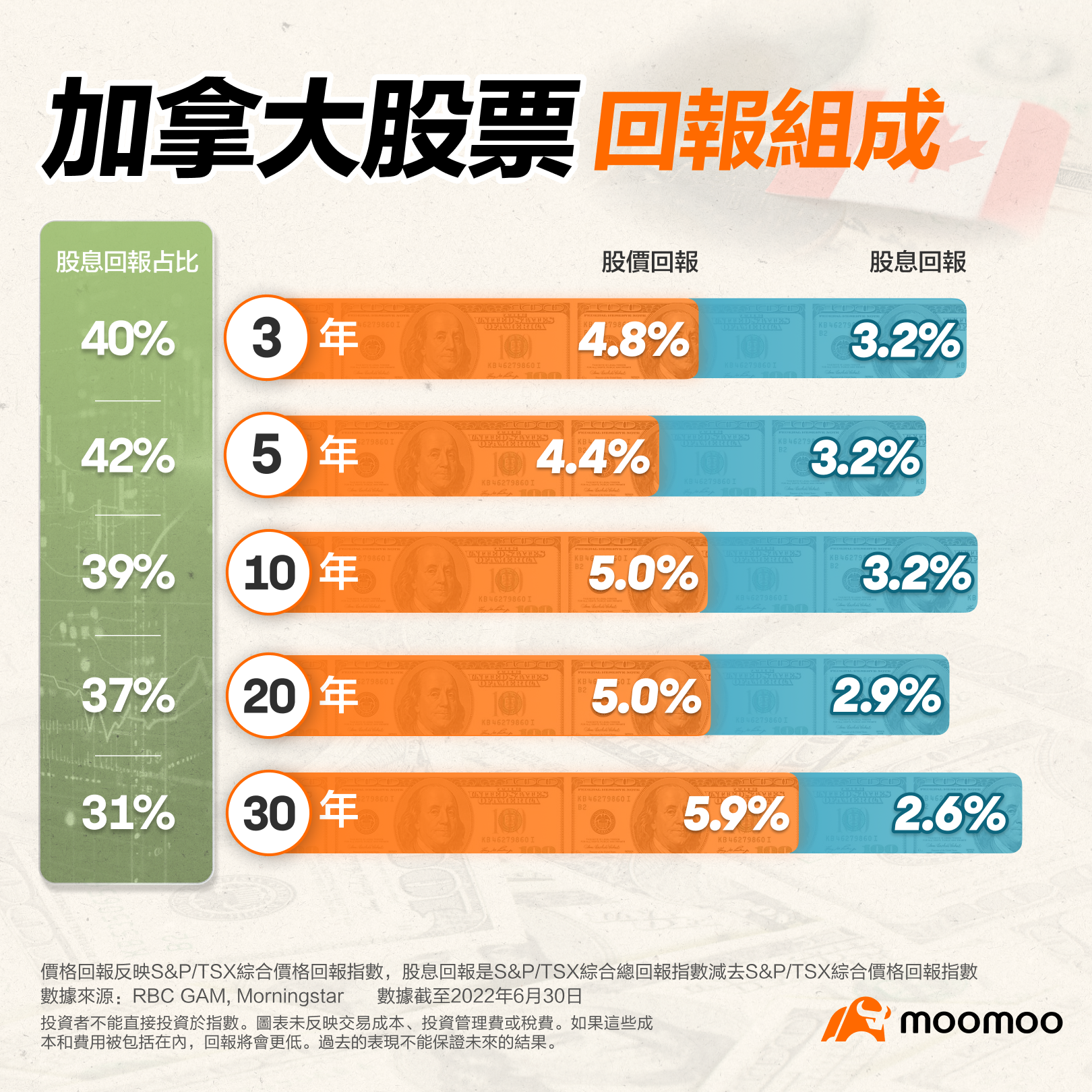
1. Over the past 30 years, dividends have accounted for 30% of the total return in the Canadian stock market.
Stock prices inevitably experience volatility, and markets cycle between bull and bear phases. Canadian high-dividend stocks are typically issued by mature companies that are leaders in their respective industries. Consequently, they are less susceptible to market fluctuations or economic downturns. During bear markets, high-dividend stocks generally outperform low- or non-dividend-paying stocks.
As illustrated in the chart below, dividends contributed 30% to the total return of the Canadian stock market over the past 30 years. Looking specifically at the overall stock returns of the last three years, dividend returns accounted for 40%, underscoring the significant role dividends play in investor returns.
2. Dividends outpace inflation
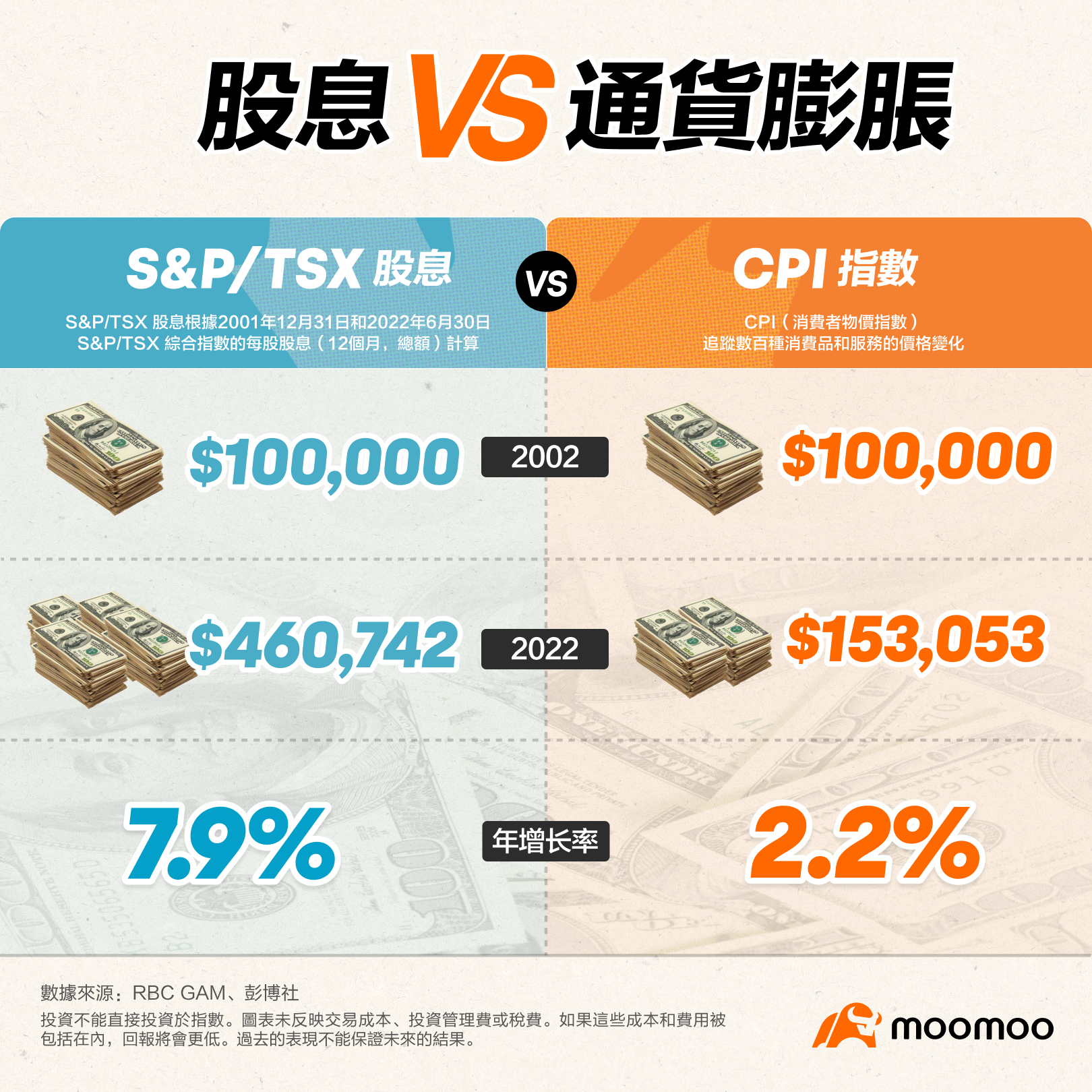
Dividends are not only a crucial component of investment returns but also help investors hedge against the impact of inflation. The table below compares the growth of dividends and inflation from 2002 to 2022.
The results indicate that dividend growth outpaced inflation over this 20-year period. During this timeframe, dividends in the Canadian market grew at an annual rate of approximately 7.9%, while the inflation rate averaged only 2.2% per year. By 2022, dividends had increased by 361%, whereas inflation-driven price increases amounted to 53%, significantly enhancing the purchasing power of investors receiving dividends.
3. Investing in High-Dividend Stocks: Earning Both Income and Capital Gains
Investing in high-dividend stocks not only provides regular dividend income but also offers the potential for capital appreciation during favorable market conditions. This dual benefit makes the returns from high-dividend stocks quite attractive.
First, Canadian high-dividend stocks typically pay dividends higher than the market average, providing investors with a stable source of income. This income can be used to supplement other earnings or reinvested to achieve long-term returns.
Second, Canadian high-dividend stocks also have the potential for capital appreciation. These stocks are usually issued by companies with stable operations, strong profitability, and a consistent track record of dividend payments. Over the long term, they have the potential to grow, delivering capital gains to investors.
4. Dividends Also Offer Tax Advantages
When investing in high-dividend stocks, Canadian investors often tend to focus on domestic companies. Why? This is because dividends paid by eligible Canadian corporations qualify for preferential tax treatment, which can reduce the investor's overall tax burden.
Eligible corporations: The tax credit is calculated by grossing up the actual amount received by 138%, and then applying the provincial tax credit. For example, the effective tax rate on dividends for taxpayers in the highest bracket is 39.34% in Ontario; 36.54% for top-income residents in British Columbia; 40.11% in Quebec; and 34.31% in Alberta.
Do Canadian High-Dividend Stocks Offer Higher Yields Than U.S. Stocks?
As the world's largest stock market, why not invest in high-dividend U.S. stocks? There are two main reasons:
1. Dividend Yield
Perhaps more importantly for income-oriented investors, how much dividend income can be generated by investing in high-yield Canadian stocks?
In fact, for over two decades, the current dividend yield of the Canadian stock market has been significantly higher than that of the U.S. stock market. As shown in the chart, the dividend yield advantage of the Canadian market is continuing to widen.
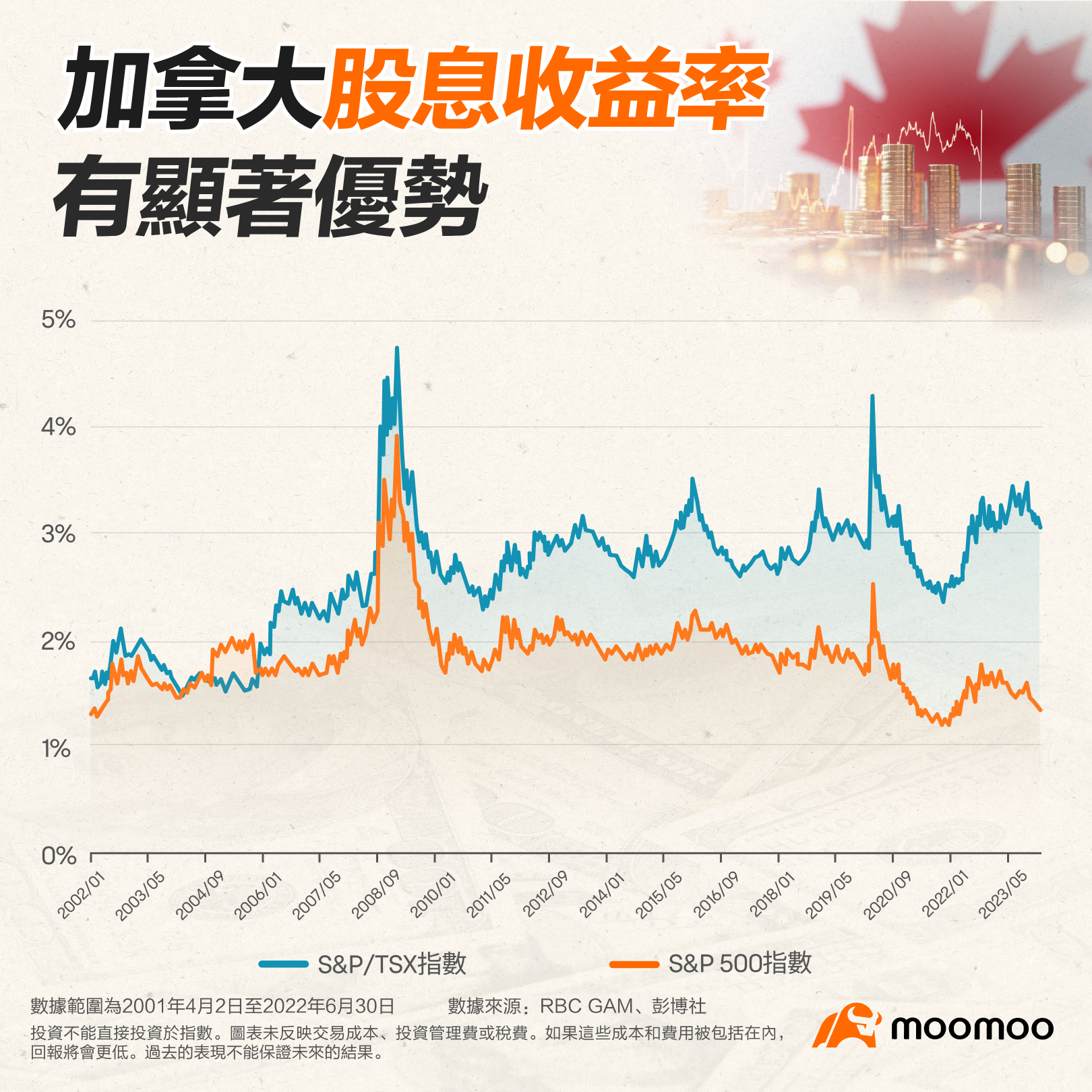

What has caused this divergence? There are two primary reasons:
First, the S&P/TSX Composite Index is heavily weighted toward mature companies in cyclical industries. The energy, financials, industrials, and materials sectors collectively account for approximately two-thirds of the Canadian index.
In contrast, the S&P 500 Index includes many growth-oriented companies, with the information technology sector comprising more than 25% of the index. Unlike mature companies, growth firms tend to pay fewer dividends, preferring to retain cash flow to fund business expansion opportunities.
Second, valuation differences.
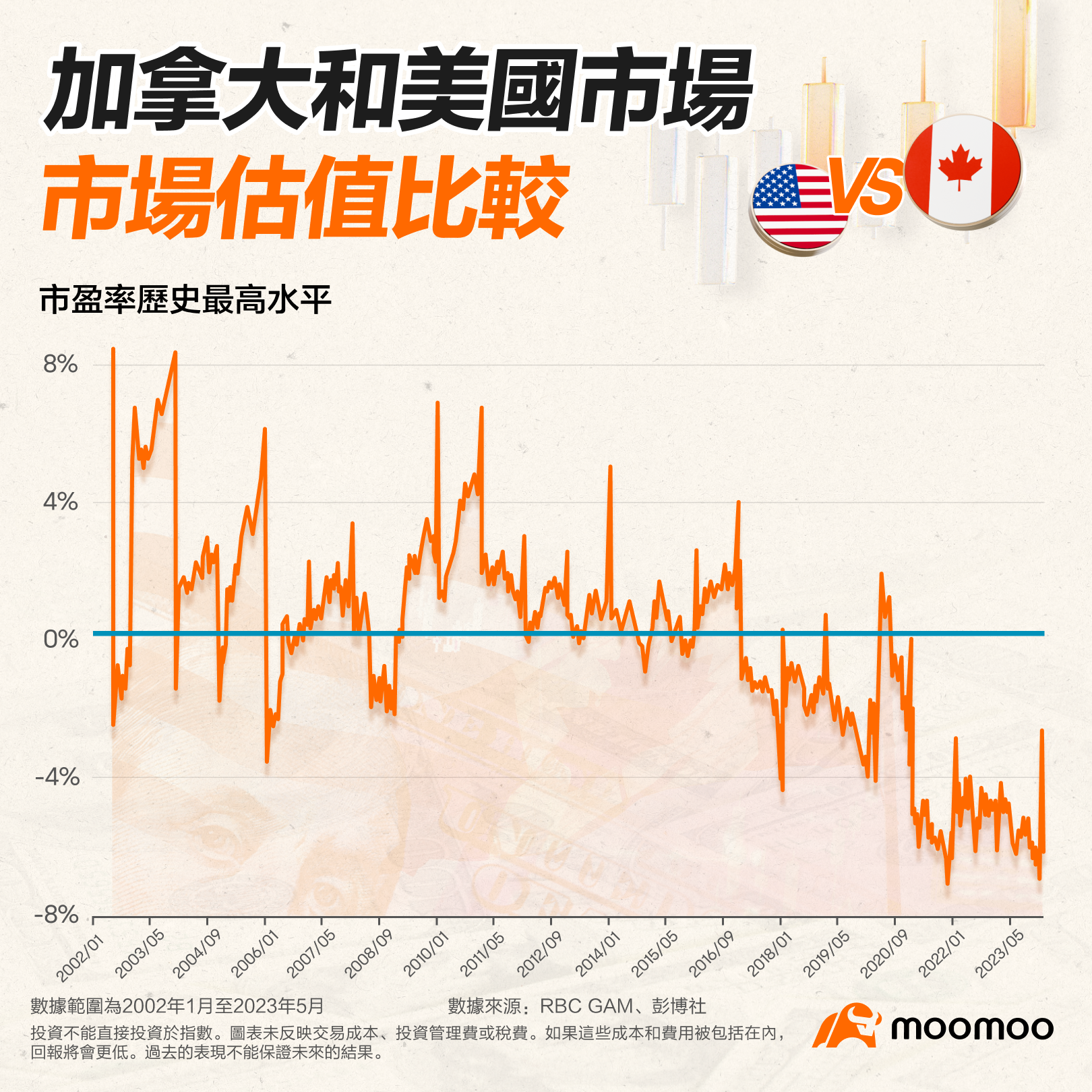
As the world’s largest equity market, the United States has a much larger market capitalization than Canada, making direct comparisons difficult. Therefore, a straightforward approach is to use the price-to-earnings (P/E) ratio for valuation comparison.
Specifically, this involves comparing a company’s current share price with its earnings per share. A lower P/E ratio may indicate that the stock is undervalued relative to its earnings potential, which could present a potential investment opportunity for investors.
As illustrated in the chart below, the overall P/E ratio of the Canadian stock market is currently lower than that of the U.S. stock market, presenting a relatively attractive opportunity for investors in the Canadian market.
Which industries dominate the Canadian dividend market?
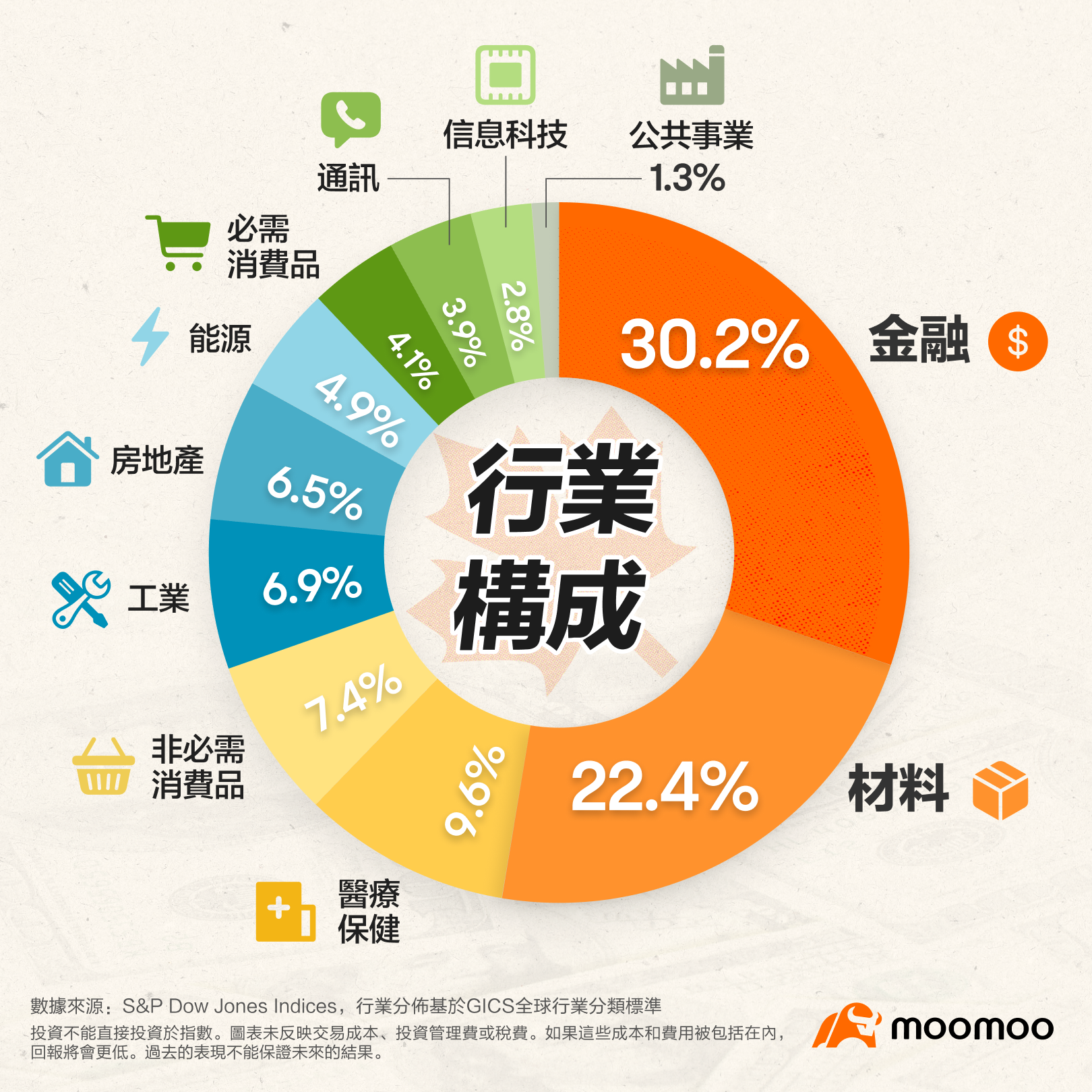
The S&P/TSX Composite High Dividend Index provides insight into the main components of Canada’s high-dividend equity market. Comprising 50 to 75 stocks selected from the S&P/TSX Composite Index, this strategy index focuses on dividend income.
As shown in the chart below, the financials and materials sectors account for the largest proportions of high-dividend stocks, followed by healthcare and consumer goods.
Do price fluctuations, such as those caused by economic turmoil or falling oil prices, pose challenges to consistent dividend payments? Historical data suggests the impact is limited: approximately one-third of the constituents of the S&P/TSX Composite High Dividend Index have maintained a record of stable dividend growth over the past five years, compared to only 10% two decades ago.
How to Screen for High-Dividend Stocks?
Given that Canadian high-dividend stocks are worthy of investment, how should investors screen for suitable candidates? Two key metrics to consider are dividend yield and dividend payout ratio; higher ratios may indicate more attractive investment opportunities.
1. Dividend Yield:This metric represents the amount of dividend received per dollar invested, also known as the current yield or return rate.
It is calculated as: [Annual Dividend per Share / Current Share Price] × 100%. For example, if a stock pays $1 in dividends annually and its current price is $20, the dividend yield is 5%.
However, dividend yield and share price are often inversely related. When the dividend remains unchanged, a rise in share price leads to a lower yield, while a fall in share price results in a higher yield. Therefore, investors who buy stocks solely based on high dividend yields may incur losses if the share price declines.
2. Dividend Payout Ratio:It indicates how much a company distributes as dividends for every dollar of earnings.
The calculation method is: [Dividends Per Share (Annual) / Earnings Per Share] * 100%. For instance, if a stock pays $1 in dividends per share annually and the company's earnings per share are $20, the payout ratio would be 5%.
This metric reflects the company's generosity; clearly, a higher payout ratio indicates a greater willingness to distribute profits.
However, investors should also note:
Neither dividend yield nor payout ratio should serve as the sole indicator for assessing stock value. If a company allocates the majority of its earnings to dividends without retaining sufficient capital for future development or investment, its long-term growth prospects may be constrained.
Pay attention to the stability of dividends. Some companies may offer generous payouts one year but suspend them the next; such companies should be avoided. Therefore, it is advisable to review whether both the dividend yield and payout ratio have remained consistent over the past three years.
Select companies with a track record of long-term share price appreciation. The key to achieving compounding returns through dividends lies in whether the stock price can sustain long-term growth after dividend payments. Since dividend distributions effectively reduce the share price by the corresponding amount, if a company's stock price fails to rise or experiences prolonged declines, investors will find it difficult to generate substantial returns from dividends alone, regardless of the payout level.
Overall, given the Canadian market environment, a long-term allocation to high-dividend stocks is a sound strategy. Naturally, determining the optimal timing for investing in Canadian high-dividend stocks requires consideration of multiple factors, including economic conditions, policy environments, and industry outlooks.
It is important to note that investing in Canadian high-dividend stocks carries risks, including market risk, interest rate risk, and stock selection risk. Investors should comprehensively evaluate these factors in light of their own risk tolerance and investment objectives to determine suitability. Additionally, investors should practice diversification to avoid excessive concentration in any single sector or stock, thereby mitigating investment risk.
Easily identify your preferred high-dividend stocks on moomoo. Invest using a TFSA account to enjoy tax-free dividend returns. Open a moomoo account now and receive exclusive perks upon funding!

This presentation is for informational and educational use only and is not a recommendation or endorsement of any particular investment or investment strategy. Investment information provided in this content is general in nature, strictly for illustrative purposes, and may not be appropriate for all investors. Read more