Understanding Options : A Beginner's Guide

Options are a versatile investment tool that could enhance capital efficiency. With a relatively small investment, they provide access to a wide range of potential market opportunities. Their flexibility allows investors to manage risks associated with market fluctuations, and their unique trading mechanics offer the potential for diverse income streams. This article explains, in simple terms, what options are, their basic structure, and how to locate them. For those interested in exploring options, here's an introductory guide.
1. What Are Options?
An option is a contract that grants the holder the right, but not the obligation, to buy or sell an underlying asset at a predetermined price on or before a future date. The key feature is the "right" aspect—it's a choice, not a requirement, for the holder to act.
Consider a real-world analogy: purchasing a property. Suppose there's concern that the property price might rise. A deposit is paid to secure the right to buy it at a set price within a set of period. If the price increases, the property can still be purchased at the lower set price. If the price decreases, the buyer can opt not to proceed, potentially losing some or all of the deposit. Options operate similarly, but instead of property, the underlying asset might be stocks, indices, or other securities.

This illustrates one of options' primary functions: locking in prices or managing risk. However, their utility extends further, serving varied purposes depending on the user.
For Investors: Options function as a protective mechanism, akin to an umbrella. If there's concern about a market downturn, they can serve as a hedge, potentially mitigating losses and can assist in safeguarding a portfolio. They could also generate additional income during market fluctuations.
For Traders: Options resemble a toolbox. They are able to leverage on a smaller investment to tap into greater market potential, especially for relatively short-term opportunities. Their adaptability allows traders to adjust strategies and optimize capital use, though this leverage can amplify both gains and losses.
For Businesses: Options help manage price risk. A company dependent on raw materials, for instance, can use options to secure prices in advance, helping to provide cost stability and protection against unexpected price swings.
Whether the goal is to hedge risk or potentially capitalize on opportunities, options may suit individuals based on their experience, risk tolerance, financial situation, and trading objectives. Understanding their basic components is the first step.

2. Key Components of Options
Options consist of three essential elements: the premium, the strike price, and the expiration date.
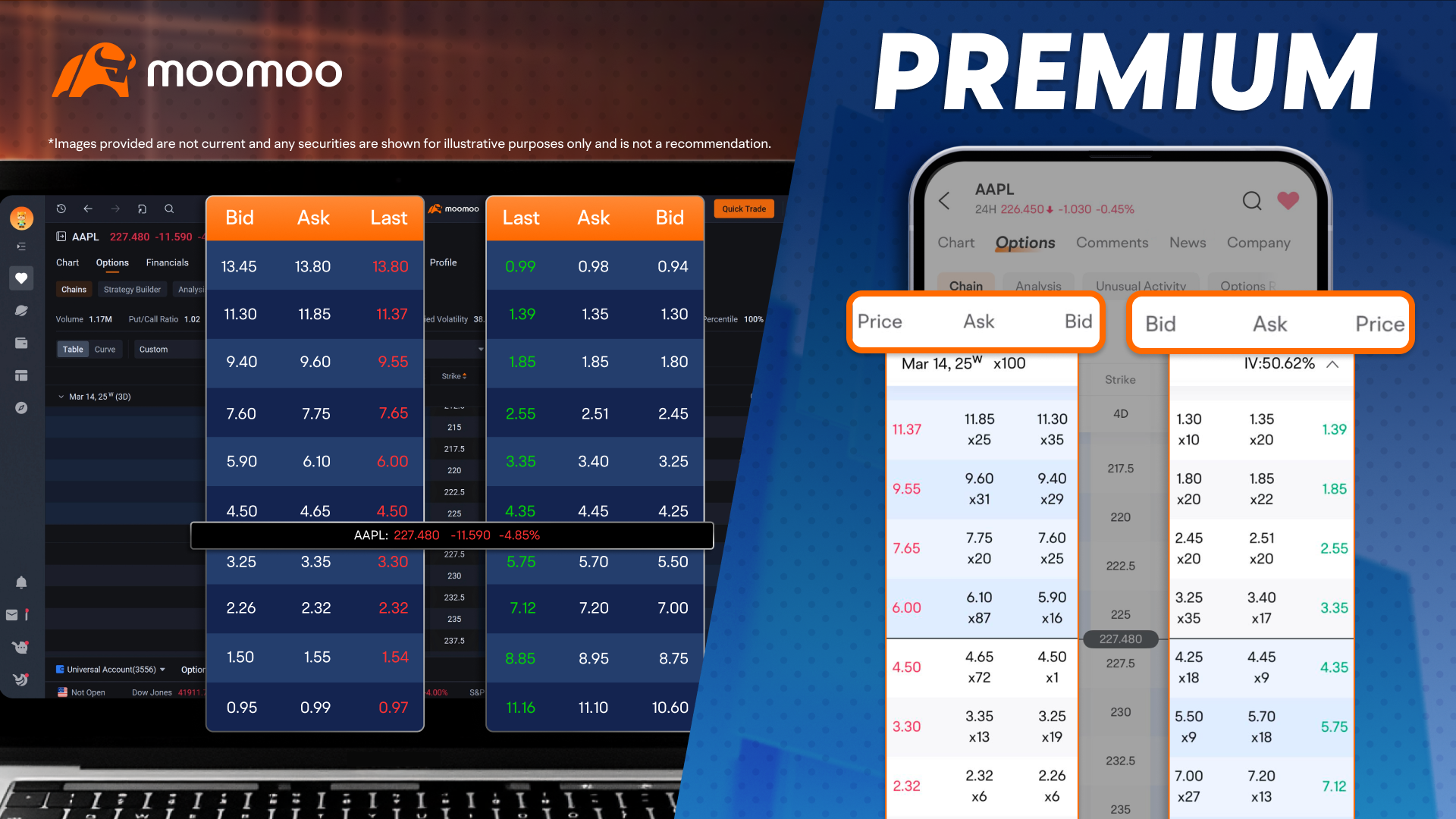
3. Premium
The premium is the price paid to buy or sell an option contract. For the buyer, it represents the cost of obtaining the right to buy or sell the underlying asset. Typically, one option contract corresponds to 100 shares (Option Contract Multiplier) of the underlying asset. For example, if the premium for an option is $2, the total cost would be $200 ($2 × 100 shares) to purchase that contract.
The premium fluctuates based on factors such as the underlying asset price, the time until expiration, and market volatility. Since an option's premium changes over time, you can choose to close it before expiration, depending on its market price at that time. However, if the option is out of the money and held until expiration, the premium paid is lost, as the contract will expire worthless.
While pricing can get complex, for now, the main takeaway is that the premium is the buyer's cost of purchasing the option, and each contract corresponds to 100 shares of the asset.
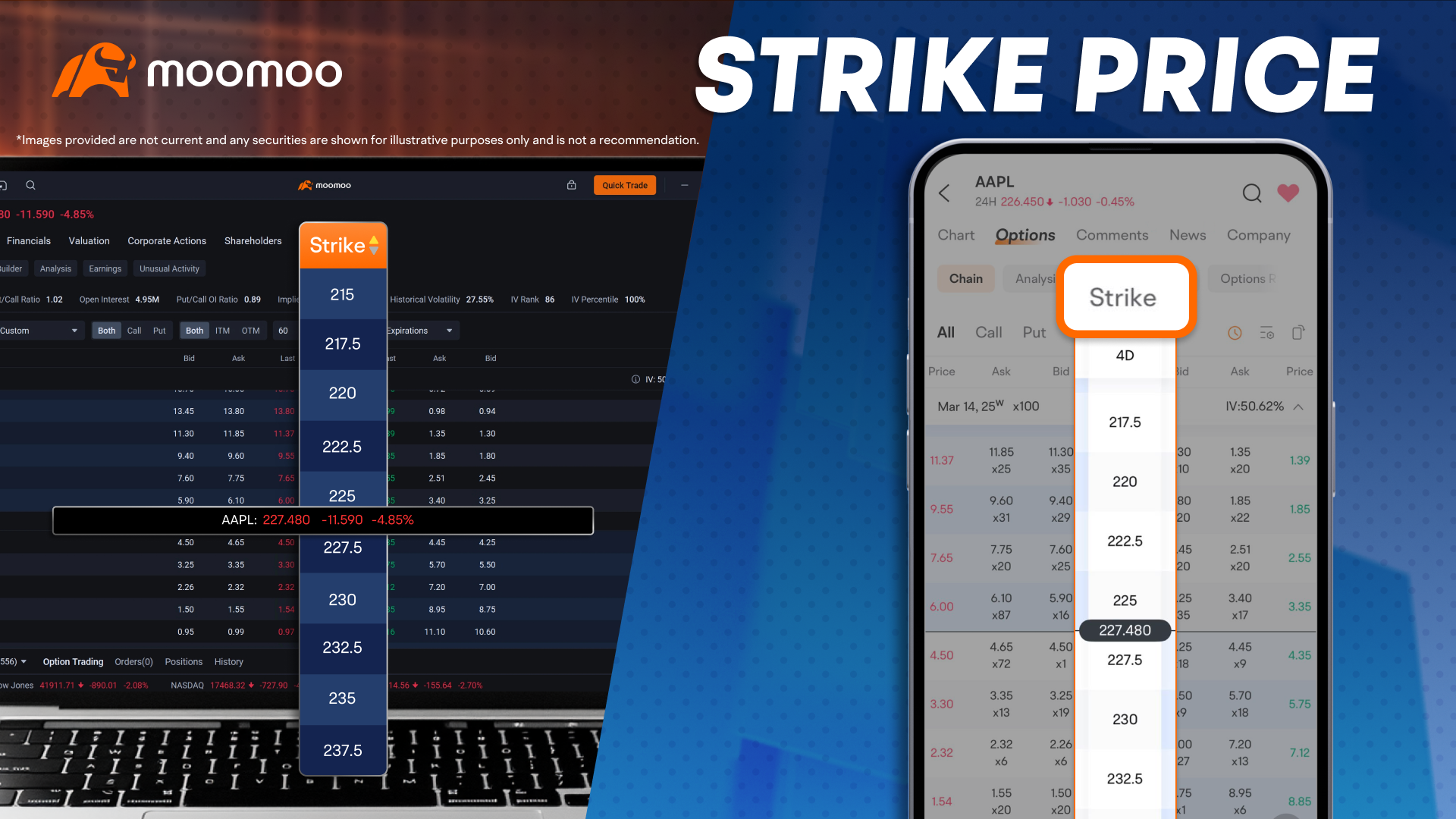
4. Strike Price
The strike price is the predetermined price at which the underlying asset can be bought or sold under the option contract. Using the property analogy, it's like agreeing to buy a property at a set price within a set period. In options trading, the strike price is the set price at which you can buy or sell the underlying asset if you choose to exercise the option.
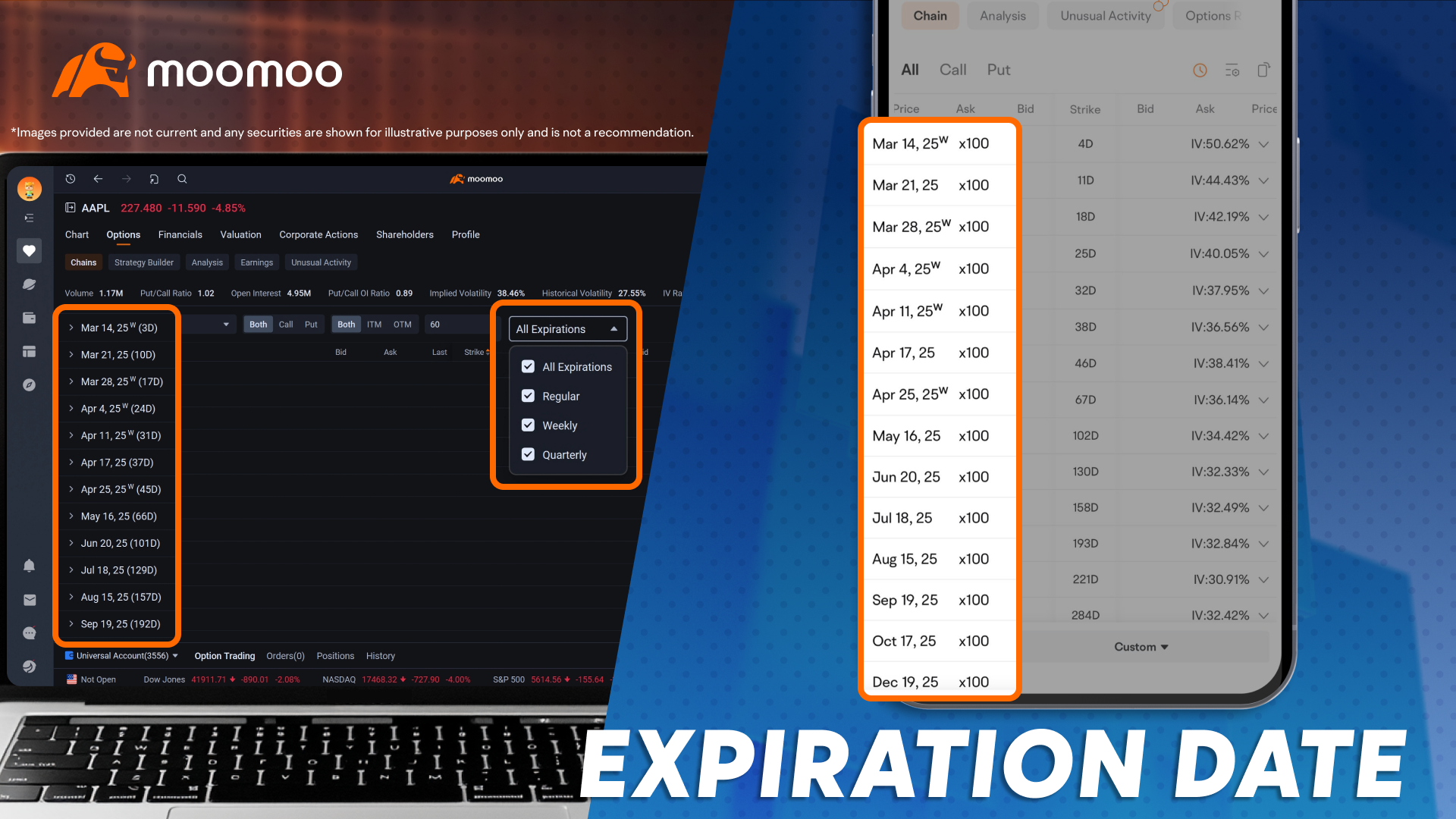
5. Expiration Date
Every option has an expiration date, which marks the deadline by which the buyer must decide whether to exercise the contract. If the option is out of the money (OTM) and is not exercised by this date, it expires and becomes void. We will cover OTM options in detail in a later lesson. For now, it's important to understand that every option has an expiration date and that there are different types of expirations. Expiration dates vary depending on the option type:
Weekly options typically expire on Fridays.
Monthly options, the most common, usually expire on the third Friday of each month.
Quarterly options, often tied to index options, expire at the end of each quarter, though they're less common for individual stocks.
LEAPS (Long-Term Equity Anticipation Securities) have expiration dates extending a year or more.

6. Rights and Obligations
Options trading involves both buyers and sellers. Buyers purchase the right to exercise the option, while sellers, who provide the contract, have an obligation to fulfill it if exercised.

For example, if a buyer exercises an option to buy an underlying asset, the seller must deliver it at the agreed strike price. This dynamic mirrors the property scenario: if the buyer opts to purchase, the seller must complete the sale at the set price. The buyer decides whether to act, while the seller must comply if the option is exercised.
In simple terms, the buyer has the right to decide whether to exercise the option, while the seller is obligated to fulfill the terms of the contract if the buyer chooses to exercise.

Options are a flexible tool for navigating financial markets, offering ways to lock in prices, manage risks, or pursue potential opportunities. By grasping the essentials—the premium, strike price, and expiration date—you’ve built a solid starting point. This basic understanding opens the door to further learning. In the next lesson, we’ll explore the differences between Call and Put options and dive into strategies to help you navigate them effectively.
Disclaimer
Options trading entails significant risk and is not appropriate for all customers. It is important that investors read Characteristics and Risks of Standardized Options before engaging in any options trading strategies. Opening new options positions close to or on their expiration date comes with substantial risk of losses for reasons that include potential volatility of the underlying security and limited time to expiration. Options transactions are often complex and may involve the potential of losing the entire investment in a relatively short period of time. Certain complex options strategies carry additional risk, including the potential for losses that may exceed the original investment amount. Supporting documentation for any claims, if applicable, will be furnished upon request.
This presentation is for informational and educational use only and is not a recommendation or endorsement of any particular investment or investment strategy. Investment information provided in this content is general in nature, strictly for illustrative purposes, and may not be appropriate for all investors. It is provided without respect to individual investors’ financial sophistication, financial situation, investment objectives, investing time horizon, or risk tolerance. You should consider the appropriateness of this information having regard to your relevant personal circumstances before making any investment decisions. Past investment performance does not indicate or guarantee future success. Returns will vary, and all investments carry risks, including loss of principal. Moomoo makes no representation or warranty as to its adequacy, completeness, accuracy or timeliness for any particular purpose of the above content.
Moomoo is a financial information and trading app offered by Moomoo Technologies Inc.
In the U.S., investment products and services available through the moomoo app are offered by Moomoo Financial Inc., a broker-dealer registered with the U.S. Securities and Exchange Commission (SEC) and a member of Financial Industry Regulatory Authority (FINRA)/Securities Investor Protection Corporation (SIPC).
In Singapore, investment products and services available through the moomoo app are offered through Moomoo Financial Singapore Pte. Ltd. regulated by the Monetary Authority of Singapore (MAS). Moomoo Financial Singapore Pte. Ltd. is a Capital Markets Services Licence (License No. CMS101000) holder with the Exempt Financial Adviser Status. This advertisement has not been reviewed by the Monetary Authority of Singapore.
In Australia, financial products and services available through the moomoo app are provided by Moomoo Securities Australia Limited, an Australian Financial Services Licensee (AFSL No. 224663) regulated by the Australian Securities and Investment Commission (ASIC). Please read and understand our Financial Services Guide, Terms and Conditions, Privacy Policy and other disclosure documents which are available on our website https://www.moomoo.com/au.
In Canada, order-execution only services available through the moomoo app are provided by Moomoo Financial Canada Inc., regulated by the Canadian Investment Regulatory Organization (CIRO).
In Malaysia, investment products and services available through the moomoo app are offered through Moomoo Securities Malaysia Sdn. Bhd.("Moomoo MY") regulated by the Securities Commission of Malaysia (SC). Moomoo Securities Malaysia Sdn. Bhd.is a Capital Markets Services Licence (License No. eCMSL/A0397/2024) holder. This advertisement has not been reviewed by the SC.
Moomoo Technologies Inc., Moomoo Financial Inc., Moomoo Financial Singapore Pte. Ltd., Moomoo Securities Australia Limited and Moomoo Financial Canada Inc., and Moomoo Securities Malaysia Sdn. Bhd.are affiliated companies.
This presentation is for informational and educational use only and is not a recommendation or endorsement of any particular investment or investment strategy. Investment information provided in this content is general in nature, strictly for illustrative purposes, and may not be appropriate for all investors. Read more