Avoid the trap: don’t buy cheap options blindly
Ever seen options priced at $0.01 or $0.05 and thought it was a bargain? It feels low risk, high upside. But in reality, these trades are where many beginners lose money.
Most low-priced options expire worthless. What looks cheap is often just a low probability trade.
Why cheap options are riskier than they look
An option’s price is made up of two parts: intrinsic value and time value.Cheap options usually lack real (or intrinsic) value and rely entirely on the chance of a big move in your favour.
Here is what is often going on under the surface.
No intrinsic value
You are relying purely on timing
Most cheap options are far (or deep) out of the money. This means the underlying price is nowhere near the strike price.
Example
If a stock is trading at $250, a call option with a $350 strike price might cost just a few cents. There is no intrinsic value, only time value.
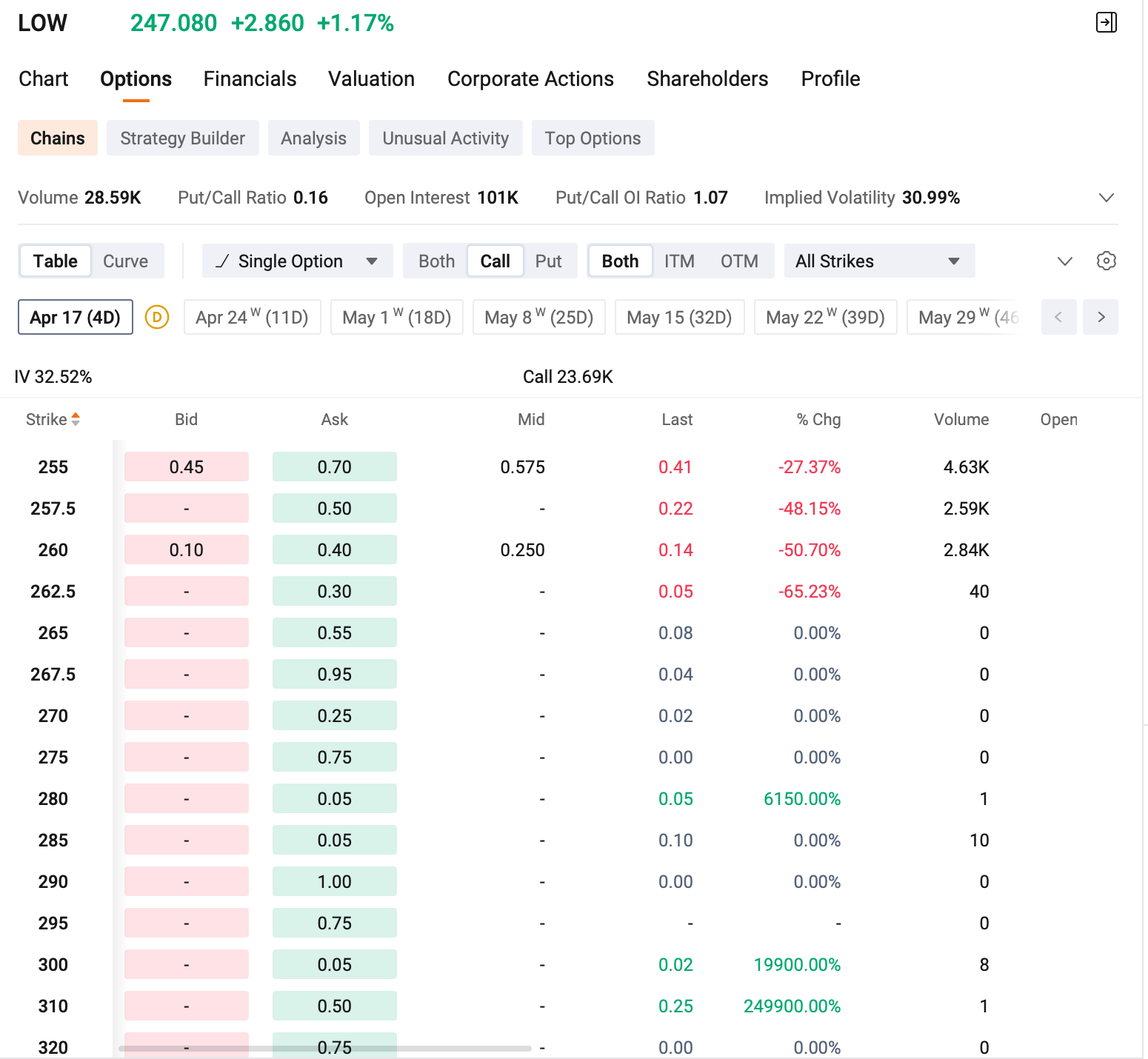
If the stock does not move significantly before expiry, the option becomes worthless.
Very short time to expiry
There is little room for error
Many low-priced options expire within days. That leaves very little time for the trade to work.
Even if the stock moves in the right direction, it may not move far enough or fast enough to reach the strike price before expiry.
Low liquidity
You may not be able to exit
Cheap options often have low trading volume and wide spreads.
You might buy at one price but struggle to sell, especially if there are few buyers. This can leave you stuck in the position as its value drops.
Example: how “cheap” turns into a full loss
Let’s say a stock is trading at $180. You buy call options with a $220 strike expiring in one week for $0.04.
You spend $40 across multiple contracts, thinking the upside is worth it.
A week later:
the stock rises to $195
still well below the $220 strike
the option has no intrinsic value at expiry
Result
The option expires worthless and you lose the full $40.
How to avoid the cheap option trap
Instead of treating options like a lottery, focus on understanding the trade.
Look at:
how far the strike price is from the current price
how much time is left until expiry
whether there is enough liquidity to enter and exit and narrow bid/ask spread
If an option is cheap, ask why. There is usually a reason and more often than not it is the very low probability that it will expire in the money.
A more practical approach
Some platforms provide tools that can help you assess risk more clearly, such as:
risk indicators that flag high time decay or low probability trades
breakdowns of intrinsic versus time value
estimates of how quickly the option may lose value
These can help you make more informed decisions rather than relying on guesswork.
Final takeaway
Cheap does not mean good value.
Low-priced options often come with high risk and a low chance of success. The goal is not to find the cheapest contract, but to understand what you are actually buying.
Options trading is about managing risk, not chasing unlikely outcomes.
This presentation is for informational and educational use only and is not a recommendation or endorsement of any particular investment or investment strategy. Investment information provided in this content is general in nature, strictly for illustrative purposes, and may not be appropriate for all investors. Read more