What Is Social Trading
The practice of social trading is a method of dealing that gives traders and investors the ability to mimic and carry out the trading tactics of their colleagues or those with more extensive knowledge. In contrast to the majority of traders who do their own fundamental and technical research, a subset of traders find it more beneficial to monitor and copy the analysis of other traders.
Many people consider social trading a social network because it allows traders to communicate with one another, observe and learn from the transactions of other traders, and get insight into how decisions are made.
How does social trading function?
Social trading functions by providing access to financial markets and enables traders of varying levels of expertise to closely mimic one another's deals and exchange trading methods. Thanks to recent technological developments and improved trading platforms, it is now less complicated than it has ever been to participate in social trading. You can use an all-inclusive social trading platform or adopt some aspects of the activity.
A fully integrated social trading platform, often known as a "copy trading" or "mirror trading" feature, allows traders to share their trading methods with one another via the use of a "copy trading" or "mirror trading" function. A social trader, similar to a user on a social networking site, would have the opportunity to "subscribe" to the channel of another trader, whose positions would be displayed on a live stream, and the trader would also have the ability to mimic the other trader's trades. Therefore, if trader A completes a transaction, trader B will also meet the identical transaction automatically.
Social trading networks often have a leaderboard based on popularity and success rate. This incentivizes experienced traders to share their trading techniques since they could be rewarded with money and prestige for doing so.
Traders can also use social trading ideas while maintaining complete control over their transactions by utilizing several different signals and indicators. Social trading may be used to validate the results of other types of analysis since it considers the feelings and actions of other traders toward the market.
What should you know if considering social trading?
The practice of social trading is only suitable for some. It has been criticized for downplaying a significant amount of the information necessary to successfully navigate financial markets. However, it has been lauded for removing some of the obstacles preventing people from accessing financial services.
One of the most significant mistakes a social trader may make is to believe that the strategy entirely removes the possibility of loss. Trading, in general, involves risks, and even the most successful investors often suffer financial setbacks. As a result, the concept of trusting a third person's judgment while keeping all of the risks of loss is considered a significant disadvantage of social trading.
Trading in the financial markets requires both knowledge and patience; however, social trading, which offers the possibility of skipping over some processes, does so at the sacrifice of experience. It is essential to ensure that you have a thorough understanding of what you are doing at all times and that you are armed with an acceptable risk management approach.
With social trading, you are adopting the trading strategy of another person; nevertheless, a trading strategy needs to be customized to your own needs and objectives. Even if the tactics of others may be utilized to provide some direction for your own trades, it is essential to keep in mind that each person's plans will be tailored to their own set of objectives, motivations, and so on. Because various people have varying comfort levels with risk and varied amounts of cash, imitating other people's trading strategies is often not a wise idea.
Potential Advantages of Social Trading
Direct communication
The majority of traders sign up for social trading platforms in the hopes of gaining access to reliable market information. In addition, customers can engage with seasoned traders on several social media in different parts of the globe. Traders thus have an opportunity to engage in direct conversation with experienced traders rather than merely replicating their trading tactics. Progressive platforms often have a built-in chat room where users may see questions being asked and their answers being provided in real-time.
Learn by engaging in actual trading
Social trading platforms may reduce the time and money required to understand a theory by making it possible for users to directly learn from industry professionals in an organized manner. Instead of spending hours trying to understand some idea, you could gain experience by doing it and putting it into practice.
Community of investors with a focus on achieving shared objectives
A vibrant investor community that facilitates consistent two-way communication and the sharing of ideas is yet another perk of participating in social trading. Traders can get market data regardless of location if they use social trading as an online platform. Consequently, traders get access to information in a timely and effective manner. Only a reliable connection to the internet is required of them at this point.
Disadvantages of Social Trading
There are certain negatives to social trading that you have to be aware of.
Distinct lack of interest
People who are new to trading and choose to start by participating in social trading run the potential danger of being overly confident and too relaxed in their trading environment. This often occurs as a result of the fact that people entrust the handling of their transactions to professionals. Because of this, they are practically not learning anything, so they may need more motivation. Consequently, the total risks are seen as being of a lower significance, which may be dangerous when deciding how much money to put into an investment.
High-risk techniques
For example, when copying high-risk techniques like scalping, traders need to exercise caution since their own risk level and capital may vary significantly from those of the trading users whose strategies they are copying from. Scalping is one such high-risk strategy.
Nothing is certain
Lastly, remember that even though a trader was successful in the past, they may not still be successful in the future. Recent times have seen significant shifts regarding the economic landscape and other things. This may make it more challenging for specific traders to react swiftly to new circumstances.
Bottom Line
It could be simple to begin social trading since the method is relatively straightforward. Interested investors would simply sign up for an account with a reputable trading platform, seek experienced traders whose trading styles are like theirs, and then they may gradually attempt to implement what they have previously learned by mimicking their trades. But always remember that there are still potential risks that you may face with financial losses if these experienced traders fail to judge the market trends. Therefore, whether to try out the social trading strategy will depend on where you currently are in your financial route and where you aim to settle eventually.
Moomoo stock trading app can provide traders with a collection of position reports from large institutions, such as Warren Buffett's Berkshire Hathaway Inc., Tiger Global, High Tide Capital, etc. Sign up and download the moomoo app today to access the visualized holdings and portfolios from institutional funds to help develop your investment strategies.
*Please note any portfolio composition provided is updated on a significant delay and may be incomplete. It is not possible to replicate the timing or exact holdings of institutional portfolios.
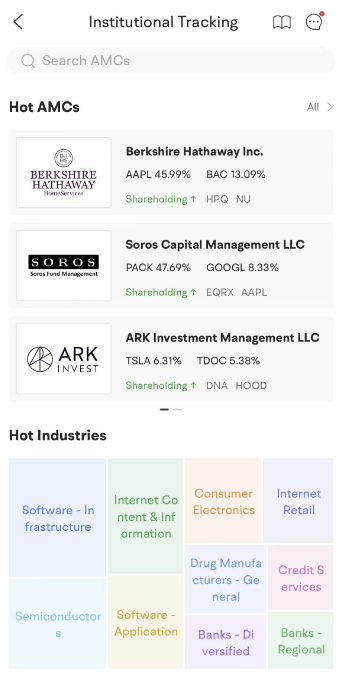
Images provided are not current and any securities are shown for illustrative purposes only.
Frequency Asked Questions
What are the benefits of social trading?
1. Direct communication Traders have an opportunity to engage in direct conversation with experienced traders. Progressive platforms often have a built-in chat room where users may see questions being asked and their answers being provided in real-time. 2. Learn by engaging in actual trading Social trading platforms may reduce the time and money required to understand a theory by making it possible for users to directly learn from industry professionals in an organized manner. 3. Community of investors with a focus on achieving shared objectives
This presentation is for informational and educational use only and is not a recommendation or endorsement of any particular investment or investment strategy. Investment information provided in this content is general in nature, strictly for illustrative purposes, and may not be appropriate for all investors. Read more
Recommend
How to Invest MyDCD IPO Malaysia 2026
SpaceX IPO 2026: How to Invest in SpaceX in Malaysia
Top 7 Dividend ETFs for Malaysian Investors 2026

How to Invest Stratus Global IPO Malaysia 2026
How to Invest in SkyeChip IPO in Malaysia 2026
Top 10 Features of Stock Brokers in Malaysia
How to Invest in Sunway Healthcare in Malaysia 2026
Cara Melanggan IPO Empire Sushi (5351): Panduan Lengkap
Top 7 S&P 500 ETFs Malaysian Investors
Top 9 Semiconductor ETFs Malaysia 2026
Top 8 Gold ETFs in Malaysia for 2026
Moomoo vs Robinhood: Which Platform for Malaysian Investors
Top 8 Inverse ETFs Malaysia 2026
Moomoo Scams Alert: The Official Anti-Fraud Guide in Malaysia
Top 9 Index ETFs Malaysia 2026
Top 10 Technology ETFs in Malaysia for 2026
Safe Investing in Malaysia: Moomoo MY Statement
Is Moomoo Safe in Malaysia
Top 8 Artificial Intelligence Stocks for Malaysian Investors
Invest in 99 Speedmart Share in Malaysia: A Complete Guide
Top 6 Semiconductor Stocks for Malaysian Investors in 2024
Top Investment Strategies for Banking Sector in Bursa Malaysia
How to Buy Tesla Stock in Malaysia
Top 4 Copper ETFs Malaysia 2026
How to Buy IPO Stocks in Malaysia
Top 7 Sectors in the US Stock Market for Malaysian Investors
Top 10 US Penny Stocks for Malaysian Investors
Popular China Stocks for Malaysia Investors to Buy
Top 10 High Dividend Stocks Malaysia 2026
What Is A Recession?
How to Buy Money Market Funds in Malaysia
How to Buy Stock in Malaysia 2026
Top 10 US Healthcare Stocks for Malaysian Investors 2024
Top 5 Malaysia Dividend Stocks in 2026
How to Invest in Startups Before IPO in Malaysia
Top 7 Leveraged ETFs to Invest in Malaysia
Top 8 Currency ETFs Malaysia 2026
How to Invest in Anthropic IPO Malaysia 2026
Moomoo Malaysia vs M+ Global: Which Platform to Choose
What is a Bond and How to Buy U.S. Treasury Bond?
How to Invest in Foodie Media IPO in Malaysia?
Mutual Funds vs Money Market Funds: Which to Invest in Malaysia
Moomoo Malaysia Brokerage Fees and Pricing
What is Thematic Investing?
Malaysia Data Center: Beneficial Sectors and Stocks
Is Moomoo Legal in Malaysia
8 Benefits of Using Paper Trading Apps for Malaysian Traders
Margin Trading: Guide and Strategy for Malaysian Investors
Top Fixed Deposit Rates in Malaysia 2024
Trading App Moomoo: Download and Guide
Top 8 Benefits of Using Moomoo Malaysia as a Stock Broker
Top 10 US Technology Stocks for Malaysian Investors 2026
US-Listed Chinese Stocks Surge on Policy Boost: Who is Leading the Charge?
China-Linked Stocks Surge Amid Strong Policy Stimulus: Wall Street Says, “This Time Is Different!”
How Much Room is There for Valuation Recovery in China-Linked Stocks?
Top 8 Consumer Products and Services Companies in Malaysia 2024
Top 8 Tips for Using Paper Trading for Bursa Malaysia Investors
Top 10 Real Estate Investment Trusts Companies in Malaysia 2024
Top 10 Construction Companies and Stocks in Malaysia 2024
Top 6 Plantation Companies and Stocks in Bursa Malaysia 2025
Special Purpose Acquisition Company and How to Invest
Top 8 Technology Stocks in Malaysia 2024
Top 10 ETFs in Malaysia 2026
How to Choose Your Ideal ETF in Malaysia?
Top 5 Energy Companies and Stocks in Malaysia 2024
What Is Social Trading
How to Use Paper Trading to Test and Help Refine Your Trading Strategy?
Tax Trading Strategies in a Bear Market
6 ETF Concerns That Investors Shouldn’t Overlook
HK Financial Stocks Make a Strong Comeback Amid PBOC Policies & Fed Rate Cuts: Are High-Dividend Inv
How Stock Charting Tools Can Help You
Choosing a Stock Simulator to Practice Stock Trading
Psychological Condition of the Market
What Is SWOT Analysis?
What Is Copy Trading
What Is Working Capital?
What Is the Spot Rate?
Index Funds in Singapore
How to Practice Trading Without Risking Money?
Mutual Funds in Singapore
What Is Mirror Trading?
What Is Revenue?
What Is Trend Analysis?
What Is a Volatility Smile?
What Is Beta in the Stock Market?
What Does It Mean to Have a Certificate of Deposit (CD)?
What Is a Day Order?
Price-to-Earnings (P/E) Ratio
What Is the National Best Bid and Offer (NBBO) in US Equities?
What Are Market Orders?
Using Volume Oscillators to Confirm Price Movements
Forex Trading in Singapore
What Is a Bellwether?
On-Balance Volume (OBV): What Is It?
What Is Historical Volatility (HV)?
Company Earnings and Earnings per Share What Investors Need to Know
Spot Market: What Is It?
Scalping Stock Trading: How Does It Work?
What Is Market Depth?
What Is a Trailing Stop and How to Use It?
Swing Trading vs. Day Trading: What's the Difference?
Will ESG Investing Be The Future Of Investing?
Hedge Funds in Singapore
Build a Low-Risk Portfolio with Blue-Chip Shares in Australia
What Is the Money Flow Index (MFI)?
How to Invest MyDCD IPO Malaysia 2026
SpaceX IPO 2026: How to Invest in SpaceX in Malaysia
Top 7 Dividend ETFs for Malaysian Investors 2026
How to Invest Stratus Global IPO Malaysia 2026
How to Invest in SkyeChip IPO in Malaysia 2026
Top 10 Features of Stock Brokers in Malaysia
How to Invest in Sunway Healthcare in Malaysia 2026
Cara Melanggan IPO Empire Sushi (5351): Panduan Lengkap
Top 7 S&P 500 ETFs Malaysian Investors
Top 9 Semiconductor ETFs Malaysia 2026
Top 8 Gold ETFs in Malaysia for 2026
Moomoo vs Robinhood: Which Platform for Malaysian Investors
Top 8 Inverse ETFs Malaysia 2026
Moomoo Scams Alert: The Official Anti-Fraud Guide in Malaysia
Top 9 Index ETFs Malaysia 2026
Top 10 Technology ETFs in Malaysia for 2026
Safe Investing in Malaysia: Moomoo MY Statement
Is Moomoo Safe in Malaysia
Top 8 Artificial Intelligence Stocks for Malaysian Investors
Invest in 99 Speedmart Share in Malaysia: A Complete Guide
Top 6 Semiconductor Stocks for Malaysian Investors in 2024
Top Investment Strategies for Banking Sector in Bursa Malaysia
How to Buy Tesla Stock in Malaysia
Top 4 Copper ETFs Malaysia 2026
How to Buy IPO Stocks in Malaysia
Top 7 Sectors in the US Stock Market for Malaysian Investors
Top 10 US Penny Stocks for Malaysian Investors
Popular China Stocks for Malaysia Investors to Buy
Top 10 High Dividend Stocks Malaysia 2026
What Is A Recession?
How to Buy Money Market Funds in Malaysia
How to Buy Stock in Malaysia 2026
Top 10 US Healthcare Stocks for Malaysian Investors 2024
Top 5 Malaysia Dividend Stocks in 2026
How to Invest in Startups Before IPO in Malaysia
Top 7 Leveraged ETFs to Invest in Malaysia
Top 8 Currency ETFs Malaysia 2026
How to Invest in Anthropic IPO Malaysia 2026
Moomoo Malaysia vs M+ Global: Which Platform to Choose
What is a Bond and How to Buy U.S. Treasury Bond?
How to Invest in Foodie Media IPO in Malaysia?
Mutual Funds vs Money Market Funds: Which to Invest in Malaysia
Moomoo Malaysia Brokerage Fees and Pricing
What is Thematic Investing?
Malaysia Data Center: Beneficial Sectors and Stocks
Is Moomoo Legal in Malaysia
8 Benefits of Using Paper Trading Apps for Malaysian Traders
Margin Trading: Guide and Strategy for Malaysian Investors
Top Fixed Deposit Rates in Malaysia 2024
Trading App Moomoo: Download and Guide
Top 8 Benefits of Using Moomoo Malaysia as a Stock Broker
Top 10 US Technology Stocks for Malaysian Investors 2026
US-Listed Chinese Stocks Surge on Policy Boost: Who is Leading the Charge?
China-Linked Stocks Surge Amid Strong Policy Stimulus: Wall Street Says, “This Time Is Different!”
How Much Room is There for Valuation Recovery in China-Linked Stocks?
Top 8 Consumer Products and Services Companies in Malaysia 2024
Top 8 Tips for Using Paper Trading for Bursa Malaysia Investors
Top 10 Real Estate Investment Trusts Companies in Malaysia 2024
Top 10 Construction Companies and Stocks in Malaysia 2024
Top 6 Plantation Companies and Stocks in Bursa Malaysia 2025
Special Purpose Acquisition Company and How to Invest
Top 8 Technology Stocks in Malaysia 2024
Top 10 ETFs in Malaysia 2026
How to Choose Your Ideal ETF in Malaysia?
Top 5 Energy Companies and Stocks in Malaysia 2024
What Is Social Trading
How to Use Paper Trading to Test and Help Refine Your Trading Strategy?
Tax Trading Strategies in a Bear Market
6 ETF Concerns That Investors Shouldn’t Overlook
HK Financial Stocks Make a Strong Comeback Amid PBOC Policies & Fed Rate Cuts: Are High-Dividend Inv
How Stock Charting Tools Can Help You
Choosing a Stock Simulator to Practice Stock Trading
Psychological Condition of the Market
What Is SWOT Analysis?
What Is Copy Trading
What Is Working Capital?
What Is the Spot Rate?
Index Funds in Singapore
How to Practice Trading Without Risking Money?
Mutual Funds in Singapore
What Is Mirror Trading?
What Is Revenue?
What Is Trend Analysis?
What Is a Volatility Smile?
What Is Beta in the Stock Market?
What Does It Mean to Have a Certificate of Deposit (CD)?
What Is a Day Order?
Price-to-Earnings (P/E) Ratio
What Is the National Best Bid and Offer (NBBO) in US Equities?
What Are Market Orders?
Using Volume Oscillators to Confirm Price Movements
Forex Trading in Singapore
What Is a Bellwether?
On-Balance Volume (OBV): What Is It?
What Is Historical Volatility (HV)?
Company Earnings and Earnings per Share What Investors Need to Know
Spot Market: What Is It?
Scalping Stock Trading: How Does It Work?
What Is Market Depth?
What Is a Trailing Stop and How to Use It?
Swing Trading vs. Day Trading: What's the Difference?
Will ESG Investing Be The Future Of Investing?
Hedge Funds in Singapore
Build a Low-Risk Portfolio with Blue-Chip Shares in Australia
What Is the Money Flow Index (MFI)?