What Is a Volatility Smile?
A volatility smile refers to patterns and graphs that form by plotting the implied volatility and strike price for an option group with an expiration date and underlying asset. The reason behind naming it a volatility smile is its resemblance to a smiling mouth. When an option's underlying asset is further out-of-the-money (OTM) or in-the-money (ITM) than it is at-the-money (ATM), implied volatility increases. Not all options fall under the scope of the volatility smile.
Fundamentals of Volatility Smile
Volatility smiles result from changes in implied volatility due to the movement of underlying assets more towards ITM or OTM. It would further lead to greater implied volatility. For ATM options, implied volatility would be the lowest.
Although the Black-Scholes model is the primary method for measurement of price options and other derivatives, it doesn't predict the volatility smile. Instead, this model predicts a flat implied volatility curve against varying strike prices. Moreover, it forecasts the same implied volatility for all options with the same underlying assets expiring on the same date. However, the reality is different.
Following the 1987 stock market crash, volatility smiles began to appear in option pricing. They weren't previously present in American markets, indicating a market structure more consistent with what the Black-Scholes model predicts. Following 1987, traders understood that severe outcomes could appear and that markets have a substantial skew. The pricing of options required to consider the potential for dramatic events. That's why implied volatility rises or falls with an increase in OTM or ITM. [1]
Moreover, a volatility smile indicates a higher demand for OTM and ITM than ATM. The erratic Prices are driven by demand, which impacts implied volatility. The aforementioned factor may partially cause this. Extreme incidents can result in significant price changes in options. Implied volatility takes into account the potential for substantial shifts.
How to Use the Volatility Smile?
When comparing options with the same underlying asset and expiration date but different strike prices, volatility smiles can be observed. There can be a U-shape if the implied volatility is shown for the various strike prices. However, the U-shape sometimes has a different shape than seen in the graph below.
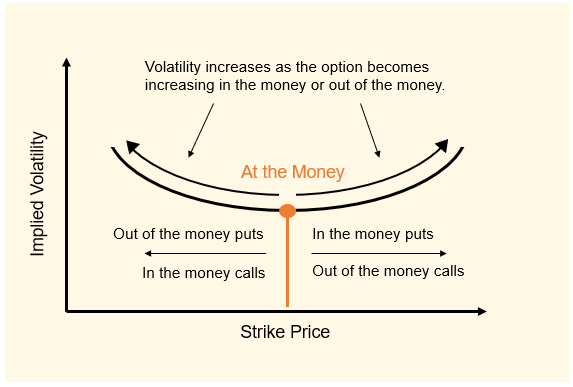
Consider an options chain that consists of implied volatility with different strike prices. A U-shaped option indicates that options with the same OTM and ITM have the same implied volatility. More OTM or ITM represents the higher implied volatility. On the other hand, ATM options represent the lowest implied volatilities.
It was also possible to plot the implied volatility of a single option over time and the underlying asset's value. The implied volatility may resemble a U shape as the price moves in or out of the money.
This may be helpful if you're looking for an option with reduced implied volatility. You could potentially pick an option near the money in this scenario. Select a further ITM or OTM option if you want more implied volatility. But remember that the implied volatility will change when the underlying asset moves closer to or further away from the strike price. As a result, regular realignment is essential to maintain a portfolio of options with certain implied volatility.
Alignment of all options with volatility smile is optional. Verify that the option's implied volatility genuinely adheres to the smile model before employing the volatility smile for trading decisions.
Limitations of Using the Volatility Smile
Finding out whether the option being traded genuinely corresponds with a volatility smile is crucial. One model that aligns with the option is the volatility smile. However, the model that aligns more with the forward or reverse skew/smirk is implied volatility.
Additionally, the volatility smile (if applicable) may have a vague U-shape due to other market factors like supply and demand (or smirk). It could have a basic and choppy U-shape, with certain options exhibiting more or less implied volatility than the model's prediction,
The volatility smile indicates all the options for traders to get more or less implied volatility. However, many other factors affect the options trading decision-making process.
[1]https://pages.stern.nyu.edu/~dbackus/GE_asset_pricing/BCDG%2087%20crash%20Jan%2010.PDF
This presentation is for informational and educational use only and is not a recommendation or endorsement of any particular investment or investment strategy. Investment information provided in this content is general in nature, strictly for illustrative purposes, and may not be appropriate for all investors. Read more
Recommend
How to Invest MyDCD IPO Malaysia 2026
SpaceX IPO 2026: How to Invest in SpaceX in Malaysia
Top 7 Dividend ETFs for Malaysian Investors 2026

How to Invest Stratus Global IPO Malaysia 2026
How to Invest in SkyeChip IPO in Malaysia 2026
Top 10 Features of Stock Brokers in Malaysia
How to Invest in Sunway Healthcare in Malaysia 2026
Cara Melanggan IPO Empire Sushi (5351): Panduan Lengkap
Top 7 S&P 500 ETFs Malaysian Investors
Top 9 Semiconductor ETFs Malaysia 2026
Top 8 Gold ETFs in Malaysia for 2026
Moomoo vs Robinhood: Which Platform for Malaysian Investors
Top 8 Inverse ETFs Malaysia 2026
Moomoo Scams Alert: The Official Anti-Fraud Guide in Malaysia
Top 9 Index ETFs Malaysia 2026
Top 10 Technology ETFs in Malaysia for 2026
Safe Investing in Malaysia: Moomoo MY Statement
Is Moomoo Safe in Malaysia
Top 8 Artificial Intelligence Stocks for Malaysian Investors
Invest in 99 Speedmart Share in Malaysia: A Complete Guide
Top 6 Semiconductor Stocks for Malaysian Investors in 2024
Top Investment Strategies for Banking Sector in Bursa Malaysia
How to Buy Tesla Stock in Malaysia
Top 4 Copper ETFs Malaysia 2026
How to Buy IPO Stocks in Malaysia
Top 7 Sectors in the US Stock Market for Malaysian Investors
Top 10 US Penny Stocks for Malaysian Investors
Popular China Stocks for Malaysia Investors to Buy
Top 10 High Dividend Stocks Malaysia 2026
What Is A Recession?
How to Buy Money Market Funds in Malaysia
How to Buy Stock in Malaysia 2026
Top 10 US Healthcare Stocks for Malaysian Investors 2024
Top 5 Malaysia Dividend Stocks in 2026
How to Invest in Startups Before IPO in Malaysia
Top 7 Leveraged ETFs to Invest in Malaysia
Top 8 Currency ETFs Malaysia 2026
How to Invest in Anthropic IPO Malaysia 2026
Moomoo Malaysia vs M+ Global: Which Platform to Choose
What is a Bond and How to Buy U.S. Treasury Bond?
How to Invest in Foodie Media IPO in Malaysia?
Mutual Funds vs Money Market Funds: Which to Invest in Malaysia
Moomoo Malaysia Brokerage Fees and Pricing
What is Thematic Investing?
Malaysia Data Center: Beneficial Sectors and Stocks
Is Moomoo Legal in Malaysia
8 Benefits of Using Paper Trading Apps for Malaysian Traders
Margin Trading: Guide and Strategy for Malaysian Investors
Top Fixed Deposit Rates in Malaysia 2024
Trading App Moomoo: Download and Guide
Top 8 Benefits of Using Moomoo Malaysia as a Stock Broker
Top 10 US Technology Stocks for Malaysian Investors 2026
US-Listed Chinese Stocks Surge on Policy Boost: Who is Leading the Charge?
China-Linked Stocks Surge Amid Strong Policy Stimulus: Wall Street Says, “This Time Is Different!”
How Much Room is There for Valuation Recovery in China-Linked Stocks?
Top 8 Consumer Products and Services Companies in Malaysia 2024
Top 8 Tips for Using Paper Trading for Bursa Malaysia Investors
Top 10 Real Estate Investment Trusts Companies in Malaysia 2024
Top 10 Construction Companies and Stocks in Malaysia 2024
Top 6 Plantation Companies and Stocks in Bursa Malaysia 2025
Special Purpose Acquisition Company and How to Invest
Top 8 Technology Stocks in Malaysia 2024
Top 10 ETFs in Malaysia 2026
How to Choose Your Ideal ETF in Malaysia?
Top 5 Energy Companies and Stocks in Malaysia 2024
What Is Social Trading
How to Use Paper Trading to Test and Help Refine Your Trading Strategy?
Tax Trading Strategies in a Bear Market
6 ETF Concerns That Investors Shouldn’t Overlook
HK Financial Stocks Make a Strong Comeback Amid PBOC Policies & Fed Rate Cuts: Are High-Dividend Inv
How Stock Charting Tools Can Help You
Choosing a Stock Simulator to Practice Stock Trading
Psychological Condition of the Market
What Is SWOT Analysis?
What Is Copy Trading
What Is Working Capital?
What Is the Spot Rate?
Index Funds in Singapore
How to Practice Trading Without Risking Money?
Mutual Funds in Singapore
What Is Mirror Trading?
What Is Revenue?
What Is Trend Analysis?
What Is a Volatility Smile?
What Is Beta in the Stock Market?
What Does It Mean to Have a Certificate of Deposit (CD)?
What Is a Day Order?
Price-to-Earnings (P/E) Ratio
What Is the National Best Bid and Offer (NBBO) in US Equities?
What Are Market Orders?
Using Volume Oscillators to Confirm Price Movements
Forex Trading in Singapore
What Is a Bellwether?
On-Balance Volume (OBV): What Is It?
What Is Historical Volatility (HV)?
Company Earnings and Earnings per Share What Investors Need to Know
Spot Market: What Is It?
Scalping Stock Trading: How Does It Work?
What Is Market Depth?
What Is a Trailing Stop and How to Use It?
Swing Trading vs. Day Trading: What's the Difference?
Will ESG Investing Be The Future Of Investing?
Hedge Funds in Singapore
Build a Low-Risk Portfolio with Blue-Chip Shares in Australia
What Is the Money Flow Index (MFI)?
How to Invest MyDCD IPO Malaysia 2026
SpaceX IPO 2026: How to Invest in SpaceX in Malaysia
Top 7 Dividend ETFs for Malaysian Investors 2026
How to Invest Stratus Global IPO Malaysia 2026
How to Invest in SkyeChip IPO in Malaysia 2026
Top 10 Features of Stock Brokers in Malaysia
How to Invest in Sunway Healthcare in Malaysia 2026
Cara Melanggan IPO Empire Sushi (5351): Panduan Lengkap
Top 7 S&P 500 ETFs Malaysian Investors
Top 9 Semiconductor ETFs Malaysia 2026
Top 8 Gold ETFs in Malaysia for 2026
Moomoo vs Robinhood: Which Platform for Malaysian Investors
Top 8 Inverse ETFs Malaysia 2026
Moomoo Scams Alert: The Official Anti-Fraud Guide in Malaysia
Top 9 Index ETFs Malaysia 2026
Top 10 Technology ETFs in Malaysia for 2026
Safe Investing in Malaysia: Moomoo MY Statement
Is Moomoo Safe in Malaysia
Top 8 Artificial Intelligence Stocks for Malaysian Investors
Invest in 99 Speedmart Share in Malaysia: A Complete Guide
Top 6 Semiconductor Stocks for Malaysian Investors in 2024
Top Investment Strategies for Banking Sector in Bursa Malaysia
How to Buy Tesla Stock in Malaysia
Top 4 Copper ETFs Malaysia 2026
How to Buy IPO Stocks in Malaysia
Top 7 Sectors in the US Stock Market for Malaysian Investors
Top 10 US Penny Stocks for Malaysian Investors
Popular China Stocks for Malaysia Investors to Buy
Top 10 High Dividend Stocks Malaysia 2026
What Is A Recession?
How to Buy Money Market Funds in Malaysia
How to Buy Stock in Malaysia 2026
Top 10 US Healthcare Stocks for Malaysian Investors 2024
Top 5 Malaysia Dividend Stocks in 2026
How to Invest in Startups Before IPO in Malaysia
Top 7 Leveraged ETFs to Invest in Malaysia
Top 8 Currency ETFs Malaysia 2026
How to Invest in Anthropic IPO Malaysia 2026
Moomoo Malaysia vs M+ Global: Which Platform to Choose
What is a Bond and How to Buy U.S. Treasury Bond?
How to Invest in Foodie Media IPO in Malaysia?
Mutual Funds vs Money Market Funds: Which to Invest in Malaysia
Moomoo Malaysia Brokerage Fees and Pricing
What is Thematic Investing?
Malaysia Data Center: Beneficial Sectors and Stocks
Is Moomoo Legal in Malaysia
8 Benefits of Using Paper Trading Apps for Malaysian Traders
Margin Trading: Guide and Strategy for Malaysian Investors
Top Fixed Deposit Rates in Malaysia 2024
Trading App Moomoo: Download and Guide
Top 8 Benefits of Using Moomoo Malaysia as a Stock Broker
Top 10 US Technology Stocks for Malaysian Investors 2026
US-Listed Chinese Stocks Surge on Policy Boost: Who is Leading the Charge?
China-Linked Stocks Surge Amid Strong Policy Stimulus: Wall Street Says, “This Time Is Different!”
How Much Room is There for Valuation Recovery in China-Linked Stocks?
Top 8 Consumer Products and Services Companies in Malaysia 2024
Top 8 Tips for Using Paper Trading for Bursa Malaysia Investors
Top 10 Real Estate Investment Trusts Companies in Malaysia 2024
Top 10 Construction Companies and Stocks in Malaysia 2024
Top 6 Plantation Companies and Stocks in Bursa Malaysia 2025
Special Purpose Acquisition Company and How to Invest
Top 8 Technology Stocks in Malaysia 2024
Top 10 ETFs in Malaysia 2026
How to Choose Your Ideal ETF in Malaysia?
Top 5 Energy Companies and Stocks in Malaysia 2024
What Is Social Trading
How to Use Paper Trading to Test and Help Refine Your Trading Strategy?
Tax Trading Strategies in a Bear Market
6 ETF Concerns That Investors Shouldn’t Overlook
HK Financial Stocks Make a Strong Comeback Amid PBOC Policies & Fed Rate Cuts: Are High-Dividend Inv
How Stock Charting Tools Can Help You
Choosing a Stock Simulator to Practice Stock Trading
Psychological Condition of the Market
What Is SWOT Analysis?
What Is Copy Trading
What Is Working Capital?
What Is the Spot Rate?
Index Funds in Singapore
How to Practice Trading Without Risking Money?
Mutual Funds in Singapore
What Is Mirror Trading?
What Is Revenue?
What Is Trend Analysis?
What Is a Volatility Smile?
What Is Beta in the Stock Market?
What Does It Mean to Have a Certificate of Deposit (CD)?
What Is a Day Order?
Price-to-Earnings (P/E) Ratio
What Is the National Best Bid and Offer (NBBO) in US Equities?
What Are Market Orders?
Using Volume Oscillators to Confirm Price Movements
Forex Trading in Singapore
What Is a Bellwether?
On-Balance Volume (OBV): What Is It?
What Is Historical Volatility (HV)?
Company Earnings and Earnings per Share What Investors Need to Know
Spot Market: What Is It?
Scalping Stock Trading: How Does It Work?
What Is Market Depth?
What Is a Trailing Stop and How to Use It?
Swing Trading vs. Day Trading: What's the Difference?
Will ESG Investing Be The Future Of Investing?
Hedge Funds in Singapore
Build a Low-Risk Portfolio with Blue-Chip Shares in Australia
What Is the Money Flow Index (MFI)?