How to Invest in Malaysia Stock Market 2026
Key Takeaway
Malaysia Stock Market in 2026: Presents opportunities through advancements in digital infrastructure, renewable energy, and regional trade. Strategic sectoral investments and staying up to date on regulatory updates are key.
Types of Stocks: Includes ordinary, preferred, growth, and value stocks, catering to different investor goals and risk appetites.
Bursa Malaysia Overview: Offers the Main Market for large firms and the ACE Market for startups. Trade securities like stocks, bonds, ETFs, and derivatives.
Benefits of Investing: Steady economic growth, attractive dividends, diversification, strong regulations, and emerging industries like tech and renewable energy.
Investment Tips for Beginners: Start with clear goals, diversify, practice patience, and avoid emotional decisions.
Moomoo Malaysia Advantage: Offers 0 commission for 6 months, low margin rates, and compliance with SC regulations, making it a competitive and legal trading platform.
Malaysia Stock Market in 2026: Presents opportunities through advancements in digital infrastructure, renewable energy, and regional trade. Strategic sectoral investments and staying up to date on regulatory updates are key.
Types of Stocks: Includes ordinary, preferred, growth, and value stocks, catering to different investor goals and risk appetites.
Bursa Malaysia Overview: Offers the Main Market for large firms and the ACE Market for startups. Trade securities like stocks, bonds, ETFs, and derivatives.
Benefits of Investing: Steady economic growth, attractive dividends, diversification, strong regulations, and emerging industries like tech and renewable energy.
Investment Tips for Beginners: Start with clear goals, diversify, practice patience, and avoid emotional decisions.
Moomoo Malaysia Advantage: Offers 0 commission for 6 months, low margin rates, and compliance with SC regulations, making it a competitive and legal trading platform.
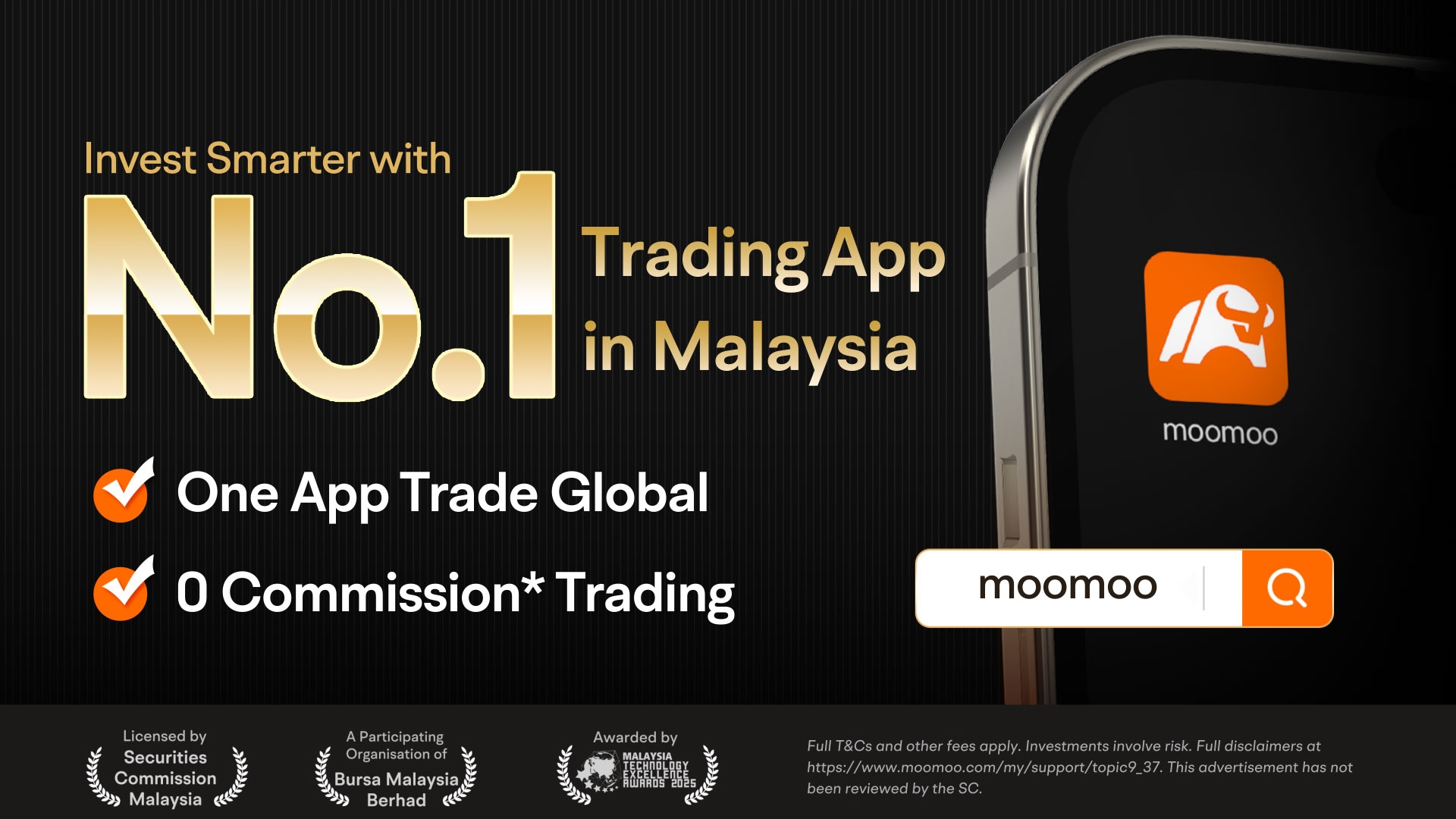
The Malaysian stock market in 2026 offers investors a timely opportunity to participate in the nation's evolving economic landscape. With advancements in digital infrastructure, green energy initiatives, and regional trade partnerships shaping market dynamics, strategic entry points are emerging across sectors. As a modern investor, understanding these shifts—from regulatory updates to sectoral trends—will be key to identifying value and growth potential in Bursa Malaysia-listed companies. Starting with a clear plan, continuous learning, and access to reliable market insights can set a strong foundation for your investment journey in the year ahead.
What are Stocks? Basics & Types

Investing in the stock market can be a rewarding but complex endeavor. Understanding the basics of stocks is essential before delving into the Malaysia Stock Market in 2026. Stocks represent ownership in a company and offer investors the potential for capital appreciation and dividend income. Here, we will explore the different types of stocks, various stock brokers in Malaysia, and policy support.
Different Types of Stocks
Stocks are the building blocks of the financial markets, offering investors a diverse range of opportunities. In the context of the Malaysia stock market, understanding the different types of stocks is fundamental for anyone looking to navigate the world of investing.
Ordinary Stocks: Owners of ordinary stocks possess voting rights in the company. They have the opportunity to influence corporate decisions. However, dividend payments are not assured and depend on the company's profitability and management decisions. For example, a startup company may issue ordinary stocks to raise capital, and investors in these stocks hope to benefit from the company's future success and growth.
Preferred Stocks: These stocks typically come with a fixed dividend rate. If a company undergoes liquidation, preferred shareholders have a superior claim on the company's assets and profits compared to common shareholders. It is a more stable investment option for income generation. For instance, a well-established utility company in Malaysia might issue preferred stocks to attract investors seeking a regular income stream.
Growth Stocks: Growth stocks are associated with companies expected to experience rapid growth in earnings and revenues. These companies often reinvest their profits back into the business to fuel expansion. They may not pay significant dividends initially, but can offer substantial capital gains over time. Tech companies in their expansion phase are often considered growth stocks. Technology stocks in Malaysia have shown remarkable growth potential and are attracting increasing attention from investors.
Value Stocks: Value stocks are those that appear undervalued based on fundamental analysis. They usually have a low price-to-earnings ratio. These could be companies in more traditional or established industries that are currently overlooked by the market. An investor might identify a value stock in a manufacturing company with solid assets and a history of stable earnings, trading at a relatively low price. For example, a traditional consumer products company that has produced household essentials for decades, with reliable cash flow and a large inventory of valuable trademarks and patents, could be considered a value stock.
What is a Stock Broker
When it comes to trading stocks in the Malaysian Stock Market or any other market, a stockbroker plays a crucial role. A stockbroker is a licensed professional or a financial institution that acts as an intermediary between investors and the stock market. They provide a platform for investors to buy and sell stocks.
Types of Stock Brokers
Full-service Brokers:
Provide extensive services, including comprehensive research and investment advice. Have analyst teams to analyze market trends, company financials, and industry outlooks, offering personalized recommendations to clients. Ideal for novice investors relying on professional guidance.
Discount Brokers:
Primarily focus on executing trades at lower costs. Present an online trading platform for quick and easy order placement. Favored by experienced investors who are confident in their strategies and aiming to reduce brokerage fees. To learn more about the benefits of stock brokers in Malaysia, you can visit the Top 8 Benefits of Using Moomoo Malaysia as a Stock Broker.
Policy Support on the Stock Market in Malaysia
Incentives for Listing: The Malaysian government and regulatory bodies offer incentives for companies to list on the local stock exchange. Tax breaks are one such incentive, which reduces the financial burden on companies during the listing process. This encourages more companies, especially small and medium-sized enterprises, to go public and expand their capital base.
Regulatory Oversight: The Securities Commission Malaysia is actively involved in supervising and regulating the market. It enforces strict disclosure requirements for listed companies. This means companies must provide accurate and detailed financial and operational information to the public. As a result, investors can make more informed decisions and have greater confidence in the market.
Boosting Market Liquidity: Measures are in place to enhance market liquidity. Promoting institutional investor participation is a key aspect. Institutional investors, such as pension funds and mutual funds, bring in large amounts of capital. Their presence in the market increases trading volume and price stability. This creates a more favorable environment for all investors, whether they are individual investors or large institutions, looking to invest in Malaysia's stock market in 2026.
Introduction to Bursa Malaysia for Beginners

Bursa Malaysia is Malaysia's primary stock exchange, serving as a platform for companies to raise capital and for investors to trade securities.
Market Structure
Bursa Malaysia is divided into several key markets. The Main Market is where large, established companies list their shares. These companies typically have a proven track record of profitability and meet strict listing requirements. For example, companies in sectors such as banking, telecommunications, and manufacturing are often found on the Main Market.
The ACE Market, on the other hand, is designed for smaller and emerging companies. It provides a platform for these companies to access capital for growth. Start-ups and companies in high-growth sectors like technology and biotechnology may choose to list on the ACE Market. This market offers greater flexibility in listing requirements than the Main Market.
Trading Hours
The trading hours of Bursa Malaysia are from 9:00 am to 5:00 pm, Monday to Friday, excluding public holidays. During these hours, investors can place buy and sell orders through their brokers. It is important for beginners to note that pre-market and after-market trading sessions may also exist, depending on the broker and the type of securities.
Types of Securities Traded
Apart from common stocks, a wide variety of securities are traded on Bursa Malaysia.
Bonds: These are debt instruments issued by companies or the government. When an investor purchases a bond, they are effectively lending to the issuer, who compensates them with periodic interest payments and repays the original principal upon the bond's maturity.
Exchange-Traded Funds (ETFs): ETFs are funds that track an index, commodity, or basket of assets. They offer investors an easy way to diversify their portfolios. For example, some ETFs track the performance of the top 30 companies listed on Bursa Malaysia.
Warrants and Derivatives: These are more complex financial instruments. Warrants give the holder the right, but not the obligation, to buy or sell a specific quantity of shares at a predetermined price within a certain period. Derivatives, such as futures and options, are contracts whose value is derived from an underlying asset.
Money Market Funds: Cash Plus is an investment product that typically combines elements of cash management and investing. It aims to provide investors with a balance between liquidity and returns. It may invest in a mix of short-term money market instruments, fixed-income securities with relatively short maturities, and sometimes a small portion in equity-linked components. This allows investors to have access to their funds while still earning a potentially higher return than a traditional savings account. It is suitable for those with short-term investment horizons or who want to park their cash more productively while maintaining a certain level of flexibility.
Bursa Malaysia offers a wealth of opportunities for investors, but beginners should understand the market structure, trading hours, and types of securities before diving into stock trading.
Why Invest in the Bursa Malaysia Stock Market?

The Malaysia Stock Market has long been a significant player in the Southeast Asian financial landscape. As we look towards 2026 and beyond, it offers a multitude of opportunities and holds great promise. Understanding both its current benefits and its future trajectory is crucial for investors seeking to make informed decisions and capitalize on its potential.
5 Benefits of Investing in the Malaysian Stock Market
Investing in the Malaysia Stock Market in 2026 can present a host of advantages for both novice and seasoned investors. Here are five key benefits that make it an appealing option:
1. Robust Economic Growth Potential
Malaysia has demonstrated consistent economic growth over the years. Its diverse economy encompasses manufacturing, services, and agriculture. The government has been implementing policies to boost further economic expansion, which in turn is likely to drive the performance of companies listed on the stock market.
For instance, the development of high-tech manufacturing hubs and the expansion of the tourism sector are expected to create more business opportunities and increase corporate revenues. This growth potential provides a favorable backdrop for stock market investments, as share prices can appreciate alongside overall economic progress.
2. Attractive Dividend Yields
Many Malaysian companies have a track record of paying regular dividends to their shareholders. This is especially appealing for income-oriented investors. Whether it's established conglomerates or well-performing local enterprises, they often distribute a portion of their profits back to investors.
Additionally, Malaysia ETFs also offer an alternative source of dividend income. ETFs that focus on dividend-paying stocks can aggregate the dividend yields from multiple underlying assets. When it comes to ETF investment strategies, investors can consider a dividend-focused ETF investment approach. By trading ETFs in Malaysia that track dividend-rich sectors or companies, investors can potentially benefit from a diversified portfolio of dividend-paying assets.
Compared to some other global markets, dividend yields in the Bursa Malaysia Stock Market can be pretty competitive, allowing investors to earn a steady stream of income while also potentially capitalizing on the appreciation of the stocks they hold.
3. Diversification Benefits
Investing in the Bursa Malaysia Stock Market offers an excellent opportunity for portfolio diversification. Its market movements are not always perfectly correlated with major global stock markets, such as those in the United States or Europe. By including Malaysian stocks in an investment portfolio, investors can reduce overall portfolio risk and potentially enhance returns. For example, during periods when global markets are experiencing volatility due to events in certain regions, the Bursa Malaysia Stock Market might be less affected or even move in the opposite direction, providing a buffer to the portfolio's performance.
4. Favorable Regulatory Environment
The regulatory framework in Malaysia for the stock market is well-established and designed to protect the interests of investors. The Securities Commission Malaysia plays a crucial role in ensuring fair trading practices, enforcing disclosure requirements, and maintaining market integrity. This gives investors confidence that they are operating in a transparent and regulated environment, minimizing the chances of market manipulation or fraud.
Moreover, continuous efforts are made to improve and update the regulatory system to keep pace with global best practices, making it an attractive destination for both local and international investors.
5. Emerging Sectors and Investment Opportunities
Malaysia is witnessing the rise of several emerging sectors. The growth of the digital economy, renewable energy, and e-commerce is creating new investment prospects. The telecommunication company in Malaysia is also an essential part of this evolving landscape. Moreover, financial companies are playing an increasingly significant role as they adapt to new technological trends and regulatory changes, offering a range of investment and financial services that attract investors.
Health care products companies are also emerging as a sector of interest, with a growing focus on health and wellness in the country, and they present opportunities for both short-term and long-term investment. Industrial companies, which are essential for the nation's infrastructure and manufacturing capabilities, are constantly evolving and innovating, with some startups and established players alike looking to raise capital through the stock market.
Many startups and innovative companies in these areas are looking to list on the stock market or are already publicly traded. Investing in these emerging sectors early can yield significant returns, as they are likely to experience rapid expansion in the coming years. It allows investors to be part of Malaysia's economic transformation and benefit from the growth of these forward-looking industries.
The Future of Bursa Malaysia Stock Market
The Bursa Malaysia Stock Market is poised for an exciting future. With the country's increasing focus on technological innovation and sustainable development, it is expected to attract more high-growth and environmentally conscious companies. The government's initiatives to enhance digital infrastructure and promote green technologies will likely drive a new wave of listings across sectors such as fintech, clean energy, and smart manufacturing.
Additionally, Malaysia's strategic location in Southeast Asia and its growing trade and investment ties with regional and international partners will open up further opportunities for market expansion and increased liquidity. As the market evolves, it is anticipated to become more sophisticated and efficient, offering investors a broader range of investment products and strategies. This could include the introduction of new derivative instruments and enhanced trading platforms, enabling investors to manage risk better and optimize returns.
Overall, the prospects of the Malaysian Stock Market present a compelling case for investors seeking exposure to a dynamic, growing market.
7 Steps to Invest in the Bursa Malaysia Market Online

In the digital age, investing in the Malaysian Stock Market online has become increasingly accessible. Here are the eight essential steps to starting your online stock investment journey:
Step 1: Set Your Investment Goals
Identify your goals for investing. Are you investing for short-term gains (less than a year), medium-term (1 - 5 years) to save for a significant purchase like a house, or long-term (more than 5 years) for retirement? Your goals will influence the types of stocks you choose.
Assess your risk tolerance. If you can't bear the thought of losing a significant portion of your investment, you might have a low risk tolerance and prefer more stable, blue-chip stocks. If you're comfortable with market fluctuations and have a higher risk tolerance, you could consider growth or small-cap stocks, which have greater potential for high returns but also carry higher risk.
Step 2: Open a Brokerage Account
Research and choose a reliable online brokerage firm. Look for factors such as brokerage fees (commission charged for each trade), account maintenance fees, trading platforms (user-friendly interface, availability of real-time market data, and order-placement capabilities), and customer service.
Complete the account-opening process. This usually requires you to provide personal identification documents such as your identity card, proof of address (utility bills), and other necessary information. You may also need to make an initial deposit to fund your account. The amount of the initial deposit varies by brokerage firm.
For investing in Malaysia's stock exchange, a Central Depository System (CDS) account is required. There are direct CDS and nominee CDS accounts. The direct CDS account has clearer shareholding records. The nominee CVS can handle corporate paperwork. You can open a direct CDS account through Maybank's Equity Investment Center with a 0.1% or 1 Ringgit per transaction fee.
Banks are chosen as brokers because they are reliable and can easily link trading and CDS accounts. Other banks, such as Public Bank and CIMB Bank, offer similar services. Hong Kong Bank is also an option. For a more detailed understanding of the banking sector, you may refer to Investment Strategies for Banking Sector in Bursa Malaysia.
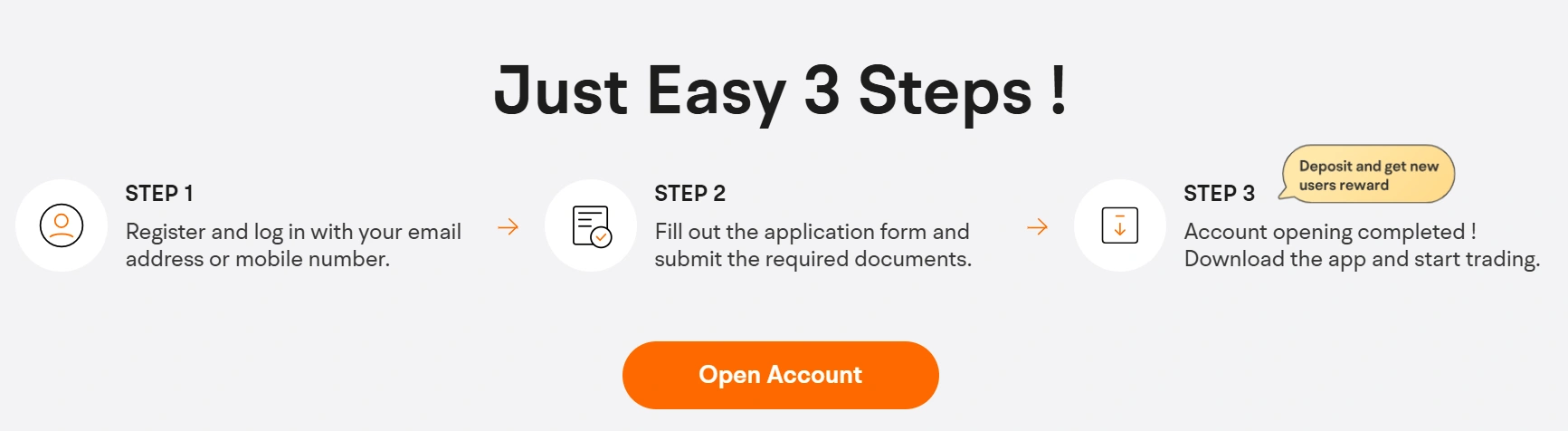
If you are ready to open an account on moomoo, click Accounts> Open Now to start opening an account:

Step 3: Fund Your Account
Once your brokerage account is approved, you need to transfer funds into it. You can usually do this through online banking, bank transfers, or other payment methods provided by the brokerage firm. Make sure to follow the correct procedures and keep records of your transactions.
Decide how much money you want to invest. It's generally recommended not to invest all your savings at once but to start with an amount you can afford to lose, especially if you're a beginner. As you gain more experience and confidence, you can gradually increase your investment amount.
Step 4: Research Stocks
Start by picking an industry you know, such as utilities or energy. Each industry has its own features. Use the tools and resources provided by your brokerage firm and other financial websites to research stocks. Look at a company's financial statements, including its balance sheet, income statement, and cash flow statement. Analyze its profitability, debt levels, and growth prospects.
Consider factors such as industry trends. For example, if you're interested in the technology sector in Malaysia, research trends in artificial intelligence, e - commerce, and digital services. Also, look at the company's competitive position in the market. Is it a market leader or is it facing intense competition from other companies?
You can also follow news and analyst reports about the company. News about new product launches, management changes, or regulatory issues can significantly impact a company's stock price.
Step 5: Place Your Order
There are different types of orders you can place. A market order is an order to buy or sell a stock at the best available current market price. For example, if you place a market buy order for a particular stock, your order will be executed immediately at the asking price of the sellers in the market.
A limit order, on the other hand, allows you to specify the maximum price you're willing to pay when buying a stock or the minimum price you're willing to accept when selling a stock. This gives you more control over the price at which your trade is executed. For instance, if you think a stock's current price is too high but you're willing to buy it if it drops to a certain level, you can place a limit buy order at that lower price.
After deciding on the order type and price (if it's a limit order), place your order through your brokerage firm's online trading platform.
Step 6: Monitor Your Investments
Regularly review your portfolio to see how your stocks are performing. You can use the portfolio-tracking features of your brokerage account or other financial apps to monitor changes in stock prices and the value of your portfolio.
Stay updated on news and events related to the companies you've invested in and the overall market conditions. For example, changes in interest rates, economic indicators, or political events can affect the stock market. If a company you've invested in reports poor financial results or faces a major lawsuit, it could harm its stock price.
Based on your monitoring, you may decide to sell a stock if it's not performing as expected or if you need to rebalance your portfolio to maintain your desired risk level and investment goals.
Step 7: Keep Records and Review Your Strategy
Keep detailed records of all your investment transactions, including the date of purchase, purchase price, number of shares, brokerage fees, and any dividends received. This information will be helpful for tax purposes and for evaluating the performance of your investments over time.
Periodically review your investment strategy. If your investment goals change, or if you find that a particular strategy isn't working well, you may need to adjust it. For example, if you initially focused on growth stocks but realized that they're too volatile for your current situation, you might consider adding more value stocks to your portfolio to achieve a more balanced approach.
How to Choose the Right Stocks for Yourself in Malaysia

Selecting the appropriate stocks on the Bursa Malaysia Stock Market in 2026 requires a methodical, well-informed approach. With a vast array of companies and sectors to choose from, it's essential to have a set of guidelines to navigate the complex world of stock investing. This section will provide you with key steps and considerations to help you make sound decisions that align with your financial goals and risk tolerance.
Understand Your Investment Goals and Risk Tolerance
Before diving into stock selection, it's crucial to have a clear understanding of your own investment objectives. Are you aiming for short-term gains to boost your capital quickly, or are you focused on long-term wealth accumulation for retirement or other primary life goals?
Additionally, assess your risk tolerance level. If you can't handle significant fluctuations in the value of your investments and prefer more stability, you'll lean towards different stocks than someone comfortable with higher risks in pursuit of potentially higher returns.
For example, a conservative investor nearing retirement might prioritize stocks with a history of stable dividends and less volatility, while a younger investor with a longer time horizon and higher risk appetite could consider growth stocks.
Analyze the Company's Fundamentals
Financial Health: Examine key financial statements, including the balance sheet, income statement, and cash flow statement. Look at metrics like profitability ratios (e.g., return on equity, net profit margin), liquidity ratios (e.g., current ratio), and debt levels. A company with healthy profitability, good liquidity, and manageable debt is generally more likely to be a solid investment. For instance, a company with a consistently high return on equity indicates it's efficiently using shareholders' funds to generate profits.
Business Model and Competitive Advantage: Understand how the company generates revenue and what gives it an edge over competitors. A unique product or service, strong brand recognition, or proprietary technology can be significant competitive advantages. For example, a Malaysian tech company with patented software in a niche market has a better chance of maintaining market share and growing its business compared to competitors without such differentiators.
Industry Outlook: Consider the industry's prospects in which the company operates. Some industries may be in decline due to technological disruptions or changing consumer preferences, while others are on an upward trajectory. For instance, the renewable energy sector in Malaysia may have a bright future given the global push towards sustainability, making companies in this industry attractive investment options.
Evaluate Management Quality
The competence and integrity of a company's management team play a vital role in its success. Look at their track record in making strategic decisions, handling challenges, and growing the business. Check if they have a history of meeting or exceeding financial targets and shareholder expectations.
You can also assess their transparency in communicating with shareholders and the market. For example, a management team that regularly holds informative investor conferences and provides detailed updates on business operations is often more trustworthy.
Consider Market Trends and Sentiment
Macro Trends: Keep an eye on broader economic, social, and technological trends in Malaysia and globally. For example, if the Malaysian government is implementing policies to boost the digital economy, stocks related to e-commerce, fintech, and other digital sectors may benefit. Similarly, changes in interest rates or inflation can impact different stocks in various ways.
Market Sentiment: Investor sentiment can greatly influence stock prices. If there's positive news about a particular sector or company, it can drive up demand for its stocks and vice versa. You can monitor analyst reports, industry publications, and social media chatter (while being cautious of misinformation) to gauge the general sentiment towards certain stocks.
Diversify Your Portfolio
Don’t put all your eggs in one basket. Selecting a diverse range of stocks across different sectors, market capitalizations, and risk profiles can help create a diversified portfolio and reduce overall portfolio risk.
For example, you might include some large, established companies for stability along with smaller, growth-oriented ones for potential upside. This way, even if one stock or sector underperforms, the impact on your entire portfolio is mitigated.
By following these steps, you can make more informed decisions when choosing the right stocks for your investment in the Malaysian Stock Market in 2026.
What are Some Common Mistakes to Avoid When Choosing Stocks in Malaysia?
When choosing stocks on the Bursa Malaysia Stock Market, there are several pitfalls that both novice and experienced investors can fall into. Avoiding these common mistakes is crucial for making more successful investment decisions and safeguarding your financial well-being.
Overlooking Company Fundamentals
Investors must not skip analyzing company financials and understanding business models. Just glancing at a firm's apparent profitability is insufficient; hidden cash-flow issues could lurk. And trendy startups might lack sustainable revenue models.
Neglecting Risk Management and Diversification
Don't concentrate all funds in one stock or sector. Overexposure, like only in Malaysia's oil and gas, risks portfolio damage during sector slumps. Diversifying across stocks, asset types, and market caps is vital for stable returns.
Emotional Decision-Making
Avoid panic-selling on market dips if stock fundamentals remain strong. Also, don't be overly optimistic and hold losing stocks too long; make rational loss-cutting decisions.
How to Choose an Investing Platform in Malaysia

Selecting the right investing platform is a crucial step when planning to invest in the Bursa Malaysia Stock Market in 2026. The platform you choose can significantly impact your trading experience, costs, and the range of services available to you. When selecting a stock broker in Malaysia, evaluate the platform's reputation, fee structure, range of available stocks, and the quality of their customer service.
Here are some key factors to consider when making your decision.
Regulatory Compliance and Security
Malaysian regulatory bodies like the Securities Commission Malaysia must license the platform. Licensed platforms adhere to strict investor protection, financial reporting, and security norms. They have safeguards against unauthorized access and cyber threats to personal and financial data. Also, seek platforms with features like two-factor authentication (2FA) for added account security. Ensure they use secure encryption for data in transit and at rest.
Fees and Commissions
Compare trading fees, which may be flat or percentage-based. For active traders, lower per-trade fees matter. Account maintenance fees vary; assess if they're reasonably given the services. Watch for hidden fees, such as inactivity, withdrawal, or additional service fees, as they can impact returns.
Range of Investment Options
The platform should offer access to a wide range of Bursa Malaysia Stock Market stocks across sectors. It's beneficial if it also allows investment in other instruments like ETFs, bonds, or derivatives for portfolio diversification.
Moomoo Malaysia offers the following investment options:
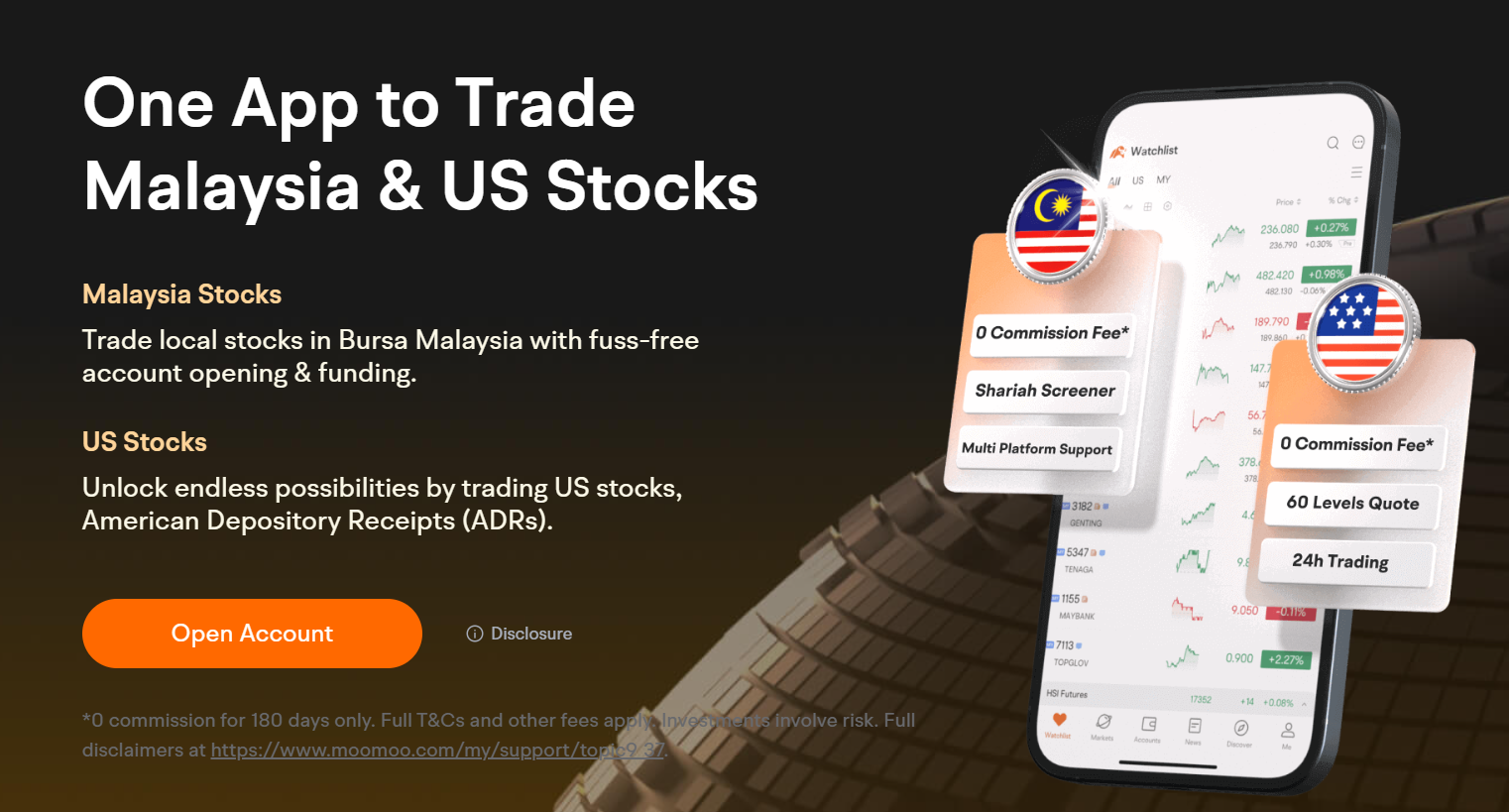
1. Stocks: It provides an app for trading both Malaysia Stocks and US Stocks.
2. IPO: It enables investors to seize the potential opportunities of IPOs in Malaysia.

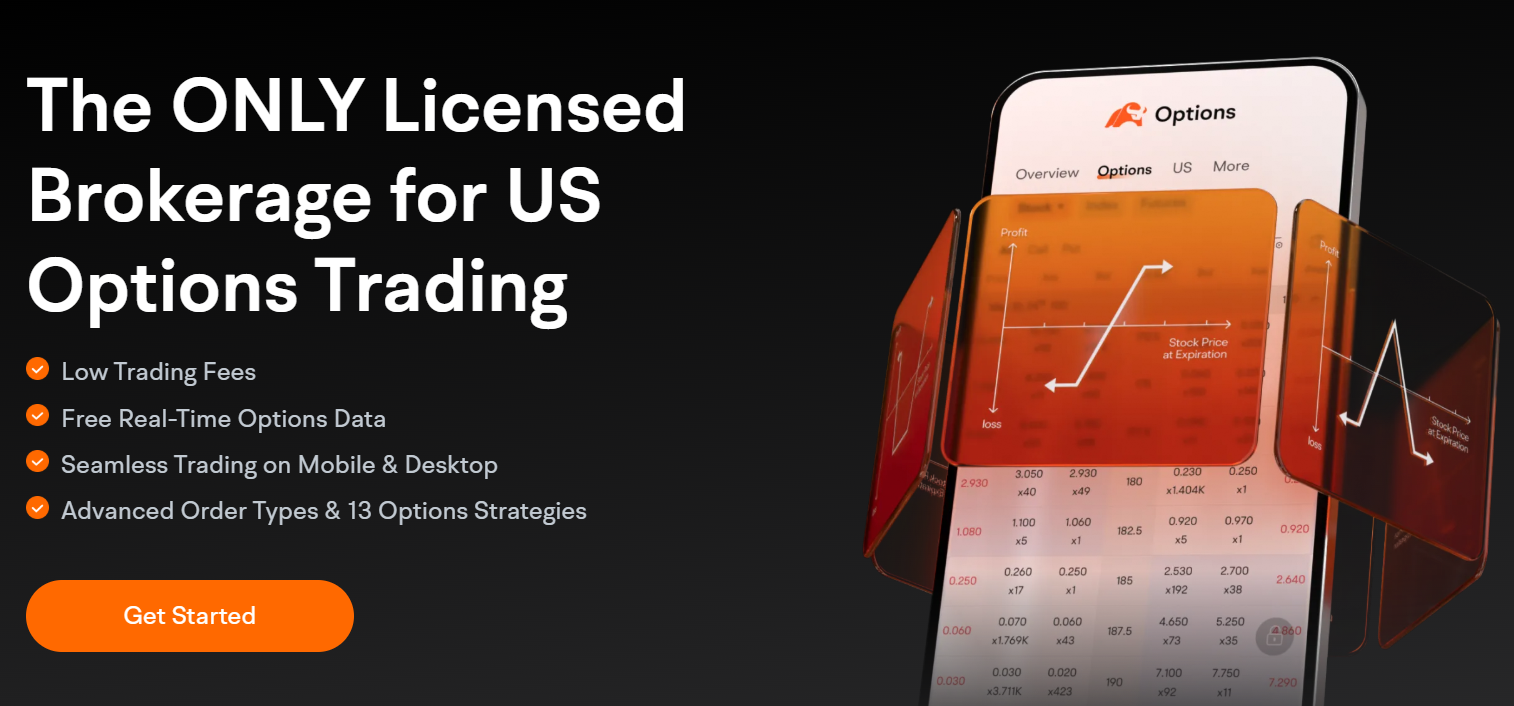
3. Options: It offers a smarter option for options trading.
4. Fractional Shares: Investors can buy a portion of a single share of a stock or ETF, starting from just $5.

5. ETFs: It allows investment in top ETFs in Malaysia.
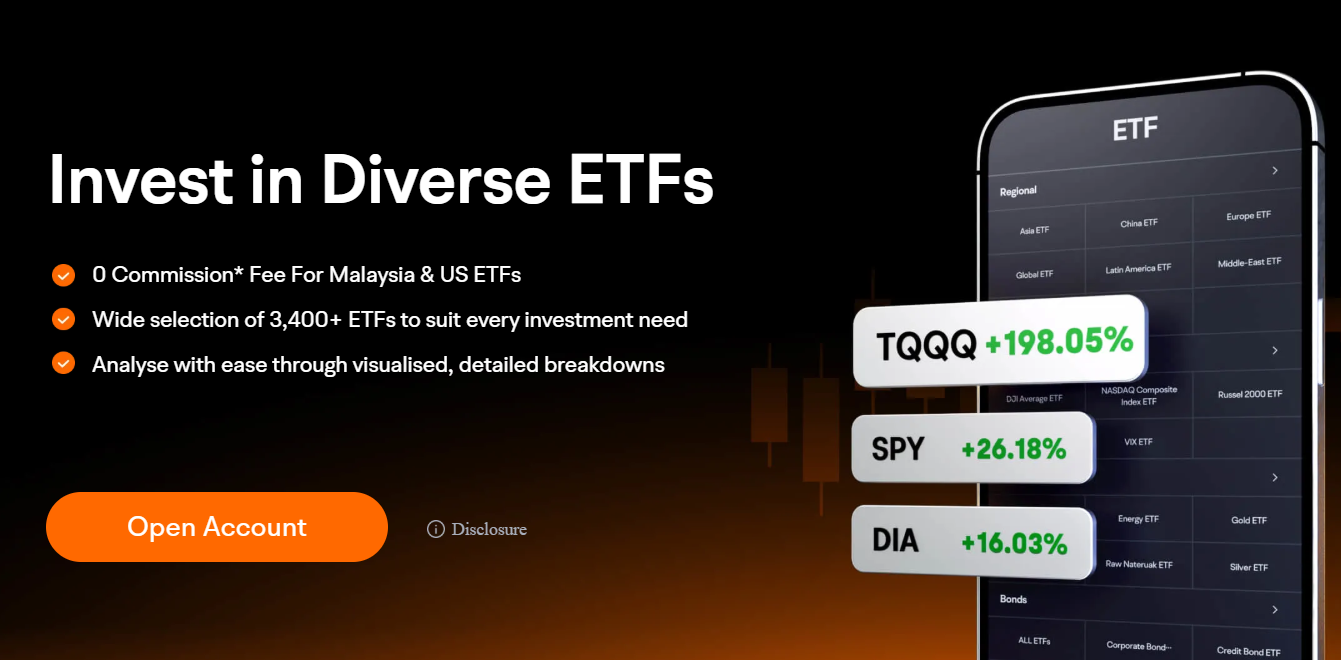
6. Cash Plus: It helps to maximize the profit of idle cash. Investors also have the investment option of money market fund in Malaysia, which provides an additional way to manage and grow their idle cash.

User-Friendly Interface and Trading Tools
An intuitive interface simplifies trading tasks such as placing orders and viewing portfolios. Useful trading tools such as real-time market data, charting, and diverse order types enhance trading decisions and control.
Customer Service and Support
Ensure multiple customer service support channels, like phone, email, and live chat, are available. The support team should be knowledgeable and responsive. Poor service can lead to trading frustrations and missed opportunities.
By evaluating these factors, you can pick an ideal investing platform for Malaysia Stock Market investments in 2026.
Tips for Beginners to Invest in the Bursa Malaysia Stock Market

Here are some valuable tips for beginners looking to invest in the Malaysian stock market:
Start with a Clear Investment Plan
Beginners should start their investment journey by setting clear, definitive goals. Are you aiming to save for a short-term objective like a down payment on a house within a few years, or are you building a long-term nest egg for retirement decades ahead? Develop a comprehensive long-term investment strategy and adhere to it. Do not be disheartened by short-term market fluctuations.
Build a Diversified Portfolio
To build a diversified portfolio, avoid concentrating all your investments in a single industry. The Bursa Malaysia stock market encompasses a wide range of sectors such as plantation, finance, technology, and healthcare. Investing across multiple sectors mitigates the impact of sector-specific risks.
Practice Patience and Discipline
In the volatile world of the stock market, it is vital to resist emotional reactions. When market fluctuations occur, avoid making hasty decisions. The stock market is in a constant state of evolution. Keep abreast of market news, economic trends, and new investment strategies. Read financial publications, attend webinars, or join investment clubs. By continuously enhancing your knowledge, you will improve your ability to make sound investment decisions and maintain discipline over the long term.
Why Use Moomoo to Trade Stocks in Malaysia

In the dynamic world of stock trading in Malaysia, choosing the right trading platform is of utmost importance. Moomoo has emerged as a compelling choice for many investors. With a range of features designed to enhance the trading experience, it offers significant advantages that set it apart from its competitors.
Moomoo Pricing and Fee
When it comes to investing, understanding the pricing and fee structure of your trading platform is crucial. Moomoo Malaysia offers several attractive pricing and fee features that can benefit both new and experienced investors. Moomoo Malaysia fees are structured in a way that provides both new and experienced investors with appealing benefits
0 Commission and Margin Rates
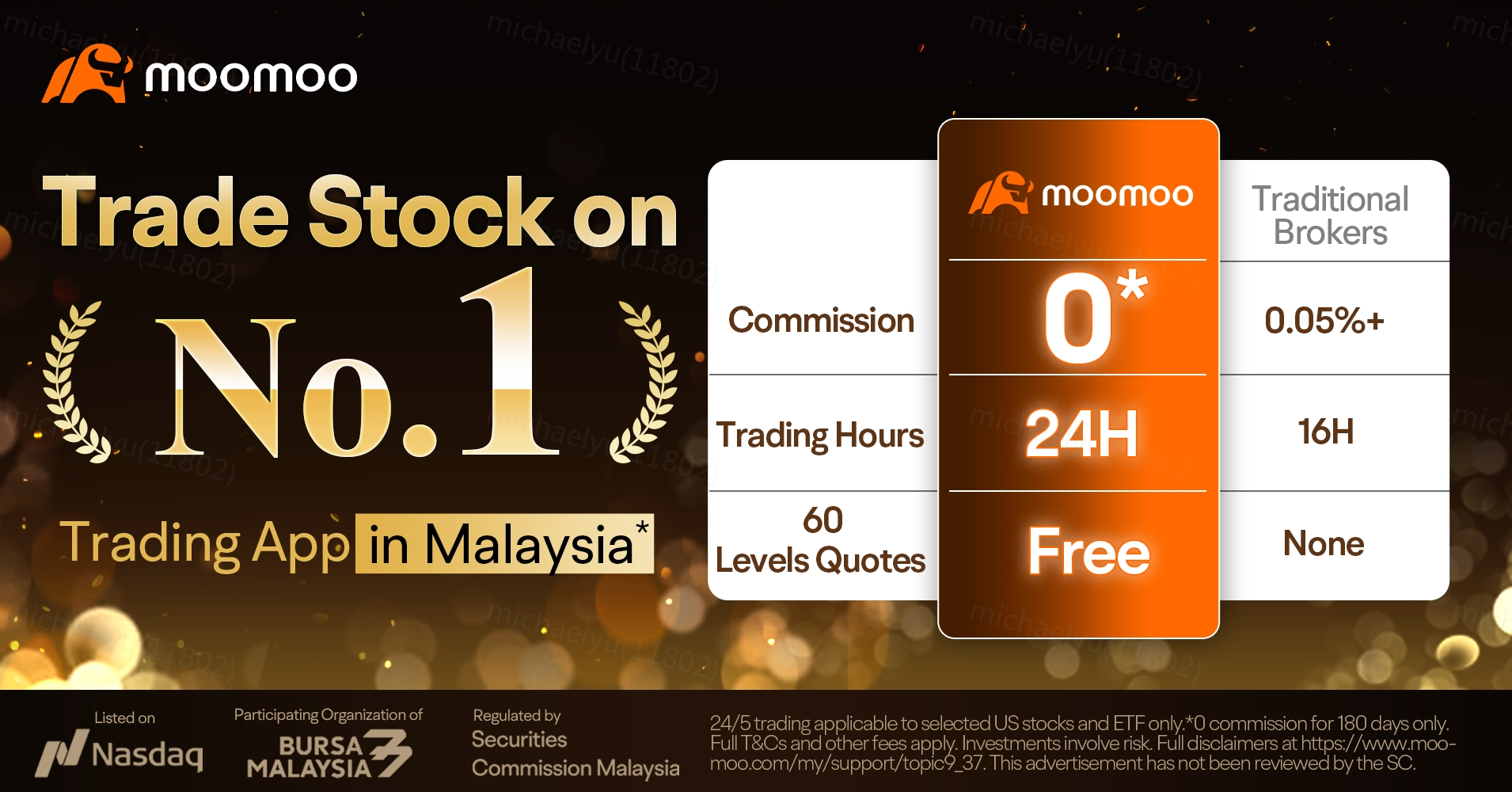
Moomoo Malaysia offers an attractive commission-free period. For a duration of 6 months, there is no commission charged when trading Malaysian and US stocks, as well as ETFs for new users. This provides an excellent opportunity for both new and existing investors to trade without incurring commission costs during the initial phase.
In terms of margin rates, Moomoo Malaysia is competitive, with rates as low as 6.8%. These low margin rates can be beneficial for investors who wish to trade on margin, as they help minimize the cost of borrowing funds for trading, thereby potentially maximizing returns.
Is Moomoo Legal in Malaysia?
Moomoo Malaysia is indeed fully legal and regulated within the country. It operates under the strict supervision of the Securities Commission of Malaysia (SC). This regulatory body ensures that all financial platforms adhere to specific rules and guidelines to safeguard investors' interests.
Moomoo Malaysia is committed to complying with all local regulations and standards. This compliance is crucial as it creates a secure environment for investors. By adhering to these regulations, Moomoo Malaysia provides a layer of protection for your investments. It means that your trading activities on the platform are carried out in accordance with the law, reducing the risks associated with illegal or unregulated operations.
Is Moomoo Legal in Malaysia? With oversight by the Securities Commission of Malaysia and its commitment to local regulations, Moomoo Malaysia is entirely safe and offers a secure platform for investing in the stock market.
Conclusion
The Bursa Malaysia Stock Market in 2026 holds great potential for investors who approach it with knowledge, strategy, and discipline. By understanding the different types of stocks, the policy support, and the various sectors and companies within the market, one can make more informed investment decisions.
Avoiding common mistakes and choosing the right investing platform, such as Moomoo with its attractive features and legal compliance, are crucial steps. As always, remember that the stock market is subject to fluctuations and uncertainties, and continuous learning and adaptation are key to successful investing.

This presentation is for informational and educational use only and is not a recommendation or endorsement of any particular investment or investment strategy. Investment information provided in this content is general in nature, strictly for illustrative purposes, and may not be appropriate for all investors. Read more