How to Invest in Gold in Malaysia 2025
Brief Introduction to Gold
Gold boasts a rich and glittering past, serving not only as a beloved material for crafting exquisite jewelry but also as a fundamental pillar of commerce and monetary systems. Its timeless appeal, scarcity, and innate beauty have ensured its high desirability throughout the ages.
Types of Gold Investments
There are several types of gold investments available, each offering unique benefits and characteristics. Understanding these options can help you make informed decisions and diversify your investment portfolio effectively.
What's the Gold Price Today in Malaysia?
What affects the Gold Price?
Since 2025 began, gold prices have kept hitting new highs. On May 9, at midday, gold prices in Malaysia climbed, following regional demand. Despite a correction in global futures, local gold was trading at RM14,310.34 per ounce. This marked a gain of RM165.92, or 1.17%, for the day, as per data from GoldPrice.org.
Over the past year, gold in Malaysia has seen a substantial increase of RM2,921.86, which is a 26.04% jump. In the last five years, its value has nearly doubled, surging by 92.3%. Looking back 20 years, gold in Malaysian Ringgit has soared an astonishing 771.89%.
Let's take a deep dive into the various elements that shape gold prices and the forces that drive its market value. Gold prices are subject to various external factors such as government policies and market demand.

The Historical Tapestry of Gold
In the 18th century, many countries adopted the gold standard, linking their currencies to gold. Coins and banknotes represented gold stored in vaults. But in 1971, the US abandoned the gold standard, and most nations followed suit, shifting to fiat currencies.
Despite this change, countries still hold large gold reserves. Gold protects against inflation and preserves wealth. Gold has been a reliable store of value throughout history. As paper money loses value to inflation, gold prices usually rise, shielding purchasing power.
Forces Shaping Gold Prices
The value of gold operates on a different plane compared to traditional investment assets such as stocks and bonds. Stock values are closely tied to a company's financial performance and growth prospects, while bond values are influenced by interest rates. In contrast, gold frequently charts its own course, moving independently of these assets. Historically, gold has exhibited a negative correlation with stocks and bonds, meaning it often thrives when these other investments struggle.
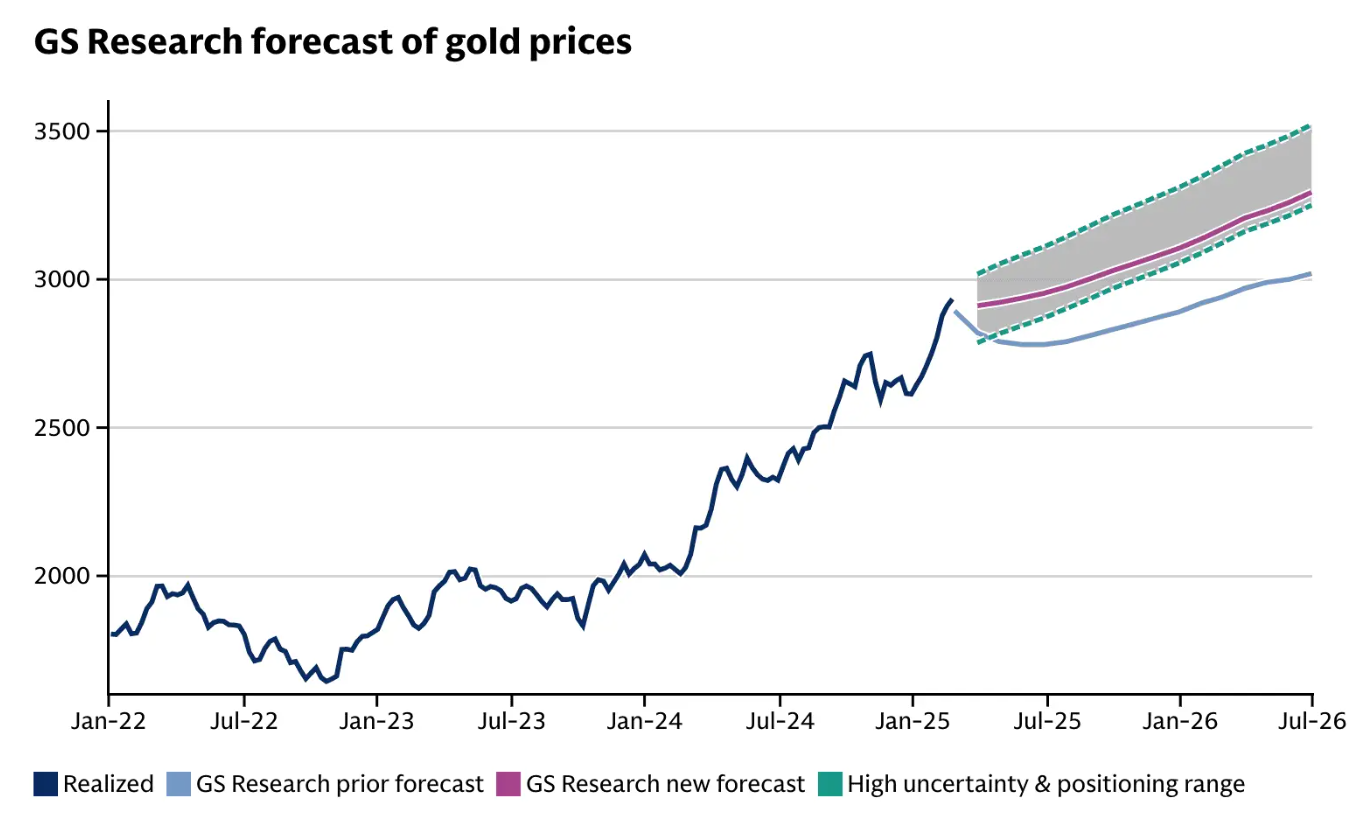
(Source: Goldman Sachs)
The following are the key elements that influence gold prices:
Supply and Demand: Supply and demand, a cornerstone of economic theory, play a crucial role in determining gold prices. During economic recessions or when central banks increase their gold reserves, the demand for gold surges, typically causing prices to rise. In contrast, during economic expansions when demand subsides, gold prices tend to decline.
Currency Movements: Since gold is predominantly traded in U.S. dollars, its price is closely tied to the dollar's strength. A weakening dollar makes gold more affordable for international buyers, boosting demand and driving up prices. Conversely, a stronger dollar often puts downward pressure on gold prices.
Inflation and Deflation: Gold has long been recognized as an effective hedge against inflation. When inflation is high, investors often turn to gold to protect their wealth, increasing its demand and price. However, the returns on gold investments can be unpredictable and subject to market fluctuations. Even during deflationary periods, when economic activity slows and prices fall, gold can gain value as it serves as a reliable store of value.
Geopolitical Turmoil: Known as a “safe haven” asset, gold attracts investors during times of geopolitical unrest or financial instability. When uncertainty rises, investors seek the security of gold, which can lead to significant price increases.
Central Bank Policies: Policies set by major central banks, particularly those related to interest rates and monetary stimulus, can have a profound impact on gold prices. Lower interest rates make fixed-income investments like bonds and savings accounts less appealing, prompting investors to shift their funds into gold.
7 Reasons to Invest in Gold in Malaysia
In the constantly shifting financial arena, gold investment shines as a steadfast symbol of stability. This precious metal, which has retained its worth for centuries, offers distinct advantages, making it highly appealing to Malaysian investors. Here are seven compelling reasons to add gold to your investment portfolio. While this product offers stability, it is not without risks and should be considered carefully.
Value Preservation: Gold has retained its worth across history, prized for both beauty and wealth transfer. Its corrosion resistance and malleability make it a lasting investment.
Inflation Hedge: Over 50 years, gold prices have risen during high-inflation periods, protecting investors as fiat currencies lose value.
Deflation Protection: In deflation, like during the Great Depression, gold's purchasing power increases, serving as a reliable store of value.
Geopolitical Safe Haven: Known as the “crisis commodity”, gold appreciates during geopolitical unrest, favored by risk-averse investors.
Dollar-Gold Link: Gold and the U.S. dollar move inversely. A weak dollar makes gold cheaper globally, boosting demand and prices, as seen from 1998-2008.
Supply & Demand: Gold supply is limited, and production has dropped since the 2000s, while demand, especially in China and India, is rising, driving up prices.
Portfolio Diversifier: Gold often moves against stocks, reducing portfolio volatility and shielding investments from market swings.
What are Gold ETFs?

A gold ETF is an investment vehicle traded on stock exchanges, similar to individual stocks. It enables investors to participate in the gold market without the burden of physically possessing precious metal. Gold ETFs can adopt different structures; some hold actual gold bullion, while others use financial instruments like futures contracts to mirror gold price fluctuations. The investment in these ETFs can be evaluated based on metrics such as fund flows and returns.
Moreover, gold ETFs can be bought and sold through brokerage accounts during regular trading hours, offering high liquidity and flexibility. This makes them an attractive option for both beginner and seasoned investors looking to diversify their portfolios with gold-related assets.
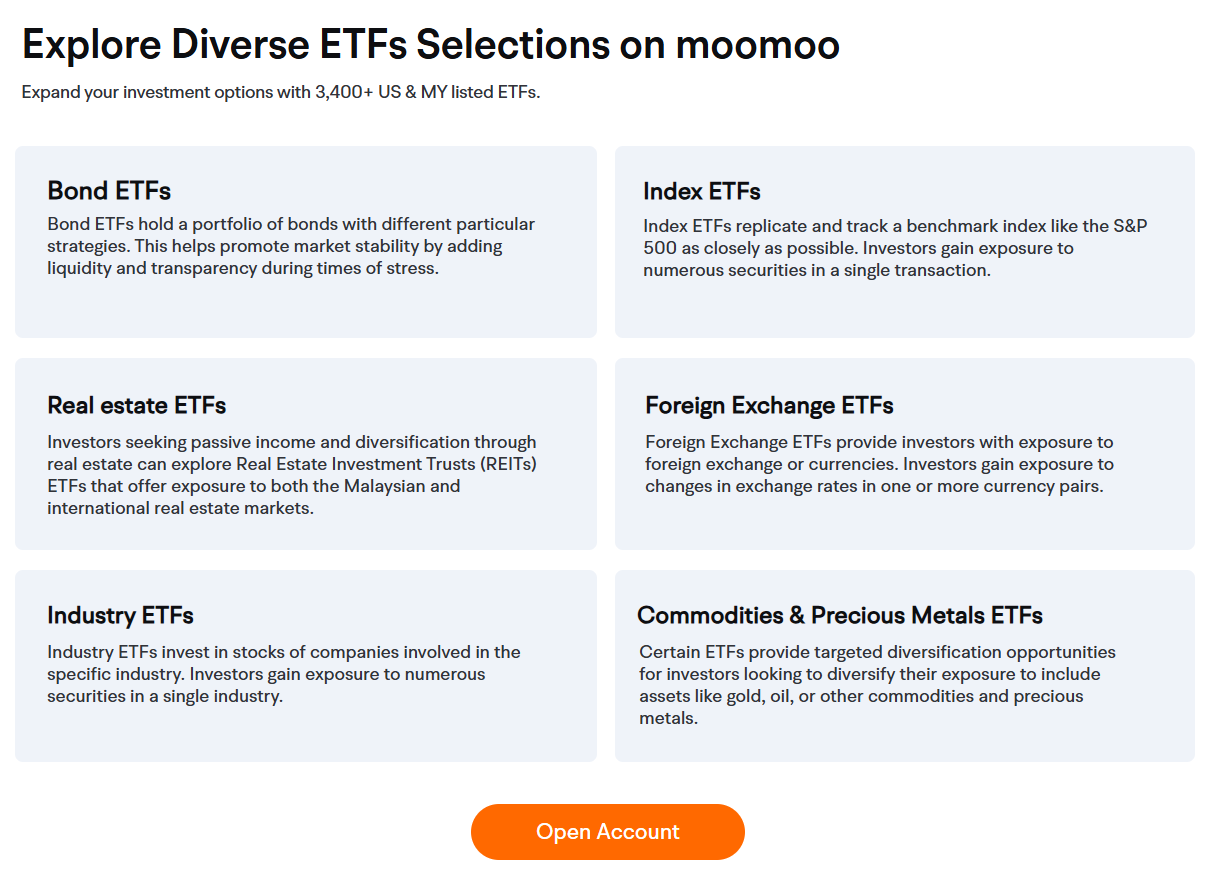
Read More: How to Choose Your Ideal ETF in Malaysia?
How does a Gold ETF Work?
A gold Exchange-Traded Fund (ETF) is a tradable financial product listed on stock exchanges. What sets gold ETFs apart from other ETFs is their underlying gold-related assets. These assets can be in the form of actual gold bars or gold futures contracts. Just like regular stocks, investors can buy and sell gold ETFs on the stock market.
The price of gold ETFs closely tracks the value of physical gold. So, whenever the price of gold goes up, the value of the gold ETF will increase proportionally, and vice versa. The returns will be directly influenced by the fluctuations in gold prices.
When investors buy shares of a gold ETF, they don't take possession of physical gold. Instead, they own fractional interests in the fund, with each share representing a specific quantity of gold. For example, if an ETF holds 100 ounces of gold and an investor buys one share, they effectively own 1/100th of an ounce of gold.
There is a diverse range of gold ETFs in the market. Some invest directly in physical gold, while others focus on the stocks of gold mining companies. Additionally, there are leveraged gold ETFs, which use financial derivatives to amplify potential returns (and risks) based on gold price movements.
Top US Gold ETFs in Malaysia to Watch
SPDR Gold Shares (GLD)
SPDR Gold Shares (GLD) is one of the most well-known gold ETFs. It aims to track the performance of the price of gold bullion. It provides investors with a convenient way to gain exposure to the gold market without physically owning gold. It holds gold bars in trust, and the value of the ETF shares is based on the underlying gold holdings.
ABRDN Physical Gold Shares ETF (SGOL)
ABRDN Physical Gold Shares ETF (SGOL) represents physical gold held in secure vaults. It offers investors direct exposure to the price of gold. The ETF's value closely follows the market price of gold, allowing investors to participate in the gold market in a liquid and cost-effective manner.

Invest in ETFs with 0-commission* on Moomoo Malaysia!
![]() >> Open an account today and enjoy exclusive welcome rewards!
>> Open an account today and enjoy exclusive welcome rewards!
 >> Open an account today and enjoy exclusive welcome rewards!
iShares Gold Trust (IAU)
iShares Gold Trust (IAU) is designed to reflect the performance of the price of gold. It holds allocated gold bullion, and each share of the trust represents a fractional undivided interest in the underlying gold. It gives investors an accessible way to invest in gold within their investment portfolios.
iShares Gold Trust Micro ETF (IAUM)
iShares Gold Trust Micro ETF (IAUM) is a micro-sized version of the iShares Gold Trust. It also provides exposure to the price of gold but is structured to offer a more accessible entry point for investors, potentially with lower investment amounts. It holds physical gold and tracks its price movements.
SPDR Gold MiniShares Trust (GLDM)
SPDR Gold MiniShares Trust (GLDM) is a smaller-sized gold ETF compared to GLD. It aims to track the performance of the price of gold. It allows investors to gain exposure to the gold market with potentially lower costs and in a more manageable investment size.
GraniteShares Gold Trust (BAR)
GraniteShares Gold Trust (BAR) provides investors with exposure to the price of gold. It holds physical gold in trust, and its shares are designed to reflect the value of the underlying gold holdings. It offers an alternative option for investors looking to invest in gold through an ETF structure.
Top US Gold Stocks in Malaysia to Consider

Barrick Gold (GOLD)
Barrick Gold is one of the world's largest gold-mining companies. It operates mines across multiple continents. The company is known for its significant gold production, advanced mining techniques, and focus on sustainable and responsible mining practices. Its stock performance is closely tied to gold price and its operational success in exploration, extraction, and production.
Agnico Eagle (AEM)
Agnico Eagle is a senior gold-mining company with operations mainly in Canada, Finland, and Mexico. It has a long-standing reputation for high-quality gold production. The firm emphasizes safety, environmental stewardship, and community engagement. Its stock can be influenced by gold market trends, as well as its ability to develop new mining projects and optimize existing operations.
Sibanye Stillwater (SBSW)
Sibanye Stillwater is a major gold and platinum-group metals producer. With operations in South Africa and the United States, it has a diversified portfolio. The company has been involved in significant mergers and acquisitions in the mining space. Its stock performance is affected by the prices of gold and platinum-group metals, along with its operational efficiency and strategic initiatives.
Gold Fields (GFI)
Gold Fields is a global gold-mining company with mines in South Africa, Australia, Peru, and Ghana. It focuses on sustainable mining and value creation for shareholders. The company engages in exploration, development, and production of gold. Its stock is sensitive to gold price fluctuations, as well as its exploration success and cost management in mining operations.
Newmont (NEM)
Newmont is one of the largest gold-mining companies globally. It has a diverse portfolio of mines in North America, South America, Australia, and Africa. The company is recognized for its strong financial position, operational excellence, and commitment to environmental and social responsibility. Its stock is influenced by the gold market, its production levels, and strategic growth plans.
Kinross Gold (SSRM)
Kinross Gold operates gold mines in the United States, Canada, Brazil, Chile, Russia, and West Africa. It is focused on maximizing shareholder value through efficient mining operations, exploration, and development. The company's stock performance is linked to the gold price, as well as its ability to manage costs, expand production, and navigate regulatory environments in its operating regions.
How to Invest in Gold ETFs in Malaysia?
Investing in gold ETFs in Malaysia presents exciting new investment opportunities. Whether your goal is to create a diversified portfolio, safeguard against inflation, or profit from the potential appreciation of gold, the following guide will provide you with the essential investment knowledge to help you navigate the world of gold ETF investing in Malaysia with confidence. You can easily open a brokerage account and start investing in Gold ETFs.
Opening a Brokerage Account
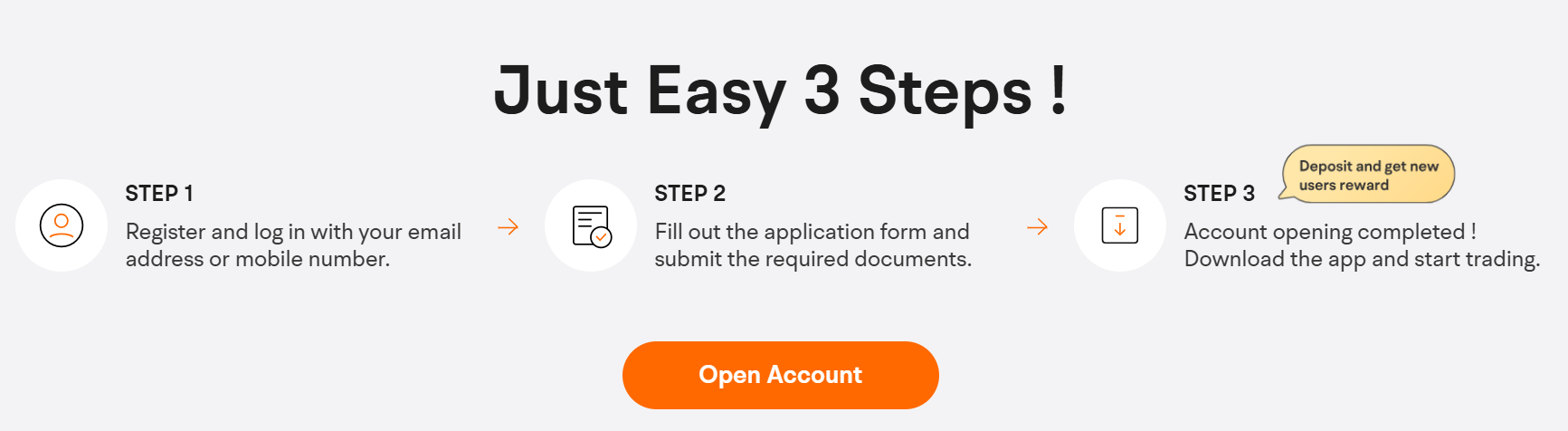
Before you start investing in gold ETFs, the first step is to open a brokerage account. Take the time to compare different brokers available in Malaysia, evaluating them based on factors such as fees, the quality of their trading platforms, and the range of services they offer. Ensure that the broker you select supports gold ETF trading and provides commissions, trading tools, informational resources, and customer service that meet your requirements.
Trade gold ETFs with 0 commission* on Moomoo Malaysia! Open an account today and enjoy exclusive welcome rewards!
Researching and Selecting the Right Gold ETF
The trading market in Malaysia offers a wide array of gold ETF products. Some funds hold physical gold, while others might utilize futures contracts or derivatives. To find the ETF that best suits your investment goals and risk tolerance, conduct in-depth research. Reviewing the product disclosure sheet is crucial to understanding the risks and terms associated with the ETF. Analyze the prospectuses, review historical performance data, and examine the expense ratios of various gold ETFs.
Monitoring Your Investment
Once you've purchased gold ETFs, it's crucial to keep a close eye on market activity and the performance of your investment. You can adjust your strategy based on your goals and/or market conditions. Gold ETFs are influenced by a multitude of economic factors, which can cause significant price fluctuations and impact your profits or losses. Stay updated by following news from stock exchanges, central banks, and reliable information platforms. This way, you'll be well-informed and able to make sound decisions regarding buying and selling your gold ETFs.
Pros and Cons of Gold ETFs
Gold ETFs have emerged as a favored investment option among market participants. Nevertheless, before deciding to include them in your investment portfolio, it's imperative to thoroughly understand both their advantages and potential pitfalls. This knowledge will help you make informed decisions and enhance the likelihood of a successful investment.
Advantages
Convenience and Ease of Access: Gold ETFs provide investors with a hassle-free way to gain exposure to the gold market without the need for direct ownership of physical gold. Unlike physical gold, which requires secure storage and incurs associated costs, gold ETFs are simple to trade and maintain. They can be bought and sold on stock exchanges, making them an accessible investment vehicle for a wide range of investors.
Inflation Hedge: Gold has long been recognized as one of the most reliable stores of value among precious metals. It serves as an effective safeguard against inflation, especially during economic downturns and periods of high market volatility. When the value of traditional currencies erodes due to inflation, gold often retains or even increases in value, protecting investors' wealth.
High Liquidity: Traded like stocks on stock exchanges, gold ETFs offer high liquidity. This allows investors to buy or sell their holdings at market prices during trading hours, providing flexibility and the ability to quickly respond to market changes. In contrast, trading physical gold can be more time-consuming and less liquid.
Transparency: The pricing of physical gold bullion or gold products can be influenced by various factors, including suppliers, distribution channels, and other market variables. In contrast, the share prices of gold ETFs are transparent and publicly available. Investors can monitor the performance of gold ETFs in real-time through trading platforms such as moomoo, enabling them to make more informed investment decisions. For the most accurate information, refer to the ETF's official documentation.
Cost-Efficiency: Gold ETFs inherit the cost advantages typical of ETFs. Since they are predominantly passively managed, their fees are generally lower than those of mutual funds. Additionally, many brokers offer commission-free trading for ETFs, further reducing the cost of investment.
Disadvantages
Market Volatility: Gold ETF prices are highly sensitive to changing market conditions. For example, during the economic turmoil caused by the COVID-19 pandemic in 2020, gold prices skyrocketed, driving up the value of gold ETFs. However, as the market stabilized in 2022 and interest rates started to rise, gold prices declined, leading to a corresponding drop in the value of gold ETFs. This volatility can result in substantial short-term gains or losses for investors.
Tracking Error: There are instances where gold ETFs may not precisely mirror the price movements of physical gold. This tracking discrepancy means that investors may not fully capture the upside of rising gold prices, potentially limiting their returns.
Counterparty Risk: Investors in gold ETFs face counterparty risk. If the ETF issuer defaults or encounters financial difficulties, investors could lose some or all of their investment. This risk highlights the importance of carefully researching and choosing a reliable ETF issuer. This is a crucial step to mitigate potential losses.
How are Gold ETFs taxed?
In Malaysia, the taxation of Gold Exchange-Traded Funds (Gold ETFs) is strictly regulated by local tax laws and may differ significantly from those in other countries or regions. Different tax jurisdictions have varying tax policies for financial products, which mainly depend on local economic policies, the development level of the financial market, and the guidance for investment behaviors. These policies will be applied based on the specific regulations of each jurisdiction.
In some countries, to encourage long-term investment, tax incentives may be offered to investors who hold Gold ETFs for a certain period. For example, certain countries stipulate that if an investor holds Gold ETFs for more than one year, they may only need to pay a lower long-term capital gains tax when selling. In Malaysia, tax policies are formulated based on the country's fiscal needs and market conditions. The Malaysian government may adjust relevant tax policies according to the role and influence of Gold ETFs in the financial market and their potential contribution to the national economy.
FAQs on Gold Investment in Malaysia
How Much Should I Invest in Gold?
Gold is highly prized for its effectiveness as an inflation hedge and its role in diversifying investment portfolios. Opening a gold account can provide additional flexibility and benefits. Additionally, it offers high liquidity and relatively low transaction costs. However, unlike stocks and bonds, gold does not provide regular income streams, which necessitates a distinct investment approach.
Financial professionals commonly recommend that gold should account for no more than 10% of your total investment portfolio. The exact proportion, anywhere from 1% to 10%, is influenced by multiple factors such as your age, investment objectives, and risk tolerance.
Take stock investment guidelines, for example. The often-cited rule of “100% minus your age” suggests that younger investors should allocate a larger portion of their portfolio to stocks compared to older ones. Applying a similar concept to gold investments, younger individuals may choose to invest closer to the higher end of the recommended gold range, aiming to benefit from long-term growth potential. In contrast, older investors may adopt a more cautious stance, prioritizing income-generating assets instead.
In the end, the ideal allocation of gold in your portfolio should match your overall financial plan and life stage. If you're uncertain about the right amount to invest in gold, it's wise to start small. Begin with a modest percentage and adjust your holdings as you gain more experience and understand how gold performs within your broader investment mix. This gradual approach enables you to better appreciate and incorporate gold's function in growing and safeguarding your wealth.
How do I Choose a Gold ETF?
When selecting a gold ETF, it's essential to evaluate several critical aspects to ensure it aligns with your investment objectives. This product should be carefully reviewed for its unique risks and potential rewards.
Asset Under Management (AUM): Begin by assessing the fund's AUM. A larger AUM generally signals greater investor trust and superior liquidity. This means that the ETF is more likely to have sufficient trading volume, allowing you to buy and sell shares with ease without significantly affecting the price.
Expense Ratio: Pay close attention to the expense ratio, which represents the annual fee imposed by the fund. Opting for ETFs with lower expense ratios is advisable, as these fees can eat into your returns over the long run. Minimizing costs helps maximize your net gains over time.
Tracking Error: Don't overlook the tracking error, a metric that gauges how closely the ETF mirrors the price movements of physical gold. An ETF with a smaller tracking error will more accurately reflect the fluctuations in the gold market, enabling you to better capture gold's performance in your investment portfolio.
Does a Gold ETF Give Dividends?
Gold ETFs primarily fall into two distinct categories: those backed by physical gold and those focused on gold mining companies. The investment is not principally protected, and the returns can be unpredictable. On the other hand, gold mining ETFs invest in firms engaged in gold extraction and production. These companies might distribute dividends based on their earnings, which are then passed on to the ETF's investors.
To sum up, if your aim is simply to follow gold price changes without expecting income, physical gold ETFs are a good choice. But if you want both exposure to the gold market and the potential for dividend earnings, gold mining ETFs would likely be more appropriate.
Is gold a good investment?
Gold can be a helpful addition to a diversified investment portfolio, especially for people looking to guard against inflation and economic uncertainty. But you need to consider your investment timeline, risk tolerance, and overall portfolio strategy. Consulting a financial advisor can help you make wise decisions about including gold in your investments.
What's the best way to invest in gold?
For most beginners, gold ETFs (exchange-traded funds) are a great way to invest in gold because they're easy to buy/sell, simple to understand, and have low costs. For more experienced investors or those looking for long-term security, physical gold (like coins or bars) offers a tangible way to hold value. Spreading your gold investments across different types (like ETFs, physical gold, or gold stocks) can help manage risk while getting the benefits of gold.
Does gold protect against inflation?
Gold is seen as a reliable hedge against inflation, especially for long-term investors. It usually keeps its value when inflation is high and currencies lose value. But it’s important to balance gold with other investments in your portfolio.
Is gold better than cash?
Whether gold is better than cash depends on the economic situation and your financial goals. In a balanced financial plan, having both gold and cash can be helpful. Cash gives you quick access to money for daily needs and short-term expenses, while gold provides long-term protection and guards against inflation.
Investing in Gold ETFs in Moomoo Malaysia
When it comes to investing in gold ETFs in Malaysia, Moomoo offers a compelling platform with distinct advantages. You can easily navigate the platform and make informed investment decisions.
0 Commission* Fee For Gold ETFs
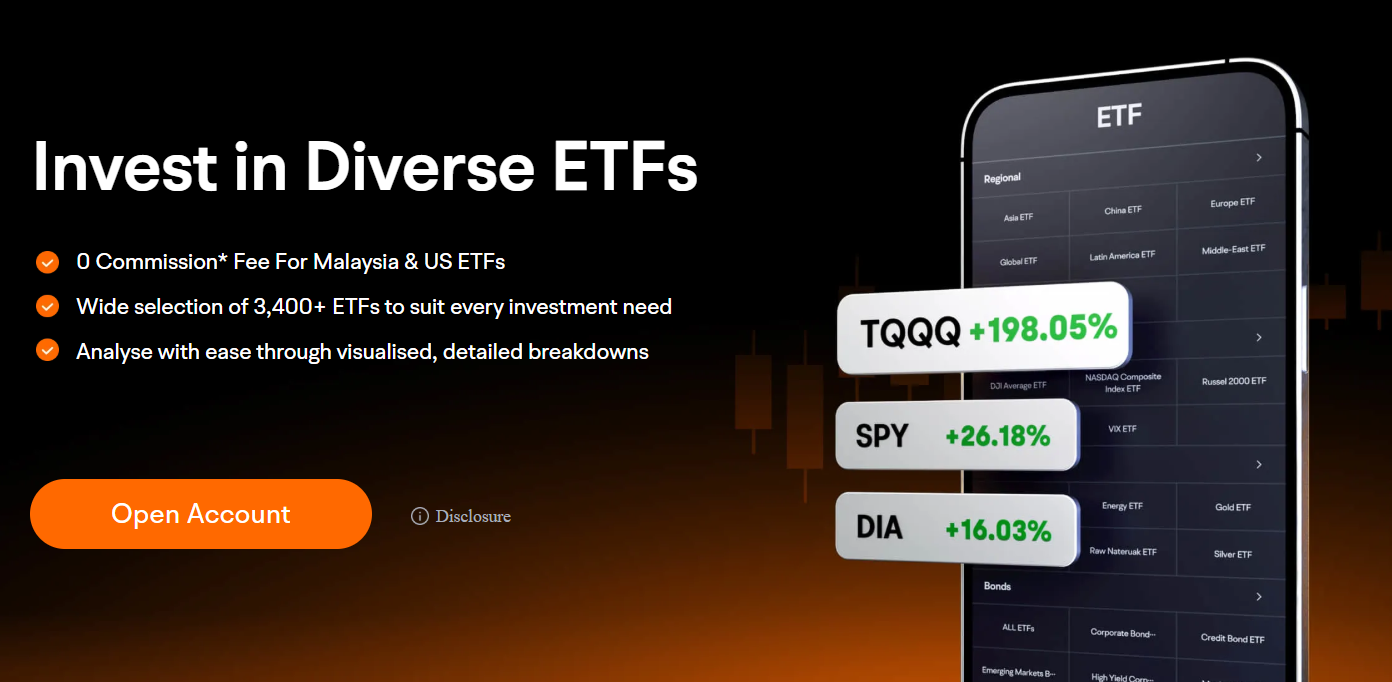
One of the most attractive features of investing in Gold ETFs on Moomoo Malaysia is the 0 commission* fee policy for both Malaysian and US ETFs. For the best investment experience, take advantage of this fee policy. This means that when you buy or sell Gold ETFs on the platform, you won't have to worry about incurring additional costs in the form of commission fees.
Wide Selection of 3,400+ ETFs to Suit Every Investment Need
Moomoo Malaysia offers a vast selection of over 3,400 ETFs, which is a goldmine for Gold ETF investors. This extensive range means that you have access to a diverse array of Gold ETFs with different investment strategies, underlying assets, and risk profiles. For more information on the available ETFs, visit the Moomoo website.
Analyse with Ease Through Visualised, Detailed Breakdowns
Moomoo provides investors with powerful analytical tools in the form of visualised, detailed breakdowns. You can also access real-time data and expert analysis to make informed decisions. When it comes to investing in Gold ETFs, understanding the performance, composition, and trends of the ETFs is crucial.
Conclusion

Investing in gold in the Malaysian stock market can be a rewarding addition to your investment portfolio. Whether you are looking to hedge against inflation, diversify your assets, or take advantage of the potential price appreciation of gold, there are various ways to do so. Gold ETFs, in particular, offer a convenient and cost-effective way to gain exposure to the gold market.
However, like any investment, it comes with its own set of pros and cons, and it's crucial to understand these before making a decision. By following the steps outlined in this guide, such as choosing the right gold ETF, being aware of tax implications, and considering your investment goals and risk tolerance, you can make informed investment choices.
And with platforms like Moomoo Malaysia, which offer 0 commission for gold ETFs and a wide selection of over 3,400 ETFs, the process of investing in gold ETFs has become even more accessible. Remember, the key to successful investing is continuous learning and staying updated on market trends. So, take the plunge, start your gold investment journey in Malaysia, and potentially unlock new opportunities for wealth growth.
This presentation is for informational and educational use only and is not a recommendation or endorsement of any particular investment or investment strategy. Investment information provided in this content is general in nature, strictly for illustrative purposes, and may not be appropriate for all investors. Read more