Best ETFs for RRSP in 2026: Maximize Your Tax-Free Growth
When Canadians start thinking about retirement, the RRSP usually takes center stage—and for good reason. It’s not just a savings account; it’s a government-registered investment vehicle that offers juicy tax breaks now and lets your money grow tax-free until you’re ready to kick back and enjoy it later in life . But here’s the twist: simply stashing cash in your RRSP isn’t enough. If you want your nest egg to truly flourish, choosing the best ETF for RRSP can make all the difference.
ETFs are popular because they combine low fees with broad diversification—think of them as baskets of investments that let you own a slice of hundreds of companies in one go. You can hold and buy ETFs in an RRSP; for step-by-step details and eligibility specifics, see the FAQs section.
Honestly, picking the best etfs for rrsp can feel overwhelming with so many choices out there. But remember: every dollar invested inside your RRSP grows shielded from annual taxes until withdrawal—which often happens when your tax rate is lower in retirement. That’s why getting this decision right isn’t just smart; it’s essential for maximizing your future comfort.
Ready to build an RRSP that works as hard as you do? Let’s keep exploring how to choose and combine the best ETF options for your retirement journey.
How to Choose the Best ETFs for RRSP?
So you’re staring at a sea of tickers, wondering which is the best ETF for RRSP growth, stability, and—let’s be honest—a little peace of mind. The good news? You don’t need a finance degree or a crystal ball. You just need to focus on a few key factors that matter way more than last year’s “top performer” headlines. Let’s break down what really counts when building your RRSP ETF portfolio.
Maximize Your RRSP Potential with Top-Rated ETFs. Join moomoo Today!
1. Start With Your Goals and Risk Comfort
First things first: what’s your retirement vision? Are you picturing early beach days in Kelowna, or are you more of a “work till 70 and travel the world” type? Your time horizon and comfort with market swings should drive your ETF picks. If you’re decades away from retirement, you might lean heavier on equities for growth. Closer to retirement? Maybe dial up the bonds for stability.
Remember: there’s no single best ETF for RRSP accounts that fits everyone. Your personal mix matters more than any “top 10” list .
2. Diversification Isn’t Just a Buzzword
You’ve heard it before: don’t put all your eggs in one basket. In the context of your RRSP, this isn’t just wise advice—it’s essential protection. Diversification means spreading your investments across sectors, countries, and asset classes so one bad apple doesn’t spoil the whole bunch. Even within ETFs, look for funds that hold hundreds (or thousands) of underlying stocks or bonds. That way, if tech stocks tumble or oil prices crash, your entire retirement doesn’t go with them .
A solid RRSP ETF portfolio often includes:
Canadian equity ETFs (for home bias)
U.S. and international equity ETFs (for global growth)
Bond ETFs (for stability)
Sometimes sector or thematic ETFs (but don’t go overboard chasing trends)
3. Keep an Eye on Fees—They Really Add Up
This one’s simple but crucial: check the Management Expense Ratio (MER). Even a 1% annual fee can quietly eat away at six figures of your nest egg over decades . The best etfs for rrsp accounts usually have MERs well below traditional mutual funds—think 0.05% to 0.30% instead of 2%+.
Lower fees mean more money stays in your account compounding over time. And yes, all else being equal, cheaper is better—just make sure you’re not sacrificing diversification or liquidity.
4. Don’t Chase Last Year’s Winners
It’s tempting to look at the best performing ETFs from last year and think you’ve cracked the code. But honestly? Markets are unpredictable—what soared in 2024 could flop in 2025 . Instead of chasing fads or niche plays, stick with broad-market ETFs that provide long-term exposure across geographies and sectors .
5. Look For Quality and Track Record
How do you separate the wheat from the chaff? Check independent ratings like Morningstar Medalist Ratings (Bronze/Silver/Gold) and Star Ratings (4 or 5 stars). These reflect both past performance and analysts’ confidence in future outperformance based on fund management quality and process .
Also consider how closely an ETF tracks its index—big tracking errors are red flags.
6. Understand Currency Hedging… Or Don’t Sweat It Too Much
If you’re adding U.S. or international equity exposure through your RRSP ETF portfolio, you’ll notice some funds are “hedged” to Canadian dollars while others aren’t. Currency hedging sounds fancy but often adds cost without much benefit for long-term investors; unhedged foreign holdings can even cushion returns when the loonie drops . Unless currency swings keep you up at night, most Canadians skip hedged versions.
Top Canadian and International ETFs for RRSP
With so many options, the list can feel endless. Let’s cut through the noise and focus on Canadian and international ETFs that actually deserve a spot in your RRSP.
The All-In-One Wonders: Simplicity Meets Diversification
ETF | Type | Asset Mix | Coverage | Key points |
XEQT | All-equity asset-allocation ETF | 100% equity | Canada, U.S., international | Global diversification in one trade; low fee; rebalancing handled |
VEQT | All-equity asset-allocation ETF | 100% equity | Global equities | Hands-off global growth; slightly different mix vs. XEQT |
ZGRO | Growth asset-allocation ETF | ~80% equity / ~20% bonds | Global stocks + Canadian bonds | Growth tilt with a buffer against volatility |
XGRO | Growth asset-allocation ETF | ~80% equity / ~20% bonds | Global stocks + bonds | Similar balanced approach; low fees |
VGRO | Growth asset-allocation ETF | ~80% equity / ~20% bonds | Global stocks + bonds | Popular one-ticket solution for long-term investors |
First up, let’s talk about all-in-one ETFs—those beautifully simple “set it and forget it” funds that do all the heavy lifting for you. If you crave simplicity (and who doesn’t these days?), these are often considered the best ETFs for RRSP accounts.
Why do these keep popping up on every “best ETFs for RRSP” list? Because they’re efficient, low-cost, and take care of global diversification in one fell swoop. Honestly, if you just pick one of these and keep adding to it every month, you’re already ahead of most Canadians .
But let’s not pretend all-in-one ETFs are perfect for everyone. Some financial experts argue that buying individual component ETFs can save you on fees—especially as your account grows—and that all-in-one funds sometimes lean too heavily on North American equities. That said, if your RRSP isn’t massive or you don’t want to juggle multiple investments, these “easy button” solutions are tough to beat. They’re also handy when you’re regularly depositing or withdrawing money since rebalancing happens automatically .
What matters most? Pick an asset allocation that matches your risk tolerance—not just the brand name on the fund. If you’re gunning for long-term capital appreciation, an all-equity fund makes sense; if you need more stability or might need cash sooner rather than later, consider something with more fixed income like XBAL or TD’s Growth ETF Portfolio (TGRO).
Good news!
Moomoo Canada offers robust customer support and local service options to make managing your RRSP and your entire investing experience as smooth as possible.
![]() You can get help 24/7 through in-app chat or email, so whether you have a quick question about account setup, trading, or technical issues, support is always just a message away.
You can get help 24/7 through in-app chat or email, so whether you have a quick question about account setup, trading, or technical issues, support is always just a message away.
![]() In addition to online support, Moomoo has opened its first physical store in Toronto, Canada — the Moomoo Store. If you prefer face-to-face help, you’re welcome to visit in person for guidance on account questions, product features, or even educational resources.
In addition to online support, Moomoo has opened its first physical store in Toronto, Canada — the Moomoo Store. If you prefer face-to-face help, you’re welcome to visit in person for guidance on account questions, product features, or even educational resources.
Moomoo Canada offers robust customer support and local service options to make managing your RRSP and your entire investing experience as smooth as possible.
 You can get help 24/7 through in-app chat or email, so whether you have a quick question about account setup, trading, or technical issues, support is always just a message away. In addition to online support, Moomoo has opened its first physical store in Toronto, Canada — the Moomoo Store. If you prefer face-to-face help, you’re welcome to visit in person for guidance on account questions, product features, or even educational resources.
Building Blocks: Best Canadian Stock Market ETFs
ETF | Index/Exposure | Fee | Key points |
HXT | S&P/TSX 60 | As low as ~0.04% | Tracks Canada’s largest blue chips; tax-efficient structure |
VCN | FTSE Canada All Cap | Ultra-low | Broad large-, mid-, and small-cap exposure |
XIC | S&P/TSX Capped Composite | Ultra-low | Broad Canadian market exposure |
ZCN | S&P/TSX Capped Composite | Ultra-low | Broad Canadian market exposure |
If you’re more hands-on or want a home-country tilt, these core Canadian equity ETFs are a solid foundation. You don’t need all four; just pick one that fits your style or brokerage platform.
Find Top Canadian Stocks in Seconds! Download moomoo app to Access Our Pro ETF Screener!
Global Reach: U.S. & International Equity ETFs
U.S. Equity
ETF | Index/Exposure | Structure | Fee | Key points |
HXS | S&P 500 | Swap-based | Low | Can help minimize U.S. dividend withholding taxes inside RRSPs |
XUU | U.S. total market | Traditional | Low | Broad access to U.S. equities across caps |
VFV | S&P 500 | Traditional | Low | Straightforward S&P 500 exposure |
ZSP | S&P 500 | Traditional | Low | Broad access to America’s biggest companies |
Why include U.S. stocks? Simple: they make up more than half the world’s stock market value.

International Equity
ETF | Coverage | Hedging | Key points |
VXC | Global ex-Canada (developed + emerging) | Typically unhedged | Invests in thousands of companies worldwide outside Canada |
XAW | Global ex-Canada (developed + emerging) | Unhedged | Similar to VXC but with slightly different regional weights |
VEE | Emerging markets only | Unhedged | Extra growth potential with higher risk |
For true diversification—and to avoid putting all your eggs in North American baskets—these picks add international breadth.
Bonds: Stability When Markets Get Rocky
ETF | Bond focus | Duration profile | Key points |
ZAG | Canadian aggregate (gov’t + corporate) | Intermediate | Go-to stability at minimal cost |
VAB | Canadian aggregate | Intermediate | Broad, low-cost Canadian bond exposure |
ZDB | Canadian discount bonds | Intermediate | Tax-efficient tilt; balance of safety and yield |
VSB | Canadian short-term bonds | Short | Lower volatility and interest-rate sensitivity |
Including a bond component helps smooth out those wild swings when stock markets get jittery—a key feature of any balanced RRSP ETF portfolio.
Specialty Picks: Income & Real Estate
ETF | Focus | Use case |
VDY | Canadian high dividend yield | Steady dividend income from big-name Canadian firms |
VRE | Canadian REITs | Real estate exposure without being a landlord |
These can complement a core equity-and-bond lineup if you want to tilt toward income or add real-asset exposure.
Building a Balanced RRSP ETF Portfolio
So you’re ready to build your RRSP ETF portfolio—but how do you actually balance growth and stability in the real world? Everyone searches for the best ETF for RRSP, but the truth is, it’s rarely a single fund. What really matters is how different ETFs work together, so your portfolio can grow without keeping you up at night.
1. The Art (and Science) of Diversification
Think of your RRSP as a long-distance journey, not a sprint. The strength of a solid RRSP ETF portfolio comes from diversification across asset classes, regions, and sectors, not from betting everything on one hot theme.
Asset Classes: Mixing Growth and Stability
A balanced RRSP ETF portfolio usually blends equity ETFs (Canadian, U.S., global) with more defensive allocations like bond ETFs—and, for some investors, income-focused or real-asset exposure.
This is where dividend ETFs really shine inside an RRSP. Because RRSPs are tax-deferred, dividends can compound without immediate tax drag, making high dividend yield ETFs a popular choice for investors who want smoother returns and long-term income growth.
On moomoo, you can explore this directly through ETF High Dividend Yield, which highlights income-focused ETFs along with yield, volatility, and stability metrics—helpful for separating sustainable income from yield traps.
How to find it in the moomoo app: Markets → ETFs → High Dividend → filter by yield or growth
Go Global—But Keep a Home Base
Geographic diversification matters just as much. Canadian ETFs provide home-market stability and currency alignment, while U.S. and international ETFs offer access to innovation, scale, and faster-growing economies.
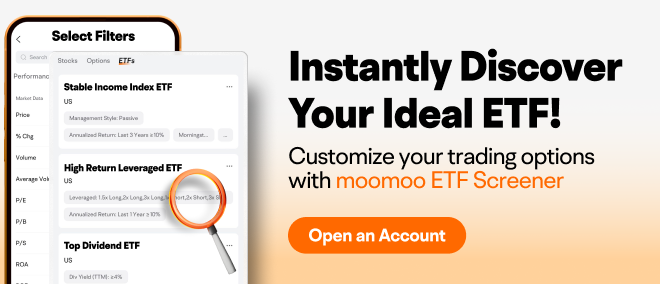
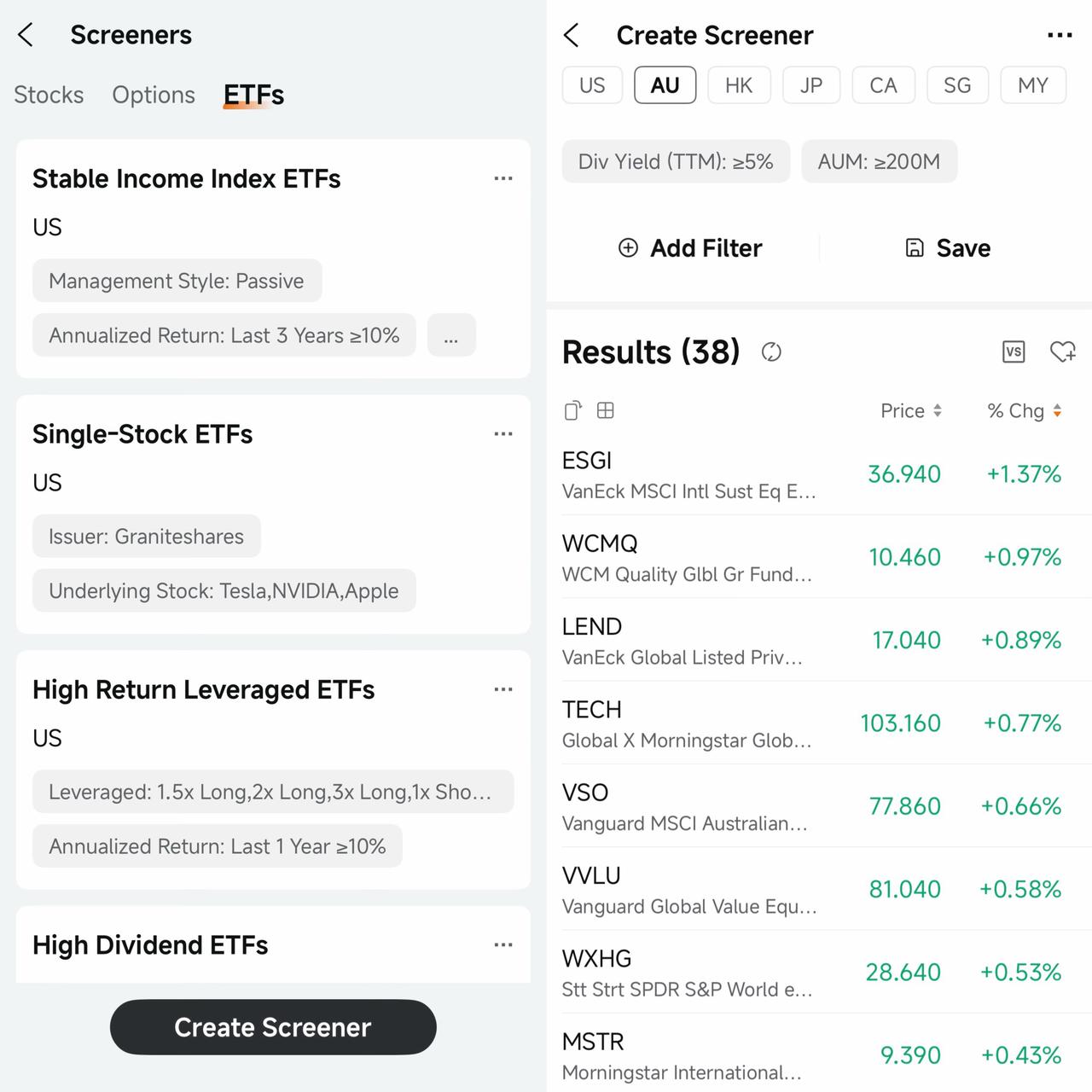
Instead of scrolling endlessly through listings, moomoo’s ETF Screeners let you filter ETFs by market, theme, or yield—saving time when you’re narrowing down options across regions. It’s especially useful if you’re building a core portfolio and want to stay diversified without overcomplicating things.
Sectors and Themes: Diversify With Intention
Not all sectors move together. Tech, healthcare, financials, energy—they each shine at different points in the cycle. Adding thematic ETFs can help you gain exposure to long-term trends like AI, clean energy, or ESG without betting on individual stocks.
On moomoo, Thematic ETFs group trend-focused funds by theme and sort them by performance, making it easier to explore ideas without chasing noise.
2. Risk Tolerance: Build for Real Life, Not Just Returns
Your RRSP portfolio should match you, not a headline. If big swings stress you out, leaning more on bonds or dividend ETFs may make sense. If you’ve got time and nerves on your side, growth-oriented equity ETFs can play a larger role.
Tools like ETF screeners help here too—letting you filter by volatility, yield, or historical performance—so your choices reflect your comfort level, not just market hype.
3. Maintenance: Review, Rebalance, Repeat
Even the best RRSP ETF portfolio needs occasional tune-ups. Over time, fast-growing ETFs can take up more space than intended, shifting your risk profile.
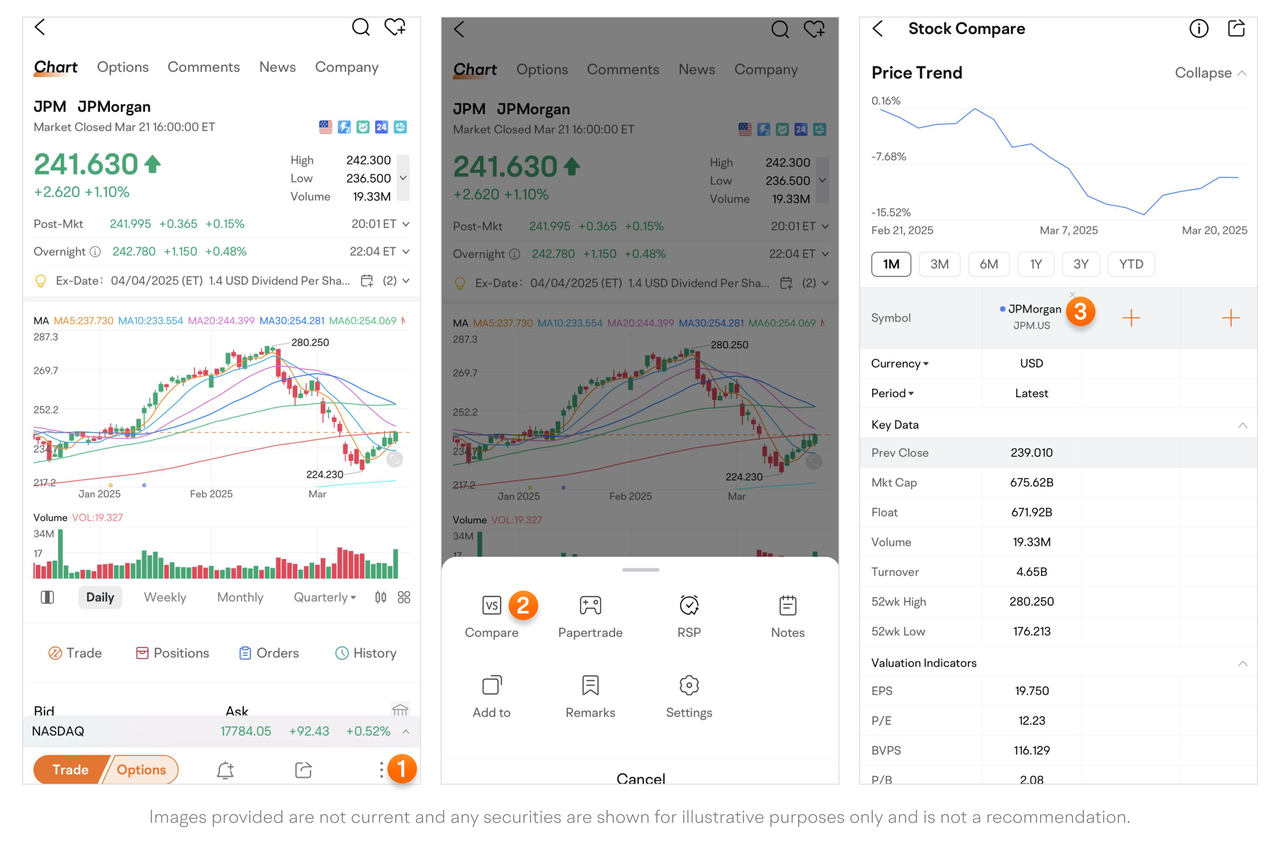
This is where side-by-side comparisons become invaluable:
? ETF Compare (Quick Check Tool) When you’re torn between similar ETFs, moomoo’s ETF Compare lets you line up up to six ETFs at once, comparing historical performance, holdings style, analyst ratings, and dividend details—all in one view. It’s a practical way to decide whether two ETFs really add diversification, or just overlap.
Most investors rebalance annually or semi-annually—but during volatile markets, even a quick comparison can help you stay aligned with your long-term RRSP goals.
Learn more: What is an RRSP? Why Does It Matter to You?
Conclusion: Making the Right ETF Choice for Your RRSP
When it comes to picking the best ETF for RRSP, there’s no magic formula—just a blend of smart strategy, self-awareness, and a dash of patience. Whether you’re drawn to all-in-one funds for simplicity or building your own rrsp etf portfolio for more control, the real key is matching your choices to your goals and risk comfort. For buying and eligibility specifics, see the FAQs: Buying and Managing ETFs in Your RRSP. Diversification isn’t just a buzzword; it’s your safety net when markets get rocky, and mixing Canadian with global exposure can help future-proof your retirement . Ultimately, the best etfs for rrsp are those that work for you—helping your money grow while keeping stress at bay.
Frequency Asked Questions
2. Are ETFs RRSP eligible?
Yes, ETFs are not only eligible for RRSPs; they’re one of the most popular investment choices for Canadians who want diversification and low fees. As long as the ETF is listed on a designated stock exchange (think TSX or NYSE), it qualifies as a “qualified investment” for your RRSP. Just steer clear of niche or unlisted products to avoid tax headaches.
3. What’s the best way to manage an RRSP ETF portfolio?
You can go hands-on with a self-directed account—where you pick and manage your own mix of the best etfs for rrsp—or let robo-advisors handle rebalancing and asset allocation for you. Many platforms offer automatic dividend reinvestment (DRIP), watchlists, and even practice accounts so you can get comfortable before risking real money. And don’t forget: keeping an eye on fees matters just as much as chasing returns.
4. How much can I contribute and what if I overdo it?
Your annual contribution room is based on last year’s earned income (up to $31,560 for 2024). Over-contributing brings a penalty tax of 1% per month on the excess until you withdraw it—so check your CRA Notice of Assessment before making big moves.
5. Is there a “best ETF for RRSP” or does it depend?
There’s no single best etf for rrsp—your ideal pick depends on your goals, risk comfort, and timeline. All-in-one ETFs like VEQT or XEQT are favorites because they bundle global diversification into one package. But plenty of investors build their own custom mix from Canadian equity, U.S., international, and bond ETFs too . So whether you’re new to investing or fine-tuning your strategy, remember: start with what fits you—not just what’s trending. And if you ever find yourself wondering about commissions or which broker offers more commission-free ETFs—well, that's just another piece of the puzzle when building your ideal rrsp etf portfolio.
This presentation is for informational and educational use only and is not a recommendation or endorsement of any particular investment or investment strategy. Investment information provided in this content is general in nature, strictly for illustrative purposes, and may not be appropriate for all investors. Read more