How to File Taxes: 6 Steps for Beginners
Most people don't exactly enjoy doing their taxes. And if someone is filing for the first time, it can feel a bit too overwhelming. There’s the paperwork, figuring out what goes where, and trying to make sense of rules that aren’t always easy to understand. And if someone started investing, that can add another layer of complexity, even if they’ve filed taxes before.
The good news is that it does not have to be so complicated. Moomoo users are already working with a platform that aims to make finance more accessible. While moomoo is best known for its powerful trading features and easy interface, it also offers useful tools to help with tax season.
This article highlights resources and general information to give insight on how some individuals prepare and file their tax returns at no cost.
When Can Individuals Start Doing Taxes in 2025?
The tax-filing season in 2025 typically kicks off in late January, when the IRS usually starts accepting tax returns.
Ensuring all necessary documents, such as W-2s and 1099s are in possession before filing a return, can help avoid errors and having to potentially file an amendment.
Understanding the Tax Filing Process
1. Determine if filing is necessary
Understanding how to file taxes starts with knowing whether an individual is required to submit a return. The filing obligation depends on factors like income, age, and filing status. For example, if someone is a single filer under 65 and has a gross income of less than $12,950 in 2024 (for the 2025 tax-filing season), filing may not be necessary. However, if taxes were withheld from someone's paycheck or if they qualify for refundable tax credits, filing could result in a refund. Using the IRS's Interactive Tax Assistant tool can assist individuals in confirming their filing requirements.
2. Gathering documents
Collecting the right documents is crucial. Personal information like an individual's Social Security number is necessary. For income, gathering forms such as W - 2s, 1099 - Gs, and 1099 - Bs is necessary.
Moomoo users can download their investing-related tax documents by simply using the moomoo trading platform:
On the moomoo app: Go to the 'Account' section, then 'Tax Documents'.
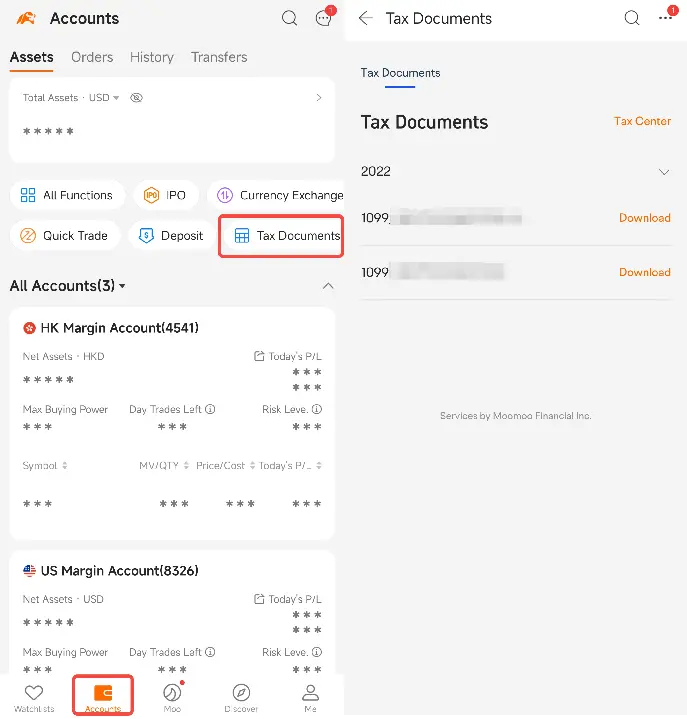
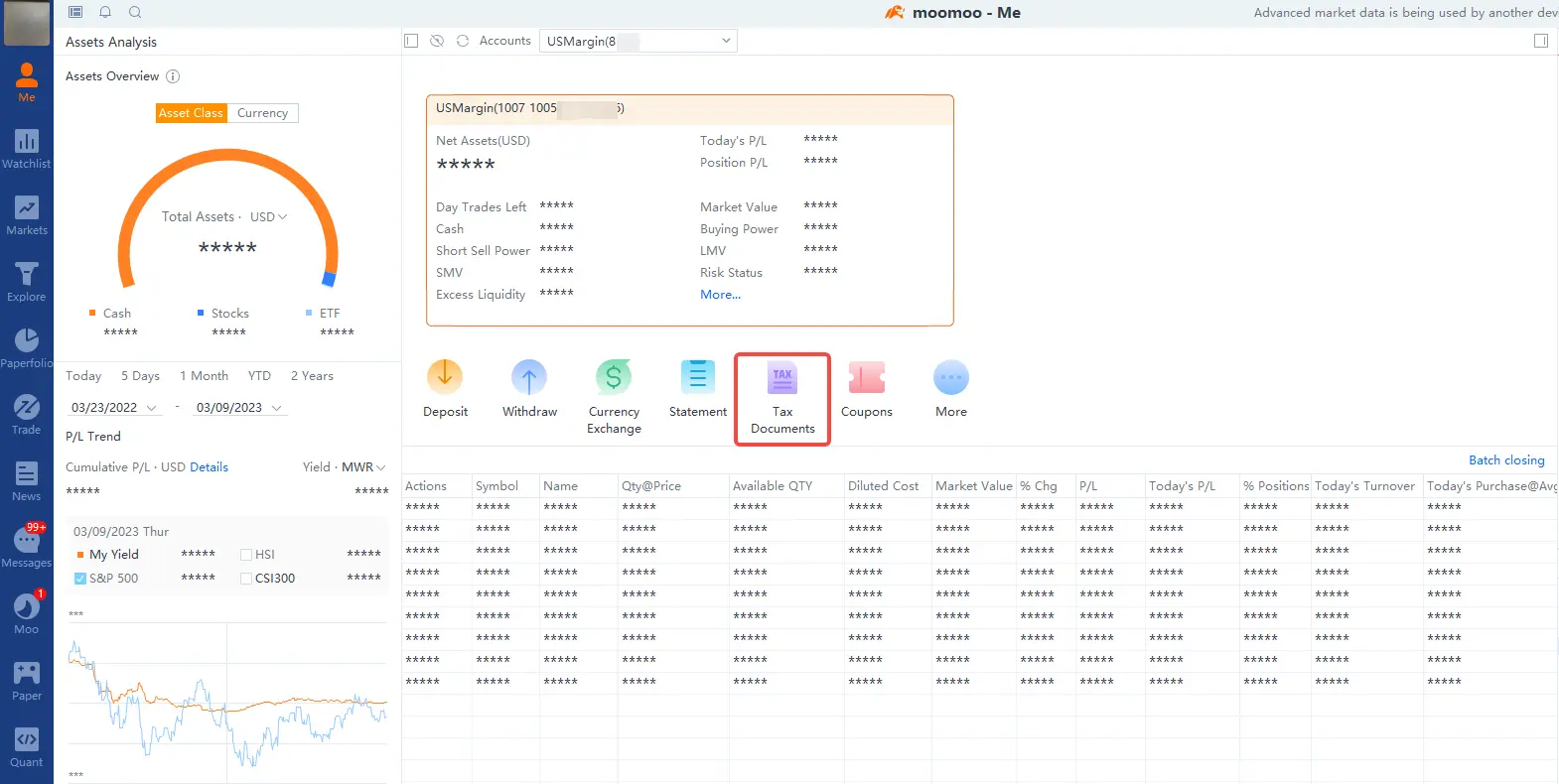
On the web version: log in and look for 'Tax Documents' in the account-related sections.
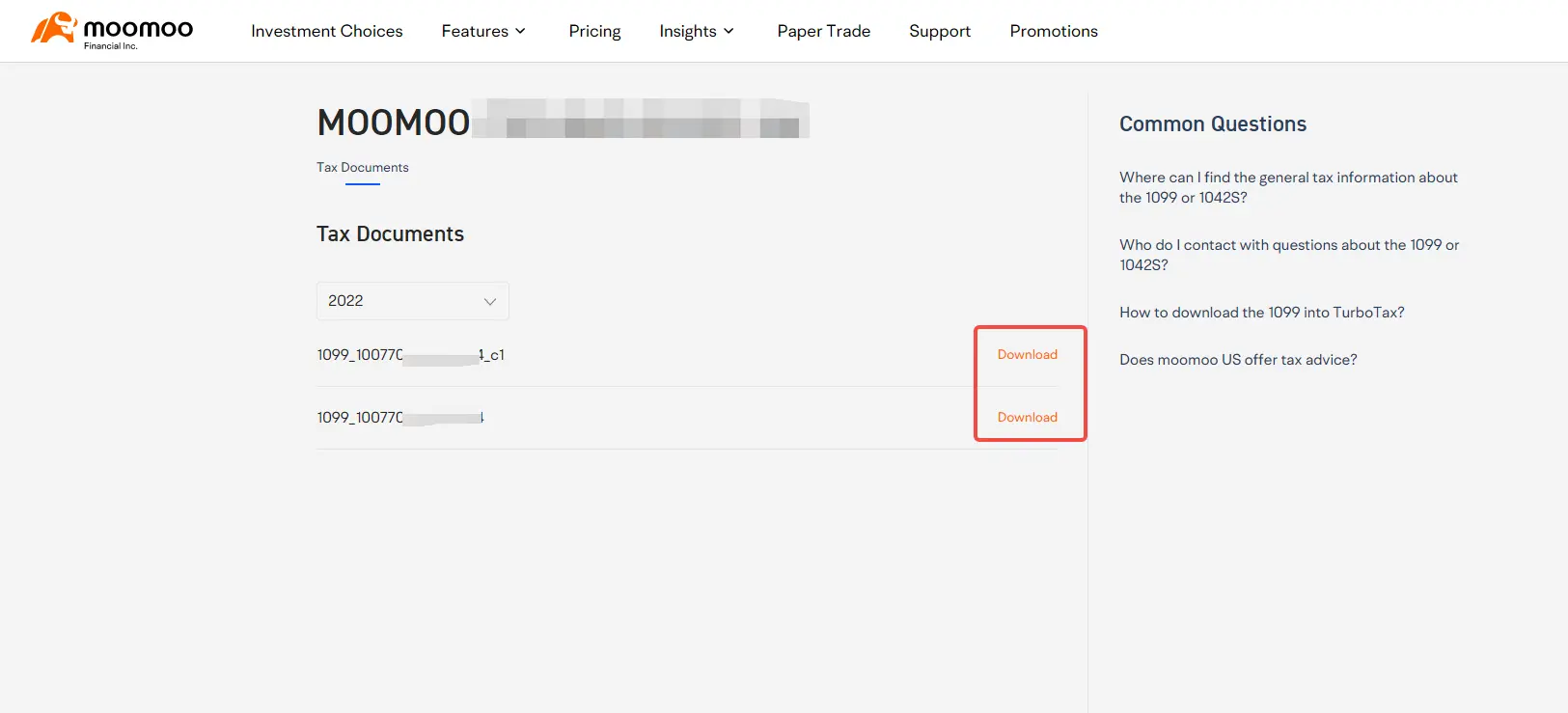
For more information, refer to the 'Tax Doc Checklist' section below. Having everything ready will make it easier when figuring out how to file taxes accurately.
3. Securing credits and deductions
Tax credits and deductions can help reduce your tax liability. Credits are directly subtracted from the tax an individual owes, while deductions lower taxable income. Examples include the Earned Income Tax Credit (EITC) for low- to moderate-income taxpayers and deductions like student loan interest. Being sure to keep detailed records of all potential credits and deductions can be beneficial, as individuals will need to provide evidence when filing.
4. Selecting a method for filing taxes
IRS Free File: This option may be available to individuals who have adjusted gross income of $84,000 or less in 2024. Visit the IRS website between January and mid-October to choose from available tax prep software partners.
Tax software: It may be beneficial to select a reputable one like TurboTax, H&R Block, or TaxAct. After entering the relevant information, the software will walk you through the process.
Filing by mail: This can be completed by getting Form 1040 and any necessary schedules, filling them out carefully, and sending them to the appropriate IRS address.
5. Receiving the refund
If an individual is due for a refund, the quickest way to receive it is through direct deposit. The personal bank routing and account numbers will be necessary when filing. The IRS typically issues refunds within 21 days for e-filed returns with direct deposit. It may take longer for those who opted for a paper check. Refunds can be tracked using the IRS's 'Where's My Refund?' tool on their website.
6. Minding the deadline and paying taxes on time
The tax filing deadline is typically April 15th. If more time is needed to file, it is necessary to request an extension by this date. But an extension to file is not an extension to pay. Estimating and paying any taxes owed by the April deadline will help an individual avoid penalties and interest. Payments can be made using the IRS's Electronic Federal Tax Payment System (EFTPS), by credit or debit card, or individuals can send a check or money order with their tax return (if filing by mail).
Free Tax Filing Resources
IRS Free File
Available for taxpayers with an adjusted gross income of $84,000 or less in 2024. It offers free tax-prep software from companies like TaxSlayer and TaxAct. The IRS also has Free File Fillable Forms for everyone, though they don't provide tax guidance or state filing options. It can be accessed on the IRS website from January 10, 2025, through mid-October.
Direct File
Currently available in 25 states as of 2025, the program is eligible for those living in a participating state with a relatively simple tax situation. It supports W-2 income, unemployment compensation, interest income, and some retirement income. The program can be accessed through the IRS website, available in both English and Spanish.
Free Tax Software
Many major tax software providers offer free versions for simple tax situations. For example, H&R Block's free tier, TaxAct Free, TaxSlayer Simply Free, and TurboTax Free Edition. Each has its covered forms and eligibility criteria. These free versions usually include state tax returns, but some may charge near the tax deadline.
Tax Counseling for the Elderly (TCE)
The TCE program helps individuals aged 60 and older, with some AARP-run sites assisting low- to moderate-income filers in their 50s. Community organizations use federal grant funding to provide free tax preparation, with a focus on pension- and retirement-related tax issues. The TCE sites can be located on the IRS website.
Volunteer Income Tax Assistance (VITA)
The VITA program helps low- and moderate-income individuals, disabled people, older Americans, and limited-English speakers. The income limit is generally $67,000. VITA sites are operated by partner organizations and IRS-certified volunteers. VITA locations can be found on the IRS website or by calling 800-906-9887.
MilTax
The Department of Defense offers a program for military members, their families, and certain veterans. It provides free tax software, tax assistance, and other resources. The program supports a federal return and up to three state returns. It will be available starting January 15, 2025. It can be accessed on Militaryonesource.mil.
Tax Doc Checklist: Common Information used in Tax Filing
Personal information: Social Security number, spouse's details (if applicable), identity protection PINs.
Income forms: W-2s, 1099-Gs, 1099-Bs, rental income records.
Deduction records: Mortgage interest statements (Form 1098), real estate and personal property tax records, and charitable donation receipts.
Investor: moomoo Tax Documents.
Others: Educational expense records and medical expense receipts.
FAQs About Tax Return
When is the tax filing deadline?
The general deadline is April 15th. If a refund is due, there's no penalty for filing late, but it may be beneficial to file as soon as possible. If taxes are owed, making sure to file and pay by the deadline can help avoid penalties. Filing may be required for those that had certain types of income, like self-employment income.
What is the minimum income threshold for filing?
It depends on the filing status and age. For example, in 2024 (for 2025 tax-filing), a single filer under 65 generally needs to file if their gross income is at least $12,950. For a married couple filing jointly, the threshold is $25,900. However, for those that had taxes withheld or qualify for certain refundable tax credits, it may be beneficial to file, even if the income is below these thresholds.
Can taxes be filed without assistance?
Yes, many individuals successfully file on their own. Tax-filing software, IRS Free File Fillable Forms, or other free filing options are typically used. However, if the tax situation is complex, it may be beneficial to consider hiring a tax professional for assistance.
How much does it cost to file taxes?
The cost varies. Free options like IRS Free File, Direct File, or free versions of tax software are cost-free. Tax professionals charge different rates based on the complexity of your return, with simple returns ranging from $100–$200 and more complex returns costing several hundred dollars or more. Some paid tax software versions can cost between $20–$100 or more.
What happens if a tax return is not submitted?
If taxes are owed and a return is not filed, individuals will face penalties for both failure to file and failure to pay, plus interest on the unpaid balance. If a refund is due, not filing means missing out on getting money back. In extreme cases, the IRS may take actions like garnishing wages or seizing assets.
This presentation is for informational and educational use only and is not a recommendation or endorsement of any particular investment or investment strategy. Investment information provided in this content is general in nature, strictly for illustrative purposes, and may not be appropriate for all investors. Read more