Top 8 Artificial Intelligence Stocks for Malaysian Investors
Key Takeaways
The article introduces the concept of artificial intelligence (AI) and highlights its transformative impact across sectors such as healthcare, finance, education, and manufacturing. For Malaysian investors, AI stocks represent a future-focused strategy aligned with ongoing digital transformation in the country.
Investing in AI stocks offers high growth potential due to rapid technological advances, broad sector applications, and supportive government policies. It's also a way to diversify portfolios and support socially impactful innovation.
Top-performing AI stocks include both Malaysian companies like TIME dotCom, MYEG, and DNeX, as well as global leaders such as NVIDIA and Tesla. These stocks showcase strong market positions, technology integration, and industrial relevance.
Companies highlighted typically show steady earnings progression linked to their AI innovations and investments in R&D, cloud infrastructure, and digital services expansion.
Several of the listed stocks provide value through diversified income streams, though their dividend strategies may vary based on reinvestment priorities and growth-focused business models.
To invest in US stocks, Malaysian investors can open a brokerage account with a platform such as Moomoo Malaysia. This platform provides key benefits including intuitive tools, compliant operations, and commission-free trading.

In the digital age, Artificial Intelligence (AI) is emerging as a new engine of growth for the global economy, with its impact spanning across key sectors such as healthcare, finance, education and manufacturing. Malaysia stock market, as an emerging market in Southeast Asia, offers unprecedented opportunities for investors as AI technology continues to advance and its applications expand widely, while also bringing about far-reaching impacts on the economic structure of the society as a whole.
Against this backdrop, exploring the AI stocks that Malaysian investors should keep an eye on is not only a keen insight into market trends, but also a form of strategic planning for future investment directions. The rapid development in the field of artificial intelligence is a harbinger of transformative technologies and business models that may emerge in the future, so companies that are able to leverage on AI technology to drive innovation in the industry are emerging as new engines of economic growth. However, in this market full of variables, how to grasp the real potential of AI stocks has become a common concern of investors.

AI Breakthroughs on Global Stock Markets 2025
The recent incident where DeepSeek's AI performance breakthrough led to a staggering 16.97% plunge in NVIDIA's stock price on January 27th has undoubtedly sent shockwaves through the investment community, especially for Malaysian investors eyeing AI stocks. However, this sharp decline doesn't paint the full picture.
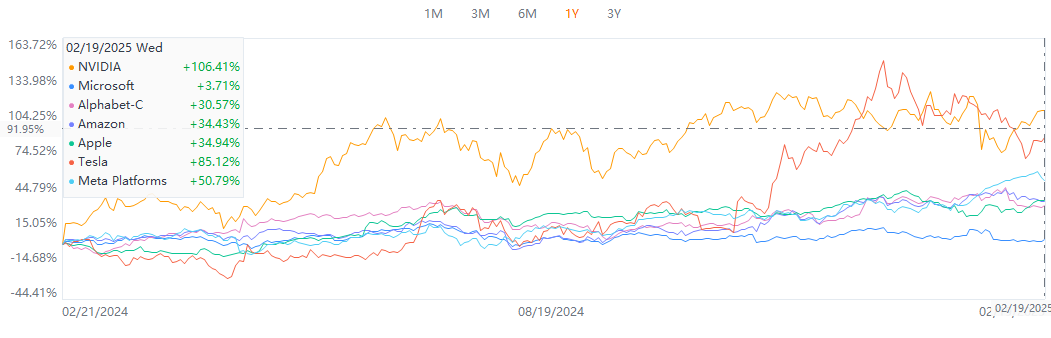
Major tech companies' unwavering commitment to NVIDIA, despite the stock price dip, signals their confidence in the company's long-term technological prowess. $NVIDIA (NVDA.US)$ has been at the forefront of developing advanced GPUs that are crucial for AI processing. Its software and hardware ecosystem is deeply integrated into the AI research and development landscape.
For Malaysian investors, while the short-term volatility is a concern, NVIDIA's long-standing position in the AI market and the continued support from industry giants suggest that it could still be a worthy addition to an AI-focused investment portfolio.
Find out the latest insights into NVIDIA's business performance by clicking on NVIDIA earnings report to access the in-depth article!

What is Artificial Intelligence?
Artificial Intelligence (AI) is a branch of computer science that focuses on developing machines and software systems that are capable of performing tasks that would normally require human intelligence to accomplish. AI technologies enable machines to process complex data, recognize patterns, make decisions, and in some cases even engage in autonomous learning.
With advances in subfields such as machine learning and deep learning, AI and its integration with various technologies and industries are becoming more accurate and efficient. They are increasingly being used in areas such as medical diagnostics, self-driving cars, personalized recommendation systems, speech recognition, and image recognition. As technology continues to evolve, the scope and impact of AI will continue to expand, revolutionizing a wide range of industries.

Definition and Goals
Artificial intelligence (AI) refers to the simulation of human intelligence processes by machines, particularly computer systems. The primary goal of AI is to create machines that can think and learn like humans, enabling them to perform tasks that typically require human intelligence, such as problem-solving, decision-making, and learning from experience. By mimicking cognitive functions, AI aims to enhance the efficiency and effectiveness of various processes, making it a transformative force in numerous fields.
Applications of AI

AI has numerous applications across various industries, including:
Healthcare: AI is revolutionizing medical diagnosis, personalized medicine, and drug discovery. For example, AI algorithms can analyze medical images to detect diseases early and recommend tailored treatment plans based on individual patient data.
Finance: In the financial sector, AI is used in risk management, portfolio optimization, and algorithmic trading. AI systems can predict market trends, assess investment risks, and execute trades at optimal times, enhancing financial decision-making.
Transportation: AI is a key driver in the development of autonomous vehicles, route optimization, and traffic management. Self-driving cars use AI to navigate roads safely, while AI-powered systems optimize traffic flow and reduce congestion.
Education: AI is transforming education through personalized learning, adaptive assessments, and intelligent tutoring systems. AI can tailor educational content to individual learning styles and provide real-time feedback to students and educators.
Customer Service: AI enhances customer service with chatbots, virtual assistants, and sentiment analysis. AI-powered chatbots can handle customer inquiries efficiently, while sentiment analysis tools gauge customer satisfaction and improve service quality.
Ethics and Governance of AI

As AI becomes increasingly pervasive, there is a growing need for ethics and governance frameworks to ensure that AI systems are developed and deployed responsibly. Some of the key ethical considerations include:
Bias and Fairness: AI systems must be designed to avoid bias and ensure fairness in decision-making. This involves using diverse datasets and implementing algorithms that do not discriminate against any group.
Transparency and Explainability: AI systems must be transparent and explainable in their decision-making processes. Users should understand how AI arrives at its conclusions to build trust and accountability.
Accountability: AI systems must be designed to ensure accountability for their actions and decisions. Clear guidelines and regulations should be in place to hold developers and users responsible for the outcomes of AI applications.
Privacy: AI systems must be designed to protect individual privacy and data security. Robust data protection measures are essential to prevent unauthorized access and misuse of personal information.
Why Invest in Artificial Intelligence Stocks?

Artificial Intelligence (AI) is acclaimed as the next technological revolution following the internet, possessing immense potential to revolutionize our lifestyles and workstyles. Investing in AI stocks means standing at the forefront of technological development, with the opportunity to participate in a significant part of the future economy.
Enormous Market Potential: As AI technology continues to evolve, it is being integrated into a variety of sectors, including healthcare, financial services, and manufacturing. For instance, in healthcare, AI can be utilized for disease diagnosis, personalized treatment plans, and drug development; in financial services, AI technology can assist banks and financial institutions in predicting market trends, managing risks, and providing more personalized customer service; and in manufacturing, AI can optimize production processes, enhance efficiency, and reduce waste. This indicates that AI has vast market potential, capable of delivering substantial returns to early investors.
High Growth Potential: Due to the rapid development in the AI field, companies related to AI often achieve swift growth. The rapid growth of AI companies is not only reflected in the continuous introduction of new technologies but also in the innovation of their business models and the speed of market expansion. As AI technology matures, companies that can quickly capture market share and expand their operations across multiple verticals are more likely to become market leaders. This high growth rate is very attractive to investors seeking capital appreciation, as it implies a considerable return on investment in a short period.
Policy Support: Support from governments and regulatory bodies for the AI industry, including funding and tax incentives, is a crucial factor in promoting the development of the AI sector. For example, many countries and regions have launched national AI development strategies aimed at fostering the growth of local AI industries, encouraging innovation, and cultivating relevant talent. This policy-level support creates a favorable external environment for AI businesses, enabling them to grow and commercialize more rapidly. These support measures reduce operational costs for businesses and boost investor confidence.
Diversification of Investment Portfolio: Investing in AI stocks can be part of a diversified investment portfolio, helping to spread risk. Especially in today's technology-driven world, AI as a key technology can add a new dimension to an investment portfolio. By allocating a portion of assets to AI stocks, investors can not only enjoy the benefits brought by technological development but also effectively diversify investment risks, reducing losses caused by fluctuations in a single market.
Social Impact: AI is not just a business investment; it's also an investment that can have a positive social impact. By supporting AI companies, investors can help drive technological progress, address societal issues, and contribute to sustainable development.
In summary, investing in the AI industry is not only a grasp of future technological trends but also a recognition of market growth potential. By investing in AI, investors can not only gain economic returns but also participate in the process of propelling society forward.

Criteria for Selecting Top AI Stocks
The criteria for selecting top AI stocks usually include the following:
Technological Innovation Capability and Machine Learning

A company's ability to innovate technologically is key to assessing its long-term competitiveness in the AI field. Investors should look at the size of the company's R&D team, the proportion of R&D expenditure to revenue, and the number of patent applications and grants. These indicators can reflect the company's pace and depth of innovation in AI technology and its leading position in the industry.
Market Position
A company's position in the AI industry chain determines its market share and pricing power. Investors should consider whether the company's products or services are unique, whether they can provide differentiated solutions, and whether the company has a solid customer base and brand loyalty in its target market.
Financial Status
A healthy financial status provides support for the company's R&D and market expansion. Investors should analyze the company's financial statements, focusing on its revenue growth rate, profit margin, cash flow status, and debt level. A robust financial condition helps the company remain stable during economic fluctuations and seize new market opportunities.
Prospects of Product Application

The market acceptance and application prospects of AI products or services are key to the company’s future growth. Generative AI is a transformative technology capable of producing realistic content across various media, including text, images, and music. Investors should assess whether the company’s products solve real problems, have a wide range of application scenarios, and whether the company has a clear market entry strategy and expansion plan.
Regulatory and Policy Support
Government regulation and policy support for the AI industry are crucial for company development. Investors should pay attention to whether the government provides tax incentives, R&D subsidies, market access facilitation, and other policies, as well as whether there are relevant laws and regulations supporting the healthy development of AI technology.
Risk Management
The application of AI technology may bring risks such as technical failures, data security, and privacy breaches. Investors should assess whether the company has a mature risk management mechanism, including risk identification, assessment, monitoring, and response measures, as well as whether the company has sufficient insurance coverage and emergency plans.
Performance Growth Potential

A company's potential for performance growth is an important indicator for investors to assess its investment value. Investors should focus on the company's long-term growth strategy, including new product development, market expansion plans, and the establishment of partnership relationships, and how these strategies are translated into actual revenue and profit growth.
Top 8 Artificial Intelligence Stocks for Malaysian Investors
Here is a list of prominent technology firms that are publicly traded in Malaysia, organized by their market capitalization as of the latest available data. Keep in mind that this ranking is subject to change with fluctuations in stock prices and is for informational purposes only. It should not be considered investment advice. Investors are advised to be mindful of the risks associated with investing in the Malaysia stock market.
TIMECOM
TIME dotCom Bhd, a distinguished telecommunications company headquartered in Malaysia, delivers a comprehensive range of services encompassing broadband connectivity at high speeds, data center operations, cloud solutions, and global connectivity options. The foundation of TIME's business is the Cross Peninsular Cable System (CPCS™️), an extensive fiber optic network that is engineered to accommodate future growth and to facilitate comprehensive solutions and services. Additionally, TIME dotCom has expanded its operations in the cloud sector, providing seamless cloud services from robust, neutral carrier data centers.
MY E.G. SERVICES BHD
MY E.G. SERVICES BERHAD (MYEG), established in 2000, stands as a pioneer in Malaysia's digital services sector, initially serving as the nation's primary e-government services provider. Over time, MYEG has become a central force in the region's tech industry, delivering a wide array of innovative solutions that span various sectors including immigration, automotive, healthcare, and finance, in addition to its government service offerings. The company is dedicated to propelling Malaysia's digital evolution, continuing to be a significant contributor to the online government services domain while also extending its influence into commercial services. MYEG is at the forefront of technological advancement, actively exploring and integrating blockchain technology to improve multiple facets of life across its key operational regions.
DAGANG NEXCHANGE
Dagang NeXchange Berhad (DNEX), a multinational entity with roots in Malaysia, encompasses a variety of businesses in the Technology and IT sectors, aiming to deliver innovative solutions and high-quality products and services aligned with market evolution. Within the semiconductor realm, DNeX's subsidiary, SilTerra Malaysia Sdn Bhd, functions as a global foundry, concentrating on the production of semiconductor wafers for a range of international clients, including fabless and integrated device manufacturers. This involvement is pivotal for advancing technological innovations and solidifying Malaysia's role in the global semiconductor arena. Concurrently, DNeX's IT operations are represented by Dagang Net Technologies Sdn Bhd, which manages the National Single Window in Malaysia, streamlining trade through electronic services. Furthermore, the company extends its reach through SealNet Sdn Bhd, offering a digital platform for logistics and cross-border transactions with cloud-based services.
SNS NETWORK TECHNOLOGY
SNS Network Technology Bhd, or SNS, stands as a prominent provider of Information and Communications Technology (ICT) solutions headquartered in Ipoh, Perak, Malaysia, since its establishment in 1998. With a workforce of over 300 professionals, SNS has become an influential entity in the ICT sector. The company is leveraging the escalating demand for AI servers, a trend fueled by the proliferation of data centers nationwide and the integration of AI in various sectors such as entertainment, manufacturing, security, healthcare, and education. Ko Yun Hung, SNS’s managing director, expresses confidence in the company’s future, anticipating continued growth driven by the escalating demand for AI super servers. SNS is charting a course towards becoming a globally recognized ICT company by 2025, with a commitment to delivering advanced solutions and superior customer service.
VSTECS
VSTECS is a renowned Information and Communications Technology (ICT) solutions provider with a significant footprint in Malaysia and the Asia Pacific region. It operates through three main business segments: Enterprise Systems, IT Services, and Distribution, and has an extensive network of over 50,000 channel partners across key Asia Pacific markets. VSTECS is a preferred partner for global ICT vendors, offering a wide range of services including enterprise servers, storage, networking, and software to more than 500 IT distributors and system integrators in Malaysia through its subsidiary, VSTECS Pericomp Sdn Bhd. The company also provides system design, cloud analysis, pre-sales support, and system integration services, collaborating with major industry players such as HPE, Dell Technologies, Lenovo, IBM, Oracle, Huawei, and Google to distribute their products in the region.
PERTAMA DIGITAL
Pertama Digital Berhad, a trailblazer in Malaysia's tech industry, is committed to fostering seamless digital engagement between the populace and governmental or private institutions. The company is on a mission to democratize digital services across Malaysia, exemplified by its development of groundbreaking solutions such as eJamin, pioneering the world's initial mobile bail payment platform and garnering over RM200 million in deposits during its initial two-year period. Furthering its commitment to ease, the MyPay application was introduced, providing a consolidated mobile platform for government entities to offer digital services, thereby obviating the requirement for separate agency-specific apps. Additionally, Pertama Digital has facilitated financial transactions for these agencies through an innovative payment system, which significantly reduces the necessity for substantial IT overhauls.
INFOMINA
Infomina Berhad, prominent on Bursa Malaysia Securities Berhad's ACE Market, specializes as a regional technology solutions provider, emphasizing mainframe technology. The company's comprehensive service offerings encompass technology hardware and software, along with consultancy, support services, and investment holdings. It operates through two main segments: the Turnkey segment that focuses on designing and executing essential technology applications and infrastructure, and the Renewal segment that ensures continuous operation, maintenance, and support. With a broad clientele that spans private enterprises and public institutions across Asia, Infomina is recognized for its extensive service provision in the technology sector.
MMAG
MMAG Holdings with a diverse operational scope, derives significant income from smart device distribution and collaborations with mobile operators via strategic third-party (3PL) and fourth-party (4PL) logistics partnerships. The company's logistics segment offers courier and delivery services, while its air cargo division manages the transportation of goods via air freight. Predominantly revenue-driven by its Malaysian operations and with a Singaporean footprint, MMAG is aggressively investing over RM 150 million to bolster its aviation sector, aiming to become a pivotal air cargo hub in the region. its strategic partnership with Menzies Aviation is set to enhance the company's service offerings with an extensive range of ground handling and cargo solutions, expected to contribute positively to MMAG's financial performance and profitability.
Top AI Stocks to Consider in Global Stock Market
As artificial intelligence (AI) continues to revolutionize industries and transform the way businesses operate, investors are increasingly seeking opportunities to capitalize on this rapidly growing sector. Here are brief introductions for each of the top five AI stocks mentioned, as they would appear on the moomoo rankings for February 25th in 2025:
NVIDIA Corporation
NVIDIA Corporation is a pioneering force in the technology industry, recognized for its cutting-edge graphics processing units (GPUs) and advancements in artificial intelligence. Established in 1993, the company has expanded its influence to gaming, professional visualization, data centers, and automotive technologies. NVIDIA's GPUs are celebrated for their ability to render high-quality images and animations, and they have been pivotal in the evolution of deep learning and autonomous driving technologies.
Apple Inc.
Apple Inc. stands as a titan in the technology sector, designing, manufacturing, and marketing an array of consumer electronics, computer software, and online services. Founded in 1976 by Steve Jobs, Steve Wozniak, and Ronald Wayne, Apple has become synonymous with innovation and design excellence. The company's flagship products include the iPhone, Mac computers, iPad tablets, and a suite of software services that have reshaped the consumer electronics landscape.
Tesla, Inc.
Tesla, Inc. is a trailblazer in the electric vehicle (EV) and clean energy sectors. Founded in 2003 by Elon Musk and others, Tesla has been instrumental in steering the automotive industry towards sustainable energy solutions. Specializing in electric vehicles, battery energy storage, solar products, and related services, Tesla has set new standards for performance, safety, and aesthetics in electric mobility.
Intel Corporation
Intel Corporation is a seminal figure in the semiconductor industry and a cornerstone of modern computing technology. Founded in 1968 by Robert Noyce and Gordon Moore, Intel is renowned for its microprocessors that power personal computers and a vast array of computing devices. The company continues to lead in areas such as cloud computing, data centers, IoT, and the development of advanced integrated circuits.
Advanced Micro Devices, Inc.
Advanced Micro Devices, Inc. (AMD) is a global semiconductor company that has been shaping the future of high-performance computing and graphics since 1969. With a commitment to innovation, AMD offers a range of products including Ryzen processors, EPYC server processors, and Radeon graphics cards. The company is dedicated to advancing open architectures and high-performance computing while also fostering partnerships to promote AI, machine learning, and cloud technology adoption across various industries. AMD's global reach underscores its mission to deliver superior products and services to address the dynamic challenges of the tech world.
NICE Ltd.
NICE Ltd. is a leading provider of advanced omnichannel customer engagement, security, and compliance solutions. With a strong focus on artificial intelligence and analytics, NICE helps organizations enhance the customer experience and ensure compliance, driving better business decisions and outcomes. The company's innovative technologies are widely used across various sectors, making it a prominent player in the global AI market.
Oracle
Oracle Corporation is a multinational computer technology corporation that specializes in developing and marketing database software, technology, cloud-engineered systems, and enterprise software products. Oracle is also a significant player in the AI space, offering a suite of AI applications and services that empower organizations to automate and enhance decision-making processes, thus driving efficiency and innovation.
Carrier Global
Carrier Global Corporation is a leading global provider of HVAC, refrigeration, fire, security, and building automation technologies. While traditionally known for its heating, ventilation, and air conditioning solutions, Carrier has been making strides in integrating AI into its product offerings. This integration allows for smarter buildings and more efficient energy use, positioning Carrier as a key player in the smart building revolution.
IBM Corp
International Business Machines Corporation (IBM) is a technology and consulting powerhouse with a rich history of innovation. IBM has been at the forefront of AI development for decades and continues to lead with its Watson platform, which offers advanced AI capabilities for various industries. IBM's commitment to research and development in AI has solidified its position as a top contender in the AI-driven digital transformation of businesses worldwide.
FTV Fortive
FTV Fortive is a diversified industrial growth company that owns and operates a portfolio of well-recognized industrial brands. While not traditionally associated with AI, FTV Fortive has been investing in technologies that leverage AI and data analytics to enhance its operations and drive growth. The company's strategic focus on innovation places it among the companies to watch in the application of AI within the industrial sector.
Tips for Investing in AI Stocks in Malaysia

Here are some useful tips for investing in AI stocks in Malaysia:
Government policy and investment developments: Malaysia’s government is actively promoting digital transformation and has set an ambitious goal to grow the digital economy to 22.6% of the country’s GDP by 2025. Investors should monitor policy announcements and investment trends as these can significantly influence the growth and direction of the AI sector in Malaysia. Favorable policies such as tax incentives, funding for R&D, and supportive regulations can create a nurturing environment for AI companies to thrive.
Study the investment plans of international tech giants: The strategic investments of tech giants like Google, Microsoft, and NVIDIA in Malaysia’s AI infrastructure are indicative of the country’s potential in the AI market. These companies’ plans to establish data centers and cloud service facilities in Malaysia reflect their confidence in the nation’s capabilities and resources. Investors can leverage these insights to identify Malaysian AI stocks that may benefit from such global interest and investment.
Consider environmental and sustainability factors: The construction and operation of data centers in Malaysia demand considerable energy and water resources. As environmental concerns grow, so does the importance of sustainability in business practices. Investors should evaluate how AI companies in Malaysia are addressing these challenges, as sustainable practices can lead to long-term cost savings and reduced regulatory risks, positively impacting the stock performance.
Assessing a company’s technology and market position: Investors should conduct thorough research on the technological capabilities and market positioning of Malaysian AI and machine learning companies. This includes analyzing their proprietary technologies, market share, competitive landscape, and strategic partnerships. Companies with strong technology portfolios and a clear market advantage are more likely to lead the AI revolution in Malaysia and offer robust investment opportunities.
Focus on industry applications and market demand: AI technology’s application across various industries in Malaysia, such as healthcare, finance, education, and transportation, is a key driver of demand. Investors should track the adoption rates of AI solutions in these sectors and identify Malaysian companies that are well-positioned to meet this demand. Companies that can successfully commercialize AI technologies and scale their operations in response to market needs may offer attractive investment prospects.
Track industry reports and market research: Staying informed about the AI industry’s latest developments is crucial for investors. By regularly reviewing industry reports and market research specific to Malaysia, such as those from Google, Temasek, and Bain, investors can gain insights into the region’s AI trends, market size, and growth potential. This knowledge can help investors make informed decisions about which Malaysian AI stocks to include in their portfolio, aligning their investments with the country’s economic and technological trajectory.
Risk Management for AI Stocks

Risk management is crucial when investing in AI stocks. Here are some key risk management strategies:
Diversified Portfolio: Investing all your capital into a single AI stock or even the entire AI sector can lead to significant risk due to the concentration of exposure. Diversification across various sectors and asset classes can help mitigate the impact of any one sector's downturn or market volatility. By spreading investments, you can manage risk effectively, as different sectors may respond differently to market changes, economic cycles, and industry-specific events.
In-depth Research: Before committing to an AI stock, it's crucial to conduct comprehensive research. This includes evaluating the company's technological capabilities, such as its patents and R&D initiatives, its market position in terms of share and influence, and its financial health as reflected in revenue, profitability, and cash flow. Additionally, understanding the management team's expertise and vision, as well as the company's growth potential based on its strategic direction and industry trends, is vital.
Understand Technology Risks: AI companies may face unique risks associated with their technology, such as the potential for technical malfunctions, data security threats, and privacy concerns. It's important to assess how a company is managing these risks, including its investment in cybersecurity measures, data protection policies, and its ability to recover from any technology-related incidents.
Use Stop-Loss Orders: To manage potential losses, consider using stop-loss orders as part of your risk management strategy. A stop-loss order sets a limit on the amount of loss you're willing to accept on a stock. If the stock price falls to the stop-loss trigger price, the order becomes a market order to sell the stock, potentially preventing further losses.
Long-term Perspective: AI technology is expected to evolve and mature over an extended period, with possible periods of rapid growth followed by consolidation. Adopting a long-term investment perspective can help investors ride out short-term market fluctuations and benefit from the long-term growth potential of AI. This approach encourages patience and a focus on the company's fundamental strengths and future prospects rather than reacting to immediate market changes.
Benefits of Investing in AI Stock with Moomoo
Investing in Artificial Intelligence (AI) stocks through the moomoo platform offers the following benefits:
User-friendly Platform: Moomoo's interface is crafted to be intuitive and user-friendly, ensuring that investors can effortlessly navigate through various AI stock options and make well-informed decisions. The platform's design minimizes the learning curve, allowing both novice and experienced investors to quickly access information and execute trades with confidence.
Advanced Trading Tools: Equipped with a suite of advanced analytical tools, moomoo empowers investors to conduct thorough evaluations of AI stocks. These tools include technical analysis indicators that can help identify trends, charting tools for visual pattern recognition, and other analytical features that provide deeper insights into AI stock performance and market dynamics.
Real-time Market Data: For investors tracking the volatile nature of AI stocks, moomoo offers real-time market data that keeps them updated on the latest price movements and market trends. This timely information is essential for making quick, informed decisions, especially in a rapidly evolving sector like AI.
Educational Resources: Moomoo recognizes the importance of education in investing, particularly in a complex and dynamic field like AI. The platform provides educational content and market analysis that can enhance investors' understanding of AI technology and its impact on the stock market. This knowledge can be instrumental in making strategic decisions when investing in AI stocks.
Security: In the digital trading landscape, security is paramount. Moomoo places a strong emphasis on safeguarding users' financial information and trading activities. The platform employs robust security measures to protect against cyber threats, ensuring that investors can trade AI stocks with peace of mind, knowing their transactions are secure and their data is protected.
Conclusion: Top AI Stocks to Consider

All in all, investing in artificial intelligence stocks in Malaysia means capitalizing on the wave of digital transformation and technological innovation in the country. With the government's strong support for the technology sector, Malaysia's AI industry has demonstrated strong momentum, bringing long-term and broad growth opportunities for investors.
When considering the layout of this sector, investors should thoroughly analyze the technological strength, market prospects, long-term growth potential, and the macroeconomic environment of each company, and also pay close attention to the industry's dynamics and policy direction, and be alert to potential risks, in order to make more prudent and reasonable investment choices.
This presentation is for informational and educational use only and is not a recommendation or endorsement of any particular investment or investment strategy. Investment information provided in this content is general in nature, strictly for illustrative purposes, and may not be appropriate for all investors. Read more