Top 11 Quantum Computing Stocks 2026
Key Takeaway
Quantum Computing Overview: Quantum computing leverages qubits to perform complex computations, revolutionizing industries like healthcare, finance, and cybersecurity. It's based on principles like superposition and entanglement.
Investment Opportunity: Quantum computing stocks offer speculative long-term growth potential but come with high technical, commercial, and timing risks. Best suited as part of a diversified portfolio.
Top Stocks: Leading quantum computing stocks include Arqit Quantum (ARQQ), IBM (IBM), Alphabet (GOOGL), IonQ (IONQ), Rigetti (RGTI), Intel (INTC), and Honeywell (HON).
Investor Takeaway: Quantum computing stocks are a high-risk, high-reward investment option, accessible via platforms like Moomoo MY offering diversified portfolio-building tools and efficient stock trading services. Keep a multi-year outlook for potential returns.
Quantum Computing Overview: Quantum computing leverages qubits to perform complex computations, revolutionizing industries like healthcare, finance, and cybersecurity. It's based on principles like superposition and entanglement.
Investment Opportunity: Quantum computing stocks offer speculative long-term growth potential but come with high technical, commercial, and timing risks. Best suited as part of a diversified portfolio.
Top Stocks: Leading quantum computing stocks include Arqit Quantum (ARQQ), IBM (IBM), Alphabet (GOOGL), IonQ (IONQ), Rigetti (RGTI), Intel (INTC), and Honeywell (HON).
Investor Takeaway: Quantum computing stocks are a high-risk, high-reward investment option, accessible via platforms like Moomoo MY offering diversified portfolio-building tools and efficient stock trading services. Keep a multi-year outlook for potential returns.
Why Choose Moomoo MY?
 0-Commission* on Global Stocks
![]() 24-Hour US Stock Trading
24-Hour US Stock Trading
![]() Exclusive Welcome Rewards
Exclusive Welcome Rewards
0-Commission* on Global Stocks 24-Hour US Stock Trading
 Exclusive Welcome Rewards
As quantum computing moves from being just a lab-based theory to a real-world market phenomenon, global investors are looking to get involved in this game-changing technology. This guide breaks down what quantum computing actually is, delves into the main types of companies fueling innovation and examines the top 10 quantum computing stocks. Malaysia market is witnessing a growing interest in innovative technologies. Let's explore quantum computing stocks that could redefine your investment portfolio this year!

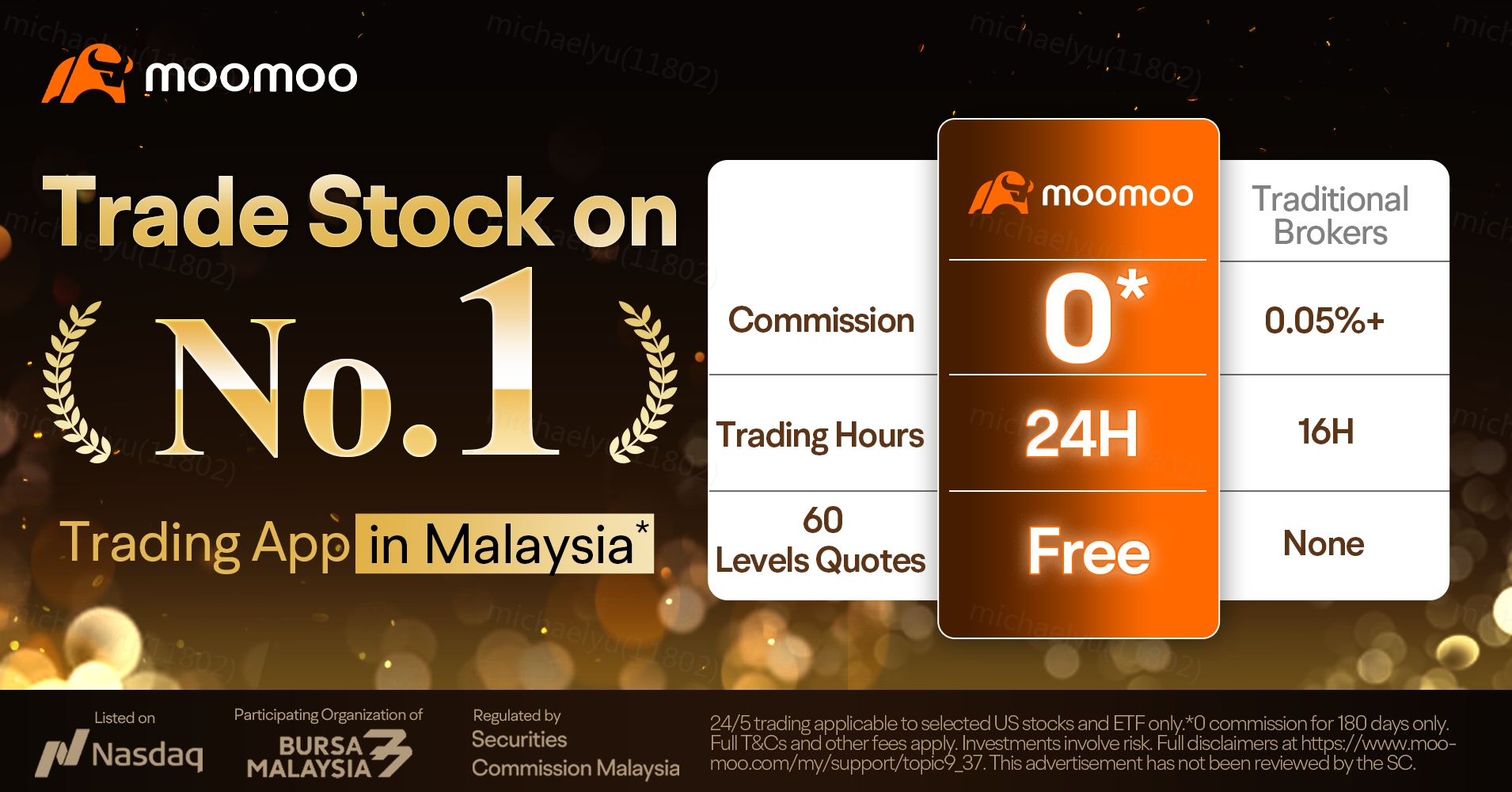
Explore Quantum Computing Stocks with 0 Commission* and claim your Welcome Rewards!
Quantum Computing Stocks Surge: What Investors Should Watch?
Quantum computing stocks represents the next monumental leap in technology, promising to revolutionize industries from healthcare to finance. For forward-thinking Malaysian investors, this nascent sector offers a compelling long-term growth opportunity. While still evolving, investing in pioneering quantum computing stocks allows you to position your portfolio at the forefront of this transformative trend.
Through a global brokerage platform like Moomoo Malaysia, you gain seamless access to leading international companies driving quantum research and hardware development. Adding this thematic exposure can diversify your portfolio beyond traditional sectors, capturing potential growth from a future-defining technology. Begin your strategic investment into the next digital frontier.

What is Quantum Computing?
Quantum computing is a cutting-edge field that uses the principles of quantum mechanics to process information. Unlike traditional computers, which rely on bits that can represent either a 0 or a 1, quantum computers use quantum bits, or qubits. A qubit is the basic unit of quantum information, and a qubit can exist in a superposition state, meaning it can represent both 0 and 1 simultaneously. The state of the qubit in superposition allows quantum computers to perform complex computations that are not feasible for classical computers.
Many quantum technologies are based on foundational concepts from quantum mechanics, such as superposition and entanglement. The transition to quantum technologies marks a significant advancement in computational power and efficiency. For a drug discovery problem, quantum computers can analyze molecular structures and interactions much faster than classical computers.
Why Invest in Quantum Computing Stocks?
Quantum computing is a long-term technological frontier that could reshape multiple industries in the future, such as cryptography, drug development, climate modeling, and financial analysis. Investing in quantum computing companies is vastly different from typical tech investments. These are early-stage bets on a technology that may take 5 to 10 years to become commercially viable. While breakthroughs could lead to significant returns, investors must recognize the sector's high technical, commercial, and timing risks. Most quantum computing investments are best treated as a small, speculative part of a diversified portfolio with a multi-year outlook.

Major Categories of Quantum Computing Companies
When exploring the landscape of quantum computing stocks, understanding the major categories of companies in this rapidly evolving field is essential. These firms specialize in distinct technologies and applications. Below is a breakdown of the key categories shaping the quantum computing industry today. (Source: Futunn News)
Quantum Computing Core Technology Providers
1. Superconducting Quantum Technology Companies
Representatives: $谷歌-A (GOOGL.US)$ , $Rigetti Computing (RGTI.US)$ , $IBM Corp (IBM.US)$.
Alphabet-A (GOOGL.US): Focuses on superconducting qubit quantum computers and algorithms, applied in AI, material science, and optimization. Its Willow chip improves coherence.
Rigetti Computing (RGTI.US): A full-stack quantum firm using superconducting qubits, offering cloud platforms and solutions for complex calculations in machine learning and material science.
IBM Corp (IBM.US): Early quantum hardware leader with processors like Qiskit and Eagle, plus cloud access via IBM Quantum Experience. Its latest system supports 5,000 dual-qubit operations.
2. Quantum Annealing Technology Company
D-Wave Quantum (QBTS.US): Pioneer in quantum annealing, supplying commercial systems for finance, logistics, and machine learning. Approved by the U.S. Department of Defense, it emphasizes government and corporate partnerships.
3. Optical Quantum Technology Company
Quantum Computing (QUBT.US): Specializes in photonic quantum processors and qubit tech (e.g., Dirac devices) for AI, cybersecurity, and remote sensing. Develops quantum random number generators (uQRNG) and authentication tools.
4. Ion Trap Quantum Technology Companies
Representatives: $霍尼韦尔 (HON.US)$, $IonQ Inc (IONQ.US)$.
Honeywell (HON.US): Uses ion trap technology for high-fidelity qubits, offering stronger coherence (but lower scalability) than superconducting qubits, suited for large-scale computing.
IonQ Inc (IONQ.US): Early cloud-based quantum service provider with ion trap systems, collaborating on drug development and defense projects.

Quantum-Related Application & Enablement
1. Quantum Data Storage and Management
QMCO (QMCO.US): Provides hybrid data protection devices (DXi9200) for secure, scalable data storage and management.
WiMi Hologram Cloud (WIMI.US): Developing quantum random access memory (QRAM) to enhance data processing in quantum systems.
2. Quantum Security and Encryption
Representatives: $SEALSQ Corp (LAES.US)$, $Arqit Quantum (ARQQ.US)$.
SEALSQ Corp (LAES.US): Focuses on post-quantum cryptography to resist quantum attacks, critical for future cybersecurity.
Arqit Quantum (ARQQ.US): Offers quantum encryption and secure communication solutions, including Quantum Key Distribution to protect networks from current and future cyber threats.
Quantum Chips and Hardware Solutions
Intel (INTC.US): Integrates quantum computing with silicon-based semiconductor manufacturing, using electron spin qubits (Spin Qubit) for precise control.
MicroCloud Hologram (HOLO.US): Developed advanced quantum computing solutions via adiabatic driving protocols for spin qubit control in double quantum dot systems.

Top 11 Quantum Computing Stocks for 2026
Quantum computing is a rapidly evolving field, and these stocks represent companies at the forefront of this technological revolution. As investors look for opportunities in this emerging sector, this list can serve as a starting point to explore potential investment options. The following list of the top 11 Quantum Computing Stocks is sourced from the top gainers within the QBTS concept list on Moomoo.
Name & Ticker | Price | Change |
Arqit Quantum(ARQQ) | 23.600 | +5.12% |
Quantum Computing Inc (QUBT) | 12.400 | +5.08% |
D-Wave Quantum(QBTS) | 17.680 | +3.33% |
Intel Corporation (INTC) | 20.290 | +2.79% |
SEALSQ Corp(LAES) | 3.460 | +2.37% |
Quantum Computing Inc (QMCO) | 11.880 | +1.19% |
Honeywell International (HON) | 226.770 | +0.55% |
IBM Corp(IBM) | 265.200 | +0.49% |
Alphabet Inc (GOOGL) | 166.180 | -1.69% |
Rigetti Computing(RGTI) | 12.040 | -1.79% |
IonQ Inc(IONQ) | 39.810 | -1.87% |
(Souce: Quantum Computing, as of January 2026)
Arqit Quantum (ARQQ)
Arqit Quantum is a leading quantum cybersecurity company specializing in post-quantum encryption solutions. Its technology aims to protect data from future quantum computing threats by developing secure communication protocols. Headquartered in the UK, the company serves governments and enterprises, focusing on delivering quantum-safe infrastructure for the digital age.
Quantum Computing Inc (QUBT)
Quantum Computing Inc (QUBT) is a U.S.-based firm dedicated to advancing quantum software and hardware solutions. The company focuses on developing quantum algorithms for complex problem-solving in industries like finance, healthcare, and logistics. QUBT aims to bridge the gap between theoretical quantum science and real-world applications through collaborative research and development.

D-Wave Quantum (QBTS)
D-Wave Quantum is a pioneer in quantum annealing technology, specializing in solving optimization problems for industries such as drug discovery, materials science, and logistics. Based in Canada, the company's quantum systems excel at handling large-scale, multi-variable challenges. D-Wave partners with global enterprises to accelerate innovation through quantum computing.
Intel Corporation (INTC)
Intel Corporation is a multinational technology giant and a key player in classical computing, with growing investments in quantum computing. The company develops quantum hardware, including superconducting qubits, and focuses on scaling quantum systems for commercial use. Intel's quantum research aims to integrate quantum technology with its existing semiconductor expertise.
SEALSQ Corp (LAES)
SEALSQ Corp is a quantum computing company focused on developing fault-tolerant quantum systems using silicon spin qubits. Based in the U.S., the company aims to leverage silicon-based technology—compatible with existing semiconductor manufacturing—to build scalable, reliable quantum computers. SEALSQ targets industries requiring high-precision quantum solutions.
Quantum Computing Inc (QMCO)
Quantum Corp. specializes in manufacturing computer storage devices. It offers solutions for storing and safeguarding data across physical, virtual, and cloud environments. Its product line includes the Myriad All-Flash File and Object Storage Software, StorNext Hybrid Flash and Disk File Storage Software, and Unified Surveillance Platform Software. Founded in 1980 by Joel N. Harrison and James M. McCoy, the company is headquartered in San Jose, California.
Honeywell International (HON)
Honeywell is a diversified conglomerate with a growing quantum computing division. The company's quantum efforts center on trapped-ion quantum systems, known for high-fidelity qubits. Honeywell's quantum solutions target precision applications in aerospace, defense, and advanced manufacturing, emphasizing enterprise-ready quantum technology.
IBM Corporation (IBM)
IBM is a global leader in quantum computing, operating the IBM Quantum Cloud Service. The company designs superconducting qubits and offers quantum hardware, software, and developer tools. IBM's quantum ecosystem supports research, education, and enterprise applications, with a focus on scaling qubit counts and reducing error rates.
Alphabet Inc (GOOGL)
Alphabet (Google) is at the forefront of quantum computing research, particularly in quantum supremacy and error mitigation. Its Quantum AI team develops superconducting quantum processors and algorithms for breakthroughs in physics, chemistry, and machine learning. Google aims to solve problems beyond classical computation's reach.
Rigetti Computing (RGTI)
Rigetti is a U.S.-based quantum computing company that builds hybrid quantum-classical systems. Its quantum computers use superconducting qubits and are accessible via the Rigetti Quantum Cloud Services platform. The company serves industries like energy, finance, and cybersecurity, focusing on practical quantum applications for today's challenges.
IonQ Inc (IONQ)
IonQ is a leading quantum computing company specializing in trapped-ion quantum technology, known for high-coherence qubits. The company's scalable quantum systems target industries requiring precision, such as drug development and financial modeling. IonQ offers cloud-based access to its quantum hardware, enabling businesses and researchers to explore quantum advantages.
Quantum Computing Stocks FAQs
What Company is Leading in Quantum Computing?
Several companies are at the forefront of quantum computing, but IBM currently leads in commercial and technological development. The company has invested heavily in quantum hardware, such as its IBM Quantum System Two—a modular, scalable quantum computer—and offers cloud-based access to its quantum processors via IBM Quantum Cloud Services. Google is also a key player, notable for its quantum supremacy achievements and Sycamore quantum processor. Other leaders include Rigetti Computing (focused on enterprise-grade quantum solutions) and Honeywell (high-precision quantum hardware).
Is Quantum Computing Stock a Good Buy?
Investing in quantum computing stocks is highly speculative and depends on your risk tolerance and investment horizon. Here's a breakdown:
Potential Upside: Quantum computing could revolutionize industries like pharmaceuticals, finance, and cybersecurity, offering long-term growth potential for early investors. Companies at the forefront may see significant valuation gains if the technology achieves mainstream adoption (likely 5–10 years out).
Risks:
Technical Uncertainty: Quantum computing is still in its infancy, with challenges like error correction and scalability unresolved.
Commercialization Delays: Most companies are not yet profitable and rely on funding for research, making them vulnerable to market downturns.
Market Volatility: Stocks in this niche can be volatile, driven by hype or setbacks in technological progress.
Is Nvidia Investing in Quantum Computing?
Yes, Nvidia is actively engaged in quantum computing—though not through hardware development like IBM or Google. The company focuses on quantum software and hybrid computing solutions:
CUDA Quantum: Nvidia's CUDA Quantum platform enables developers to write applications that combine classical computing (via GPUs) with quantum algorithms, bridging the gap between traditional and quantum systems. This platform is designed to help organizations and researchers make the transition to quantum by integrating quantum capabilities into existing classical workflows.
Partnerships: Nvidia collaborates with quantum hardware firms like Quantum Circuits and Qubit Logic to optimize quantum-classical workflows. Its goal is to create tools that make quantum computing accessible to broader audiences, particularly in AI and high-performance computing (HPC).
Why Choose Moomoo MY for Quantum Computing Stocks?
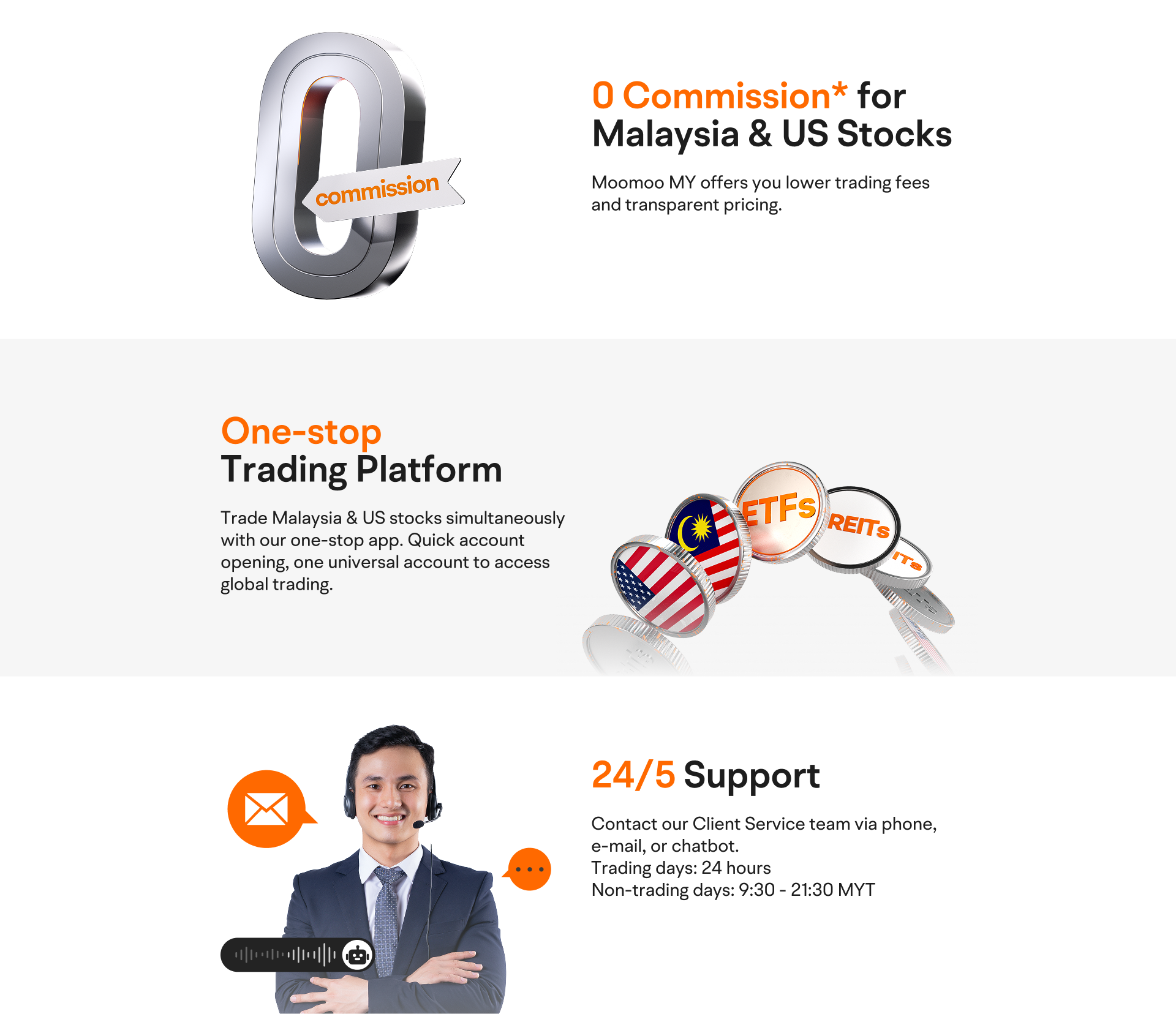
Moomoo MY offers several advantages for stock trading in Malaysia, here are some key highlights that make it a top choice for Malaysian investors eyeing quantum computing stocks and beyond.
24-Hour US Stock Trading
One of the key benefits of using Moomoo MY is its 24-hour US stock trading feature. With 24/5 trading access, Malaysian investors never have to worry about missing out on crucial market movements.
0-Commission* on US Stock
Cost is a significant factor when investing in stocks, especially for those looking to build a diverse portfolio in emerging sectors like quantum computing. Moomoo MY offers 0-commission* policy on global stocks, including US stocks, Malaysia stocks and more, click the pricing page for more information.
*T&Cs and other fees apply.
Conclusion

Quantum computing stocks's rapid advancements and the potential to reshape industries make these stocks a noteworthy addition to portfolios. With platforms like Moomoo MY offering convenient access—including 24-hour US stock trading and 0-commission* benefits—navigating this high-growth space becomes more accessible. As quantum computing continues to evolve, staying informed and leveraging the right tools will be key to capitalizing on the opportunities these top stocks offer. Whether you're a seasoned investor or new to the market, the quantum computing arena holds promise for those ready to explore its transformative potential.

This presentation is for informational and educational use only and is not a recommendation or endorsement of any particular investment or investment strategy. Investment information provided in this content is general in nature, strictly for illustrative purposes, and may not be appropriate for all investors. Read more