Are U.S. Treasuries still a safe haven?
U.S. Treasuries have long been the go-to for safety, boasting lower volatility and steady returns compared to stocks. But recent years have flipped that script.
Long-term bonds, once the darlings of cautious investors, are now dubbed "yield yawners" due to underperformance. With tariffs adding a fresh layer of uncertainty, investors are left wondering: what's the deal with Treasuries?
Takeaways:
U.S. Treasuries have become more volatile due to rising interest rates and tariffs
Treasury auctions serve as a sign of market demand
Inflation and tariffs make traditional investment strategies more difficult
Investors could use options like Covered Calls to manage risks
1. A tough era for bond investors
Bond investors have been taking hits left and right in recent years:
In 2022, faced with soaring inflation, the Federal Reserve raised interest rates at the fastest pace in 40 years, causing bond yields to rise sharply.
By 2023, hedge fund mogul Bill Ackman had taken short positions on U.S. Treasuries, driving the 10-year yield above 5%.
The year 2024 saw a brief sigh of relief with rate cuts, only for Trump’s reelection to send rates climbing again.
In 2025, a flurry of tariff policies injected even more uncertainty. The "reciprocal tariffs" sent Treasury yields on a rollercoaster.
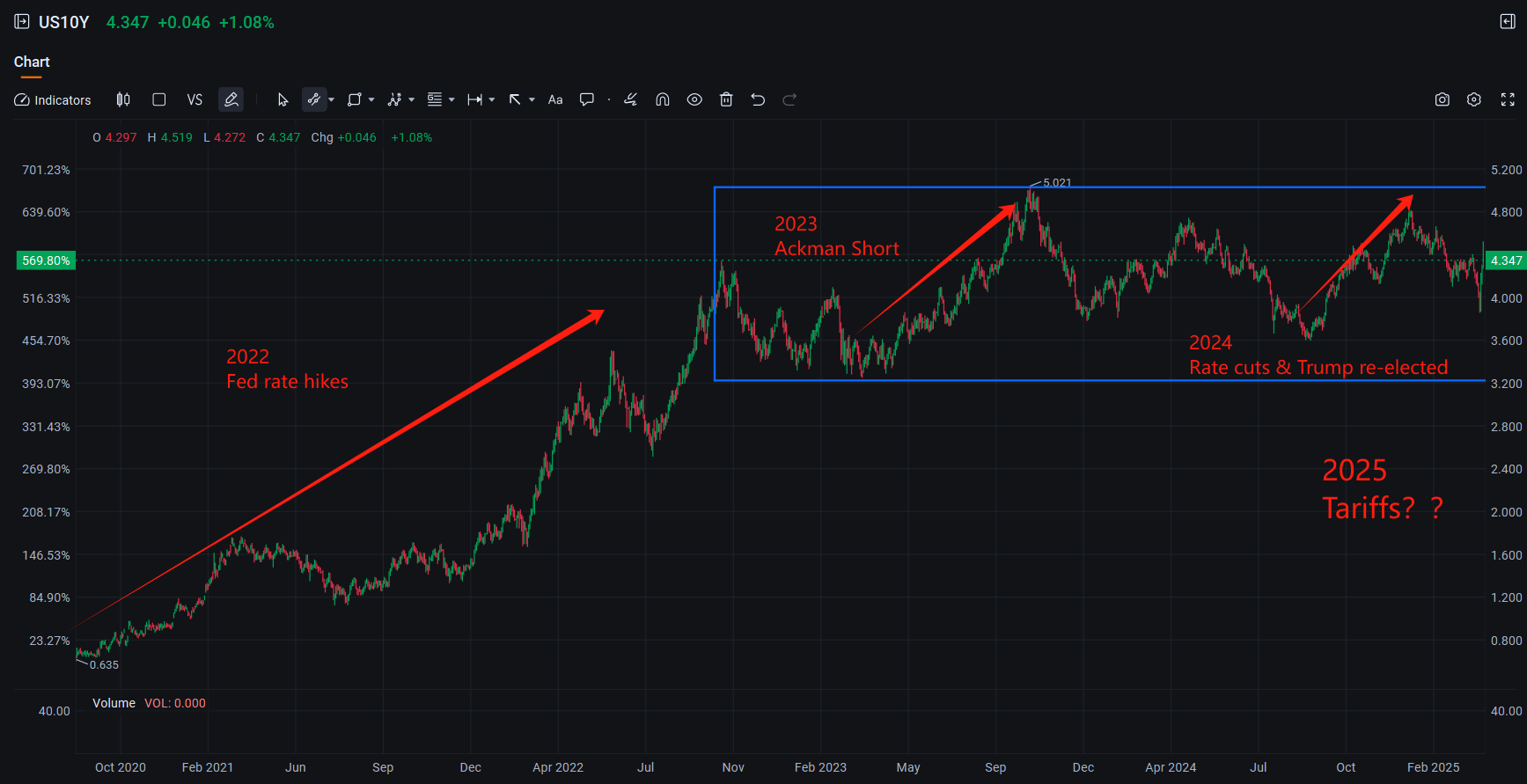
Source: moomoo. Data as of Apr 2025.
Past performance does not guarantee future results. This is for information and illustrative purposes only.
Remember, bond prices and yields move in opposite directions. If you hold a bond with a 3% coupon and new bonds offer 4%, yours must drop in price until the yield aligns.
Longer-term bonds are even more sensitive to rate changes. Many tried "buying the dip" with long-term Treasuries, only to find returns elusive.
2. Treasury auctions
We often see art auctions, but you may not know that U.S. Treasuries are issued similarly. Buyers and sellers assess the asset value, negotiating until an agreement is reached.
However, each U.S. Treasury auction involves billions of dollars and impacts a bond market worth tens of trillions.
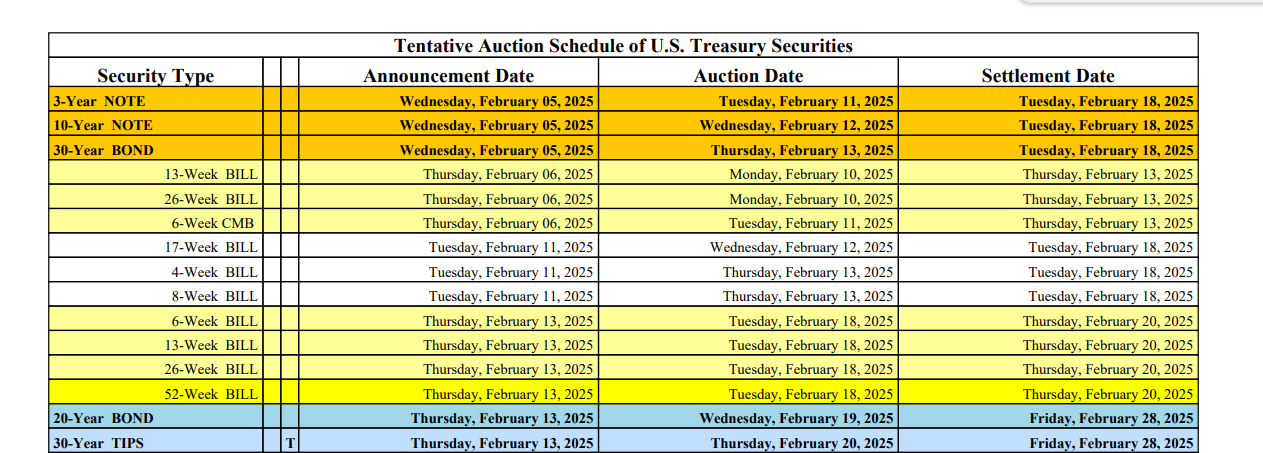
Source: U.S. Treasury
This is for information and illustrative purposes only.
In 2023, as Treasury yields surged, auctions went cold. High winning yields and less participation signaled weak demand, sparking market adjustments. Come April 2025, with Trump’s global tariff spree, auctions cooled again, leading to another sell-off.
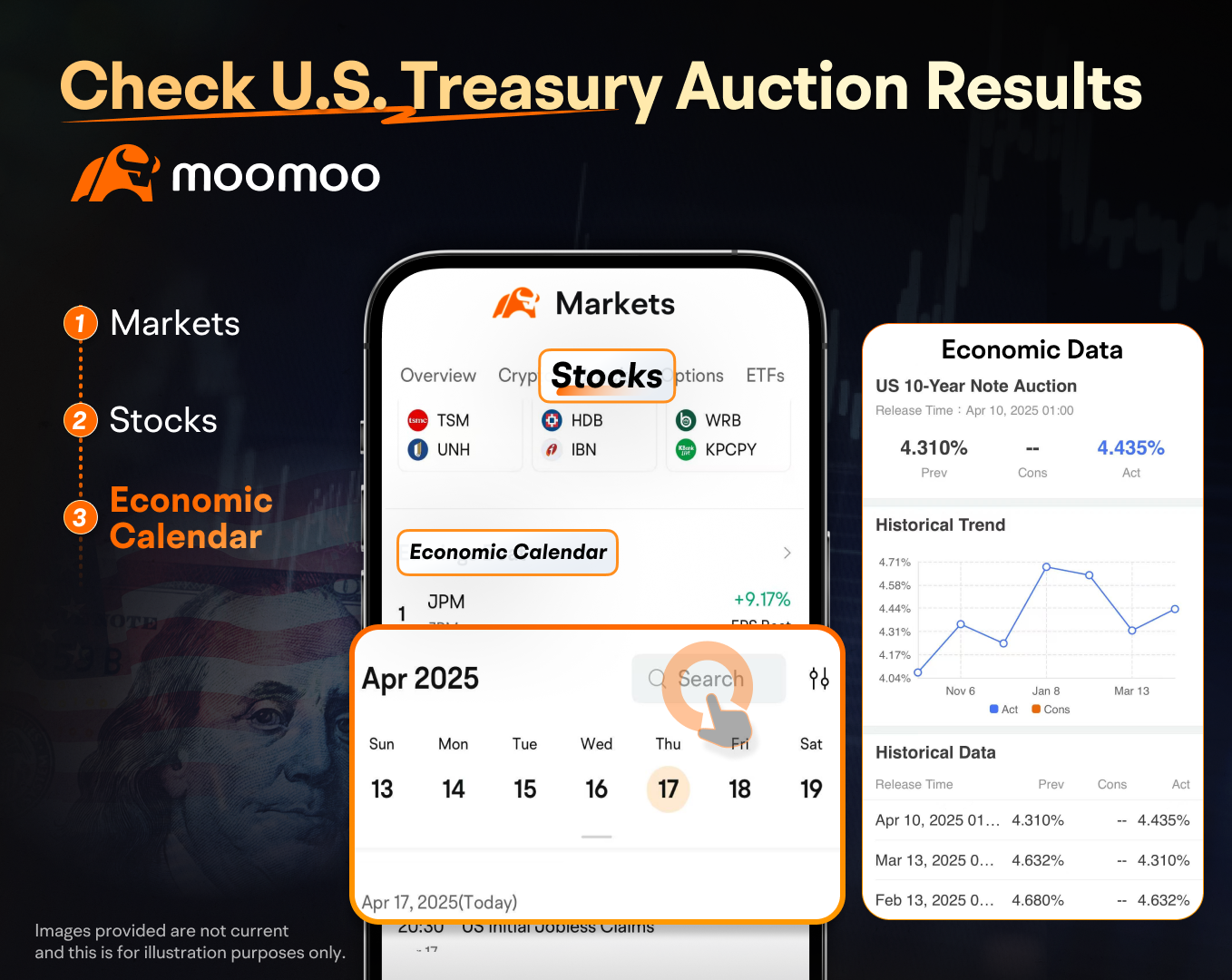
You can keep tabs on these auctions on moomoo with the Economic Calendar.
3. Inflation uncertainty
Traditionally, Treasuries have been the storm shelter during market turmoil—think 2008’s financial crisis and the 2020 COVID shock. Yet, 2022 saw both stocks and bonds struggling. By April 2025, post-tariff, both markets faced sell-offs. The key difference now? Inflation.
During a recession, the Fed typically cuts rates to ease borrowing costs. But with rampant inflation, it’s a different ball game. In 2022, the Fed lifted rates above 5%. Though inflation eased, it didn’t hit targets, keeping high yields on the field.
Bill Ackman’s bearish Treasury stance echoed this, predicting persistent inflation.
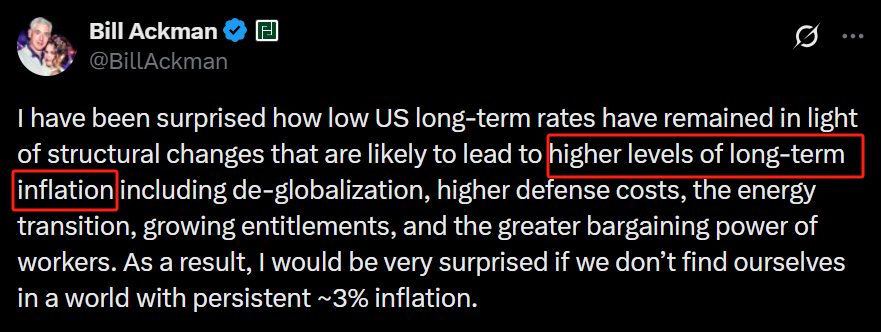
Source: X/BillAckman. Aug 2, 2023.
This is for information and illustrative purposes only. It should not be relied on as advice or a recommendation.
Trump 2.0’s tariffs only muddy the inflation waters further. Fed officials hint that steady policy rates might be the best defense against tariff-induced inflation. And if the tariff war de-escalates, U.S. Treasury yields may potentially decline.
4. Navigating a volatile market
U.S. Treasuries offer a wide range of durations, from as short as one month to over 30 years.
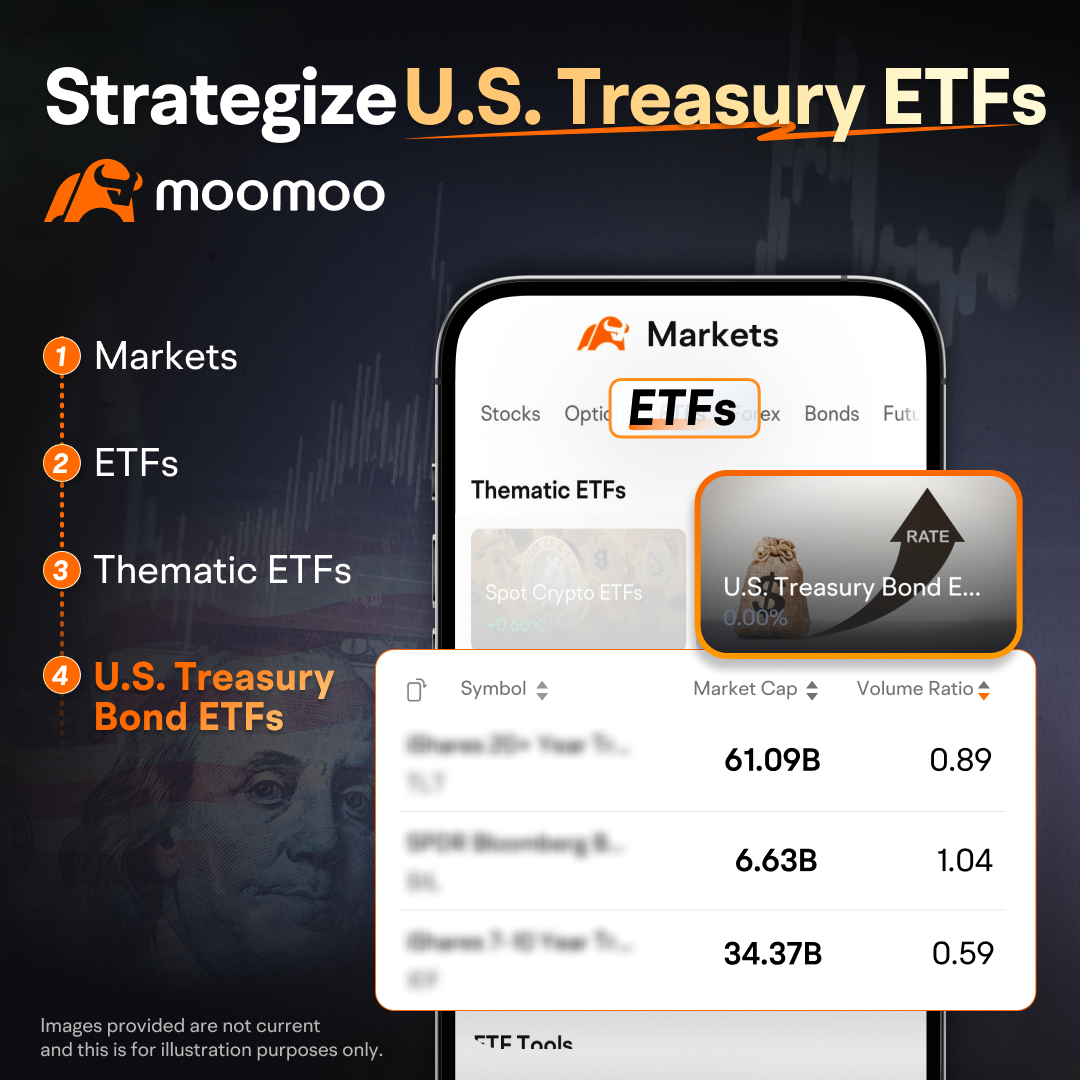
Holding individual bonds requires more active management, so regular investors might consider using ETFs for a diversified bond portfolio.
Investors can explore Treasury-tracking products in the Thematic ETF section on moomoo.
If you already hold Treasury-related products and remain optimistic about their long-term performance, you might consider using options to reduce costs.
A common approach is Covered Call—selling call options while holding the underlying asset.
The premium collected could offset losses if prices continue to fluctuate or decline. But if the trend reverses in the future, you also risk losing the gains from the potential surge.
Options involve higher risks and volatility than stocks, and investors should study them thoroughly before participating. Moomoo Learn offers a wealth of courses on the subject.
This presentation is for informational and educational use only and is not a recommendation or endorsement of any particular investment or investment strategy. Investment information provided in this content is general in nature, strictly for illustrative purposes, and may not be appropriate for all investors. Read more
Recommend

Mastering the Dollar Cycle: How to invest in a changing economy

How Will the US Dollar Perform in 2024? A Closer Look into the US Dollar Index
Unveiling Inflation: Why is Your Wallet Shrinking?

Why is the US dollar so powerful worldwide, and how can we tell?
How to interpret the Fed dot plot?
Why do oil ETFs lag behind oil prices in the long run?
Understanding Bessent's Fiscal Blueprint
Unpacking the U.S. Debt Issue
Meet Dr. Copper: Understanding the Copper Market
A look at employment: what other indicators are there?
Do Oil Price Swings Rock the Stock Market?
How Tariffs Could Impact the Copper Landscape?
Why is Oil Called the "Mother of All Commodities"?
GDP: The Barometer of National Prosperity
Are U.S. Treasuries still a safe haven?
How does nonfarm payroll impact the global market?
How Inflation Affects the Market
How to Decode Inflation: CPI, PCE, and PPI
Understanding Treasury Auctions: A Step-by-Step Guide
Gold vs. Gold Miners: A Comparison
Understanding the GDP
How does monetary policy steer our lives and investment
How to analyze the Federal Reserve's monetary policy?
Discussing the driving forces behind rises in gold prices
Strong Consumer Spending Despite Economic Slowdown: Here's Why
Rapidly Rising US Housing Prices: Opportunity or Risk?
The Underlying Conflicts Surrounding Crude Oil Prices
'Father of value investing' Benjamin Graham: Ten Stock Selection Criteria
'Oracle of Omaha' Warren Buffett:ROE>20% is preferable
07 Howard Marks & Oaktree Capital
Listen to the Fed's speakers: Hawks or doves?
Understanding the CCI
Understanding the Federal Reserve Interest Rate Decision
Understanding the Durable Goods Orders
Investing and Labor Market Indicators
Understanding the relationship between the stock market and the bond market
The Rise of the Fed: Can Trump Dismiss Powell?
01 Using 13F filings to learn from big investors
Why does Warren Buffett say don't piggyback on his trades?
Understanding the US Non-Farm Payroll Data
Understanding the US Crude Oil Inventories
Understanding the PPI
Understanding the Retail Sales
How to Preserve Your Wealth in a High Inflation Environment
What is the Debt Ceiling? A Deep Dive into US Fiscal Policy
Discover the bond market: A quick and easy guide
Analyzing the manufacturing industry may help you grasp economic trends
The Fed Dot Plot explained: What it says about US interest rates
What the Federal Reserve does?
08 Carl Icahn & Icahn Enterprises
09 Seth Klarman & Baupost Group
What's in the Fed's Toolbox?
Open the Fed's monetary policy toolbox
A brief history lesson on the Fed and U.S. economy
06 Ray Dalio & Bridgewater Associates
04 Warren Buffett & Berkshire Hathaway
03 How to Read Form 13F
02 Identify a fund's investment strategy
05 Bill Ackerman & Pershing Square Capital
Mastering the Dollar Cycle: How to invest in a changing economy
How Will the US Dollar Perform in 2024? A Closer Look into the US Dollar Index
Unveiling Inflation: Why is Your Wallet Shrinking?
Why is the US dollar so powerful worldwide, and how can we tell?
How to interpret the Fed dot plot?
Why do oil ETFs lag behind oil prices in the long run?
Understanding Bessent's Fiscal Blueprint
Unpacking the U.S. Debt Issue
Meet Dr. Copper: Understanding the Copper Market
A look at employment: what other indicators are there?
Do Oil Price Swings Rock the Stock Market?
How Tariffs Could Impact the Copper Landscape?
Why is Oil Called the "Mother of All Commodities"?
GDP: The Barometer of National Prosperity
Are U.S. Treasuries still a safe haven?
How does nonfarm payroll impact the global market?
How Inflation Affects the Market
How to Decode Inflation: CPI, PCE, and PPI
Understanding Treasury Auctions: A Step-by-Step Guide
Gold vs. Gold Miners: A Comparison
Understanding the GDP
How does monetary policy steer our lives and investment
How to analyze the Federal Reserve's monetary policy?
Discussing the driving forces behind rises in gold prices
Strong Consumer Spending Despite Economic Slowdown: Here's Why
Rapidly Rising US Housing Prices: Opportunity or Risk?
The Underlying Conflicts Surrounding Crude Oil Prices
'Father of value investing' Benjamin Graham: Ten Stock Selection Criteria
'Oracle of Omaha' Warren Buffett:ROE>20% is preferable
07 Howard Marks & Oaktree Capital
Listen to the Fed's speakers: Hawks or doves?
Understanding the CCI
Understanding the Federal Reserve Interest Rate Decision
Understanding the Durable Goods Orders
Investing and Labor Market Indicators
Understanding the relationship between the stock market and the bond market
The Rise of the Fed: Can Trump Dismiss Powell?
01 Using 13F filings to learn from big investors
Why does Warren Buffett say don't piggyback on his trades?
Understanding the US Non-Farm Payroll Data
Understanding the US Crude Oil Inventories
Understanding the PPI
Understanding the Retail Sales
How to Preserve Your Wealth in a High Inflation Environment
What is the Debt Ceiling? A Deep Dive into US Fiscal Policy
Discover the bond market: A quick and easy guide
Analyzing the manufacturing industry may help you grasp economic trends
The Fed Dot Plot explained: What it says about US interest rates
What the Federal Reserve does?
08 Carl Icahn & Icahn Enterprises
09 Seth Klarman & Baupost Group
What's in the Fed's Toolbox?
Open the Fed's monetary policy toolbox
A brief history lesson on the Fed and U.S. economy
06 Ray Dalio & Bridgewater Associates
04 Warren Buffett & Berkshire Hathaway
03 How to Read Form 13F
02 Identify a fund's investment strategy
05 Bill Ackerman & Pershing Square Capital