09 Seth Klarman & Baupost Group

Seth Klarman was born in New York City and grew up in Baltimore.
His mother started her career as an English teacher and then became a psychiatric social worker, while his father, a health economist, taught at Johns Hopkins and NYU.
Seth Klarman's interest in business reportedly began at the age of four, when he redecorated his room to match a retail store by putting price tags on his possessions. At ten, he bought his first stock, Johnson & Johnson.
The reason why he picked the healthcare giant was pretty simple: he used a lot of Band-Aids as a kid. Though the choice was based more on instinct than analysis, the stock soon tripled in value.
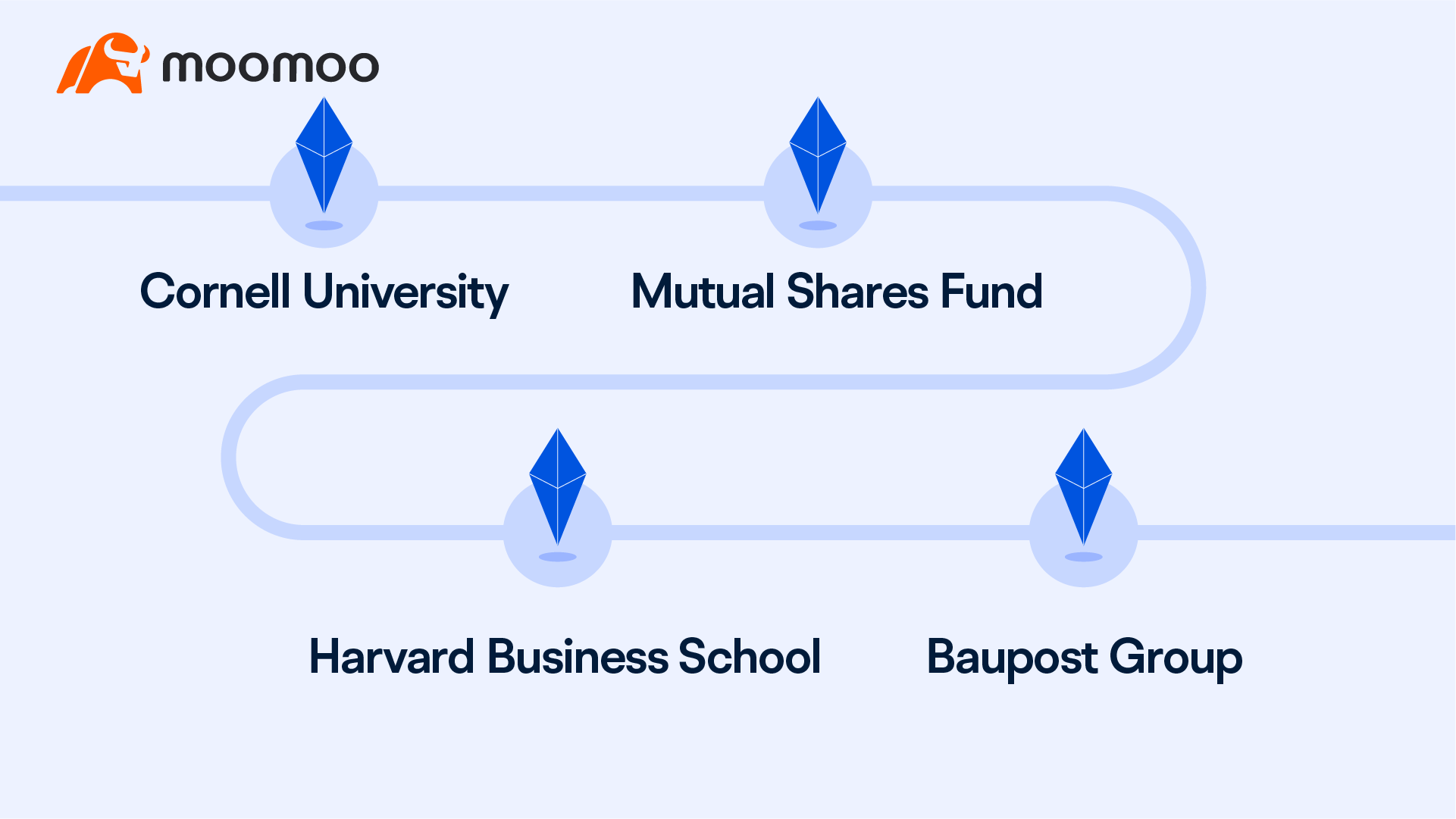
Seth Klarman studied economics at Cornell University. When he was an intern at Mutual Shares Fund, he was mentored by Max Heine and Michael Price, both of whom were disciples of Benjamin Graham.
Three years later, he left the company and pursued his studies at Harvard Business School. He co-founded Baupost Group with his professor and three other investors upon graduation.

Following Graham's footsteps, Klarman sticks to the principles of value investing.
He focuses on long-term performance instead of quick returns. He says, "Value investing is the discipline of buying securities at a significant discount from their current underlying values and holding them until more of their value is realized."
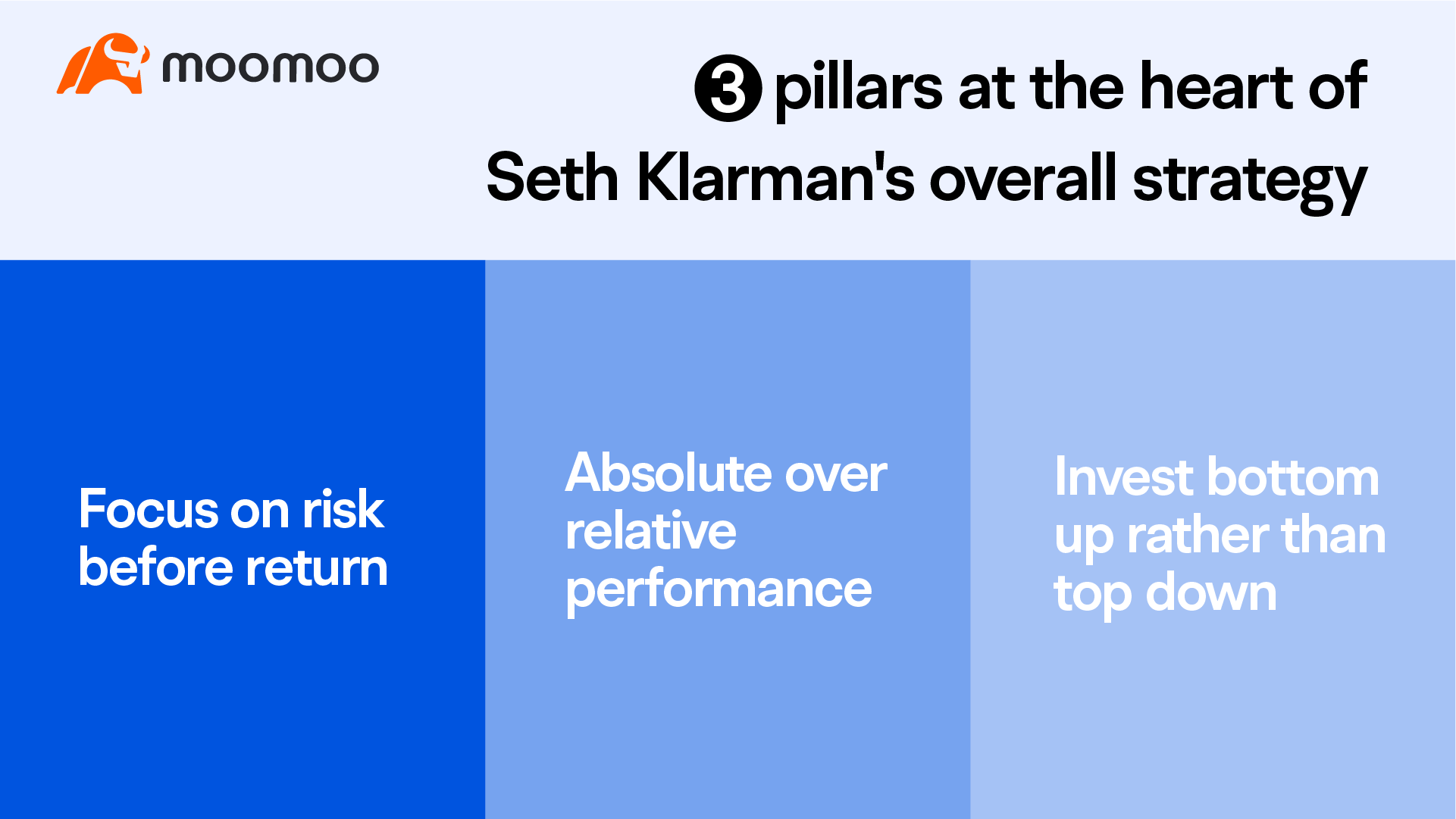
There are three pillars at the heart of Seth Klarman's overall strategy: focus on risk before return, absolute over relative performance, and investing bottom up rather than top down.

Seth Klarman outlines three critical approaches for investors to reduce risk in his book "Margin of Safety": diversify adequately, hedge when appropriate, and invest with a margin of safety.
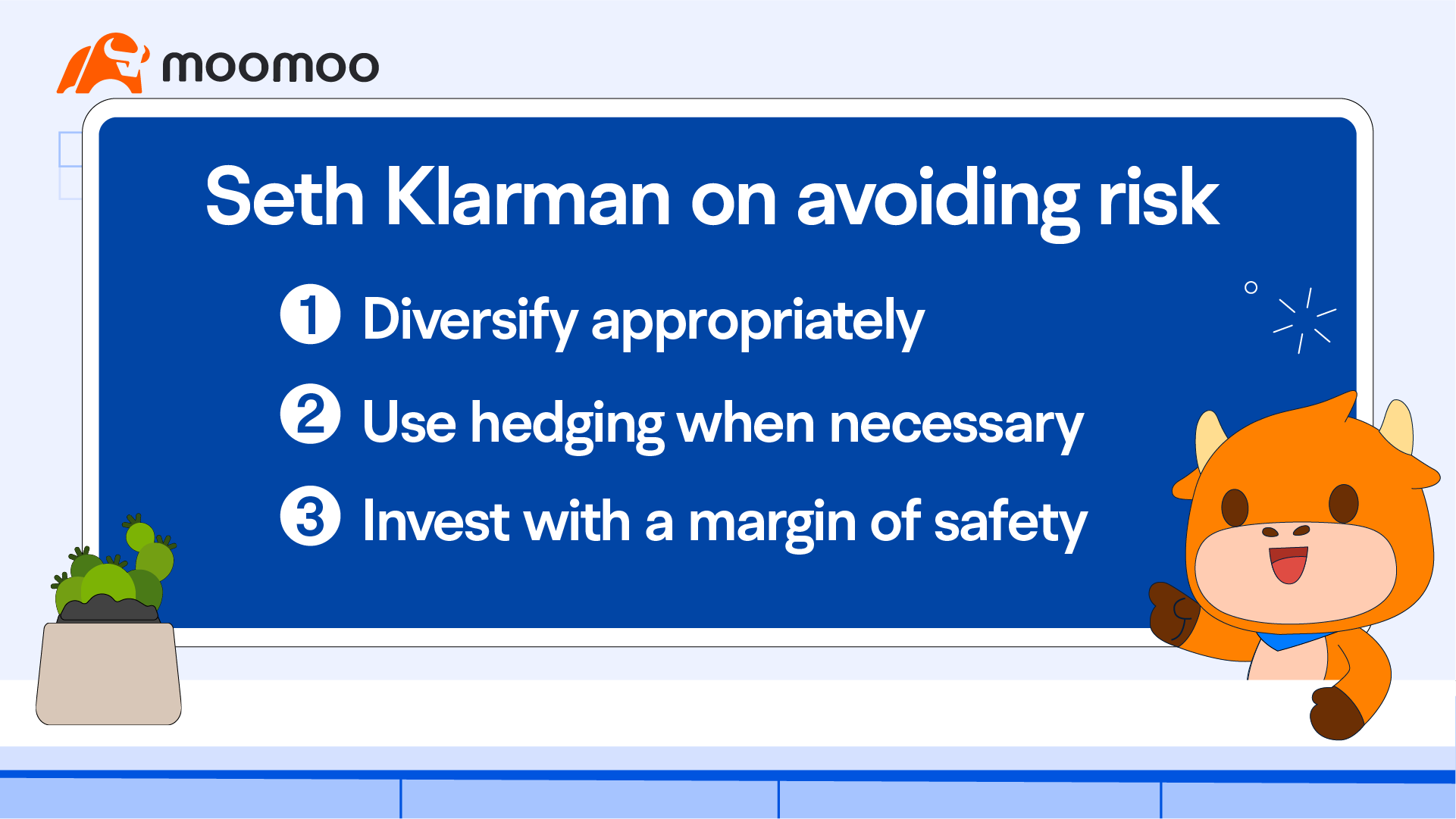
In Klarman's view, diversification does not refer to the number of stocks in your portfolio but the sort of risks you take on. He explained: "Diversification is not how many different things you own, but how different the things you do own are in the risks they entail." For example, a diversified portfolio of junk bonds still carries very high risk.
Klarman also stresses that investors should always have a "margin of safety" because it can "allow for human error, bad luck, or extreme volatility in a complex, unpredictable, and rapidly changing world."

According to Klarman, there are only three ways to value a stock: going-concern value, liquidation value, and the market value of equities.
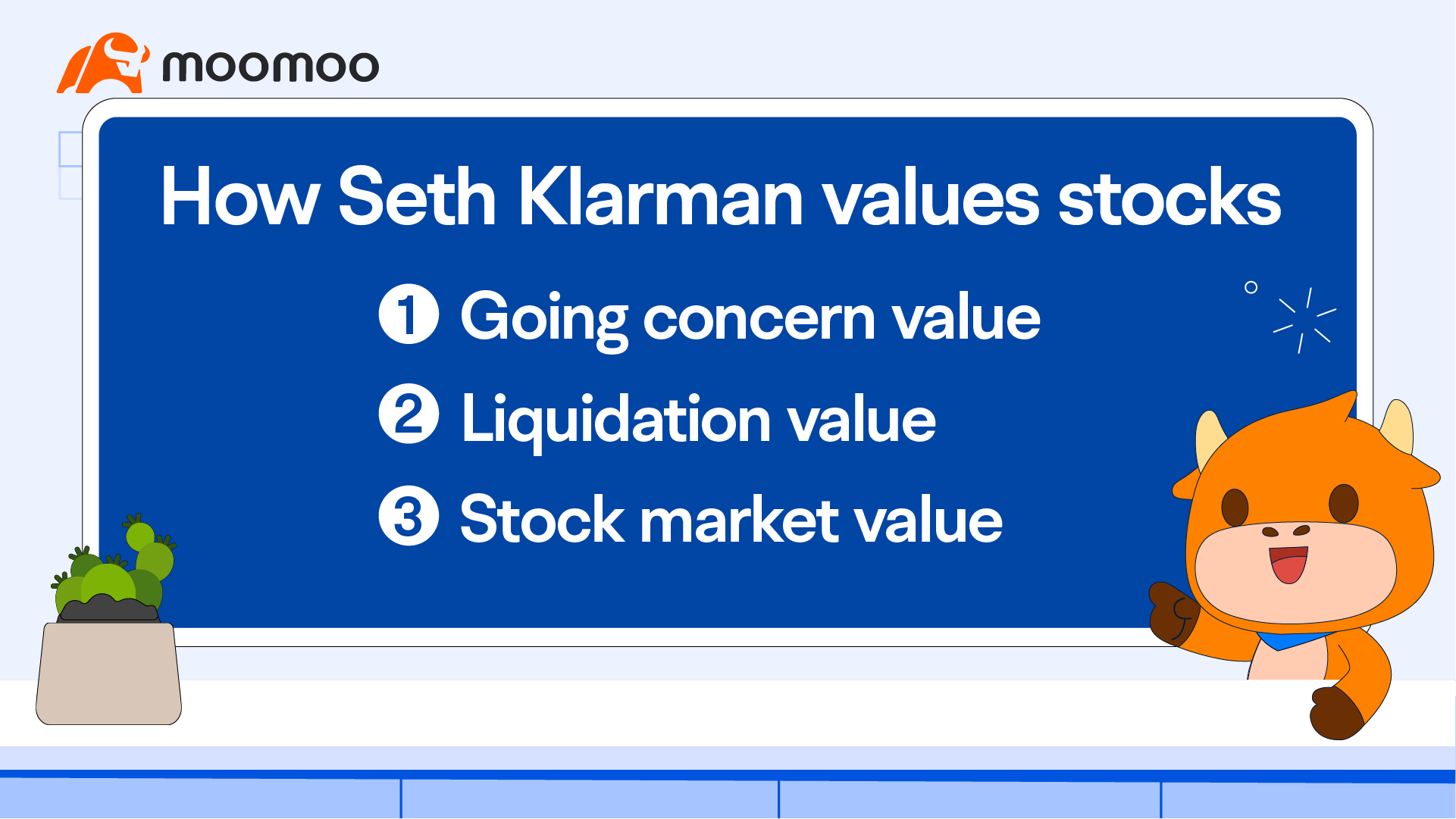
Businesses that consistently generate cash are most suited for going-concern values. The category can be further divided into discounted cash flow and private market value. However, there is an unsolvable paradox: to perform present value analysis, you must make predictions, which can be wrong.
Liquidation value is more conservative as it only considers a business's tangible assets. However an asset becomes an attractive investment when priced at its liquidation value.
The market value approach also works because securities of the same type are generally traded at similar prices. So investors can use multiples, or financial metrics, to compare companies within the same industry.
This presentation is for informational and educational use only and is not a recommendation or endorsement of any particular investment or investment strategy. Investment information provided in this content is general in nature, strictly for illustrative purposes, and may not be appropriate for all investors. Read more
Recommend

Mastering the Dollar Cycle: How to invest in a changing economy

How Will the US Dollar Perform in 2024? A Closer Look into the US Dollar Index
Unveiling Inflation: Why is Your Wallet Shrinking?

Why is the US dollar so powerful worldwide, and how can we tell?
How to interpret the Fed dot plot?
Why do oil ETFs lag behind oil prices in the long run?
Understanding Bessent's Fiscal Blueprint
Unpacking the U.S. Debt Issue
Meet Dr. Copper: Understanding the Copper Market
A look at employment: what other indicators are there?
Do Oil Price Swings Rock the Stock Market?
How Tariffs Could Impact the Copper Landscape?
Why is Oil Called the "Mother of All Commodities"?
GDP: The Barometer of National Prosperity
Are U.S. Treasuries still a safe haven?
How does nonfarm payroll impact the global market?
How Inflation Affects the Market
How to Decode Inflation: CPI, PCE, and PPI
Understanding Treasury Auctions: A Step-by-Step Guide
Gold vs. Gold Miners: A Comparison
Understanding the GDP
How does monetary policy steer our lives and investment
How to analyze the Federal Reserve's monetary policy?
Discussing the driving forces behind rises in gold prices
Strong Consumer Spending Despite Economic Slowdown: Here's Why
Rapidly Rising US Housing Prices: Opportunity or Risk?
The Underlying Conflicts Surrounding Crude Oil Prices
'Father of value investing' Benjamin Graham: Ten Stock Selection Criteria
'Oracle of Omaha' Warren Buffett:ROE>20% is preferable
07 Howard Marks & Oaktree Capital
Listen to the Fed's speakers: Hawks or doves?
Understanding the CCI
Understanding the Federal Reserve Interest Rate Decision
Understanding the Durable Goods Orders
Investing and Labor Market Indicators
Understanding the relationship between the stock market and the bond market
The Rise of the Fed: Can Trump Dismiss Powell?
01 Using 13F filings to learn from big investors
Why does Warren Buffett say don't piggyback on his trades?
Understanding the US Non-Farm Payroll Data
Understanding the US Crude Oil Inventories
Understanding the PPI
Understanding the Retail Sales
How to Preserve Your Wealth in a High Inflation Environment
What is the Debt Ceiling? A Deep Dive into US Fiscal Policy
Discover the bond market: A quick and easy guide
Analyzing the manufacturing industry may help you grasp economic trends
The Fed Dot Plot explained: What it says about US interest rates
What the Federal Reserve does?
08 Carl Icahn & Icahn Enterprises
09 Seth Klarman & Baupost Group
What's in the Fed's Toolbox?
Open the Fed's monetary policy toolbox
A brief history lesson on the Fed and U.S. economy
06 Ray Dalio & Bridgewater Associates
04 Warren Buffett & Berkshire Hathaway
03 How to Read Form 13F
02 Identify a fund's investment strategy
05 Bill Ackerman & Pershing Square Capital
Mastering the Dollar Cycle: How to invest in a changing economy
How Will the US Dollar Perform in 2024? A Closer Look into the US Dollar Index
Unveiling Inflation: Why is Your Wallet Shrinking?
Why is the US dollar so powerful worldwide, and how can we tell?
How to interpret the Fed dot plot?
Why do oil ETFs lag behind oil prices in the long run?
Understanding Bessent's Fiscal Blueprint
Unpacking the U.S. Debt Issue
Meet Dr. Copper: Understanding the Copper Market
A look at employment: what other indicators are there?
Do Oil Price Swings Rock the Stock Market?
How Tariffs Could Impact the Copper Landscape?
Why is Oil Called the "Mother of All Commodities"?
GDP: The Barometer of National Prosperity
Are U.S. Treasuries still a safe haven?
How does nonfarm payroll impact the global market?
How Inflation Affects the Market
How to Decode Inflation: CPI, PCE, and PPI
Understanding Treasury Auctions: A Step-by-Step Guide
Gold vs. Gold Miners: A Comparison
Understanding the GDP
How does monetary policy steer our lives and investment
How to analyze the Federal Reserve's monetary policy?
Discussing the driving forces behind rises in gold prices
Strong Consumer Spending Despite Economic Slowdown: Here's Why
Rapidly Rising US Housing Prices: Opportunity or Risk?
The Underlying Conflicts Surrounding Crude Oil Prices
'Father of value investing' Benjamin Graham: Ten Stock Selection Criteria
'Oracle of Omaha' Warren Buffett:ROE>20% is preferable
07 Howard Marks & Oaktree Capital
Listen to the Fed's speakers: Hawks or doves?
Understanding the CCI
Understanding the Federal Reserve Interest Rate Decision
Understanding the Durable Goods Orders
Investing and Labor Market Indicators
Understanding the relationship between the stock market and the bond market
The Rise of the Fed: Can Trump Dismiss Powell?
01 Using 13F filings to learn from big investors
Why does Warren Buffett say don't piggyback on his trades?
Understanding the US Non-Farm Payroll Data
Understanding the US Crude Oil Inventories
Understanding the PPI
Understanding the Retail Sales
How to Preserve Your Wealth in a High Inflation Environment
What is the Debt Ceiling? A Deep Dive into US Fiscal Policy
Discover the bond market: A quick and easy guide
Analyzing the manufacturing industry may help you grasp economic trends
The Fed Dot Plot explained: What it says about US interest rates
What the Federal Reserve does?
08 Carl Icahn & Icahn Enterprises
09 Seth Klarman & Baupost Group
What's in the Fed's Toolbox?
Open the Fed's monetary policy toolbox
A brief history lesson on the Fed and U.S. economy
06 Ray Dalio & Bridgewater Associates
04 Warren Buffett & Berkshire Hathaway
03 How to Read Form 13F
02 Identify a fund's investment strategy
05 Bill Ackerman & Pershing Square Capital