What are the key points to keep in mind before investing?
In the early stage, investing might seem complex and difficult to start. There are many blogs, articles, and videos explaining how you can start investing. In this guide, we are committed to providing you with concise yet powerful basics about investment so that you can get started investing quickly.
What is investing?
Investing is the act of committing your money to something in the hopes of getting back more than what you put in. This essentially means that you invest money to make money and achieve your financial goals.
Investing is different from saving. Savings are sometimes guaranteed but investments are not. Where you invest your money will depend on factors, such as how much you want to invest, how long you’d like to invest your money for, and how comfortable you are with risk. All investment involves an element of risk. However, when you’re younger and have many income-earning years ahead of you, you can afford to take on more risk, which could result in higher gains. If you were to keep your money under the mattress and not invest, you will never grow beyond your initial savings.
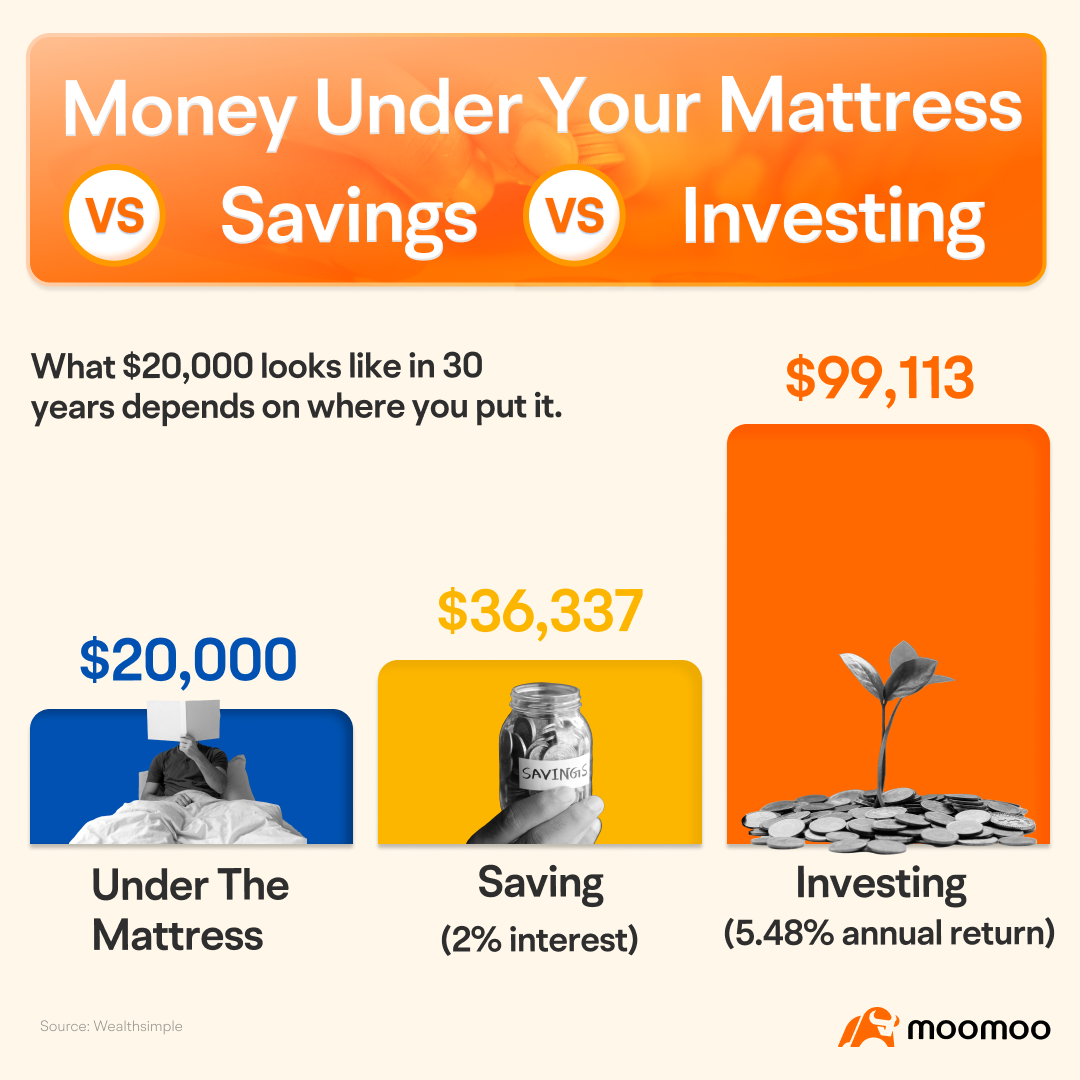
What types of investments are there?
Investing can indeed yield significant returns, but there are many distinct categories within it. While the universe of investments is a vast one, here are some common types of investments:
1. Stocks. A stock is a slice of ownership in a company, also called a share, that is bought and sold by investors on a stock exchange.
2. ETFs. Also called Exchange-traded funds, these funds combine the funds of multiple investors to invest in a basket of assets — typically stocks and bonds.
3. Mutual funds. These funds also pool investor funds and hold multiple investments. Unlike ETFs, mutual funds are often actively managed by a fund manager. Mutual funds are the most popular (42%) asset in Canadian RRSPs.
4. Bonds. A bond is a lump sum loan from an investor to a company or government that earns interest and is paid back over a set length of time. Bonds are a popular type of fixed-income investment.
5. Derivatives. These assets derive their value from another asset’s volatility, like the price movement of a stock. The two most common types of derivatives are options and futures.
6. GICs. Guaranteed investment certificates are similar to bonds: you lend your money to a financial institution for a set period of time in return for your investment back, plus interest, at a later date.
7. Real estate. Real estate investment in Canada involves purchasing property to generate rental income or capital gains, offering a tangible asset with potential for long-term appreciation.
8. REITs. Real estate investment trusts are companies that own real estate. You can invest in REITs by purchasing shares — just like a stock.
9. Forex. The foreign exchange market, or the FX market, allows investors to buy and sell international currencies.
10. Crypto. The cryptocurrency market lets investors buy and sell digital currencies.
Decide what to invest in
Know what you're investing for
How you invest depends on what exactly you're investing for. People always invest for these following reasons:
Make ends meet
Salary management
Accumulate wealth rapidly
...
The time horizons on each of these investments are very different. If you can, invest for the long term. The longer your money is invested, the more likely you are to benefit from compound growth. When you’re younger and have many income-earning years ahead of you, you can afford to take more risk, which could result in higher gains. Therefore, you can select an investment type suited to your goals and consider timing to tailor your personalized investment strategy.
Understanding your risk tolerance
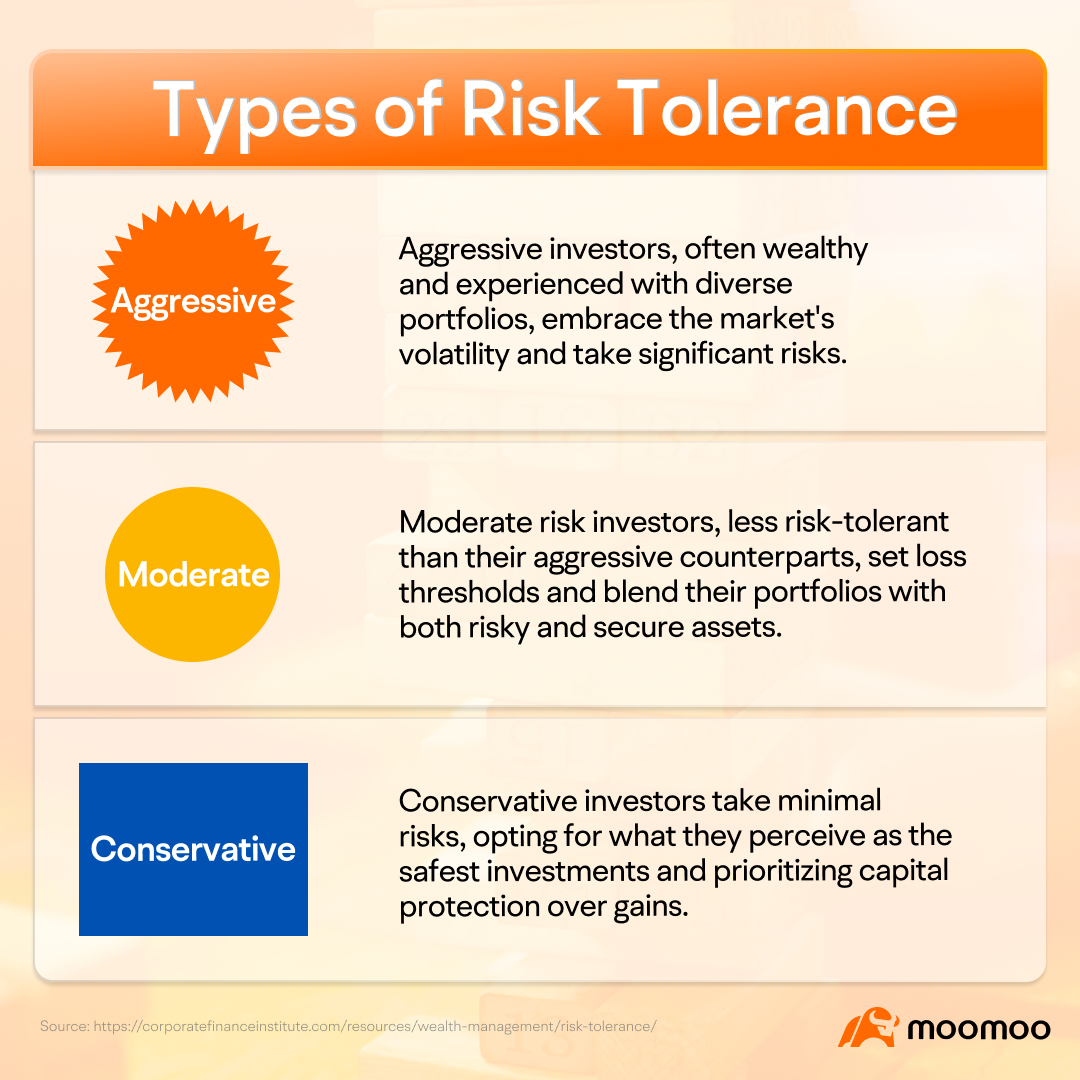
Risk tolerance is undoubtedly a critical consideration when building an investment portfolio. Investors are usually classified into three main categories based on how much risk they can tolerate. They include aggressive, moderate, and conservative.
Aggressive
Aggressive investors, often wealthy and experienced with diverse portfolios, embrace the market's volatility and take significant risks. They favor assets like equities, known for their dynamic pricing. While they enjoy high returns in a booming market, they also withstand substantial losses during downturns without resorting to panic selling, accustomed as they are to daily fluctuations.
Moderarte
Moderate risk investors, less risk-tolerant than their aggressive counterparts, set loss thresholds and blend their portfolios with both risky and secure assets. This balanced approach yields lower gains than aggressive investors during market highs but also protects them from severe losses in downturns.
Conservative
Conservative investors take minimal risks, opting for what they perceive as the safest investments and prioritizing capital protection over gains. They typically stick to a limited range of secure asset classes, like fixed deposits (FD) and public provident funds (PPF).
If you’re beginner in investments, here are three questions you could consider to determine which of the three categories of investors above you fall into:
1. Do you have high-interest debt?
Different types of debt have varying interest rates. In Canada, fixed-rate home loan interest rates fluctuated between 1.46% and 5.58% from 2019 to 2021, while the average credit card interest rate stood at 19.4%. Such high-interest debt can negate investment earnings.
2. Do you have money you can afford to lose?
While some investments are riskier than others, no investment can guarantee profit. Money invested should be money you’re willing to lose — in part or entirely, as both are possible. Lower-risk options like bonds and GICs also necessitate locking in funds for extended periods, so invest money you can commit for the long time.
3. Do you have an emergency fund?
An emergency fund is for unforeseen costs, such as car repairs or job loss. Experts recommend saving three to six months' living expenses, though any initial savings can be beneficial.
Creating this fund prior to investing can offer financial security, ensuring you have a safety net regardless of investment outcomes.
Meanwhile, you also need to know that age, investment goals, and income contribute to an investor's risk tolerance. Stock volatility, market swings, economic or political events, and regulatory, or interest rate change may always happen.
Once you know where you fall along the risk spectrum, the next step is to become familiar with typical performance data for your portfolio. The more you know about what you can expect, the smaller the chance that you will react emotionally when times get tough.
Translating risk tolerance into an investment strategy
The more informative investors weigh both risk and potential returns, understanding that high-return investments like stocks typically carry more risk than stable options like bonds and cash. Yet, even conservative portfolios can face short-term losses due to market shifts, underscoring the importance of diversification.
Consider an example where you invested $10,000 in 1970 into one of three asset-allocation models, rebalancing annually until 2016.
The aggressive model would have grown to $892,028, the moderate to $676,126, and the conservative to $389,519.
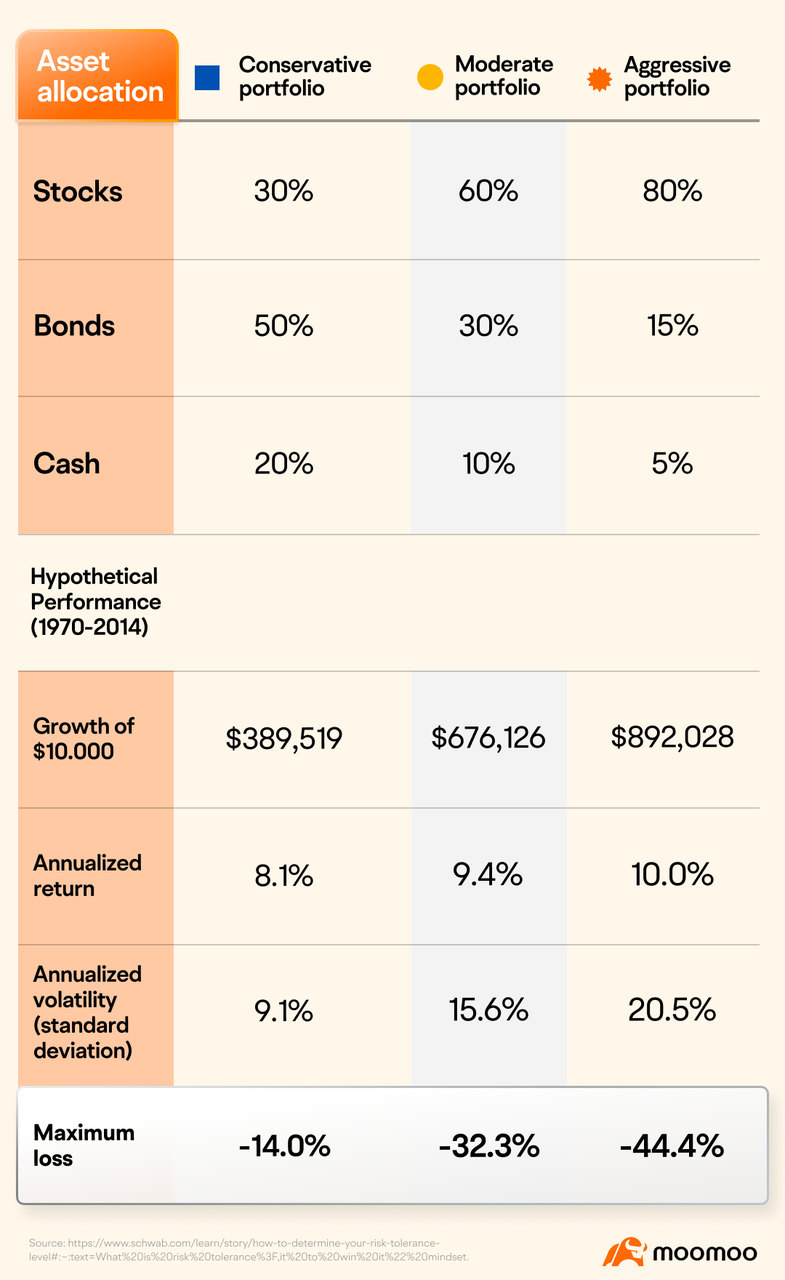
The outcomes illustrate that higher investment risk can lead to greater rewards compared to cautious strategies, but it also challenges your risk tolerance. Let's review how each portfolio fared during tough times:
The aggressive portfolio, with the highest annualized return, experienced twice the volatility of the conservative one and saw a steep 44% drop at its worst.
The moderate portfolio, with a balanced asset mix, faced a maximum annual downturn of around 32%.
The conservative portfolio's largest dip was just 14%, but it also had the smallest annualized return over the years
Consider investing in a portfolio that reflects your risk tolerance, time horizon and personal circumstances when you accurately gauge your limits for investment risk, you're one step closer to achieving your financial goals!
How to Kick-start Your Investing Journey
You might think that investing and effective money management are complex, given the vast industry built around it, which suggests experts possess knowledge beyond your grasp.
However, here are some strategies to help you quickly grasp smart investment practices without the complexity.
Start with your passive investing
Passive investing allows your investments to fluctuate with market trends, whereas active investing involves a fund manager actively trading stocks in your portfolio to outperform the market for greater returns. Conversely, you can act as your own fund manager and pick your stocks or ETFs using moomoo. Recently, passive investing has gained popularity as evidence suggests it often outperforms actively managed funds over the long term, with the added benefit of lower fees.
Here's a chart comparing active and passive investing:
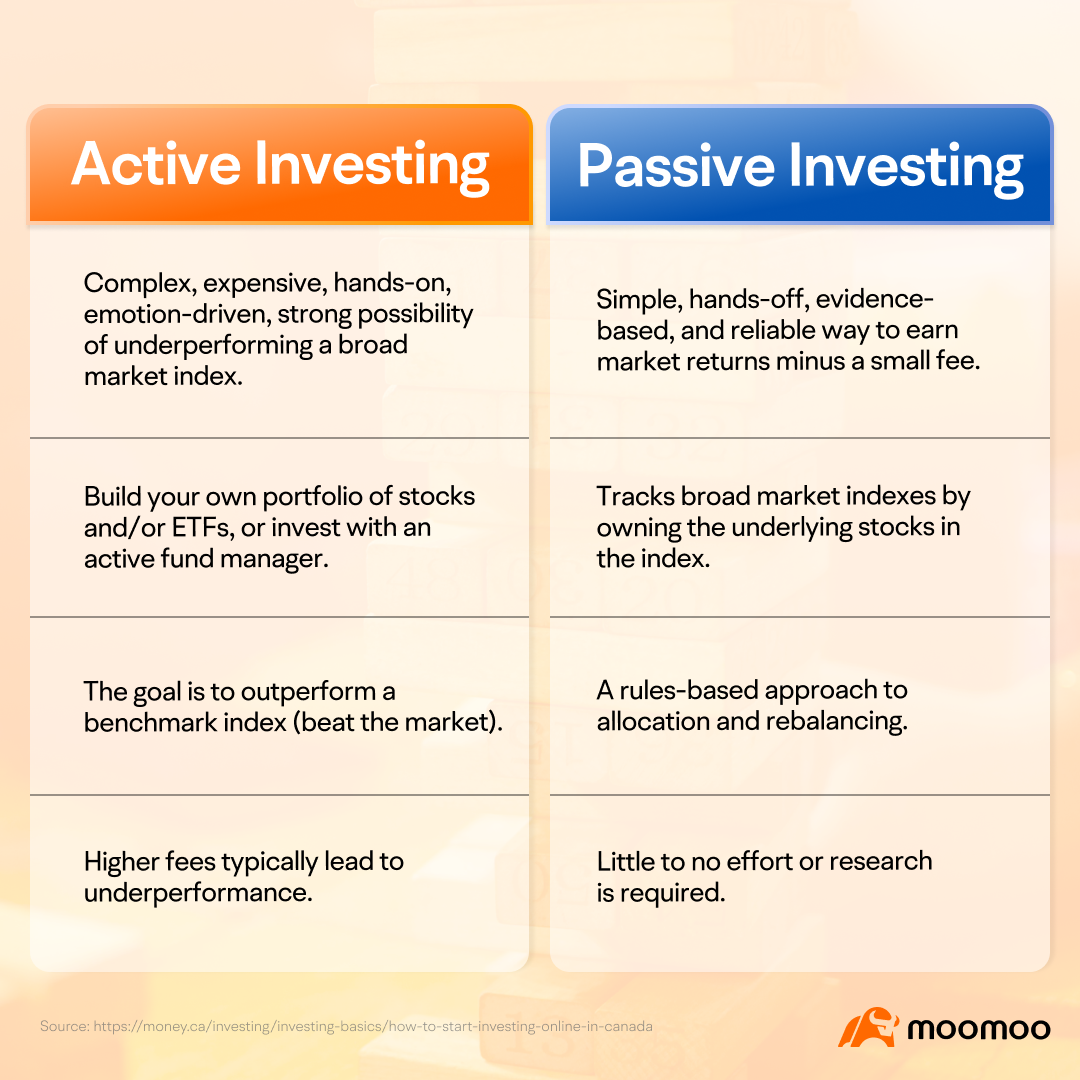
Although active investing may surpass market returns in the short term, consistently selecting winning stocks over the long haul is an unreliable strategy. The most effective and dependable approach to securing long-term investment gains is to assemble a risk-adjusted portfolio composed of economical, globally diversified index funds or ETFs.
Diversification to reduce risks
Diversification is a common investment strategy that entails buying different types of investments to reduce the risk of market volatility. It's part of what’s called asset allocation, meaning how much of a portfolio is invested in various asset classes.
Diversification mitigates risk and enhances the possibility for returns, as different assets perform variably. While some may lag one year, they could lead the next. Short-term returns can fluctuate greatly, but over the long term, a diversified portfolio typically yields the market's average return. This strategy minimizes the impact of any single underperforming asset and ensures more consistent performance, albeit without the dramatic highs of standout performers. The result is a more stable, steady growth that offers investor peace of mind.
Three of the most common asset classes are stocks, bonds and cash (or cash equivalents). To achieve diversification, investors will blend dissimilar assets together (like stocks and bonds) so that their portfolio does not have too much exposure to one individual asset class or market sector.
Cultivate a long-term investment mindset
A long-term investment mindset is an approach to investing that prioritizes patience and a focus on the long-term rather than quick gains. Instead of constantly buying and selling investments in response to short-term market movements, long-term investors hold onto their investments for extended periods, often years or even decades. They are less concerned with daily fluctuations in the stock market and more interested in the underlying performance of their investments over time.
Here are two key benefits of this mindset:
1. Helps to Avoid Emotional Investment Decisions
Investing can be an emotional process, and many investors make decisions based on fear, greed, or other emotions. By focusing on the long-term, investors can avoid making impulsive investment decisions based on short-term emotions.
2. Helps to Avoid Market Timing Mistakes
Market timing refers to the practice of buying and selling investments based on predictions about future market movements. Unfortunately, market timing is notoriously difficult, and many investors end up making costly mistakes by trying to time the market. By focusing on the long-term, investors can avoid the temptation to make short-term predictions and instead rely on a disciplined, strategic investment plan.
Having established a basic understanding of investing from the introduction above, are you eager to have a try? Don't be in a hurry! If you're keen to learn the ropes of stock trading, you can find informative details in our next article.
This presentation is for informational and educational use only and is not a recommendation or endorsement of any particular investment or investment strategy. Investment information provided in this content is general in nature, strictly for illustrative purposes, and may not be appropriate for all investors. Read more