Why are Canadian high-yield stocks a great way to earn passive income?
What's a good investment in Canada? Thinking about buying stocks but worried about the risks and uncertain returns? Is investing in real estate or REITs still reliable?
For many new immigrants, dealing with complex tax issues is already a headache, let alone exploring new investment strategies. So, is there a safe option for earning a steady investment income?
High-yield dividend stocks in Canada are a great option to consider, especially for conservative investors. You don't need to spend much time analyzing complex price movements to enjoy a steady stream of passive income.
Why are high-yield dividend stocks in Canada worth investing in?
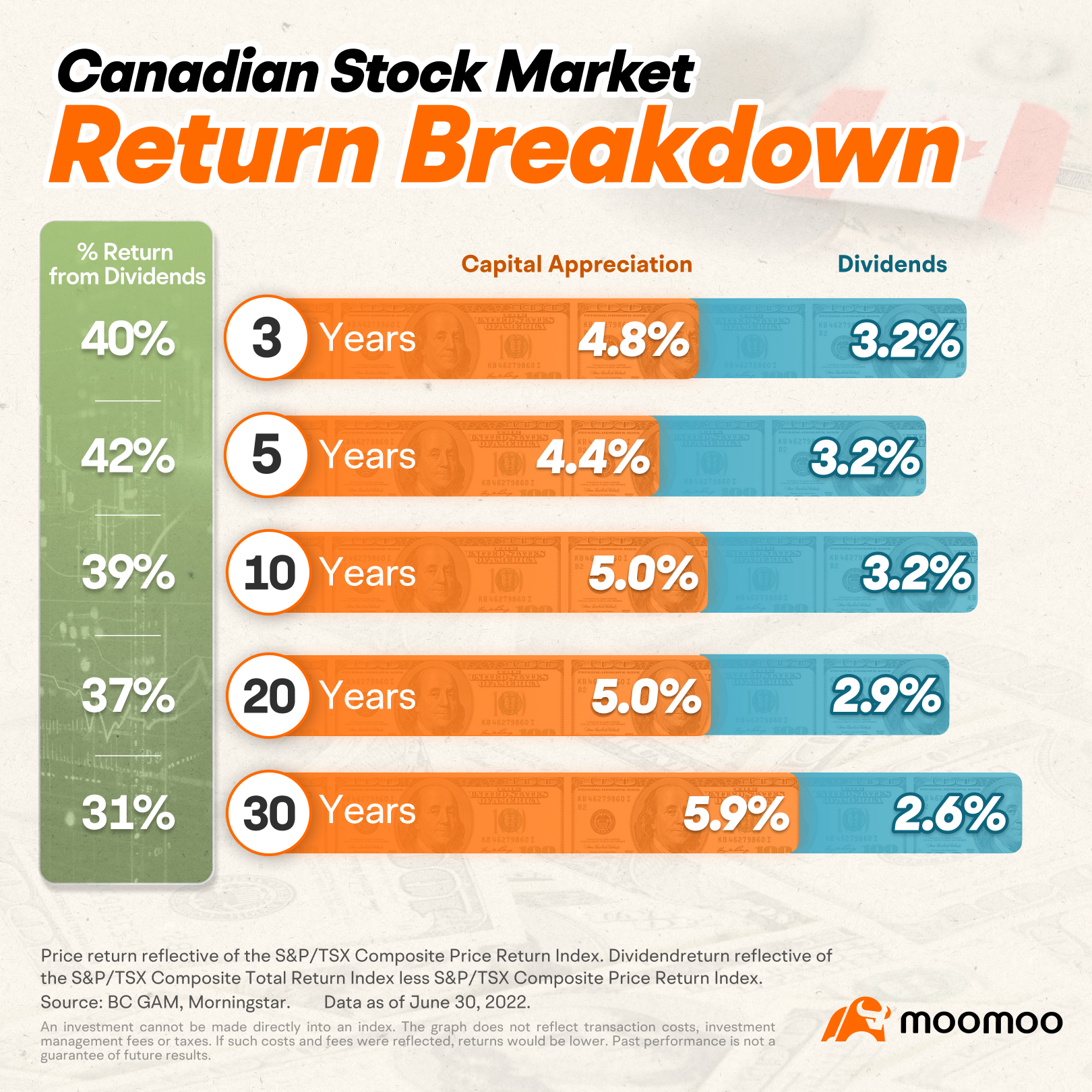
1. Dividends have contributed 30% of total returns over the past 30 years to the Canadian stock market
Stock prices fluctuate, and markets experience bull and bear cycles. High-yield dividend stocks in Canada typically come from mature, industry-leading companies. They are less vulnerable to market volatility and economic downturns. In bear markets, these stocks often outperform their low-yield or non-dividend counterparts.
Over the past 30 years, dividends have accounted for 30% of the total returns in the Canadian stock market. In the past three years alone, dividends have contributed 40% of overall stock returns, underscoring their importance in investor returns.
2. Dividends beat inflation
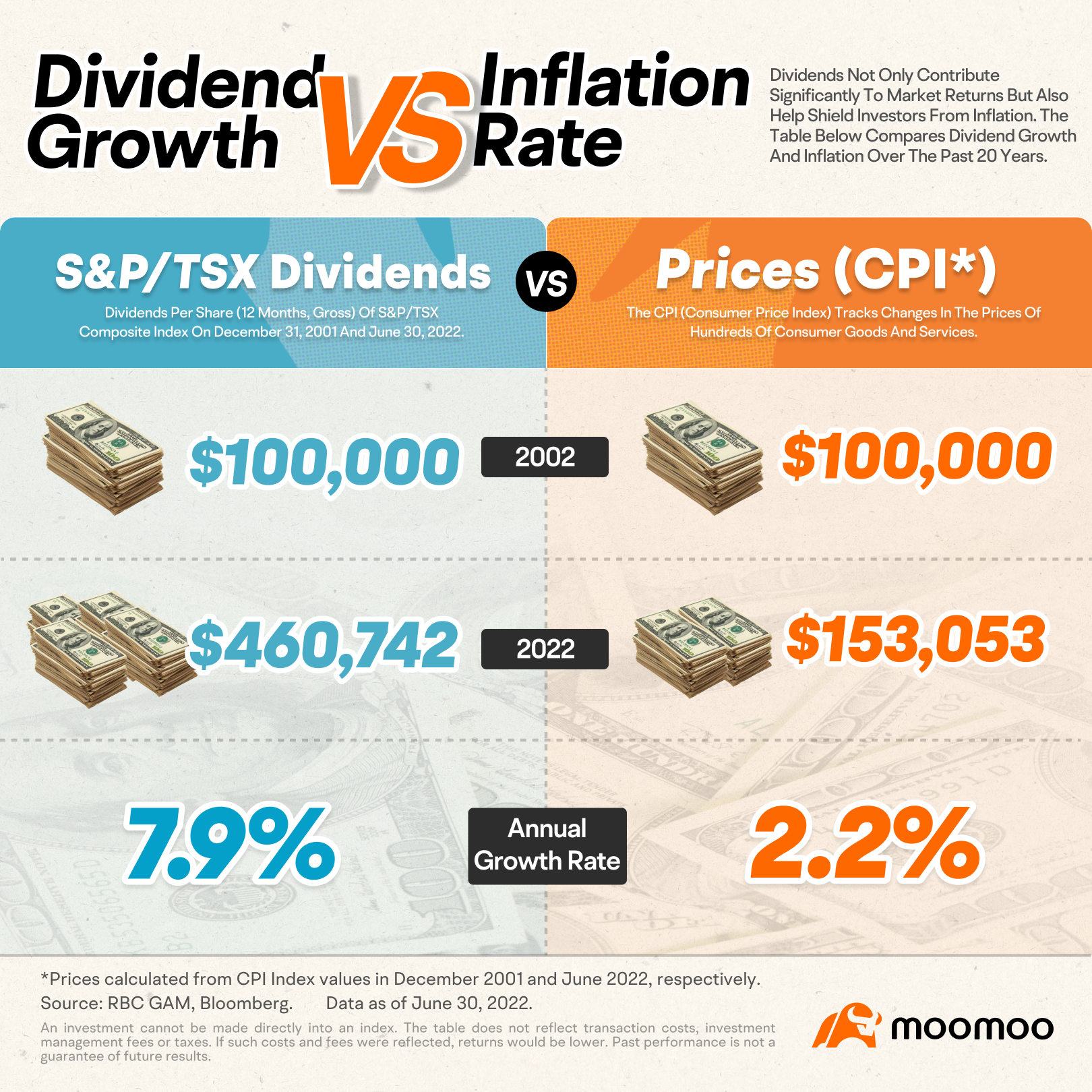
Dividends boost investment returns and help protect against inflation. From 2002 to 2022, dividends in the Canadian market grew by about 7.9% annually, while inflation was just 2.2% per year.
By 2022, dividends increased by 361%, compared to a 53% rise in prices due to inflation. This means dividend investors saw a significant increase in purchasing power.
3. Earn dividends and capital gains
Investing in high-yield stocks offers the dual benefits of regular dividend income and potential capital appreciation when the market is strong.
Stable income: Canadian high-yield stocks typically pay higher-than-average dividends, providing a steady income stream. This income can supplement other earnings or be reinvested for long-term growth.
Capital appreciation: These stocks often represent stable, profitable companies with a solid dividend payment history. Over time, they have the potential for capital growth, adding to investor returns.
4. Tax advantages of dividends
Canadian investors often prefer domestic high-yield stocks due to favorable tax treatment on eligible dividends, which can reduce overall tax liability.
Eligible dividends: Dividends from qualifying Canadian companies benefit from a dividend tax credit. For example, the effective tax rate on eligible dividends for top-bracket taxpayers is 39.34% in Ontario, 36.54% in British Columbia, 40.11% in Quebec, and 34.31% in Alberta.
Non-eligible dividends: Typically from smaller businesses, these dividends are taxed at a higher rate. In Ontario, top-bracket taxpayers pay 47.74% on non-eligible dividends.
Foreign dividends: These are fully taxable without the benefit of the dividend tax credit, though foreign withholding taxes paid can often be credited against Canadian taxes.
Are Canadian high-yield stocks more attractive than U.S. stocks?
Why choose Canadian high-yield stocks over U.S. ones? Here are two main reasons:
1. Higher dividend yields
For income-focused investors, Canadian high-yield stocks offer significantly higher dividend yields compared to U.S. stocks. This gap has been widening over the past 20 years.
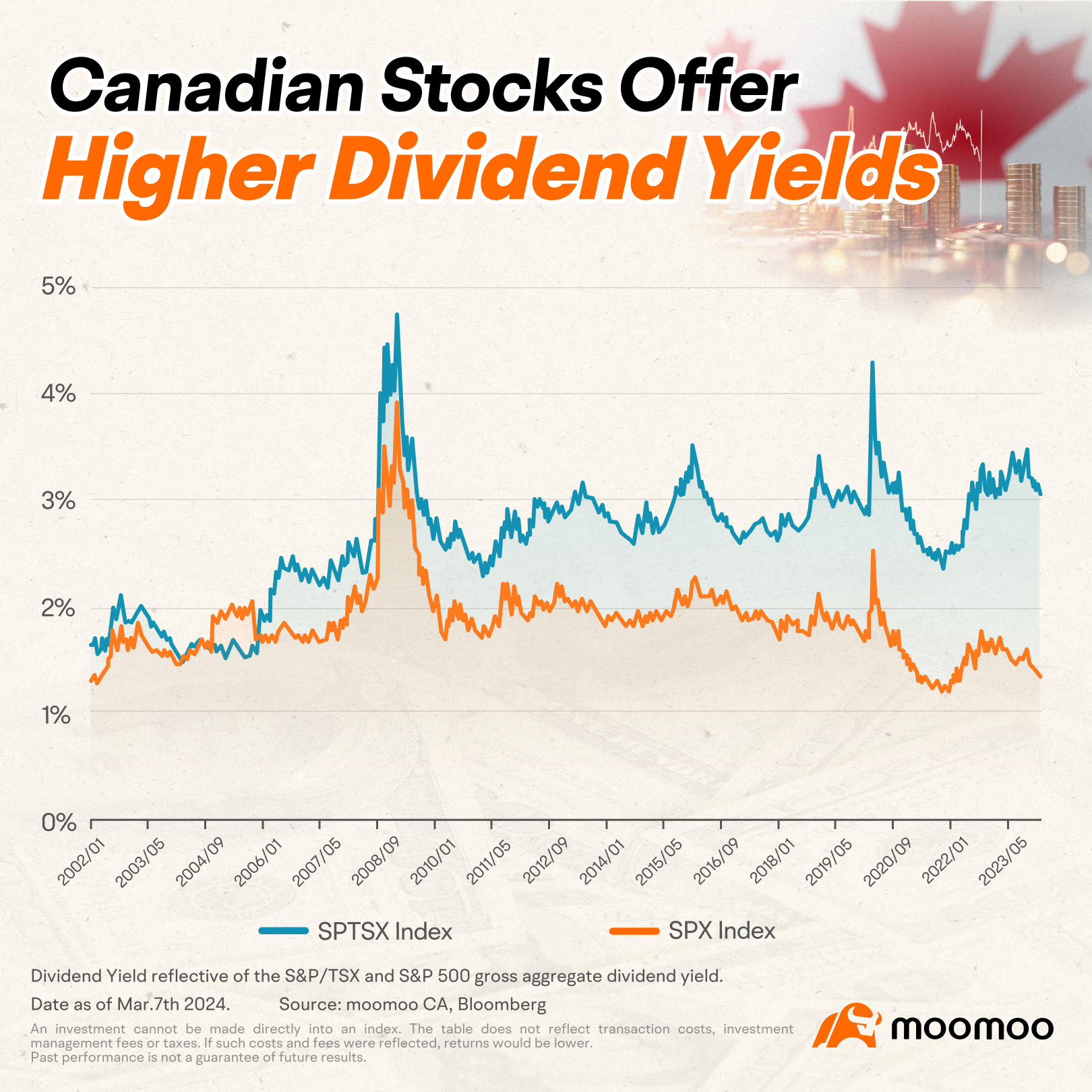
The reason? The S&P/TSX Index is dominated by mature, cyclical industries like energy, financials, industrials, and materials, which make up about two-thirds of the index. These sectors tend to pay higher dividends. In contrast, the S&P 500, particularly in the tech sector, has a large proportion of growth-oriented companies that usually reinvest profits rather than paying dividends.
2. Attractive valuations
Valuation is another key factor. The Price-to-Earnings (P/E) ratio is a simple way to compare the two markets. A lower P/E ratio suggests a stock is undervalued relative to its earnings potential, presenting a possible investment opportunity.
Currently, the P/E ratio for the Canadian stock market is generally lower than that of the U.S. market, making Canadian stocks relatively more attractive for value investors.

Which sectors dominate the Canadian dividend market?
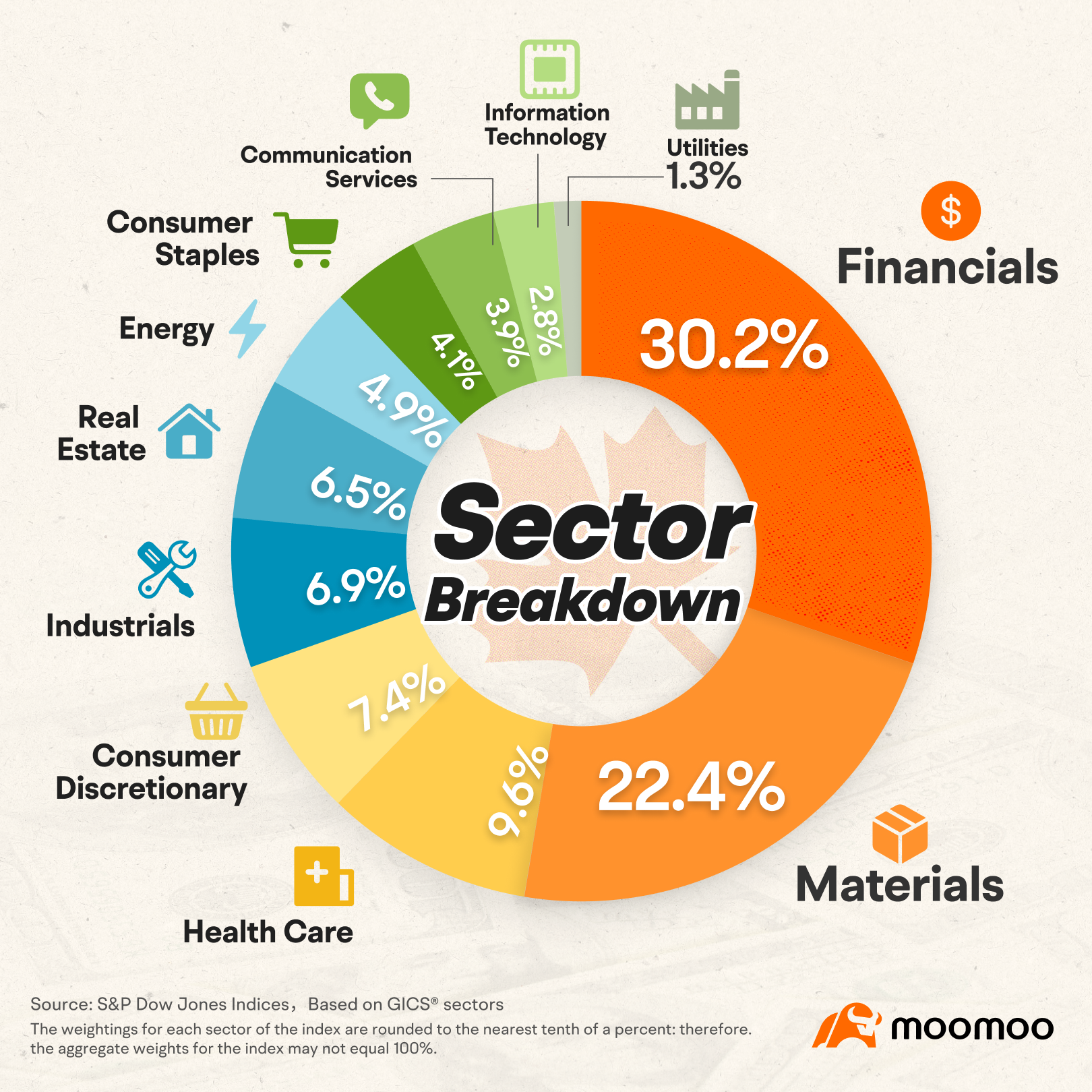
To grasp the key sectors in the Canadian high-yield market, we can look at the S&P/TSX Composite High Dividend Index. This index consists of 50 to 75 stocks selected from the S&P/TSX Composite Index, with a focus on dividend income.
The chart below shows that the financial and materials sectors have the highest representation, followed by healthcare and consumer goods. Does price volatility, such as economic turmoil or falling oil prices, challenge the ability to pay consistent dividends?
Historical data suggests otherwise. About one-third of the stocks in the S&P/TSX Composite High Dividend Index have shown stable dividend growth over the past five years, compared to just 10% twenty years ago. This indicates that the impact of such volatility is limited.
How to select high-yield stocks
Given that Canadian high-yield stocks can be a worthwhile investment, how do you choose the right ones? Focus on two key indicators: dividend yield and payout ratio.
Dividend yield: This shows how much dividend you receive for every dollar invested.
Formula: (Annual Dividend per Share / Price per Share) * 100%
For example, if a stock pays a $1 dividend annually and its price is $20, the yield is 5%.
Remember, yield inversely correlates with stock price. High yield can sometimes indicate a declining stock price, so be cautious.
Payout ratio: This indicates how much of the company's earnings are paid out as dividends.
Formula: (Annual Dividend per Share / Earnings per Share) * 100%
For example, if a company earns $20 per share annually and pays a $1 dividend, the payout ratio is 5%.
A higher ratio suggests a company is generous with dividends, but it should also retain enough earnings for future growth.
Additional Considerations:
High yields and payout ratios shouldn’t be the sole criteria. A company that pays out most of its earnings as dividends might lack funds for growth, impacting long-term prospects.
Look for companies with stable dividend payouts over the past three years. Avoid those with erratic dividend policies.
Ensure the stock also has long-term growth potential. Dividends are deducted from the stock price, so if the stock doesn't appreciate, high dividends alone won't yield good returns.
Summary
Investing in Canadian high-yield stocks can be a solid long-term strategy, but the timing and suitability depend on various factors, such as economic conditions, policy environment, and industry outlook.
However, inherent risks such as market fluctuations, interest rate changes, and stock selection errors still exist. Investors should assess their risk tolerance and investment goals carefully and ensure diversification to avoid over-concentration in any single sector or stock, thereby mitigating potential risks.
This presentation is for informational and educational use only and is not a recommendation or endorsement of any particular investment or investment strategy. Investment information provided in this content is general in nature, strictly for illustrative purposes, and may not be appropriate for all investors. Read more